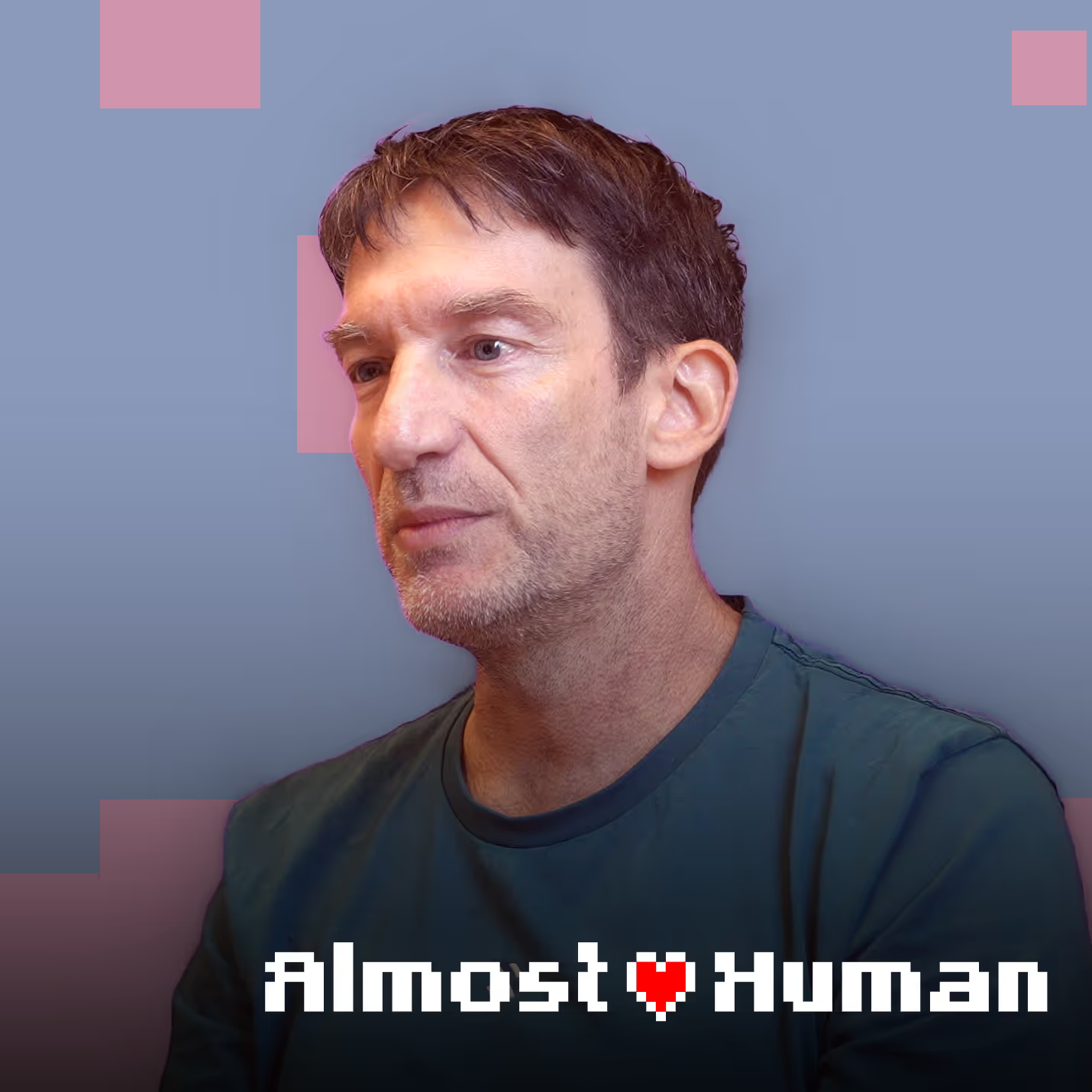
Yuval Kaminka


How can values create value? On this podcast, Michael Eisenberg talks with business leaders and venture capitalists to explore the values and purpose behind their businesses, the impact technology can have on humanity, and the humanity behind digitization.




Yuval Kaminka
Yuval Kaminka
Yuval Kaminka
.jpg)
Yuval Kaminka
Yuval Kaminka
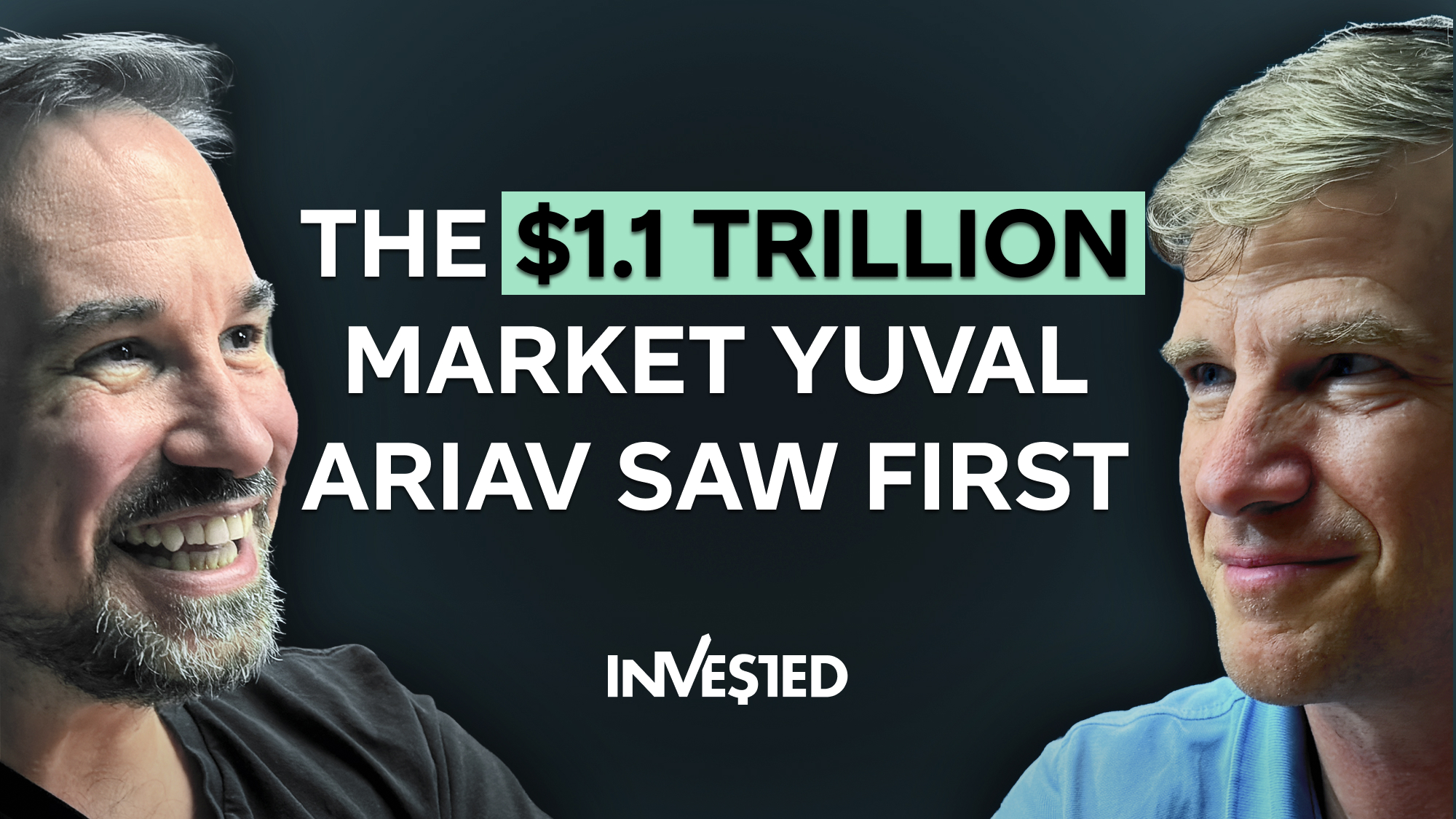
Yuval Kaminka, co-founder and CEO of Simply (formerly JoyTunes), on nearly running out of money, losing his co-founder Roey Izkovsky, and taking on Duolingo with an app that teaches piano, guitar, singing, and drawing.
On this episode of Invested, Michael Eisenberg talks with Yuval about the moment Simply ran out of money and even its own investors believed it wouldn't survive. They get into why that near-death experience shaped the company, how it fired a third of its staff and shared the bank account with every employee, and how Simply grew to millions of users.
They also talk about the last few years: Yuval's nephew Yanai, a search-and-rescue officer killed at Zikim on October 7th, and the sudden death of Roey, his co-founder and best friend, at 44. Simply responded by building Harmony, a therapeutic music room at Sheba Medical Center's rehabilitation hospital, and by bringing Simply Draw into the Tel Aviv Museum of Art.
Yuval Kaminka is an entrepreneur and the co-founder and CEO of Simply. He holds an MSc in computational neurobiology from the Weizmann Institute of Science and is a veteran of an elite technology unit. He co-founded JoyTunes (now Simply) with Roey Izkovsky and his brother, the musician Yigal Kaminka. He has built his career around a powerful idea: creating things that matter and elevate people's lives.
00:00 - Intro
01:58 - What Simply Actually Does
05:38 - Out of Money and Written Off
09:25 - Two Principles Born From Crisis
10:35 - Firing a Third of the Company
13:05 - Sharing the Bank Account With Everyone
15:40 - Why Simply Chose to Stall Growth
18:40 - COVID Swapped the Weights for Feathers
22:17 - Free Apps in Times of Crisis
23:23 - From Cyber and Neuroscience to Music
26:08 - Why 90% of Kids Quit Instruments
27:30 - October 7th and the Iran War
31:20 - Remembering Yanai
38:18 - Building the Music Room at Sheba
45:08 - The Music Room That Brought Back Her Voice
47:20 - Simply Draw at the Tel Aviv Museum
49:40 - Losing Co-Founder Roey Izkovsky
55:42 - The Pod Structure Meets AI
59:02 - Building a Company With Family
63:01 - Velocity and Work That Matters
64:45 - Competing With Duolingo
[Michael Eisenberg — 0:00]
A few years ago, the business basically stopped growing. Full disclosure. I thought we should write off the company.
[Yuval Kaminka — 0:05]
If Aleph or anyone else would have injected a little bit of money to help us out, we wouldn't be around today. We want to create something meaningful that is in every home in the world. That's like the type of company that we're building.
[Michael Eisenberg — 0:24]
Almost a nine-month plan to get to where you needed to get to, and it happened in three months all of a sudden. What happened? During the war that started October 7th, unfortunately, your nephew was killed.
[Yuval Kaminka — 0:34]
Yanai.
[Michael Eisenberg — 0:34]
Yanai.
[Michael Eisenberg — 0:35]
Your co-founder Roey passed away.
[Yuval Kaminka — 0:36]
Two years ago.
[Michael Eisenberg — 0:37]
Two years ago, at age 44. Suddenly. How did that affect you personally, and how did that affect the company? And then we're going to go from there to the near-death experience.
[Yuval Kaminka — 0:48]
Looks like it's a fun episode.
[Michael Eisenberg — 0:56]
Welcome back to another episode of Invested. My guest today is Yuval Kaminka, the founder and CEO of Simply. Welcome, Yuval.
[Yuval Kaminka — 1:04]
Thank you.
[Michael Eisenberg — 1:05]
I want to start in an uncomfortable place, can I?
[Yuval Kaminka — 1:09]
Shooting immediately. Okay, let's go.
[Michael Eisenberg — 1:11]
Yeah. So you have what I would call, at Simply, two defining experiences, including one—full disclosure, we're your investor—where I thought we should write off the company.
[Yuval Kaminka — 1:25]
I remember that.
[Michael Eisenberg — 1:27]
You remember that. Also, a few years ago, the business basically stopped growing. And so what I'd like you to do just to start off is to describe in just a few sentences what it is that Simply, then named JoyTunes, does. What's your business? And then I want you to start really with that first challenging moment, we'll call it, which is already back, I think, in 2015 or 16. Is that right? Or 17? When did that first challenging moment happen?
[Yuval Kaminka — 2:00]
It's been a journey.
[Michael Eisenberg — 2:02]
So that was a journey. So start with what the company does in three sentences.
[Yuval Kaminka — 2:07]
Okay, so Simply builds a companion, a creative companion for every single home, every family, every person to make the pursuit of creative hobbies simple and fun. And it means in every home and every family there's at least one person that wants to be able to play an instrument, draw, craft, dance, sing, cook – something which is a very human self expression. And they are very difficult skills and we're building tools to make it very, very easy for you. And it's working amazingly well and increasingly well.
[Michael Eisenberg — 2:42]
Yeah, I know it's difficult because my mother tried to get me to play a musical instrument. She got me a piano teacher. No. A guitar teacher. No. I didn't try drums because I'm clumsy, but my brother did. No. actually we may be the only family that doesn't answer to any of those creative skills. But I did manage to pound out.
[Yuval Kaminka — 3:00]
But that's the point. In every family you would have, you want to do that, right? You're looking for a best way. What you just described, Okay, I don't want to do it with a teacher. I want a skill, I want to be able to do that. I want to play piano, I want my kids to play piano. I want to dance, I want to want my, my daughter wants to dance. My kids are drawing and want to draw better. And you know, all that applies to every single family. Every single family. Anyone can do it and anyone can do it way better than what they're doing it now.
[Michael Eisenberg — 3:31]
All right.
[Yuval Kaminka — 3:32]
I think that's, that would be the point. Not necessarily you become a, you know, a professional pianist. Maybe you will and maybe you won't. I'm not, I'm not, I'm not the judge of that. But you can get to a level, every single person can get to a level that you're having fun with a hobby. That you're at a skill level that you can just when you're looking, when you can sit down and draw something and have fun with it. Every single person could do.
[Michael Eisenberg — 3:56]
I will say that my nephew Yehuda, he taught himself to play piano using Simply Piano. So the first product was Simply Piano, then at the time called JoyTunes. You want to just describe what the product does?
[Yuval Kaminka — 4:07]
JoyTunes is almost a different company, right? It was not, not just, it wasn't even a small pivot. It's like, it's like a huge, very separate, more education based company through teachers and education systems and so on. And then we shifted to Simply, which is a huge expansion on many levels, also not just music. So expanding from music to arts, craft and so on, all the creative things.
[Michael Eisenberg — 4:33]
Why don't you describe the piano product, describe the draw product and then we're going to go from there to the near death experience.
[Yuval Kaminka — 4:41]
So both products are beginner to capable. Getting you from nothing. I don't know how to approach this. I don't know what to do. I don't know in the piano, I don't know where to put my hands even to a level of capable. The basic capable where I can play with two hands and have fun, and drawing as well. It's not a copy, like what most, what you have, the comparables, is a copy by reference, by copying just what, you know, YouTube reference or something which is not a tangible skill and, but actually by drawing something that you want to draw or that your child wants to draw, learning about perspective, dimensions, reflections, shading, and so on. And the method to do it in a super, super, super fun way. All of them are working amazingly well. Draw is at the forefront of growth.
[Michael Eisenberg — 5:28]
Okay, we're going to talk about that in a second. Okay, so go back to 2016 now, the company had gotten started in 2012? 13? When did we get started?
[Yuval Kaminka — 5:39]
That was JoyTunes.
[Michael Eisenberg — 5:41]
Yeah.
[Yuval Kaminka — 5:41]
Roughly around that time.
[Michael Eisenberg — 5:43]
No, I get it.
[Yuval Kaminka — 5:45]
And I think that the point you're referring to is a point of transition. That's exactly the transition point. We had this board meeting where Eden, from Aleph, we had this conversation about, okay, JoyTunes is a company with the most value that I've seen, in his words, to consumers. We have to start. It's not like, we have to monetize. And that was a shift to Simply Piano, of not going through education systems and teachers and so on, but doing something which is direct to consumer. The shift is where Simply started, and kind of 2017 is the year that Simply started.
[Michael Eisenberg — 6:25]
But you were out of money, basically. You were close to out of money.
[Yuval Kaminka — 6:30]
We were out of money. We were approaching. It was a very. Yeah, it was a very, it wasn't a fun point. It was a very defining moment. We created a very aggressive plan that included firing a third of the company and we were small. A third of the company at any size is very dramatic. But it was very family community like and was a very dramatic moment with a very strong plan of how we not just get amazing growth, but also reach break-even and beyond, kind of own our destiny and. And over this fact. And at that point was also the write off. I remember a conversation with Eden following a board meeting with the plan. Eden said, "You know, I just want you to know companies do not survive something like this and we can't bring in more capital inside because we have our fiduciary duty.
[Yuval Kaminka — 7:29]
So just, you know, truthfully, we can't do that. But I will support you in any way that I can." Which, as you know, and, anyone listening, we know, it's not a trivial thing to say, because usually you don't— your phone— you don't get— people don't pick up your phone at that point. And he was— "I will help you in whatever way that I can." To me it was a very depressing moment, because, Eden— but we have an amazing plan. Like, it's going to work amazing. Like, why are you writing us off? I'm okay with not getting the capital, but this is— he was trying to be supportive, and it was actually a downer. And we had a plan that was kind of June, and we had a plan.
[Yuval Kaminka — 8:06]
I remember the dates and everything. By the end of the year we will get— or the first quarter of the following year we will get to break-even. I even remember the financials, the numbers, everything. And we got to that within three months. And we give a talk to everyone as part of the onboarding to the company. We're now over 200 people on the team, punching way over our weight, ARR per team member, and all these metrics, overall, today, over all the benchmarks and everything. And every single person that joins today, we have an onboarding session about that moment, as something which is a very strong learning in our journey. But especially the freak-out was actually not firing people at that point, and all that entailed. It was a few months after, when we saw unbelievable growth in terms of velocity, that the two principles of the company, the cultural principles of the company, were born there.
[Yuval Kaminka — 9:05]
And we were lucky. We were fortunate for that to happen to us, that we ran out of money. Otherwise we wouldn't be around today. The things that we learned there, if Aleph or anyone else would have injected a little bit of money to help us out, we wouldn't be around today. It was a learning that we had to go through.
[Michael Eisenberg — 9:28]
What are those two cultural principles?
[Yuval Kaminka — 9:31]
The two principles that we have are co-building. That we all are, everyone. It's not leadership and employees. We're all team members that are co-builders. Being a co-founder is— this is usually when people say co-founder, it's what they mean. But being a co-founder is you will do anything. This matters to you. This is your baby. You will fight for this. You will have resilience and persistence, and you will do whatever it takes.
[Yuval Kaminka — 9:55]
And you were there in the beginning, at the spark, which matters, right?
[Yuval Kaminka — 10:00]
It is a point that it matters. We're taking that temporal element out, but the same principle of this is yours. You are a shareholder, you fight for this. This matters for you. You are impact driven. You will do whatever it takes. No ego. Nothing is too small. That is a very strong element. That is the co-building part. And the impact velocity is a combination of get shit done and first-principles thinking.
[Michael Eisenberg — 10:23]
And what turned it around so quickly then, right? You made the point that it was like almost a nine-month plan to get to where you needed to get to, and it happened in three months all of a sudden. What happened after you fired a third? By the way, my recollection is it was more than 40% of the workforce, but I could be off.
[Yuval Kaminka — 10:44]
It was a third. 21 people to 14. Again, very small, but a dramatic moment. So the manifestation of these two principles— because what we did is, okay, we took everyone that remained, and full transparency of everything. We opened the bank account on the screen, everyone. This is the amount of money we have. These are the simulations. This is what happens if we succeed. This is what happens if we fail. This is like everything. This is the plan. And the plan had this amazing element of focus. There's something so crystallizing about a near-death experience in that sense, figuratively of course. And that just makes it— it's like, okay, these meetings and this conference we were going to go to, it doesn't freaking matter. Like, this doesn't matter and this doesn't matter.
[Yuval Kaminka — 11:39]
And we started the whole pod system that we work in, squads. It started there, basically, of: these are four things that we have to get right. Our plan consists of four things. Each one had an owner. All of us are shared resources, but each one had an owner, and this owner was obsessed. And all the team were obsessed about everything, about the entire plan. And it just worked very, very well. Everyone stayed. Like, we worked around the clock, and we had very smart tests, and we only did these four things. No distractions. A guillotine of focused work, extra hours. And I think we were lucky— I think all four were successful. But it's like...
[Michael Eisenberg — 12:23]
What were the four?
[Yuval Kaminka — 12:25]
So we even had ALTA. We had this kind of synonym for it. So it was moving Simply Piano— it's the beginning of Simply Piano and the monetization of it. So it was the A, the first A was Android. It's very tactical, Android. Lifetime value: we did 6x on lifetime value that year. Teachers: we had a very strong teacher community from the past, and we gave it for free for teachers. It was how to monetize in a smart way for teachers, so they support us and not get mad with us because we have to monetize with them. And Apple relationships, since we're very, very close with all the platforms, and with Apple specifically. But it started then.
[Michael Eisenberg — 13:10]
How did you make the decision to share the bank account with all the employees? That's unusual.
[Yuval Kaminka — 13:16]
That was easy. That was the easiest from all this plan, for everything. We still do it to this day. So, like, every all-hands of the company that we have, every month and a half or so, there's a full count of how much capital we have. It's just a form of context that we should all share. It's not transparency as a principle, because there are things that we have— personal agreements, right? Employment agreements and so on. It's not that everything is transparent, but there needs to be a reason not to share something versus the opposite. And in a lot of places— not all places, but a lot of companies— there's, okay, I need to know, in some way. If you need some context, we will give you, and we will make it— no. Everything is available. Everything is open for everyone. Every context. I can't guess what context you need and don't need. There needs to be a good reason why not to, and sometimes there are good reasons.
[Michael Eisenberg — 14:15]
Your employees could freak out from that. They see the cash balance, they see how much money you're spending per month. Would your employees freak out?
[Yuval Kaminka — 14:23]
If so, you need some— sometimes you do need to manage expectations. Freak-out is destructive.
[Yuval Kaminka — 14:29]
Right?
[Yuval Kaminka — 14:29]
But if we're in a situation— we haven't been since that time— but at that— let's take that moment. It's understanding the situation, understanding that, yes, there are outcomes of this. But now you get so many ideas, and responsibility comes from the team, now that they're thinking of it. It's not someone from finance thinks of ideas how to cut budgets and starts fighting with everyone else; the team comes outside: "You know what? We could open source this, or we could use another service, so I don't need to fly out," whatever. Like, they find— we even had on many occasions, we even had to tone it down a little bit.
[Michael Eisenberg — 15:15]
You can drink the expensive coffee.
[Yuval Kaminka — 15:17]
Yeah, the capital matters, but it's okay. This is impactful. This is a good spend to have.
[Michael Eisenberg — 15:25]
So take me forward now. Growth stalls in the business, right? What year are we talking about now? The growth kind of stalls out for a bit.
[Yuval Kaminka — 15:35]
So from 2017, if I'm going to transition to Simply, we had amazing growth.
[Michael Eisenberg — 15:40]
Amazing.
[Yuval Kaminka — 15:40]
Amazing growth. And then post-COVID— COVID was very, very good for us.
[Michael Eisenberg — 15:44]
We're going to come back to COVID in a second.
[Yuval Kaminka — 15:48]
But yeah, okay. So post-COVID, growth stalled. I think it's not necessarily as, very much a decision. There was a point, again, part of this first-principles way of thinking and being very focused on things, is that in the crisis that happened after COVID it was like, okay, growth is not rewarded by the market. The proxy, the predictor, for a successful company right now is not growth. It's runway, capital efficiency, and runway, and so on. So we made, okay— if that's the case, we can really invest in improving our capital efficiency, our modeling, our infrastructure, like a country does in times of crisis. Like, let's work on infrastructure.
[Michael Eisenberg — 16:34]
Yeah.
[Yuval Kaminka — 16:34]
And roads. So we worked a lot on roads for that.
[Michael Eisenberg — 16:38]
This is a purposeful decision to—
[Yuval Kaminka — 16:40]
A very purposeful decision.
[Michael Eisenberg — 16:41]
Because you believe the stock market, basically, or investors, didn't reward growth.
[Yuval Kaminka — 16:46]
Exactly. And we turned to profitability, went to profit very quickly.
[Michael Eisenberg — 16:50]
But it's hard to restart growth from there, isn't it?
[Yuval Kaminka — 16:53]
It's, again, it's Eden again, and I'm going to quote him a lot. We're very close and.
[Michael Eisenberg — 16:59]
We like him.
[Yuval Kaminka — 16:59]
We all— I think we all like him. Good guy, keeper for sure.
[Michael Eisenberg — 17:06]
Yeah, listen, I'm keeping him around. You know what my wife says: if I wasn't married to her, I'd be married to Eden. So—
[Yuval Kaminka — 17:14]
Which— your partnership with Eden is one of the biggest mysteries of life, for me. Just how different, and the relationship that you.
[Michael Eisenberg — 17:26]
How different what?
[Yuval Kaminka — 17:26]
How different you two are.
[Michael Eisenberg — 17:28]
Oh yeah.
[Yuval Kaminka — 17:29]
And the way that you think about the world, it's amazing. It's like— I— you don't know this, but I analyzed this with people from Aleph that joined our team after a lot, and with Eden a little bit, and so on, about this relationship, this beautiful relationship that you built. But we can talk about that.
[Michael Eisenberg — 17:47]
Yeah. I didn't know that there was a psychoanalysis going on behind my back, but I'm glad to hear that it turned out okay.
[Yuval Kaminka — 17:54]
Yeah, there's a lot to say. We can talk about it. But it was a purposeful decision, and then Eden had said that reigniting growth is going to be very difficult. But because what we did at the time was building the roads, the infrastructure, the modeling, the engines— we started Simply Draw at the time and so on— there is a question of pacing a little bit. Like moving to growth, sometimes the ignition takes a little bit of time. Even just cohorts accumulating again, just the dynamics of a subscription business and so on. It takes a little bit of time. But the acceleration was actually— we moved from being flat for a year and a half or so post-COVID to 25% growth, and then 35, 30-something percent growth, and now 50% growth.
[Michael Eisenberg — 18:47]
So I want to talk about COVID one second. Because I think that was also the seeds of some strategies. So, COVID hits. You have, by the way— everyone should know this beautiful office, it's very musically and creatively inspired, with music instruments and drawing. And it's just a beautiful space. And everyone goes home, but everybody goes home and they're all looking for creative hobbies. So take us through what happens in COVID, and particularly some of the decisions, business decisions, you made during COVID that caused the company to really accelerate.
[Yuval Kaminka — 19:20]
Interesting. So there were two big things that happened at COVID. One was the— go home, but that we got a very good view of a passion for people. So it's more of— we got this. We said, it's like you get a crystal ball that tells you the future and gives you an underlying of human need. Going back to where we started, right? Basically everyone wants to play piano. We only had piano, we had the beginning of guitar at the time. So we only enjoyed COVID and the piano times. And so everyone wants to play piano, basically. Now they have a bit more time, which is a question of tools, of how accessible and easy and so on. So we got this glimpse of the future. And at the same time, just marketing was very cheap. So the combination of these two things created a very strong effect. We were very cautious.
[Yuval Kaminka — 20:16]
Even the analogy that I used was— as a company, I want to build a huge— we both want, you know, we want to build a huge company. We want to go into every home, we want to go public. We want to create something meaningful that is in every home in the world. That's like the type of company that we're building. So as a company, it's like I'm going to the gym and I'm always working on my muscles. But someone came in at night and replaced all the weights to be feather, feather weight. And that's the parallel to the marketing spend just being very cheap and efficient. So working as a company, I can enjoy it. It's like, look at me, I'm amazing. But I know that this is not real. I'm not actually much better at growth as a company. And that one day— and we knew that because we had amazing data science that went over every quarantine in the world, so we could actually predict everything that's going to happen.
[Yuval Kaminka — 21:15]
So we knew these weights are going to go back. So if I want to work on my body, if I want the muscles of the company, I need to work extra hard. I need to stack weights on top of each other. And I— so we didn't squeeze the lemon. We didn't. So we worked more on usage and retention and content. We accelerated working on guitar. We had, okay, this thing is happening. We need to prepare for when it de-accelerates. Which is why, after— it was a decision, post-COVID. The fact that it was a decision to stall growth and move to profitability was that it could be a decision, and not, you know, this panic move of "oh, no growth." No, we were— we knew.
[Michael Eisenberg — 21:59]
Talk to me for a second about your background. By the way, were there any marketing gimmicks during COVID? Like, give it away for free at all? Did you— I believe you, like, you added a family subscription at some point.
[Yuval Kaminka — 22:11]
It wasn't a gimmick. It was things that we wanted to test out. We did give some things that we do to this date, when there is a big crisis somewhere.
[Michael Eisenberg — 22:21]
Yeah. That's what I'm getting at.
[Yuval Kaminka — 22:22]
We like to give it for free. So we started. We had this time— I think the first quarantine was in, if I'm not mistaken, I think it was in Italy, and I think we gave it for free there, in the beginning, before it was kind of—
[Michael Eisenberg — 22:40]
So when there's a quarantine in Italy, you just say, okay, Simply's free in Italy?
[Yuval Kaminka — 22:44]
Yes.
[Michael Eisenberg — 22:45]
For how long?
[Yuval Kaminka — 22:47]
If I recall, this was some time ago. But if I recall, it's like a month or two.
[Michael Eisenberg — 22:52]
Okay.
[Yuval Kaminka — 22:53]
That it was free. You have the privilege to work on a domain that gives a lot of comfort to people in times of both good and, what's less trivial, during bad times. So it comes with some level of responsibility during these times. Yes, it was a calculated thing, but not a gimmick.
[Michael Eisenberg — 23:09]
If you're interested in finding out ahead of time what's going on in Israeli tech, what the latest trends are, who's breaking not only news but breaking the trend lines, then you want to subscribe to Aleph's newsletter. You can sign up right in the show notes, in the description of the show. Please subscribe to the newsletter. What is your background like? First of all, do you play an instrument?
[Yuval Kaminka — 23:30]
I play now with kind of with our things. I'm not a musician before. I have a very clear kind of cyber-type background. Did most of my first degree during high school, in the army, in the right units.
[Michael Eisenberg — 23:50]
Yeah.
[Yuval Kaminka — 23:51]
So the journey was laid out to me, the path was laid out for a cyber track. I worked on algorithmic research and cyber companies and B2B enterprise companies and so on. But I was always drawn to impact that I wanted to see in the world, ideally in people's hands, but not necessarily so. It's not B2C versus B2B, but it's more like, this is a change that I want to see, in my humble way, kind of small way that I can affect it, I want to be part of that. So first of all was maybe, you know, being the forefront of that was actually academia, like science. So I went to— did my master's degree in Weizmann Institute, with computational neuroscience, basically computer science and neurobiology, and really enjoyed it immensely. I remember the pitch. I was considering the Hebrew University versus Weizmann Institute. Someone asked, "Well, what if we finish all our coursework?"
[Yuval Kaminka — 24:52]
Like, you know, that's on a scholarship basis. "So, can we just go home?" And the answer was, "You— I don't think you understood. You come here, you are a researcher. If you finish, go read papers and research something." That struck me. It's like, I have to be here. This is amazing. And I did way over on my courses, and in courses I became this teaching assistant. I did a bunch of stuff and I really enjoyed it. And both my advisors offered that I continue working, and funded me for a while further, to continue a PhD with them. But with a lot of respect for the science, I felt I needed application of things. I felt like there's so much that I researched here and I was exposed to that I think could be already used to do things out in the wild.
[Michael Eisenberg — 25:43]
So you're like a neuroscientist and a biologist that's helping people do creative hobbies. Is that the right way to think about this?
[Yuval Kaminka — 25:50]
You know? Yes, we did. I did explore a bunch of stuff. So I'm not— I was agnostic to—
[Michael Eisenberg — 25:55]
You wanted to start a company, you didn't care what you did.
[Yuval Kaminka — 25:58]
No, I wanted to solve a pain.
[Michael Eisenberg — 26:00]
And what was the pain?
[Yuval Kaminka — 26:01]
And the pain that we started with, that took us on a lot of different routes, but the pain that we started with was this pain of starting an instrument. So it started with music.
[Michael Eisenberg — 26:13]
The psychological pain?
[Yuval Kaminka — 26:15]
The psychological– All these kind of 90% of kids that are starting out with learning an instrument and don't finish the first year.
[Michael Eisenberg — 26:21]
Is that a cost pain, a psychological pain?
[Yuval Kaminka — 26:23]
It's not a cost pain. As a parent, you would pay any price for a kid. If they only continue, I'm okay with almost any price for it. It's worth so much. So it's a motivation problem. It's a motivation over these exercises. It's like with any skill. It's very similar to a lot of education and skills and sports. And so in that sense, this beginner-to-capable challenge is common to a lot of domains. And it's a real problem. A lot of great companies built amazing tools in sports that are exactly kind of implementing solutions for that exact pain of how to get to the capable, and how to maintain it, how to continue with it.
[Michael Eisenberg — 27:15]
So you mentioned before that during COVID you released the app or the service free and incurred usage in numerous countries. That began a trend, because also during the war post-October 7th here and during the war with Iran, you also released it free. You want to talk about that?
[Yuval Kaminka — 27:36]
October 7th, that hit us and the country very, very hard. And in the beginning, like most in Israel, we did everything that we could think of to help, from housing and clothing for those affected to making sandwiches. We ran around trying to find places we can assist as a team. And with the passage of time, it became more and more outside— we're actually in a domain that is like our day job, and we don't even invent something. Our day job is super, super, super helpful for healing processes of people. And we can do that. So we started doing more where we're uniquely positioned. That included opening our apps for free here, and it was for a long time, for like a year. Cost us a lot of money to do that. We did this for a long duration, and then also various different projects. And I think the highlight of them was the rehabilitation.
[Michael Eisenberg — 28:37]
We'll come to that in a second. But Israel wasn't the only place you opened the app to, right, over the last couple of years?
[Yuval Kaminka — 28:47]
So we opened in several other areas, but it was mostly we focused on the region. Yes, we did see spikes in usage in the entire region.
[Michael Eisenberg — 28:57]
During the Iran war in particular?
[Yuval Kaminka — 28:59]
Yes, in the Iran war. You really could see kind of spike. The whole region is lighting up.
[Michael Eisenberg — 29:06]
The whole region. There's something that it's like an orchestra—
[Michael Eisenberg — 29:09]
An orchestra in the Middle East, or drawing from the Middle East.
[Yuval Kaminka — 29:14]
Yeah. So there's something about this domain that transcends borders, very human, and transcends— like, the universal language. And a universal parental need and a personal need and a human need that transcends all these fights and borders and conflicts and so on. It's just amazing. A light for everyone.
[Michael Eisenberg — 29:31]
What are some of the comments you got from parents in particular, either during COVID or during the war, about how their kids experience the service?
[Yuval Kaminka — 29:42]
We get very emotional responses. It's interesting to be in a company where it's very common, during user interviews, that people cry.
[Michael Eisenberg — 29:53]
Really?
[Yuval Kaminka — 29:54]
From joy, from being proud, if it's a kid, or for themselves, of achieving something. Let's say even a measure of, okay, we think we got it. We have a good product-market fit indication when you see these very strong reactions to something that we created. And definitely, for people that are enduring something which is more difficult, fighting a disease, and elderly, obviously— these are things that fill a void, help fight, you know, loneliness and so on. For every demographic, there's something that is very important for them that they can achieve with this. If it's a teen, it's an X factor. For every demographic, it achieves something which is very emotional, very fundamental.
[Michael Eisenberg — 30:49]
Is there any specific picture that was drawn that stands out in your head that somehow someone shared as part of a user survey?
[Yuval Kaminka — 30:57]
There are so many. I think one that I can relate to was this generational one. You'd have a child, a father, and a grandfather all holding the same drawing, that each one drew a version of their own. And there was this picture that was shared of the three of them together. And that was, okay, this is a beautiful moment.
[Michael Eisenberg — 31:21]
You know where that came from in the world?
[Yuval Kaminka — 31:24]
I think this was in the Tel Aviv area.
[Michael Eisenberg — 31:28]
Tel Aviv area. So during the war that started October 7th, unfortunately, your nephew was killed.
[Yuval Kaminka — 31:34]
Yes.
[Michael Eisenberg — 31:34]
Yanai. Want to tell us about Yanai?
[Yuval Kaminka — 31:41]
Yes, it's on the more sensitive side, but Yanai, so he was a search and rescue officer in Zikim that morning. And he became, during both his life and what he did before and these final moments that morning, a symbol of leadership. Even though he was kind of a very young leader and learning the ropes of it, he challenged a lot of the common wisdom to create his own path of how he thought leadership could be. And it was based a lot on love, on empathy and love. You have to love people, you have to be empathetic towards them, you have to understand them. There's this one— again, without going too deep into it— this one story. The commanders that reported to him— he gave them an exercise at the beginning of some leadership training course of some sort.
[Yuval Kaminka — 32:53]
And he gave them an exercise of a scenario where a soldier or something is behaving in this way or that way and so on. It's like, "What do you do?" And they were— you know, the punishment: he can't go home, he has to do these chores and so on. There was this punishment entailed with that. And he said, "Okay, I'm going to add new information for you. And this new information is that it's a lone soldier, kind of, family— they have financial challenges, and he is troubled by that. When he goes back over the weekend, he needs to get a job, and he needs to kind of help out, and his girlfriend dumped him, or whatever."
[Yuval Kaminka — 33:38]
"I'm going to add more information. Does your answer change? What are you going to do?" It's like, "Okay, obviously our answer changes, and we're going to do this or that. We're going to help him, assist him, and so on." "But how— how could we know?" "Your job is to know. If you want to be a leader, your job is to know. You need to know what's going on with the people that you're leading, for you to help them to be the best versions of themselves." And that is beautiful, and that is so nontrivial.
[Michael Eisenberg — 34:13]
That's inspiring.
[Yuval Kaminka — 34:14]
And he spent his nights talking to his soldiers, to other people in the unit.
[Yuval Kaminka — 34:24]
He didn't sleep at all. He spent all his nights just talking to people, and he had his notes, and he did a lot of house visits, and he helped in whatever way he could. So that's the type of person. And he became part of— what you said you want to talk about later— part of the music room that we later opened.
[Michael Eisenberg — 34:45]
And Zikim, for those who don't know, is a beach, basically, area just north of Gaza that terrorists landed on and began shooting up many people. And there were search and rescue missions there to help the people, civilians, to get out. But we have something that we don't normally do on this podcast. We have a clip. This is the first of two clips we're going to play.
[Clip — Hebrew video about Yanai — 35:09]
It's amazing. A 20-year-old kid, you know? It's unbelievable. The phrase "Only at night can you see the stars" guides us here, in this room. Every chance we get, with every tour that comes through, we honor Yanai's memory and tell his amazing story. So here we also honor him with the plaque and a little bit of his story. Yanai's coffee cup. They say it was always lying around everywhere, even at home. They say this was probably his cup from his base. Something they found there, and from it they made this special sculpture, at Bezalel. At the ceremony, his parents made a simple request: whenever you can, invite someone for a cup of coffee. Someone you just want to talk to, someone you're in a fight with, someone you'd like to start a conversation with. Invite them for coffee, ten minutes, fifteen minutes, and it opens up the relationship. At the ceremony, his father said he'd call at all hours: "Dad, I need a washing machine for this soldier. Dad, I need..." He was so open, he really wanted to help, and he'd find these people along the way. That's truly inspiring to me, a 20-year-old kid like that. It's amazing.
[Michael Eisenberg — 36:01]
The thing that struck me about this clip about Yanai is the quote, at every night or every night you see stars. And the double entendre, which works even better in Hebrew than it does in—
[Yuval Kaminka — 36:15]
Only at night do you see the stars.
[Michael Eisenberg — 36:18]
Yeah, and it says so much. It's also very related to Simply, right? Which is that there's all these people around the world with these hidden talents, and only when you can kind of get to them in the darkness of their own home, on some level, right? Which is— hey, this app and service comes where you can discover your own talent, do you find stars. It's striking. It's almost like a family trait, to be able to find these hidden stars around the world.
[Yuval Kaminka — 36:49]
It's very strong. It became a mantra. It's from a poem that my brother, Yanai's father, Yal, wrote him before, and it became a mantra of Yanai. And it felt very fitting in the room, where— in a time of darkness, there is light. You find rays of hope and you find good people. And there is a lot of what's in the room, in our domain, which is a domain of light, of spreading light, of giving hope and giving light. Not only in darkness. It's just light.
[Michael Eisenberg — 37:29]
A little birdie whispered to me that he played the piano too.
[Yuval Kaminka — 37:33]
He played the piano too.
[Michael Eisenberg — 37:35]
Did he pick it up from Simply, or was he talented?
[Yuval Kaminka — 37:39]
He was self-taught. A little bit of Simply, but mostly self-taught. Not lessons. Self-taught pianist, and a very shy one.
[Michael Eisenberg — 37:50]
And so this video we just saw showed his coffee cup, the memorial coffee cup, which he left around the rooms—
[Yuval Kaminka — 38:01]
To help him keep awake at night.
[Michael Eisenberg — 38:04]
At night, because he didn't sleep at night.
[Yuval Kaminka — 38:08]
He drank a ridiculous amount of coffee.
[Michael Eisenberg — 38:10]
A ridiculous amount of coffee at age 20.
[Yuval Kaminka — 38:13]
Yes, a ridiculous amount of coffee to be able to keep himself awake to talk to people. So I mentioned before that we explored so many ways in what way we can be helpful. And then the connection was made with Professor Amitai Ziv from Sheba Hospital. He's the manager of the rehabilitation hospital at Sheba Hospital. And he had this vision of how music learning is a fundamental part of a healing process, and not something secondary, which is very revolutionary. It's very innovative in the world. And we hit it off immediately, and it was an amazing, very, very rapid process.
[Yuval Kaminka — 39:00]
We found generous donations, the Greenberg Greenglass family, that helped with the construction of a music room, Harmony Music Room, and donations that we brought.
[Michael Eisenberg — 39:17]
We being Simply.
[Yuval Kaminka — 39:18]
Yeah— for the spark of Simply, of instruments and devices and subscriptions and music therapists. We connected with the Jerusalem Academy of Music, and they came in and brought their students to help with the ongoing activation of the room. And it's beautiful. And in our terminology, in our domain, there's product-market fit, and a very strong one. The music room is fully booked.
[Yuval Kaminka — 39:47]
Departments are fighting over it. It became something very crucial as part of the healing processes for all various kinds of demographics. There's a community of makers that are building instruments that are helping those with disabilities that need different types of instruments. Maybe a good time to mention that they are looking— they also need donations for music therapists, because they want to expand this program and have more therapy inside the room.
[Michael Eisenberg — 40:17]
My son-in-law, he talked about this very openly, was wounded in 2014, and he was a musician, played guitar, and he couldn't play guitar after his injury. And a bunch of guys who were good at hacking things together got together and built him a special implement for his finger, and his hand, so that he could squeeze the chords on the guitar, and he went back to playing. He ultimately recorded a song with Tzahi from Fauda. What's his name? Tzahi Halevi from Fauda. He recorded the song with Tzahi Halevi from Fauda.
[Yuval Kaminka — 40:55]
Beautiful.
[Michael Eisenberg — 40:56]
Yeah. About, basically, the road of life. And I see firsthand how music is part of the rehabilitation process through my son-in-law. You're very regimented at Simply about ROI. I mean, I've never seen a company more maniacally focused on ROI and KPIs. Is there any ROI or KPI to this music rehab room?
[Yuval Kaminka — 41:26]
Yes, I think the ROI is us, right? Is our own. The definition of the ROI. It doesn't have to be a very numerical one.
[Yuval Kaminka — 41:38]
It can be.
[Yuval Kaminka — 41:39]
It's more having a strong purpose, being very deliberate about things, about how the success looks like, and being very focused. If we're going to do this, we need to do it right. And this required a lot of resources and bandwidth to do it right. But it was very important for us to know that there's product-market fit. If this was another room that is half empty and devices that are broken, it's like, no, no. We have to make sure that there's enough, that there's maintenance and there's support, and that continues. That's the only way to do this. It's not.
[Michael Eisenberg — 42:17]
Who built the room?
[Yuval Kaminka — 42:19]
The construction came from this donation that I mentioned, that's kind of from the hospital side. The Friends of Sheba.
[Michael Eisenberg — 42:26]
Yeah.
[Yuval Kaminka — 42:27]
And everything inside it. And the therapy, the ongoing therapy, came from us.
[Michael Eisenberg — 42:31]
Came from you. Did you help build the inside of the room?
[Yuval Kaminka — 42:35]
We— no, no. The design of it came from us.
[Michael Eisenberg — 42:38]
The design came from us?
[Yuval Kaminka — 42:39]
Yes.
[Michael Eisenberg — 42:40]
Yeah. I thought I heard something like that from you.
[Yuval Kaminka — 42:43]
Yeah, yeah. We designed the room with the hospital.
[Michael Eisenberg — 42:50]
Let's see the clip.
[Clip — Sheba rehab doctor — 42:53]
You know, rehab basically depends on the motivation of the rehab individual. Liat was an example of someone whom we could hardly penetrate her very depressive mood and depressive attitude and lack of motivation. It was a truly rare encounter. She came in a wheelchair. She didn't speak at all. She was very much within herself at bed, hardly going out, hardly cooperating with physiotherapy, occupational therapy, and other means of rehab that we offered her. And her eyes literally lit when she was offered to come to the room. She didn't want to sing. She came with her wonderful family, so I told her, "OK, I'll sing, and you just breathe between the lines." That's basically how we started working. I can't really go into detail but basically I had multi-system injuries all over my body. Injuries to my face and eyes, as you can see. Unlike myself. Look at her today. Today she walks without a cane. She's out of the wheelchair. She speaks. The rest is history, because she's done a huge mileage via music therapy that she is hospitalized anymore. If this room hadn't been built, I don't think I'd be where I am today. This room helped me grow and gave me strength in my heart. And it all happened all at once – one day I just started talking. I swear. They worked on it with me a lot - speech therapists and all that. The first word I said was "mom" and she was over the moon. And then somehow I was talking again. Seriously the doctors didn't even understand how it happened. Do you understand how crazy it is?
[Michael Eisenberg — 44:52]
So when you see that story, the music room brought her back to speaking. How does it make you feel?
[Yuval Kaminka — 45:01]
It's obviously speechless. It's like— I'm very proud and happy that this is my— I'm part of this. That I had some stake in this, that we had some stake as Simply, as a team, as everyone involved in this. It's beautiful.
[Michael Eisenberg — 45:30]
I heard that somebody described seeing an amputee sitting down at a drum set and asking, "Wait, can I record my songs here?" What did you feel the first time you watched someone use the room and say, "Hey, an amputee is going to record his songs here, play the drums or record the songs"?
[Yuval Kaminka — 45:51]
So maybe the silly answer would be going to being deliberate. I want to see day-seven retention. I want to see not the first enthusiasm. I want that result. I want the end result of the.
[Michael Eisenberg — 46:07]
Of Liat speaking.
[Yuval Kaminka — 46:08]
Of Liat speaking. I want to see that patient continuing, time and again, and not— because the first impression is it's important, and it's great. And it's like, you come and you jam a little bit and so on, but will this person come the day after? When I was there recently, immediately my instinct was to go around and check that everything is working. And I found this amplifier that wasn't – kind of okay, we need to replace that. And did they clear the room for me to be here, or was it empty, and so on. I want this— this is not this kind of poster thing. We want this to work, and it looks to be working. So we're starting to replicate. We want to do more.
[Michael Eisenberg — 46:58]
Where are you going to replicate? That's what I was going to ask you. Are there other countries, other cities?
[Yuval Kaminka — 47:05]
So the immediate thing that we did, which is a slightly different use case of this, we launched several weeks ago with the Tel Aviv Museum, on the drawing side, of adding this element inside the museum for families and kids and delegations and art therapy and everything, to be able to interact with the art of the museum and draw pieces of art from the museum there. It started recently, and there too, amazing product-market fit. I was like, how do you define product-market fit? Despite the fact that there are a lot of things that are broken, and the projector that is screening the drawings isn't necessarily tight with everything, still we have tens of thousands of drawings made. And this is in a few weeks, with 15 to 20 stations there in the museum. We have tens of thousands of drawings made.
[Michael Eisenberg — 48:03]
You take the art from the museum, and then you kind of draw.
[Yuval Kaminka — 48:06]
And then it gives an instruction with Simply Draw. It gives a tailored instruction for how to make this drawing. And in a session that's fitting for the capacity in a museum, it's like 20 minutes of drawing of some art element from the museum. And then you broadcast that. You put this on the projector and it shows it on the wall, and you have this moving gallery of drawings that the kids are now part of, the musician of the gallery, right? And again, full all the time, to the point that they have to force people out after closing hours. They close the light on the kids.
[Yuval Kaminka — 48:49]
And now we want to look at expansion, both locally, do more of this, and then, or in parallel, start doing it in other countries, US obviously, and in other use cases as well. So we have museums, we have hospitals. We didn't do children's hospitals. I think it applies very strongly there. Someone recently brought up prisons as kind of rehabilitation. That is interesting for us as well. I think there's a lot we can do.
[Michael Eisenberg — 49:23]
This wasn't your only interaction, unfortunately, with loss during this time. Your co-founder, Roey.
[Yuval Kaminka — 49:29]
Looks like it's a fun episode.
[Michael Eisenberg — 49:31]
No, I think an important episode, because there's this unique combination of tragedy and a company that brings such joy. I mentioned my nephew learned to play the piano with this. My kids have all used Simply, by the way. They're more musical than their father, because they got it from their mother. And I have run into thousands of people, probably at this point, who have taken on a creative hobby through Simply, and it really incredibly brings such joy. And I think the striking thing about this company, as we mentioned, the challenge of laying off a third of the company, the growth stalled, at least from our perspective— you say it was the infrastructure, either way, it doesn't matter— restarting that growth is stunning. This is such a scientific company. You really created this pod structure that so many companies have emulated, which I want to come back to at the end. And you're a totally KPI-driven company, and you've just overcome an incredible amount of things, while accelerating, you're bringing more joy to the world through this. And as I said, your co-founder Roey passed away.
[Yuval Kaminka — 50:35]
Two years ago.
[Michael Eisenberg — 50:36]
Two years ago now, at age 44. Suddenly.
[Yuval Kaminka — 50:39]
Suddenly. Unexpectedly.
[Michael Eisenberg — 50:41]
Yeah. And within, I think, five or six months of your nephew. And Roey, I think, was with you in the army unit. He was your commander in the army unit before starting the company. How did that affect you personally, and how did that affect the company?
[Yuval Kaminka — 51:01]
So the effect was obviously meaningful. Roey, besides being one of the most brilliant people I've ever had the privilege of working with, and I've worked with a lot of very, very, very smart people. He was my best friend. We had a lot of past between us, traveling in different places in the world, and our partners, just the two of us and with our partners. And he was my best friend. And the impact of it is obviously— okay, so it impacted the company obviously. He was a beacon for a lot of people, and he held a lot of stuff, and a lot of people depended on him, including myself. And so over the past two years, almost three years, a lot of people have been asking me, where do I find the strength, with everything that happened, this very, very difficult time on a personal level? Do I find the strength to continue with the startup grind and with board meetings and investors and all that?
[Yuval Kaminka — 52:21]
And my response is that it's sort of the other way around. Working in something like what we do, and with the people that we do this with, is what gives me strength to deal with everything that is happening. You once— I don't know if you remember this even— but you once asked me, years ago, how do I cope with the loneliness at the top. And I remember— I don't know if you remember the response— I pondered upon this, and then I said, well, I feel the full spectrum of emotions that you have, good and bad, often on a daily basis. But not loneliness. One of the principles of that co-building, which is implemented, we bring people in, we expect this from them, and we grow them into it.
[Yuval Kaminka — 53:20]
We are partners. I have a lot of partners. I lost a co-founder. As a company, we lost a co-founder, but we have a lot of co-builders. So we overcame, or we grew. We didn't grow stronger because of this, but we did grow stronger. The weird thing is that business has been amazing in the past two or three years.
[Michael Eisenberg — 53:44]
Your growth and your revenue per employee is just stunning.
[Yuval Kaminka — 53:46]
And everything.
[Yuval Kaminka — 53:49]
So this is because of this very, very, very strong partnership, and the way that we work, that allowed us— So the loss is much more on the personal level. And I have Roey with me— I ask him questions, he disagrees with some of my decisions. I know which— I have an argument and, unfortunately for him, I have an advantage and I win. But not always. Sometimes he wins the arguments. And I do feel a gaping hole of regret. Dont know if regret is the right word, but, like, a miss of him not being around. He would be so proud of what we're doing and the results that we're achieving, and he would have an amazing freaking fun time. He would celebrate all the things that we're doing with AI and beyond. He would have so much fun.
[Michael Eisenberg — 54:55]
Before I get to the wrap-up, I want you to talk through the pod structure, because you've also really innovated on this many years ago, and the company has grown a lot since then, both in revenue and number of employees, and pretty explosively transformed itself through AI pretty meaningfully over the last, well, a bunch of months to a year. But the pod structure persists. You've built what I think is an incredibly scalable, replicable, almost maniacal model.
[Yuval Kaminka — 55:25]
So it's first principles meets organizational structure. It's the same thing. It's, okay, what is it that we want to achieve, and what's the best way to achieve it? And when you have— so we start with an OKR, we start with an objective. Okay, we want a certain effort to happen, and then we go into, okay, what's the team? What's an exciting team to achieve that? Who needs to sit— it's a very practical question— who needs to sit next to whom in the open space for the most amazing results. And that's basically a pod. So you want it to be— it's a min-max question. You want it to be the smallest amount of people to be able to run fast, because the more people, it's more opinions and more processes and more— it becomes— you can't have a brainstorm with 10, 12 people. Definitely not more than that.
[Yuval Kaminka — 56:21]
But these people, as a small team, will have an unbelievable amount of context on the problem and the challenge and the business challenge that we have. And they will do whatever it takes to achieve that thing. And it often, it doesn't have to be, but it often creates a multidisciplinary team, and so on. And the way you write that, it's very scalable, to the point of, let's say I just need to break down these OKRs. I need to break down the business achievements that I want to achieve. And it could be all the developers are sitting together— I could say, oh, you know what, they want an infrastructure software element, infrastructure. That's my plan for the next six months in some area. It's like, okay, so we need five developers working together and doing just that.
[Yuval Kaminka — 57:11]
So just being deliberate about not— okay, all developers are sitting together, not the departmental, all marketing. And that optimizes on communication between them and on training, on-the-job training and so on. It optimizes on that, which is okay. But if we're optimizing on something else, we would want a different structure for that. The disadvantage, which is why this time is also exciting, is that it's unbelievably bad with onboarding. It's like training someone to this train of thought— or you going into having only two developers in a team, and you're immediately thrown into, I need to understand the customers. As a developer, I need to understand the customers and the marketing, and working with a marketing person and the product and the designer and everything. It's like an overload. So it's very hard for onboarding, it's very hard for hiring.
[Yuval Kaminka — 58:08]
It means that we hire problem solvers more than disciplinary professionals, but problem solvers. And as you can imagine where I'm going with this, it's amazing with AI, the fact that first of all I can hire less. So I need to onboard fewer people. So hiring, obviously, but a lot, a lot of positions— but hire less, every person could do more. And the sheer fact that we always hired for problem solvers, and not necessarily a lot of experience in Java, but someone that is, "I will solve this, whatever, in whatever way possible," is very fitting for the revolution that's happening.
[Michael Eisenberg — 58:45]
So I want to wrap with the following. So we talked about your nephew, and we talked about my partner, Eden. Eden has a rule that you never invest in brothers and families; it's a recipe for disaster. It comes up all the time, because for some reason there are a lot of brother founding teams in this country. Turns out that at Simply, your brother Yigal is, I think, the head of music.
[Yuval Kaminka — 59:12]
Music, and he's leading now a kick-ass music AI research team.
[Michael Eisenberg — 59:16]
Your mother, who I believe is a psychologist, is that right? And was the head of the Israeli HR Association.
[Yuval Kaminka — 59:25]
No, not a psychologist. HR. HR, pure.
[Michael Eisenberg — 59:27]
Israeli HR Association. Dr. Shlomit Kaminka was your chief consultant on performance reviews, or a consultant on performance reviews, at some point.
[Yuval Kaminka — 59:37]
I think not formally. We had help from— if that's the point. We had one of my brothers, another brother. There was a time where another brother actually conducted research. He has a PhD in education, and he conducted formal research for us on the impact of what we're doing. So it was kind of a controlled study, with unbelievable results. But that's like— yeah. So he was part of the company for a little bit.
[Michael Eisenberg — 60:07]
Are there any complexities in this?
[Yuval Kaminka — 60:09]
Of course. And I would say so. You know, we spoke about Roey as my best friend, regardless of Simply. So I started with my brother and my best friend. The company, it has to— so this would not be, as tips go— this is not, you know, "Okay, you should start your company with your family and friends." I know exactly— they know my capabilities, I know their capabilities, and we have this fundamental, strong trust between us. Which means that we did, in the beginning— we spoke a lot. We had unbelievable communication. Everything is open. You don't leave— we had these rules, like, you don't leave anything behind. Everything is open. Feedback, anything, everything is open, and expectation settings, that we all knew that we are here for the company. Meaning there will be a point, or there might be a point, where we can't grow to be what the company needs us to be.
[Yuval Kaminka — 61:08]
I kept saying that, as a CEO, that this is not this ego trip. I'm on this path. Every person that joins the company breaks my record for how many people I led. I didn't know if I'll enjoy being a leader of 100 people and if I'll be good at it. And I have the same question now on 500 people, if I'll enjoy it and if I'll be good at it. And if I don't, I need to trust people that tell me that we need, as a company, someone else to lead. So the same type of expectation we had between us. And we separate hats. So on Shabbat dinner, we don't talk about work.
[Michael Eisenberg — 61:47]
And you managed to keep to that?
[Michael Eisenberg — 61:50]
Zero talk about work.
[Yuval Kaminka — 61:52]
10%.
[Michael Eisenberg — 61:52]
And if there's disagreement, who makes the ultimate decision?
[Yuval Kaminka — 61:56]
So it's based on our ownership in the company.
[Michael Eisenberg — 62:00]
Got it.
[Yuval Kaminka — 62:01]
It's a context. There isn't a formal hierarchy in terms of who is valued more. There's a hierarchy of context, of ownership and context. Right? Yigal is an owner of his domain. I do not make decisions in his domain.
[Michael Eisenberg — 62:20]
Last question. You're still on the journey at Simply—
[Yuval Kaminka — 62:24]
Some would say in the beginning.
[Michael Eisenberg — 62:26]
Some would say in the beginning. And obviously the last two and a half years have been a journey. If you were giving one piece of advice, either to yourself or to other people out there, what would it be?
[Yuval Kaminka — 62:44]
The advice that always comes up often, that I hear all the time, and I would give myself in a heartbeat, is velocity. It's always about kind of velocity. Faster.
[Michael Eisenberg — 62:57]
That's the startup advice. What's the personal advice you'd give over the last two and a half years, or 12 years, however you choose to think about it?
[Yuval Kaminka — 63:09]
Work on things that matter, and it's actionable. It's not just this. So there's no double bottom line. I don't believe that. And it's not like we're growing like crazy and we have this huge companion in every household, and we're in the future of how this world is going to look like in the world of AI, with people that have more time and more need for this. And we're strong believers where we see that AI is elevating humanity and elevating creativity for people. And we're part of this trend that is happening in the world, that is evolving. This is something that is very strong, and amazing financial outcomes for you guys.
[Yuval Kaminka — 63:53]
Freaking amazing financial outcomes. But to have the strength to do that over time, with things that happen for us— no one predicts that, in that startup journey, of what happened to us. But there is so much grind, like in the regular path. There's so much, and you need to have so much strength, so much resilience. It needs to be— or it's much more helpful if you do it on something that you believe needs to happen in the world, that gives you so much strength, and with people that can share the load with you.
[Michael Eisenberg — 64:27]
Do you worry about competition, like Duolingo thinks about giving away music for free?
[Yuval Kaminka — 64:32]
It's not that I'm wary of it, we're aware of it. We look at competition all the time, and obviously it's a very exciting domain, so there are obviously a lot of interesting competitors out there. We learn from them, and we know they learn a lot from us. We learn from them and we just— we're better. We need to make sure, regardless— it helps us. Having a competitor helps us define how we're going to be better. If you're lacking that, you need to disrupt yourself all the time. And how can I be better? With a competitor, it just makes it easier. So it's very helpful.
[Michael Eisenberg — 65:16]
Yuval, thanks for joining us on Invested. I appreciate it. If you enjoyed this episode of Invested and found it meaningful— because I think this was an extraordinarily meaningful episode of Invested— please rate us five stars on Spotify and Apple Podcasts. Subscribe to the YouTube channel. Don't forget to subscribe to the newsletter. And if you're looking to follow Yuval Kaminka, you can find him on both LinkedIn and X at Y-U-V-A-L-K-A-M-I-N-K-A. That's both on X and LinkedIn. Thank you, Yuval.
[Yuval Kaminka — 65:47]
Thank you.

Follow Yuval on LinkedIn
Follow Yuval on X
Learn more about Simply
Subscribe to Invested
Learn more about Aleph
Sign up for Aleph's monthly email newsletter
Subscribe to our YouTube channel
Follow Michael on Twitter
Follow Michael on LinkedIn
Follow Aleph on LinkedIn
Follow Aleph on Instagram
Executive Producer: Erica Marom
Producer: Sofi Levak, Dalit Merenfeld
Video and Editing: Nadav Elovic
Music and Creative Direction: Uri Ar
Content and Editorial: Jackie Goldberg
Design: Nimrod Sapir
Follow Yuval on LinkedIn
Follow Yuval on X
Learn more about Simply
Subscribe to Invested
Learn more about Aleph
Sign up for Aleph's monthly email newsletter
Subscribe to our YouTube channel
Follow Michael on Twitter
Follow Michael on LinkedIn
Follow Aleph on LinkedIn
Follow Aleph on Instagram
Executive Producer: Erica Marom
Producer: Sofi Levak, Dalit Merenfeld
Video and Editing: Nadav Elovic
Music and Creative Direction: Uri Ar
Content and Editorial: Jackie Goldberg
Design: Nimrod Sapir
Follow Yuval on LinkedIn
Follow Yuval on X
Learn more about Simply
Subscribe to Invested
Learn more about Aleph
Sign up for Aleph's monthly email newsletter
Subscribe to our YouTube channel
Follow Michael on Twitter
Follow Michael on LinkedIn
Follow Aleph on LinkedIn
Follow Aleph on Instagram
Executive Producer: Erica Marom
Producer: Sofi Levak, Dalit Merenfeld
Video and Editing: Nadav Elovic
Music and Creative Direction: Uri Ar
Content and Editorial: Jackie Goldberg
Design: Nimrod Sapir
.jpg)
.jpg)
.jpg)
.jpg)
.jpg)
.jpg)
.jpg)
.jpg)




















.jpg)
.jpg)


.jpg)
.jpg)
.jpg)
.jpg)

.jpg)
.jpg)
.jpg)
.jpg)
.jpg)