Assaf Elovic Takes on the SMB AI Revolution


You can’t go ten minutes without someone talking about AI, but most of the time, it’s hype without substance. Almost Human exists to change that; to dig past the noise and reach the sharp ideas, technical breakthroughs, and human stories that actually shape the future.
Let’s cut through the noise.
Assaf Elovic Takes on the SMB AI Revolution
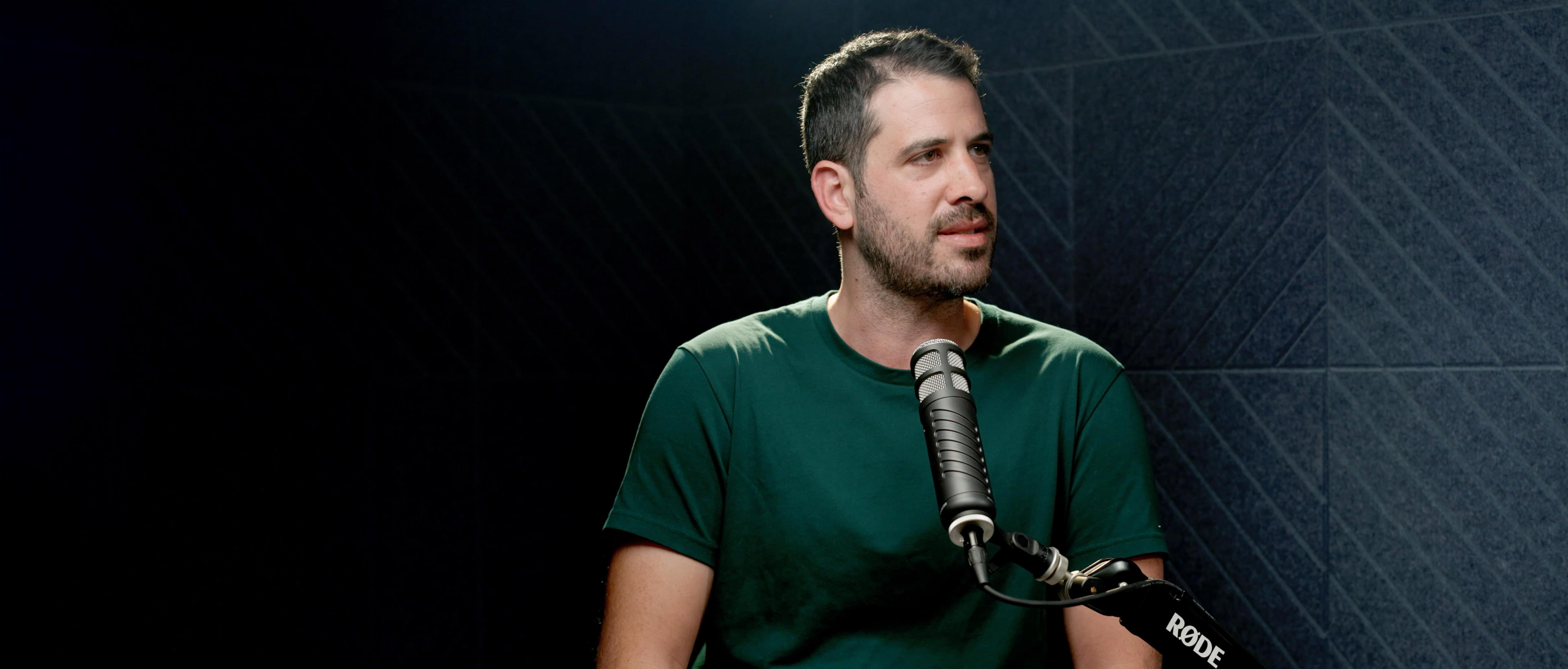
How can values create value? On this podcast, Michael Eisenberg talks with business leaders and venture capitalists to explore the values and purpose behind their businesses, the impact technology can have on humanity, and the humanity behind digitization.
Assaf Elovic Takes on the SMB AI Revolution
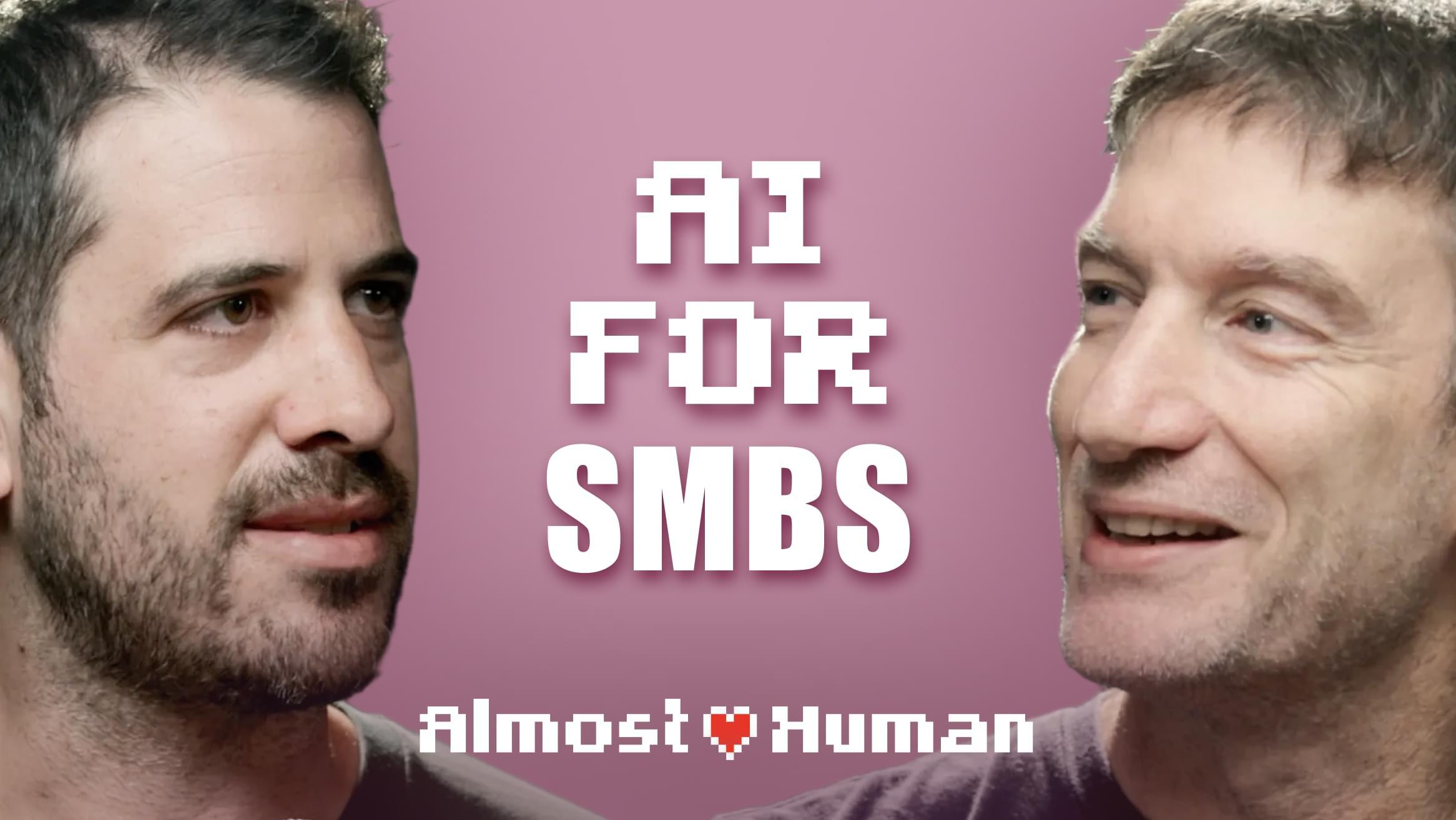
- [00:00:00] Intro: “SMBs are the biggest AI opportunity” and Monday’s AI trust breakthrough
- [00:00:48] Meet Assaf Elovic, Head of AI at Monday.com and how his job sits at the AI × SMB crossroads
- [00:01:25] What “Head of AI” means at Monday: from 0→1 startup inside the company to building an AI platform for everyone
- [00:03:06] Culture over tooling – AI Champions, AI Month, and creating bottom-up AI FOMO across the org
- [00:04:47] “AI is 10% model, 90% workflows and culture” and why SMB spreadsheets signal massive opportunity
- [00:05:19] Why SMBs are a dream AI customer: limited resources, infinite workflows, and Monday’s Agent Factory
- [00:08:39] The problem with chat UIs: restaurant-without-a-menu, unknown limits, and fear of being wrong
- [00:10:36] Monday’s failed AI chat assistant: how they measured adoption, retention, and why they killed it
- [00:11:52] Enter AI Blocks – embedding AI directly in boards, instant value, and the trust problem when it’s “only” 90% right
- [00:13:27] Explainability + feedback: closing the 360° loop and turning AI Blocks into a product users actually trust
- [00:15:39] Business-first AI research – starting from user problems, not “cool capabilities”
- [00:18:13] Risk analysis gone wrong: LLM hallucinations, subjective risk by industry, and moving to smaller, domain-tuned models
- [00:21:12] Eden’s 3 questions for SMBs and how to define Monday.com as a “job role,” not just a product
- [00:22:12] Advice for new AI startups: pick one painful, repetitive workflow (like event scheduling) and own it end-to-end
- [00:22:34] Scraping Gmail as startup-only superpower for workflow discovery
- [00:23:09] Why voice agents are Assaf’s #1 startup idea: near-human quality, 24/7, multi-language, zero churn
- [00:24:27] Niche to network: starting with one ultra-specific workflow and expanding into multi-agent businesses
- [00:25:01] Outro: AI that does the work, not just manages it, and how founders can ride the SMB AI wave
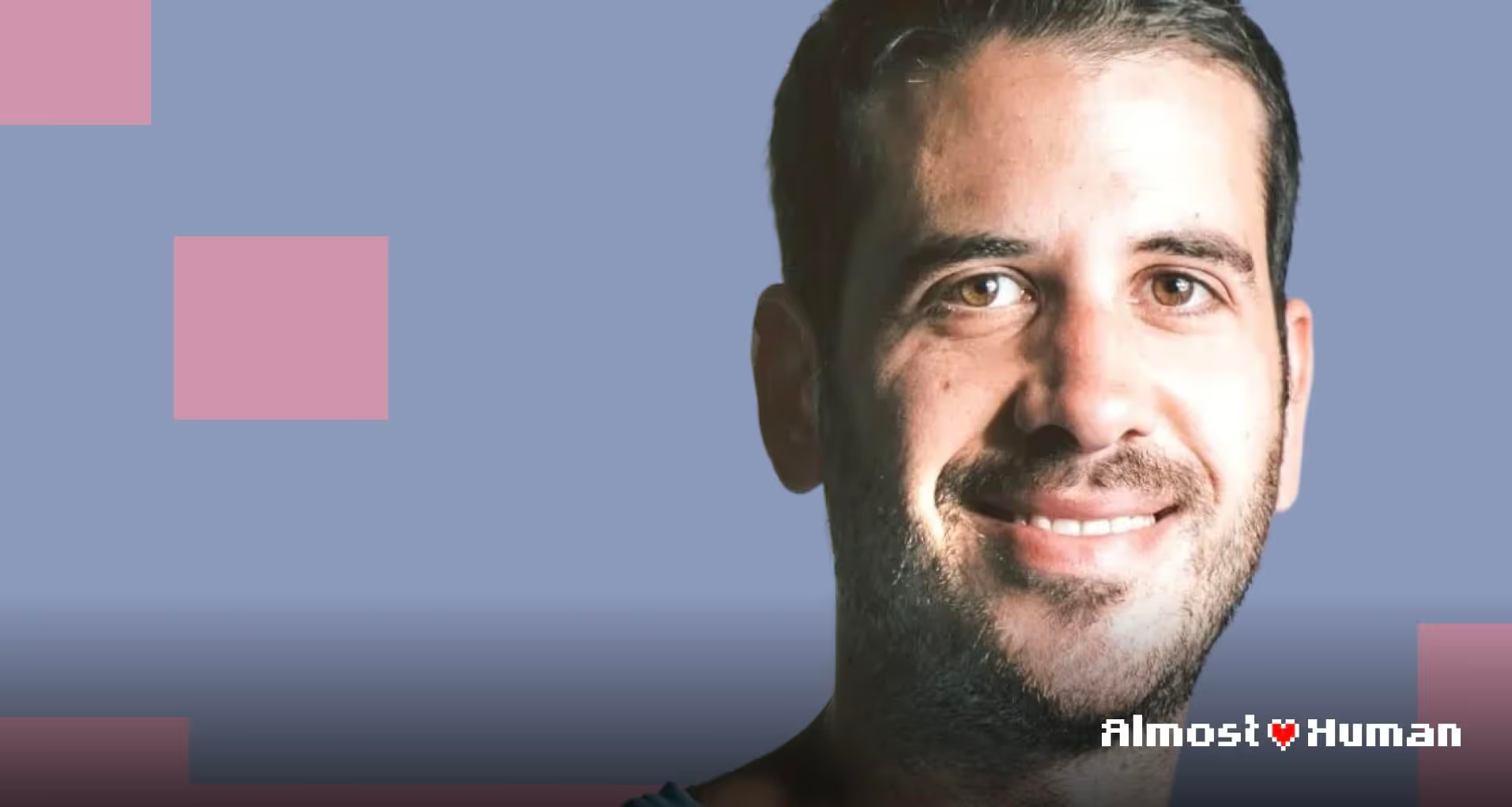
What does “Head of AI” actually mean inside a company like Monday.com and why are SMBs such an insane AI opportunity?
In this episode, Eden talks with Assaf Elovic, Head of AI at Monday.com, about bringing a massive SaaS company from “almost no AI” to AI products that ship real value across millions of users. Assaf shares how his role evolved from a 0→1 “startup inside Monday” to building an internal AI platform and culture the whole company can build on.
They break down why AI is 10% model, 90% workflows and culture, and why SMBs don’t need more magical chatbots - they need AI that is transparent, constrained, and deeply tied to the way they already work. Assaf walks through Monday’s first failed AI co-pilot, why users didn’t know what to ask, and how they reversed course by killing the chat, embedding AI Blocks directly into boards, and then adding explainability and feedback to rebuild trust.
From there, they zoom out to how Monday runs AI internally: AI Champions across departments, an “AI month” where everyone paused roadmaps to build AI, and a bottom-up culture where people share new papers and tools because they’re genuinely afraid to miss the next unlock.
For founders, Assaf and Eden get tactical:
- Why risk analysis with generic LLMs backfired and what it taught them about subjective risk and domain-specific models
- How to think “business problem → research task → product,” instead of doing cool research and hoping it lands
- A simple framework for interviewing SMBs and finding a first workflow worth automating
- Why a two-person startup today should be obsessed with voice agents and narrow, high-value workflows
If you’re building AI for real businesses, especially SMBs, this episode is a playbook on turning research into product, closing the trust loop with users, and using AI to actually do the work, not just manage it.
Please rate this episode 5 stars wherever you stream your podcasts!
00:00:00 Assaf Elovic
SMBs is maybe the most incredible opportunity we see in AI with this disruption. The first version of it didn't go that well.
00:00:07 Eden Shochat
Why?
00:00:08 Assaf Elovic
Because they don't know what to ask. They don't know what it can do.
00:00:12 Eden Shochat
I understand why it made the mistake. Would that work or not?
00:00:15 Assaf Elovic
That was the big shift. Once we did that, once we closed the loop, this is where we unlocked, I think the huge, the biggest trust with our users. And now we're billions in ER and. And adoption is skyrocketing.
00:00:48 Eden Shochat
I'm joined today by Asaf Elovik, right, head of AI@Monday.com, one of my favorite companies in Israel. And actually historically I was the first seed investor 15 years back. Like, who can believe that your job sits at an amazing crossroad, right? The SMB and AI revolution of empowering and enabling SMBs.
00:01:12 Assaf Elovic
How should we be thinking what is ahead of AI?
00:01:16 Eden Shochat
Right? And we have 50 portfolio companies. Head of AI would mean very different things in different companies. What is it at Monday?
00:01:25 Assaf Elovic
I think it's a great question and it really depends on the timing of when you join or what you do as the company matures in the AI space. So for example, when I started at Monday, we had very little AI generally at the company. So my position was more.
00:01:41 Eden Shochat
Wait, when was that?
00:01:42 Assaf Elovic
That was a year and a half ago.
00:01:43 Eden Shochat
Okay.
00:01:44 Assaf Elovic
And my position was more to bring the company from 0 to 1 in terms of building an AI product for our users. So I managed all cross team domains from product engineering, research, go to market, marketing, design. We built a startup within Monday to build a product that was the AI blocks we released a year ago. So that was hit of AI back then. If you fast forward to today, we are in much bigger problems and challenges in terms of scale. So once you go from 0 to 1, the company cannot scale with a small team building AI if it wants to compete with a huge market, we need to be able to have AI being developed all across the company, both internally and externally. So today the position is more about expanding knowledge, you know, promoting how everyone at Monday builds AI and how can we as a team support in any way we can? So today I'm managing the platform for how every team can build using AI. We're still doing zero to ones in cases where we want.
00:02:46 Eden Shochat
Let's turn that into a textbook, right? I get something, a privilege that probably you also have like 15% of my day is reading AI papers. Right. Other people can't. How do you disseminate information? Like what's the textbook of pushing Knowledge of the changes that are happening in AI in a company overall and Monday specifically.
00:03:06 Assaf Elovic
It's about culture more than anything else. I mean, we could talk about operational things that we do. So, for example, we have the AI Champions program is basically where we have seeds from every single department. Rather, it's product engineering and marketing, etc. Where there are selected group of people who sit once a week and share knowledge. And that's how we kind of make sure that everyone are aligned, at least in the high level of what it is that we're learning, what is important to learn and know about new technologies, new disruptions, new ways of working. We had an AI month where we actually did a cross. We said we're stopping everything, we're stopping our roadmaps, which obviously is a big company is super risky. And now everyone are doing only AI. So those are the kind of things you can do. But I think culture is more important than anything. I think if people just wait to get that knowledge from someone else, it's going to be very, very slow as a company because things are moving so fast. You want to be able to create a culture where people are constantly bottom up, trying to bring in new innovation, learning when they're drinking their coffee in the morning or when they're listening to a podcast on the way home. I think that is what we're trying to do. And for that we have this channel that we've opened a few months ago where we constantly push people to share updates of things they've learned and seen in the market. And I think what's interesting with those kind of approaches is that people get fomo. People feel like, hey, he's always posting, I'm never posting, maybe I should also post. And you kind of see how that kind of spreads around the organization. But I think bottom line, culture is more important than operations. And this is how we're trying to tackle it moving forward.
00:04:47 Eden Shochat
So AI is 10% model, 90% workflows and culture.
00:04:51 Assaf Elovic
Yes.
00:04:52 Eden Shochat
A sentence I love for many, many years is your spreadsheets are my opportunity. Right. It's effectively, if you think of an SMB, each has 8, 10, 12 spreadsheets, anywhere from how they market, how they sell, what's their inventory. Each of those is a real opportunity. What are the things that you're seeing today? How do you better understand what is an opportunity with a given SMB?
00:05:19 Assaf Elovic
Wow. I think first of all, I have to say SMBs is maybe the most incredible opportunity we see in AI with this disruption. I mean, it's a huge Spectrum of value, right? So SMBs have limited budgets, they have limited resources. And we see two things where AI can like very high level can help. One is expanding the reach, being able to work as if they're a team of hundreds of people. So for example, we have our agent factory, which is a product we built to where you can build your own agents. And imagine that now any SMB in the world can define their own outreach agent that basically can just make cold calls as if they're humans, right? I mean, technology now with voice has become insane and these are things that they could never even do. So I think RSVP agent is a very big use case we're seeing. So think about the smallest MBAs around events. If it's like bars or yoga studio, all those like small, very SMBs have a lot of events going on. There's a lot of work around, you know, managing events from the, from the scheduling, from the booking, from, from the reminders. And you could do all that with very simple dedicated workflows with AI agents now, which is really reducing 80% of what they could have done without it. So I think that's one and the other part of it is it's just how much better they could become as an SMB. So one side of it is that, you know, as an enterprise, you have a person for everything, right? I'm surprised every single time when I meet people in Monday or, you know, previous companies, they're like, oh wow, there's, there's really one someone for everything. In SMBs, you only have very few people with very limited expertise and AI can help them expand their expertise. They can now understand things and do things they could not have done without, you know, external costs. So for example, anything from how to write, you know, simple legal documents to generating very powerful images and marketing campaigns. So we have one very strong use case we're seeing is where, let's say there's an SMB who wants to do a marketing campaign in 30 different languages. Up until today, the only way to do it is either they work locally within their ecosystem and their language, or they hire someone externally who they have to pay credit. I was shocked when I heard from interviewing users how much they pay for external marketing departments. Now they could just create AI blocks on Monday boards with a different kind of, you know, messaging and goals of what they want to achieve with this marketing campaign. And it automatically generates it to 30 different languages in all the different variants that are important for different countries. And now they can go globally. So from going local to Globally is an amazing way to expand. So I could talk about this for hours, but I think you can see how much passion I'm showing for them.
00:08:13 Eden Shochat
I think Monday in many ways is that realization, right? It's like custom spreadsheets are the background and kind of the history after the Pulse was kind of a chat system. One of the brilliance of OE is that he just realized that you'd need to translate spreadsheets into actionable code. But what's the missing step between a research paper that you read to something that you highlight as a potential product?
00:08:39 Assaf Elovic
At Monday, SMBs in particular, they do not, I mean, I'm talking from my experience, right? They do not understand how AI works.
00:08:50 Eden Shochat
They shouldn't.
00:08:50 Assaf Elovic
They shouldn't, right? And I think when you look at software before AI, then. You know, products are pretty explanatory. You know, you go into a product, you have the buttons, you have the, you see the limits, you kind of understand what you have to do. And with AI, especially conversational AI or like a co pilot that we've actually released a year ago that the first version of it didn't go that well. Is that they. Why it's because they don't know what to ask. They don't know what it can do. So I think there is a fear of trying out, there is a fear of getting, of it getting things wrong. So they're just scared of even, you know, writing something into that black hole, right? Because they don't know what's going to happen when on the other side of, of their request. And I think most importantly when you, you know, I have this joke I make about, you know, chat interfaces is that it's like going into a restaurant without a menu. Then the waiter comes in and you say, you know, I want, you know, chocolate cake. And she says, we don't have that. Like, well, okay, so can you give me, you know what I want a burger. We don't have that. You know, just give me just a guess. Exactly. And then. So you're disappointed. Maybe they have the best cheesecake in the country, but by the time you get to the cheesecake as a, as a client, you're disappointed because. So I think the same happens with chat interfaces is basically if you don't know the limits and there's a 99%, you know, in the long tail, the infinite case of use cases, you have a 99% of not helping the user the way you expect it. So I think this is why it's so important when you're building products especially for SMBs is A. You want it to have to be transparent. You want to wait, wait, wait.
00:10:29 Eden Shochat
Before going to. Did you re release that feature? How did you re release it? What made it work?
00:10:36 Assaf Elovic
So we had our chat assistant and the first iteration of chat assistant was that it's going to help you do things on your Monday board. And it, you know, it failed, you know, very. As we just discussed. So what we did was we said.
00:10:50 Eden Shochat
Okay, let's fail this very little usage or nps. How do you measure it?
00:10:55 Assaf Elovic
So obviously, you know, retention adoption, you know, retention meaning do they come back after one conversation? Simple things like, like yes and no. Like did he like the conversation afterwards? Did. Did the AI eventually take action? Some action based on the conversation. We have a lot of different measurements for this. Obviously this itself is a whole science that we're still iterating on. The world is. Yeah, yeah. We actually went backwards. I think that was the biggest unlock we had. So we removed the chat, we said let's just do what we know how to do best and this user experience. And then we brought in the value through what we release is called AI blocks. AI blocks are basically. Imagine that when you know, you know, Monday boards. Oh yeah, I'm talking also for the audience. Like basically it's a table with lines and columns.
00:11:52 Eden Shochat
Spreadsheet.
00:11:53 Assaf Elovic
Spreadsheet. A nice beautiful spreadsheet.
00:11:55 Eden Shochat
Yes.
00:11:55 Assaf Elovic
Don't tell how to worry. So imagine that you have a board for incoming tickets or incoming reviews. So what you can do now is let's say you have a column where users would regularly define a sentiment or. So now we know how to automatically just tell you. All you do is click the button and we're going to do this automatically. So that was the first iteration. It already improved conversion by, I don't know, hundreds of percent because it was such simple and understandable value. Oh wow. This could be automatic from now. Like we even talk AI. It was just this could be automatic for you. So we saw increase. That was the first iteration. But then we saw churn. We saw many like people after adopting it, they disabled it. 50% disabled over time. So we talked with our users again and we realized that sometimes it was wrong. So let's say that out of 100 items, it was wrong in 10 of the items. It's enough that it was wrong. I mean it's credible to think that it automated 90% right, but the 10% it got wrong created lack of trust because it didn't understand why it was wrong. And then they realized that if it's wrong 10 times. It means I can't trust and have to review all by myself. I may as well just categorize it all by myself.
00:13:10 Eden Shochat
Do you think explainability would have helped? Meaning they could understand there's one way. Give feedback and have it improve. And we'll talk about that later. But even just explainability, would that be good enough for these customers in saying I understand why it made the mistake, would that work or not?
00:13:27 Assaf Elovic
We added an explainability feature. So now when you hover over a cell that was AI generated, you can just hover and then you get this nice text box where the AI explains why it made the decision it made. So when we did that, we didn't see a much better improvement, surprisingly. So we went back to our users, talked to them again, and we learned that. It gave them more trust in how AI makes decisions. But if without the capability of giving it feedback, what's the point? So we added the feedback feature. So basically when you hover the cell and you see the explainability, you could click another button that kind of gives it feedback and that automatically goes back to the AI to improve the original prompt or instructions that were originally defined. That was the big shift. Once we did that, once we closed the loop, the 360 loop from immediate value, I understand how it came to the outcomes. I can now give feedback on the outcomes. This is where we unlocked, I think the huge, the biggest trust with our users. And now we're, I mean we're, I mean, millions in error and adoption is skyrocketing around that phase.
00:14:41 Eden Shochat
So two things. First, chat, what we've found in portfolio companies is a great way to discover what the users actually want. You have the issue that they might be unhappy, right? Because it doesn't actually do that, but it's a great discovery vehicle. But other than that, we haven't seen chat work in almost any company. So it's actually really interesting product discovery capability. But if I go back to what you're saying, at the core there is a research, say reinforcement learning that is very useful in order to do ongoing training and ongoing discovery of what the users actually want and tune the model. But how do you take such a research paper and bring it into product? How did that work? How did you inform people like the product management that there is that capability or did they assume it exists? How did that work organizationally?
00:15:39 Assaf Elovic
Monday, we've always been and sound like cliche, right? We've always been 100% business driven. So no research we do ever comes from, hey, maybe this is cool tech. We can, I don't know, we never talk capabilities. This is something that I've also learned as part of the company. So it always starts from a business problem. Okay, so even in this case we had the business problem of users do not understand how the AI works. This then becomes a research task. How can we using AI help them understand what happened? And then the research team works, you know, for whatever time they need to bring a good solution to the table. Sometimes two options. And then we test that from a product perspective. Here's a great example for how research and product align. We released also a year ago a risk analysis feature. So basically users could that have this very nice. Summary of the risk in a certain project, right? So we wanted to do that feature. We thought it would be huge for our users. So we went to a research team and say, okay, we wanted to detect risks in projects, good luck. Then the research team starts to work and we brought that back to our users. What we did was we used LLMs to kind of take all the different entry points, data points, and kind of generate the kind of risk at once. But then we learned a very hard truth which was LLMs are always here to satisfy us. And no matter what, no matter how much prompt engineering you do, they'll always write risks. And then we brought it back as a product and we saw huge churn. What happened was, is that users tried once they see risks that don't really give them value or like, oh really, I could have known sometimes they would hallucinate, they would make up risks that aren't even there. Is this creating more anxiety for managers? Not the opposite. So now we're back at research. Now we're thinking, you know, we understand from this many things, one is that risk is subjective, meaning that risk for health is different than risk for software companies, which is different than risk for finance companies. For example, there is some would care more about budget, while some would care but more about timelines. And, and for this we are now doing very interesting research on how do we take small LLMs, train them, fine tune them on specific industries and then where we know the subjective risks that could happen. And then we kind of, you know, based on the users route that.
00:18:13 Eden Shochat
So there's a great episode with Liran Tam, highly recommended about meta learning. It seems like an ideal solution to that. Meaning you want a distribution that is general for your customers, but then with very little data about that specific customer, it's able to learn very quickly even from 10, 20 samples, which I think could be Huge. So one framework I see useful with SMBs is asking three questions. If you could hire 10 more employees today, who would those be? That's one. What would be the job description or roles and responsibility of that product? Say Monday. Right. And if I give you a magic wand right now, what could double your business? Right. So three questions. That's what SMBs care about. They want more customers, they want better service. Right. And they want to be able to provide the level of service that enterprise could provide. If I think about this framework, like how would you define the job description of Monday.com, like as. As a. Instead of product? Had it been a person. What would be their roles and responsibilities?
00:19:29 Assaf Elovic
I mean the easy nave answer would be a project manager. Right? I mean, I think what Monday, when you look at Monday from a software perspective, is basically how you manage work across different departments, CRM, service and so on. So basically what you want is someone who knows how to look multi, multi company, run a different departments and know how to orchestrate and manage that work. Which is also by the way another, another interesting research we're doing right now is how we can, you know, you know, compound what we have, which is a multi platform and have AI kind of help teams across the organization.
00:20:05 Eden Shochat
So effectively that changed your roadmap in saying that's a role that we can take or should take, right?
00:20:12 Assaf Elovic
Yeah, yeah. We definitely, by the way, as a company of, of shifted our strategy from managing work to doing the work. Like we, this is a lot of how we, even in the work management space where we have, we had this very long roadmap around how can we have humans in different departments and manage, help manage their work. We're now thinking about how we can just do the work for them. And that's another great example. If you have an operations manager at a company whose 90% of his job is working on Monday, then we're potentially trying to create that role of an operations manager who could just orchestrate the work across the organization.
00:20:51 Eden Shochat
So shout out to the OUD who asked me to ask this question. So when a small team is starting from zero, they have nothing. It's a new startup, right? Limited resources, no data, no ML team. Where should they look first? What's the first thing that they should do when they interview an SMB thinking what kind of value can they provide?
00:21:12 Assaf Elovic
They should look, they should find a Persona and understand based on that Persona what is a very heavy iterative workflow or task that that Persona does on a daily basis and just build the best workflow for that and there's so many, there's. There's millions of opportunities. Right. I think as we said earlier about event scheduling, event scheduling, you know, if I was to know do a 0 to 1 now in AI space I would probably find something like that. Like how can I just make scheduling a solved task for SMBs like end to end, like from booking reminders, support operational. Just do that end to end. So I think that is like I think those very specific workflows is something that no big company would probably tackle obviously. And on the other hand it just goes side by side with AI advancements so it probably your workflow will only improve over time as you kind of models improve.
00:22:12 Eden Shochat
One piece of advice that only startups can do Monday can't or should not. You can scrape Gmail inbox in order to understand what are the processes that a company that the SMB has. Where does it slow down? Who do they depend on just. And that's one of the best product discoveries especially because now LLMs can read through all that data.
00:22:34 Assaf Elovic
Right.
00:22:35 Eden Shochat
Something I just didn't exist before. So let's wrap with something tactical. What are the things that you are most excited about recently in research that can drive a workflow for a startup, for a new startup by automated AI pricing completely different. You can actually price something as your customers want. So if you were to leave Monday now and start that two person company. What'S most exciting for you? Like where would you do it?
00:23:09 Assaf Elovic
Definitely I would look into what I can do with voice agents is number one. Like my discovery with voice agents is that we came. We're now at the time where they're almost in my opinion almost as good as humans, maybe even better.
00:23:23 Eden Shochat
Yeah, they can speak multiple languages. You're not limited by number of people.
00:23:27 Assaf Elovic
Right? They can unfortunately they can understand people better than I can understand people.
00:23:33 Eden Shochat
They don't churn. You don't need to replace them every two weeks.
00:23:36 Assaf Elovic
Right. They're always happy you can choose the voice and they're always on their best day. Right. And there is so many unlock in that area. I mean when you think so as I think it does relate to what I said earlier. But workflows is I met for example I met this founder who is now working on how to help create this outbound sales for family activity. Family activity events happening after school. The thing that's exciting about AI in general is personalization and memory and all these things that we haven't discussed. But imagine that you could learn a family, learn their needs and then over time you can go back and and Taylor made, you know, the experience and obviously this would definitely increase, you know, the conversion increase.
00:24:27 Eden Shochat
It goes back to the if I could hire 10 people tomorrow. Right, you would hire people that organize these kind of events for the families.
00:24:36 Assaf Elovic
Exactly.
00:24:38 Eden Shochat
And I love it.
00:24:39 Assaf Elovic
And just that, you know, now you start this super, super niche vertical where you just do that workflow. Amazing. And then you start to expand over these other agents. Now you're building a company with multi agents and exactly as you said. Now they're all working together from A to Z completing an entire business problem for what they need to do start.
00:24:57 Eden Shochat
With one workflow not with a vertical.
00:24:59 Assaf Elovic
Exactly.
00:25:01 Eden Shochat
Thank you so much. This was awesome. I'm Aidan Shorrat. Thanks for listening. Until the next episode of Almost Human. If you want to provide feedback you can always email us almosthuman@aleph.vc
Follow Assaf Elovic on LinkedIn: https://www.linkedin.com/in/assafe/?originalSubdomain=il
Follow Assaf Elovic on X:https://x.com/assaf_elovic
Keep up with Almost Human here: https://www.aleph.vc/almost-human
Follow Almost Human on Instagram: https://www.instagram.com/thealmosthumanpodcast/?hl=he
Learn more about Aleph: aleph.vc
Sign up for Aleph’s monthly email newsletter: https://newsletter.aleph.vc/
Subscribe to our YouTube channel: https://www.youtube.com/@aleph-vc/
Follow Eden on X: https://x.com/eden
Follow Eden on LinkedIn: https://www.linkedin.com/in/edens/
Follow Aleph on X: https://x.com/aleph
Follow Aleph on LinkedIn: https://www.linkedin.com/company/aleph-vc/
Follow Aleph on Instagram: https://www.instagram.com/aleph.vc/
Follow Assaf Elovic on LinkedIn
Follow Assaf Elovic on X
Keep up with Almost Human
Follow Almost Human on Instagram
Learn more about Aleph
Subscribe to our YouTube channel
Follow Eden on Twitter
Follow Eden on LinkedIn
Follow Aleph on X
Follow Aleph on LinkedIn
Follow Aleph on Instagram
Monday.com, AI Blocks, Monday AI Assistant, Agent Factory, SMB automation, meta-learning, Liran Tam, Almost Human podcast, Aleph VC, Eden Shochat
Executive Producer: Erica Marom Chernofsky, Uri Ar
Producer: Dalit Merenfeld and Sofi Levak
Video and Editing: Nadav Elovic
Music and Creative Direction: Uri Ar
Content and Editorial: Dalit Merenfeld and Kira Goldring
Design: Uri Ar
Follow Assaf Elovic on LinkedIn: https://www.linkedin.com/in/assafe/?originalSubdomain=il
Follow Assaf Elovic on X:https://x.com/assaf_elovic
Keep up with Almost Human here: https://www.aleph.vc/almost-human
Follow Almost Human on Instagram: https://www.instagram.com/thealmosthumanpodcast/?hl=he
Learn more about Aleph: aleph.vc
Sign up for Aleph’s monthly email newsletter: https://newsletter.aleph.vc/
Subscribe to our YouTube channel: https://www.youtube.com/@aleph-vc/
Follow Eden on X: https://x.com/eden
Follow Eden on LinkedIn: https://www.linkedin.com/in/edens/
Follow Aleph on X: https://x.com/aleph
Follow Aleph on LinkedIn: https://www.linkedin.com/company/aleph-vc/
Follow Aleph on Instagram: https://www.instagram.com/aleph.vc/
Follow Assaf Elovic on LinkedIn
Follow Assaf Elovic on X
Keep up with Almost Human
Follow Almost Human on Instagram
Learn more about Aleph
Subscribe to our YouTube channel
Follow Eden on Twitter
Follow Eden on LinkedIn
Follow Aleph on X
Follow Aleph on LinkedIn
Follow Aleph on Instagram
Monday.com, AI Blocks, Monday AI Assistant, Agent Factory, SMB automation, meta-learning, Liran Tam, Almost Human podcast, Aleph VC, Eden Shochat
Executive Producer: Erica Marom Chernofsky, Uri Ar
Producer: Dalit Merenfeld and Sofi Levak
Video and Editing: Nadav Elovic
Music and Creative Direction: Uri Ar
Content and Editorial: Dalit Merenfeld and Kira Goldring
Design: Uri Ar