Best of 2025

Special Episode: A Lookback on Some of the Strongest Business Leaders of 2025

How can values create value? On this podcast, Michael Eisenberg talks with business leaders and venture capitalists to explore the values and purpose behind their businesses, the impact technology can have on humanity, and the humanity behind digitization.

Subscribe and listen anywhere:

Best of 2025

Special Episode: A Lookback on Some of the Strongest Business Leaders of 2025

How can values create value? On this podcast, Michael Eisenberg talks with business leaders and venture capitalists to explore the values and purpose behind their businesses, the impact technology can have on humanity, and the humanity behind digitization.

Subscribe and listen anywhere:

Best of 2025

January 14, 2026

Best of 2025

January 14, 2026

Best of 2025

January 14, 2026

Best of 2025

January 14, 2026
Subscribe and listen anywhere:
KEY TOPICS

00:00 - Intro

00:46 – Gavin Baker: Why Global Warming Is a Solved Problem

03:54 – Sender Cohen on George Soros vs. Stan Druckenmiller

06:52 – Nas Daily: “Followers Are Dead”

07:45 – Noam Bardin’s Letter After Leaving Google

11:11 – Gali Arnon: the Genius Strategy for Growing Fiverr

13:01 – Micha Kaufman: Companies Don’t Owe You Career Growth

17:19 – Omri Casspi: Life After the NBA

19:07 – Adam Fisher: Sacrificing a Million Users for the Next 10 Million

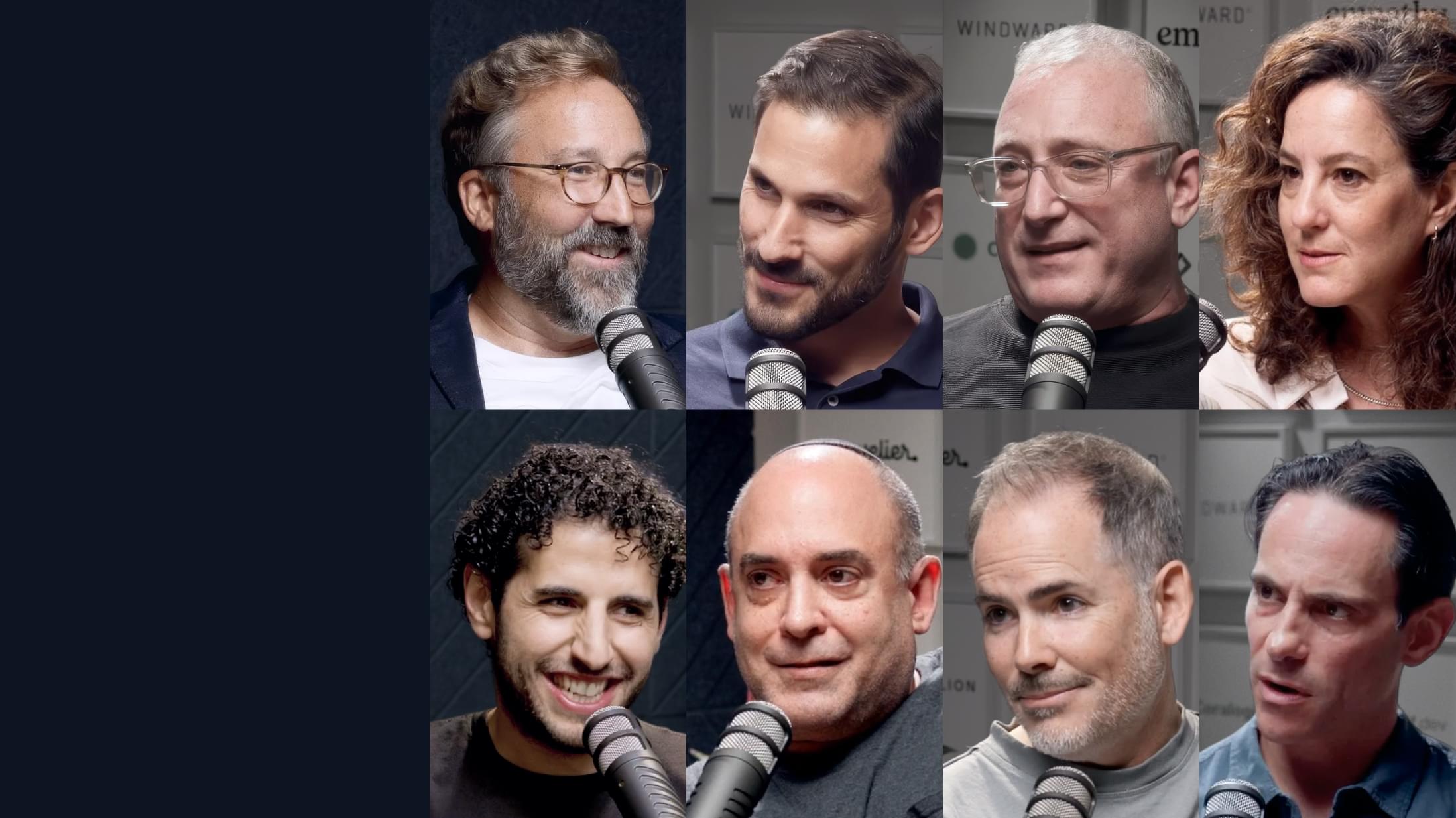
On this special episode of Invested, Michael Eisenberg curates the most compelling conversations and sharpest ideas from across our 2025 episodes. From Gavin Baker’s contrarian argument that climate change is already economically solved, to Nas Daily’s declaration that followers - and organic reach - are effectively dead, this episode captures the ideas that sparked the most debate, reflection, and conviction.

We revisit investing legends through Sender Cohen’s comparison of George Soros and Stan Druckenmiller, explore post-acquisition realities inside Big Tech with Noam Bardin’s unfiltered reflections on Google, and unpack how companies like Fiverr and Wix reinvent perception and scale by building boldly for their next ten million users.

Please rate this episode 5 stars wherever you stream your podcasts!

No transcript found

Michael Eisenberg (00:00)

Welcome to the best of Invested from 2025. This year, we covered everything from Gavin Baker’s contrarian take that climate is a solved problem—powered by solar, batteries, and maybe even fusion—to Nas Daily’s blunt claim that “followers are dead” and organic reach is over. We dug into big-league investing categories with Sender Cohen’s George Soros-vs.-Druckenmiller lessons, and went inside Big Tech culture with Noam Bardin’s post-Google letter and what it teaches founders after an acquisition. Along the way we hit brand reinvention, like Fiverr’s celebrity-powered repositioning, and the bold, sometimes uncomfortable decisions it takes to build for your next 10 million users. Here are the highlights. I hope you enjoy them.

I am thrilled to have my old friend Gavin Baker. Welcome, Gavin.

Gavin Baker (00:52)

Thank you, thank you, so excited to be here. 

Michael Eisenberg (00:53)

You mentioned that you think global warming and climate is actually a big issue, but you think it's solved.

Gavin Baker:

I agree. 

Michael Eisenberg: 

Because of solar? 

Gavin Baker: 

Because of solar and batteries. God forbid one of these fusion companies works. And it seems like one of them might probably will. I don't know which one, but yeah, I think believing in global warming is a problem because it became part of an ideology. And if you just look at the facts in the data around what is happening with solar and batteries, like it’s very–the world is going to run on natural sunlight in my lifetime. I mean, in America–

Michael Eisenberg: 

That’s a big statement. The world is going to run on natural solar, fully in your lifetime.

Gavin Baker: 

Maybe my children's lifetime, if I want to hedge. But I mean, it's economics. It's just economics. Every year it gets cheaper, and essentially every other source of power gets more expensive. And definitionally, all power comes from the sun. Fossil fuels are just stored sunlight. Nuclear is just artificial sunlight. Actual sunlight plus batteries, it really can, and I think will get you there. I mean, in America, we are back to 1920 levels of emissions on a per capita basis. I think it's very hard to understand math, look at the charts of what's happening with solar from a cost perspective, and a deployment perspective, and be really worried about global warming.

Michael Eisenberg:

China was a big part of that, I think is fair to say, right? Because of economics.

Gavin Baker: 

100%, because of economics. Yeah, they needed–China does not have domestic fossil fuels. 

Michael Eisenberg: 

Right. Absolutely. They needed a lot of oil. 

Gavin Baker: 

So yeah, that's why A. they went so hard on solar and batteries and B. they went so hard on EVs. Because for them, it was a national security issue, their dependence on oil shipments from other places. So yeah, I think the world's gonna run on sunlight. I'm a committed environmentalist. I love to be outdoors, but I genuinely believe global warming is a solved problem. 

Michael Eisenberg: 

In your lifetime, or your kids’, to hedge.

Gavin Baker:

The trend is it's just–it's the boulder has started rolling down the hill. It's rolling down the right path, and it's going to take you there. Just economics. Elon did more for this planet in decarbonizing it than all of the activists and the Greta Thunbergs combined. Those crazy people who are splashing paint on paintings–they make people you want to go buy a big rig. They don't do anything useful. Elon did something useful. If you care about the planet, and you care about global warming, you just have to be pro-Elon.

Michael Eisenberg: 

I'm here with Sender Cohen. First podcast, welcome Sender. 

Sender Cohen (03:59)

Thank you. 

Michael Eisenberg: 

You spent years at George Soros. 

Sender Cohen: 

Yep. 

Michael Eisenberg: 

What's the big thing you took away from him?


Sender Cohen: 

The great similarity that George and Stan have is, they're both able to distill things down to a very simple concept. The big difference between George and Stan, I think it was actually Scott Bessent who said this, to paraphrase him–

Michael Eisenberg: 

Now nominated to be the–

Sender Cohen: 

Treasury Secretary–and I think you heard Scott at the last, we're about to host something together; at the last one, Scott and Stan started off the day for us, which was a lot of fun.


Scott once said that George can get into the mess. The market's a mess, and he knows to get out, right? And most people don't know how to get out of that mess. Stan never even gets in the mess in the first place. I daresay even on this podcast and I don't know, you know, on the public sphere–Stan is a better investor than George.


He just has a skill that I think is unique and second to none, but that's like comparing, you know, as I say that he's better than George, and I very much think he is a much better investor than George, certainly at size. He's shown an ability that few have shown.


If I knew sports, I'd compare it to when you realize the great nations–

Michael Eisenberg: 

LeBron James and Michael Jordan?

Sender Cohen: 

There you go. LeBron James and Michael Jordan. 


Michael Eisenberg: 

Each person will decide whether George is LeBron James or Michael Jordan, or whether Stan is LeBron James or Michael Jordan.


Sender Cohen: 

Yeah. I like that. But yeah, Stan is a very unique talent. 

Michael Eisenberg: 

I sense also their politics are pretty different. 

Sender Cohen: 

They are quite different. They are quite different. But despite the difference in their politics, one thing that I always think about, especially in today's fractured times, is the way that they're both focused on helping people.


George comes from the far left. Stan, he's not by any stretch far right. I think he's classified, classifies himself as an independent. But he just stepped down as chairman of Blue Meridian, which is one of the most amazing organizations in helping underprivileged people in America that exists today. I mean, it's an absolute powerhouse. You look at the list of multi-cent of billionaires, whatever the term is these days, that are involved in this incredible–that was all Stan's doing, pulling them all together.


Michael Eisenberg: 

Amazing. And how would you describe your investing style, having been both at Soros and with Stan?


Sender Cohen: 

My investing style is a bit different. I'm not a really great investor, and I say that with complete sincerity. It's true. What I'm very good at is figuring out a trend or an area to be in, and finding the right people to do that. That's what I'm good at. I'm not good at underwriting a specific security; I am good at underwriting a person, and I'm good at underwriting a theme or a trend and putting that person together with the theme or the trend.

Michael Eisenberg: 

You're like one of the OG content creators of all time.

Nuseir Yassin: 

Yes, sir. 

Michael Eisenberg: 

Is that fair? 

Nuseir Yassin: 

I think that's fair.

Michael Eisenberg: 

You're very humble too.

Nuseir Yassin: 

Organic content is dead. 

Michael Eisenberg:

What does that mean? 

Nuseir Yassin: 

Followers are dead. I came here at the beginning of the show and I lied to you. I said I have 70 million followers. That is one giant lie, and I'm so comfortable saying it to everybody, because no one knows it's a lie. The concept of followers does not exist anymore. If you want to sell something on the internet, you cannot sell to your followers, because you cannot access them, because the algorithm blocks you. So you could have 100,000 followers as Aleph, VC, and then

one day you make a video saying, ‘Please buy my t-shirt.’ You'll get 2,000 views. 2%. And 98% will not see it. So do you have 100,000 followers or do you not? You do not.

Michael Eisenberg:

I am thrilled to have Noam Bardin with us. Welcome Noam. 

Noam Bardin: 

Thank you. 

Michael Eisenberg: 

So you left Google, and you penned a flame, a letter. What's the right way to describe it? Tell everyone what you did, what the letter said, basically. 

Noam Bardin (08:05)

So I left Google, and all kinds of people were asking me why I left, whatever. And I thought, let's put my thoughts down on paper. And I never had any idea what was going to happen.

If I had, I would have ended it differently. I would have thought about what I'm saying, whatever, but I just wrote what I thought, and published it, and literally the world exploded the next day. 

Michael Eisenberg: 

Because what did the letter say? 

Noam Bardin: 

So basically I was commenting about the culture at Google, and the mismatch of culture with a startup. And a lot of people read it the wrong way, but the way I looked at it–I naively felt that I wanted to make an impact on Google coming in. You know, we startup people think we can do everything, and we can change everything. And I thought I was going to make this big impact on Google.

And I went out and basically fought some windmills around that, and realized at the end that it really is kind of the nature of the beast. It's not something that's fixable. That's what it is. That's your nature. A corporation has a certain nature to it. And, you know, today when, just a side note, a lot of entrepreneurs talk to me, they've just sold their company to the corporation and then they read my note, and they're like, “Wow, this is really something.”

And what I tell them is, “What you need to do is to get out as fast as possible. What you're doing is actually damaging your team. When you're trying to fight to keep it separate, trying to preserve your values and your culture. You've sold your company. It's not yours. Now you've got to–the faster you come to terms with that, the better it's going to be for your team, for the acquiring company, et cetera.”

I fought very, very hard to keep Waze independent. I also tried very hard to change things at Google, and ended up losing on all those battles. 

Michael Eisenberg:

What was your description of the culture of Google? 

Noam Bardin: 

It's complicated. I think Google is an extreme case of a corporation, because it has literally unlimited amounts of money coming from a very small team in the company, a small percentage–

Michael Eisenberg:

The ads business. 

Noam Bardin: 

The ads business, search ads, that's where the money comes in at the end of the day, and everyone else can live this imaginary life that they matter. And frankly, they don't, from a financial perspective.

Michael Eisenberg:

The greatest business model of all time funds all of these great ventures. 

Noam Bardin: 

Of course. They would argue they're not a monopoly, and they're not dumping, and all these kinds of arguments. Bottom line is, we all know what's going on, right? They have this great monopoly, best monopoly ever, creating tremendous profits. They're using that to build all kinds of stuff, giving away for free, that nobody else can compete with. 

The problem, from a culture perspective–what happens is that people begin believing in what they're saying. So this idea of OKRs, right? I make up some goals, which are not connected to sales, because there's no money.

So there's no real external impetus. And I believe that until money transfers hands, nothing happened. So at that point, we're all just talking and loving each other, right? And then when you try to sell something is when you discover what your product's really worth, right? And so you can make up these OKRs and obviously hit 80 percent of them because you made them up, right? And feel really good about yourself doing it. And at the same time, it creates this culture of exceptionalism–without being exceptional. 

Michael Eisenberg:

I am thrilled to be here with Gali Arnon. Welcome, Gali.

Gali Arnon (11:19)

Hi, I'm thrilled to be here. 

We want people to know that you can actually buy good stuff on Fiverr. So we hired Rob Janoff. Do you know who Rob Janoff is? 

Michael Eisenberg: 

I don't.

Gali Arnon: 

Alright. So he's the designer who designed the Apple logo. Do you know the Apple logo? I'm sure you do. So he worked with Steve Jobs to design the Apple logo. And then we said, “Let's bring him on the platform for a month to kind of offer a limited edition of his logos on Fiverr, for $10,000. But he will do it for a month, and we'll do a whole campaign around it. And people will actually say, ‘Well, we can buy a logo on Fiverr from the same guy who actually designed the Apple logo? Well, maybe it's not as low quality as I thought.’” 

Michael Eisenberg:

That's actually an amazing idea.

Gali Arnon:

Then we did a whole design event in New York around it, and we invited designers. He was on stage, he told his story on how he worked with Steve Jobs and all of it. That was the first move. And then we decided, well, it's working and let's do it in other categories.

We brought Wyclef Jean for the music category, and we bought Eli Roth, which was a horror show, in the horror show business, film business in Hollywood, to do the video editing limited edition. And then we went on and on with different celebrities in different categories and it worked really, really well. And then we did so many other things. And as I said, it was climbing a mountain, but the vision was very clear. There was many different things we did in order to get there. And I think we actually did.

Michael Eisenberg:

You know what I need to ask you now, right? Who is the celebrity for the love potion?

Gali Arnon: 

Martha Stewart. 

Michael Eisenberg (13:10)

I’m super excited to be here today, back on Invested with Micha Kaufman, Founder and CEO of Fiverr. Micha, welcome. 

Micha Kaufman (13:17)

Thank you, thanks for having me. 

This notion that your workplace is responsible for making you better–where on earth did you get that idea from? Who's responsible for making you a better person, a better spouse, a better parent? Why am I responsible for your professional capabilities? Fuck you. Seriously. Like, I'll help anyone who helps themselves. But if you look for me to educate you about AI, you're doomed. You're done. You're done. And your problem is, you're not done at Fiverr, you're done period. There will be no demand for lazy people that expect the world, or think that the world owes them anything.” 

Michael Eisenberg: 

I think if you look at corporate America right now, particularly Howard Schulz's Starbucks, he's sending the baristas for college education, I think many of these companies have in-house training to try to make people better. I think your view is not popular.

Micha Kaufman:

How's that going?

Michael Eisenberg: 

I think your view is not popular. 

Micha Kaufman: 

I don’t care. 

Michael Eisenberg:

I think it's related to the previous thing you said, which is freelancers are accelerating faster

than people in corporations, because they are expecting the corporate employer to train them. And you think, I think the point you're making very forcefully, and I wanna double click on it, is it's not working. That's a pipe dream. And so what should we do? Just tell people, figure it out on your own?

Micha Kaufman:

Absolutely, yes, it starts from that. Meaning, okay, so we had this meeting–

Michael Eisenberg: 

‘We’ is the company?

Micha Kaufman;

Yes. I sent this memo. It was very blunt. And I said, “Okay, it might come as a shock to you, and that's fine, but I'm here. If you wanna spend time with me, let's talk. And so I've asked my

my Chief of Staff to set up this space that could hold 70 people, whatever, 50 people. But I said, I'm just gonna take my laptop, and I'm just gonna work there for three hours. If someone wants to drop by, just sit with me, and let's have a chat. I went down to that room, there were 250 people cramping up. And I wasn't prepared to give a talk.

So we started having this discussion, and in one of the first questions, I said–so we had a long weekend. It was one of the holidays and it connected with a weekend. I said, “How many of you, because you've seen my memo like 10 days ago, how many of you spent one night of that very, very long weekend vibe coding, trying to figure out how to do proper prompting, just using different AI solutions? If you haven't, I can't help you. Like, fuck you, seriously. Like, I'm not gonna help you. I'm not going to help you. But if you're making the effort, if you wanna become better, if you feel that you're responsible to making yourself worth...then in that case we have a lot to work on. And everything that we obviously discover as individuals within the team is gonna be shared. It's gonna be shared with those who want and are interested in doing that.” 

And I think that this was a very important wake-up call for people. Because I've seen the transformation.

Michael Eisenberg (17:22)

I'm thrilled to be here with my friend, Omri Casspi.

Omri Casspi (17:28)

Good morning, thanks for having me. 

“You guys are gonna make a lot of money in the NBA. There's guys sitting courtside that make much more money than you. They're billionaires and multibillionaires, right? You play for the Warriors, you see Elon Musk, you see Mark Zuckerberg, right? Folks that are worth $200 billion. So try to get interactions with them, ask them questions, meet them for coffee.” 

Essentially like you prepare for a game, you know, in many ways. You can't come to a game and play against LeBron James, and expect just to show up and perform at the highest level, right? Because if you don't do the work, if you don't lift weights, if you don't shoot, if you don't wake up in the morning, and you stretch, and you massage, and you eat properly, and you prepare for a game, he's gonna crush you. He's gonna crush you most times anyway, even if you do all these things, right? But at the same time, if you do all these different things–so if like, you box out to a rebound, one thing coach always says, is, “Don't look at the ball, you know, go out and do the early work. Box out, put your body in the position, and then go get the rebound.” And then you can put yourself in position to get the rebound. It's the same way for retirement. And it's even more drastic in basketball players and professional athletes, and many, many, many athletes, you know, retiring. They really find it hard to find themselves in life after basketball, right? So you have to do the work early.

And one thing I tried to do at the time is to meet folks like yourself, and folks in real estate, and ask questions, and to pick their brain about different things, and strategies, and ask dumb questions. And while you're playing–I had a unique position, being the first basketball player from Israel, so folks were really nice, and I was fortunate to meet them even after basketball. 

Adam Fisher (19:10)

In the case of Wix, I saw two things that I really had not seen before in Israeli companies. The first was this marketing angle that they had. They were doing things that I'd never seen before, well in advance release of the product, of how to create–everything from buying their URL, a three letter URL back in 2007–but also various sites that were kind of building their SEO, and just already thinking about paid acquisition, which is something that again, I was not very familiar with. That was fresh. And that to me felt like somebody who was really thinking far ahead. 

The second thing I saw, and this actually helped, that I'm not technological, is the whole proposition that it shouldn't be that to create content on the web, you need to be a developer, or that you had to learn a specific kind of software. That didn't make sense to me. And I've always been one to say that if it can be made for non developers, or non technical people, then that is what will succeed. Because most people will always be non-developers.

So that's what I saw in it. It was admittedly a small investment. It was a two million dollar initial investment, with an option for another million. 

Michael Eisenberg: 

Back then, you could still do those kinds of deals. 

Adam Fisher: 

I had to overcome a lot of doubt. My partners really didn't like it. Because again, there was no traction. I don't mind saying this. The company did not present well at the time. 

Michael Eisenberg: 

So I have a similar story, by the way, when they came to see me–it was right at this point, and older listeners will appreciate this, when Flash was about to become obsolete, and Wix was originally built on Flash, and they walked in and started telling me “Don't worry about it. Our current platform is going away, but there's a thing called HTML5 that we'll just reconstruct everything.” And you're going, “They didn't really just say that in the presentation right? That the whole thing is going obviously, but don't worry, it's going to be okay.” And I actually admired the honesty on it but it was a tough kind of–

Adam Fisher (21:19)

Oh, they were always very transparent, right? I mean, there are a lot of things I learned from Wix over the years. I mean they were a magnet for talent. Whenever they saw somebody who was talented, they would find a way to find a position for them. It just didn't matter what the titles were. It was a company that didn't care about titles. They just wanted talent.

And so they became a magnet for all types–former founders, new ideas. I mean, Monday was spun out of Wix and all the different products. The second thing was being afraid to throw away what you've done. I mean that moved from Flash to HTML5–they literally said to 1 million users, “Fuck you, because we're not going to support you anymore.”

Now, they didn't use that language of course, but they said, “Listen, we care about the next 10 million users, not the first million.”

60 seconds with
Best of 2025
Show References

Subscribe to Invested

Learn more about Aleph

Subscribe to our YouTube channel

Follow Michael on Twitter

Follow Michael on LinkedIn

Follow Aleph on Twitter

‍Follow Aleph on LinkedIn

‍Follow Aleph on Instagram

Credits

Executive Producer: Erica Marom 

Producer: Sofi Levak, Myron Shneider, Dalit Merenfeld

Video and Editing: Ron Baranov, Nadav Elovic 

Music and Creative Direction: Uri Ar 

Content and Editorial: Kira Goldring

Design: Rony Karadi

60 seconds with
Best of 2025
Show References

Subscribe to Invested

Learn more about Aleph

Subscribe to our YouTube channel

Follow Michael on Twitter

Follow Michael on LinkedIn

Follow Aleph on Twitter

‍Follow Aleph on LinkedIn

‍Follow Aleph on Instagram

Credits

Executive Producer: Erica Marom 

Producer: Sofi Levak, Myron Shneider, Dalit Merenfeld

Video and Editing: Ron Baranov, Nadav Elovic 

Music and Creative Direction: Uri Ar 

Content and Editorial: Kira Goldring

Design: Rony Karadi

Latest Episodes

David Magerman on Building Renaissance Technologies, Why AI is “An Automatic Machine Gun We’re Giving Children,” and Sacrificing Relationships for Success

February 14, 2024

Founding Partner of Uncork Jeff Clavier on Being the First Seed Investor, When Your First LP is Your Wife, Passing on Uber & LinkedIn and the ‘3 Asses’ Rule

February 14, 2024

USVP GP Jacques Benkoski on What Entrepreneurs Get Wrong About Go to Market, Building Value as an Investor & Why ‘Crossing the Chasm’ is Outdated

February 14, 2024

Carta CEO Henry Ward on the Death of CartaX, a Controversial AI Take, Only Hiring Missionaries & the EQ Mistakes That Break Companies

February 14, 2024

Nuseir Yassin, AKA Nas Daily, on Being the First Israeli-Arab to Build a Unicorn, the Death of Organic Content & the New Marketing Playbook, and the Cost of Advocating for Peace Between Jews and Muslims

February 14, 2024

Gavin Baker, Managing Partner of Atreides, on Everything You Wanted to Know About Semiconductors & Why Global Warming is a Solved Problem

February 14, 2024

General Catalyst Co-Founder David Fialkow on Pitching VCs Through ‘Hot Buttons,’ Billion-Dollar Storytelling & Bringing Down a Cult

February 14, 2024

Mati Gill, CEO of AION Labs, on Funding Life-Saving Startups, Lessons From Working at Teva Pharmaceuticals in Crisis & Life After Getting Shot

February 14, 2024

Nir Zohar on His Evolution from Wix Coffee Maker to COO, Why the Wix Management Team Has Offsites in the Water, the Super Bowl Ad that Changed Everything and Why Wix Bought Base44–”One Guy”–for $80 Million

February 14, 2024

Gigi Levy-Weiss on How the Israeli Air Force is the Best Model for Running a Company, How Playtika Exploded Overnight by Accident, the Uncomfortable Truths About Working in Gambling, and the Coolest Companies in the NFX Portfolio

February 14, 2024

Fiverr CEO Micha Kaufman on How a Story in CNBC Beat Fiverr’s $8M Super Bowl Ad, the Right Way to Go Public, How Your Boss isn’t Responsible for Your Career, Why Freelancers Move Faster Than Employees, and How AI is Raising the Floor–not the Ceiling

February 14, 2024

From DNA to Star Trek: Samuel Arbesman on Reconciling Science with Tradition, Building Personalized “Sims” for Your Body, and What it Means to be a Scientist in VC

February 14, 2024

Dream Founders Shalev Hulio and Sebastian Kurz on How Dream Became the World’s Fastest-Growing Cyber Startup Within 18 Months, Building the First AI Native Cybersecurity Company, and Whether it’s Possible to Ethically Use Offensive Cyber

February 14, 2024

Israel <> Iran War: Special Episode of Invested

February 14, 2024

Ex-Fiverr Chief Business Officer Gali Arnon on the Strategy That Turned Fiverr From the Cheap Services Brand into the World’s Top Talent Marketplace, How the Role of the CMO Has Changed, and Making Your Mother-in-Law Proud

February 14, 2024

StarkWare Co-Founder Eli Ben-Sasson on the Future of Blockchain, Zero Knowledge (ZK) Proofs and How They “Solve Integrity” and Why We No Longer Have to Trust the Banks or Government

February 14, 2024

Katie Stanton on What You Never Heard About Obama, Operating Vs. Investing, Behind the Scenes at Twitter, Yahoo! and Google, and Using Your Network to Get Ahead

February 14, 2024

Benchmark GP Sarah Tavel on What She Learned at Bessemer, Greylock, Pinterest and Benchmark, Being an Operator vs. an Investor, and How to Create an AI Moat

February 14, 2024

Omri Casspi on Life After the NBA as a Venture Capitalist, Bringing Elon Musk to Israel, Sports Philosophy in Investing, Getting Founders to Trust Him, and the Story He Never Told Anyone | Invested

February 14, 2024

Amir Shevat on Growing Developer Relations at Google, Microsoft, Slack, Twitch and Twitter; the Future of Engineering; Getting Fired Overnight by Elon Musk & Publicly Calling Him Out

February 14, 2024

Ex-Amazon Dan Davidi on Replacing Fuel with His Company Ohr, Literally Reinventing Rocket Science, and Whether Synthetic Biology is Playing God

February 14, 2024

Ex-CEO of Waze Noam Bardin on What Really Happens at Google, Life After a Billion-Dollar Acquisition, Building the Ultimate Community-Based Business, and What No One Gets About OKRs

February 14, 2024

Investor Sender Cohen on Learnings From Working With Stan Druckenmiller and George Soros, TLV vs. Dubai, and Why He Pays Someone to Keep Him Off the Internet

February 14, 2024

Andreessen GP Katherine Boyle on the Battle for America’s Future, Why She Left Silicon Valley for Florida & Why it’s Good to be Bored in Church | Invested

February 14, 2024

Special Episode: Why TikTok Should be Banned in the U.S.

February 14, 2024

The Information Founder Jessica Lessin on Building the World’s Top Tech Media Outlet, Why Citizen Journalism Won’t Replace Traditional Media, and the Future of Journalism | Jessica Lessin on Invested

February 14, 2024

Vee Founder May Piamenta on Selling Her First Company at 16, Smuggling a Computer Onto an Army Base, Laying Off Her Entire Company and Knowing When to Pivot

February 14, 2024

Adam Fisher, Partner at Bessemer Venture Partners, on What it Takes to be a Great VC, Lessons from Wix and Fiverr, and Why Israel Should Let Go of the “Startup Nation” Narrative

February 14, 2024

Harvard Professor Roland Fryer on Relentlessly Pursuing Truth, ‘Closing Social Gaps with Market Caps,’ and Celebrating Failure

February 14, 2024

Harry Stebbings on Starting 20VC, Being Underestimated, Investing, and Wealth vs. Happiness

February 14, 2024

Yasmin Lukatz on Investing in a Time of War, Founding ICON, How to Make a Difference, and Being on Shark Tank

February 14, 2024

Yonatan Adiri on Stepping Down as CEO of Healthy.io, the Future of Healthcare, and What’s Next for Him - Part Two

February 14, 2024

AI Expert Oren Etzioni on How Deepfakes are Influencing Global Events, Our Moral Obligations Around AI & the Fight Against Disinformation | Invested

February 14, 2024

Yonatan Adiri on Founding Healthy.io, Challenges in HealthTech, and Working with Shimon Peres - Part One

February 14, 2024

Izhar Shay on Losing His Son Yaron Oree, the October 7th Attack, an Initiative for the Fallen, and Moving Forward

February 14, 2024

Yoav Shoham on What Machines Understand About Us, Leading AI in Israel & Stanford, AI21 Labs Innovations, and How We’re Wrong About AGI

February 14, 2024

Sam Lessin on What Entrepreneurs Don’t Realize About VCs, When the State Should Intervene with Tech, the Future of Crypto and the Evolution of Truth

February 14, 2024

Ami Daniel on the October 7th Massacre, Rescuing Survivors Using Tech, and Managing a Company During War

February 14, 2024

Matan Bar on Melio’s Humble Beginnings, The Power of Storytelling, Making Tough Decisions as a CEO, and Meeting George W. Bush

February 14, 2024

Marc Rowan on Having the Courage to Speak Up, Apollo’s Investing Strategy, Commitment to Israel, and Looking Ahead

February 14, 2024

Palantir Co-Founder Joe Lonsdale on Fixing America, Disrupting Defense Innovation & Building the University of Austin

February 14, 2024

Lior Eshkol on How Wolt Israel Became a Cultural Icon, the Essence of the Israeli Consumer & Navigating the Company Through Crisis

February 14, 2024

Jacob Helberg on the China Doomsday Scenario, the Dangers of Wokeism, and What America Needs to Win the Technological Arms Race

February 14, 2024

Eyal Waldman on Building Mellanox, Employing Palestinians and Israelis Together, and The Future of AI

February 14, 2024

Eyal Waldman on What Went Wrong on October 7th, His Personal Loss and Plan for Peace, and Mellanox’s Impact on AI

February 14, 2024

Jon Pelson on China's Influence, TikTok, Huawei and Different Values

February 14, 2024

Kathryn Mayne on VC, Investing in People, Taking Risks and Why Israel is Special

February 14, 2024

Daniel Schreiber on Storytelling, Good vs. Bad Investors, Running a Public Company

February 14, 2024

Russ Roberts on the Difficulty of Giving Good Advice, Work-Life Balance, Our Obsession with Productivity, Storytelling and Wild Problems

February 14, 2024

Jeff Swartz on Timberland, Social Impact, Philanthropy, Having Too Many Words and Lots of Dreams

February 14, 2024

Ron Gura on Empathy, Grief and Scaling Humanity

February 14, 2024

Aryeh Bourkoff on Empathy, Digital Communities, Relationships vs. Transactions, Being Self-Aware, Dreaming about Being Shy and Lazy

February 14, 2024

Stefan Tompson on Founding Visegrad24, Fake News, Fighting for Israel and the West

February 14, 2024

Bradley Tusk on Investing Like a Politician in Regulated Industries, the Flaws of Elite Education, and the Fragmented Future of America

February 14, 2024

Bradley Tusk on How to Save Democracy Before it’s Too Late, the Problem With Our Political Structures, and the Power of Mobile Voting

February 14, 2024

Ben Lang on Being Early at Notion, How to Build Community, Angel Investing and Taking Risks

February 14, 2024

Beezer Clarkson on How to Get a “Yes” from Investors, Advice to Young VCs, Fund Mission vs. Returns, and What Diversity Means in Venture

February 14, 2024

Alon Arvatz on the Future of Israeli Cybersecurity, Exiting Multiple Companies, Leaving Money on the Table, and Making Financial Literacy Accessible

February 14, 2024

Michael looks back on the incredible and tragic stories from October 7th within the Israeli tech ecosystem that were shared on the Invested podcast over the past year.

February 14, 2024

Barak Herscowitz on TikTok’s Anti-Israel Bias, the Memo That Got Leaked, Resigning From TikTok, and the Story Israel Needs to be Telling

February 14, 2024

Antonio Garcia-Martinez on the Hippie Influence over Silicon Valley, Behind the Scenes at Facebook, Writing ‘Chaos Monkeys’ and Founding Spindl

February 14, 2024

Alex Konrad on Covering Israeli & Gazan Tech, the Forbes Midas List, & Civic Resilience

February 14, 2024

Orit Farkash HaCohen on AI Regulation, Burnout, Israel’s Natural Gas Exploration, and Diversity in High-Tech

February 14, 2024

Recommended

placeholder image

New Space Meetup Join us for a meetup featuring the latest developments in Space tech and ventures, with speakers from the IDF, Utilis, Effe

February 14, 2024
placeholder image

Apply to Aleph.bet B2B Pricing

February 14, 2024
placeholder image

The Future of Talent Why is it so hard to recruit engineers? Maybe we’re going about it all wrong. Avishai Ish-Shalom, Aleph’s Engineer-in-R

February 14, 2024
placeholder image

HoneyBook Raises $28M Series C Read Michael Eisenberg’s blog post about HoneyBook’s journey to cracking a new market, now servicing solopren

February 14, 2024
placeholder image

Firewall Podcast Comes to Israel

February 14, 2024
placeholder image

Usability Testing 101

February 14, 2024
placeholder image

What I Hate About High Tech When Erica Marom joined Aleph, she fell in love with the energy of the Israeli high tech community. But as a for

February 14, 2024
placeholder image

Beyond Innovation Tourism

February 14, 2024
placeholder image

30 Time Management To-Dos We all struggle to manage our time better, so Eden Shochat has prepared a cheat sheet to ease our path to producti

February 14, 2024
placeholder image

A Seat at the Table As Nexar’s GM Mobility Solutions, Kate Balingit partners with the world’s largest auto manufacturers. She shares five le

February 14, 2024
placeholder image

Aleph III We are pleased to announce the closing of Aleph III, a $200 million fund, to continue partnering with great Israeli entrepreneurs

February 14, 2024
placeholder image

Aleph DreamBuilders Erica Marom shares the philosophy behind the creation of Aleph DreamBuilders, a new video series capturing our founders’

February 14, 2024
placeholder image

Don’t Bail Out Israeli Startups In an op-ed in Israeli newspaper Calcalist, Adam Fisher of Bessemer Venture Partners, Rona Segev of TLV Part

February 14, 2024
placeholder image

Dear Entrepreneur Amid the COVID-19 pandemic, Aleph Equal Partner Michael Eisenberg writes in an open letter that this is a time for empathy

February 14, 2024
placeholder image

The Houseparty Exit A year on, Eden Shochat shares a personal perspective on the sale of Houseparty, why exits are not black and white, and

February 14, 2024
placeholder image

$LMND — Aleph’s First IPO Lemonade is a meaningful company with values at its core, a reflection of its founders, Daniel Schreiber and Shai

February 14, 2024
placeholder image

Investing in Great People Michael Eisenberg says investing in great people has always been his strategy, but keeping small business in busin

February 14, 2024
placeholder image

Branding for Founders Uri Ar and Erica Marom, aka Urica™, share the 3-step practical guide they use as a basis for helping startups build th

February 14, 2024
placeholder image

Why You Need Sales Ops Sales Operations is misunderstood, says Leore Spira, head of Sales Ops at Syte, and formerly of Anodot. Once consider

February 14, 2024
placeholder image

Melio Raises $250M

February 14, 2024
placeholder image

A Deal of Biblical Proportions Michael Eisenberg attended the first-ever Business Summit of the Abraham Accords in Abu Dhabi, and says lsrae

February 14, 2024
placeholder image

Eran Shir, Nexar — Aleph DreamBuilders Nexar CEO Eran Shir says he never met a pessimistic entrepreneur. Intrigued by the challenges of mobi

February 14, 2024
placeholder image

Aleph’s New Partner

February 14, 2024
placeholder image

Bringg Raises $100M at $1B Valuation Bringg, a last-mile delivery platform for retailers, helps companies scale up and optimize their custom

February 14, 2024
placeholder image

Games and the Economy Digital games teach us that economies should be expressions of culture, says Michael Eisenberg. He explores the econom

February 14, 2024
placeholder image

Michael’s New Book The most successful companies of the 21st century are values-driven, because the best way to be successful is to make oth

February 14, 2024
placeholder image

Invest in Relationships In an era of transactional investing, Michael Eisenberg says relationships are both scarce and proprietary. Reflecti

February 14, 2024
placeholder image

Aleph’s Latest Investment

February 14, 2024
placeholder image

Announcing Fund IV We are pleased to announce Aleph IV, a $300 million fund. We are humbled and honored by the ongoing support of our LPs, t

February 14, 2024
placeholder image

Trullion Raises $15M Trullion raised $15M in a Series A funding round, as they continue to create business transparency by powering real-tim

February 14, 2024
placeholder image

Placer Raises $100M

February 14, 2024
placeholder image

anecdotes Raises $25M

February 14, 2024
placeholder image

RiseUp Raises $30M

February 14, 2024
placeholder image

Coralogix Raises $142M

February 14, 2024
placeholder image

Unit Raises $100M

February 14, 2024
placeholder image

Healthy.io Receives FDA Clearance Healthy.io received landmark FDA clearance for Minuteful Kidney, holding promise to reduce dialysis rates

February 14, 2024
placeholder image

Raftt Emerges From Stealth

February 14, 2024
placeholder image

Agora Raises $20M

February 14, 2024
placeholder image

SecuriThings Raises $21M

February 14, 2024
placeholder image

AutoLeadStar Raises $40M

February 14, 2024
placeholder image

I am a very disorganized person. There. I said it. Whenever I make this point, though, people I work with smirk and say, “Yeah, right, sure

February 14, 2024
placeholder image

Almost all blogs on budgets begin with some statement on how tedious yet important budgets are. This one is no different (Budgets are tediou

February 14, 2024
placeholder image

The Community Factor Tamar Abramson, Community Lead at RiseUp, shares how their community led to massive product adoption and real social ch

February 14, 2024
placeholder image

A few weeks ago, Eden prompted a casual Facebook conversation about a cap table he reviewed that was beyond repair. Our community expressed

February 14, 2024
placeholder image

This is a story about a spreadsheet that started on a whim. I keep a list of seed investors that I’d send to entrepreneurs when I thought th

February 14, 2024
placeholder image

This blog post was written with Yam Goddard following a meetup for the Aleph portfolio designers community.

February 14, 2024
placeholder image

Time spent on optimizing time is time well spent. I’m writing this post to share how I manage my time, which is usually split between managi

February 14, 2024
placeholder image

Most people do not have enough information to properly evaluate the offer they receive, compare it against industry benchmarks, negotiate it

February 14, 2024
placeholder image

In my previous post (see here) I discussed the ramifications of the Israeli 102 Section approach to taxation of stock option grants and its

February 14, 2024
placeholder image

An employer brand is defined as a company’s reputation as a place to work and its employee value proposition. Big firms spend millions of do

February 14, 2024
placeholder image

A How To Guide on how to maximize user testing for interpreting analytics and evaluating decisions.

February 14, 2024
placeholder image

Five lessons I learned from bringing new technologies to the world’s biggest companies

February 14, 2024
placeholder image

There are very few lawyers who actually love their job (or admit they do). I was one of them. Five years ago, I was working as a tech lawyer

February 14, 2024
placeholder image

Every couple months, we hold a workshop where executives of larger (10M+ users) companies share their experiences and best practices with a

February 14, 2024
placeholder image

Every time Aleph General Partner Tomer Diari dropped the words “crypto” or “Web3'’ into a conversation here at Aleph, he would be greeted wi

February 14, 2024
placeholder image

A year ago I returned from maternity leave with my second daughter, right in the midst of the Coronavirus pandemic. After months of homescho

February 14, 2024
placeholder image

We, Aleph, were the trigger for Sarah Lacy’s thought-provoking post on the premature celebration of Israel’s arrival as an internet/mobile “

February 14, 2024
placeholder image

As Aleph’s one year anniversary approaches, we wanted to publicly revisit our commitment to our limited partners and entrepreneurs. Our five

February 14, 2024
placeholder image

We are thrilled to announce that Eran Shir will be joining Aleph as an Entrepreneur In Residence.

February 14, 2024
placeholder image

Oona Rokyta (Image courtesy of Waggener Edstrom) I have a default setting. It’s to convey to people how they may be seen by others. For as l

February 14, 2024
placeholder image

What a beautiful coastline to host some of the greatest entrepreneurs out there today. On Israel Independence day last week, the press repor

February 14, 2024
placeholder image

If you are reading this and know who Conduit or Wix are for more than 2 years, you are probably Israeli. In fact, as I sat on their boards,

February 14, 2024
placeholder image

You have probably heard of Google I/O. Unless you are an Israeli “Maker” like me, you probably have not heard of Geekcon. So why was I invit

February 14, 2024
placeholder image

I have spent much of the last 20 years of my life investing in entrepreneurs trying to change the world through innovation. These entreprene

February 14, 2024
placeholder image

A few months ago, I talked about Geekcon and what a special experience it is every year for geeks to come together, learn from each other th

February 14, 2024
placeholder image

This post was written in light of the Aleph.bet: Creating your Startup Culture which took place in March 19th, 2015.

February 14, 2024
placeholder image

Some things take a while but are well worth the wait. We spent a year trying to convince Ron Gura to join the Aleph family as an entrepreneu

February 14, 2024
placeholder image

As you start down the path of growing a huge company that enters all sorts of markets successfully, you’re going to be thinking about all so

February 14, 2024
placeholder image

We are looking for a product & data buff for an internship role at Aleph. When Michael & I set out to create Aleph, we decided to make it an

February 14, 2024
placeholder image

There’s got to be a science to pitching that will secure you buckets of funding, right? Add x and y, multiply by 5 and divide by 2.7 to arri

February 14, 2024
placeholder image

We recently brought Marty Cagan over to Israel to work with some of our companies. Marty has a 30 year history in defining and building prod

February 14, 2024
placeholder image

For those still not familiar with Aleph.bet, it is our growth workshop. Every two months or so we hold a session where executives of larger

February 14, 2024
placeholder image

This week saw a remarkable display of action from Israel’s high tech entrepreneurial leaders to save our community’s reputation from irreput

February 14, 2024
placeholder image

I am sure any engineer or executive at a Unicorn company or a tech company valued at hundreds of millions of dollars is sitting around askin

February 14, 2024
placeholder image

I’m hardly a feminist. I admit that in law school I viewed all the feminist law/philosophy classes as “out-of-date” and targeted at angry wo

February 14, 2024
placeholder image

Aaron shares Aleph’s core values and hallmark qualities: a tireless work ethic on behalf of entrepreneurs; Zionism; business ethics; transpa

February 14, 2024
placeholder image

When I chose the name for my personal blog (sixkidsandafulltimejob), I looked for something that would be a conversation starter. I realized

February 14, 2024
placeholder image

We are a network in service of entrepreneurs. A network that builds services for entrepreneurs. Having just celebrated another anniversary a

February 14, 2024
placeholder image

In Pirkei Avot (“Ethics of the Fathers”, part of the Jewish oral tradition), there is an outline of some different ways that people acquire

February 14, 2024
placeholder image

Over the last decade, we have seen the “Startup Nation” story become a main Israeli narrative, worldwide. The world’s opinion of Israel is t

February 14, 2024
placeholder image

Please join me in welcoming two new members to the Aleph family: Nadav “Wiz” Weizmann as an Entrepreneur in Residence and Mor Sela as an Eng

February 14, 2024
placeholder image

Not long after news of Intel’s acquisition of Mobileye leaked, the inevitable melancholy about the selling out of scale-up nation hit my Fac

February 14, 2024
placeholder image

A few years ago, I dedicated my life to the first 2 years of the wonderful Onavo. I thought I knew what Founders, Startups and Venture Capit

February 14, 2024
placeholder image

In this new capacity, I’ll be joining the company’s global leadership team and among my many missions ahead I am establishing WeWork’s produ

February 14, 2024
placeholder image

In How to Castrate a Bull: Unexpected Lessons on Risk, Growth, and Success in Business, NetApp founder, Dave Hitz, skillfully retells the ba

February 14, 2024
placeholder image

When I joined Google in 2010, I was shocked to learn that every secret project the company was working on, every strategy, almost every plan

February 14, 2024
placeholder image

Almost two years ago, my wife and I went to a highly enjoyable Bon Jovi concert in Park Hayarkon, Tel Aviv. The band was in top form and pla

February 14, 2024
placeholder image

Six weeks ago, Tzvika, our head of platform encouraged me to include a small link in my email signature asking “Can Aleph help you make Aliy

February 14, 2024
placeholder image

When I first entered the Israeli venture capital business some two decades ago, there were certain canonical beliefs about how to build a su

February 14, 2024
placeholder image

A year ago, we decided to pack our office on Rothschild 32 and move for one year to WeWork’s then recently opened office in Sarona. We wante

February 14, 2024
placeholder image

The last week has been a whirlwind at the Aleph portfolio. Lemonade, which is now a household name in insurance and not beverages, announced

February 14, 2024
placeholder image

Sometimes you need to get lucky. But as Jim Collins says in Good To Great, “The critical question is not ‘Are you lucky?’ but ‘Do you get a

February 14, 2024
placeholder image

This series was written in light of a talk I gave at the Aleph.Bet: Building a Successful SaaS Business workshop which took place on Februar

February 14, 2024
placeholder image

TLDR: After 4 years of activity, 4514 questions, 23856 answers and 6614 appreciations, we have decided to shutdown the Karma app as we know

February 14, 2024
placeholder image

This is the second part of our two-part series focused on exploring metrics for when you’re in the growth stage of building your start-up.

February 14, 2024
placeholder image

Hi everyone — my name is Uri Ar and I’m joining Aleph as an EIR. I think the E is supposed to stand for Experience Designer. Right now it st

February 14, 2024
placeholder image

They come from 10 different countries and speak 8 languages. Now they want to help Israeli startups succeed in the global market.

February 14, 2024
placeholder image

Startup founders often underestimate the importance of preparing for an announcement and think they can hire a PR firm to do all the heavy l

February 14, 2024
placeholder image

Once upon a time there was a girl who loved telling stories. Before she even knew how to write, she would dictate them into her father’s dic

February 14, 2024
placeholder image

As we enter 2019, I think we are on the cusp of a massive transformation in tech, communication and community. In my last blog post, Long Hu

February 14, 2024

Recommended

placeholder image

Founders: Stop Selling SaaS and Start Selling Services

February 14, 2024
placeholder image

The IPO Boom is Over. What Should Your Startup Do Instead?

February 14, 2024
placeholder image

February 14, 2024
placeholder image

Starting a vertical SaaS, or vertical software company, can be a great move for entrepreneurs who want to avoid fierce competition and crowd

February 14, 2024
placeholder image

“Companies are going to start running out of money," says Yael Elad, in the latest video of our Partner Perspective series. "And they are go

February 14, 2024
placeholder image

How did sales cycles change in the second half of 2022 and what was their effect on B2B businesses? “So all in all, the fact that sales cycl

February 14, 2024
placeholder image

“I’m trying to come up with the next generation Twilio, the next generation Auth0, the next generation Stripe…” says Tomer Diari, in the lat

February 14, 2024
placeholder image

“Companies should focus on capital conservation, which they can do in two ways,” says Yael Elad, as she discusses the short and long-term im

February 14, 2024
placeholder image

What could you accomplish with 100 super capable employees that have the full knowledge of the world, and that you can train to do anything

February 14, 2024
placeholder image

Contrary to popular belief, starting a horizontal SaaS sets your company up for all kinds of obstacles and challenges - not the least of whi

February 14, 2024
placeholder image

Businesses close. It's an unfortunate but common reality of entrepreneurship, and not something to be ashamed of. As Yael Elad, Operating Pa

February 14, 2024
placeholder image

Where to incorporate is a decades-old question, and it's been asked by Israeli founders since the tech industry has existed. In this Partner

February 14, 2024
placeholder image

Right now, every company thinks that having a separate AI group is the way to go. That's wrong, says Eden Shochat, VC and Equal Partner and

February 14, 2024

Recommended

placeholder image

Web3 Experts on The Future of Web3 Security: How to Hack the Unhackable, and What We Can Do About it

February 14, 2024
placeholder image

Here's Your Playbook for Building a Vertical Software Company That Captures Your Market

February 14, 2024
placeholder image

Meet Ampliphy: Automating Serendipity at Scale

February 14, 2024
placeholder image

The State of Tech Investing in Israel, with Michael Eisenberg | CNBC Money Movers

February 14, 2024
placeholder image

The Future of AI

February 14, 2024
placeholder image

How to Cultivate a Startup Culture of Growth (Hebrew)

February 14, 2024
placeholder image

What it Really Means to be an Entrepreneur | Our Founders Share Their Stories

February 14, 2024
placeholder image

[Teaser] Aleph: Tales from the Crypto - Incentive Systems in Web3

February 14, 2024
placeholder image

[Full Panel] Aleph: Tales from the Crypto - Incentive Systems in Web3

February 14, 2024
placeholder image

Aleph – Urica Employer Branding Workshop Clip

February 14, 2024
placeholder image

Michael Eisenberg Talks to Oxford MBA Students - April, 2020

February 14, 2024
placeholder image

Aleph in Shorts: Yael Elad - How to Extend Your Runway in Times of Crisis

February 14, 2024
placeholder image

Michael Eisenberg and Jonathan Medved at OurCrowd Summit 2020

February 14, 2024
placeholder image

Eden’s Guide to Time Management

February 14, 2024
placeholder image

Productivity Friends

February 14, 2024
placeholder image

Productivity Enemies

February 14, 2024

Recommended

placeholder image

SMBs are the biggest AI opportunity if you focus on workflows, not models. Eden & Monday.com’s Assaf Elovic on AI that users trust.

February 14, 2024
placeholder image

Facetune’s founder is rebuilding video. Eden talks with Lightricks CEO Zeev Farbman on real-time video AI, edge vs cloud, and fast-decaying models.

February 14, 2024
placeholder image

When AI runs the business. Eden Shochat with Daisy CTO Nir Hemed on autonomous agents, property management, and human–AI collaboration.

February 14, 2024
placeholder image

Meta-learning: AI that learns how to learn. Eden Shochat with Liran Tam on shipping faster, tiny data, less compute, and beating Big Tech.

February 14, 2024
placeholder image

February 14, 2024
placeholder image

AI isn’t just chatbots. Eden Shochat with BuzzFeed’s Gilad Lotan on embeddings, vectors, personalization, and the future of adtech.

February 14, 2024
placeholder image

AI hype is loud. Almost Human cuts through it. Eden Shochat on real AI shifts, tools that matter, and founders shaping Israel’s tech future.

February 14, 2024