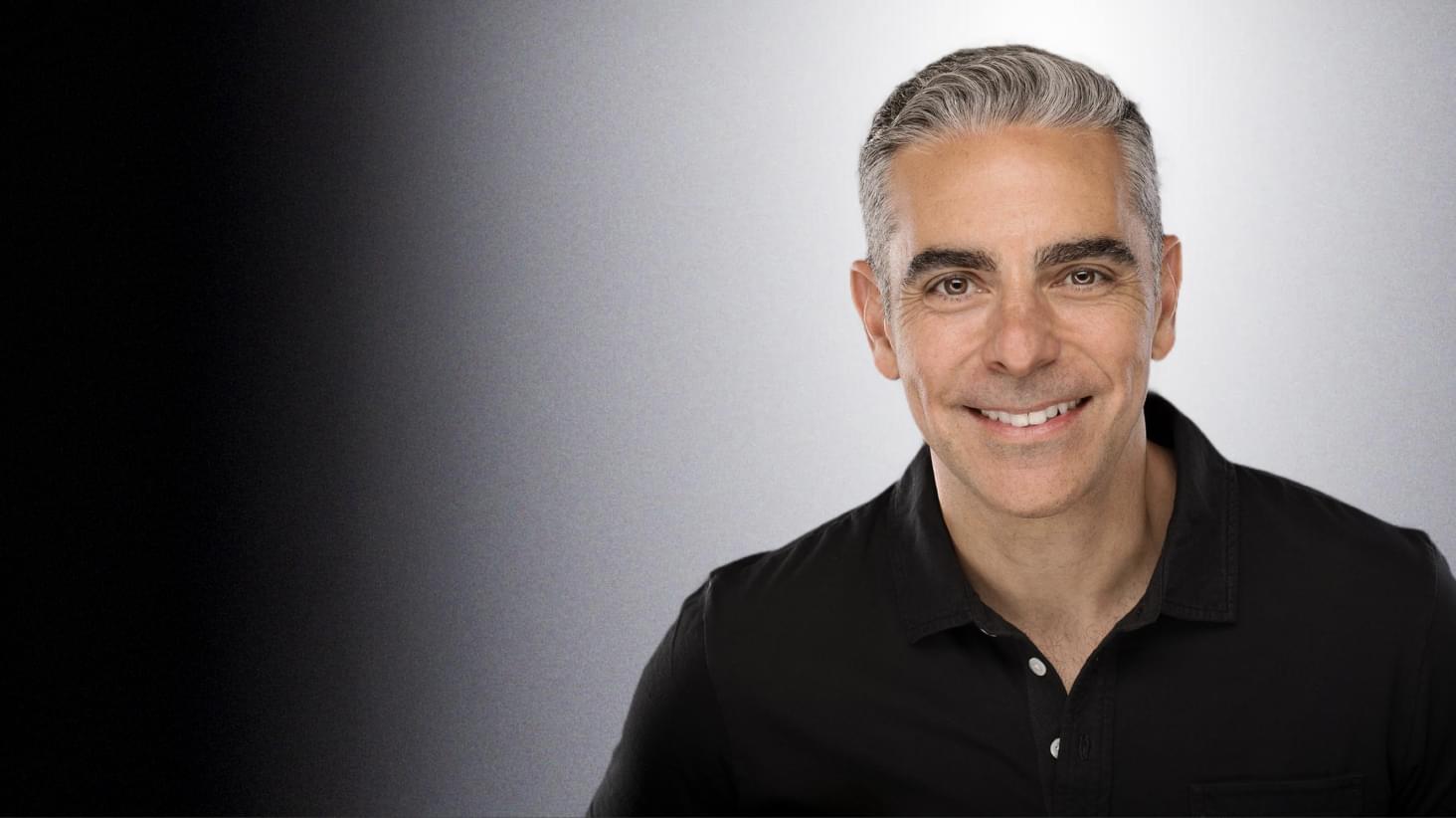
David Marcus

How can values create value? On this podcast, Michael Eisenberg talks with business leaders and venture capitalists to explore the values and purpose behind their businesses, the impact technology can have on humanity, and the humanity behind digitization.




David Marcus
David Marcus
David Marcus
David Marcus
David Marcus
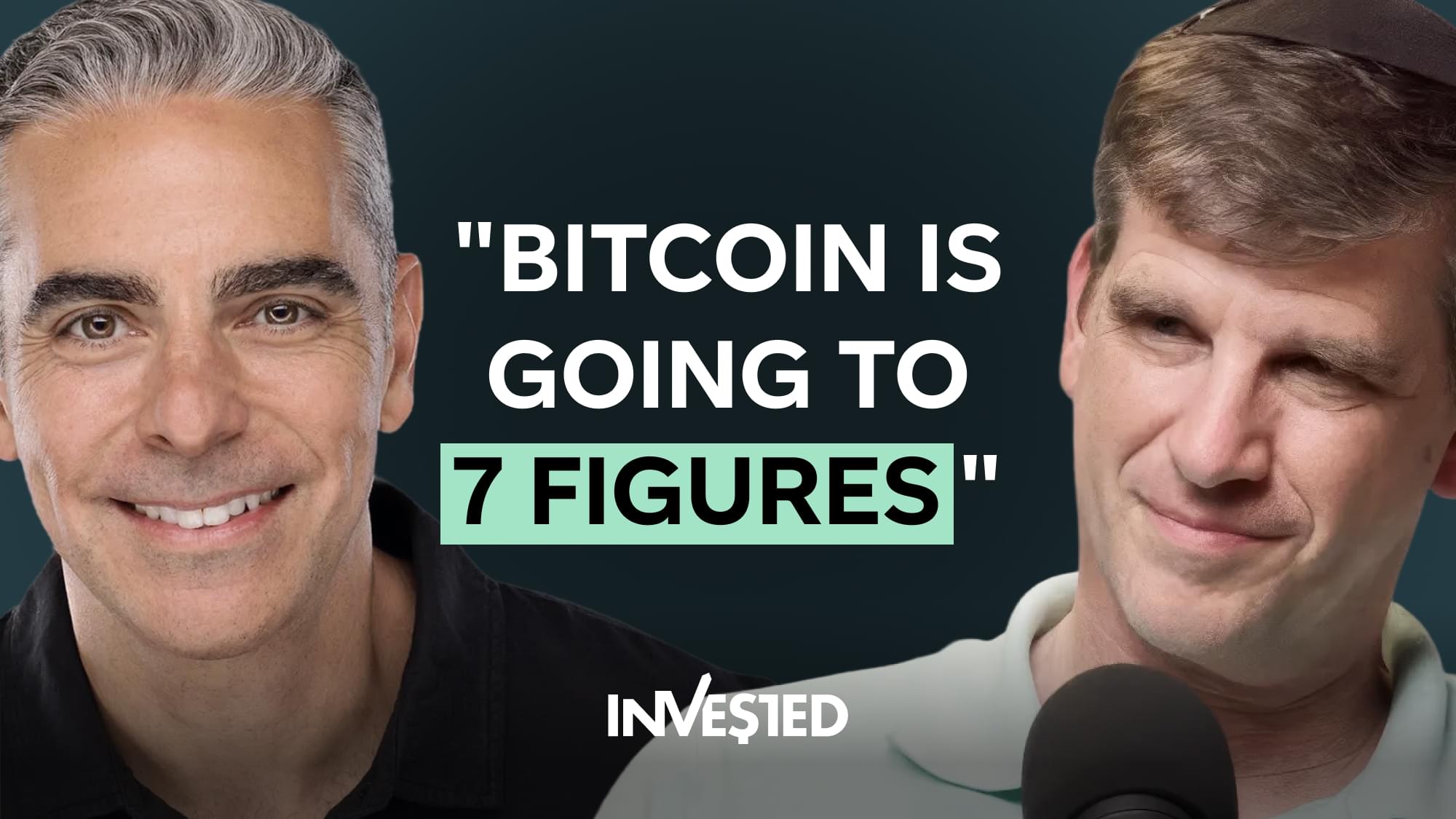
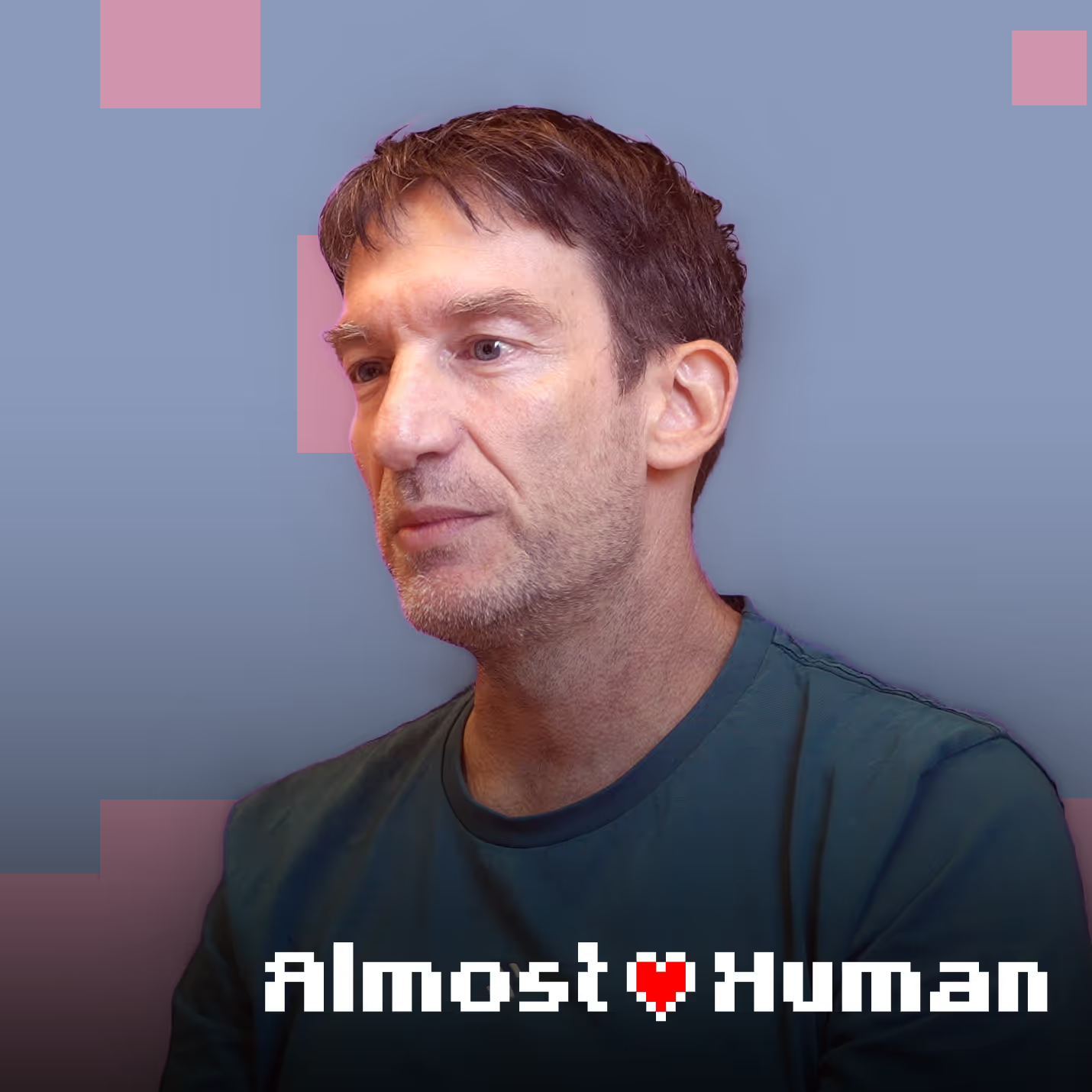
On this episode of Invested, Michael sits down with David Marcus, the CEO and co-founder of Lightspark. Most recently, he led all payments and crypto efforts on Meta/Facebook. In 2018, David started Diem (fka Libra). He joined Meta in 2014 to lead Messenger, which he took from under 200M monthly users to over 1.5B. Previously, he was PayPal’s President. A lifelong entrepreneur, David launched two companies in Europe and then founded mobile payments company Zong in Silicon Valley, which was acquired by PayPal in 2011.
Please rate this episode 5 stars wherever you stream your podcasts!
00:00 - Intro
01:54 - Dropping Out of College
05:07 - Elite Colleges Are Radicalizing Students
07:45 - AI Makes College Mostly Obsolete
15:30 - Libra Threatened the Global Financial Order
17:36 - Janet Yellen Personally Killed Libra
18:55 - Why Centralized Crypto Always Fails
19:40 - Bitcoin Is the Only Neutral Money
23:38 - Bitcoin Can’t Work - Until Lightning
26:05 - Bitcoin Replaces SWIFT and Banks
30:11 - Stablecoins Are Corporate Control Tools
33:45 - Bitcoin Enables Real De-Dollarization
36:10 - Most Financial Crime Isn’t Crypto
41:30 - Bitcoin Is the Ultimate Bar Mitzvah Gift
43:10 - Bitcoin Will Hit Seven Figures
44:05 - US Education Is a National Security Threat
47:35 - Parents Are Letting Kids Be Radicalized
54:20 - Mark Zuckerberg Backed Libra Until End
56:10 - Why Governments Fear Neutral Money
57:30 - Politics Destroyed My Faith in DC
59:10 - Israel, Iran, and Regime Change Hopes
01:03:45 - Europe’s Point of No Return
David Marcus (00:00.046)
If you're building something that is going to change the way that money moves in a profound way, you have to do it on top of something that's like truly decentralized, unassailable, doesn't have a CEO, a foundation, an association, and the only thing that fits the bill is Bitcoin.
Michael Eisenberg:
You tell everybody you know to own some Bitcoin?
David Marcus:
It's my favorite bar mitzvah gift.
Michael Eisenberg:
It’s better than the bonds I got for my bar mitzvah, I guess.
David Marcus:
Definitely better.
Michael Eisenberg:
Is there anything negative about going to college today?
David Marcus:
I mean, there’s so much.
I built up pretty successful companies by sheer force of will and persistence.
I was the only guy on that leadership team that really didn't want the top job, and of course I ended up getting it, which was really weird, because I had never managed more than 200 people and suddenly I inherited 15,000 people.
Life's too short to just be coy and not fight for the things you believe are existential.
Michael Eisenberg (00:52.526)
I am thrilled to welcome my friend David Marcus to Invested. Welcome, David.
David Marcus:
Thanks for having me, Michael. Great to see you.
Likewise. David and I know each other for a fairly long time, and operate in reasonably similar circles. So I hope this is gonna be a super fun conversation. But I actually wanna start with something that's become somewhat of a topic in modern circles, or super modern circles. And there's been a couple of news items on this in the last 48 hours.
And that is, you have an illustrious career. You sold your first company to PayPal. You then ran Venmo. You're now doing another startup, but before all that, you were a college dropout. And that is certainly a kind of topic of conversation right now, given where AI is at and what skills are going to be needed. So I'd love for you to just tell everyone about your journey from college dropout, why you dropped out of college, would you make the same decision today, and how you think about that in the era of AI? And then we'll get on to all the business stuff.
David Marcus (01:53.71)
Yeah, for sure. Look, I dropped out of college mainly not by choice, but mainly because I was in a situation where my father basically lost everything, and I had to drop out of college to go work to try to support the family and myself. And so this kind of forced my hand a little bit, not that I was kind of excited to stay in college anyways, I was kind of itching for getting into active life.
But that's what pushed me into the workforce early. And then I worked at a bank for a year, because that's what you do when you're in Switzerland. I was in Switzerland at the time. And a year or so in, I'm like, “OK, this is really too virtual for me.” And I started my first company, which was an ISB and Telco company at a time where the market was opening up for competition in Switzerland, which feels like ages ago.
So tell me about the decision to drop out. It was just like,”Hey my family needs money. I need to go do this and need to do this right now?”
David Marcus:
Yep, yep.
Michael Eisenberg:
Do you have any regrets about it?
David Marcus:
No, no, no, zero regrets. And it's kind of interesting, because we have three kids, and one of our three kids is actually–Ethan, our son, is actually a dropout as well. But like, he didn't drop out because he needed to, but he dropped out because he was itching to go build a company and he successfully fundraised and is off to the races. So two generations of dropouts, not the other two so far. I mean, one for sure, and one is too young, but like, you know, there's a story here.
Michael Eisenberg (03:31.054)
When you think about the modern workforce and modern AI? What, in your view, are the differences between people who drop out to pursue kind of agency, let's just call it, that are starting their life earlier versus those who sit down and study in a college environment?
David Marcus:
I think it really depends. I feel like right now, the college experience is as much for building a network and the social aspects of things than anything else. I think if you're really, really curious and you want to learn about something, we have tools at our disposal to learn that no previous generation had. In ours, we kind of were–like even on the tail end of the Google access to all of the world's information revolution, prior to that, you had to actually physically go to a library, find a book, et cetera. There was so much friction between you and knowledge. Google reduced that friction significantly. And now, LLMs has radically shifted that to the next level.
So I think, in terms of learning, I think you can learn pretty much anything without going to college right now. And it's more the credentialing and the social life. So I think the game has changed in a really significant way, I think. And so for this next generation, the real question is, do you need the credentialing, the networking, the social life, or do you want to learn by yourself and go do?
Michael Eisenberg:
Let's invert the question. Is there anything negative about going to college today?
David Marcus (05:07.31)
I mean, there's so much. I mean, look, I think the problem is, a lot of the elite colleges in the West have been weaponized and radicalized in such a way that not everyone has a fantastic experience right now, to say the least. And some others enter college with kind of a normal, neutral view of the world, and got spat out on the other side totally radicalized. So yes, there's definitely a downside to that. Hopefully we can collectively work to address this, there's definitely a downside.
Michael Eisenberg:
One of the things I started to think about recently is, startups are all about pace and I think learning today builds on itself, right? And I've started to wonder whether the pace of learning in college actually slows people down versus the pace they can, you know, via some of the self-learning you talked about before, whether it's YouTube or LLMs or just reading online. Do you have a view of that?
David Marcus:
Yeah, definitely. Look, an AI, an LLM can be the ever patient tutor that will never get agitated when you don't get something that will be ever patient and take the time you need to actually learn at your speed. And so I think that's definitely going to be a thing. Look, I think, hopefully we can address some of the shortcomings of colleges and some of the best institutions will learn how to actually use AI as a tool for their students to learn faster, better, actually to just raise the level for everyone. I hope this is where we end up being, but if we're in a world where basically people just accumulate college deaths to be around people who are being radicalized and are falling behind, compared to people who actually learn on their own, like you basically get the worst of all worlds.
Michael Eisenberg:
Can I just ask you one more question on dropping out of college before we move on to the business stuff? So you dropped out for family reasons, you needed to support the family. Has that had any kind of long-term impact on you, that experience?
David Marcus:
Yeah, for sure. But positive impact. Not at the time where I was living it, but certainly this idea that I was in a pretty comfortable environment, a pretty comfortable family environment and not have to really think about how to put food on the table or any of these things by far. And then I got basically projected into this reality of having to do whatever it takes to win and to like, earn money and support my family and myself at a very, very early stage of my life was definitely very formative for me. And I'm really thankful actually in hindsight that all of this happened to me.
Michael Eisenberg:
Anything you would tell your younger self today about that experience?
David Marcus (08:16.096)
No, I feel like, I don't know, maybe it's me just idealizing that stage of my life, but I feel like I never took it really hard. It was just what I had to do. And I just went and did it. It was not like I felt like things were going to go bad. It's like I was always optimistic about my chances. So, you know, I don't know. You know, I guess like, maybe more useful for people listening to this is actually, if life throws stuff at you, if you internalize those things as ‘it happens to you for a reason,’ you have something to learn from it and something good will happen, make you better and stronger. I think if you approach challenges and hurdles in your life with that mindset, then you're fine no matter what happens.
Amazing. All right, let's take us through the career now, right? So start at the startup that gets sold to PayPal, then go in and run Venmo, and let's do the career thing now.
David Marcus:
Yeah, so I dropped out of college. I went to a bank. I didn't like it.
Michael Eisenberg:
Which bank, by the way?
David Marcus:
Started my first company. I'm sorry?
Michael Eisenberg:
Which bank?
David Marcus:
Oh, it was a small Swiss bank called Handelsfinanz that since then got acquired by HSBC, et cetera. So a phenomenal group of people really enjoyed my time, but it wasn't for me.
Michael Eisenberg:
What was your first job there?
David Marcus (09:47.7)
Oh, I was in the back office doing a job there. Yeah, I mean, this was really funny because actually, you know, this was like, I'm going to date myself big time. This was the time where we had an AS400 mainframe and no PCs, zero PCs in the whole bank. And everything was basically client mainframe. And I'm like, this is insane. I was already a super geek at the time. So, you know, I had access to computers since I was like eight years old. And so I was like really deep into it.
And so my actual day job was being in a back office and filing FX market orders in the back end and doing all kinds of things. And I'm like, “OK, this is ridiculous. We need PCs.” And I actually convinced people in every department that I went in, because I started in the back office. Then I went to trading and FX, where I spent most of my time, actually, at the FX trading desk.
But every department I went in, I added a PC, and I had little programs or even basic Excel stuff that actually made life of everyone easier. And by the time I had left a year later, there were PCs everywhere. And I was not part of the IT department ,which is kind of really a funny anecdote of my time there And that's what I enjoyed doing. I enjoyed actually finding ways to make people's lives easier with technology, and it was really clear that this is what I needed to go do. And so when the market opened up for competition, the telecommunications market in Switzerland, I was 23 and I decided I'm going to go build a company to compete with Swisscom, the monopoly in Switzerland. I knew nothing about telecoms, but built up pretty successful companies by just sheer force of will and persistence. And then sold the company in 2000, and straight up started the next company, which was a mobile entertainment company.
It was premium SMS time, and I knew telecoms really well, and I felt like there was something to be built on top of SMS and text messaging. And so built this company that ended up becoming a payments company, because we had connectivity into all of the mobile operators around the world, and we could actually bill you on your mobile bill. And then the iPhone came out in 2007 and I'm like, okay, like no one's going to download ringtones and wallpapers on a small phone anymore. And this is when I convinced, it was hard actually, my investors that this was the time for me to leave Europe, come to Silicon Valley and try to make something bigger of that company. And we built it into a very successful mobile payments company that was called Zong. Like we pivoted into that with all the connectivity we had with the mobile operators for payments.
And then that company got acquired by PayPal slash eBay in 2011. And I started working on mobile payments there. And five months in, the then CEO, president of the company left to go run Yahoo. And I'm like, “Great, I'm just going to go leave and do another startup, because this is the guy who bought my company and this is the guy I had loyalty to.” And I was the only guy on that leadership team that really didn't want the top job. And of course, I ended up getting it, which was really weird because I had never managed more than 200 people and suddenly I inherited 15,000 people.
And I was very frustrated with the culture. It was very, very corporate, lots of consultants everywhere. And so I decided to do the brash thing of trying to completely revamp the culture there, which we did very successfully. We bought Braintree and Venmo. And then it was like, it was still part of eBay. Carl Icahn was in the eBay stock wanting to split the company. I of course thought it was the right thing to do, but out of loyalty for all of the good people that gave me the chance to lead the company, I didn't say that publicly, but it was very frustrating. And I wanted to go back to building things. And so was ready to kind of jump out when basically Mark Zuckerberg intercepted me and convinced me to join him to do something different, which is to build messaging products at Meta, which was a kind of sabbatical from payments and regulated businesses for a while, which was wonderful. And then Libra.
So, went back to payments because I was frustrated in the fact that money didn't move around the world in a seamless way many years later. And that was a whole crazy, crazy journey.
You know, we can talk about it, but that resulted in Janet Yellen had pulled the plug on this thing on the morning of June 21, and me leaving December of 21 and starting Lightspark a few months later.
Michael Eisenberg:
You decided after the Libra experience, which is a crypto experience we'll come back to in a second, to go build plumbing for Bitcoin. So despite Janet Yellen putting the plug on Libra, you doubled down on, I guess, was it the founding mother of crypto, which is Bitcoin. Weren’t you spooked?
David Marcus:
No, I was kind of emboldened. So look, I mean, so first of all, like when we started the Libra journey, the whole point was the internet needs a protocol for money, like an open way to move money on the internet like any other type of content. And that thing didn't exist. We looked into Bitcoin early on because I've been a Bitcoiner since 2012.
Michael Eisenberg:
Do you still hold your whole position?
David Marcus (15:47.174)
No comment. But so yeah, I've been in Bitcoin since late 2011, 2012, thanks to a good friend. We can talk about that. So we started looking into Bitcoin early on in the Libra journey. And we quickly realized at the time in 2018, early 2018, that like the Lightning Network and technology supporting Bitcoin wouldn't scale to real time transactions for billions of people on WhatsApp and beyond.
And so we went on and built our own proprietary blockchain with a very early, ahead-of-its-time stablecoin concept. The fact that it came from Facebook, which at the time was really not a well-liked company, to say the least, it's probably the understatement of the year there, at the time. And the fact that we reached three plus billion people every month across our products, like really made it a systemic threat to the system instantly, like even before we launched. And so for once, all of the central bankers of the world actually agreed that this thing needed to die. And we fought it for another two and a half years, until that morning when Jake Powell went to have breakfast with Janet Yellen, which they do every other Thursday. He was actually ready to let it go within a controlled environment. And she was like, “This is political suicide. I won't have your back.”
The next day, the general counsel of the Fed started calling all of the banks and participants, telling them, “We can't prevent you from going forward with this, but we're very uncomfortable about you doing so.” And that was it, basically. So it was kind of a soprano's shakedown.
Michael Eisenberg:
Yeah, I was gonna say, it sounds like a political shakedown. What do you think about that in retrospect?
David Marcus (17:36.334)
Oh, I was very angry. Like I came to America as an immigrant, like, you know, and I, you know, I was like, this is it. This is the country of leveled playing field, and equal chances and opportunities. If you build something great, you know, people will let you do it, et cetera. And, and this is kind of a banana Republic shakedown style. And so, look, the learning there was deep, right back to the earlier point around the philosophy of, if stuff happens to you there's a reason and there's a learning–the learning there is, if you're trying to change the way that money moves, first of all you've got a lot of incumbents and players that will want to stop you, because they have a lot of entrenched interest in keeping the inefficiencies alive.
And the few things that we did wrong was actually–like one is, if you're trying to supplant the unit of account of a country that a government controls with a stablecoin in this case, and the threat is real, then you will be shut down. If you're building a network that is centralized, even though we tried to devolve power with 28 other phenomenal companies that joined that consortium, all of these companies can be pressured into dropping out.
And they were because there are humans and CEOs, and they have shareholders and there's all kinds of different ways to actually pressure people. And so the big insight is, if you're building something that is going to change the way that money moves in a profound way, you have to do it on top of something that's like truly decentralized, unassailable, doesn't have a CEO, a foundation, an association, a consortium. And the only thing that fits the bill is Bitcoin.
And so that was the insight. And so that's why a number of us left and started Lightspark in April, late April of ‘22, to go build an open money grid on top of Bitcoin, basically.
Michael Eisenberg (19:46.702)
Why do you believe in Bitcoin, other than the fact that it's decentralized and obviously is not domiciled anywhere?
David Marcus:
It's kind of a unique thing. It's pretty crazy to think about this. It's like, you know, last week we celebrated the 17th anniversary of the Bitcoin whitepaper. And so 17 years ago, a guy, or people, or group of people or, you know, woman, no one knows–and that's part of the appeal–wrote a whitepaper, and encoded in that whitepaper a series of incentives that created the most successful form of neutral money ever created in the history of mankind. And it's a fascinating thing. And I'm particularly fascinated with how visionary the incentives were, and the way that it created an incentive for miners to actually use energy and convert that energy into value, secured cryptographically, the way that it created an incentive for people to care because of the appreciating value, and the fact that we had finite supply, deflationary asset by design in a market that's basically plagued with inescapable runaway inflation–and really had all of this built in in a way that you could actually just let the code and the incentives do its things for 17 years, and magical things will happen and survive all of the attacks of modern finance and world trying to kill it. And that's a truly unique thing. And no other digital asset has that property, none. Like every other thing, like think about any other asset or network, you can name a person who has outsized influence. You can name a group of people, you can name a foundation or company that actually has some influence. This is the only one that is truly neutral, decentralized, secured, that has the depth of liquidity with all of the other currencies, which is actually super important for payments.
And that's why we basically convinced ourselves, and reached this unshakable conviction that this is the only thing that will actually behave like an internet for money, that you can build a set of technologies and products on to facilitate real-time global payments and make money like any other type of content on the internet.
Michael Eisenberg:
Ironically though, it hasn't happened yet, right? We're 17 years into Bitcoin. I think it's fair to say, even though the stories or the lores of people who paid for their pizza with too many Bitcoin 15 years ago, it's not exactly, not even the world's bottom 10% payment system right now. And so I guess it begs the question, right? And to be candid, if it's digital gold, and I'm a Bitcoin holder also, if it's digital gold, most people don't pay for things with gold either. So why do you think that this actually will become a payment system and why will LightSpark be successful at it?
David Marcus (23:37.408)
Yeah, I mean, look, I think I'm so glad you asked that question. So first of all, a couple of things. More than a couple actually, but the first one is, if Bitcoin didn't take the time it took to actually be as secure, as prominent, as valuable with the depth of liquidity it has, in trading with all of the regular currencies that people want to pay with and use, then it wouldn't be as valuable as a settlement asset as it is. And so it needed to take the time to survive all of the assaults. First it was, this thing is for criminals and drugs and what have you, where it turns out that actually 99% of financial crime is happening on the good old stack that's actually way easier to–yeah, exactly.
And then the second one, it was, it's going to consume all of the energy of the earth, and it's terrible for the environment. Turns out, no, actually it's like the greatest accelerants to renewable energy. Great, okay. So, I mean, we had so many of these attacks, and it had to actually go and survive all of these attacks. It had to actually get into the hands of the largest financial institutions in the form of ETFs, the most successful ETFs in the history of ETFs.
It had to do all of these things, and go through all of these series of events, all driven through this beautiful incentive system invented 17 years ago to actually get to the point where it is today, to become the greatest settlement asset for payments. Okay, so that's one. Two is, if you're trying to make payments with Bitcoin layer one, good luck, right? It's not meant for that, right? It's like a back hole, slow, super secure network, but it's not meant for everyday payments. so you need to make it fast, and you need to make it cheap, and you need to make it scalable. And that's where Lightning and Spark, a Bitcoin L2 that we invented and pushed out in the world six months ago are meant to do. So you have to build a set of technologies to make Bitcoin move fast and cheaply.
Then third is the insight, which is the one that is really important, that actually, fast cheap real-time Bitcoin movement is actually like TCP IP packets for money. It's not like when you send an email or a photo, you're basically sending a series of zeros and ones on TCP IP that arrives on the other side and gets reassembled into a photo. The same is true for the way that we're using the Bitcoin network for payments. You're sending dollars to someone in Mexico receiving Mexican peso on the other side. You're not seeing that you're using Bitcoin. You don't even know you're using Bitcoin. You're not spending Bitcoin. And this is for instance what we have live now with Sofi, which is a large US bank, with New Bank in Brazil, with a bunch of other large-scale banks in Europe and other parts of the world where you can replace old that like really dusty like, Swift and correspondent banking that takes three to five days to clear, doesn't work Friday after 5 PM, costs $50 a pop with a real-time transaction that costs a cent to send cross border on top of Bitcoin from one fiat currency to another fiat currency.
So all of these things have to come together for Bitcoin to actually become the winning open neutral settlement network for all of the world's payments and money. This is why we're here now, and it's really starting to work at large scale for the first time in 17 years since its invention.
Michael Eisenberg:
Is it fair to say, though, that the early instantiation of these payments, and the payments rails has happened through stablecoins, mostly built on Ethereum, which the point you made earlier, does have a choke point? It's not obviously as stateless or distributed as Bitcoin. So early adoption, even other blockchains, Paxos doing it, others have created the payments rails that are 24 by 7, so they answer criteria three. Somehow they matured faster, although many of them on the stable coins are backed by US treasuries right now, which I think the United States government is certainly in favor of, even if they won't say it publicly. And so, why should Lightspark catch up to what's going on in the stablecoin war? Now, obviously, Stripe just acquired a big stable coin company and stablecoins are taken off big time?
David Marcus (28:01.912)
Yes, I mean, to me, like the two are not mutually exclusive, right? It's like, for me, a stablecoin is just another asset type. And as far as we're concerned, we support stablecoins on our network. So it's like, you can send dollars to someone in Mexico receiving Mexican peso or to Europe or to Israel, someone receiving shekels, it's fine. But you can also send dollars to someone in Argentina receiving a stablecoin, dollar stablecoin, and that works fine too. And so for me, I think people conflate the stablecoin, like the digital form of dollar that is fully centralized, fully controlled by a corporation that has to run the reserve and the rails that are Bitcoin basically fully decentralized, fully neutral and stablecoins can be just another asset type running on Bitcoin. And this is one of the reasons we built really easy issuance capabilities on top of Spark that exists on top of Bitcoin. So you can use the products and capabilities we built.
A few weeks ago, we had our big partner summit here in LA, and we announced this new product called Lightspark Grid, where you can open an account and then use the network to send or receive transactions in 65 countries that go straight into a recipient's bank account in real time, 24/7, powered by Bitcoin at a very low cost and/or spit up wallets in real time, and send either Bitcoin or stablecoins to these wallets anywhere in the world, and that's available for clients that are business clients, that are merchants, that are wallets, that are banks that can actually plug into the network and enable global money movement like never available before, and stablecoins are just one of the other ways to do it.
Michael Eisenberg (30:10.914)
The part that amazes me is, most of the stablecoins run on Ethereum today, right?
David Marcus:
I mean, Ethereum, Solana, like Ethereum L2s and Solana, and a bunch of others, yes.
Michael Eisenberg:
If you're making a case why Bitcoin, would it go back to the fact that just not centrally controlled by anybody, whereas Ethereum is?
David Marcus:
I mean, all the ETH L2s are definitely more centralized than Bitcoin is for sure, or that Spark is for that matter, or Lightning. So I think the question is really not whether you should use stablecoins or not. There's definitely a use case for stablecoins, and there are different networks that you can use it on. Our view is basically that by offering an ability for our partners to send money in the way that they want everywhere–and it so happens that stablecoins, in our case, run on top of Bitcoin–is just a superior way to do this, because we're just a service provider on top of an open network that no one controls. And everything else is just more centralized in nature. And there's kind of a rise of what I call a corp chains, which is basically, I did like the first corp chain, which was Libra, and it was killed for a reason.
And I think that like if you're approaching a region like Europe, or a country like Brazil or Mexico, and you're starting to intermediate like say 20% or 25% of the in and outflows of payments into the country with a centralized US dollar stablecoin on top of a centralized network, then you're going to know the same fate Libra had, and Libra got, and basically you're not going to be able to do it. Whereas here, you have the opportunity to deliver the currency of the country if that's what people want in their bank accounts, on top of a network that is neutral, doesn't fly a flag, is not controlled by a person you can find. And that's actually better for many people. Like if you talk to the Europeans, they resent the fact that all the payments networks are American payment networks. They are very worried about US dollars, stablecoins taking over, et cetera.
Our solution enables people in Europe to receive euros. That's fine. Like, you can do that. But if you want stablecoins for a specific use case of moving liquidity in dollars between businesses or between people at a certain point in time, you can do that on the network too.
Michael Eisenberg:
Perfect segue. So is Lightspark and Bitcoin a gateway to de-dollarization of the economy and the world?
David Marcus:
Well, I mean, we’re not that, you know? This is the stablecoins thing, right? That's like, if you are a country and your currency is crap, and basically, people who work really hard to earn money earn money, and then the second it hits their account or pockets, it's basically melting away, then yes, you deserve to have better alternatives being offered to your people. That’s something stablecoins are doing really, really well in a number of different regions.
Michael Eisenberg:
Sure. That's true like in Iran, and in Turkey and in places like that. But your rails, which get people off the dollar rails, like you said, before the Europeans are not that happy that it's all happening in dollars. That's the stablecoin side, but it's also the infrastructure side, right? Whether it's Swift or other ways for example, suppose the sanctions using the dollar… Are you accelerating, let's call it, the de-dollarization of the global economy?
David Marcus:
I see. Sorry, I heard the question the other way around. Yeah, I mean, no, I don't think so. I think the reality is the institutions, if you're talking about the dollar or the US hegemony on top of financial systems around the world, and this country's ability to actually be involved in that, the settlement rails don't really matter.
Because if you're a regulated entity at either edges of the network, you still have to comply with whatever law is actually in place and whatever compliance and OFAC sanction screening and all of these things that are actually required of you. If you're a regulated entity, you still have to do that. The fact that this network is neutral, though, enables us to have an open internet for money that is tolerated by everyone in the world because it's not coming from a specific country.
And I think that's the key thing. Like the key thing for me is like, when I look at what I would be happy to have contributed to is a world where every human and every business can move money however they see, whenever they need it, however they need it, in real time, at a very low cost, just the same way that you would send a text message or an email, no matter what the amount is, no matter what time of day it is.
And I think if your goal is that, if your goal is financial freedom of money movement and enabling people to do that at that scale, then you have to do it on top of a neutral network, because a centrally controlled network or a corp chain or any of these concepts will never work for the reasons that we talked about.
Michael Eisenberg:
So I was never like terribly bothered by the kind of ‘Bitcoin is used for drugs and pornography and a bunch of other things,’ in the early days of it. But if you've got an easy way to move, uncontrolled network, how do you think about like Iran or finance guys in Turkey or wherever it is financing Hamas via Lightspark? These are non-regulated entities in the normative sense of the world. We're obviously not doing much KYC or paying attention to OFAC for that matter. And this would open that world to them. They use crypto for things like this already.
David Marcus:
I mean, look, I think the reality is, if you look at what's happening right now, like you know, just take Lightspark, Bitcoin out of the equation for a second, you look at like crypto in general, like crypto rails in general versus traditional financial rails, and you look at the amounts of illicit financing, money laundering sanctions forwarding and all of these things, and you look at the rate at which this currently happens on those crypto networks using stablecoins and other networks, or any other asset, versus the traditional financial system–the reality is the traditional financial system supports still like 90 plus percent of the financial crime and abuse.
And the reason for that is actually not trivial to fully internalize unless you've been in payments for a long time. And the way that this works is basically that the systems that are basically used by many financial institutions and banks are not real time. They're all batch processed. And so a lot of the fraud happens, and then people realize that after the fact, and then you have to file what is called a SAR with a financial authority or regulator.
And by the time you do all of these things, the funds are already long gone and washed and all of that. So if you talk to any AML specialist on traditional financial networks, they'll say that the efficiency rate of these systems is 1% or below, which is crazy, right? And when you look at the reality of what happens on blockchains and crypto networks, it's like, if you're a criminal and you want to use that to move money around ot toward things, you're a dumb criminal, which is often the case, by the way. And it's just like, you get caught much faster, because all of these things are real time. And there are much more modern systems that enable you to detect those things much faster.
Like in the case, for instance, we bring banks onto the network. And before the transaction actually happens, there's exchange of information that happens between the sending institution and receiving institution about the account holders on both sides, whether they're KYC or not KYC, they run their OFAC sanction screening and all these things before the transaction actually gets settled in real time. And so that's actually a much better way to prevent that from happening. And then of course, if you're sending to self-custody wallet and all of these things, then there's a question of incompatibility of the network, because many of these regulated financial institutions are actually pretty uncomfortable sending to unknown endpoints. And so that's a different problem that we collectively need to solve in a way that enables people to actually have really great self-custody wallet experiences, while actually being able to participate in the financial system.
Michael Eisenberg (39:14.424)
Who first introduced you to Bitcoin?
Michael Eisenberg:
So my very, very dear friend, Wences Cazares, is kind of known as patient zero in Silicon Valley for having grown up in Argentina, in Patagonia on a sheep ranch and having seen his family lose everything again and again, and being one of the most curious persons and friends I've ever known. And so yeah, in late 2011, he was like, “You should spend more time,”–and I stumbled upon Bitcoin in ‘09, actually, the first time. And I was like, “This is way too dorky for me. Like they'll never work. It's too complicated.” And by my standards, that means really dorky. And then in 2011, deep, deep into the rabbit hole and was like, oh, you need to really spend time really understanding this.
And it took me months at the time to really fully understand it. Months. And I think it's still, if you truly want to understand all of the incentive systems and the way that it's baked and everything, it takes a while. And I never came out of that rabbit hole.
Michael Eisenberg:
Amazing. And you tell everybody you know to own some Bitcoins?
David Marcus (40:31.054)
It's my favorite bar mitzvah gift. I have those metal cards that I can load Bitcoin on. Also something that I saw Wences do for all kinds of different things and I'm like, this is great for bar mitzvahs and bat mitzvahs. So I actually load up the cards with Bitcoin, and I give them, and it's like a fabulous anthropological study to see what people do over years with Bitcoin.
And it's just a fascinating thing. Like actually owning even a small amount of Bitcoin completely changes people's outlook on everything. It's fascinating.
Michael Eisenberg:
You can actually track what they do with it, or you ask them?
David Marcus:
Yeah, no, I mean, it's a public key. If you have the public key of the thing, you can see whether people are actually over the years spending it, keeping it. It's fascinating.
Michael Eisenberg:
Better than the bonds I got from my bar mitzvah, I guess.
David Marcus (41:31.182)
Definitely better. Wrong generation.
Michael Eisenberg:
Yeah, you I think said somewhere that you think Bitcoin is going to seven figures. You still think so?
David Marcus:
Yeah, for sure. For sure. I mean, look, if all things are being equal, and just forget the utility phase of Bitcoin and the fact that it's going to basically move trillions of dollars a day of payments. So take that out of the equation entirely. If you look at just the store value use case, and you compare it to the market cap of gold, it's much better than gold.
Like, people say, it has no intrinsic value, et cetera. That's bullshit. It has, you know, actually more value, hard value than gold has.
Michael Eisenberg:
Why?
David Marcus:
Because when the first gold ETFs were created, guess what? They figured out a way to mine more gold. Like there's elasticity in the supply of gold that doesn't exist at all in Bitcoin. Like we're going to have 21 million Bitcoin, period. And that's enforced by code in a way that is really predictable and impossible to change. And so, or it would take a lot of people to agree that they need to change that to change it, which, given the current incentive structure, is not going to work. So you have some certainty that this is not going to change. It is more fungible than gold. Like, you know, just try to buy coffee with a gold coin. Good luck.
It has more portability than gold. You can remember 12 words and carry around a billion dollars or more if you want. Like, that's totally fine. If you remember in your head 12 words, pretty remarkable thing, right? You know, if you look at the market cap of gold right now, and you adjust it to the number of Bitcoin and all of that, the market cap of Bitcoin should take it to a price per Bitcoin that should be anywhere between 1.1 and 1.5 million dollars a Bitcoin. And I think that's going to happen. The question is when and your guess is as good as mine, but it will happen.
Michael Eisenberg:
That’s what Tom Lee said today, that Bitcoin will hit 300,000 by the end of the year.
David Marcus:
I don't know about that.
Michael Eisenberg:
I saw Tom in Saudi a couple days ago. He said he was more bullish on Ethereum than Bitcoin. So go figure, I'd say I'm pretty bullish on Bitcoin.
David Marcus (44:03.832)
That I know about.
Michael Eisenberg:
Yeah, I want to switch gears entirely for a second. So you said somewhere that the biggest threat to the United States is not China and not AI, but the U.S. education system. Can you elaborate on that?
David Marcus:
Yeah, because I think that, you know, fighting an external enemy is always easier than fighting cancer. And cancer is in your own body. It attacks your healthy cells and just makes them malignant cells. And I think that's what's been sadly happening on our college campuses at an alarming rate. I think it's a combination of different things. I think it's a combination of what happened during COVID, the fact that a lot of kids basically didn't have a normal college experience for a while, the fact that we have increasingly turned college into a giant vacation for liberal arts and all kinds of different things that you can learn as a hobby rather than go to college. But that happened to be the places where people got most politically radicalized.
We've let foreign interference fund programs to radicalize our kids. And the result is what we've witnessed in the last few years, which is basically perfectly normal kids that actually come into college with all kinds of hopes and dreams, and come out with radical ideas. I think that if we let it continue to metastasize, we end up with situations like, you know, what’s probably about to happen as we record this podcast in places like New York with Zohran Mamdani being the mayor of New York, which still boggles my mind in ways that I can't even begin to explain. And you look at the voter base of people like him, it's those kids that we're talking about, and it's the product of our education system.
Michael Eisenberg:
Did it start, you think it starts in college or does it start earlier? Cause my sense is, and I just met somebody who moved from Silicon Valley to Israel, that his wife was a teacher in a high school, an elite high school, private high school in Silicon Valley. And basically on October 8th was more or less asked to leave, because she didn't kind of align with the high school's view of what's called current events. It feels like it's infiltrated even younger. Am I wrong about that?
David Marcus:
Yeah, I mean, college is kind of the finishing touches, yes. It happens earlier. It happens even in earlier stages of middle school and other parts of the education system. And parents, of course, have a responsibility. And I think a lot of parents have just let their kids be weaponized without intervening and it just creates this crazy situation where it...
Michael Eisenberg (47:35.214)
If you were advising parents would you tell their kids to go to college?
David Marcus:
I would advise them to be very thoughtful around where they send them to college, and for what, and ensure that you're very present as a parent during those years.
Michael Eisenberg:
Can I ask where your kids went to college?
David Marcus (48:06.348)
So I have two kids who went to college, one dropped out. So the first one is very studious and very academic, and she went to USC, graduated with all of the honors and is now an entrepreneur in her own right and doing really, really great in the food business.
And the middle one, because he didn't care at all about academia, thought it was a total waste of time. And so he went to USC as well and dropped out to start his startup as well. The third one is too young to go to college, 16 now, but no one's radicalizing that one, I can tell you already. That's not happening.
Michael Eisenberg:
My 16 year old is the same, for what it’s worth. So tell me something else. Oren Zeev said I should ask you, our mutual friend, where–you've been very public about your political views, particularly I think over the last two years, but perhaps even before that, because I remember you were grilled in Congress about Libra. And I think you've been pretty outspoken on that as well.
You said before about Janet Yellen. Has that hurt you in any way business-wise, personally, your kind of outspoken views on political issues of our time? You have any second thoughts about that?
David Marcus:
Not at all. Not at all. Look, life's too short to just be coy and not fight for the things you believe are existential. And I definitely think the topics that I've fought for, notably around Israel, around defending Jews outside of Israel, the diaspora, around the Western values that I hope we continue promoting and advancing in America. All of these things are things that are 100% worth fighting for no matter what the consequences are. And so for me, I never looked back. And of course it had consequences. Of course I lost fake friends. Of course I had a lot of threats and issues that I had to contend with. So it has had an impact on my life, but I don't spend any time thinking about that. There's just no other way for me to live with myself than to fight for what I really deeply believe is worth fighting for.
Michael Eisenberg:
Any investor pushback?
David Marcus:
No.
Michael Eisenberg:
None. Because you got aligned investors to start with?
David Marcus:
Probably, yeah.
Michael Eisenberg:
Going back to the school question, do you think things are better in Europe in university?
David Marcus (50:50.134)
I'm not sure. I think there's probably less foreign money influence just because this is not the way that most universities work in Europe. They're publicly funded with no opportunity for anyone to start throwing money at programs to brainwash kids. So I think there's less opportunity to actually do that. But if you look at what's happening in Europe, it's not like it's a lot better. So maybe that dimension is slightly better, but I think on all of the other dimensions, you still have way too many professors that are trying to really change the outlook of young minds in a way that's very, very damaging.
Michael Eisenberg:
I think I once saw you say that not everybody hung with you in Libra like till the 11th hour. Like you really fought this thing to the bitter end. But not everybody hung in there. Am I correct that you said that once upon a time?
David Marcus:
Yeah, there were lots of companies that were part of that consortium that not only fell to the side, but at some point even tried to sabotage the thing for their own interests. And at some point, I'll have to write a book about these years. It was so crazy.
Michael Eisenberg:
You think it's like weakness of resolve? Is it realpolitik? Are people today–you know, it was both a very big business opportunity and like you said before, it was a shakedown at the end of the day. And most people buckled and left you hanging.
David Marcus (52:33.782)
I think we have to be real about one thing. It's like, you're running a public company. You have a responsibility towards your shareholders, your employees, your stakeholders. And this thing is actually threatening your core business. This thing was like, it had an opportunity for people, upside opportunity, but not at the cost of risking their own core businesses.
And I think the politicians were actually really, really good at this. There's actually a letter that is still public record that was sent by a few senators to a bunch of companies saying, “Look, if you don't drop out of this thing, expect increased scrutiny, not only in things related to Libra slash Diem, but like anything that you do in your business will actually be under higher scrutiny because you're continuing to be part of this thing.” Which is insane. And so, if you're a responsible business leader, and this is actually maybe important to you, but not as important as your core business, you're not going to press on, you know. Hence the point of building on Bitcoin, like, there's no pressuring Satoshi Nakamoto to do something. Like, good luck with that.
Michael Eisenberg:
Reading between the lines of what you just said now, that for Facebook and Zuck, Libra was not part of the core business, but for many of–
David Marcus:
No, actually, credit to Mark. Mark was like all the way to the end. Like maybe not many other people at Facebook felt the same way, but to his credit, he had our back all the way to the end. Like all the way.
Michael Eisenberg (54:19.022)
Why? Why wasn't he afraid of any of the risks like the CEOs of the other businesses?
David Marcus:
Because, you know, Mark is wired that way. He felt like this was actually something that was actually going to be really good for the world and, also for Facebook if it worked out. And he's not... He doesn't shy away from hard things if he believes in the thing. And I think that's an amazing quality he has. And until the last minute, until that general counsel from the Fed call in June 2021. He had our backs all the way.
Michael Eisenberg:
That’s actually quite remarkable.
David Marcus:
Yeah, it absolutely is.
Michael Eisenberg:
If you had to give all the listeners two lessons from the whole Libra saga and particularly the end of it. What would they be?
David Marcus:
I don't know. Typically what I do in these things is like, it's like, oh, persistence and all of these things are just really great. But in that case, persistence turned out to be a total waste of time. So yeah, I mean, I do think that the lesson I learned in this one is if you're building something that has a chance of disrupting something so profound, so ingrained, that hasn't changed in over half a century in any shape or form, then you have to really, really paint the worst possible picture of what's going to happen with people trying to prevent you from doing it. And to some extent we did that, but like maybe not enough.
It's like, really put yourself in the shoes of all these people who want to try to kill this thing and will want to kill this thing, and all the reasons they would hate it. And really do that before you actually embark on a journey like this, is probably the one lesson. Something like that had never been tried before. So it was hard to actually internalize that. The public perception of Facebook also degraded in a pretty significant way from the moment we started the project to the moment we announced it. Now it flipped, so we're fine again. I think they’re fine again. But I think for a period of time it was really, really bad. So that didn't help. But yeah, really think adversarially to the max extent possible, if you're doing anything related to completely revolutionizing money movement for billions of people. Like you really have to be adversarially minded, because it's coming for you for sure.
Michael Eisenberg:
Has it changed your view of politics and politicians in any way?
David Marcus (57:26.26)
Oh yeah, for sure. Like I had rose-colored glasses when it came to politics and all of that. And then I spent so many nights and days in DC meeting with senators and Congress people and regulators and executive branch people, and it had, it completely changed my view on politics completely.
Michael Eisenberg:
I want to switch gears for a second. So you have a Romanian father and an Iranian mother. That's quite a multicultural upbringing, because you also were born in France or grew up in Geneva. Tell me about how that impacted you as a person, your childhood, who you are today.
David Marcus:
I mean, in so many different ways. On my mother's side, she had such a traumatic life because she had to leave Iran when the Mullahs came in in ‘78. Lost many, many friends and loved ones, and lived with that and the inability for her to return to her country.
A great story of deep loss on that side. And then on my father's side, it was really this deep rooted Ashkenazi identity. And I guess all of the attachments to Israel and all of that comes from my childhood, because we were there every three months or so all the time. And my father loved bringing lots of people to Israel to make them understand and discover, like literally flew people in all the time. So I grew up with all of that. And Paris, I was a kid, like I was eight years old when we left, eight or nine years old when we left for Switzerland. And Switzerland was kind of, very international environments and interesting. I still have–my high school friends from that time are still close friends now, which is kind of funny. But yeah, so it was kind of this multi-cultural thing between the Iran thing of not being able to go back, and losing so many loved ones, and and then the deeply rooted Israel stuff on the other side while not living in Israel directly, but being there a lot and being in Europe. So it's kind of like a very interesting mix. Then until all hell broke loose with all of that stuff and I had to go drop out and start working.
Michael Eisenberg:
How does the current 12-day war against Iran, does that bring up any feelings? I mean, months ago, but does it bring up any feelings?
David Marcus:
I mean, look, I live in LA and I'm surrounded by Persian Jews, right? So to say that…
Michael Eisenberg:
Not about that angle.
David Marcus (01:00:14.998)
I mean, everyone's talking about it. And like, I think there's definitely excitement, and at the same time, this feeling that we shouldn't be too excited, because every time we get excited for some reason, like, you know, it just doesn't pan out. But I do think that now more than ever, there's a possibility that there's regime change that's going to happen within our lifetime in Iran that is hopefully going to change the dynamic of the Middle East–I'm afraid that they're not going to go out without a fight. And I'm afraid of what's going to happen when we're getting closer to including more countries in the Abraham Accords, and what that does to what they do in the region, et cetera. So there's all kinds of things that are in the back of my mind.
But I think that within this generation, we're probably going to see a regime change for the better in Iran.
Michael Eisenberg:
Wow. We both moved to a different country as reasonable adults. You were more of an adult than I was. How do you think about your kids growing up in a completely different environment, both financially, but also culturally, than the one that you grew up in?
David Marcus (01:01:45)
I mean, look, I'm very happy I made that move. And I'm very happy our kids are here and are spending time here and are spending time in Israel. It's like, between the two, I think it's a good balance of things. But America is great. I feel like, if we can prevent it from deteriorating even further to our previous conversation, I think this is a country where you have meritocracy, where you have rule of law, where you have opportunity, where you have a lot of enthusiastic people that are not judging you for who you are, but like more judging you based on what you actually build and what you give them, like, you know, in terms of products or services, give people–so all of that creates an environment which I think, really good, hardworking people can thrive in.
And when I look at the rest of the family that stayed back in Europe or friends that stayed back in Europe, like they haven't had the same opportunities that I've had, that you've had, that our kids have. And I think that's very, very visible as we age. The delta keeps increasing. And I think they're sadly falling behind more and more. And all of the major innovations, the optimism, the creation of value, but also moving the world forward happens here. And so I'm very happy that my kids are here and that we came to America and they're growing up here, and I'm excited for them to also spend more time in Israel, which is always a great thing for them and for the next generation.
Michael Eisenberg:
What do you think happens in Europe over the next 10, 20 years?
David Marcus (01:03:45.662)
It's a tough one. Right now, I'm very pessimistic. I'm very pessimistic. I think you see what's happening in the largest democracies in Europe, and you see the problems from within, the fact that the immigration that they're faced with is really eating their societal fabric alive. And that I don't see how they actually break the cycle. I don't see it. I think it's going to take some radical things that Europeans are probably not equipped to do until it's going to be too late. So I'm really not optimistic, sadly.
Michael Eisenberg:
Give me a prediction for Europe that you think most people haven't thought of yet.
David Marcus:
I think Switzerland is going to continue to be great. Somehow they always figure out a way to differentiate themselves in ways that make them look on a relative basis so much better than all of their neighbors. So I think not everyone is thinking about that when they think about Europe and they think about that little country. But look, I actually think that if you look at France, if you look at the UK, they're on a downward spiral.
And I think that they either have like significantly adverse events that push them to do the, for them, the unthinkable, or they're just going to become like you know rudderless, lost countries and I think we're not far from that sadly. Like we're not far from the point of no return.
Michael Eisenberg:
Two last questions. You said twice earlier that if something happens, there's a reason for it and the question is what you learned from it. Can you just unpack that for me more? What do you mean by that?
David Marcus:
There's probably all kinds of readings that you do more than I do that you can also bring to the fore on this topic. But look, I think life has meaning and things that happen in your life have meaning as well. And I believe that if somehow, if you're equipped to rise up to challenges, you receive those challenges and that actually enables you to rise up to the next level. And those challenges, those hardships, these things that look hard to handle at times in your life are what makes us who we are. If you approach challenges, obstacles, hardships with that mindset, then it's actually a lot easier to go through them and actually get value from those moments in your life rather than being all depressed and complain about them.
Michael Eisenberg (01:06:59.31)
Where or from who do you think you get that fortitude and approach?
David Marcus:
I think, at some point, this was something that my wife told me when we were going through all of the hard times. And there's actually a famous rabbi who said something about this, which was actually that God basically only gives you the challenges that you're capable of handling. And somehow she found this and shared it with me. And I found it to be a very useful mindset to go through hard things in life. Yeah, I think it's very true. I really believe in it.
Michael Eisenberg:
Who's somebody out there, this is my final question, that you want to say something kind about that deserves more attention than they're getting?
David Marcus:
Whoa, that's a good question. Wow. Like there's so many people out there. I mean, so here's my shout out. My shout out is not to one specific person, but it's really to like, I think, we've shared a lot of experiences after October 7th, you and I, in different ways. And my message of appreciation is for all of these people who have gone out of their ways to really lace their shoes and boots up on October 7 that day, and have never stopped fighting for what's right and have given more than people actually fully understand or appreciate and continue to do so. My general appreciation is for all of these people fighting that fight.
Michael Eisenberg:
Thank you, David. I really appreciate you doing this. I know it's early morning there in Los Angeles. And so I thank you for doing this. And to all of our listeners out there, please subscribe to the YouTube podcast. Rate us five stars on Spotify, Apple Podcasts. And you can follow David Marcus on X at @David Marcus, D-A-V-I-D-M-A-R-C-U-S. And he has a lot to say and you'll want to follow him. So click on that Follow button. Thanks, David.
David Marcus:
Thanks Michael, great to see you.
Michael Eisenberg:
Likewise.

Follow David on X
Subscribe to Invested
Learn more about Aleph
Subscribe to our YouTube channel
Follow Michael on Twitter
Follow Michael on LinkedIn
Follow Aleph on Twitter
Follow Aleph on LinkedIn
Follow Aleph on Instagram
Executive Producer: Erica Marom
Producer: Sofi Levak, Myron Shneider, Dalit Merenfeld
Video and Editing: Ron Baranov, Nadav Elovic
Music and Creative Direction: Uri Ar
Content and Editorial: Kira Goldring
Design: Rony Karadi
Follow David on X
Subscribe to Invested
Learn more about Aleph
Subscribe to our YouTube channel
Follow Michael on Twitter
Follow Michael on LinkedIn
Follow Aleph on Twitter
Follow Aleph on LinkedIn
Follow Aleph on Instagram
Executive Producer: Erica Marom
Producer: Sofi Levak, Myron Shneider, Dalit Merenfeld
Video and Editing: Ron Baranov, Nadav Elovic
Music and Creative Direction: Uri Ar
Content and Editorial: Kira Goldring
Design: Rony Karadi
Follow David on X
Subscribe to Invested
Learn more about Aleph
Subscribe to our YouTube channel
Follow Michael on Twitter
Follow Michael on LinkedIn
Follow Aleph on Twitter
Follow Aleph on LinkedIn
Follow Aleph on Instagram
Executive Producer: Erica Marom
Producer: Sofi Levak, Myron Shneider, Dalit Merenfeld
Video and Editing: Ron Baranov, Nadav Elovic
Music and Creative Direction: Uri Ar
Content and Editorial: Kira Goldring
Design: Rony Karadi
.jpg)
.jpg)
.jpg)
.jpg)
.jpg)
.jpg)
.jpg)
.jpg)
.jpg)
.jpg)













.jpg)
.jpg)
.jpg)


.jpg)
.jpg)
.jpg)
.jpg)
.jpg)
.jpg)
.jpg)
.jpg)
.jpg)