Shlomi Madar

How can values create value? On this podcast, Michael Eisenberg talks with business leaders and venture capitalists to explore the values and purpose behind their businesses, the impact technology can have on humanity, and the humanity behind digitization.




Shlomi Madar
Shlomi Madar
Shlomi Madar
Shlomi Madar
Shlomi Madar
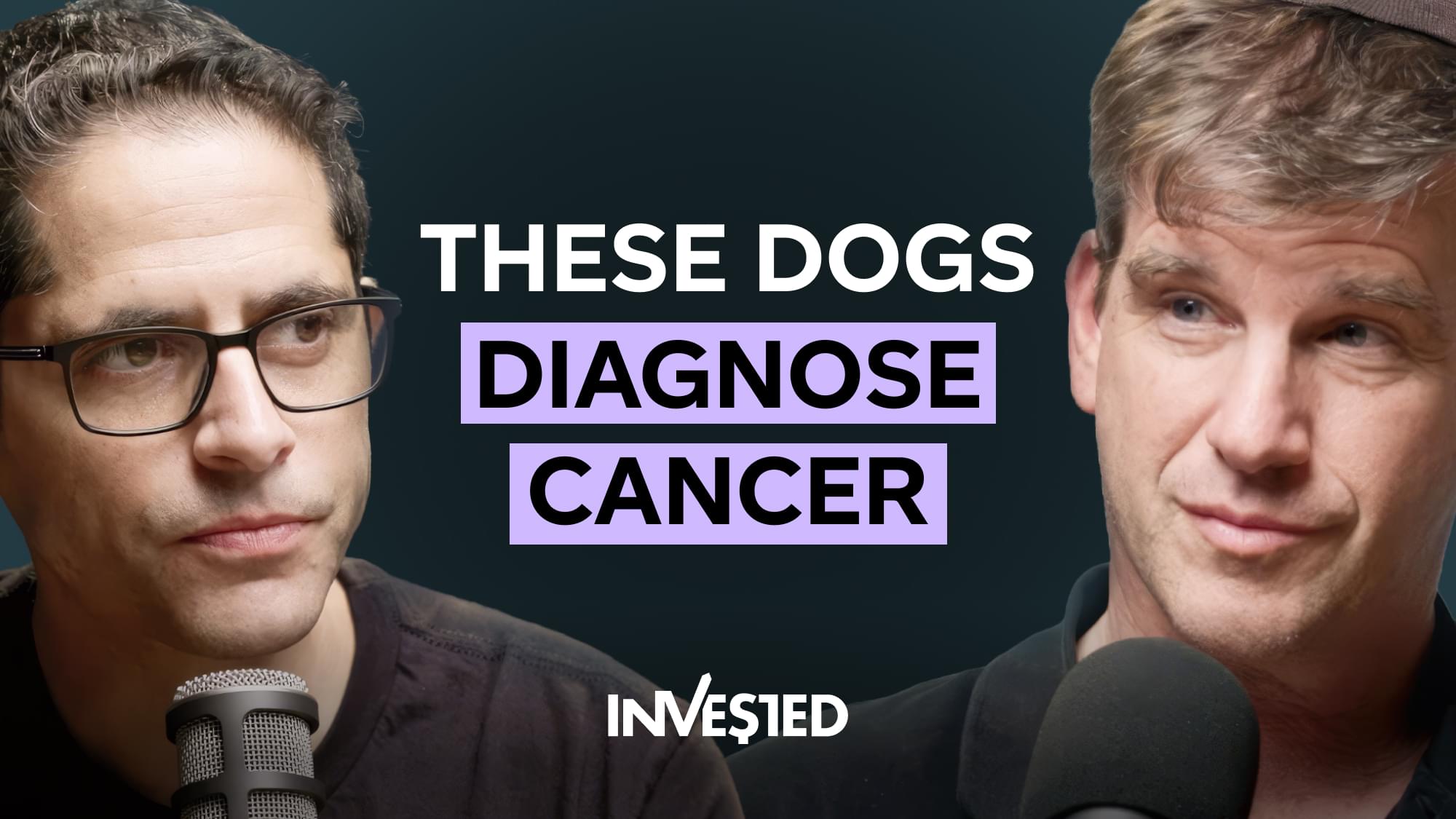
On this episode of Invested, Michael sits down with Dr. Shlomi Madar, the CEO of SpotitEarly. Madar is a PhD-trained molecular biologist with more than 15 years of leadership experience spanning oncology, diagnostics, and healthcare business development. At SpotitEarly, he leads the company’s U.S. buildout, overseeing strategic partnerships, clinical collaborations, and fundraising.
He has held multiple leadership roles at the intersection of product strategy, commercialization, and clinical execution in high-stakes healthcare settings, across several biotech and digital health companies.
Please rate this episode 5 stars wherever you stream your podcasts!
00:00 - Intro
02:50 - Theranos vs. Dogs: Why This Is Real
04:56 - Three Minutes to Detect Cancer
06:41 - Why Beagles Beat Other Dogs
09:02 - AI Watches Dogs’ Every Move
13:01 - Dogs + AI Break 90% Accuracy
13:43 - Blood Tests Miss Early Cancer Detection
16:26 - Stage One Cancer = 90% Survival
17:26 - Why Grail Fails at Early Detection
18:55 - Early Cancer Smells Stronger
22:26 - Selling Cancer Tests Direct-to-Consumer
27:22 - $250 a Year to Save Your Life
29:33 - Different Dogs for Different Cancers
30:10 - “This One’s for Ty”
42:22 - AI Can’t Replace Biological Sensors
46:00 - Dogs Smelled Disease 100 Years Ago
48:55 - You Can’t Buy a Cancer Test
50:46 - Message to RFK: Save Lives, Save Money
53:00 - Missile Strike Hit Cancer Labs
55:44 - Saving Lives vs Building Profits
00:00:00 Michael Eisenberg
Everyone in Israel thinks, you know, 8200 and innovation. I don't think anyone thought that out of the canine unit of the IDF you'd say, “Okay, let's cure, let's at least diagnose cancer.”
00:00:08 Shlomi Madar
The dog's sensitivity, it's parts per trillion, so they can sniff one part out of trillion parts. So just if you take like a half a spoon of salt or sugar, put it in an Olympic swimming pool, they can tell the difference between these two different pools. That's insane.
Across all cancers, if you detect cancer early enough, so stage one, you have more than 90% survivability rate. And for some cancers, it's even more like for breast, it's 99%.
We want to get to the people through online marketing.
00:00:37 Michael Eisenberg
Just plain online, direct to consumer marketing. Saying, “Here, take a mask, breathe into it, you may have cancer?”
So you're a scientist and not a commercial guy. Is that beneficial or a drag on being the CEO of this company?
I got emotional in the middle of talking about my friend Ty, who was just diagnosed with kidney cancer not long ago. So, Ty, this one's for you. Hope you're listening.
Welcome back to another episode of Invested. I almost feel like this episode. Invested is a cross between National Geographic and Wired magazine. You see, we live in a world where we think about intelligence in terms of artificial intelligence today. We often think about human intelligence. What we don't realize is that all the species around us have their own intelligence, and they've evolved and developed in very, very different ways.
Our guest today on Invested is Shlomi Madar, the CEO of a company called SpotitEarly. SpotitEarly asked the question, what if I take the highly evolved sensor called a dog's nose, married it to digital and artificial intelligence, and use human dog training and human intelligence in trying to detect cancer, to merge all these things together and create the world's greatest cancer detection system?
It is a remarkable merging for the time we're living in, of thousands of years of evolved canine intelligence, thousands of years of evolved human intelligence, and a decade of digital intelligence. I think you’ll really enjoy the episode with Shlomi, the CEO of SpotitEarly.
So there are other ways to look for cancer. There's CT scans, there's drawing blood, et cetera. There's a famous woman named Elizabeth Holmes, or an infamous woman named Elizabeth Holmes, so I hear, who made similar claims about being able to detect or diagnose cancer, among other ailments, and by drawing blood or drop of blood. And here you come with dogs sniffing cancer. And so why should people assume that this is actually real, given the fraud in the background from Elizabeth Holmes?
00:02:50 Shlomi Madar
Sure. So it's a great question. And I think it's very easy. It's very simple. The proof is in the pudding. So for the company that she started, first of all, it wasn't just cancer. A whole host of different diseases that was claiming to identify. But also, they didn't have a double-blind clinical study where it's really hard to manipulate the results. And we've done that. We completed a trial with 1400 patients where it was double blind. It means that you deposit your predictions in a third party company and then they do the big reveal. So you cannot go back and forth with your predictions. So that would be my kind of straightforward answer for why are we different than them.
00:03:33 Michael Eisenberg
Okay. Has there been scientific literature published on your accuracy statistics?
00:03:36 Shlomi Madar
Yeah, yeah, in a peer-reviewed journal, Scientific Reports. It was published at the end of last year.
00:03:42 Michael Eisenberg
Okay, how does it work?
00:03:46 Shlomi Madar
All right, so maybe we do a little bit of a background. I think it's important just to figure out what's going on there. So as you mentioned, also by training, I am a molecular biologist. So I'm going to get a little bit technical. I'll try to keep it–
00:04:00 Michael Eisenberg
No, no, it's okay. We have a very intelligent audience.
00:04:02 Shlomi Madar
Oh, that's great. Good to know. So basically we are focusing on something called volatile organic compounds, or VOCs, in short. And these molecules are information, if you will, about what's going on inside of our bodies. So it's not necessarily limited to cancer. Any biological process that's happening is reflected in those VOCs. The way to capture those–so they are circulating in the blood, and they are exchanged in the alveoli in the lungs, into the air that we exhale, the air that we breathe. And what we do, we capture–so I have a mask here with me just to show you how simple it is.
00:04:41 Michael Eisenberg
Live demo!
00:04:42 Shlomi Madar
Yeah, live demo.
00:04:43 Michael Eisenberg
Yeah.
00:04:43 Shlomi Madar
It looks like an N95 mask. So it's very, very simple.
00:04:47 Michael Eisenberg
Yeah. Everyone now knows what N95 mask is since COVID. Okay. So you have a mask.
00:04:51 Shlomi Madar
Yeah. And we don't ask people to put it on for three years. Just three minutes.
Michael Eisenberg:
How long?
Shlomi Madar:
Three minutes.
00:04:56 Michael Eisenberg
Three minutes. Okay.
00:04:57 Shlomi Madar
You breathe into the mask freely for three minutes. You can scroll on your phone, you can read a book. Maybe it's better to read a book. But only three minutes. You put it back, you finish breathing into the mask, you open the capsule, you put it inside, and you ship it back to the lab. Okay. So now what happens is….
00:05:15 Michael Eisenberg
And that is a fully sealed container that nothing else can get into. So whatever I breathed into the mask over three minutes is what will stay in the mask until it gets to its destination.
00:05:24 Shlomi Madar
Not only that, these are very durable, and the VOCs, actually, they are being kept in this mask for at least a year.
00:05:31 Michael Eisenberg
Wow.
00:05:31 Shlomi Madar
So we've done a lot of pressure testing, temperature testing. It's very durable. And it's important, because–
00:05:37 Michael Eisenberg
So even if it goes to the Israeli mail system, which could take a very long time, it will end up still being useful even after a year.
00:05:42 Shlomi Madar
Even the American mail system–
00:05:45 Michael Eisenberg
Yeah. You know, if it gets lost with Santa's elves, you'll still find it. Right. Okay.
00:05:49 Shlomi Madar
Exactly. So what we do in the lab, we know how to extract those VOCs. Remember the VOCs that we talked about?
00:05:56 Michael Eisenberg
Volatile Organic Compounds.
00:05:59 Shlomi Madar
Wow. You're a great student of biology. I love it.
00:06:02 Michael Eisenberg
Yeah, I haven't taken biology since the 11th grade, but okay, go ahead.
00:06:07 Shlomi Madar
So we know how to produce gas from this mask, and in this gas, you have those volatile organic compounds, and we know how to introduce those compounds to the sniffing dogs. Okay. So this is just to give you kind of a quick look into the beginning of the process. So in the lab, we have what we call the sniffing ports. So these are actual physical ports where we introduce the gas to the sniffing dogs. The dogs were trained to sniff specific cancers. So we have a pack for breast cancer, a pack for lung cancer, and so on.
00:06:41 Michael Eisenberg
What kind of dogs are these, by the way?
00:06:42 Shlomi Madar
Oh, yeah. So they're amazing. Beagles.
00:06:45 Michael Eisenberg
Beagles.
00:06:46 Shlomi Madar
And by the way, all dogs are amazing. It's important for me to note that the beagles are best for this particular task because of their demeanor. So they're very independent, so they don't have to look back just to see if their handlers are happy, which is super important because of what comes next, which is the AI. Also they’re great sniffers. But I can say that about other dogs as well. But they are amazing sniffers, and they're very sweet.
00:07:12 Michael Eisenberg
How'd you know to start with beagles?
00:07:13 Shlomi Madar
We didn't actually start with beagles.
Michael Eisenberg:
What did you start with labs?
Shlomi Madar:
Labradors.
00:07:17 Michael Eisenberg
Labradors, yeah.
00:07:19 Shlomi Madar
And they are amazing. I don't want to–
00:07:21 Michael Eisenberg
You don't want to badmouth them?
00:07:22 Shlomi Madar
Yeah.
00:07:22 Michael Eisenberg
Okay.
00:07:23 Shlomi Madar
I don't want to talk smack about them. I love Labradors. I love all dogs.
Michael Eisenberg:
To be honest, I'm not a dog lover.
Shlomi Madar:
I mean, we can fix that.
00:07:29 Michael Eisenberg
Okay.
00:07:30 Shlomi Madar
And by the way, some of the dogs don't pass our test, and then we donate them. But maybe we can talk about that later.
00:07:37 Michael Eisenberg
Who do you donate them to?
00:07:39 Shlomi Madar
Typically families with kids with special needs. Some of them were actually adopted by our employees.
00:07:46 Michael Eisenberg
Got it. Okay. So now you got beagles. The Labradors didn't make the cut, so you went to beagles.
00:07:50 Shlomi Madar
Yeah, but I'm saying also, not all the beagles would make the cut.
00:07:53 Michael Eisenberg
Okay. And what caused them to fail?
00:07:56 Shlomi Madar
So there are a couple of different things. It could be, first of all, just the sniffing. So the professional thing that we need from them. But also their demeanor. It's also important for them to be very independent and active, and know how to work in a group. Remember, they live together, they work together. So our trainers would know how to look at all these different aspects.
00:08:17 Michael Eisenberg
One of the things, by the way, I'm going to ask our team to do, and I'm encouraging anyone listening to this on Spotify or Apple to actually look at the YouTube video. We're going to hopefully run some B-roll, while this is going on, of the dogs going around and sniffing.
00:08:30 Shlomi Madar
Now, these dogs were trained to sniff this particular scent of that cancer. So their gesture is sitting. It's very simple, relatively speaking. But using dogs just with this gesture and having a handler interpreting their gesture is good, but it's not great.
00:08:49 Michael Eisenberg
Okay, so just wait a minute. The dog goes around, it sticks its nose into wherever it sticks its nose, some cone, it gets a whiff of the VOCs. And if there's cancer from that sniff, it sits down.
00:09:02 Shlomi Madar
Right. I do have to say, you'll see it in the video, hopefully. But this is not just us giving a mask to the dog. There is a whole technology platform here, we call it Lucy. So it controls the whole process end to end. So starting from the information of the patient and kind of knowing to receive a mask producing the gas, everything is controlled by this Lucy. It's a kind of a brain that controls everything, but it also has hardware. So it introduces the different controls and the sample, the target sample, to the dogs in different order. So they don't get used to the same sniffing port being positive or negative.
00:09:42 Michael Eisenberg
You have to randomize it.
00:09:43 Shlomi Madar
Yes.
00:09:43 Michael Eisenberg
Okay.
00:09:44 Shlomi Madar
And we actually let the dog sniff the sample more than once. So we have some redundancy baked into the process and another redundancy level. And soon I'll explain why it's important. We're using the whole pack. Remember, you see it in the video, it takes less than a second to clear a sniffing port.
00:10:03 Michael Eisenberg
Right.
00:10:03 Shlomi Madar
For the dog, it's very, very quick. But there are a lot of different types of information that are being collected during this process. And this is where the AI comes in. So the AI has kind of eyes and other sensors, and it knows how to interpret what it's seeing, basically. So I'll give you a sense of what we're talking about when we talk about sensors. We have cameras on top of the lab. We have cameras inside the sniffing ports, so they can actually monitor the facial gestures of the dogs, which is very important. We also have a small microphone embedded in the sniffing port, and it actually captures the breathing pattern of the dogs. And remember, this is another kind of indication as to what the dog is actually sniffing, whether or not it's sniffing in a certain way.
00:10:54 Michael Eisenberg
So the dog sniffs, and it has a different breathing pattern depending on whether there's cancer in the sample or not, cancerous or not cancerous?
00:11:01 Shlomi Madar
Yes. So you can find those nuances, and–
00:11:04 Michael Eisenberg
They make a different face depending if there's cancer on the sample or not?
00:11:07 Shlomi Madar
Yes. Also more than that, I will say it's–some of these gestures are involuntary. So basically the dog doesn't even know what is gesturing. But through the machine learning, who was trained to identify different behaviors of dogs–and also they know intimately the actual dogs in our lab, so they know what's their baseline–and whenever they're deviating from the baseline, they know how to kind of quantify it. Okay, so I mentioned this sensor. There's also, the dogs are wearing a vest. In the vest, we have embedded sensors. So we're measuring both their heart rate as well as their acceleration.
So we have kilometers hidden inside the vest. Now, just imagine that all this plethora of information is being fed into the machine learning algorithm. And just to give you a sense of what type of information we're talking about here–so let's just focus on the video. So every sniffing event is being captured in a short video. So you take this video, you break it down into frames, every frame into pixels, and that's what the machine learning is actually analyzing. And this is just one sensor that I mentioned. So because it knows the baseline of the dogs, because it was trained basically to identify a different dog's behavior, it can really tell you what's the true meaning of the gesture of the dog. So it doesn't only focus on the sitting. The sitting is the nice. But it's very crude.
00:12:33 Michael Eisenberg
So if you get the 94% accuracy, what percentage accuracy do you get to from sitting?
00:12:39 Shlomi Madar
So it's hard for me to answer this question, because when you talk about the 94%, it was a year ago.
00:12:45 Michael Eisenberg
Got it.
00:12:46 Shlomi Madar
Since then, we have like different type of packs, we're using different type of sensors. So it's not apples to apples.
00:12:52 Michael Eisenberg
Okay, what is it now, you think?
00:12:54 Shlomi Madar
So I would say it's around 80% before accuracy before you apply the machine learning. Yeah, I think, yeah.
00:13:01 Michael Eisenberg
Once you apply the AI or the machine learning, then you get to–
Shlomi Madar:
Over 90%.
00:13:05 Michael Eisenberg
Well over 90%.
00:13:06 Shlomi Madar
Yeah.
00:13:06 Michael Eisenberg
Okay. Like 91% or 97%?
00:13:09 Shlomi Madar
It's, again, it varies between the cancers, and also it needs to be done under–right now it's single blinded, because we're not still in the clinical settings, but we want to make sure we repeat it in the double-blind settings.
00:13:23 Michael Eisenberg
Yeah, but even if, I guess it's–I'm just thinking about this now. Even if it's 90%, right, it doesn't tell you you have cancer. It tells you 90% that you likely have cancer. I'll go get it checked out with a blood test or something else.
00:13:34 Shlomi Madar
Let's take a step back. So no one screening tool is 100%. It doesn't exist.
00:13:41 Michael Eisenberg
Even blood?
00:13:43 Shlomi Madar
Even blood. I mean, I would say more–a blood test is not the golden standard at all for diagnostics. So maybe a little bit of information about blood tests. So when we talk about screening tests, there aren't that many. So the scheduled routine screening, we're talking about only five cancers. And this is true both for Israel and the US, and around the world as well.
So you know, the big four, right? We have prostate, we have colorectal cancer, prostate, we have PSA. Typically that's a blood test. For example, we have colonoscopy for colorectal cancer. We have mammograms for breast cancer. We have low-dose CT for lungs, and pap smear for cervical cancer. These are the five that are being currently tested. And they're not all created equal. So not all of them are–first of all, many of them are very invasive or uncomfortable at least.
00:14:37 Michael Eisenberg
And they don't always capture, catch cancer at early stages, all of these.
00:14:40 Shlomi Madar
Exactly. So that was where I was heading. So you mentioned blood tests. So the old blood test, let's take the PSA, for example. So it doesn't really identify prostate cancer per se. It knows when the prostate is being enlarged for whatever reason. So it could be kind of benign. What you call benign hyperplasia, which is just a benign growth of the prostate gland. It could be inflammation, but it gives you a sense that something is off with the prostate cancer. But it's just the first indication. And then you have to go through additional testing. It could be a biopsy, it could be a digital exam, whatever it is. And the new blood tests are actually looking, they're better. So they're looking across the board, what we term as omics. So you probably heard about genomics or proteomics. So it's true for other types of information that you can glean from the blood from stool. It could be metabolomics, for example. So it's very informative in a way, but it's still not that accurate for early stages.
I want to give you an example. One of our biggest competitors was also, I have to say, I kind of tip the hat to them. They're called Grail. So they developed this multi cancer test that can screen for 50 cancers at a time, which is amazing. They kind of open the door for this trend of test that will screen for more than one cancer.
00:16:12 Michael Eisenberg
Like the holy grail.
00:16:13 Shlomi Madar
Yeah, exactly. The problem with the holy grail–and again, there is merit to screening 50 cancers. The problem with Grail, currently, it's that it's not excelling at the early stages.
00:16:25 Michael Eisenberg
What does that mean?
00:16:26 Shlomi Madar
So most cancers have stages, stage one to four, typically. There are other ways, by the way, to grade cancers that are very specific, But I don't want to get into that. Focus on the stages. Why is it so important to excel at the early stages? So on average, across all cancers, if you detect cancer early enough, so stage one, you have more than 90% survivability rate. Okay. And for some cancers, it's even more like for breast, it's 99%. Just let this number sit with you for a second. So there's a world of difference between stage one and stage three. It's not just to survive it. It's the type of treatments you have to undergo.
00:17:15 Michael Eisenberg
So Grail–
00:17:16 Shlomi Madar
Yeah.
00:17:16 Michael Eisenberg
Just to make sure I'm clear, does a poor job. Even if you take their test, they do a poor job of catching cancer in the early stages where it's most curable.
00:17:26 Shlomi Madar
Right, okay, exactly. And again, I'm not saying there's no merit. I got it in other stages across the board.
00:17:32 Michael Eisenberg
But you're suggesting that, if you want to get early diagnosis and survive, you probably should do something else.
00:17:37 Shlomi Madar
Yes.
00:17:37 Michael Eisenberg
Okay. But I will tell you that they do a better job of naming their company than you do.
00:17:41 Shlomi Madar
Well, that's, you know, that's arguable.
00:17:44 Michael Eisenberg
I get it. Spot. Cute. The dog. I got it. This is the right time to talk about early detection. Still.
00:17:50 Shlomi Madar
I mean, listen, early, it's–
00:17:54 Michael Eisenberg
See how many words are on your shirt? It's like, a lot for a company.
00:17:57 Shlomi Madar
Yeah, but we've broken it down into two rows. No, it doesn't do it for you? All right, we'll have to figure out–
00:18:04 Michael Eisenberg
The red marks, the spot. That's not exactly what I have in mind when I think about spot. Like the dog. I don't know. Why’s there no dog on your shirt?
00:18:12 Shlomi Madar
I mean, listen, there's gonna be a few variations of our shirts and other kind of, you know–
00:18:21 Michael Eisenberg
Get me the one with the dog on it. Like, even though I don’t like dogs, it at least is better on brand, I think.
00:18:25 Shlomi Madar
I'll take a note of that.
00:18:26 Michael Eisenberg
Yeah, yeah. Israelis are very good at the science, less good at the branding.
00:18:29 Shlomi Madar
That's true.
00:18:30 Michael Eisenberg
Yeah.
00:18:31 Shlomi Madar
We are working now with US marketing and PR teams, so hopefully we'll get better.
00:18:36 Michael Eisenberg
All right. Good. All right, so back to SpotitEarly.
00:18:38 Shlomi Madar
Yeah.
00:18:39 Michael Eisenberg
So, okay, so you detected early. How does this work?
00:18:43 Shlomi Madar
So actually, we're faring better compared to ourselves at the early stages, whhich might be counterintuitive. Right.
00:18:51 Michael Eisenberg
What it suggests maybe is that these VOCs are a better indicator than blood for early stage cancer. Is that fair?
00:18:55 Shlomi Madar
Oh, that's for sure. But even when we compare it to ourselves. So when I look at the sensitivity levels of stage one versus stage four, we're actually doing slightly better at the early stages, which is counterintuitive. Why? Because as the tumor grows, you would expect it will produce more of the VOCs. So we don't know exactly what’s the reason for that. We're talking about a few percentage points, but it's repeating itself. We have a conjecture on why it's happening. So as the tumor grows, it forms what we call the tumor microenvironment. So perhaps it's a little bit masking the pure scent of the tumor for the dogs.
00:19:35 Michael Eisenberg
Trying to hide itself.
00:19:37 Shlomi Madar
Yeah, but again, it's just a conjecture. It's really hard to prove.
00:19:40 Michael Eisenberg
It's a cloaking device, Maybe.
00:19:42 Shlomi Madar
Yeah. Love it.
00:19:43 Michael Eisenberg
Okay, so I'm just a regular person who lives in New York City, Chicago, Tel Aviv, Berlin, and I go to the doc, and he says, “Take a test, a blood test,” whatever it is. And maybe they send it and discover, God forbid somebody has cancer. When I'm 50, they do that colonoscopy thing, which is awful for two days before you do the colonoscopy. But there's somebody who tells me, “Hey, go drink this stuff.”
00:20:15 Shlomi Madar
Yeah. You know, by the actual procedure itself, I mean, I got three hours of sleep. I mean, that's not too bad.
00:20:22 Michael Eisenberg
That's one way to look at it. I didn't feel the same way, but I can't sleep. Yeah. And like, how do I get to this mask and why do I do this?
00:20:36 Shlomi Madar
Sure. So we're not in the market yet. It's important for me to know we're still under clinical trials. We do have a CLIA, a certified lab.
Michael Eisenberg:
What is a CLIA, exactly?
Shlomi Madar:
So it's one of the regulatory governing bodies in the US. It works kind of side by side with the FDA.
00:20:51 Michael Eisenberg
What does it stand for? Certified Laboratory…?
00:20:55 Shlomi Madar
Yeah.
00:20:56 Michael Eisenberg
Innovative association? In-House Association?
00:21:00 Shlomi Madar
Yeah. Maybe we can fix that later.
00:21:02 Michael Eisenberg
All right, so it's alongside the FDA, which means it's a pain in the neck.
00:21:06 Shlomi Madar
Yeah. I mean, they're more separated now than ever before. The FDA tried to sue them. It didn't go well. And I think now there's more separation there. And basically it allows us to sell laboratory developed tests outside of our lab. There are only two labs in Israel who are CLIA certified, and we are one of them. So we're very proud of that.
00:21:26 Michael Eisenberg
Congratulations.
00:21:27 Shlomi Madar
Thank you. Thank you so much.
00:21:28 Michael Eisenberg
I think.
00:21:29 Shlomi Madar
Yeah. Okay, so it means that we can sell the test in the US. So let's start with your question. Where do we sell it? Right now, we can only sell it in the US. The reason why we're not in the market yet is we just started a clinical study in the US.
Michael Eisenberg:
Where?
Shlomi Madar:
In New Jersey, in collaboration with Hackensack Meridian Health. It's the largest health system in New Jersey. It has 18 hospitals, a lot of clinics, great partners to us, and it's going really well. We're going to add additional sites.
00:21:59 Michael Eisenberg
I don’t understand. I go to the hospital to go breathe in a mask for three minutes?
00:22:03 Shlomi Madar
That's for the clinical study.
00:22:04 Michael Eisenberg
Oh, yeah. But what's like–
00:22:06 Shlomi Madar
I'm getting there. I'm going to the market. I'm saying right now where we are, we're performing this clinical study. Once we have enough information collected from this, again, it's the same rigor, double-blind study. Once we have at least interim results from that study, then we'll go to market and sell direct to consumers.
00:22:26 Michael Eisenberg
Directly to consumers. But why am I going to know that I need this? Why should I even buy this? I'm a guy at home in Chicago. And why am I getting a mask? Go breathe into it and send it to you in a canister so that you can tell me if I have cancer?
00:22:38 Shlomi Madar
So I think you alluded to that some of the alternatives are painful.
00:22:44 Michael Eisenberg
But I'm not doing those either. Most people don't do these things. They don't do this.
00:22:47 Shlomi Madar
Sure. So obviously it will depend on our marketing capabilities. But the idea is to tell you….
00:22:53 Michael Eisenberg
Listen, I mean, take how good you are getting people to take an unnecessary test.
00:22:57 Shlomi Madar
It's okay. So let's maybe tease this out.
00:23:01 Michael Eisenberg
Yeah.
00:23:02 Shlomi Madar
Necessary versus unnecessary. So I don't know if you guys are aware of it, but there is a very worrying trend where the onset of some cancers starts earlier.
00:23:12 Michael Eisenberg
Yeah.
00:23:12 Shlomi Madar
Then what? So it's hard for some people.
00:23:15 Michael Eisenberg
Some people attributed it to the COVID vaccinations. I have no idea if that's true or not, but.
00:23:18 Shlomi Madar
No, but the trend started before the COVID. I don't think that's the reason. I don't know about that particularly.
00:23:24 Michael Eisenberg
Early onset of cancer. Go ahead.
00:23:25 Shlomi Madar
Yeah. And we’ve seen it actually across a few cancers. So colorectal would be one. Breast would be another one. Kidney. Pancreatic cancer. So it's a bunch of cancers. There are others as well where you see relatively young adults. So we're talking about younger than 50.
00:23:41 Michael Eisenberg
Yeah. I have a friend who was just diagnosed with terminal kidney cancer.
00:23:44 Shlomi Madar
I'm sorry to hear.
00:23:45 Michael Eisenberg
And it's awful. No detection, but, like, how would he have known?
00:23:49 Shlomi Madar
So–
00:23:51 Michael Eisenberg
He's like, in his early 40s.
00:23:53 Shlomi Madar
So again, you asked about necessary versus unnecessary. So I just want to establish that there is a need for early detection, even earlier than what we thought. I hear that in terms of the age of the patient. But even if you just adhere to the recommended screening schedules, people are not getting tested by the masses. So you have to ask yourself, why are they not getting tested?
00:24:16 Michael Eisenberg
Yeah.
00:24:16 Shlomi Madar
So we did a bunch of surveys, and actually there's data available online that other people performed where you see what the barriers are, and it's different for different cancers. So, for example, for breast cancer, where you have a high adoption rate–and I should explain what adoption rate means. It means how many people out of the eligible population are actually getting tested.
00:24:41 Michael Eisenberg
Mammograms.
00:24:41 Shlomi Madar
Yeah. So let's say mammograms. It's a recommendation above the age of 40. Right now in the US, you actually can go younger if you have additional risk factors. So it could be certain mutations like BRCA. It could be direct family history and so on. And also it actually influences the frequency by which you need to take those tests. So even there, where it's relatively high, we're talking about around 75% adoption rate. So there's more ways to go to push this number up for other cancers like lung cancer. The adoption rates are abysmally low.
00:25:21 Michael Eisenberg
Right.
00:25:21 Shlomi Madar
So we're talking about, I think the national average in the US is like 5%.
00:25:25 Michael Eisenberg
No awareness yet.
00:25:27 Shlomi Madar
So awareness is definitely one of the barriers. Access is another barrier. Just think about people who do not have, like, primary care physicians, you know, for them to get their recommendation from. Or maybe they just live in a rural area. There's nothing, you know, in the city.
00:25:43 Michael Eisenberg
Why and how are they getting this mask?
00:25:46 Shlomi Madar
So we want to get to the people through online marketing.
00:25:51 Michael Eisenberg
Just plain online, direct to consumer marketing. Say, “Here, take a mask, breathe into it. You may have cancer?”
00:25:55 Shlomi Madar
No, no. So obviously when you do these type of campaigns, you know how to target your target population.
00:26:03 Michael Eisenberg
Yeah, but why do you think the people are going to say, “Okay, send me a mask?” I feel like you're not answering the question.
00:26:09 Shlomi Madar
No, no, I'm so. I'm getting there. Sorry. I'm not trying to evade the question. Not at all.
00:26:19 Michael Eisenberg
Yeah. So, yeah, you want to educate the people, obviously.
00:26:20 Shlomi Madar
Online is one of the activities we're going to do. Other activities are actually, are going to be physical lectures in the communities.
00:26:30 Michael Eisenberg
So people who have no idea they think they have cancer, they're going to turn up at lectures to find out that…
00:26:34 Shlomi Madar
So, no, there are actually a lot of events. So just take breast cancer for example. You have a few in the US, it's pretty great. You have a few advocacy groups, large ones, who have–
00:26:44 Michael Eisenberg
American Cancer association, for example.
00:26:47 Shlomi Madar
But that's not specific for breast cancer.
Michael Eisenberg:
Oh right, not for breast cancer.
Shlomi Madar:
You have, for example, Coleman. You have Force in New Jersey, New York area. You have something called Sharsheret.
00:26:57 Michael Eisenberg
You also have these pink days where the people, even the Yankees wear the pink baseball hats.
00:27:01 Shlomi Madar
So something like that. We did one, actually. So October was Breast Cancer Awareness Month. So we did an event already.
00:27:09 Michael Eisenberg
And people took masks? Because you're not selling it. I mean.
00:27:11 Shlomi Madar
Yeah, yeah. But we actually recruited people to the clinical study based off of this event.
00:27:16 Michael Eisenberg
You can give it out at baseball games, I guess, also, or something like that.
00:27:19 Shlomi Madar
That could be another option. I should talk to you.
00:27:20 Michael Eisenberg
How much are they going to pay you for the mask?
00:27:22 Shlomi Madar
So the starting price for our kit is going to be $250.
00:27:26 Michael Eisenberg
$250. And how often am I going to do this?
00:27:30 Shlomi Madar
So right now we're going to adhere to the recommendations, which would be a yearly test.
00:27:35 Michael Eisenberg
So once a year, buy a mask, pay $250, breathe into it, send it to our thing. We'll let you know if you have cancer.
00:27:41 Shlomi Madar
Yes.
00:27:42 Michael Eisenberg
Okay.
00:27:42 Shlomi Madar
And now as we grow the company, and we add more cancers, you can actually check more boxes. So you can decide, I just want to do breast. Maybe I want to do more. Maybe I'll do breast and lung, colorectal and others. As we go along, we'll add them to the list. By the way, from the patient perspective, you just have to breathe once into the mask. It's not going to change their basic experience.
00:28:06 Michael Eisenberg
By the way, when the dog sniffs it, does it know the difference between breast cancer and colorectal cancer, or whatever it is?
00:28:12 Shlomi Madar
That's a great question. So when we started the company, we actually trained the dogs to be kind of horizontal. So we actually trained them to sniff the common scent between the different cancers. Which was great, by the way. We actually trained them to sniff four cancers. But when we introduced new cancers that they were not trained for, they could detect them at a pretty high rate. So around like 80%.
00:28:36 Michael Eisenberg
So there's a high commonality in the VOCs.
00:28:38 Shlomi Madar
Right. The problem with that, it's a very common problem in multi-cancer testing. It's the tissue of origin. So you want to be sure that it's not only that you have a positive signal, you can actually trace it back to the source of the tumor. Does that make sense?
00:28:53 Michael Eisenberg
I mean, to someone who knows what they're talking about it probably does. But for an idiot like me, it's harder.
00:28:57 Shlomi Madar
So just say we take the Grail test. It's 50 cancers. So let's say it comes out positive. But now you have to make sure where the positive signal came from. And that's a whole new ballgame. So when you train them to sniff horizontally, there is always a chance that maybe they're sniffing one cancer over the other and you're not sure what's the origin tissue. So that's why we decided to kind of change course in the way we train the dogs. And now we have a dedicated pack for each cancer. And I saw it with my own eyes for the first–
00:29:33 Michael Eisenberg
Pack of dogs? Interesting.
00:29:33 Shlomi Madar
A pack of dogs is four dogs. Four dogs, basically, per cancer.
00:29:36 Michael Eisenberg
So this is the breast cancer sniffing dogs, and these are the lung cancer sniffing dogs, and these are the colorectal cancer sniffing dogs….
00:29:42 Shlomi Madar
Exactly. And I saw it with my own eyes, I think, for the first time. I don't know. I haven't seen any other papers around that where a dog would sit for a positive breast cancer sample and would ignore the positive lung cancer in the same sniffing event. So that's amazing. That's, I think, for the first time, done in history. And it goes to show that they're identifying a very unique signature of VOCs to that particular cancer.
00:30:10 Michael Eisenberg
That's actually incredible.
00:30:11 Shlomi Madar
Yeah.
00:30:11 Michael Eisenberg
Before we go on to the next question, I want to ask you actually, like, I got emotional in the middle of talking about my friend Ty, who was just diagnosed with kidney cancer not long ago. So, Ty, this one's for you. The reason we got to make this company work is for you and for everybody else that loves you out there. So hope you're listening.
00:30:27 Shlomi Madar
Thank you.
00:30:29 Michael Eisenberg
Where did the idea come from that dogs can sniff cancer?
00:30:33 Shlomi Madar
So actually, one of our founders was the head of canine unit, and he's not–
00:30:42 Michael Eisenberg
Canine unit in the IDF?
00:30:43 Shlomi Madar:
In the IDF, yeah. And I think, you know, he saw their amazing sense of smell. Remember, we trust dogs with our lives, right. We see them at airports. They work with the military and the police. They sniff all–
Michael Eisenberg
Explosives.
Shlomi Madar:
Yeah, explosives.
Michael Eisenberg
Drugs.
Shlomi Madar:
Bodies, missing persons.
00:30:59 Michael Eisenberg
Missing persons.
00:31:00 Shlomi Madar
Just think about the missing person for a second. Right? We give them, like, a piece of cloth of something they never came across. It's the first time they come across this scent, and they can sniff a person from miles away. So I think he kind of saw the potential here, and he said to himself, “Why not healthcare? Why not identify different diseases?” And by the way, we started with cancer, but that doesn't mean that it's limited to cancer. We've actually seen a lot of papers that came out recently. There is a growing body of evidence, I should say, for other diseases as well.
00:31:34 Michael Eisenberg
So the dogs can sniff other diseases?
00:31:36 Shlomi Madar
Yeah, you have a bunch of neurodegenerative diseases like Parkinson's and Alzheimer's. They already can sniff seizures in advance.
00:31:45 Michael Eisenberg
Wow. Is this research you’re doing, or…?
00:31:47 Shlomi Madar
No, no, others are doing it. They help diabetic people. They can also alert to different conditions.
00:31:57 Michael Eisenberg
So the is, from the guy who runs the canine unit is one of the founders of the company, is if dogs can sniff explosives, they can sniff cancer in advance.
00:32:04 Shlomi Madar
They can sniff anything.
00:32:05 Michael Eisenberg
Anything. Yeah. And so how'd they settle on cancer?
00:32:08 Shlomi Madar
So I think maybe it was close to the heart of….
00:32:10 Michael Eisenberg
Remember, everyone in Israel thinks, you know, 8200 innovation–I don't think anyone thought that out of the canine unit of the IDF…
00:32:16 Shlomi Madar
Yeah.
00:32:16 Michael Eisenberg
Which sniffs explosives and missing persons and people and terrorists, you'd say, okay, let's at least diagnose cancer, I think.
00:32:25 Shlomi Madar
Yeah. So pretty amazing. Yeah, it's very creative.
Michael Eisenberg:
What's his name, by the way?
Shlomi Madar:
Ariel.
00:32:30 Michael Eisenberg
Ariel.
00:32:30 Shlomi Madar
Okay. And you know, he put together an amazing group of people. The other founders are coming from different backgrounds, different walks, kind of tech and marketing, and also the team in Israel. I mean, I just came from the lab. They're just an amazing group of people. Very unique, diversified group. Right, so you have dog trainers, the dog people–
00:32:57 Michael Eisenberg
The dog trainers.
00:32:58 Shlomi Madar
Dog trainers, the dog handlers. Right.
00:33:02 Michael Eisenberg
Where do they come from? They also come from the canine unit?
00:33:04 Shlomi Madar
Not necessarily. Also, but not necessarily. You know, you have a lot of just civilian, I would say, dog trainers as well.
00:33:10 Michael Eisenberg
Yeah.
00:33:11 Shlomi Madar
So they know how to work with dogs also, you know, putting them–so remember, the dogs have to live in a kibbutz together.
00:33:19 Michael Eisenberg
In a kibbutz.
00:33:19 Shlomi Madar
Yeah. And they hang out together. So you have to make sure that you pair them correctly. And they have to be in a good mood. Like us. If you want to function well, you have to be happy. So we have to keep them happy. And then we have the other side. So we have the wet lab, the lab technicians, the biologists, the chemists. You have people who understand the science of scent, which you have to know a lot about in order to make this happen.
00:33:49 Michael Eisenberg
Where do those people come from?
00:33:51 Shlomi Madar
So they actually are veterans of the electronic nose. So, you know, it's been, I don't know, three decades maybe of electronic nose research. And I think they saw the potential with the dogs because just to give you a sense of the difference–so the dog's sensitivity, it's part per trillion. So they can sniff one part out of a trillion parts. That's insane. So just if you take like a half a spoon of salt or sugar, put it in an Olympic swimming pool, they can tell the difference between these two different pools. So that's three orders of magnitude better than any artificial instrument.
00:34:32 Michael Eisenberg
And what about human nose?
00:34:34 Shlomi Madar
So we used to be good sniffers. The reason why I say that is, the most frequent gene we have in our genome is actually genes for olfactory receptors, but with evolution, we are much more reliant on our eyesight. So we have relatively really good eyesight compared to other mammals. So with time, we kind of inactivated it. So a bunch of these genes are actually inactivated.
00:34:59 Michael Eisenberg
So we used to be as good sniffers as the dog?
00:35:01 Shlomi Madar
I don't know if, I don't want to make those types of comparisons, but I should say it's not just dogs. A lot of mammals, as much as I love dogs, a lot of mammals have this amazing sense of smell because they need it, they rely on it to survive.
00:35:14 Michael Eisenberg
It's hard to get a dolphin to sniff a mask, that…Yeah, that’s hard.
00:35:19 Shlomi Madar
Bad karma, also, to take them out of the water.
00:35:21 Michael Eisenberg
Okay, so you're saying, so you've got the chemists, the dog trainers, the dog keepers, you have the engineers.
00:35:29 Shlomi Madar
The engineers, all the hardware kind of chemistry guys. Yeah, the chemistry guys. We have data scientists as well.
00:35:35 Michael Eisenberg
It's a very diverse team. You're right.
00:35:36 Shlomi Madar
Yeah. And you see it. Like, in the office, you have like the people with sandals, you know, that are the dog people. You have the people working on the computers. So it's a very diverse group and amazing group of people. I mean, remember, at the end of the day, that's what would make a startup work, if you have a great team and a winning team. And that's what we have.
00:35:55 Michael Eisenberg
You kind of launched this company to say dogs are going to sniff cancer. I imagine most people looked at this and said, “Nah, here comes Elizabeth Holmes again.”
Shlomi Madar:
Yeah.
Michael Eisenberg:
So how much of a challenge was it, especially given Elizabeth Holmes’ Theranos background, to raise money for this crazy idea?
00:36:14 Shlomi Madar
I want to start actually with my story. So when SpotitEarly first approached me, it was around, I don't know, almost three years ago now, I said, “No.” I am a molecular biologist by training. I'm a skeptical person, and I know how noisy, biologically speaking, cancer is. And I told them, like, I don't think it's going to help if you're going to add another layer of variance. But as it happened, they just completed the interim results of their clinical study. And when I saw the numbers, I was like, “Okay, you know, I'm an evidence person. I cannot ignore what I'm seeing.” And it just clicked, and I got hooked. And I'm obsessed with the company actually, ever since. And actually I keep seeing the information, the results kind of coming in.
So I feel like every–remember our collaborations, by the way, I mentioned Hackensack, Meridian Health. We also have an agreement with the University of Pennsylvania. Hopefully we can kick off the study with them as well. We actually have a separate grant with them to figure out how to sell it in collaboration with the hospital. So kind of identifying the clinical utility, the intended use of the test. So they're helping us with that. We got a million and a half–oh, sorry, million dollar grant from the Bird foundation to do just that.
00:37:37 Michael Eisenberg
Yeah. I'm sitting here thinking about it, by the way. $250 for a test once a year that lets you detect stage one cancer, even pre-cancer, is actually way cheaper than what it would cost to treat somebody with it.
00:37:49 Shlomi Madar
Oh, yes.
00:37:51 Michael Eisenberg
And so it's actually not a big deal, except that the consumer has to pay for it rather than the medical system.
00:37:54 Shlomi Madar
For now.
00:37:55 Michael Eisenberg
Yeah, yeah, I was thinking about that now. Okay, so. So keep going back. You got here and you got convinced.
00:38:01 Shlomi Madar
Yeah. So I just want to talk about, a little bit about the trust that you need from the medical industry, from the health systems, from the hospitals. So I have to say it's very easy for me right now because I went through the same process. So when I first talked to the professors, the radiologists, the oncologist, to start off, very skeptical, but then I showed them the paper, I showed them the actual results, and I think they transformed like this. The conversations are very, you know, they're flowing. We already, I told you, have a bunch of signed agreements. And I think they just understand how big of a need it is for early detection. And, you know, they know that what we have right now, it's not good enough.
00:38:45 Michael Eisenberg
Yeah.
00:38:45 Shlomi Madar
And they're looking for innovation in this space.
00:38:48 Michael Eisenberg
And they say dogs, no problem.
00:38:50 Shlomi Madar
Yes.
00:38:50 Michael Eisenberg
Skepticism about the dogs.
00:38:51 Shlomi Madar
I mean, there might be some. But you know, again, the proof is in the pudding. They are willing to conduct those clinical studies together with us, so they have skin in the game.
00:39:00 Michael Eisenberg
So you're a scientist and not a commercial guy.
00:39:04 Shlomi Madar
Yeah, that's true. For, I don't know, 15 years?
00:39:08 Michael Eisenberg
Is that beneficial, or a drag on being the CEO of this company?
00:39:11 Shlomi Madar
No, actually, in this particular case, I think it's a benefit. And I’ll explain why. When I just, you know, came out of university, I was an ideologue, I guess. You know, I just didn't understand, why can't you just have a great idea, just take it to the market, don't worry about, you know, the economics and all that stuff? Just get it to the people, you know. But in reality, as much as we all would love to, you know, get–
00:39:39 Michael Eisenberg
Everything handed out for free, yeah.
00:39:40 Shlomi Madar
And that's been a trend recently. If you really want to help people, you have to build a successful product. Because people are ideologists, so long as it doesn't touch them. What if I tell you that, “Listen, this month you're not gonna get a salary. Okay? Just do it for the people.” No one is willing to do that. So I think, you know–
Michael Eisenberg:
Some people are.
Shlomi Madar:
Most aren't.
00:40:02 Michael Eisenberg
Okay.
00:40:03 Shlomi Madar
So if you have to do both, if you want to help save lives, you have to build a functioning, profitable company. And that's what we're trying to do. Trying to do both.
Michael Eisenberg:
How much money have you raised?
Shlomi Madar:
So far, 20 million in seed money.
00:40:19 Michael Eisenberg
Total of 20 million in the company so far? That's it?
00:40:22 Shlomi Madar
And now we're hopefully in the very near future finishing up round A.
00:40:28 Michael Eisenberg
Okay. How big is that?
00:40:30 Shlomi Madar
Additional 20 million.
00:40:33 Michael Eisenberg
Okay.
00:40:33 Shlomi Madar
Yeah.
00:40:33 Michael Eisenberg
You've been pretty capital efficient until now.
00:40:35 Shlomi Madar
Yeah.
00:40:36 Michael Eisenberg
Dogs don't cost as much money as human beings, I guess.
00:40:38 Shlomi Madar
I mean, it depends. I think relatively speaking, we didn't still make the big jump right? The scale jump. So that's still ahead of us. But we'll need, so those clinical studies are not cheap. We have to finance those. And also growing. So we want to open a lab in the US. We want to grow in the US that takes money.
00:40:59 Michael Eisenberg
What about getting the consumers? I'm sitting here looking at this mask and saying, “How the hell is this getting into the hands of the people who need it? So it sits in their medicine cabinet,” or so they walk into a CVS and they say, “Okay, give me that. Oh, $250, ew.”
00:41:14 Shlomi Madar
So, yeah, as I mentioned at the beginning, we're not going to approach all of the population. It's going to be very targeted.
00:41:20 Michael Eisenberg
Rich people who pay.
00:41:22 Shlomi Madar
Not necessarily. I guess it's kind of middle class and above. Okay, but remember, there's a whole marketing team. It's not just me, thankfully, that's working on it.
Michael Eisenberg:
You live in New York?
Shlomi Madar:
I live in New York metropolitan area.
00:41:37 Michael Eisenberg
Is Mamdani gonna make this a $2 mask?
00:41:39 Shlomi Madar
So wait, wait, wait. I live in New York metropolitan area, which means New Jersey.
00:41:42 Michael Eisenberg
New Jersey. Okay. Yeah.
00:41:44 Shlomi Madar
It's a bit different over there.
00:41:45 Michael Eisenberg
You're able to charge $250 for this in Mamdani’s New York, or not?
00:41:49 Shlomi Madar
So, actually, a small anecdote. Typically, diagnostics companies and screening companies, they don't start with New York and California. They start with the outer 48. They graduate.
00:41:58 Michael Eisenberg
Why? That's interesting.
00:41:58 Shlomi Madar
They have unnecessary heavy regulation. So, yeah, I'm sorry, you know, for the population there.
00:42:07 Michael Eisenberg
But really sorry, New York and California, you will not be able to detect your cancer early. You'll have to move to a different state.
00:42:13 Shlomi Madar
You said that. I'm not….
00:42:15 Michael Eisenberg
You're in New Jersey. It's good for you.
00:42:18 Shlomi Madar
In the future we want to go there as well.
00:42:22 Michael Eisenberg
So one of the things I'm trying to get my head around is, and I think you've said this before, that you're combining AI with AI, artificial intelligence with animal intelligence. And one of the things I've actually been curious about because, let's talk about AGI, right, which is general intelligence, similar to human intelligence. I'm sitting here thinking about your metaphor that if you put a half a teaspoon of salt in an Olympic-sized swimming pool, the dog can tell the difference between that swimming pool and a regular swimming pool. I'm saying to myself, can AI ever get to the level of biology of these animals, human or dog as the case may be, that have these just incredibly developed senses that AI doesn't have?
00:43:10 Shlomi Madar
So we have to separate the software from the hardware. So there's been a lot of developments around the software and that's, I would say the AI part. And it could do magic. We applied in a certain way, but other companies are applying it in different ways. Just as an example, also from our field, being able to scan for millions of X rays, simple X rays can help radiologists make better judgment calls. So, and this is again, image processing. I don't think that I can be replaced. You know, I think it's coming. So right now it's assisted. But at some point AI will just do a better job and we'll trust it more.
00:43:52 Michael Eisenberg
Do a better job of what, specifically?
00:43:54 Shlomi Madar
So image processing.
00:43:55 Michael Eisenberg
Image processing.
00:43:55 Shlomi Madar
But again, that's software. When I'm talking about scent, you have to use hardware, you have to use actual sensors. So that there's a limiting factor there. So no AI, no AI capacity can help you if you don't have enough input.
00:44:09 Michael Eisenberg
Is the dog the hardware or is the sensor the hardware?
00:44:11 Shlomi Madar
I'm talking about just the scent. The scent itself. By the way, the dogs have both. Why do they have both? They have, first of all, they have hundreds of millions of olfactory receptors in their nostrils. On top of that, they have a small organ called the olfactory bulb. It's in their frontal cortex. And this really, this organ helps them to parse out the signal from the noise in real time. So if you ever walk the dog, you see that they're just like us. They're kind of scrolling, sniffing. And they have to look up information. So you know, this dog was peeing over there, and maybe had something bad to eat or something like that, and this one is pregnant, and you just collect all this information, but there's kind of an onslaught of smell and scent coming their way, and they have to kind of decipher what is that, is it that they're sniffing?
00:44:59 Michael Eisenberg
Yeah, I'm actually going to go with that analogy. I've never thought of an Instagram scroll as pee and having bad smell and the dog smell. If you know, sniffing is like scrolling when you're walking in the street. I actually like the analogy specifically for TikTok.
00:45:15 Shlomi Madar
Yeah.
00:45:16 Michael Eisenberg
Oh yeah, yeah, yeah. That's a lot. I don't know what that is. Pee or whatever it is, but it.
00:45:21 Shlomi Madar
Fake pee. Maybe it's fake.
00:45:22 Michael Eisenberg
Yeah, I'm not sure it's fake. It might be real. It smells really bad, the TikTok feed. Yeah. So the dog is not replaceable, really by AI, but–what are other biological sensors you think we can use that are underappreciated right now?
00:45:36 Shlomi Madar
So first of all, I told you before, there are mammals with amazing sense of smell to the same extent of dogs.
00:45:43 Michael Eisenberg
What's the most competitive one to a dog?
00:45:47 Shlomi Madar
A bunch of them. So mice, rats. They have amazing sense of smell. And by the way, there is a company who's using mice. I think, you know, maybe the pitfall there would be their short lifespan.
00:45:57 Michael Eisenberg
Yeah.
00:45:58 Shlomi Madar
So you train them and then they die after 24 hours.
00:46:00 Michael Eisenberg
When was the first time we understood that dogs can smell disease?
00:46:04 Shlomi Madar
Oh, a long time ago.
00:46:05 Michael Eisenberg
How long?
00:46:06 Shlomi Madar
So as much, as far as I know, like over 100 years ago.
00:46:09 Michael Eisenberg
And who was the person who invented that?
00:46:11 Shlomi Madar
I don't know if there's like an invention. There were reports. And by the way, still you get anecdotes from people who would say, you know, my dog sniffed me, sniffing like weirdly a few years before I was diagnosed, but I felt there was something there. Well, so we get those anecdotes from time to time.
00:46:27 Michael Eisenberg
The reason I'm asking any questions, I'm thinking about the branding of, of the car and Elon Musk calling his car Tesla. Yeah, I was thinking that SpotitEarly you could find the first guy who knows it's not just one guy.
00:46:39 Shlomi Madar
I don't think so. But yeah, it's a point for us to–we'll look it up. We'll look it up. It's a good idea.
00:46:43 Michael Eisenberg
That's what I was thinking.
00:46:44 Shlomi Madar
Maybe it was Tesla.
00:46:45 Michael Eisenberg
Why did you launch in Israel before you launched the United States?
00:46:49 Shlomi Madar
You have to graduate to United States. And also Israel, it's kind of a hub of innovation. So we were great at coming up with ideas. When it comes to scale, it's harder for us to do it here. First of all, there's less money here than in the U.S. and also the U.S. you know, we call it–
00:47:09 Michael Eisenberg
Why don’t you go to the big market first? I mean, many companies just go to the big market first?
00:47:13 Shlomi Madar
So again, it's a question of where the innovation is coming from. And I think there's a concentration of healthcare innovation in Israel. By the way, we have a lot of Americans taking interest in Israeli companies for that reason.
00:47:25 Michael Eisenberg
This is not really healthcare. This is something else. This is like, the market is healthcare. But this is like you said, it's like chemistry and dogs and sniffing and AI and sensors, and it's like classic Israeli multidisciplinary on the science side. I'm more just in the market side.
00:47:41 Shlomi Madar
Yeah, but again to develop the actual capability before you scale–Israel is actually a great place to do it. First of all, you have a lot of grants, you know, accelerators here. So to start something, I think it's actually better to do it here. And also you have a lot of people who have this drive to innovate, to start something new, all kind of concentrated in a small place.
00:48:08 Michael Eisenberg
How many times a week does somebody call you and say, “Send me a mask?” I wanna know.
00:48:11 Shlomi Madar
Three times a week.
00:48:13 Michael Eisenberg
Do you do that?
00:48:14 Shlomi Madar
No.
00:48:14 Michael Eisenberg
Why not?
00:48:15 Shlomi Madar
Because we can only say, compliance and regulation, it's very–I'm not sending shoes here. Right. So I can, I mean–
00:48:23 Michael Eisenberg
What's the big deal? So give me a mask, I'll send it 90% and then you send them for a blood test, or a mammogram or colonoscopy.
00:48:31 Shlomi Madar
Have you ever heard of liability?
00:48:33 Michael Eisenberg
So it's lawyers. I'm just sitting here thinking about this. Like this should be a no brainer, right? Just like I went in and put on a mask because it had no cost. Basically this $250. I get the point, you know, to stop Covid from spreading. Just give it to me. What the hell.
00:48:46 Shlomi Madar
Yeah, so we still, again, this is a cancer test, by the way. When I said we are selling direct to consumer, that's only half true. So every time you fill in the–
00:48:55 Michael Eisenberg
The whole first part of this thing, we have to erase, because it’s only half true.
00:48:58 Shlomi Madar
No, no, I'll add information. You can edit it back if you want. I think you guys can do it. But on a serious note, when you fill out the form, if you want to order the test, it actually goes to a physician. So it needs to be–
00:49:10 Michael Eisenberg
This has to be prescribed by a physician.
00:49:12 Shlomi Madar
It's a cancer test. It's not a COVID test. It's not, you know, something–
00:49:17 Michael Eisenberg
So I can buy a strep test at CVS, no problem, right? Rapid strep test. And I can buy a COVID test, a rapid COVID test, which is going to keep me at home for five days.
Shlomi Madar:
Yes, at a CVS, no problem.
Michael Eisenberg:
But I can't buy a cancer test.
00:49:33 Shlomi Madar
Also CVS now. Do you see any on the shelf?
00:49:36 Michael Eisenberg
No, I've never seen it. But I'm trying to understand why.
00:49:39 Shlomi Madar
Because it's a more severe disease. There are different regulations and rules.
00:49:43 Michael Eisenberg
Shouldn’t I want to know about it before?
00:49:45 Shlomi Madar
Yeah, but again, the ramification of getting a cold versus diagnosing cancer. It's just–
00:49:54 Michael Eisenberg
What if you said a disclaimer that this is only 50% accurate, but if you want to do it, turn up for a blood test afterwards?
00:49:58 Shlomi Madar
I mean, you have to talk to RFK and ask him all these questions.
00:50:01 Michael Eisenberg
If RFK is listening, we'll just tell him this is something you should do to prevent people from getting cancer and you'll save a lot of money for the US health system.
00:50:07 Shlomi Madar
Yeah, we can go there.
00:50:08 Michael Eisenberg
But I'm asking a serious question. So where in the world could you go today and put these boxes somewhere and say, okay, pay us 50 bucks and take a test?
00:50:15 Shlomi Madar
Even if you go elsewhere–so you know, we had conversations in Europe, Southeast Asia, South America–there's still some regulation when it comes to cancer.
00:50:27 Michael Eisenberg
What's the most forward thinking market for us? Yeah, I mean this should be a no brainer.
00:50:32 Shlomi Madar
Yeah, yeah. So outside of the U.S. I'm not even limiting myself. It could be Central, South America, Canada obviously would be easy. Israel in the Middle East, Southeast Asia. I mean these are all–
00:50:46 Michael Eisenberg
If you have a 20 second message now to RFK. What is it? Hey RFK.
00:50:50 Shlomi Madar
Hey RFK, help us, you know, make this dream come true. And if we can–
00:50:55 Michael Eisenberg
He doesn't want to make your dreams come true. He wants to make Americans healthy again.
00:50:57 Shlomi Madar
Yeah. So relax. If we can relax a little bit of the constraints here, I think we can get it.
00:51:04 Michael Eisenberg
Convince me. I'll be RFK. Convince me.
00:51:06 Shlomi Madar
Because you can save people’s lives and a lot of money in the process.
00:51:09 Michael Eisenberg
Okay. Just for a mask?
00:51:11 Shlomi Madar
Yeah, just with a mask. Detecting cancer early so you don't have to go through the whole process of getting diagnosed with multiple tests and then having painful treatments.
00:51:22 Michael Eisenberg
Yeah, that picture was crisp enough. Try again. RFK.
00:51:25 Shlomi Madar
I started with a crisp one liner. All right. Save lives, save money.
Michael Eisenberg:
You said make my dream come true.
Shlomi Madar:
Oh, you're right. Right.
Michael Eisenberg:
Save lives, save money would be my.
00:51:34 Michael Eisenberg
Kind of save lives, save money.
00:51:35 Shlomi Madar
Yeah.
00:51:36 Michael Eisenberg
Relax your regulation. This is just a diagnosis. Just a mask.
00:51:39 Shlomi Madar
Right.
00:51:39 Michael Eisenberg
You didn't like the COVID mask. But these are three minute masks.
00:51:42 Shlomi Madar
Yeah, yeah, that's important to note. I know people have some feelings about it.
00:51:48 Michael Eisenberg
You got your PhD at the Weizmann Institute, right? In cancer research. What was your thesis on?
00:51:54 Shlomi Madar
So I focused on the interaction between the tumor and its microenvironment. Back then, by the way, it was mostly kind of academic. After I left, obviously, it started booming. So I don't know if you heard the term immunotherapy, cell therapy, gene therapy. So basically, but kind of collectively, what it means, you don't only focus on the tumor itself. You understand that it grows kind of, not in a vacuum, but rather it interacts with whatever it is. It could be supporting cells, what we call fibroblasts, the immune cells, and you can actually activate the immune system to attack the tumor, which is what's going on with the new surge of drugs. Actually, that's one of the reasons why you see this innovation following of early detection, because once you have more treatment, you have to have treatment options for the early detection to matter. Now, if you tell me early detection for Alzheimer's, I would say it's nice, but it's not really helpful because we don't have a cure for that. With cancer, it's a different ballgame. What we have right now we didn't have 20 years ago. So there are much more options on the table for patients.
00:53:00 Michael Eisenberg
So correct me if I'm wrong, but when the Iranian missile strikes happened, it hit, actually, the cancer labs at the Weizmann Institute. Is that right?
00:53:07 Shlomi Madar
Yeah. Yeah, that was a hard time at the Weizmann. But I do have to say they were very resourceful. I mean, you know, immediately managed to find, like, other areas, other places, kind of rearrange some of the things there. It's true that one of the cancer research buildings was. Got a direct hit, but also it spread across multiple buildings. It's not as if we're just going back–
00:53:35 Michael Eisenberg
How do you think about that? Like, probably, I'm guessing, but like a decade plus of research probably went up in smoke, right? You think about how many diseases could have been cured had it not been for that missile strike?
00:53:46 Shlomi Madar
I mean, that's one way to look at it. I think it also–so I talked to a few professors and researchers from Weizmann. It also opens up, like, opportunities for innovation. It depends how you look at it. Of course, you know, there's damage and some of the things cannot be salvaged, and some of the research, you know, is gone. But also, nowadays we keep a lot of things on the cloud.
00:54:09 Michael Eisenberg
Right.
00:54:10 Shlomi Madar
It's true that the biological samples themselves, some of them at least, are gone, but some of the information would still live on on the cloud.
00:54:17 Michael Eisenberg
I love your positive attitude towards it. Somebody mentioned to me that your PhD mentor was very meaningful.
00:54:23 Shlomi Madar
Oh, yeah.
00:54:24 Michael Eisenberg
Tell me more about her. Right?
00:54:26 Shlomi Madar
Yeah.
00:54:27 Michael Eisenberg
Yeah.
00:54:28 Shlomi Madar
So, yeah. Her name is Professor Varda Rotter. She was one of the discoverers of a molecule called P53. P53 is a protein, what we call a tumor suppressor. So it helps protect our bodies from tumor formation. It's what was termed the guardian of the genome. So she was one of its discoverers. And throughout her career, she managed to take this little protein and kind of provide different angles. So cancer was probably, you know, the strongest one. But as the years went by, we found in the lab that it actually influences a lot of other biological processes. So she had multiple discoveries like that. She really helped patients eventually with her research throughout the years, and she also created an amazing lab. So she was a leader. She could bring people together. I remember at Weizman–don’t let me fool you. There's actual smart people there, and it's hard to bring them together towards achieving those different milestones. So she was a great leader. And, yeah, I have a lot of appreciation for her.
00:55:44 Michael Eisenberg
And what kind of culture do you want to create at SpotitEarly?
00:55:47 Shlomi Madar
So I would actually–inspired by Professor Roter, I would say that's exactly the type of energy I want to bring to the company. So I think it's true for every startup, you have to be united. But what the company is trying to do, I think we have two main advantages. One, the fact that we're actually trying to help people, and that means a lot. There are easier things that we can do. Why do I need this headache? Like I just told you, cancer, it's heavily regulated. And it's hard to introduce a healthcare product into the market because of that. It takes years. It's hard to raise money. You mentioned it before. But it's meaningful, because at the end of the day, you can actually save lives. I know maybe it sounds a little bit tacky, but…
00:56:36 Michael Eisenberg
Not tacky.
00:56:37 Shlomi Madar
It's important when you wake up in the morning, and you have it in the back of your mind, I think it matters, but that's one thing. The other thing is the dogs. So I know you mentioned you're not a dog lover. I think there's a therapy for that. I think we just need to give you a dog.
00:56:49 Michael Eisenberg
Don't know. My kids, actually, just so you know, like, my kids are nagging me to have a dog. I didn't want to have a dog. They brought it to the house for, like, I don't remember how many days, this dog. And, you know, of course the kids said they’d take it out. That never happened or rarely happened.
00:57:01 Shlomi Madar
Yeah.
00:57:02 Michael Eisenberg
You know, thankfully, the dog only made it in our house for eight days. I thank God I have eight children. I don't need something else. Oh, yeah, I'm busy enough.
00:57:09 Shlomi Madar
You know, you got it covered. But there are a lot of–
00:57:12 Michael Eisenberg
And also, by the way, I, like, I sneezed when the dog was in the house, so we're done. Oh, you know, I was hypoallergenic. They said it was hypoallergenic, but it's like, come on, give me a break.
00:57:20 Shlomi Madar
So, okay, they are hypoallergenic.
00:57:22 Michael Eisenberg
My kids come to SpotitEarly to pet the dogs, because I won't let one in the house.
00:57:25 Shlomi Madar
So listen, my daughter, she's actually allergic to dogs. Really allergic. So she took Zyrtec before she visited the lab, and still she got puffy eyes and everything. And we got it, but it's about the dogs.
00:57:37 Michael Eisenberg
Yeah, you got it under control. Go. Sorry.
00:57:38 Shlomi Madar
Yeah, so. But we got a hypoallergenic dog, and she's doing fine. I'm just amazing. Okay, so it could be in the car show. And also there are a lot of videos right now on TikTok and other social media where they show typically, like, grumpy older people, they say no to a dog, and then they force them to adopt a puppy, and then they show like, a video, like, a few months in, and they're just in love with the dogs.
00:58:01 Michael Eisenberg
You calling me a grumpy old man?
00:58:03 Shlomi Madar
No, not necessarily. I'm just saying in the video….
00:58:06 Michael Eisenberg
I'm just saying, you watch TikTok, which you called piss and cocky before. I'm just pointing that out to you, actually.
00:58:10 Shlomi Madar
You don't have TikTok, by the way.
00:58:10 Michael Eisenberg
Oh, no, I'm just joking. So, you know, we can tit for tat. If you think I'm a grumpy old man, I think you're like the dog. There's a great Hebrew expression, “hakelev shechozer al kiyo.” Like the dog, it goes after its own puke. I'm just saying.
00:58:23 Shlomi Madar
Yeah. Yeah, I take it.
00:58:25 Michael Eisenberg
Yeah. Okay, so let me ask you another question.
00:58:27 Michael Eisenberg
So you said that it really inspires you to get up and save lives. So I need to ask this question. 250 bucks a test if what you really want to do is save lives?
00:58:34 Shlomi Madar
Again, what’s on the other side? That's the big question. And with time, hopefully we'll be able to reduce the price and also get insurance coverage. It just takes time.
00:58:47 Michael Eisenberg
If RFK Jr. came to you and said, okay, not 250 bucks for this, 25 bucks for the test, but you can go to market tomorrow, do you do it?
00:58:54 Shlomi Madar
I will need the insurance to pick up the difference there. Yeah.
00:58:59 Michael Eisenberg
Okay. What does it cost you? You may not want to say this, but….
00:59:04 Shlomi Madar
Yeah.
00:59:05 Michael Eisenberg
What does the kit cost? Plus the postage?
00:59:07 Shlomi Madar
So right now, yeah, it's not cheap. Yeah.
00:59:12 Michael Eisenberg
The mask?
00:59:13 Shlomi Madar
No, it's not just the mask. You have to offset for all your developmental costs.
00:59:16 Michael Eisenberg
Sure. Development costs.
00:59:18 Shlomi Madar
Yeah.
00:59:18 Michael Eisenberg
You have to pay for the dogs, too.
00:59:20 Shlomi Madar
The dogs. And also setting up the lab. But with time, you offset those costs and actually the test. Hopefully we can, once we open the lab in the US, we'll save on the shipping costs and things like that. So we'll try to bring it down with time.
00:59:32 Michael Eisenberg
What's your core value in life?
00:59:37 Shlomi Madar
Again, maybe it sounds a bit tacky, but for me, it's just really trying to be in the moment. The past is already gone. The future, it's a concept, and many of it happens to me also on a regular basis that you kind of dwell on what happened. And maybe I should have said this, that, or the other thing. Why worry? I worry about the future. When you do that, you don't get to enjoy what we're doing here. You don't get to enjoy a company like SpotitEarly and what he does. So I really try. And again, I have to remind myself multiple times a day. I meditate a lot in order to do that. But I think that's if you want to ask me what's important. I also try to instill that in my family, my friends and kids. Let's try to have this moment together. Let's put the phones down just for this meal that we're having, or whatever experience that we're having, because that's what you have left. Eventually this moment wraps up.
01:00:35 Michael Eisenberg
You know, I have, like, investors on the show and CEOs and scientists, et cetera, but I think it'd only be appropriate–I'd like you to tell us about one of the dog trainers who are, like, real heroes in this story. So tell us about one of the dog trainers. Feel free to mention their name. I'm trying to help people understand what these people are doing and who they are behind the scenes.
01:00:58 Shlomi Madar
Sure. So actually, I met one of them yesterday. We had kind of a gathering not so far from the kibbutz, so I want to–
01:01:08 Michael Eisenberg
Oh, it's an actual kibbutz. It's not just the dog Kibbutz. It's an actual kibbutz.
01:01:12 Shlomi Madar
Yeah. Other people live there. Not just the dogs.
01:01:13 Michael Eisenberg
Not just the dogs. Okay.
01:01:14 Shlomi Madar
Yeah, we have a few employees, actually, that are part of that kibbutz as well. So one of the trainers, his name is Itamar, and I just learned that he's doing more than that. He's a really amazing cook. He had some experience with that as well. And he's actually taking care of lunchtime at the company.
And last summer, I visited for the first time with my family. I visited the kibbutz. Like I mentioned, one of my daughters is allergic. I have two other kids. They're not allergic, by the way, but they love dogs. We have a dog. We always been fond of dogs, but he kind of guided us through the whole experience. He's very patient. You know, you can see how people who are good with kids are also good with dogs. I don't think it's by coincidence and just very professional, very nice. Doing God's work in training those dogs.
01:02:15 Michael Eisenberg
What's his background?
01:02:18 Shlomi Madar
I think maybe it was, I don't remember. I have to say, I know he was a dog trainer, but I'm not sure if he did it in the army as well.
01:02:27 Michael Eisenberg
Interesting.
01:02:29 Shlomi Madar
Thank you. Thank you so much.
01:02:30 Michael Eisenberg
Thanks for doing this.
01:02:31 Shlomi Madar
Thank you. It was great.
01:02:32 Michael Eisenberg
If you enjoyed the podcast, please rate us five stars on Apple Podcasts and Spotify. And make sure you watch this episode on YouTube, because there'll be B roll there of the dogs sniffing out cancer. You're not gonna wanna miss it based on what Shlomi said. Thank you for joining us.
01:02:49 Shlomi Madar
Thank you.

Follow Shlomi on Linkedin
Subscribe to Invested
Learn more about Aleph
Subscribe to our YouTube channel
Follow Michael on Twitter
Follow Michael on LinkedIn
Follow Aleph on Twitter
Follow Aleph on LinkedIn
Follow Aleph on Instagram
Executive Producer: Erica Marom
Producer: Sofi Levak, Myron Shneider, Dalit Merenfeld
Video and Editing: Ron Baranov, Nadav Elovic
Music and Creative Direction: Uri Ar
Content and Editorial: Kira Goldring
Design: Rony Karadi
Follow Shlomi on Linkedin
Subscribe to Invested
Learn more about Aleph
Subscribe to our YouTube channel
Follow Michael on Twitter
Follow Michael on LinkedIn
Follow Aleph on Twitter
Follow Aleph on LinkedIn
Follow Aleph on Instagram
Executive Producer: Erica Marom
Producer: Sofi Levak, Myron Shneider, Dalit Merenfeld
Video and Editing: Ron Baranov, Nadav Elovic
Music and Creative Direction: Uri Ar
Content and Editorial: Kira Goldring
Design: Rony Karadi
Follow Shlomi on Linkedin
Subscribe to Invested
Learn more about Aleph
Subscribe to our YouTube channel
Follow Michael on Twitter
Follow Michael on LinkedIn
Follow Aleph on Twitter
Follow Aleph on LinkedIn
Follow Aleph on Instagram
Executive Producer: Erica Marom
Producer: Sofi Levak, Myron Shneider, Dalit Merenfeld
Video and Editing: Ron Baranov, Nadav Elovic
Music and Creative Direction: Uri Ar
Content and Editorial: Kira Goldring
Design: Rony Karadi
.jpg)
.jpg)
.jpg)
.jpg)
.jpg)
.jpg)
.jpg)











.jpg)

.jpg)
.jpg)
.jpg)
.jpg)

.jpg)
.jpg)
.jpg)
.jpg)
.jpg)