Revital Moses

How can values create value? On this podcast, Michael Eisenberg talks with business leaders and venture capitalists to explore the values and purpose behind their businesses, the impact technology can have on humanity, and the humanity behind digitization.




Revital Moses
Revital Moses
Revital Moses
Revital Moses
Revital Moses
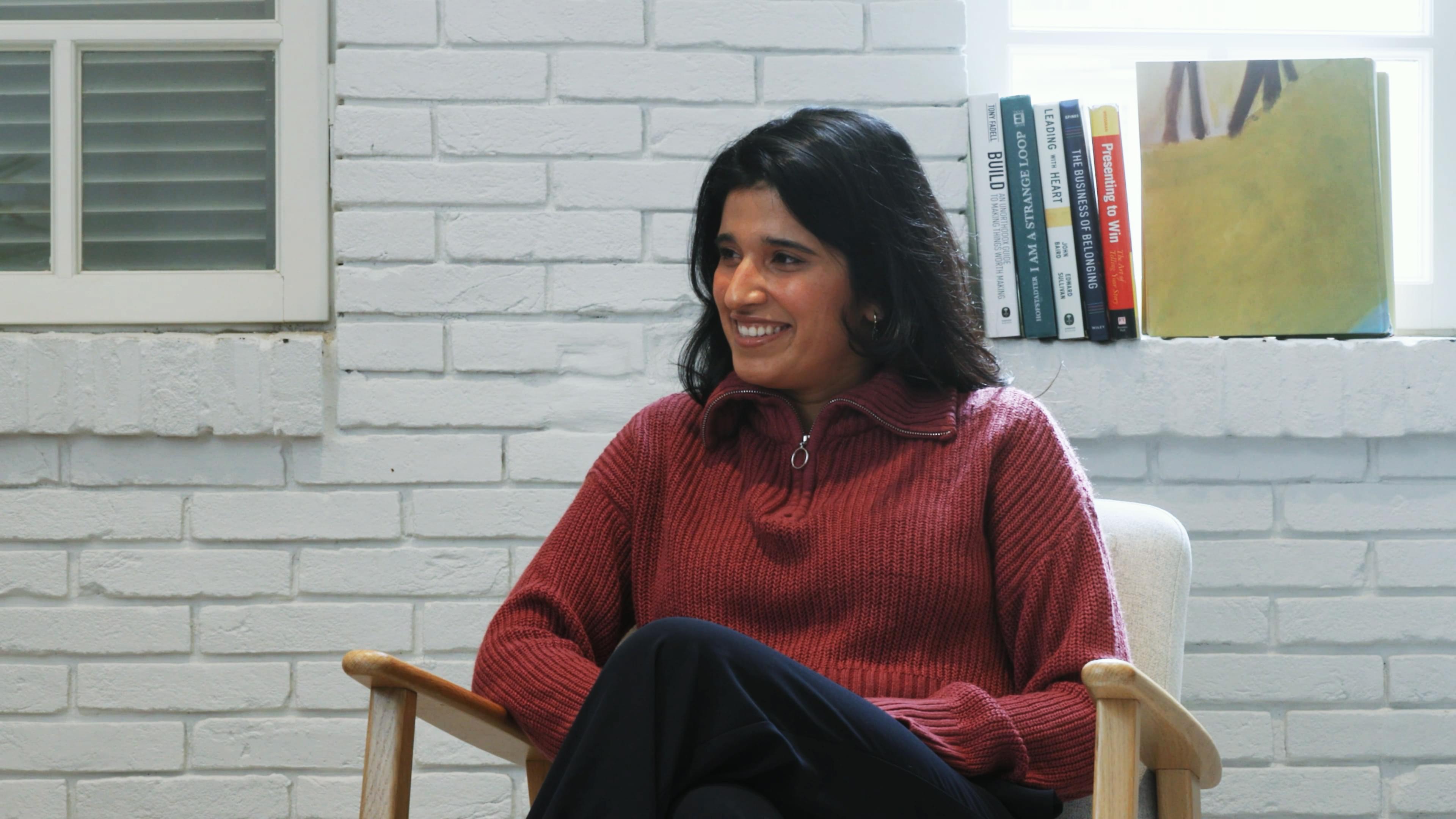
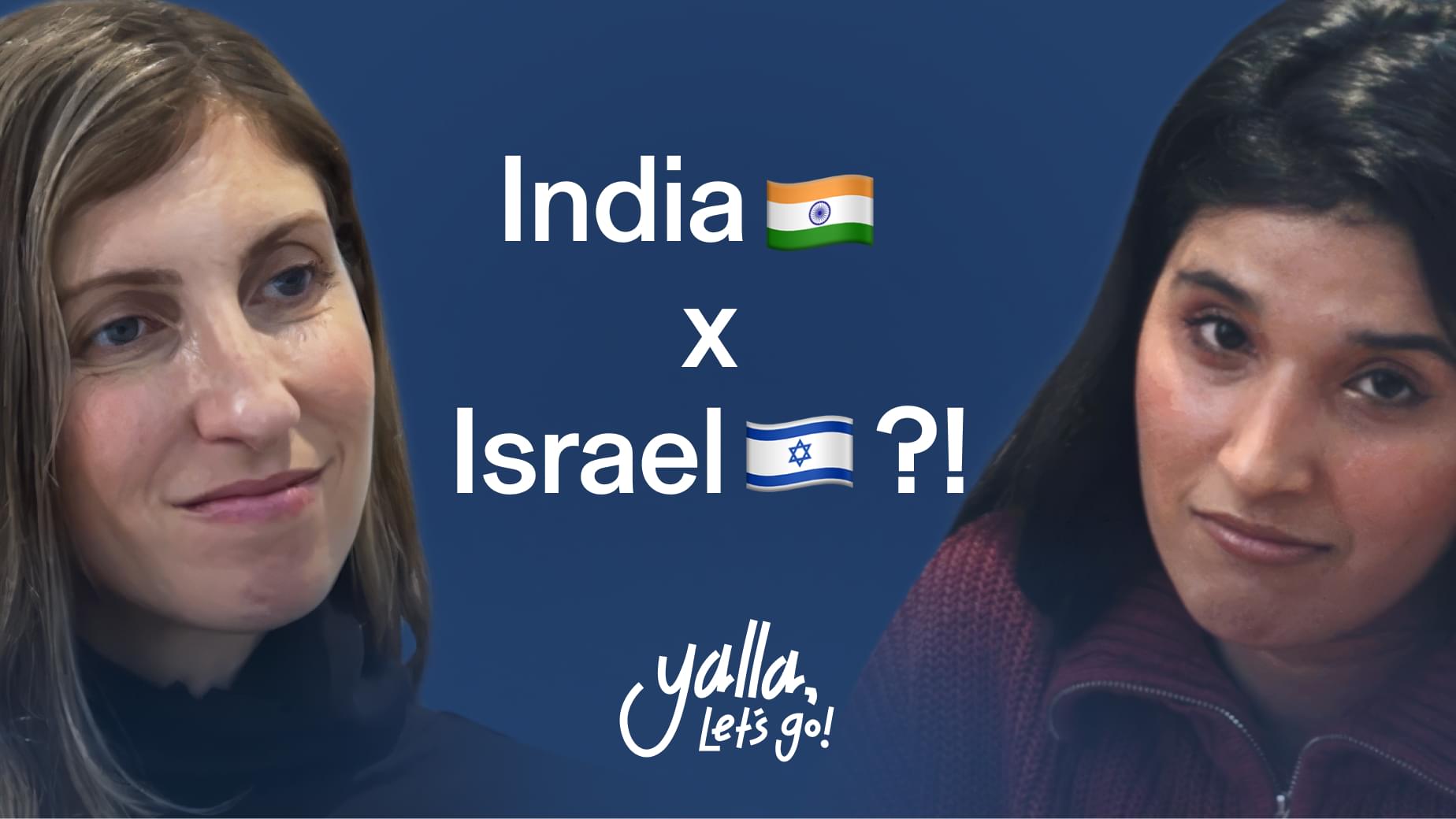
In this episode of Yalla, Let’s Go!, Erica and Abbey sit down with Revital Moses: a leading voice in India-Israel cultural diplomacy, leveraging digital storytelling to bridge two of the world's most dynamic civilizations. As the creator of "Moses in Israel / Indian in Israel" a YouTube and social media project with millions of cumulative views. She has become a go-to commentator on the evolving India-Israel relationship, offering rare insider perspectives that combine Indian heritage with Israeli Jewish identity.
Born and raised in Mumbai, Revital never planned to live in Israel. She made Aliyah with her family just four days before the first COVID lockdown; heartbroken, frustrated, and unsure she would stay.
Fast forward six years.
Today, she’s built a YouTube community of nearly 90,000 subscribers, amplifying India–Israel relations, spotlighting the 80,000-strong Indian Jewish community in Israel, and creating representation where none existed before.
In this episode, we talk about:
- Growing up Jewish in India - one of the only countries with virtually no antisemitism
- Making Aliyah when it wasn’t your dream
- Reinventing your career during COVID
- Surviving a missile strike 50 meters from your home
- Why Israel needs to stop only looking West and start looking East
- Finding independence, identity, and maybe even love in Israel
This is a conversation about resilience, belonging, and what happens when you decide to stay, even when it’s hard.
If you enjoyed this episode, please rate us 5 stars wherever you listen to podcasts.
00:00 – Intro
02:00 – “I never wanted to live in Israel”
04:00 – Making Aliyah four days before COVID
07:00 – Launching a YouTube channel & finding a voice
10:00 – The 80,000 Indian Jews in Israel
13:00 – Why Israel needs to look East
17:00 – The missile strike & choosing to stay
22:00 – Independence, identity & building a life here
25:00 – Bridging two ancient civilizations
27:00 – Rapid fire
Revital Moses (00:00.078)
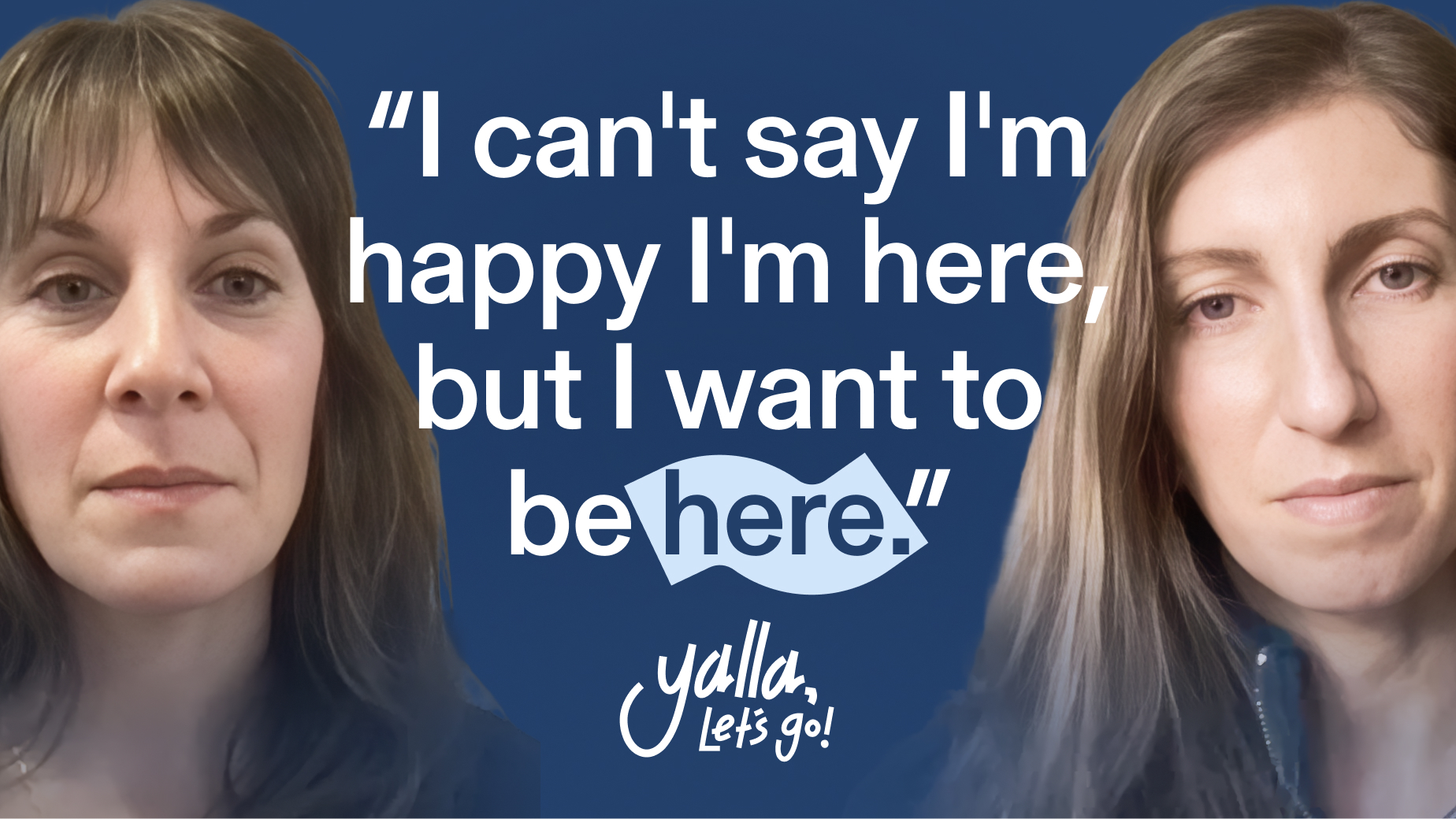
I loved Israel, but I never wanted to live here. I couldn't take the chutzpah. I was like, this place is not for me.
You said to me, Israel's always looking west and it's time that they look east. And you literally are like, they're always looking west. They need to look east. How's
There is a community of 80,000 Indian Jews that live in Israel, but there's no representation on social media. I decided to launch my own YouTube channel and I'm now close to 90,000 subscribers on YouTube. Four or five days into the war, four o'clock in the morning, I think the alarms go off. My parents' bedroom was basically the safe room. The time he closes the door, boom.
you
You guys must really love living here if you decided to stay on.
Revital Moses (00:45.23)
Oh absolutely! This is a great place. And a great place to find the Jewish cardinal. Found your partner? I have. Yeah I think this would be a good story for a Bollywood movie. Me too.
Have you already?
Erica Marom (01:07.246)
Welcome back to another episode of Yalla Let's Go, the podcast that Abby and I started to remind ourselves why we live in this country and maybe hopefully remind some of you, if you have forgotten as well, why you live here. We're gonna talk to people from all walks of life, whether it be politicians or influencers, chefs or athletes, and ask them the questions you really wanna know about what it's like to live in Israel. Today we are so excited to have with us, Ravi Talmosis, an Indian-Israeli creator, who has...
Millions of views on her videos. She made all yeah with her family from Mumbai and she calls herself Israel's favorite Indian Ola. Revital, thank you so much for joining us. Thank you. I forgot something. Yes, I apologize. We're not joining. Yes. Okay, but first as always pulse check Abby. How are you feeling today about living here?
Thank you
Abbey Onn (01:55.544)
So I just moved for the first time in 10 years. I stayed in my neighborhood, but we moved from the apartment that we had been in for 10 years to a house, which is giving me, people give me a lot of flack for being super American, for moving into a house that has a basement and a backyard. But I have really big smelly kids, so I felt like this was the moment, and I host a lot, and so really wanted kind of an outdoor space. But the living in it, as a whole piece of it is, you have to deal with like...
and fixtures and my husband often doesn't want me to be the one to call because he's afraid that they'll hear my accent and like jack the price up by 30%. So that is what happened. My hack is that I WhatsApp them in Hebrew and the mail, I like act as a man. So then they think it's an Israeli guy that's WhatsApping them and then they think about a price and I feel really proud of the hack. And then I have to have Avi and not Avi, which is also what happens to me in the cafe. I order my coffee, the big Avi and I'm like, Abbey.
and then think you're obvious.
Revital Moses (02:48.692)
and I think it's not me.
Okay, we're here today with Revital Moses, an Israeli Indian creator, recently made aliyah with her family from Mumbai. She calls herself Israel's favorite Olah Hadasha from India, and we're so excited to have you with us here today.
I'll be a coos dog.
Revital Moses (03:07.928)
Thank you so much. I'm actually a bit nervous because I'm usually used to being on the other side where you guys are sitting, but you know what? Let's do it.
Let's go. Yeah, let's do Ruby Tal, tell us your life story in less than a minute.
So, Poneraries in India, in the Indian Jewish community, do not want to come to Israel, but never say never, ended up here, never left, end of story.
He was like, okay. So I wanted to pursue arts and dancing, but you know, when you grew up with Indian Jewish parents, you don't really do that. So I ended up pursuing pharmacy. I'm a licensed pharmacist, by the way, but I don't practice it anymore. Eventually, my parents decided that we would make Aliyah as a family. And I was like, why Israel? I wanted to go to the United States because the...
The American dream is, you know, it's a global phenomenon. And if I was to find a Jewish husband, I can also find him in America. Anyway, they were like, you know what, we'll go to Israel if it works out, great. If not, we can always come back. Well, I made Aliyah four days before the first COVID lockdown, so I couldn't even run away. So I had to make it work. And then almost six years later, I'm right here sitting in front of you.
Erica Marom (04:27.0)
Tell us, like, what do you remember about those first few weeks that you made after you knew Aliyah during the COVID time?
Needle.
I was, I was heartbroken because just leaving India was very tough for me. I'm very Indian, like in my soul, like chai and curry, they run in my veins. And also unlike the other Jews living in the diaspora, like I had a different reason to come to Israel. Most from, again, I'm not generalizing this, but most Jews living in the diaspora at this point in time, they're feeling unsafe. And of course, for Zionistic reasons, you want to make Aliyah.
For us, it was more like for my parents at the time. I had no... I mean, I loved Israel, but I never wanted to live here. Why? I came on Taglit. I couldn't take the chutzpah. I was like, this place is not for me. But, know, it has its ways of putting you in situations where you don't want to be and you have to make it work. I was angry because I felt like I had no choice but to do it because I had to make my parents happy and just...
felt obligated to do it as an Indian child. And I wanted to run away, but I mean, there were no flights at the time. I couldn't step out. I couldn't interact. I'm a very social person. So being cooked up with your family members, driving each other crazy, a bit too dramatic, even for an Indian family. But we made it work. I mean, I'm still, I mean, not completely integrated into the community yet because I didn't have a smooth landing like...
Revital Moses (06:02.998)
other people who came before COVID, but I'm here.
You said that you are trained as a pharmacist and we know that you are a gorgeous dancer. But on coming to Israel, you actually really changed your career. Can you talk a little bit about kind of your rebirth and what you're doing now and how that change was for you?
Okay, well I have to go back in time. So when I came here, because it was COVID, I couldn't physically go to these dancing studios. I wanted to pursue dancing full time. It eventually may be choreographed for Noaki Reb. Okay, but that never happened because studios shut down, there's no way to network. So I was like, but I need to make it work. I live in the most expensive country and I need to pay my bills. So what can I do? But I wanted to do something that I really enjoyed.
I didn't want to follow the same thing like I did in India is to do things that my parents thought would be better for me, but do things that would be good, but also I would enjoy. So I decided to launch my own YouTube channel. just wanted to, I've always wanted to be a YouTuber at the back of my head. I was like, you know what? It is probably, it's a good opportunity because I saw there were, there were gaps.
I didn't see enough Indian representation or Indian Jewish representation in Israel. For people who didn't know, there is a community of 80,000 Indian Jews that live in Israel, but there's no representation on social media.
Abbey Onn (07:37.477)
Indian Jews living in Israel? Yes.
Video of yours on Instagram. Yes. Yes. I mean, even at that time, I didn't know it's because I work with the embassies now. They have the numbers because they have all the database, right? So I was like, represent, like, let's do this. I wanted to be a lifestyle YouTuber, but that just completely changed. now I was like, who's going to be my audience? The 4,000 Indian Jews that live in India?
I only know because I watched that
Revital Moses (08:08.748)
and the that don't care about New Olim so much. I was like, you know what, let's not overthink, let's just get into it. Slowly, slowly I realized that there is an audience. 70 % of my audience is living in India. There are Indians who live in the diaspora that love the content I make. I talk about India-Israel relations. I think it perfectly describes where I come from, because I'm Jewish.
born in India, born and raised, and India is one of the only countries in the East that kept the Jewish community safe. There's close to zero antisemitism, and we are accepted completely. So I was like, this is my time to give back to India. Maybe this could be other way. And I'm now close to 90,000 subscribers on YouTube. It's surreal. did not...
Imagine that I could get to this point, this is a niche topic, India-Israel, because I know Israel and US relations is highly, it's a very popular topic, but who speaks about India-Israel? But I saw that gap and I was like, Kaila, let's give it a try and we'll see what happens.
So let's talk about those 90,000 subscribers for a minute. So do you know a little bit about who this community is that you've built around yourself? You've said that it's been really powerful. So it's not just subscribers for you. Who are these people that are really part of your community?
A bunch of them are course Indian Jews. there are hardly any Indian Jews left in India, less than 4,000 currently in Mumbai and cities like Thane. There is a community which is northeastern, if you've probably heard of it, Ben Emanashay. They're probably gonna be coming very soon for Israel. But apart from that, my major chunk is the Hindu community that see shared values and shared challenges with the Israelis. What I mean by shared values is like,
Revital Moses (10:08.27)
Both communities focus on growth, education, family, upbringing, thriving together. And when we talk about shared challenges, it's like being surrounded by very friendly neighbors who are trying to get us and create problems. Also, if you see in terms of history, both India and Israel, they gained independence like a year apart. 1947 for India, 1948 for Israel. The partition story, India, Pakistan, Israel, Palestine.
So they see these similarities. I understand that religiously, fundamentally, they're very different. Monotheistic, Hinduism is a little more, it's very different. But in terms of culture and value, they're like, oh, this is amazing. Why didn't we see this before? But now they see it. And they see Indian representation in Israel. So they're like, give us more, tell us more, bring us more idea of soldiers. You want to know what's happening on the ground.
Get us more people in defense type because you're, because defense, we are known to be the best. So one of the best in defense. Give us more. We want to, we want to partner with you. How can we do it? Let's collaborate. That's where it's going now. Have you, you know, it can't.
been always easy to be an influencer out of Israel over the last couple of years during this really sensitive time. You said there's not a lot of anti-Semitism in India towards the Jewish community. Have you felt any backlash or has it mostly been positive?
It's mostly been touchwood, very positive, thank God. I do get a few messages, but I completely ignore. And if they do comment in the comment section, my followers just take care of it, to be honest. I've been very lucky that, sometimes I feel like I live in a bubble because when I compare it to my other Jewish content creators, they get a lot of hate online. I get it too, but I receive more love than hate, to be honest.
Abbey Onn (12:07.928)
So you're involved both in the kind of content creation and the Indian Jewish intersection, but also in the Israeli TEP intersection. Yes. How do you think working in Israel has changed your career after you left your bubble and mocked down? What about being here has been influential for you?
I'm not a developer. I'm not an analyst. I can be a below average graphic designer. What can I do at this point in the tech ecosystem? And then I realized that there are roles that are tech adjacent. That could be marketing or creating videos. And I'm like, that could be my strong point. I'm already making videos for my channel so I could bring that expertise and do it for the Israeli tech ecosystem. That's how I got into Israel tech where we are.
Now interviewing CEOs, VCs and founders and sort of like democratizing and decentralizing how content gets fed in the ecosystem. Also, there was a big gap at the time when we started was like a lot of the content was in Hebrew. And if let's say investors in the US, so India want to invest, there's no way to know because of these Hebrew. So let's start in English. And that's how it began to take shape. But I'm very happy because I'm like, it's a good intersection of content creation and the tech.
And then also bringing in, I'll say that attracts more Indian founders and investors to take more interest in Israeli technology.
Okay, so kind of an opposite question, but Israelis, as you know, love tribe and safety. Yeah, right. They finished the army, they grow their hair out, they go to India to find themselves, to find themselves. It's the best, you know, part of their life, Right now, we're working at the intersection of trying to get Israel interested in investing in India, not just traveling there under tucks. How are you working on that?
Revital Moses (13:47.265)
If you're
Revital Moses (13:56.046)
I think the audience is different because the Israelis that you're talking about, they're just like fresh out of the army. are like, that's it. We either go to South America or we go to India or the other Asian countries, right? I am trying to target Israelis that are actively working at tech, that see an advantage or just like a partnership in India because India is now the fourth biggest economy just surpassed China.
And also we have the biggest population on planet earth at the moment. So it is a missed opportunity if we don't partner in terms of tech. Actually, there's a big wave of tech coming up in India because during COVID sharp tank India was launched. Also a lot of technology started to come up and they're like, they can't even, we can. And that's how we just started to like bloom and blossom and it's growing. I think it's a good way to partner.
So if there are any Israeli founders or VCs interested in investing in Indian technology or want to set up a manufacturing unit in India, get in touch with me.
pitching. Yeah I remember when we spoke earlier you said to me, Israel is always looking west and it's time that they go east. And you literally like they're always looking west, they need to look east.
For some reason, I mean, I understand there is a diplomatic relation with the West, which is great, but as times change and the geopolitical scenario is also changing, I think we need to change our strategy as well.
Erica Marom (15:31.726)
Speaking of looking east, you've said, you know, first of all, you came here with your parents. Yes. It wasn't like your choice. You've often said that you sometimes feel like, you know, when you look back east, that's home for you. How do you feel about that emotionally as you're building your life here? Do you ever think of going back?
What are you?
Revital Moses (15:49.39)
A lot of people ask me that. I'm like, if you would have asked me this question maybe three years ago, I would have said yes. Maybe I'll just go back. I didn't feel there was a connection here, but I feel like over time, especially, it's just sad to say, but just afterwards, just I feel more connected to Israel and just with the people. I feel like I've built a life for myself. I have friends here, a loving community. Now I've built this from scratch. I don't want to leave all of that and
you know, move back to India. India is lovely, but I definitely see my future here. I would love to go every three months, Salam alaikum for about 10 days. And I'd also take a bunch of you with me for an Indian Jewish trip, if you guys like. We would love that. I've actually got a I'm not sure if we're done.
So you said that there was a time when it was more difficult for you and then you got easier. Yes. What do you think is like, what do you feel is like the hardest part for you of living here?
It's definitely the language. I think I cracked the chutzpah thing. I think I do have the chutzpah, especially after my family was affected during the Iran-Israel war. had to deal with a lot of stuff. So I was like, I put that chutzpah soul inside me and just, I think it can be with Israelis at this point. I think it's language and bureaucracy that I really struggle with. But I think in time, it'll be okay.
That's the life of an immigrant. Yeah. There's always going to be coming off every now and then, but I think at this point of grown a thick skin term, go through it.
Abbey Onn (17:28.942)
I'm going agree with that because you just chose language over what happened to your family during the Iran war as your big ____. But if it's okay, I want to ask you to talk a little bit about what happened. You know, it's painful.
biggest challenge.
Revital Moses (17:39.832)
I know it's
All right, so we are talking, I think, four or five days into the war. don't really exactly remember the date. It's my way of coping with trauma, but I tend to forget things. My apartment doesn't have a mammoth or a micolot. So, and they do. Which is a safe room. Yes, which is a safe room. I do not have a safe room. So my father was like, yeah, I'll come see over. And then next day in the morning, you can go back. We live very close.
four o'clock in the morning, I think the alarms go off. And then that day I was being lazy. I did not want to go. My parents' bedroom was basically the safe room. I didn't want to go. I'm like, you know what? The iron door was probably going to take care of it. I don't need to run. But my father pulled us out. The time he closes the door, boom. And it took us a second. I'll tell you what happened. First thing that happens is the mama the door, which is supposed to be an iron
door was actually a wooden door. Oh my gosh. It flew on my sister because she was sitting right in front of the door. But we all ducked so and she was stuck like this. Know what I mean? So the door fell on her with force. So she was kind of bruised and injured. It took us a second to understand what happened. I thought we were already on the other side. I thought we were gone. I went deaf for a few seconds because the impact was so loud.
After five minutes, we thought, my mother thought that the missile probably fell in the apartment. So we were scared to even step out because we thought there's going to be a big crater or a hole and then we're just going to fall down. But then we realized it fell about 50 meters in the parking lot. But the impact was so big that it kind of like impacted in the radius of one kilometer around that place. Now, what do we do?
Revital Moses (19:31.598)
I don't really know the protocol. Like yes, at the top of my mind, yes. You know, they told us like pack your important documents and have your clothes ready. Thank God my parents had that ready. So we grabbed everything and then we just left because we didn't know if the building was going to fall down. gosh. Anyway, I thought the firefighters were going to come and rescue us like they show on Instagram. That's what I had in mind when nobody came to save us.
It took us a few, a couple of hours, but at the end of the day, they made arrangements at one of the hotels by the beach. And then the time you settled within an hour, there was another siren. And they put us, they put us up on the fourth floor. So I had to run all the way down every time there was a siren, which is like every five, six hours. I was actively involved in filling all these million forms we had to fill. And then.
applying for insurance and applying for this and applying for that because there was no procedure in place and nobody knew nothing. I think I'm more trauma from this entire process compared to being hit. You know what I mean?
everybody today how your parents and your sister
Thank God everybody's physically, mentally, mentally we're definitely in more shaken. So it's going to take some time for recovery, they found another apartment and they've completely moved and you know, they're now continuing living their lives. Yeah, I think this would be a good story for a Bollywood movie.
Erica Marom (21:04.064)
And that whole experience didn't make you think.
Maybe I should fly back to India.
You're right. A lot of our friends and family in India were like, why didn't you fly back? And I'm like, do you expect me to leave everything and just fly back? There was like a fleeting thought of flying, but I'm like, you know what, this is it. Like if you've chosen to live here, this is what we deal with and we've accepted it's okay. Israel will take care of us. The people will take care of us and it's okay. We will get through this. I think we were in that mindset and we got through it.
So it must be really, you guys must really love living here if you decide to just stay on even after that experience.
Oh absolutely. I also made a video. I made sure I got like 100,000 views.
Erica Marom (21:52.174)
So what do love most about living in Israel?
So my answer is definitely going to be a bit different. I definitely love the freedom. As somebody who's grown up in India, as a woman, it can be a little bit annoying. I felt safe and unsafe in India a lot of times. But here I feel like as a woman, I feel safe walking around even at 11 o'clock in the night. I feel like I've found my independence. It's just a culture. It pushes people to move out after...
They turn 18 or 21. If I was living in India, I would probably be living with my parents and I would probably move out when I would get married. So now that I have, I have my own studio apartment. That's a big win for somebody who comes from India, by the way. It's like a big deal. And I feel like I found my own voice in terms of content creation. felt like I've been successful enough to create this Indian representation where people now want to listen and collaborate and partner.
And you're our story as a community. So I feel like that's a big win because that was in the case five years ago. And I'm Nevo, so.
Okay, you said that there's 4,000 Jews left in India. And if you had to give an advice on making aliyah, what would you tell them?
Revital Moses (23:11.264)
It's not as tough as it sounds and looks like. Life can be hardier, but just like you're more independent, more self-sufficient, and it challenges you to do more than your capacity. Israel is good for the longer run. If you're comfortable being in your comfort zone, besede. But if you want to, you know, step up and do something for the community or for the world or even for yourself, I think.
This is a great place and a great place to find a Jewish partner because in India, the community is so small, you're either related to somebody or you're just not a good match. A good chance to make caramel look like ladies.
can be.
So have you ever found your partner?
I have, I have, I'm not going to reveal it now, maybe off camera.
Erica Marom (24:03.042)
last question. When you're 70 years old and looking back on your life, what do you think is one thing that will have been true because you made Aliyah and lived in Israel that wouldn't have been true if you had stayed in India?
If I would have been living there, I didn't think I would have had the opportunity to start this spark of India, Israel. And I just feel like I have that passion and to go a long way to bring these two ancient civilizations together. Not that I'm saying other people aren't working in this space. I just have the passion for it. I don't know if you know why I named Moses in Israel for three reasons. My last name is Moses. The OG Moses never made it to Israel. So was like, it's about time. And then.
If you know of a story, he runs away because, you know, he kills an Egyptian and he feels guilty and angry, runs away. When he runs away, he finds, a tribe finds him and makes him one of his own. That's where he finds his wife, Sephora. Now consider Moses as my ancestors who fled and came to India. In India, and consider India as a tribe that accepted my ancestors and made them one of their own, made a part of their community. So.
I felt morally responsible to start this vision and like take it forward. I don't think I would have been able to do that if I was living in there.
Okay, we're gonna ask you some rat food questions. So you should give us one word answers. Okay. Ready? food or sack? Israel.
Revital Moses (25:34.315)
hummus.
best place to get authentic Indian food.
Israel.
place to reset.
It's your favorite Hebrew word.
Revital Moses (25:43.661)
Mama.
The thing you miss the most from media.
The people.
your best only in Israel moment in one sentence.
when somebody said that I didn't look India.
Abbey Onn (25:55.16)
Revital, thank you so much for joining us. This was an amazing conversation and we're so excited to continue following you and all of the things that you're creating.
Follow me, Moses in Israel, on YouTube.
And we're waiting for our Indian Bollywood dancing lessons.
Invite us to your mother's kitchen.
Yes, also not much everything everything you just said is happening. Thank
Erica Marom (26:12.366)
Thank you so much. Thank you so much to our crew, Nadab, Sarah, Kira, Sophie, Dalit, Ori, Poon, I've done this without you. Tell your friends to listen in and hear all about why it's really awesome to live in Israel.
Yalla, let's go.

Follow Revital on Instagram
Subscribe to Revital’s YouTube Channel
Subscribe to Yalla, Let’s Go
Learn more about Aleph
Sign up for Aleph’s monthly email newsletter
Subscribe to our YouTube channel
Follow us on Instagram
Follow us on TikTok
Follow Aleph on Twitter
Follow Aleph on LinkedIn
Follow Aleph on Instagram
Hosts: Erica Marom, Abbey Onn
Executive Producer: Sarah Bard
Producer: Sofi Levak, Dalit Merenfeld, Myron Shneider
Video and Editing: Nadav Elovic
Music and Creative Direction: Uri Ar
Content and Editorial: Kira Goldring
Design: Rony Karadi
Follow Revital on Instagram
Subscribe to Revital’s YouTube Channel
Subscribe to Yalla, Let’s Go
Learn more about Aleph
Sign up for Aleph’s monthly email newsletter
Subscribe to our YouTube channel
Follow us on Instagram
Follow us on TikTok
Follow Aleph on Twitter
Follow Aleph on LinkedIn
Follow Aleph on Instagram
Hosts: Erica Marom, Abbey Onn
Executive Producer: Sarah Bard
Producer: Sofi Levak, Dalit Merenfeld, Myron Shneider
Video and Editing: Nadav Elovic
Music and Creative Direction: Uri Ar
Content and Editorial: Kira Goldring
Design: Rony Karadi
Follow Revital on Instagram
Subscribe to Revital’s YouTube Channel
Subscribe to Yalla, Let’s Go
Learn more about Aleph
Sign up for Aleph’s monthly email newsletter
Subscribe to our YouTube channel
Follow us on Instagram
Follow us on TikTok
Follow Aleph on Twitter
Follow Aleph on LinkedIn
Follow Aleph on Instagram
Hosts: Erica Marom, Abbey Onn
Executive Producer: Sarah Bard
Producer: Sofi Levak, Dalit Merenfeld, Myron Shneider
Video and Editing: Nadav Elovic
Music and Creative Direction: Uri Ar
Content and Editorial: Kira Goldring
Design: Rony Karadi
.jpg)
.jpg)
.jpg)
.jpg)
.jpg)
.jpg)
.jpg)
.jpg)














.jpg)
.jpg)
.jpg)
.jpg)
.jpg)
.jpg)
.jpg)
.jpg)
.jpg)
.jpg)
.jpg)