Aleeza Ben Shalom


How can values create value? On this podcast, Michael Eisenberg talks with business leaders and venture capitalists to explore the values and purpose behind their businesses, the impact technology can have on humanity, and the humanity behind digitization.




Aleeza Ben Shalom
Aleeza Ben Shalom
Aleeza Ben Shalom

Aleeza Ben Shalom
Aleeza Ben Shalom
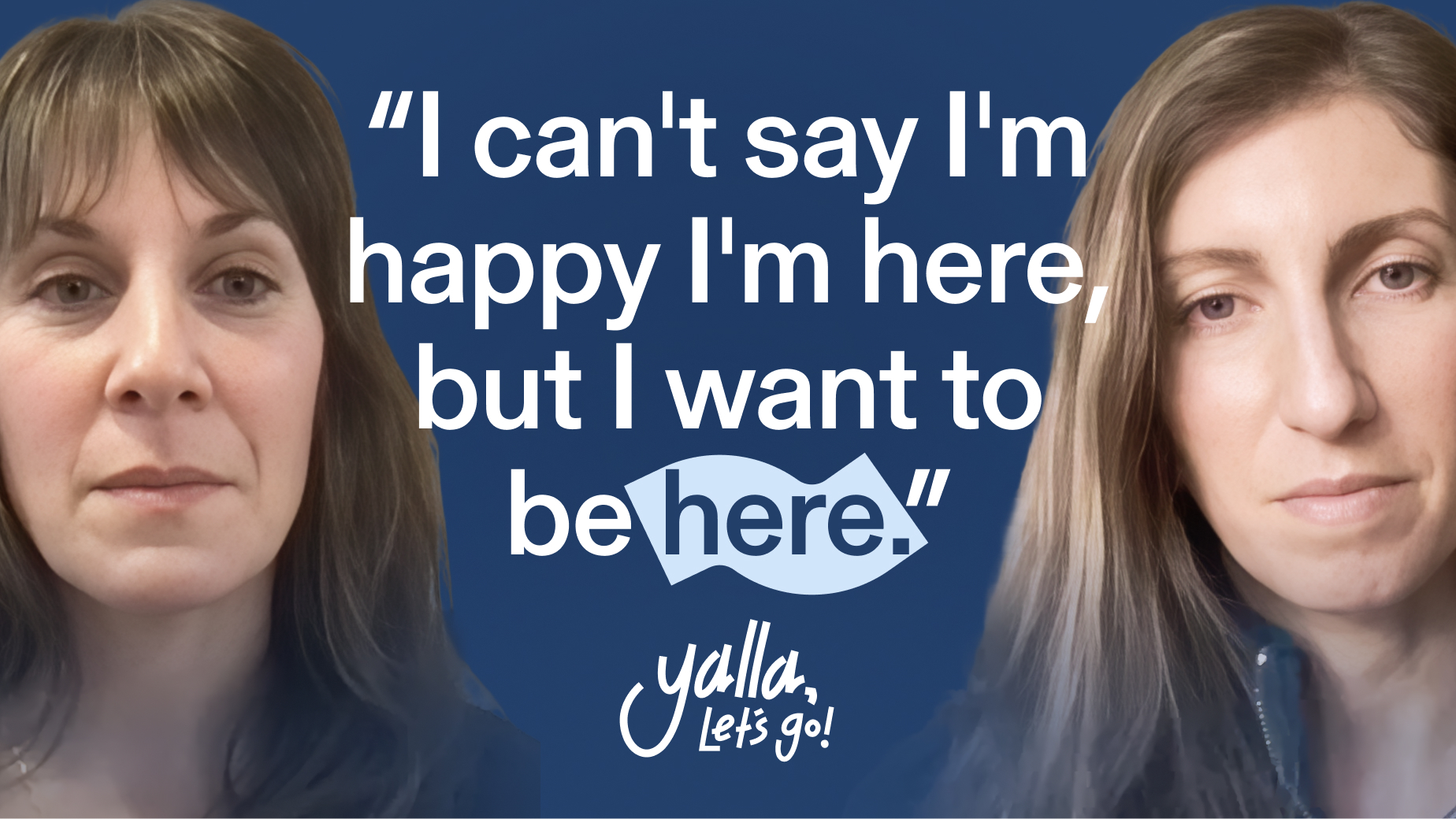
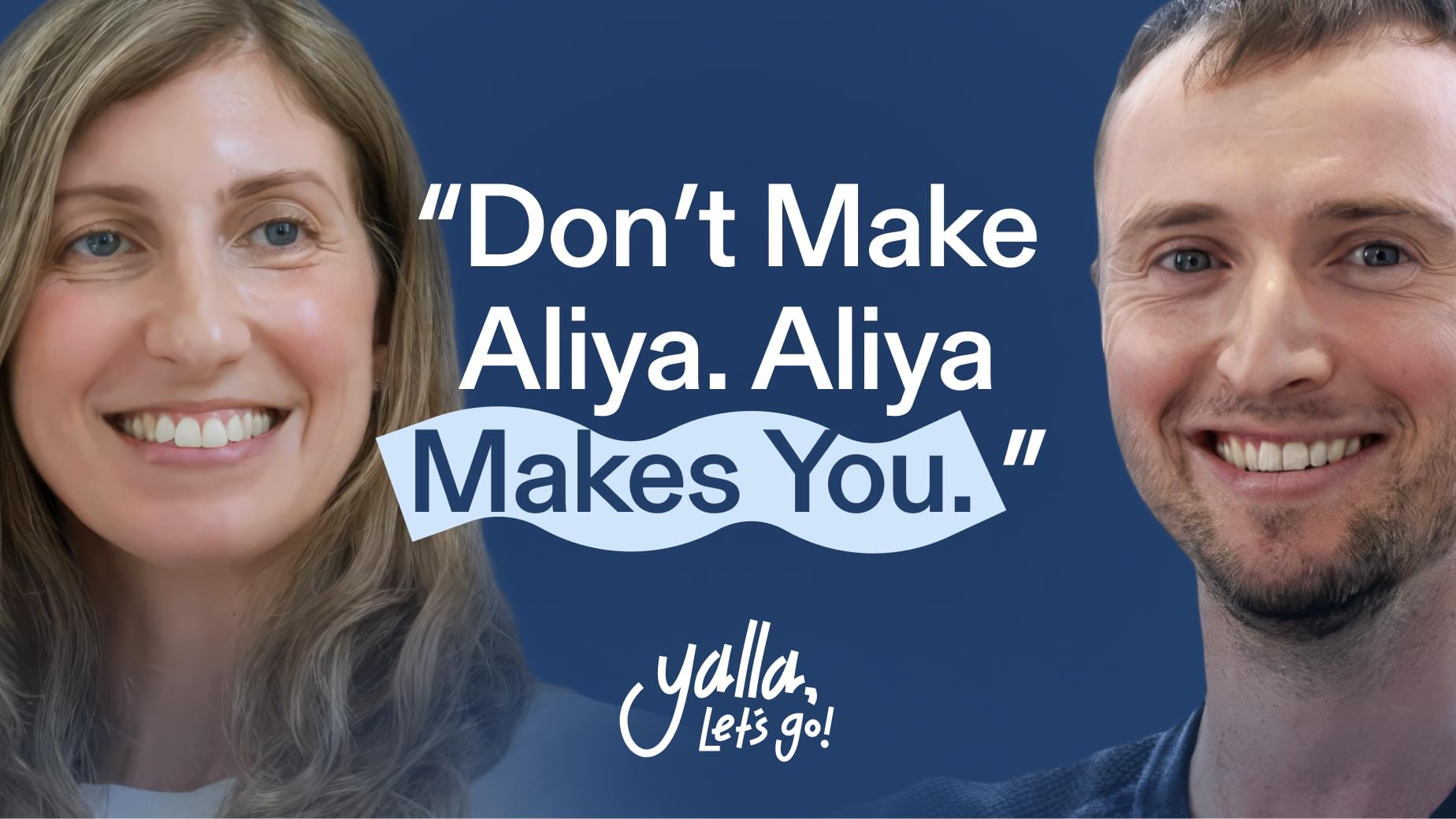
In this episode of Yalla, Let’s Go!, Erica and Abbey sit down with Aleeza Ben Shalom, a renowned relationship coach and matchmaker who shot to international fame as the star of Netflix’s Jewish Matchmaking. She is also the host of the “The Jewish Matchmaker” podcast on ILTV. To date, she has successfully helped over 250 people make their way down the aisle, and has trained over 450 matchmakers and coaches. Currently Aleeza alongside World Mizrachi has begun the Jewish Matchmaking Movement.
Yalla, Let’s Go! explores what it really means to make Aliyah and build a life in Israel - the opportunities, the challenges, and everything in between. Each episode features candid conversations with Olim from diverse backgrounds. The podcast is produced by Aleph, the team behind Invested, Israel’s leading English-language business podcast.
If you enjoyed this episode, please rate us 5 stars wherever you listen to podcasts.
00:00 - Intro: Aleeza Ben Shalom Made 300+ Matches
02:25 - From Philly to Netflix
04:05 - Aliyah Was My Dating Filter
05:45 - Wait Too Long and You’ll Never Move
07:05 - Why Israel Wins at Love
08:15 - Why Olim Give Up and Leave
09:00 - The Kotel Moment That Changed Everything
10:40 - Why Aliyah Breaks (or Builds) You
12:45 - The 5-5-5 Rule That Ends Dating Confusion
13:55 - Why Not Touching Changes Everything
16:30 - Raising Kids in War Made Them Stronger
18:20 - Jewish Life vs. Jewish Convenience
20:55 - The Life Choice I’ll Never Regret
Erica Marom (00:00.11)
How many couples have you set up?
Aleeza Ben Shalom
Set up several hundred or 250, 300. I don't count. No, why count? We came at the perfectly right time to mess up our children's lives, but COVID ruined everybody's lives. So we were fine.
33% of English-speaking immigrants will leave it in the first three years because they don't find love or they don't find their job. But you came and you kind of rebuilt a piece of your career here. Can you talk to us about how you made that happen and how it's sustaining you and your identity here?
It is a struggle. It's a struggle to get here. It's a struggle to be here. It's a struggle to stay here. And there's just a special blessing that happens and you don't know what that is until you get here. From your perspective,
Erica Marom
Is Israel a better place to find love? Is better build relationships?
Aleeza Ben Shalom (00:39.406)
Is Israel a better place to... It's a much better place.
Abbey Onn (00:53.176)
Welcome back to another episode of Yalla, Let's Go, the podcast that Erica and I decided that we needed to start to remind ourselves of why we made Aliyah. Why do we live here? So we are going to spend a number of episodes talking to people from all across tech, ECE, athletes, you name it. And today we have the amazing opportunity to speak to a matchmaker. But before we do that, I want to ask Aarapa, pulse check, how you feeling about loving us well today?
influencers, chefs.
Erica Marom (01:20.398)
Well, apropos our superstar guest, I feel really good about it today. I was just at a wedding the other night near Netanya of a friend who we both met at the same time like 20 years ago. And she just got married to her mid 40s. It was the most emotional.
We were at the same wedding. I was at that wedding with my son. Really? At table 7.
It was at that moment! It was very beautiful and emotional. Horrible! He cried while she was walking down the aisle and I was like... It was so beautiful! was such an inspiring moment!
was business.
Abbey Onn (01:59.086)
So perfect transition to introduce our guest today, Aleeza Ben Shalom, who is known as one of the best known Jewish matchmakers out there and the host of Jewish Matchmaking on Netflix, and Enola. And it is our absolute pleasure and honor to ask you easy and hard and all of the questions today. So thank you for being with us.
Take for having me. How many couples have you set up? stop. Like how many couples, how many couples are married?
Ooh.
Aleeza Ben Shalom (02:26.126)
Yeah, several hundred or two hundred and fifty hundred. You don't count. No, why count? It doesn't. They say you make three matches and you go to heaven. It's written nowhere. Nowhere. Is it written not in the Torah? I guess every rabbi in the world, it's written nowhere. But it is a massive myth that even if you just set up yourself and get married, if you just get one person married.
3
Erica Marom (02:48.11)
So first, tell us your life story in a minute or less. How easy did you into matchmaking in that story?
Okay, grew up in Philly, born in a maze, Jewish, conservative, loved my Judaism, but wasn't living my Judaism. Decided in my mid-twenties to do some Jewish stuff. Came back from a retreat. I was like, oh my gosh, I'm in. I don't know what all the rules are, but like game on, let's do this Jewish thing. Started to keep kosher, started to keep Shabbat. And then I'm like, wow, you're more than a hoax. And I was like, no, I'm just Jewish. I'm just practicing my Judaism.
And I was like, okay, that's it, great. Let's yell, let's get married. So I went on a mission to find my husband. I spent a year trying to find him and I found him. And a year later I got married. Fast forward, we had five kids. We made all that five years ago. And the Netflix show came out in 2023 and totally flipped my life. When I had my first two kids, I became a matchmaker online. I was like,
just trying to figure out what to do. My grandma was like, you could do matchmaking. I was like, OK, cool. So that's what I started doing, and I just never stopped.
Wow. And tell us how did you end up here? Why did you make all the out? Why Israel? so that was one of my deal breaker things. When I was dating, I was like, if you
Aleeza Ben Shalom (04:07.182)
You don't want to make aliyah and then I don't want to date you. And he's like, yeah, yeah, I want to make aliyah. was like, great. When? No, I need a timeline. So he said like, whenever I live in a right moment, said, okay, five years. He said, whoa, too soon. I was like, okay. He said 10 years. was like, too long, seven years. We'll go in seven years. And we tried to do that, but it just wasn't great timing. got the advice, so that guidance.
told our parents who were devastated that we would be leaving, that we're not gonna go, we don't have active plans until we seen the signs of Mosheach, know, really, really here, here, we're not going. And 18 years later we made Aliyah. Yeah, COVID happened and I was like, we're done. We get out now. And he's like, how soon is now? I was like, as soon as Nefesh and Nefesh processes paperwork, that's now. And it was eight months after we made that decision that we landed in Israel.
That's amazing, let me attend and-
with my youngest being seven, my oldest being 17, and a pandemic puppy. And yeah, it's just convenient, easy. We came at the perfectly right time to mess up our children's lives, but COVID ruined everybody's lives. So we were fine. It wasn't a deal. We so who cares? You're not getting a good education. You're getting no education. It makes no difference if you live in Israel. Everybody has a puppy. Like those...
school in Los Angeles.
Abbey Onn (05:20.662)
As a puppy, you'll be fine. Right. Good. OK, so we're fans from before and current and late, but you often talk about past, present, and future. I do. Yes, we are real fans. And you just alluded to that in your thinking about baking aliyah. Can you talk about that kind of in general and how that thinking influenced how you made aliyah?
So looking at life and my lifetime, I had a conversation with my husband and somewhere in 2016, my mom passed away in 2016. And I said, listen, we gotta go. I haven't planned. We'll get there by the time our oldest is entering high school and then everybody else will follow along. You need to get there for high school. And we looked into the timing and I was like, it's not gonna work. It's not gonna work. It's like, no, if we miss the moment, we're gonna miss it. And then I was like, and that's it? And then we're stuck.
in America. And he's like, well, it's okay, you can visit. I was like, visit? I don't want to visit. I want to live there. I want to be there. And if I visit, that means my children live somewhere else. Then I have to go be there with them. I want everybody here. And it wasn't the right time until it was the right time. But at a certain point, I said, if we don't go now, we'll never go. And then what? What do we live our life for? What do we want? What do we believe in?
Where's our connection? If we love Judaism, we love Israel, we have a connection to spirituality at God, why are we not living the most Jewish authentic life that we can live? And it's here. There's nowhere else that it's better.
I'm sure you've spoken to a number of olim, I have spoken to like three in the last couple of weeks, who have made Aliyah actually looking for love, hoping to find their basheret, their spouse, their person in Israel. From your perspective, like is Israel a better place to find love? Is Israel a better place to build relationships?
Aleeza Ben Shalom (07:09.678)
Israel is better place. It's much better place. You have so many options. You have people from all different countries speaking all different languages, culturally Jewish, there's many different flavors, and it's population debt, right? And it's people that are also passionate. Like if you are in Israel, you have some grit, you have some inner strength that just gets you through things because you can't live in Israel without that. You have to have...
really something strong in your court, which is also really good for marriage. And this isn't a dig for anybody who needed to get out of a marriage. There's always an appropriate time. That's why it exists in Jewish law to do that. There takes a lot of inner koach, and strength and effort to actually live here and stay here and to stay in a marriage also and build something. They have similar qualities. So it's the best place to be to find something.
When I started building the organization, I found a piece of data that said 33% of English-speaking immigrants will leave it in the first three years because they don't find love or they don't find their job. You're working on the love part of it, which we're so grateful for. But you came, and you kind of rebuilt a piece of your career here. Can you talk to us about how you made that happen and how it's sustaining you and your identity here?
Yeah, we came and everything was with us. So we meet Ali on March of 2021. I had been interviewing for the show. I knew it was a possibility, but nothing was done. It was actually just after we got off quarantine, because we were years during bidud, that we were at the cocktail and we were praying and all of that. And there was like, my phone was buzzing. And I had a meeting with the producers to say, by the way, we're sending a contract. You got the job. I was standing at
was unknown for us.
Aleeza Ben Shalom (08:56.3)
the kotel when I received that message. was like, okay, God, I kind of had a question. Like, is this going to be good for me? Is this going to be good for the Jewish people? Will it be good for my children’s shiduchim? And, you know, to get that message right there was something really powerful. And also it was something that did tremendously help to figure out how to make it here. My original plan was just I'm portable. My job, dating, coaching, match making, it's all virtual. I could be sitting in my car. It could be online. It could be in Israel. I could be in any place in the world. And we had a plan. told my husband, listen, you take a sabbatical, just, you know, enjoy life for a year. You help out with the kids, the family and cooking and schlepping and whatever, whatever needs to be going on and enjoy the family. Like, we wanted that. And I'll figure out how to earn a living for the first couple of years. Let's whatever. And you'll figure out what you want to do here. And then it continued. And so he was like on a sabbatical and then he was semi-retired. And then it's like, I think if you don't work for a couple of years, like you're retired.
And it just accidentally happened, because I started traveling all over the world and things really took off. So there was tremendous blessing in that happening. You know, the first couple of years, it is a struggle. It's a struggle to get here. It's a struggle to be here. It's a struggle to stay here. And so struggle to stay, you know, positive to make everything happen. But there's a lot of hashgachat patik, divine intervention that happens. And in Israel it's like this, you know, like, oh, well, what are you doing tomorrow? People can't even make plans. Like, I don't know, I'll let you know.
Let me know if you want to come like just yes or no. I plan three, you know, three months out, even Shabbat. You want to come for Shabbat? I'll let you know. You'll let me know when I got to cook food. I got to go buy. got a shop. Everybody exists like in the moment. And there's just a special blessing that happens. And you don't know what that is until you get here. You don't experience it. can't even fathom how's it going to work out. Well, you should, you need a plan. You need to know how you're going to sustain yourself at basic minimum with your needs at community.
But then after that, you come and then you figure those pieces out. But you have to be committed. That's the number one thing, by the way. Same thing with marriage. You just have to be committed to, coming and I'm staying because this is my path for life. That's it.
Abbey Onn (11:06.488)
So since you've been here, has it changed the way that you look at love? Has it changed the way you look at relationships at all? Has it changed anything about your relationship with your husband, Gershop?
I think that the way that I look at love is so much broader now, like where, I don't know, you live in America and you live in Philadelphia and you're like in this little bubble and you're like, where's my person? And you're looking no further than New York to Baltimore, right? That's it. Being here, everything is so international and so worldly. People coming in and flying in and moving and living and working. it's like, you really could expand so much further than your own community. And we don't think that way.
or least I did think that way in America. With my husband, I think we've learned how to adjust to a new life and a new lifestyle. So being Israeli is one thing, and we figured out how to be Israeli and be ourselves. I think there's two pieces there. And we've also entered a different phase of our relationship. Like I went from being a full-time mom to transitioning part-time, working part-time mom to full-time working and also being a mom, doesn't go away, but for him also to be in the home. And there's been massive transitions happening, but I just see just with all the people and culturally who they are and how people shift as they evolve here, there's a lot of inspiration. And so I think our relationship has evolved from the things that I see here from the different types of people and the different cultures and just we're constantly learning and adapting. And some of it is just...
It's like through osmosis. like it almost just happens organically as you're sleeping. Your brain processes it all and like new behaviors start to come out.
Abbey Onn (12:49.934)
Tell us about the 5-5-5 bowl.
Explain it. Yeah, I think you need five deeks in no more than five hours.
Thanks.
Aleeza Ben Shalom (13:00.398)
No, I'm not gonna explain. Get the book. Five dates in no more than five hours per date and no more than five days between dates. What five hour date? No more than five hours. I keep on robbing. We're on a date for nine hours. I said nine hours. I don't know what you're doing, but you're burning one of the two of you out or both. How's this relationship gonna continue? What do you think? you think we're watching? Sorry. We're like, no. Well, I don't know. I'm not saying everybody follows the rules that everybody does.
for night hours without touching.
Aleeza Ben Shalom (13:28.844)
But they stood up, they talk all night. They're like sitting and talking and walking. And then we go to eat and then we go to go roller skating and then we go and then we need to eat again. But the concept is first of all, five days. So you five dates. You should have five dates. You should have in mind that I'm going out with you once. I could go out with you five times to see how much I really do like you, right? Like what our connection is. no more than five.
hours because yeah we don't want people to for now but also no more than five days between dates because like i see you on sunday then i don't see you again till next sunday like i already forgot about you right you are gone from my mind or they like obsessively like a text and that's ridiculous
You're saying you should go out five times. You should do that in a small amount of time. So, how to decide dates you can say, let's keep going or...
What two and a half weeks we're done and also like no touching it solves every problem And I don't care religious secular old young you come from another culture you to say hello like good for you That's your thing But I'm just telling you if you actually want clarity and you don't need a therapist and you don't need a dating coach And you don't need a match or do you literally need nothing and no one if you don't touch and I want to see you again I like you and if we don't touch and you want to see me again, you like me. There's no question It like literally removes all doubt and by the way, I'm
I can convince men of this concept and they'll buy in faster than women. And they'll tell me, I'd go 10 if I like her. And all the women go, no, I don't, you know, then he's not gonna stick around. They said, if you do that, he's not gonna stick around anyway. No, it's not true. And I was like, try it, try it.
Erica Marom (14:59.256)
So you talked a little bit before about the struggles. There are struggles in living here. And I'd love to hear what are the hard parts for you since you made Aliya few years ago of life in Israel?
I did like an Ulpan years ago and I learned Hebrew in university years ago. was always like whatever class I was in was here and I was at the bottom of the class like hanging on trying to keep up with it pretending that that was my level and it all went in my brain like we learned dikduk and grammar and all these things and it like all brain hero and like it just never came out of my mouth there was no fluency like so I came here and everything and I'm going wait what did you this hat?
They're like very good. was like, but I can't use it in a sentence. Hebrew is the greatest challenge. Even if you're like, I don't know if we're going to cop. Learn to speak, read, and write Hebrew.
So in your time here, you've been here now at four years, coming up on almost five years, including the last two years of war. Was there any moment when you were like, God, maybe we should go back?
Never, never, absolutely never. But we came with a plan. I told everybody it's going to be hard. Hebrew is going to be the hardest thing you have to deal with. I told my kids it's going to take at least three years. I really should have said five. Five is more accurate. Like you'll start to be comfortable at five years. We're just at the starting to be comfortable point. I thought that it would be, the younger one got it by three, but the older one's not. And...
Aleeza Ben Shalom (16:31.438)
War is war. We happen to live in Pardes Hana, which is, we had less of an effect than most places. It's like my kids would wake up and they go like, no school today? Is there war? And I was like, no, this is not happy. This is like, you know, by like being a kid as a kid, you know, like you get off school, you get off school. It's like, is it raining today? No. Is it raining rockets today? Yes. Oh, no school. You know, that, that was the conversation we would have. But I think that for us, it gives, just builds an inner core strength that you don't get any other way. Like I can't explain it, but my kids are so much more mature, resilient and so much more resilient. I mean, I would never stick my kid on a public bus. That Ted, he was taking a bus to go to school. My big kids were like, what are you doing? I was like, I don't know, it's normal here. We're just following the custom, you know, like, and that's what he does now. And he takes a public bus or rides his bike. It goes to school and goes here. And it just, you know, like I didn't even let my kids cross the street a moment Ted. Did they take a public bus?
What do you love most about living there?
I think I love the Jewish people. I think I love that I am constantly surrounded by a Jewish life and lifestyle where even if you're the most secular person or picking up your halah on a Friday night and you're going home, because that's what people do. Even in our community, things shut down and not everybody's religious. have a bunch of secular people, but people are traditionally Jewish and we know what Judaism means in our kishkes, in our guts. It's way down there and you see it and you feel it here and you can't feel that in America. know, Yom Kippur, the streets close it, nothing, nobody's on the roads. Nobody, it doesn't matter if you're religious or secular. That doesn't exist. Just being a Jew exists and you can't get that anywhere else in the world. Truth.
Abbey Onn (18:19.138)
Booking. Challenge. If you have, and I know you do, someone in the United States that has yet to make LAO, I want you to look in the camera and I want you to sell them for one minute on why they should do it. Pick someone specific.
pick someone specific.
Okay, I'm going to speak to all the wives and mothers out there and the women of the world. Whether you're with children, without, whether you're married or single, there is no better Jewish life and Jewish lifestyle that exists anywhere in the world. You cannot get a better Jewish education, not school. Education, what exists with...
in you, within your life, in your lifestyle, it will exist nowhere else. If you care about having Jewish children and grandchildren, if you care about the Jewish people and the future of the Jewish people, you will get it nowhere but here. This is the only place that you can get that. Everywhere else, it's nice. There's gorgeous Jewish communities. There's incredible people across the world. I've met them. I have traveled a ton, and that's fabulous.
But you want a Jewish life, you want a Jewish lifestyle, you want a Jewish future, it's here. I agree with that. By the way, you should come now. Now's the moment, because tomorrow doesn't exist, only now. Just make plans, that's all. You have to come realistic. If you don't come realistic, you'll go back. So like, we had a one-way ticket. We sold our house, we sold our cars, we got rid of the business, his business, everything was done. Anything that we couldn't make work, we left. Too late now.
Erica Marom (19:32.696)
Can I?
Abbey Onn (19:39.672)
Just make clear.
Aleeza Ben Shalom (19:52.11)
Yeah, and then we go back and we visit family here, they visit us, that's it. You can always visit, there's planes. It's funny, cause I-
think we're sitting at a venture capital and so many people often say, when should I found a startup? And a lot of people say, we're in the boats. You have to quit your jock. You have to give up everything. Want to build a business? You have to go all it. And I think it's what you're saying about living here, is you have to say it's, it's good.
One-way ticket, visit, travel, do whatever you want. By the way, Europe is so close, you can just go visit, hang out. If you want the perks, the traveling opportunities are amazing. And so much.
Okay, last question. When you're 70 years old and you're looking back on your life, what is one thing that you think will have been true because you made Aliyah and moved to Israel that wouldn't have been true otherwise? But is one thing that will be true.
For me, will have accomplished my mission. Like if I do nothing else in the world, right? If I just live in the world and did nothing else, I lived in Israel. I committed my life, myself, my body, my soul to actually being here. And as a Jewish person, can't, there's certain mitzvahs, not to get all, know, Jewy on you, but like a little bit of the religious side, there's certain things you can only do if you live in Israel. You can't even do it.
Aleeza Ben Shalom (21:09.718)
It's not for you. It's not your mitzvah to do it. But if just by waking up and living and breathing here every day, even if you don't do Shabbat or you don't keep kosher, whatever you don't do just by living here and being here, you are doing a mitzvah every day. And I will back and go, I did it. It took me a long time, man. I didn't get here till I was 44. You know, I'm 48 now. I like, I didn't get, but like, but I did it. And I brought my family along and I showed my family what my true values are.
and what I believe in and I hope please God that that will continue on for many generations.
Thanks
You did and we're so glad you did. Okay, so now we have some rapid questions. We're gonna ask you and just one, like one more. Okay, favorite Israeli.
and best life and lifestyle.
Aleeza Ben Shalom (21:54.446)
He's the
So that reason said...
everyone.
Yes, I know. I'm I'm cool with Bappa also, but like I have to choose with like savory over
Yeah, the puff. Your favorite, Hever or as I was like.
Aleeza Ben Shalom (22:07.022)
This isn't really Hebrew slang, but this is in our house. We adopted haftaa, which just means surprise, because every time in Israel it's either a good surprise or a bad surprise that it's haftaa. It's not Israeli slang, it's our slang. America. People.
What do you miss most from America? What is your only in Israel moment in just one sentence? Have like an only in Israel moment.
I mean, only in Israel do they like walk up in front of you in line and go, Hey, he was shown. was here first. And if you're like, but you weren't, they're like, no, I was here five minutes ago. So I was here. I told them that I just had to get seven more things and then I was here first. And I'm like, but you weren't. And then they just, I don't really care. Just know it's culturally.
It's your thing. Good for you.
Aleeza Ben Shalom (22:58.744)
So they all, well the older ones, because we're getting to that stage, basically said, listen, we're gonna work on it on our own, but if we can't, like, they have a backup, you'll figure it out. We're not buried to God, but basically we know everything that you say, because we've heard it and we've listened to it, you're on calls, they hear the one side of things, somehow you'll set the lights in the world. Yeah, so they know, but we know everything that you believe, so we're pretty confident that we'll be able to do this well too. But if not, we'll let you know.
Lisa, thank you so much for joining us. This was super fun.
was amazing. Thank you so much.

Learn more about Aleeza
Follow Aleeza on Instagram
Subscribe to Yalla, Let’s Go
Learn more about Aleph
Sign up for Aleph’s monthly email newsletter
Subscribe to our YouTube channel
Follow us on Instagram
Follow us on TikTok
Follow Aleph on Twitter
Follow Aleph on LinkedIn
Follow Aleph on Instagram
Hosts: Erica Marom, Abbey Onn
Executive Producer: Sarah Bard
Producer: Sofi Levak, Dalit Merenfeld
Video and Editing: Nadav Elovic
Music and Creative Direction: Uri Ar
Content and Editorial: Kira Goldring
Design: Rony Karadi
Learn more about Aleeza
Follow Aleeza on Instagram
Subscribe to Yalla, Let’s Go
Learn more about Aleph
Sign up for Aleph’s monthly email newsletter
Subscribe to our YouTube channel
Follow us on Instagram
Follow us on TikTok
Follow Aleph on Twitter
Follow Aleph on LinkedIn
Follow Aleph on Instagram
Hosts: Erica Marom, Abbey Onn
Executive Producer: Sarah Bard
Producer: Sofi Levak, Dalit Merenfeld
Video and Editing: Nadav Elovic
Music and Creative Direction: Uri Ar
Content and Editorial: Kira Goldring
Design: Rony Karadi
Learn more about Aleeza
Follow Aleeza on Instagram
Subscribe to Yalla, Let’s Go
Learn more about Aleph
Sign up for Aleph’s monthly email newsletter
Subscribe to our YouTube channel
Follow us on Instagram
Follow us on TikTok
Follow Aleph on Twitter
Follow Aleph on LinkedIn
Follow Aleph on Instagram
Hosts: Erica Marom, Abbey Onn
Executive Producer: Sarah Bard
Producer: Sofi Levak, Dalit Merenfeld
Video and Editing: Nadav Elovic
Music and Creative Direction: Uri Ar
Content and Editorial: Kira Goldring
Design: Rony Karadi
.jpg)
.jpg)
.jpg)
.jpg)
.jpg)
.jpg)
.jpg)

.jpg)

























.jpg)

.jpg)
.jpg)
.jpg)
.jpg)
.jpg)
.jpg)
.jpg)
.jpg)
.jpg)