Agency Under Fire

How can values create value? On this podcast, Michael Eisenberg talks with business leaders and venture capitalists to explore the values and purpose behind their businesses, the impact technology can have on humanity, and the humanity behind digitization.




Agency Under Fire
Agency Under Fire
Agency Under Fire
Agency Under Fire
Agency Under Fire
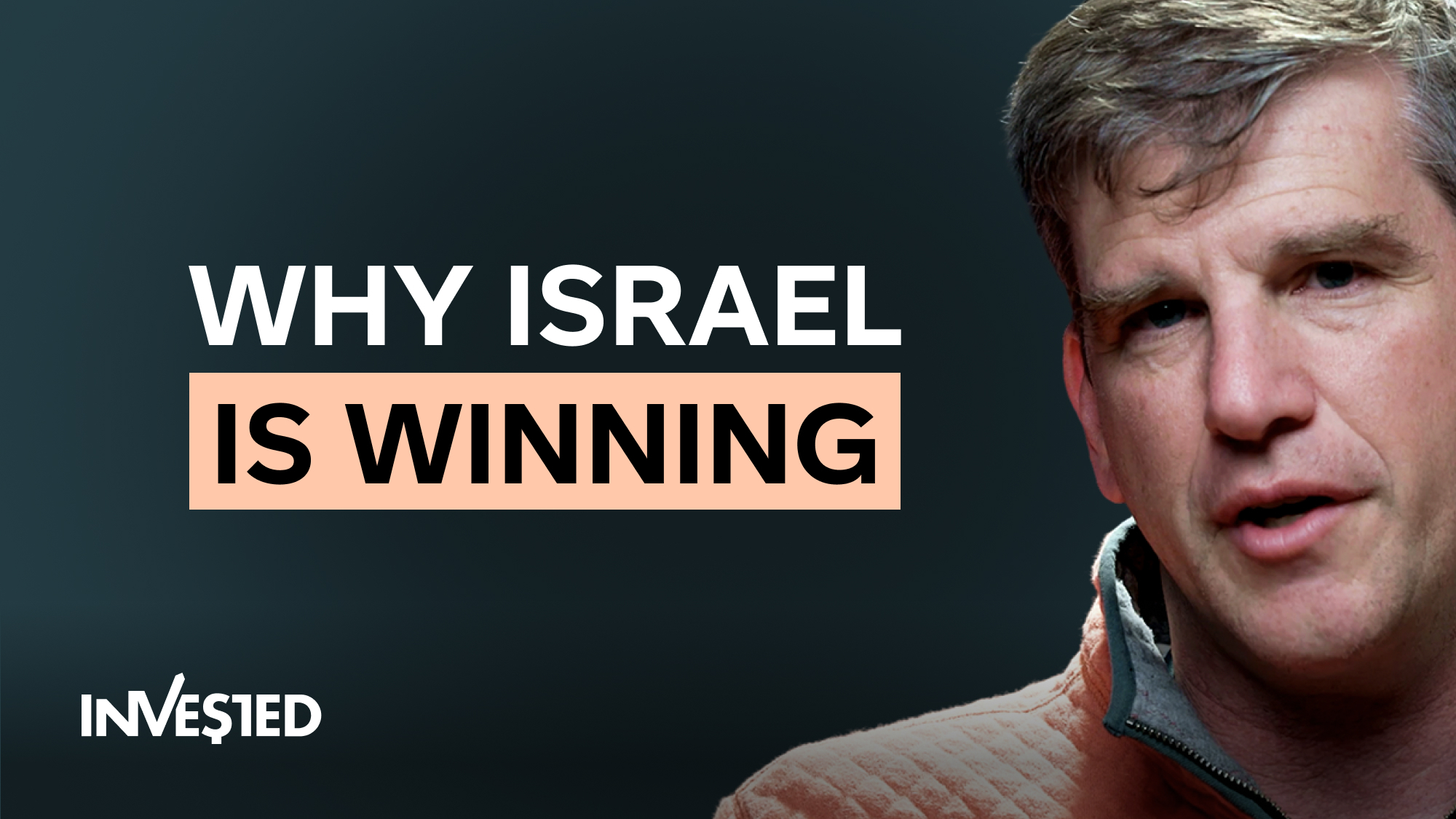
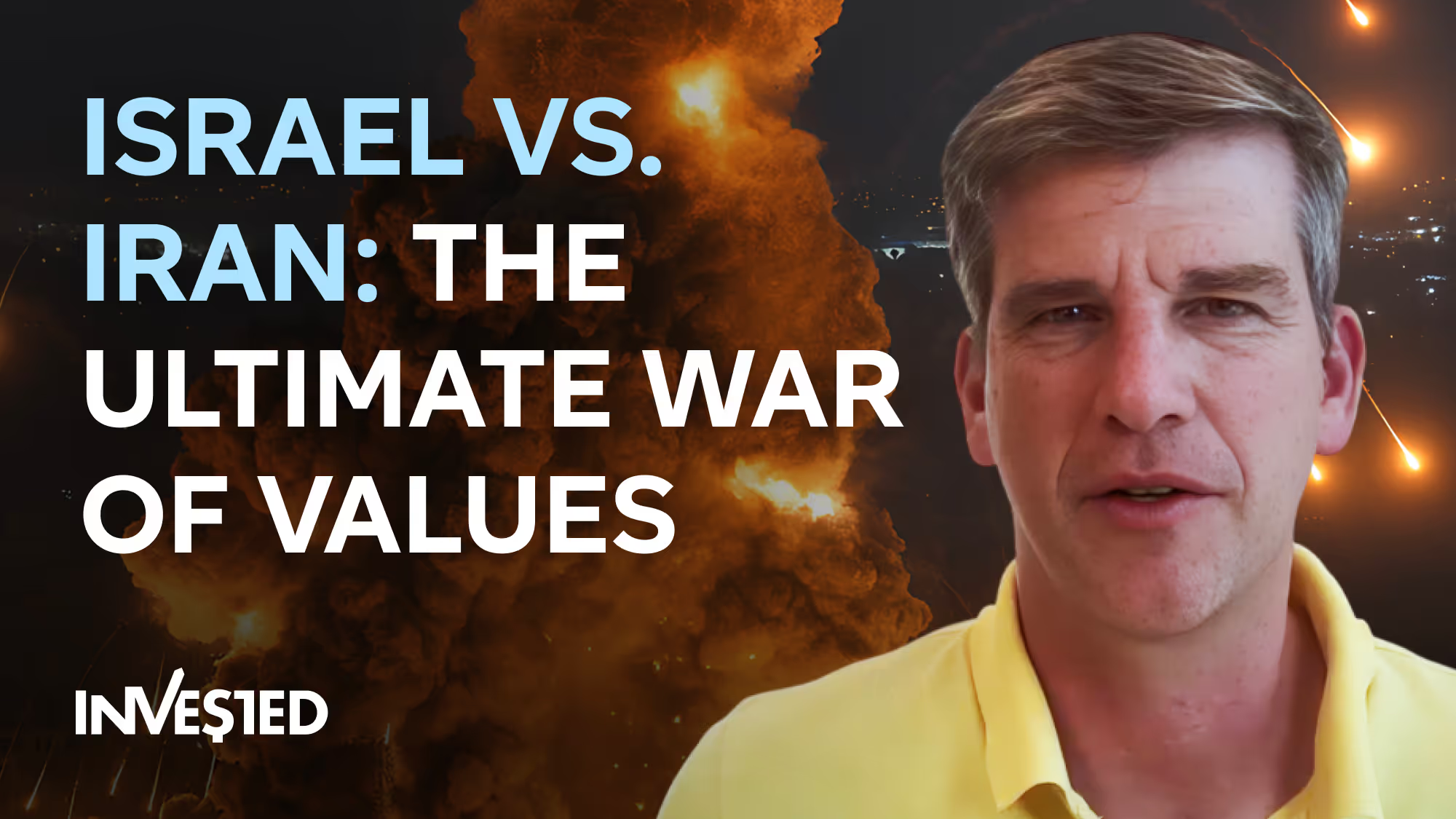
Israel’s Resilience, Innovation, and the Future of Techno-Geopolitics | An Invested Special Episode
00:00 - Recording Invested During War in Israel
00:35 - Israel’s Ability to Produce “Agency at Scale”
01:27 - The Bomb Shelter Dating App: Innovation in Crisis
02:14 - Weddings and Births Continue During War
02:53 - Young Israelis Build Emergency Hospital Delivery Rooms
03:28 - Resilience as a National Culture
03:50 - Startups Continue Growing Despite the War
04:31 - The World Entering the Era of Techno-Geopolitics
05:18 - Why National Resilience Will Define the Next Decade
06:14 - The U.S., China, and Israel as Technological Superpowers
06:43 - AI, Intelligence Sharing, and Modern Warfare
07:10 - Why Israeli Engineers Think Differently
08:08 - From the Era of SaaS to the Era of Atoms
08:27 - Countries Turning to Israel for Defense Technology
09:12 - Why the Tel Aviv Stock Exchange Is Rising During War
09:51 - Why Investment in Israel Will Surge After the War
10:10 - The U.S.–Israel Alliance in the Future of Innovation
10:38 - A Call for Entrepreneurs to Build with Agency
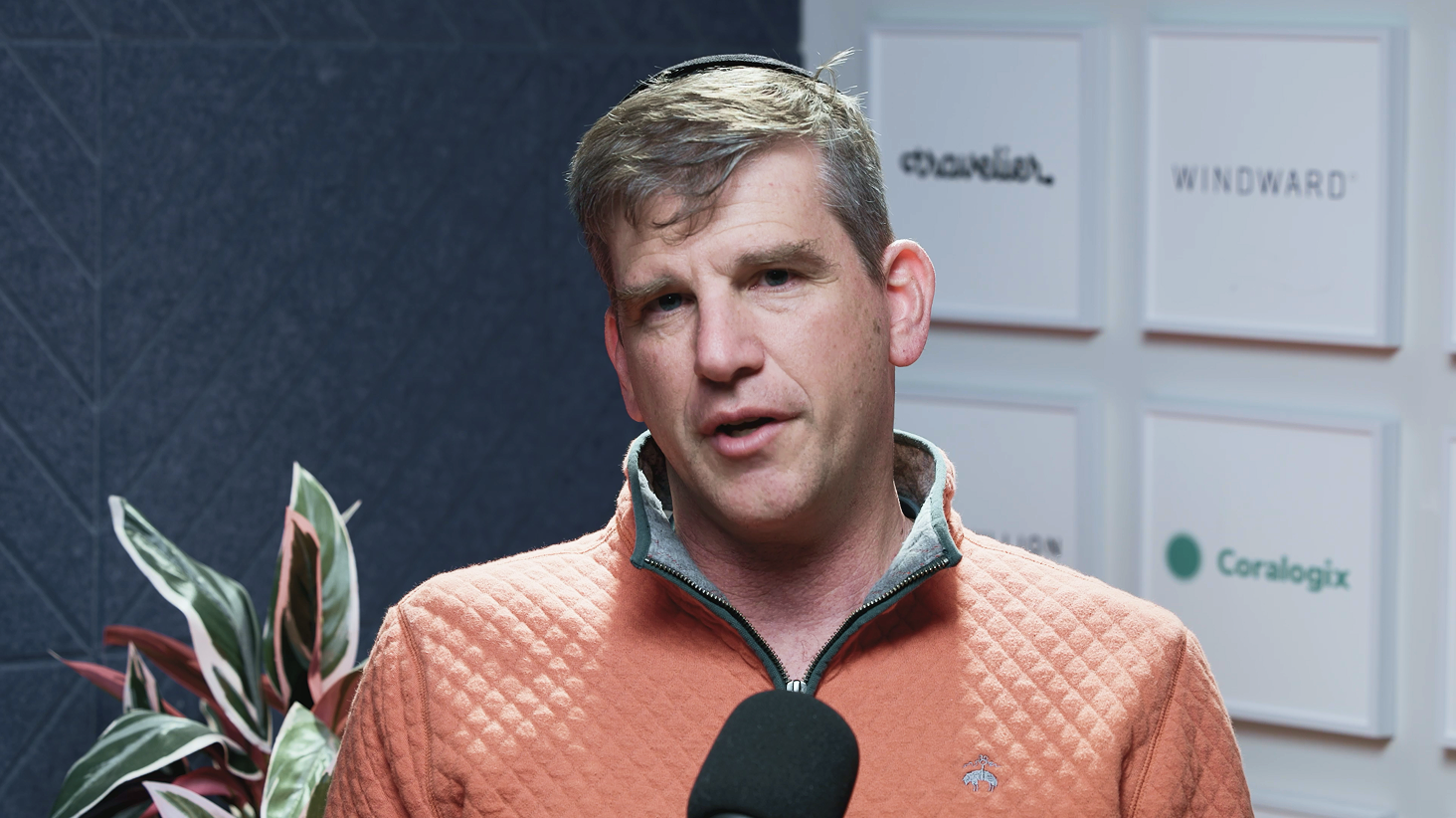
Good afternoon and welcome to a special short, brief episode of Invested. You'll notice that I don't have any guests here today. It was hard to get guests in the studio in the middle of the war. In fact, I had someone who was coming in from the UK, but his flight was canceled and we ourselves just got out of a shelter after a siren here in Tel Aviv.
But I thought I'd take a few minutes, while you're at home and hopefully have time, to talk about what we're seeing on the ground here in Tel Aviv and in Jerusalem and across the country. I think the most important thing to start with, though, is that we're hoping that everybody is safe. There's been a lot of firing, particularly in the last 48 hours, on the north of the country. Tel Aviv continues to get rockets at the pace of five to seven a day. But, we should also point out that certainly, rockets coming from Iran, the number of rockets and drones has come down since the beginning of the war and the campaign.
I don't want to get into here, the causes for the war here. That's been well documented in the public. What I'd like to talk about is something we wrote about in our annual letter and that is Israel producing agency at scale, or people with agency at scale. And some of the more interesting parts of the war of human stories are the high-tech stories of the people of Israel. Many of you have probably seen on Twitter or elsewhere that there was an app developed for people in shelters to declare whether they're single or not.
I think this little story reflects a lot of different facets of the unique Israeli personality. First, the agency. Somebody takes up an idea and says, "Hey, I'm going to code an app for this." Second is the importance of togetherness – togetherness in the miklat [shelter] and the fact that people want to come together, find what's called in Hebrew a shidduch [match], so that people can find love and happiness. Even under the stress of the war, people are looking to build families, to build togetherness and couplehood, and I think that is an indicative story of both the innovation and the human values of Israel.
You may have also seen weddings in underground shelters, and the weddings continued on. People did not stop the wedding or pause the wedding for the perfect wedding, but in fact, they celebrated this wedding with the other people around you. Meaning, we go forward with life even when this is going on. And on a personal level, I had a grandchild born on Thursday during the war. I want to tell you an incredible story. The grandchild was born underground, in a shelter, or in the parking lot of one of the hospitals in Israel.
And here's an incredible story also of agency. The morning that the war started, the hospital put out a call to members of what are called here mechinot. These are army preparation academies; in some cases, yeshivas and other places. And the citizens of Israel, when I say citizens, I mean 18, 19, 20-year-old young people, turned up in the hospital parking lot and put up sheetrock walls to create delivery rooms. They set up the beds. They moved the patients down from the hospital so that they could be safe underground.
18, 19, 20-year-olds. You have so many 18, 19, 20-year-olds out in the battlefield and manning the stations. And at the same time, you have other 18, 19, 20-year-olds who turned up, this is prior to their army service, they will be going to the army, in order to help people be safe if they needed medical care or they wanted to deliver a baby. In fact, my new granddaughter experienced her first siren 30 minutes into her young life.
And I think what we've built in this country is a sense of resilience. And I take that up to our day job as well. So today, we had our first partner meeting since a week ago when the war started. And, in the partner meeting, one of our companies came in to present. The company is growing at a very rapid rate. They're actually supposed to fly out this week, which they won't be doing probably just yet. And at the same time, customer growth continues unabated. They're working round the clock while running into shelters and taking care of their families, because schools are closed, to make sure that they deliver to their customers. The machine, the high-tech machine, the innovation machine, the agency machine, is working here.
Now, in a book that I released a few months after the October 7th war started, I suggested that the world was going to look more like Israel in the future. What does that mean? Conflict, beginning with Russia's invasion into Ukraine. After that, October 7th. After that, the information war on campuses. Since then, there's been Pakistan and India, and the South China Sea, and areas of Africa. Conflict has returned to the world and we covered this also in our annual letter. Not only has conflict returned to the world, but people are starting to get an understanding of what they need to survive in their own countries.
And Israel is a state that is a majority Jewish state, an unabashedly Jewish state that is tolerant of its minorities, but it has an ethos, and that ethos has turned up during this war. The United States has regained that ethos as well. And as we chart our way – as we wrote in our annual letter, and I highly recommend you read it – in this entanglement between technology, sovereignty, geopolitics, and technopolitics that is going to accompany us for at least the next decade, in my view, being part of a country that is resilient like Israel is, that is unified in ways in times of crisis and stress like Israel is, that produces agency at a high scale like Israel does, is going to be a big feature and not a bug.
A country that knows how to stand up both to evil at this time, which is what Iran represents, and galvanize itself to protect its ethos, are those that are going to be successful over the coming century. And the more countries that copy this Israeli model, the more those countries are going to be successful. Fecklessness is not going to work during this time. Passivity is not going to work during the coming decade. Ignoring the technology of geopolitics is not going to work during this decade.
Very clearly right now, the three most advantaged countries in this regard are the United States, China, and Israel. They are the big three moving into this next phase of the global economy.
Now, the other thing that war produces, as we saw post-October 7th, is incredible technological innovation. Secretary of War, Pete Hegseth, has said that these are the two greatest air forces fighting side-by-side, wing-to-wing, as they traverse the skies and reduce the IRGC and the Ayatollah regime to rubble.
Incredible firepower. More than incredible firepower is incredible coordination. Incredible intelligence sharing, which comes from technology, and incredible coordination that comes from the use of artificial intelligence tested at the absolute frontier of technology. And when life and death of the pilots is on the line, when life and death of the sailors in the navies are on the line, this is when you find out whether the technology really works.
For many years, when people asked me about investing in Israeli technology, I would joke that the Israeli technologist – the Israeli engineer who grows up in the military – is different than his US counterpart who perhaps learned at MIT and Stanford University. Not in terms of intelligence, but in terms of the price of being wrong. The price of being wrong or incorrect or failing in the Israeli military is life and death. The price of being wrong at Stanford University is a C or a B on your final project. Those are very different prices.
And by the way, sometimes that's a feature, sometimes that's a bug. But when tested at the outer limits of the abilities of technology, when you're trying to intercept drones or intercept missiles using Israel's protection of its airspace, Israel's technologically advanced missile defense system, this matters a lot. And it will matter a lot as we move from the era of SaaS to the era of atoms. And that is an era that already started five or seven years ago. Those who invested five or seven years ago in this are benefiting right now. But there is going to be more of this as people witness Israelis’ technology prowess, they will come to us for solutions.
In fact, Prime Minister Netanyahu spoke last night. One of the things he said was countries are reaching out to Israel. You wonder, “Why are they reaching out to Israel now?” Countries that don't necessarily have diplomatic relations with us. Why are they reaching out? They're reaching out because they see the technological superiority of the Israeli military solutions, of the Israeli defense industries, of Israeli startups, some of which are deployed during this. There are numerous defense tech and AI startups deployed right now. So, in addition to serving customers, they're serving the country.
And one final word. You all noticed that following October 7th, the Tel Aviv Stock Exchange was the best-performing stock exchange in the world. Strikingly, since the war with Iran has started, the Tel Aviv Stock Exchange is up almost 10%. Other exchanges in the world are flat to down. And you say, "What's going on?" I think there's a few things going on. Number one, very clearly, the Iran geopolitical risk was an overhang on the Tel Aviv Stock Exchange. It's been cleared up, or at least investors think it's going to be cleared up. Investors who get paid to invest in the future think this is getting cleared up. And please God, it will be cleared up, and that will give more headroom to the Tel Aviv Stock Exchange.
I think the second thing that is becoming obvious is that this agency in the era of AI, this ability to produce people at scale, is becoming obvious. And just like there was a boom in venture capital investment after October 7th, I expect the same thing will happen post the war with Iran. This will not be an endless war. It will have an end date. And when it has an end date, more investment will flow into Israel than you ever saw before.
And the last thing is the following: we have come together as a nation after a fractious period. And we come together as a nation after a fractious period together with our great ally, the United States of America – two of the three most formidable technological economies on the planet. We can only begin to imagine what can happen here. I call on you, if you're outside of Israel or inside of Israel: keep investing. And if you're an entrepreneur, grab some agency and keep developing. The AI era demands it.
Together – the United States, Israel, and the members of this region – will produce incredible technologies, innovations, and investments that will drive the future. The future, after this war, is going to be very bright for Israel, for the United States, and for our partners. If you enjoyed this episode of Invested, please listen to our other ones and also rate us five stars on Spotify, Apple Podcasts, and subscribe to our YouTube channel. We'll be back with more guests as soon as the skies open up.

Subscribe to Invested
Learn more about Aleph
Subscribe to our YouTube channel
Follow Michael on Twitter
Follow Michael on LinkedIn
Follow Aleph on Twitter
Follow Aleph on LinkedIn
Follow Aleph on Instagram
Aleph Annual Letter on “Agency at Scale”, The Tree of Life and Prosperity by Michael Eisenberg, the October 7 War, the Islamic Revolutionary Guard Corps (IRGC), Israel’s missile defense systems (Iron Dome, David’s Sling, Arrow), artificial intelligence in modern warfare and intelligence coordination, the shift from the era of SaaS to the era of atoms, the Tel Aviv Stock Exchange (TASE), the U.S.–Israel strategic technology alliance, Israeli pre-military academies (Mechinot), and the Israeli defense technology and startup ecosystem
Executive Producer: Erica Marom
Producer: Dalit Merenfeld
Video and Editing: Nadav Elovic
Music and Creative Direction: Uri Ar
Content and Editorial: Jackie Goldberg
Design: Nimrod Sapir
Subscribe to Invested
Learn more about Aleph
Subscribe to our YouTube channel
Follow Michael on Twitter
Follow Michael on LinkedIn
Follow Aleph on Twitter
Follow Aleph on LinkedIn
Follow Aleph on Instagram
Aleph Annual Letter on “Agency at Scale”, The Tree of Life and Prosperity by Michael Eisenberg, the October 7 War, the Islamic Revolutionary Guard Corps (IRGC), Israel’s missile defense systems (Iron Dome, David’s Sling, Arrow), artificial intelligence in modern warfare and intelligence coordination, the shift from the era of SaaS to the era of atoms, the Tel Aviv Stock Exchange (TASE), the U.S.–Israel strategic technology alliance, Israeli pre-military academies (Mechinot), and the Israeli defense technology and startup ecosystem
Executive Producer: Erica Marom
Producer: Dalit Merenfeld
Video and Editing: Nadav Elovic
Music and Creative Direction: Uri Ar
Content and Editorial: Jackie Goldberg
Design: Nimrod Sapir
Subscribe to Invested
Learn more about Aleph
Subscribe to our YouTube channel
Follow Michael on Twitter
Follow Michael on LinkedIn
Follow Aleph on Twitter
Follow Aleph on LinkedIn
Follow Aleph on Instagram
Aleph Annual Letter on “Agency at Scale”, The Tree of Life and Prosperity by Michael Eisenberg, the October 7 War, the Islamic Revolutionary Guard Corps (IRGC), Israel’s missile defense systems (Iron Dome, David’s Sling, Arrow), artificial intelligence in modern warfare and intelligence coordination, the shift from the era of SaaS to the era of atoms, the Tel Aviv Stock Exchange (TASE), the U.S.–Israel strategic technology alliance, Israeli pre-military academies (Mechinot), and the Israeli defense technology and startup ecosystem
Executive Producer: Erica Marom
Producer: Dalit Merenfeld
Video and Editing: Nadav Elovic
Music and Creative Direction: Uri Ar
Content and Editorial: Jackie Goldberg
Design: Nimrod Sapir
.jpg)
.jpg)
.jpg)

.jpg)
.jpg)
.jpg)
.jpg)
.jpg)
.jpg)

.jpg)

























.jpg)
.jpg)
.jpg)

.jpg)
.jpg)
.jpg)
.jpg)

.jpg)
.jpg)
.jpg)
.jpg)

.jpg)