Amir Fischer


How can values create value? On this podcast, Michael Eisenberg talks with business leaders and venture capitalists to explore the values and purpose behind their businesses, the impact technology can have on humanity, and the humanity behind digitization.




Amir Fischer
Amir Fischer
Amir Fischer
Amir Fischer
Amir Fischer
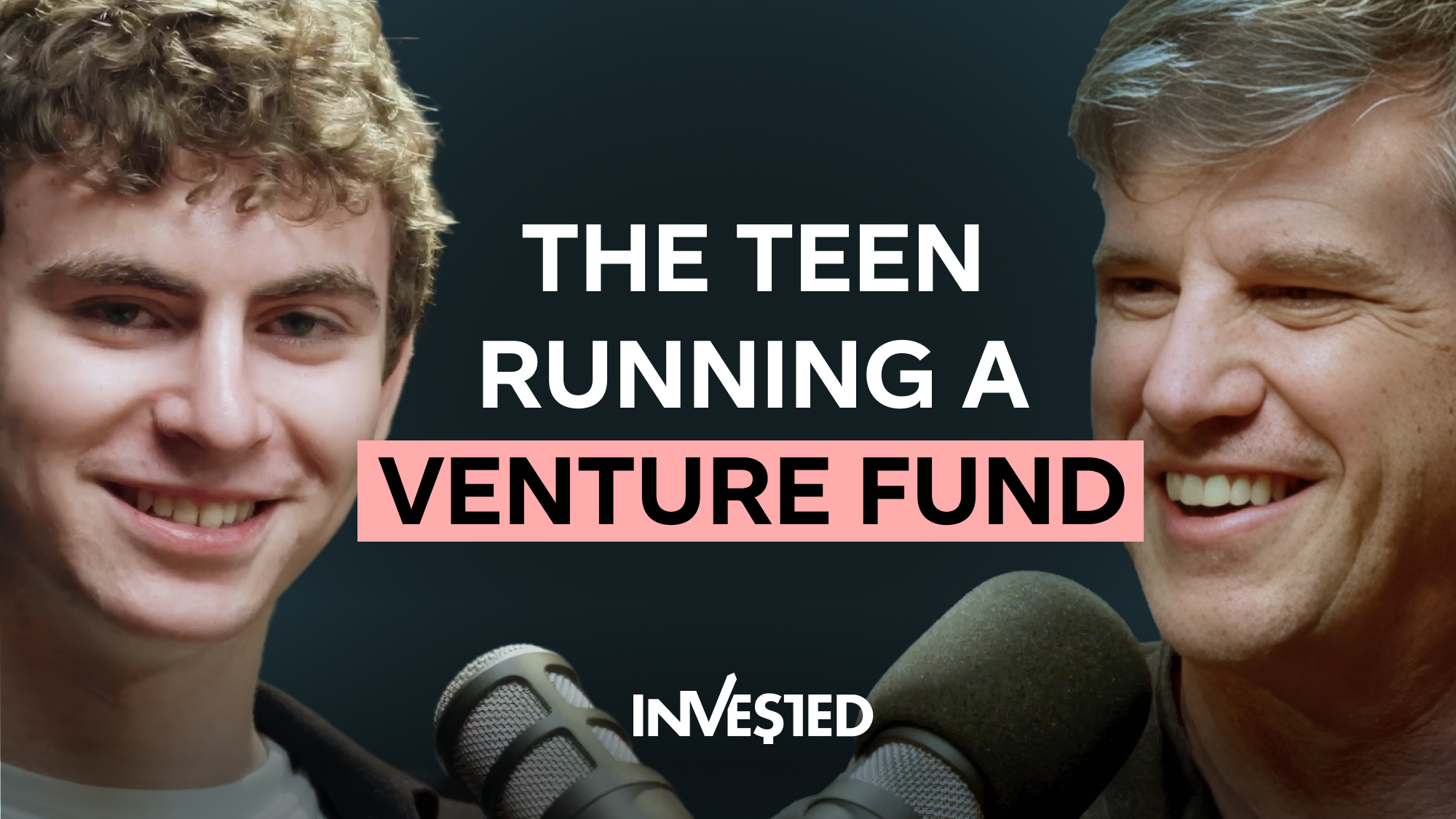
On this episode of Invested, Michael Eisenberg sits down with Amir Fischer, a 16-year-old investor, podcaster, and emerging venture capitalist who is building an entirely new investing thesis: teenagers backing teenagers.
In this sharp and unconventional conversation, Amir explains how he started investing in public markets at age 10, built a $15,000-a-month ad agency at 14, cold-emailed 3,000 financial titans to launch his podcast, and raised a $2 million venture fund - legally set up in his mother’s name - to back the most exceptional teenage founders in the world.
Michael and Amir explore what makes this generation different: growing up with the internet, adapting early to AI, and developing leverage far earlier than previous generations ever could. They also debate whether school is still the best use of time for ambitious young builders, why maturity matters more than intelligence, and how short-form content and algorithms are creating what Amir calls a coming “Great Bifurcation” between high-agency and low-agency people.
They discuss:
- Why teenagers may be the most overlooked investment category in the world
- How Amir landed guests like Steve Cohen through relentless persistence
- Why some of the most talented teens are already working in crypto, AI, and trading
- The dangers of algorithm-driven short-form content
- How access to information is reshaping ambition, learning, and opportunity
- Where elite teenage founders actually come from
- Why Amir sees himself as a “kingmaker” for his generation
Amir also reflects on identity, conviction, and the fear of mediocrity - and why young people should use their age as an advantage, not a limitation.
Amir Fischer is the founder of Noar Ventures, a venture fund focused on investing in exceptional teenage founders, and the host of Generating Alpha, where he has interviewed some of the most prominent investors in the world.
If you want to understand where the next generation of founders, investors, and capital allocators is coming from, this episode is essential viewing.
Please rate this episode 5 stars wherever you stream your podcasts!
00:00 - Intro
01:55 - Why Invest Only in Teenagers
03:22 - Maturity Matters More Than Intelligence
06:16 - The Teen Who Made $100M
07:15 - Dylan Field Said Drop Out
08:01 - Is School a Waste of Time?
09:43 - Use Your Age as a Weapon
11:33 - Teen Talent Stories Are Insane
16:00 - Started Investing at Age 10
17:56 - Built a $15K/Month Agency
19:30 - Cold Emailed 3,000 Billionaires
20:25 - How Persistence Landed Steve Cohen
24:02 - YouTube, AI, and High Agency
26:36 - The Great Bifurcation Is Coming
28:03 - Why Short-Form Content Is Dangerous
30:57 - Why Teen Founders Should Choose Amir
35:06 - Sometimes the Best Advice Is None
36:16 - Biggest Mistake: Moving Too Fast
41:20 - Why He Wants to Be Kingmaker
44:12 - Why More Jews Must Speak Up
46:47 - What Happens When Amir Ages Out
47:11 - Why This Generation Is Different
51:00 - What Being 16 Still Can’t Do
52:24 - Where He Finds Exceptional Teenagers
55:01 - The Secret Teen Networks Online
56:58 - Core Value: Be Genuine
Amir Fischer 00:00.0
I got started investing in public markets when I was around 10 years old. There's this kid who was 19 who made $100 million from Trump Coin in his basement. I have this edge of being a teenager myself. And so I was like, "Why don't I invest in teenagers? Why don't teenagers invest in teenagers?" And so went out, ended up raising $2 million.
Amir Fischer 00:15.6
And that's what Noar Ventures does. I think people are scared that people will disregard them because of their age. I think you should use your age as a weapon.
Michael Eisenberg 00:23.2
What are other things that being 16 doesn't allow you to do?
Amir Fischer 00:26.8
Set up a venture capital fund – it's in my mom's name.
Michael Eisenberg 00:30.2
The venture fund's in your mom's name?
Amir Fischer 00:31.8
Yeah.
Michael Eisenberg 00:32.3
Is that real? I didn't know that.
Amir Fischer 00:33.6
Yeah.
Michael Eisenberg 00:34.2
You followed up 56 times to get Steve Cohen to come on your podcast.
Amir Fischer 00:37.9
Yes.
Michael Eisenberg 00:38.3
And what made him say yes? You won't be 16 forever.
Amir Fischer 00:41.3
Yes.
Michael Eisenberg 00:42.0
How do you invest in teenagers when you age out of the category?
Michael Eisenberg 00:50.3
Welcome back to another episode of Invested. This is a super unique episode. I'm thrilled to be here with Amir Fisher.
Amir Fischer 00:58.4
Thanks for having me on, Michael.
Michael Eisenberg 00:59.7
Good to have you. Amir, just tell our audience, how old are you?
Amir Fischer 01:02.7
I'm 16.
Michael Eisenberg 01:03.6
Amir is 16, and he's going to be our youngest guest probably forever on Invested. And I think you're going to find this conversation super interesting. Amir, what do you do?
Amir Fischer 01:15.5
I run a podcast and I also run a venture fund.
Michael Eisenberg 01:18.1
Right. So Amir is a solo GP, venture capitalist and he runs a podcast, which we'll get into with literally, titans of the universe. Where do you live, Amir?
Amir Fischer 01:30.6
Live in Greenwich, Connecticut.
Michael Eisenberg 01:32.2
And have you lived your whole life in Greenwich, Connecticut?
Amir Fischer 01:34.7
Born and raised.
Michael Eisenberg 01:35.5
Do you actually go to school?
Amir Fischer 01:36.8
I do, I try to, although I don't end up going much.
Michael Eisenberg 01:41.2
Where do you go to high school?
Amir Fischer 01:42.8
Greenwich High School, the public high school in Greenwich, Connecticut.
Michael Eisenberg 01:45.4
In Greenwich, Connecticut. So before we dig into your inauspicious high school career, tell everybody about your venture fund, which is called Noar Ventures.
Amir Fischer 01:55.6
Yeah, so I had this idea about six to eight months ago. I saw a lot of teenagers starting interesting companies. And I was like, why is there no one focused investing on specifically on investing in teenagers? Saw a lot of people investing in Gen Z, 20 year olds, 30 year olds, and all that kind of stuff.
Amir Fischer 02:14.8
And I thought it'd be interesting. There's a market for investing in teenagers in the sense of, I think there's a lot of people who had access to the Internet very early, do very interesting things with it. There's kids who made millions trading crypto in their basement when they were early teenagers. There's kids who now work at these big AI labs in their kind of late teens.
Amir Fischer 02:30.7
And so I think a lot of these people are going to go on to start very, very interesting companies that'll do very, very innovative things. And I think the focus on this cohort can be very interesting. And I also think I have this edge of being a teenager myself in the sense of I can probably pick out better talent among this generation than other people can.
Amir Fischer 02:48.7
And so I was like, why don't I invest in teenagers? Why don't teenagers invest in teenagers? And so went out, ended up raising $2 million. And that's what Noar Ventures does. I write pretty sizable checks to the most talented teenagers in the world, starting the most interesting companies in the world.
Michael Eisenberg 03:01.7
For full disclosure, I am an LP in Amir's fund. I'm still a happy LP because he hasn't invested a nickel yet. So we haven't lost any money.
Amir Fischer 03:09.9
It's perfect.
Michael Eisenberg 03:11.9
What is the most important thing that you think differentiates investing in teenagers versus my job as a 54 year old guy investing in people who are, out of their teens?
Amir Fischer 03:22.7
I think the one thing is maturity in the sense of, there can be this crazy, crazy smart 16, 17, 18, 19 year old, but if they're not mature, if they're not able to build a team, if they're not able to build systems, if not able to really, really get a company off the ground, they can't do anything, they can't scale to that billion dollar outcome.
Amir Fischer 03:39.2
And so I think maturity is the one what thing?
Michael Eisenberg 03:41.2
Why should I think that a 16 year old can figure out if another 16 year old is mature or not?
Amir Fischer 03:49.7
I think I'm relatively mature for my age and so I think...
Michael Eisenberg 03:52.5
That's what my kids say, too.
Amir Fischer 03:56.7
I've also spent time around a lot of people, through my podcast and such who've done incredible things across all industries. And so I think I'm really better suited to pick out the maturity than others in the sense of I've seen people who are able to take that zero and build it up into tens of billions, hundreds of billions of dollar companies.
Amir Fischer 04:15.7
And so I've been kind of privy to that. I've been around that and I've been able to, see people who kind of achieve those outcomes. And so I think it makes me better suited, in a sense.
Michael Eisenberg 04:24.8
It makes you better suited. Just give us some examples of teens that have come your way that you think are potentially high value founders or people that you're trying to hang around, like literally walk through the stories. One story that I've heard from you is the, I think you said they were 14 year olds who were hanging with Sam Bankman-Fried, or, just tell the story, just so everyone has it.
Amir Fischer 04:49.8
Yeah. So there were these two teenagers who were working at FTX during the time where everyone was hearing about FTX, like 23 and 24, I think. And so these kids literally got asked to move out by Sam Bankman-Fried. One of them got asked to drop out of high school from Sam and he said no because his parents wouldn't let him.
Amir Fischer 05:09.7
He ultimately didn't and he was very glad that he didn't. But I think he...
Michael Eisenberg 05:14.7
He did not drop out of high school.
Amir Fischer 05:16.3
Yeah.
Michael Eisenberg 05:16.7
And he's glad because his parents stopped him from...
Amir Fischer 05:18.8
Exactly.
Michael Eisenberg 05:19.2
Making an immature mistake.
Amir Fischer 05:20.6
Exactly.
Michael Eisenberg 05:21.0
Okay. And the other one?
Amir Fischer 05:23.5
The other one I think is 17 or 18 now and is now working at some kind of crypto lab.
Michael Eisenberg 05:29.2
And he did move into the Bahamas with Sam Bankman Fried?
Amir Fischer 05:31.5
I'm pretty sure, yeah, he did. And he did homeschool or something like that.
Michael Eisenberg 05:34.3
Okay.
Amir Fischer 05:34.8
And he has a very interesting story in the sense of like he started doing e-commerce when he was very young, then he went on to build kind of these projects on the blockchain, and then he built this like yield aggregator for cryptocurrency, got it up to like 7 million in assets under management and then ultimately went to FTX.
Amir Fischer 05:54.2
So there's kids like that using the FTX example, who've done these very, very interesting things. There's kids who are now 16, 17, 18, 19 working at places like Cognition or xAI. There's all types of very interesting kids. There's also kids who, from the crypto world, very interesting in the sense of it gives a lot of people a lot of accessibility very early.
Amir Fischer 06:12.2
And there's no real cap on what you can do.
Michael Eisenberg 06:15.2
What does that mean?
Amir Fischer 06:16.3
In the sense of you can be in your basement sniping meme coins and you can make, there's this kid who's 19 who made a hundred million dollars in Trump Coin in his basement because he was the first block on Trump Coin. And so there's literally no cap on how much money you can make, what you can achieve.
Amir Fischer 06:31.5
But I think the also interesting thing about this space is that people tire out of it very easily.
Michael Eisenberg 06:35.8
When you say, "the space," you mean crypto?
Amir Fischer 06:38.2
Yeah.
Michael Eisenberg 06:38.6
Yeah
Amir Fischer 06:38.6
You can't be sniping meme coins in your basement, it's not something you're gonna do your entire life. You can maybe do it for five years when you're a teenager or something. But now this is a point where, like, all these kids, they've made their millions, they've done whatever, and they're like, what next? I want to create actual value.
Amir Fischer 06:53.9
And so I think this is a very interesting pocket of talent. But these are some, like, the stories, among other things, of these interesting kids. Yeah.
Michael Eisenberg 06:59.9
You know what? When, earlier in my venture career, we talked about Mark Zuckerberg dropping out of college. And, you know, when I got into the business, it was Bill Gates who dropped out of the college. And it feels like you're now saying, you know, Sam Bankman Fried encouraged people to drop out of high school. You haven't dropped out of high school.
Amir Fischer 07:15.7
Dylan Field told me to drop out of high school.
Michael Eisenberg 07:18.1
Dylan Field told you to drop out of high school?
Amir Fischer 07:19.6
Yeah.
Michael Eisenberg 07:19.9
Did he drop out of high school, Dylan?
Amir Fischer 07:21.2
He did not.
Michael Eisenberg 07:21.8
He did not.
Amir Fischer 07:22.3
He dropped out of Brown.
Michael Eisenberg 07:23.3
So why did he give you that advice?
Amir Fischer 07:25.5
I have no idea. I think the place where it was coming from was like, you have this opportunity now, which is very, very unique. I don't think, like, there's a single person in the world that has as unique an opportunity as I have right now, and so just like, take it. Give it all you got. You can always, like, I don't know, reapply to college or something, in a sense.
Amir Fischer 07:44.7
And so I think that was, that's where it came from.
Michael Eisenberg 07:46.4
Tell me about your current high school experience. Like, what do you, you go?
Amir Fischer 07:50.2
I go.
Michael Eisenberg 07:50.6
Every day?
Amir Fischer 07:52.2
Every day. At least I try.
Michael Eisenberg 07:53.4
Your parents will listen to the podcast, so we should say every day, right?
Amir Fischer 07:55.8
Every day.
Michael Eisenberg 07:56.6
Every day. And, is it a good use of your time?
Amir Fischer 08:01.8
I want to be politically correct here.
Michael Eisenberg 08:04.5
I think you just answered the question.
Amir Fischer 08:05.8
Yeah, I don't think it's necessarily the best use of my time. I think there's, like, higher value things I can be doing with the time I spend in school. I also think there's this interesting kind of dynamic in school in which these teachers want to spend or want to fill out a certain amount of time a day in which they have to teach and ultimately get paid.
Amir Fischer 08:24.2
And that amount of time is not where really learning is maximized. They can maximize learning in maybe 10 minutes out of the hour they are teaching. And so I think spending that additional 15 minutes in every class there, like 5/6 of the time is just a waste. And so I'd say as a whole, if I would generalize, I'd say school is probably not the best use of my time.
Amir Fischer 08:45.8
But I think it's ultimately like I have to get my high school degree and it's something that I have to go through to do so. And so it's the only thing that I've got right now. So. Yeah.
Michael Eisenberg 08:55.4
How many kids study in Greenwich High School?
Amir Fischer 08:57.7
I think it's in the high 2000s, so 27, 2800.
Michael Eisenberg 09:01.8
And how many of them are doing like other things on the side? This is not a side hustle for you. This is like a core hustle for you, setting up your venture fund, your podcast, which we'll come to in a second. How many others are you think are doing what you're doing?
Amir Fischer 09:12.6
I think very few are doing things as seriously as what I'm doing. I think there's some who have like experimented in like these, you know, drop shipping. There's some who like to trade options or whatever. Nothing really materializes for a lot of them just because of like, lack of commitment and discipline.
Amir Fischer 09:29.8
But some people try, I'd say maybe like dozens or maybe like a hundred of the kids try to do these hustles, but very few do it to kind of an extent of which, like, high intensity.
Michael Eisenberg 09:43.5
If you're like advising another 16 year old today, not investing in them, advising them when they're in high school, what, what's like the most important trait you think they need to have?
Amir Fischer 09:52.8
I think it's just bias towards action and being extremely proactive in the sense of like, I think people are scared that people will disregard them because of their age. I think you should use your age as a weapon. And every cold email I send to every person I want on my podcast, it's their name dash Amir Fisher dash Greenwich High Schooler.
Amir Fischer 10:15.3
I use that Greenwich High Schooler. And when I start the email I say, "Hi, I'm a 16 year old." And so I think without that I wouldn't have gotten anywhere near the guests I've gotten today or I wouldn't have met anywhere near the people I met today. And so I think these people are scared that their age is going to be used against them or whatever.
Amir Fischer 10:33.9
Use what you have now. Use it to your advantage. Be extremely proactive. Put yourself out there and just see what happens. Worst thing that happens, you're back in the spot that you were yesterday.
Michael Eisenberg 10:42.7
Right. So super high agency.
Amir Fischer 10:44.8
Exactly.
Michael Eisenberg 10:46.8
Take whatever risks because you got very little to lose when you're 15 or 16.
Amir Fischer 10:50.2
Yes.
Michael Eisenberg 10:50.7
Unless, of course, you made $100 million of sniping Trump meme coins. Then you may have something to lose.
Amir Fischer 10:55.2
Exactly.
Michael Eisenberg 10:57.6
Do you have time for a social life in high school?
Amir Fischer 11:01.7
My socializing is kind of limited to high school. That's why I'm seeing my friends outside. I also play tennis. Other than that, I mean, I'm just kind of heads down doing what I do.
Michael Eisenberg 11:10.7
How many entrepreneurs, teenage entrepreneurs, do you meet a week?
Amir Fischer 11:14.4
I would say around 30.
Michael Eisenberg 11:18.5
30 a week.
Amir Fischer 11:19.5
30 a week. Yeah.
Michael Eisenberg 11:20.5
Amir has this incredible email he sends out to his LPs every week, which summarizes the most interesting people he's met during the week. Give us two or three of the most interesting people you've met recently.
Amir Fischer 11:33.8
Yeah, I think I'll use just one example. And there's, these are particularly parts of the story that I can pick out. There's this kid who, there's this rapper called Trippie Redd. He's very famous. He gets like 20 million views a month off Spotify. And so this kid was making videos in his basement for rappers, making like, edits of them on, like, posting on social media.
Amir Fischer 11:54.5
He got picked up by Trippie Redd when he was 16, toured around the world with him, and then ultimately went back to making kind of films. Ended up working with this artist, this kind of random musical artist that he took a bet on very, very early and ended up getting them signed to Warner Records, ultimately suing Warner Records because they kind of kicked him out of the deal.
Amir Fischer 12:17.9
And then now is making films out of this kind of company called Circus 17. His name is Dylan. And actually getting very, very closely mentored by Ben Affleck. He's just 19. And so that's one of these just like insane, incredible stories.
Amir Fischer 12:34.1
There's also a really, really good friend of mine. His name's Kyron. He started college when he was nine years old, graduated when he was 14. It did take him five years. Yes. And then ultimately worked at SpaceX for two years. Worked on Starlink, where he owned most of his team's code base.
Amir Fischer 12:51.5
So he wasn't just like a performative hire. He actually did stuff and ultimately went to Citadel Securities where he now does low latency options market making for the biggest market maker in the world.
Michael Eisenberg 13:00.4
Is that, this is a hard question to answer. And I mean, this is not judgmental. I'm just asking, like, one of the things I always worry about with all these smart guys who went to quant, was like, couldn't they be building Starlink? And here's a guy who built Starlink is now doing quant trading for Citadel. No disrespect to Ken Griffin, but can't you give him a venture investment to do something better?
Amir Fischer 13:22.8
I don't want to say anything about his future plans are...
Michael Eisenberg 13:27.2
Being agey...
Amir Fischer 13:28.3
But I think at some point over the next couple decades he's likely going to start something of his own and have a bigger impact on quant.
Michael Eisenberg 13:34.1
Okay, yeah, give us another person, another example.
Amir Fischer 13:38.2
I think two ones are the, are the FTX guys. I think another would be this, this is like not necessarily one who's had an accomplished background, but there is this 17 year old who ended up burning 12.5% of his body in third degree burns.
Amir Fischer 13:59.5
He got in an accident when he was in middle school, ultimately recovered from it and started building autonomous drones and he won kind of a couple of national science fairs. And now he's building a company, building these like incredible autonomous drones from his bedroom. And he's also building like a totally unique and novel software within them.
Amir Fischer 14:19.0
And so he has these like gigantic servers, server racks in his basement that he set up and everything. And so I think that's like another example of someone doing something,
Michael Eisenberg 14:27.1
Pardon the question. What is the fact that he burned 12 and a half percent of his body have to do with what he went on to do?
Amir Fischer 14:33.1
Yeah, I, the reason I mentioned that is it's this incredible adversity. I think something like that at a young age really is like an incredible formative experience that ultimately like flips the switch. And I was talking to him about it and he was like, "After that I knew who my real friends were and like I knew what really mattered.
Amir Fischer 14:51.1
And I was like thinking to myself like before that I was just prancing around life, didn't really know what I wanted to do. And after that I was like, the real world's gonna hit me. Things get serious fast. What do I want to do for the rest of my life?" I think that gave him an answer. And so speaking to someone like that where when you talk to someone about something like that, they can, you can really, really see a change in how they behaved and you can see how that adversity really impact them.
Amir Fischer 15:12.2
That's something that I like, I love to see.
Michael Eisenberg 15:14.0
What was the adversity you encountered, you think?
Amir Fischer 15:17.0
I don't think I've encountered a lot of adversity. I think my parents went through a pretty hefty three year divorce. I think that was, that was some adversity. And I think that also kind of flipped a switch in me, which is relatively similar to him, which is like, I grew up in like a relatively environment where I was kind of sheltered.
Amir Fischer 15:33.0
When you grow up in Greenwich, you're not like, you don't see any gang violence, you don't see anything particularly harsh, you don't see any war. And so I was like, I think after that divorced, I was just like, the real world's coming at me. And I need to do something. I've always been motivated to do something.
Amir Fischer 15:49.4
What will I do?
Michael Eisenberg 15:50.7
Take us back to how you actually got started in this whole doing, take us really back to the origin story.
Amir Fischer 16:00.0
Yeah. And so I grew up in Greenwich. I got started investing in public markets when I was around 10 years old. I got really interested through a couple YouTube videos I watched about value investing. And so I dug down this really, really deep rabbit hole of value investing.
Michael Eisenberg 16:14.5
On YouTube.
Amir Fischer 16:15.3
Yeah. So looking for like summaries of The Intelligent Investor, like security analysis through YouTube, like videos or
Michael Eisenberg 16:23.8
The Intelligent Investor by Ben Graham.
Amir Fischer 16:25.2
Yes.
Michael Eisenberg 16:25.5
Yeah.
Amir Fischer 16:26.4
Or like watching how does Warren Buffett pick stocks? Or watching all these videos about how people pick stocks or whatever. Ultimately watching some clips of Warren Buffett shareholder meetings and whatever. Ultimately went down this really, really deep rabbit hole from like when I was around 10 or 13, tried to read, watch, and listen to everything the greats ever put out.
Amir Fischer 16:44.5
So the Buffetts, the Mungers, the Ackmans, the Marks of the world on value investing. Taught myself how to read financial statements, build financial models, all that good stuff. Did it until I was 13. Then when I was around 13, I was like, I want to try this thing called short term trading.
Amir Fischer 16:59.5
I always saw it. I always saw people making a lot of money and I was like, okay, I want to make money. And so, and this always value investing that I did was out of an $100 account. I convinced my mom to set up when I was 10 years old. And so I was around 13 and I was like, I want to try this. And so ultimately that year was spent, trading currencies on my laptop during my homeroom period in my, I think it was my sixth or seventh grade class.
Amir Fischer 17:23.0
And so while everyone else was like playing games on their laptop, on their school laptop, I was trading currencies and whatever. It was kind of funny. And it was an interesting experience. Like, taught myself how to like read charts. And realized short term trade is just based off solely off reading charts. But did that for about a year.
Amir Fischer 17:40.0
It was interesting experience. Taught me how to like get a feel for short term markets. And then when I was 14, I was like, okay, I want to make some real money. So basically my birthday when I turned 14 and I heard about this thing blowing up called these social media marketing agencies and I was like, okay, I want to start one of these.
Amir Fischer 17:56.4
And so ultimately was like, I want to learn how to do Google and Facebook ads and what niche can I do this for? I realized there was 2 million real estate agents in the United States. All of them are very competitive with each other. The only thing that differentiates one from another is brand.
Amir Fischer 18:12.1
And so went out, told myself I'd do Google, Facebook ads two months off of YouTube, cold emailed tens of thousands of real estate agents over the span of like 10 months. And was like, "I'm 14, I'll do your ads for you, please pay me." Not like much more elegant than that, but ultimately in around eight months, scaled up to where like I did around $15,000 a month in revenue.
Amir Fischer 18:35.8
There was a couple problems that arose out of that though, because I was growing really, really quickly and it was a one man show. And the problems were that I was okay at what I did, I wasn't great. And so at, some point the charm wore off of having a 14 year old do your advertising. People started realizing of like, this kid's okay at what he does, but he's pretty expensive.
Amir Fischer 18:53.3
You'll find better people out there who are cheaper and who can do the same thing that he does. And that was one thing. Another thing it was just like I was my freshman year of high school, my grades were dropping to like all Ds. My parents weren't very happy with me. And I also came to a realization of like, am I passionate about this? No, I'm doing it solely for the money.
Amir Fischer 19:10.4
So is this something I want to do long term? Not really. Ultimately put that on pause and then this is kind of where I start the things that I'm doing now kind of originated, of around last year, fall. So around last year, this time started the podcast, Generating Alpha podcast.
Amir Fischer 19:30.1
Because I always listen to a lot of podcasts in finance. Always saw a lot of people talking about their strategies, their perspectives or whatever, but never really heard people talking about their stories as investors. We hear a lot of founders talk about their stories, their upbringing, how they got to where they are today, kind of their origin stories, but you never really hear a lot of investors do that.
Amir Fischer 19:49.3
And so I was like, I want to, if no one else was going to do this, I want to do this. Sent out 3000 cold emails to every billionaire across every financial asset class I could possibly find. Went through, like, the hedge fund Forbes list of highest hedge fund earners from, like, 2007. Every little piece of information I could find.
Amir Fischer 20:05.5
Cold emailed 3,000 people over the span of like, 10 months. And then, my first big guest was Jim Rogers, who co-founded the Soros Fund with George Soros. My second big guest was Steve Cohen. And I got Steve on, like, a large amount of follow ups.
Amir Fischer 20:21.5
And now I've done...
Michael Eisenberg 20:23.0
What does mean you got Steven on a large amount of follow ups? What does that mean?
Amir Fischer 20:25.1
I think it was a 56 follow up.
Michael Eisenberg 20:26.5
I mean, you wrote him 56 times?
Amir Fischer 20:27.9
Correct. Followed up 56 times.
Michael Eisenberg 20:29.4
You followed up 56 times to get Steve Cohen to come on your podcast?
Amir Fischer 20:32.9
Yes.
Michael Eisenberg 20:33.4
And what made him say yes?
Amir Fischer 20:36.0
I think the persistence.
Michael Eisenberg 20:37.2
And what made Jim Rogers say yes?
Amir Fischer 20:38.8
I was also... I think Jim's now, like, just takes every interview. So I don't know if he's particularly selective. But I got lucky there. But Steve. I was talking with Steve, like, I think like a month or two ago, and he was just like, "I also said yes, partly because you're in Greenwich." Which, like, I'm very grateful for, and I took advantage of.
Amir Fischer 20:59.0
And so now I've done 44 episodes as of last Thursday with people like Steve, Howard Marks, Barry Sternlicht, Thomas Peterffy, Jeff Yass, many more. And then ultimately built up an interesting network, and then this fund came to fruition recently.
Amir Fischer 21:17.6
But yeah, that's kind of my origin story.
Michael Eisenberg 21:18.8
Did you interview any venture capitalists or are they all public markets guys?
Amir Fischer 21:23.7
I've interviewed Tim Draper, Alan Patricof, Kevin Hartz, and we'll do something soon.
Michael Eisenberg 21:30.5
All right. Alan Patricof is incredible.
Amir Fischer 21:35.3
He's 92 and he's just still like.
Michael Eisenberg 21:38.3
He's not the OG. He's like the PG. The prescient guy. He's like. He's unbelievable.
Amir Fischer 21:42.9
I met him a couple months ago for a coffee in New York City. And his son calls me after. He's like, "You're this guy's favorite person." And so I've got to be Alan Patricof's favorite person.
Michael Eisenberg 21:51.9
That's amazing.
Amir Fischer 21:52.7
Yeah.
Michael Eisenberg 21:53.8
But that's amazing. You were born, like, after his 75th birthday.
Amir Fischer 21:56.5
Exactly.
Michael Eisenberg 21:57.4
What makes a 10 year old kid get interested in investing in stocks? I'll say for myself that I actually got interested in investing in stocks when I was 12 or 13. And I bought some with my bar mitzvah money. That was the first stocks I bought. I know what I bought. I bought a stock called Tofutti, which still makes soy based ice cream and Tops baseball cards because I like to flip baseball cards.
Michael Eisenberg 22:19.4
And it was like a thing, you know, you should only invest in something you know, and love. And I, didn't love Tofuti, but my mom did, but I did love Tops baseball cards. And so, what makes a 10 year old get interested in like public market investing or trading currencies?
Amir Fischer 22:34.9
I think truthfully it's a product of my environment – of you grow up in Greenwich and you hear about all these hedge funds coming out of Greenwich, like the Point72s, Bridgewater is right over in Westport, there's the Vikings, whatever, these gigantic hedge funds. And everyone around you, you go to school, everyone around you can be categorized.
Amir Fischer 22:53.1
Like everyone's dad works in one or two places, which is either an investment bank or a hedge fund. And so it's one of the few avenues you explore. First of, like, these are probably some of the only ways you can make money when you're growing up. You're like, okay, the way I want to make money is going to be a hedge fund investor. I'm going to work in an investment bank. And so I think it's one of the more logical first kind of areas to explore, which I also see a lot of my friends, like starting to trade later than me, but like starting to trade stocks or whatever.
Amir Fischer 23:19.1
I just started it earlier because I think it was like relatively more proactive. But I think it's just like an outcome of my environment of just like being around these people who are all investors. And I was like, I want to check this area out.
Michael Eisenberg 23:30.2
It feels like though, there's also like a unique time in history where when I was growing up, the only way you could, you know, find out about the stock market was you opened the New York Times in the morning. You turned to, it was the D section at the time, which was the business section. And you look through this like ichart of stocks kind of listed and you went out and learn.
Michael Eisenberg 23:46.9
I couldn't learn about investing other than kind of asking people. You went out and watched hours and hours and tens of hours of YouTube videos to train. What... how do you reflect on that or how do you think about that as the, you know, with this young generation, they can literally learn anything on YouTube right now?
Amir Fischer 24:02.7
I think it's, first I just want to preface, I think it's like absolutely incredible. I think people have knowledge at their fingertips like never before. And the barrier to go out and learn is so much lower than it's ever been. You don't have to, to get SEC reports, I think in the 1970s there was this hedge fund manager called Steve Mendel who, who runs Lone Pine, he was covering Walmart for Goldman Sachs in the 1970s.
Amir Fischer 24:29.0
And when their quarterly reports came out, you could just call the SEC and get the reports because no one else had them and then trade based off that information and you have an edge over other people. But now information has gotten, that's an example of even at a place like Goldman, in the 70s, you didn't have information at your fingertips.
Amir Fischer 24:45.4
Now as soon as the quarterly report comes out, someone made a YouTube video on it. And so everyone can learn everything. And so I think because there's so much more stuff available for people to consume, that means there's also so much more like lazy and like slop stuff in a sense that people can consume.
Amir Fischer 25:05.1
And so I think people are inherently becoming lazier and lazier. All of this learning is becoming more kind of easier to access. And so I think the separation between lazy and proactive is kind of becoming larger and larger in the sense of like not many people are doing these types of things.
Amir Fischer 25:25.8
But I do think that, it's just very, I think it's only going to get more and more like this. I think with the kind of rise of these LLMs, you can ask them questions, you can prompt them. When I was 10, if I could have used these things, I probably would have learned way faster. And so I think it's just way more up to the person of like, do you want to just have to learn or do you just want to stay like you are?
Michael Eisenberg 25:47.8
This comes back to something numerous people are saying right now, which is that the number one skill to have in the modern era is agency. You're either going to be a high agency person or a low agency person, you're a high agency 10 year old, you've talked about a bunch of high agency teens. And I think the point you're making is profound, which is, if you're lazy, you're just going to drift further and further off of the skew because there's so much information that's kind of sloppy or not interesting to consume.
Michael Eisenberg 26:11.8
If you're a high agency person, you're learning compounds at a much faster rate. And that's why we have so many of these super accomplished teenagers that, you know, even Alex Karp at Palantir is actually, you know, headhunting teenagers out of high school right now. And Dylan Field is asking you to... Dylan, I can't believe you told him to drop out of high school.
Michael Eisenberg 26:28.0
Dylan Field is telling you to drop out of high school. And you make the point about the dichotomy. Where does that lead us as society?
Amir Fischer 26:36.6
I think it leads us to society...
Michael Eisenberg 26:38.0
The society you're going to grow up in.
Amir Fischer 26:39.3
Yes. So I have this, it's actually, I was talking about this with a kind of mentor and a friend who happens to be the vice chairman of this firm called 6th Street. And they also have this, I was talking about this with him. And they actually have this, it's like a house belief. And it's called like, they call it the "Great Bifurcation." Of even more than today, there's just going to be this, these like swaths of people that are like completely brainwashed.
Amir Fischer 27:05.0
We were talking about this kind of short form content. And so these algorithms will feed them whatever they want to see. They're going to keep scrolling through, they're just going to like keep moving along their everyday lives. And they're going to be these people who very early on chose to learn, chose to take advantage of this technology and grow exponentially.
Amir Fischer 27:20.9
And those people are going to have so much leverage, so much power. And so I think there's going to be so much more wealth, power, whatever, concentrated in the very, very kind of few over the next many decades than ever before.
Amir Fischer 27:37.2
And those people will have power and have leverage among...
Michael Eisenberg 27:40.0
The comment you reference is something we talked about before coming on air, which is, I asked you, like, what's the most interesting thing you think one of your teenage entrepreneurs is going to pursue potentially over the next year or two? And you said it was just an entirely new genre of short form content.
Amir Fischer 27:58.7
Yeah.
Michael Eisenberg 27:59.1
And I said what? Short form content? Explain your thesis.
Amir Fischer 28:03.5
Yeah, I don't think. I think it's kind of consensus among my generation in the sense of the way that everyone my age gets their information is short form. It's just short form. Barely anyone I know reads book. I barely even read books.
Amir Fischer 28:18.8
I read like substacks and articles and whatever.
Michael Eisenberg 28:21.8
You make it sound like that's a great thing that you read substacks. Because most people don't read substacks either?
Amir Fischer 28:26.4
Yes, most people just don't read, like, unless it's for school.
Michael Eisenberg 28:29.7
Your generation doesn't read books. They don't even read substacks. Like, they think this is a great accomplishment. They get educated through short form content. And is this good?
Amir Fischer 28:41.6
Bad. I think it's bad because there is this kind of short form content algorithm serves what you already believe. And so if you have these kind of already held beliefs of a lot of these people grew up, I'll just use like a kind of, I'll generalize.
Amir Fischer 28:57.4
But, you grow up as a kid and your beliefs are mostly those of your parents and what your parents tell you. And so if you spend slightly longer on a TikTok video about something that's like more right than left, you're gonna get served more right things.
Amir Fischer 29:12.5
And so that leads to just like, you're gonna get served more and more of that stuff. And that leads to extremely, extremely spiky beliefs in one or another direction without any information of the other side, without a fully kind of broad perspective.
Amir Fischer 29:27.7
And so it leads to people that I think are extremely dangerous in the sense of they are extremely radical on one point of view without knowing what the other is expressing, without knowing the other at all.
Michael Eisenberg 29:38.9
Are they able to think? I mean, one of the things I keep finding is books help me think. You think it's only because I grew up reading books? Like, and writing helps me think. And like I think about all the people using ChatGPT to write. And like you said, no one's reading books anymore.
Michael Eisenberg 29:54.2
No one in your generation reads books. Like, who's gonna learn how to think?
Amir Fischer 29:57.1
I think for me, I'm learning how to think in the sense of I might not read. I read some books, I read some articles from time to time. But the way I learn, which I've identified very early, is through meeting people, and it's through learning from as many interesting and diverse people as possible.
Amir Fischer 30:14.6
On the podcast, I talk with people like Paul Krugman, who's like very, very left, who's an economist, or people like Jeff Yass, who donate like hundreds of millions of dollars to political thinkers like Donald Trump.
Michael Eisenberg 30:28.6
Right.
Amir Fischer 30:29.0
And so I think getting kind of a broad array of perspectives, it doesn't matter where it comes from. It can come from books, it can come from articles, it can come from people, it can even come from short form, if you are able to get that broad array of perspectives is really what it takes to learn how to think.
Amir Fischer 30:46.3
And I think very few people have access to that broad array of perspectives in this day and age.
Michael Eisenberg 30:51.4
Very few people have access to a broad array of perspectives this day and age because of the algorithms.
Amir Fischer 30:56.2
Exactly.
Michael Eisenberg 30:57.2
Okay, so you started this podcast. You've interviewed 54 titans of the universe, which is remarkable. Like, you're 16. Now you've raised a first venture fund targeting teenagers. If I am a teenager founder, I'm having a hard time saying that if I'm a teenage founder, if I'm a teenage founder, why am I coming to Amir Fisher to get a check rather than trying to come to Tim Draper or Mark Andreessen or Sean McGuire?
Amir Fischer 31:32.1
Or you? I think there's two things.
Michael Eisenberg 31:35.5
They're not coming to me because the teenagers in Israel are in the army. That's why they're not coming to me. But why aren't they going to Tim or Sean or...
Amir Fischer 31:43.2
I think the first thing is access of, like, I'm objectively way more accessible than Mark Andreessen.
Michael Eisenberg 31:49.8
You're more accessible than Mark Andreessen?
Amir Fischer 31:52.6
100%. Objectively.
Michael Eisenberg 31:54.1
Come on.
Amir Fischer 31:55.5
Anyone can cold DM me on LinkedIn and I'll see it, I'll respond to it, and I'll gauge your email or whatever.
Michael Eisenberg 32:01.2
When did you open up a LinkedIn page?
Amir Fischer 32:03.3
I had to be 16, so August.
Michael Eisenberg 32:07.1
You had to age into LinkedIn. I love it.
Amir Fischer 32:09.0
Yeah, I'm way more accessible. But I also think I'm sort of in this interesting place of being the node between – a bunch of my LPs are these very successful people like yourself, who've done incredible things across many industries of people who've made billions of dollars in hedge funds, people who bought beer companies, people who invest in agriculture, operators, entrepreneurs, investors.
Amir Fischer 32:31.6
All shapes and sizes, all ages, all industries. And the common theme among them is they've all been extremely successful and they want to get back to the younger generation. But a lot of them don't know how to access the most talented people from the younger generation. A lot of the most talented people of the younger generation want to learn from all these kind of titans of all these incredible people, but don't know where to go, don't have access to them.
Amir Fischer 32:53.9
And so I think being that node where I can connect with people, young people, old people alike, really creates these meaningful mentorships, relationships. People who can invest in them down the road or even now, is probably the kind of place where I am the most service to these young people, while being also very accessible.
Amir Fischer 33:15.9
But I think the kind of people I know, the network I have access to is the most valuable thing I can provide these people in this n of one. I don't think anyone else across my age, even 10 years older than me, has access to these incredible people.
Amir Fischer 33:32.0
And I also think the third thing on top of that is, like, I'm relatable. I'm their age. I've gone through kind of the same stuff that they have. I'm a friend. I'm not as much of an investor. Like, it's not as much as a transactional relationship, as just a relationship.
Michael Eisenberg 33:44.8
Actually, the one other guy I can think of like you is Harry Stemmings. Right?
Amir Fischer 33:48.3
Podcaster turned VC.
Michael Eisenberg 33:49.8
Have you ever met Harry?
Amir Fischer 33:50.8
I have not.
Michael Eisenberg 33:52.5
Did you model yourself on him at all?
Amir Fischer 33:54.5
I did not. I actually, I saw, so I saw what Harry did we;; as a podcast, and I was like, okay, I never want to turn my podcast into, like, a VC. I feel like it's way too transactional or whatever. But then I saw this interesting thesis and ultimately came to starting a venture fund.
Amir Fischer 34:11.5
I unconsciously modeled myself after Harry, but now more than ever after made the kind of switch, and I've gone through this evolution. I admire what he's done. And obviously he raised a much larger fund than me.
Michael Eisenberg 34:22.8
That's true. But his first one, I think, was like 6 or 7 million.
Amir Fischer 34:26.9
Yeah.
Michael Eisenberg 34:27.5
Yeah. You're not that far behind.
Amir Fischer 34:29.0
Now he's up to what, like 600?
Michael Eisenberg 34:30.8
Something like that.
Amir Fischer 34:31.3
Yeah. Yeah.
Michael Eisenberg 34:33.1
When I, if I asked you, like, Ron Miasnik, who's our, used to work for me here and now a partner of Bank Capital, and I know a relationship of yours. He said, "What is the thing that you keep top of mind from the relationships you developed on the podcast?"
Amir Fischer 34:51.0
I think I have this very interesting point that I try to tell a lot of people of. Like, a lot of these people who are my age, ask me, like, what is this common theme of advice? What's the playbook? What's the playbook to becoming a billionaire, essentially, of, like, what you've learned from these people.
Amir Fischer 35:06.2
What's the playbook? What's the path? What can I do? The kind of honest, fundamental answer is that there are a couple things that I've seen that's gone into these people's success, which is, like, from the array of people I've interviewed, it's like, there's obviously very hard work. There's luck, there's being at the right place at the right time, which factors into luck.
Amir Fischer 35:22.7
There's leverage. And there's just, like, surrounding yourself with the right people. And I think that's like, the foundation of everything. And people think there's like, this playbook. People think there's this way that these people can become successful. Like the people I've interviewed. And what I try to tell them is I've asked the same question, the 20 people, same net worth, same age, whatever.
Amir Fischer 35:44.4
I've heard the answer one side of the spectrum, and I've heard an answer the complete opposite side of the spectrum. And so I think the thing I keep top of mind is there are a few things which are good to get advice on, but sometimes the best advice is no advice.
Michael Eisenberg 36:01.2
You mean, just do it yourself.
Amir Fischer 36:02.4
Exactly.
Michael Eisenberg 36:03.2
Micky Malka is also an LP of yours, and a good friend of mine said I should ask you: what's the biggest mistake you made in the last six months? And so given you say, "Just do it, kind of, and not to get advice," so what's the biggest mistake you've made?
Amir Fischer 36:16.2
I think the biggest mistake I've made is moving too fast. I think I'm naturally a very fast mover in the sense of, like, I was proactive very early, and I've consistently been proactive throughout my life. I think in moving fast, when you're a venture capitalist, when you're having these conversations with these founders, when you're meeting them for the first time, it's not something you should move fast towards.
Amir Fischer 36:38.4
You shouldn't be like, I have 15 minutes, 30 minutes on my calendar, going to get through this, and I'm going to be done with it, and I'm going to analyze it afterwards. It should be more just like, I'm going to have a meaningful conversation with this person. I'm going to let it ride. Who knows where it'll take me. I'm going to talk about things that are totally unrelated to investing or their companies or whatever, and that's what's going to happen.
Amir Fischer 36:59.8
And I'll let it take me wherever it takes me. And so I think the first couple months of, like, having these conversations with these founders, I was very, like, rushed, transactional. 15 minutes. Tell me your story, I'll tell you mine. I'll ask you a couple questions, then we're done. Rather than having these really meaningful conversations.
Amir Fischer 37:15.7
And I wrote in my letter that, recently, over the past, like, month, three, two months, I've started each call I take a longer time on. I block, like, 30 minutes, an hour in my calendar every first call. I try to talk about things totally unrelated to venture company.
Amir Fischer 37:34.4
What they're thinking about, how relationships with their friends are, like how they feel about their high schools. Like all these kind of really, really interesting things that I think I can tell much more about them from than talking about their companies. Because ultimately I'm investing in founders.
Amir Fischer 37:50.1
And at this stage they're so early in their careers, they're so early in their lives, I', taking this bet on them, I'm not taking the bet on the company. The company's gonna go through a million pivots, it's taking the bet on them as a founder. And so I think it's really talking about them, connecting with them and spending more time with them. is the biggest mistake I've made, of being way too rushed, way too transactional early rather than spending more time later.
Michael Eisenberg 38:10.8
Do you think that's a result of the fact that most of your interviewees on your podcast were hedge fund people who are investing in businesses and stocks and getting the, you know, earnings reports from EDGAR or whatever it is, whereas the venture capital business is actually a relationship business, you know, where you're betting more on the person?
Amir Fischer 38:29.2
I think it's also just that is, I think there's a product of the podcast that goes into it of like each podcast is suposed to be X amount of time. I usually let it be an X amount of time. And so I like stop it at that point in time in the podcast. It's like I have a list of questions, I run through them and I stop.
Amir Fischer 38:45.9
And so I think that product of the podcast, I think I've always been very good about building relationships. I'm like a good network builder. I'd say that's my superpower. He loves this idea of like a superpower. I'd say that's my superpower. And so I think the podcast is a part of that.
Amir Fischer 39:01.4
And then also just being like, I think I've been able to like accomplish a good amount for someone my age and I think that's been because I accomplish a lot of things very fast. But for some things it's not very good to do that. And so I think this is one of them.
Michael Eisenberg 39:17.3
What's Micky's super power?
Amir Fischer 39:20.3
That's a good question. I think Micky is, I don't know how to categorize into a superpower, but he's one of the most, he's had all types of experiences which make him one of the most insightful people, I think the most insightful person I've ever met.
Michael Eisenberg 39:36.4
Yeah, he's also a mensch. But I think the other thing about Micky is that given his upbringing also, he understands the uncertainty of financial systems perhaps better than anybody on planet Earth. And both the upside and the downside of them.
Michael Eisenberg 39:55.9
And I think that superpower, of Micky's enabled him to not just be a great investor but to really kind of peer into the future. Because one of the things that you're saying is one of the ways you peer into the future is through the young people, but also through the flow of capital, and where it's going in these kind of long term trends, what you call the Great Bifurcation, what you see in young people not reading books, which horrifies me personally.
Michael Eisenberg 40:17.5
But I'll try not to be judgmental. And then the flow of capital into people that you're talking about, you know, whether it's short form content, et cetera. So hanging around people like Micky is just...
Amir Fischer 40:28.5
A hundred percent. And you can kind of see that through line through his career, like growing up in Venezuela with a lot of inflation and then ultimately starting a couple fintech companies, going into Ribbit was like the whole kind of ideal of making money better. Yeah. And so I think like someone like him who's had that career, the constant through line and have just had so many experiences in that space is really, really like powerful in someone who talks the talk and walks the walk. Talk about like con, he talks about concentration, he talks about conviction and all that kind of stuff.
Amir Fischer 40:59.5
The guy owns like double digit percents of Robinhood and Coinbase at IPO.
Michael Eisenberg 41:03.0
Yeah
Amir Fischer 41:03.4
Like, yeah.
Michael Eisenberg 41:04.5
And Bitcoin for a long time. And Bitcoin for a long time. So I'm glad, and part of the reason I dug into Micky for a second was exactly to get to his model: making money better. Which is a, it's not even a double entendre, it's like a triple entendre.
Michael Eisenberg 41:20.8
But you mentioned a few times in the podcast, you know, how'd this guy be a billionaire, how'd that guy be a billionaire and you know, the guy made a hundred million dollars sniping Trump meme coins. What's the goal? Is it making a lot of money?
Amir Fischer 41:35.1
I think the goal that I've had in mind, will like participate in all kinds of things of I always wanted to make money. That's a motivation for me for sure. But I think something that's always inspired me more is being behind the people that make the money. I've always wanted to be like A king maker in the sense of my goal with this fund is in the next 10, 15 years, I want to be behind the most successful founders of my generation.
Amir Fischer 42:03.2
I want to be with them from pre-seed, seed, A, B, C, continuously with them. And I want to be their first believer, the person that stuck with them all the way. And I want to be the king maker in the sense of like I want to be the person behind the most successful founders of my generation.
Amir Fischer 42:22.3
And that doesn't only apply to like venture, but as a whole to, I want to make a lot of money, sure, but I want to be early believers in people and surround myself with the most interesting and smart people on earth and be with them from beginning to the end.
Michael Eisenberg 42:42.0
Why is that important to you?
Amir Fischer 42:43.6
I've always been on this eternal quest of learning. And the way I love to learn, like I mentioned before, is through people. And so I think if I have this constant ring of people that I really trust and surround myself with that I think of as excellent, that's the best possible life I can live.
Michael Eisenberg 43:02.6
Who is the person you admire most for what they do outside of business?
Amir Fischer 43:07.0
I'll give the, I think it someone like Steve Cohen probably is, in the sense of he bought the Mets a couple years ago and you speak to that man and he sees it as his genuine civic duty and responsibility to add that team and to bring them to the championship.
Amir Fischer 43:26.4
And he really wants to do it for the people and he really, really cares about the people. And although he's made tens of billions of dollars in the hedge fund industry, that guy will sit with his fans, he'll go down to the dugout, incredibly down to earth person.
Amir Fischer 43:44.4
And that's an example of something that I really, really admire of really giving back in a very material and tangible way.
Michael Eisenberg 43:52.3
You wrote somewhere on Twitter, I'm sure I'm going to get it wrong that the Jewish people need more people like, I think you said Bill Ackman, Sean McGuire...
Amir Fischer 44:02.1
And I think Josh...
Michael Eisenberg 44:03.9
And Josh Wolfe. Josh Wolfe, good friend as is Sean. What does that Tweet mean?
Amir Fischer 44:12.3
Yeah, I think, I'm obviously been raised, born and raised Jewish and I live in a community of a lot of Jewish people. I think there needs to be more people that are not afraid to stand out. It's gutsy people who are not afraid to stand out in kind of speaking about what they care about, especially in the Jewish kind of religion.
Amir Fischer 44:34.0
And I think there's very few examples of that. Who are very vocal. I think we need more people like that. There's a lot of people who are scared to speak out because there might be backlash about them. They don't want to handle the backlash. They don't want to handle what it might do to their companies or whatever. I think once you, I think financial freedom unlocks you being able, being successful should unlock you being able to do what you want at any point in time.
Amir Fischer 45:03.6
And so if you really, really love the Jewish people, if you're Jewish and love your religion, you should go out and just champion it, and you should go out and fight for the Jewish people. And so I guess that's the answer I'd give.
Michael Eisenberg 45:16.7
Is it only financial freedom that lets you speak your mind?
Amir Fischer 45:20.3
I don't think it's only financial freedom. Those are examples of people with financial freedom.
Michael Eisenberg 45:24.0
Yes, no question.
Amir Fischer 45:27.2
But I think it's also really knowing who you are. I think I'd say it's kind of confidence in your identity of knowing who you are, knowing that the people close to you will respect you whether you say something they agree with or not.
Amir Fischer 45:46.2
And. Yeah, really, I think just really, really knowing who you are and being comfortable saying your views and all that kind of stuff.
Michael Eisenberg 45:55.9
Do you feel that way at 16? Are you comfortable?
Amir Fischer 46:00.0
I think. I think, honestly, not fully. I think we live in a world in which saying controversial things at a young age can get you in, I wouldn't say controversial, but, like, just speaking your mind at a young age, speaking for things you believe in with conviction can get you into bad places.
Amir Fischer 46:24.7
If you're interviewing for a job somewhere, it can get you in a bad place.
Michael Eisenberg 46:28.5
That's very Orwellian. You probably didn't read 1984, right?
Amir Fischer 46:31.7
I read, Pig Farm or whatever.
Michael Eisenberg 46:37.2
Animal Farm. Animal Farm for that.
Amir Fischer 46:40.3
Okay.
Michael Eisenberg 46:40.8
One of the things about being 16 and investing in teenagers is I'm not sure I'm telling you anything you don't know. You won't be 16 forever.
Amir Fischer 46:47.1
Yes.
Michael Eisenberg 46:48.9
Like, how do you invest in teenagers when you age out of the category?
Amir Fischer 46:53.4
The thesis, and this is the important thing that I think a lot of people don't realize of, my thesis is not investing in teenagers forever. I really believe in this generation of teenagers, and specifically, this obviously because it's my generation, but I think it's a very interesting generation in which these kids grew up with the Internet.
Amir Fischer 47:11.8
They grew up having access to information at their fingertips, like we talked about, but they also adapted to this AI wave.
Michael Eisenberg 47:18.6
They became Bar Mitzvah at the ChatGPT era.
Amir Fischer 47:20.6
Exactly.
Michael Eisenberg 47:21.2
Yeah.
Amir Fischer 47:21.6
And I think being adapted to a new technology teaches you way, way more than having it kind of when you're born, kind of having it, fundamentally knowing how it works, being used to it or whatever. And so I think learning from it and adapting to it has, taught these people incredible things and they will go on to use these technologies in incredible applications.
Amir Fischer 47:45.5
And so that, to be that, to say that I think I want to invest in this generation, I want to crystallize my help with this generation and I want to back them over the next 10, 15, 20, 30 years.
Michael Eisenberg 47:58.9
So the insight therefore, is not necessarily about teenagers per se, although that's the age cohort you're at right now. But your basic thesis is, number one, this is the cohort that came of age when the world changed forever.
Michael Eisenberg 48:18.4
The ChatGPT moment. Number, two, you think this cohort that has high agency in the era of call it AI and crypto, and maybe other things combined, or SpaceX, will be just incredibly more successful than whatever that cohort was.
Michael Eisenberg 48:38.9
So has anything changed in teenagers per se? Or is it the environment they've grown up in has changed? Like, were there this number of smart, accomplished teenagers 30 years ago?
Amir Fischer 48:50.3
Oh, I think teenagers as a whole have not changed at all. I think...
Michael Eisenberg 48:55.4
Except they stopped reading books.
Amir Fischer 48:56.8
Exactly.
Michael Eisenberg 48:57.4
Yeah.
Amir Fischer 48:58.5
But materially, the minds that the teenagers have, whatever, that's not changed at all. I think the things that they have access to, things that they're able to do, those who are high agency are able to do so much more than 50 years ago. And so I think just the environment around them, what they're able to do.
Michael Eisenberg 49:14.5
So they have changed.
Amir Fischer 49:15.3
What they've learned...
Michael Eisenberg 49:16.1
Their brains are compatible. Brain's like a muscle, right? You work it out, it gets better and faster. And the younger you do it, the more you do.
Amir Fischer 49:22.8
They've had more access early and so they've been able to have been more educated by the point they are blank teenagers or whatever.
Michael Eisenberg 49:30.2
And so, and so this is a generation where there is, there are more capable teenagers, not necessarily because of genetics, but because...
Amir Fischer 49:38.6
Earlier starts.
Michael Eisenberg 49:39.7
They compound at an earlier age because there's less friction to learn. And if you have high agency, you can do it. Do you think there are more or less high agency kids today than there were?
Amir Fischer 49:49.7
I think they're, I think they're the same.
Michael Eisenberg 49:52.8
Does anybody flip burgers anymore? Like, you know, I cut cheese and fish, I sliced cheese and fish as a teenager and did deliveries.
Amir Fischer 49:59.0
I live in Greenwich, the kids I know are getting hedge fund internships.
Michael Eisenberg 50:03.6
Do you ever get out of Greenwich?
Amir Fischer 50:05.6
I mean, I go to New York. I travel a lot, but I don't go to like, the, Midwest or yeah, I don't interact with like, high schoolers, those who are not exceptional or like, whatever. I don't interact with like, regular high schoolers from random towns, no.
Michael Eisenberg 50:20.0
Is that a hole in your education?
Amir Fischer 50:22.5
Probably is, but, like...
Michael Eisenberg 50:25.0
That's a lot of the world. Yeah.
Amir Fischer 50:28.2
I might have to amended it. I don't know how.
Michael Eisenberg 50:30.2
You may have to go, like, on a bus tour. You know, hop a Greyhound. And I don't think Greyhound comes to Greenwich. Hop a Greyhound at Port Authority in New York.
Amir Fischer 50:37.5
Or just hitchhike somewhere.
Michael Eisenberg 50:38.7
You can just hitchhike somewhere. That you can do in Israel that's harder to do...
Amir Fischer 50:41.6
Yeah.
Michael Eisenberg 50:42.1
...across the United States.
Amir Fischer 50:43.5
Well, I feel like I'll have a better time speaking English.
Michael Eisenberg 50:47.3
How's your Hebrew?
Amir Fischer 50:48.1
It's okay. I understand. I don't speak.
Michael Eisenberg 50:50.0
You understand. You don't speak. So you had to turn 16 to open a LinkedIn profile. What are other things that being 16 doesn't allow you to do?
Amir Fischer 51:00.5
Set up a venture capital fund – it's in my mom's name.
Michael Eisenberg 51:04.8
The venture fund's in your mom's name?
Amir Fischer 51:06.5
Yeah.
Michael Eisenberg 51:07.0
Is that real? I didn't know that.
Amir Fischer 51:08.2
Yeah. Set up a venture fund, technically, my mom's name. All kinds of legal things.
Michael Eisenberg 51:17.0
Who signed the documents? Mom?
Amir Fischer 51:18.9
My mom.
Michael Eisenberg 51:19.8
Wow.
Amir Fischer 51:20.3
Yeah.
Michael Eisenberg 51:21.0
She gave you your first hundred bucks to start investing and signed your venture docs.
Amir Fischer 51:24.6
Exactly.
Michael Eisenberg 51:25.8
What else can't you do as a 16 year old?
Amir Fischer 51:28.9
I mean, my parents won't let me travel by myself places, so that's like a parental thing.
Michael Eisenberg 51:35.0
And they insist you stay in school.
Amir Fischer 51:36.5
They do. But that's like, I can see where that comes from. I can't really see where the, I think I can travel most places myself. As long as it's not like the middle of nowhere.
Michael Eisenberg 51:48.5
I guess you have to go out for coffee and not drinks.
Amir Fischer 51:50.9
Exactly.
Michael Eisenberg 51:51.5
Yeah. What else?
Amir Fischer 51:53.8
Technically, haven't learned how to drive yet.
Michael Eisenberg 51:56.5
What does that mean you technically have not learned how to drive yet?
Amir Fischer 51:59.1
I'm 16, so I can get my learner's permit. Yeah. But I've been quite busy the past three months or three or four months.
Michael Eisenberg 52:05.0
So you haven't done it?
Amir Fischer 52:05.9
Yes.
Michael Eisenberg 52:06.6
Will you need one? Here's another thing, right? You kind of like, can you Waymo yet in Greenwich?
Amir Fischer 52:10.5
No, but you can Uber. I. I like Uber everywhere.
Michael Eisenberg 52:12.3
You Uber everywhere?
Amir Fischer 52:13.3
Yeah.
Michael Eisenberg 52:13.8
I want to ask you two or three more questions. Like if I'm a venture capitalist in Silicon Valley, I go to Stanford University to hunt entrepreneurs. Where do you go?
Amir Fischer 52:24.2
It's a good question. I have an interesting answer to this question of nowhere specific in the sense of I started sourcing through like LinkedIn.
Michael Eisenberg 52:33.9
Mmhmm. The teenagers can't get a LinkedIn account.
Amir Fischer 52:36.9
Exactly.
Michael Eisenberg 52:37.5
Yeah. By the way, Ron Miasnik
told me to ask you this question. It's a really good question.
Amir Fischer 52:40.4
Yeah, like most other venture capitalists. But then ultimately, once I built a foundation of interesting people that I knew, teenagers specifically. I believe excellence surrounds excellence. And so I asked these teenagers, who are your smartest, most talented friends?
Amir Fischer 52:57.0
And so I think I have this ring of these exceptional teenagers who I think are very smart, very talented and are going to do incredible things. And they generally have rings around them of these excellent people. And these people are in pockets of talent or places in the world or even can't be found online by any venture capitalist.
Amir Fischer 53:16.5
And so when I ask them who are your most talented teenager friends or some I've even built really close relationships with in the sense of like I hang around their friends a lot, so I meet them naturally. And so excellence surrounds excellence is a core belief that I have. And so probably like 70, 80% of people I meet is just warm through other incredible teenagers that I meet who give me referrals.
Michael Eisenberg 53:38.2
When you say these people hang out together and you hang out, where do you hang out?
Amir Fischer 53:41.8
For those who are in New York, I hang out with them in New York.
Michael Eisenberg 53:44.8
Like where?
Amir Fischer 53:46.0
I like walk around with them in like Bryant Park. Some of them I invite to dinners that I'm hosting with friends of mine, with like venture capitalist friends of mine. And so that sort of thing. I'm hosting a dinner in San Francisco.
Amir Fischer 54:01.4
I'm going to start to host more dinners in San Francisco.
Michael Eisenberg 54:03.1
You're old enough to get a credit card?
Amir Fischer 54:04.4
I have a debit card.
Michael Eisenberg 54:05.7
Debit card. Okay.
Amir Fischer 54:08.5
Sadly no points or rewards yet.
Michael Eisenberg 54:10.3
No points or rewards. But you're paying for dinner.
Amir Fischer 54:13.0
Exactly.
Michael Eisenberg 54:13.6
Yeah. Okay.
Amir Fischer 54:14.2
Hanging out with them in New York and places like that.
Michael Eisenberg 54:16.0
And where do they meet each other? Like one of the other things I noticed from your emails is that these young people from like all over the world, many of them, they, you know, this one's from India and this one's from Pakistan and this one has Israeli parents and this one has from Canada. Like, where did they meet you? Like at like the Math Olympics?
Michael Eisenberg 54:32.0
Where do they meet each other?
Amir Fischer 54:33.0
So places like that.
Michael Eisenberg 54:33.9
Oh yeah?
Amir Fischer 54:35.7
The Math Olympiads. The IO, the International Informatics Olympiad. It's like all these random places.
Michael Eisenberg 54:40.6
Yeah. First robotics competitions?
Amir Fischer 54:43.6
The international science, like the ISEFs of the world. And then they all like, there's like these hackathons, whatever, they all travel to these events and so they all meet each other one way or another. Sometimes it's just like these small accelerators.
Amir Fischer 55:01.7
Like there's this one in Finland now called Freight, which is actually producing some quite interesting people. Just like people who like aren't even building, they're just living there and who are interesting and who are young. And so they meet each other in these physical places, but they also meet each other in these very interesting online communities of these Discord servers of talented teenagers.
Amir Fischer 55:25.9
There's a couple group chats of interesting teenagers. They all have these group chats, they have these Discord servers. They have everything. And because at some point talent is usually distributed equally across the world, opportunity is not, all these people can't go to these places like San Francisco or New York when they're a teenager, you have to go to school.
Amir Fischer 55:43.2
And so they just find these people online, chat with them every day, all day online. And then some of them, they meet in person at these events, some of them, ultimately they're all going to end up in a place like San Francisco or New York. But, yeah.
Michael Eisenberg 55:58.9
What's the most teenager thing you do?
Amir Fischer 56:04.6
That's a good question. I watch short form content probably. I'm very careful. I limit all my social media intake to an hour a day. But yeah.
Michael Eisenberg 56:16.5
Which social media platforms are there?
Amir Fischer 56:19.5
TikTok, Instagram, and Snapchat.
Michael Eisenberg 56:21.9
TikTok? Why are you on TikTok?
Amir Fischer 56:24.9
It's where, it's how I keep up with the times or something of like the way I socialize is through like references that no one can understand and all that kind of stuff.
Michael Eisenberg 56:33.6
Do you have friends or only colleagues?
Amir Fischer 56:35.5
I have friends in high school. Yeah.
Michael Eisenberg 56:37.0
You have friends in high school? Is it hard for them to hang out with you?
Amir Fischer 56:42.1
No, very. My close friends in my high school know what I do.
Michael Eisenberg 56:45.3
Yeah.
Amir Fischer 56:45.5
I don't talk about it when I'm with them. Everyone else in my high school has no idea what I do at all. I don't make it known to people.
Michael Eisenberg 56:51.6
If I ask you when you turn 21, what's your core value? What's it gonna be?
Amir Fischer 56:58.9
I think it's being genuine. I think it's. I hate it when people try to fake things. I hate it when people try to be someone they're not. I hate it when people try to, like, put on a facade and talk about things they don't know about and whatever or someone asks me about things I don't know about, I just say, "I have no opinion on this.
Amir Fischer 57:20.2
I don't know enough about it just to talk about it."
Michael Eisenberg 57:22.2
So who is Amir Fisher?
Amir Fischer 57:24.3
And so Amir Fisher is a 16 year old who has always been scared of mediocrity and has always tried to do things that he sees as excellent and try to be the best in the world at the things he does.
Michael Eisenberg 57:41.2
If the fund doesn't work out and the podcast doesn't work out...
Amir Fischer 57:45.6
Keep going.
Michael Eisenberg 57:46.2
And investing doesn't work out. What are you going to do when you grow up?
Amir Fischer 57:48.8
I have no idea. I'll figure it out as it goes.
Michael Eisenberg 57:50.8
You'll figure it out as it goes.
Amir Fischer 57:52.0
Yeah, I'm all in on this. We'll see.
Michael Eisenberg 57:54.3
Good for you. And you're taking the risk at a young age.
Amir Fischer 57:56.2
Exactly.
Michael Eisenberg 57:57.2
Thanks for letting me invest in your fund.
Amir Fischer 57:59.2
Of course.
Michael Eisenberg 57:59.8
I really appreciate it.
Amir Fischer 58:00.8
Thanks for investing.
Michael Eisenberg 58:01.9
Really. I thank everyone for listening. I hope you found this interesting. Amir is likely forever going to be our youngest guest. So otherwise I have to bring on my daughter. My youngest daughter is your age and so maybe she'll want to sit in the hot seat. So thank you for joining us on Invested. You can learn about Amir on his LinkedIn.
Michael Eisenberg 58:17.6
Yes, he is qualified for LinkedIn having passed 16. That would be A M I R F I S C H E R. And on X he's Amir F 15336. What is that?
Amir Fischer 58:31.2
How do you change that?
Michael Eisenberg 58:32.8
Amir F 15336. I'm trying to decode it. You were 15 when you started your X account.
Amir Fischer 58:40.1
It doesn't even mean anything. It was recommended to me by X.
Michael Eisenberg 58:42.3
Okay. Can you be on X under 16? Or you have to be 16?
Amir Fischer 58:46.2
I have no idea. I was on it before 16. I don't think they were strict.
Michael Eisenberg 58:50.1
Elon. Shout out to you for letting the young people on. Thanks for joining us.

Follow Amir on X
Subscribe to Generating Alpha Podcast
Subscribe to Invested
Learn more about Aleph
Subscribe to our YouTube channel
Follow Michael on Twitter
Follow Michael on LinkedIn
Follow Aleph on Twitter
Follow Aleph on LinkedIn
Follow Aleph on Instagram
Executive Producer: Erica Marom
Producer: Sofi Levak, Myron Shneider, Dalit Merenfeld
Video and Editing: Nadav Elovic
Music and Creative Direction: Uri Ar
Content and Editorial: Jackie Goldberg
Design: Nimrod Sapir
Follow Amir on X
Subscribe to Generating Alpha Podcast
Subscribe to Invested
Learn more about Aleph
Subscribe to our YouTube channel
Follow Michael on Twitter
Follow Michael on LinkedIn
Follow Aleph on Twitter
Follow Aleph on LinkedIn
Follow Aleph on Instagram
Executive Producer: Erica Marom
Producer: Sofi Levak, Myron Shneider, Dalit Merenfeld
Video and Editing: Nadav Elovic
Music and Creative Direction: Uri Ar
Content and Editorial: Jackie Goldberg
Design: Nimrod Sapir
Follow Amir on X
Subscribe to Generating Alpha Podcast
Subscribe to Invested
Learn more about Aleph
Subscribe to our YouTube channel
Follow Michael on Twitter
Follow Michael on LinkedIn
Follow Aleph on Twitter
Follow Aleph on LinkedIn
Follow Aleph on Instagram
Executive Producer: Erica Marom
Producer: Sofi Levak, Myron Shneider, Dalit Merenfeld
Video and Editing: Nadav Elovic
Music and Creative Direction: Uri Ar
Content and Editorial: Jackie Goldberg
Design: Nimrod Sapir
.jpg)
.jpg)
.jpg)
.jpg)
.jpg)
.jpg)
.jpg)
.jpg)
.jpg)


















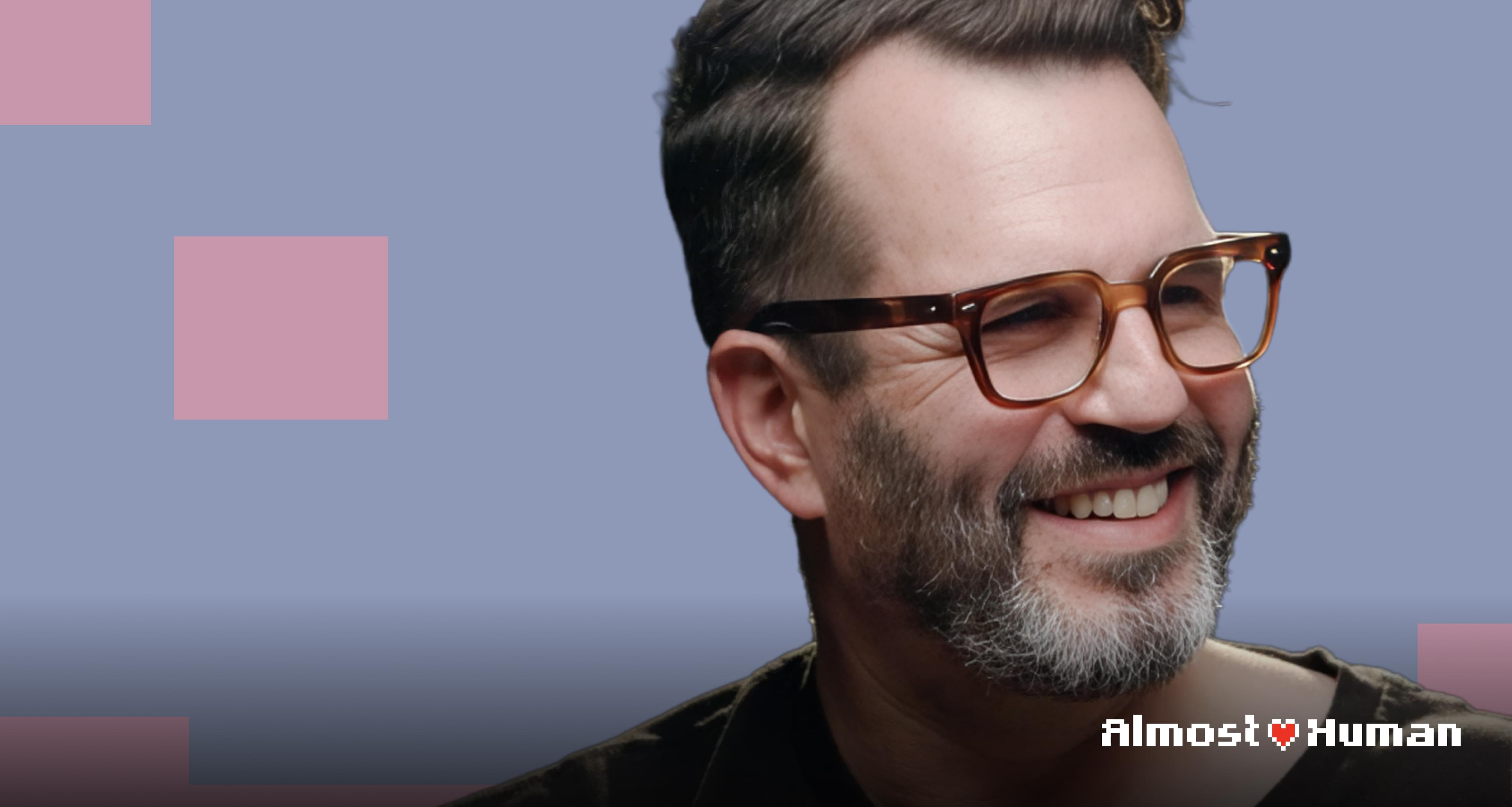
.jpg)
.jpg)
.jpg)


.jpg)
.jpg)
.jpg)
.jpg)

.jpg)
.jpg)
.jpg)
.jpg)

.jpg)