Tamir Goodman
.jpg)

How can values create value? On this podcast, Michael Eisenberg talks with business leaders and venture capitalists to explore the values and purpose behind their businesses, the impact technology can have on humanity, and the humanity behind digitization.




Tamir Goodman
Tamir Goodman
Tamir Goodman
.jpg)
Tamir Goodman
Tamir Goodman
In this episode of Yalla, Let's Go!, Erica and Abbey sit down with Tamir Goodman — the Jewish Jordan, Division 1 basketball pioneer, author, and entrepreneur — for an honest conversation about faith, resilience, and what it really means to build a life in Israel.
Tamir shares his journey from Baltimore to the courts of Maccabi Tel Aviv: how he became the first Jewish athlete to earn a Division 1 scholarship while keeping Shabbat, what happened when an abusive coach shattered everything he'd worked for, and how he found his way back — first to basketball, then to Israel, and eventually to a new calling as an inventor and coach.
The conversation continues with:
- Growing up with a Holocaust survivor grandmother who shaped his identity
- Keeping Shabbat at the Division 1 level — and the teammates who said "Shabbat Shalom"
- The assault that broke him, and how he rebuilt himself
- Signing with Maccabi Tel Aviv and making aliyah
- Inventing Zone 190 and Aviv Net — and getting into the NBA G League
- Coaching thousands of kids and bringing the spiritual side to the sport
- Why Israel is forever home — even with three kids in the army
This is a conversation about grit, faith, and finding the hidden blessing inside every challenge.
Subscribe for more conversations with people who live, work, build, and stay in Israel.
#TamirGoodman #JewishJordan #Israel #Aliyah #Basketball #Shabbat #Division1 #YallaLetsGo #JewishIdentity #MaccabiTelAviv #IsraeliSports #LifeInIsrael #Resilience #LoneSoldier
0:00 - Intro
0:50 - Meet Tamir Goodman: The Jewish Jordan
3:16 - From Baltimore to Jerusalem
3:44 - Why He Made Aliyah: A Grandmother, a Dream, and a Breaking Point
4:55 - Broken by a Coach: What Happened After His Freshman Year
5:23 - The Road Back: "God Invests in Everybody"
6:10 - The Maccabi Call and the One-Hour Tryout That Changed Everything
7:47 - Dyslexia as a Hidden Blessing
8:34 - From Injury to Invention: Creating Zone 190
9:46 - Aviv Net: An Anti-Microbial Basketball Net Born in COVID
10:45 - From Startups to Fabric: Powering NBA Events
10:53 - His Wife, His Mission, and the "Different Uniform" Moment
11:30 - Coaching Erica's Son — and Turning Injury Into Opportunity
12:30 - What Makes Him Never Give Up
14:38 - Was Shabbat Ever a Question? Not for a Second
16:29 - Bringing the Spiritual Side to Israeli Basketball
18:23 - His Dream Was Never the NBA — It Was Bigger
19:24 - Three Kids in the Army and Why Israel Is Still Forever Home
20:55 - What He Loves Most: The Authenticity of Life Here
21:09 - Aliyah Advice: Be Resilient
21:35 - Looking Back at 80: It All Started With Meeting His Wife
22:23 - Rapid Fire: Israeli Salad, Yihiyeh B'Seder & Maryland Falls
[Tamir Goodman — 0:00]
I remember when I got hurt — I didn't know what I was going to do. Basketball was everything to me. I called my wife from the locker room, and I knew I was done. I knew I just couldn't play anymore. And she said, "You're going to do the same thing — you're just going to wear a different uniform. It's the same mission." So I took that pain and I said, okay, if I can't play anymore, I'm going to try to figure out a way to help the next generation of players.
[Tamir Goodman — 0:19]
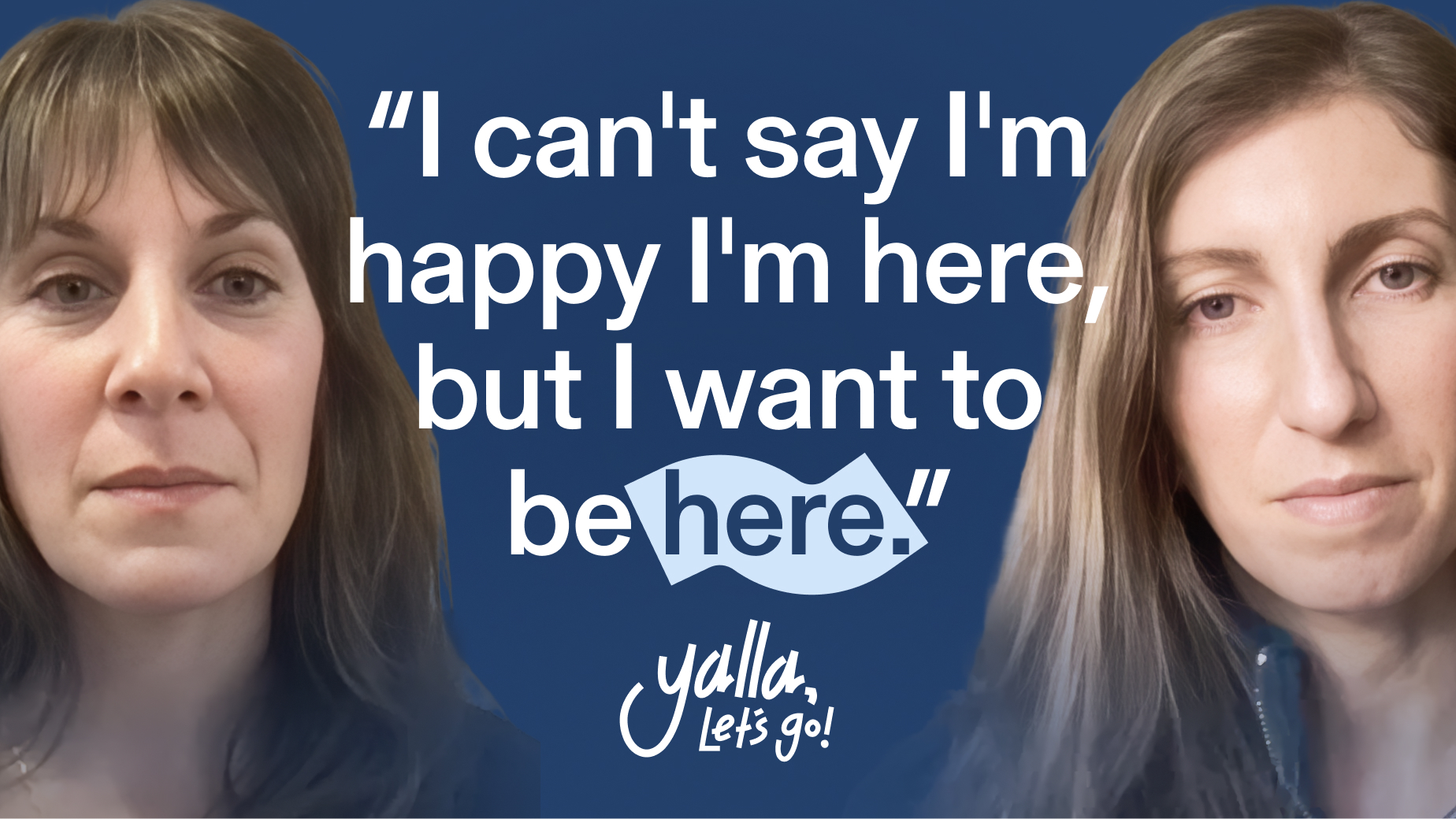
After I got assaulted by the coach, I was broken — emotionally, physically, and spiritually. I didn't want to play anymore. I quit. I left school. I never even said bye to my college teammates.
[Tamir Goodman — 0:29]
Corona hit and all basketball was shut down. We can't pass the ball because there's germs and bacteria on the ball. Why don't we create an antimicrobial and moisture-absorbing net so that when you make a shot, it'll almost act like a Clorox wipe — it'll disinfect the ball. We had a trial with the NBA G League, and hopefully eventually we'll get bumped up to the NBA.
[Tamir Goodman — 0:45]
I just turned around and he was there. And he's like, "Look — do you want to do this? If you don't want to do this, let's go home. If you want to do this, stop crying and pick yourself up." And I did it. And then like a year after that, I was already ranked the 25th best player in the country.
[Erica Marom — 0:59]
Maccabi Tel Aviv or Hapoel Yerushalayim [Jerusalem]?
[Tamir Goodman — 1:00]
I'm not allowed to answer that, because I'm gonna get in too much trouble from both sides.
[Erica Marom — 1:16]
Hello, and welcome back to another episode of Yalla, Let's Go! — the podcast that Abby and I started to remind ourselves why we made aliyah [immigration to Israel] and live in Israel. We're going to talk to everybody from athletes and chefs, venture capitalists, entrepreneurs, people who work in high tech, and anyone else you can recommend us to talk to about what it's really like to live in Israel. And we're going to ask them all the questions you really want to know. So yalla, let's get started.
[Erica Marom — 1:42]
But first, as always — pulse check. Abby, how are you feeling right now about living in Israel?
[Abbey Onn — 1:47]
This week I'm feeling lucky. Recently in Israel we had Yom HaMishpacha [Family Day] — which is Israel's answer to Mother's Day and Father's Day and they made Family Day. I got to go to school for my nine-year-old's Family Day, and we did a really fun sports activity, and then we did a fun game. And he brought home three cards — one for our family, and then he made one also for my father and one for my mother-in-law, for his Safta [grandmother]. And the card he made for my dad was in English, and the card he made for my husband's mom was in Hebrew. And I just thought — I didn't grow up with grandparents geographically close to me, and I was really, really grateful that that was how he chose to celebrate that day, and not just make the card for our family but that he recognized them and made a card for them. I just thought it was really beautiful.
[Erica Marom — 2:36]
That's so nice.
[Abbey Onn — 0:00]
I feel lucky.
[Erica Marom — 0:00]
I remember my first Yom HaMishpacha, and my son came home and said, "Why does everybody else have an ima [mom] and I don't?" And I said, "But you have Mommy." He said, "But I also want an ima." Yeah, that was my first experience.
[Abbey Onn — 2:51]
So funny. You're like, "I'm right here."
[Erica Marom — 2:53]
So today we're here with Tamir Goodman. Thank you so much for joining us.
[Tamir Goodman — 2:56]
Thank you for thinking of me.
[Erica Marom — 0:00]
Tamir — also known as the Jewish Jordan. The first Jewish athlete to play Division 1 sports while wearing a kippah [yarmulke] and keeping Shabbat [the Sabbath]. Also an author and an entrepreneur. We're so happy that you could join us on the podcast.
[Tamir Goodman — 3:11]
Thank you for having me. Excited to be here.
[Erica Marom — 3:13]
So tell us your life story, Tamir, in less than a minute.
[Tamir Goodman — 3:16]
Less than a minute. Okay, I'll try. I'm originally from Baltimore, Maryland. I fell in love with basketball at a very young age, and I decided that I wanted to be the first person to get a Division 1 scholarship without playing on Shabbat. Thank God, I had amazing family, an amazing coach. There were a lot of challenges along the way, but ultimately I was able to live out my dream and then come over here to play professionally. So today I live in Jerusalem with my wife and five children and feel very blessed.
[Erica Marom — 3:44]
So tell us — why did you decide to make aliyah?
[Tamir Goodman — 3:48]
I always wanted to make aliyah. My Safta was a Holocaust survivor and she lived here in Israel. I always wanted to be near her because she was my hero. But my first goal was really to play Division 1 and get that scholarship without playing on Shabbat. And I accomplished that. Unfortunately, after my freshman season, my coach was fired — my coach who helped me for Shabbat, even though he wasn't Jewish — and my teammates and the staff, they were gone. The new coach who came in, he was the exact opposite. He wasn't accommodating. And he assaulted me in the locker room really badly. I just felt like, after that, it was time to go to Israel. I proved it. Hopefully the path will be easier for the next generation of Jewish athletes. But after everything I had gone through — because I went through a lot even before that, on and off the court — I felt like it was time to go to Israel and live out my dream and make aliyah and play here and spend time with my grandmother. And I'm very thankful that I did.
[Abbey Onn — 4:43]
So you started off your career here playing for Maccabi Tel Aviv, where you played until you ended up retiring. Can you talk a little bit about how you built a professional sports career in Israel as an athlete?
[Tamir Goodman — 4:55]
After I got assaulted by the coach, I was broken — emotionally, physically, and spiritually. I didn't want to play anymore. I quit. I left school. I never even said bye to my college teammates. The athletic director called — I was in the police station — and he's like, "You could stay. You don't have to be on the team. We're sorry this happened to you." And I couldn't wrap my head around it. It was too much for me to handle, even before that, how much I had gone through. So I quit. I went back home, and I stopped playing basketball, and I was just broken.
[Tamir Goodman — 5:23]
And then one day I said to myself, "You know what? I can't understand why this happened to me, but I do understand that God invests in everybody, and if you're alive, then you have a mission. So my mission is to try to do good through basketball. And I can't let somebody else take that away from me. So I've got to get myself back in shape." I came back, started training, then getting back in shape mentally and physically in every way. And then I got a phone call from Maccabi, and I hadn't played in a while because of everything that happened. And the coach was like, "Do you want to make aliyah?" And I said, "I'd love to." But they knew that I hadn't played. So he was like, "Look, I'm friends with the coach at Princeton. Go up there, train with them. If he says you're worth it — that we should come see you — then I'll come down to America and meet you." So I went up to Princeton. Thank God, it went well. Coach is like, "You should — it's worth the trip." So then Coach David Blatt, who was the first Israeli to coach in the NBA, came to meet me in New York. I did a one-hour tryout there, and after that signed a three-year contract to play in Israel.
[Abbey Onn — 7:01]
It's super inspiring and emotional, because it's such an unusual aliyah story — that it was like you had it in you, you wanted to do it, but then someone said, "Get yourself back together." You were already on the way to do that. Since then, you have become an entrepreneur, an author, a strategic director. Talk to us about what you're doing now, and how that fortitude has seen you through to where you are now.
[Tamir Goodman — 7:47]
Great question. I'm also very dyslexic. I was very highly recruited, but I wasn't sure I'd be able to pass my SATs. It was always like a really big struggle for me. But the dyslexia was always like a hidden blessing, because dyslexic people are constantly compensating throughout the day, and we're exercising other muscles in our brain that most people don't. So it brings out this really creative muscle in your brain.
[Tamir Goodman — 7:37]
After I got hurt and I couldn't play anymore, I went to my coach. I was like, "Will you just try to rebound for me one more time? Maybe the doctor's wrong." And he's like, "No, you're done. We already signed another player." So I took that pain and I said, "Okay, if I can't play anymore, I'm going to try to figure out a way to help the next generation of players."
[Tamir Goodman — 8:34]
Usually in basketball, the coach would stand underneath the net and pass the ball out. But in basketball we don't really catch the ball at a straight-away angle — we catch the ball at multiple angles. And depending on where the ball is coming from, you have to set your hands and feet. So I'm thinking to myself, "Okay, I'm not going to be able to play anymore, but how can I help the next generation of players? Well, I got it. Instead of us always training the ball, catching it that way — it's unrealistic — I'm going to create a device that allows players to replicate game-like angles." So instead of having a traditional pitch-back, which is one-dimensional, I created the first-ever multi-angle pitch-back for basketball, called Zone 190. It gave you 190 degrees of passing instead of just a traditional angle.
[Tamir Goodman — 9:12]
I couldn't explain to a designer what I wanted, so I flew back to America. I went to Home Depot, and I was playing in the plumbing section trying to build it. A plumber actually tapped me on the shoulder and he said, "This isn't going to work. You're going to mess up your bathroom." And I said, "No, I'm making something for basketball." Thankfully I was able to bring that to life — called Zone 190. We got it in the NBA. Unfortunately, a big company stole it from me, even though I had a patent on it. And I told my wife, "I'm never going to do startups again after this."
[Tamir Goodman — 9:46]
So I just started focusing on camps and clinics and basketball and things like that — all the way up until Corona. Then the Corona hit, and all basketball was shut down. My daughter's like, "Why don't you think of something else? Think of a new invention." Right after she said that, we got an email from the Israeli Basketball Association that said, "Whenever we go back to practicing again, we can't pass the ball because there's germs and bacteria on the ball." And I said to myself, "I have another idea. Israel's a world leader in textiles. Why don't we create an antimicrobial and moisture-absorbing net so that when you make a shot, it'll almost act like a Clorox wipe — it'll disinfect the ball, and it'll also dry it because it's moisture-absorbing." I went back on my promise and I brought that to market and named it Aviv Net. We had a trial with the NBA G League, and hopefully eventually we'll get bumped up to the NBA. We have our second version coming out now. We signed with Dick's Sporting Goods in America. And at the grand opening, my teammates who were in the locker room that I got assaulted in, that I hadn't seen in many years — they came out there to support me. So I finally got to give them a hug and get closure on that story.
[Tamir Goodman — 10:45]
Because of the success of the net, I got a phone call from Fabric, which is a leading mixed-reality fan engagement company. They hired me as the head of sports. Just a dream opportunity. We just got back from All-Star Weekend. We power almost every NBA event now using our platform. So that's how I got into the entrepreneur space. But it's always with the same energy that I played for, and the same energy now — which is trying to better the world through basketball. And that's how I came up with the book, too. The whole point of the book is to inspire kids with learning challenges, to let them know that within the challenge, there's a hidden blessing.
[Tamir Goodman — 10:48]
I remember when I got hurt — I didn't know what I was going to do. Basketball was everything to me. I called my wife from the locker room, and I knew I was done. I knew I just couldn't play anymore. And I was really, really broken. And she said, "You're going to do the same thing — you're just going to wear a different uniform. It's the same mission, you know?" And she was right. Everything I do throughout the day is with that same mission statement.
[Abbey Onn — 10:53]
Sounds like you picked the right partner in your wife. And it sounds also like your daughter has a lot of what you have, which is the challenge back to you to keep building. I want to just pick up on the All-Star Game and ask how it felt to be there and see the Israeli flag.
[Tamir Goodman — 10:59]
You know, when I was growing up — after dinner on Friday night and Shabbat — my father would read us books about Jewish heroes, Jewish sports heroes and things like that. That really had a big impact on my life. And I think what Deni's doing now is, like, witnessing those types of moments — what my father used to read to me about when I was a kid. So I'm sure that there are millions of kids around the world that he's inspiring, and it's so great to see. His agent was actually my teammate, Matan. So I'm very proud of him too, to see him go through this journey as well. It's very, very magical. My father always used to say, "Let your game do the talking." And I think he's letting his game do the talking, and a lot of times that has a very big impact, and we're seeing it around the world.
[Erica Marom — 11:30]
So we know each other because you coached my son at your camp for the past bunch of summers, and he loves playing for you. Actually, this past summer, he got injured on the first day of camp. And I remember — for us, we thought, okay, that's it. Now camp's over, you can't play anymore. He was so upset. And you totally turned it around. You were like, "No, this is not how you approach problems. We're going to look at the opportunity." And you taught him to help you coach, and you helped him perfect his shot. And really kind of turned it into a positive moment instead of a negative one. I think that's something that's really defined your life — taking challenges and figuring out how to overcome them. Whether it was the dyslexia or the Shabbat or the getting injured or whatever it was, you always bounce to the next thing. What is it in you that makes you never give up?
[Tamir Goodman — 12:30]
Oh, that's a very good question. I think it was the way that I grew up. My grandmother was a Holocaust survivor, and I grew up in a family full of faith. And I also had a coach who has been coaching me since I was seven years old. He taught me the beauty of transcendence — and overcoming. I remember just a couple of quick examples.
[Tamir Goodman — 12:52]
When I was 16, he took me to play against college players, and I wasn't used to having players stronger and faster than me. I remember one time a college player stripped the ball from me, and I was so upset. I went underneath the hoop and I hit my hand and head against the mat, and I was crying. And I just turned around and he was there. And he's like, "Look, do you want to do this?" I said, "Yeah." He's like, "Well, if you want to do this, you're going to have to be able to play against that speed and that strength. If you don't want to do this, let's go home. If you want to do this, stop crying and pick yourself up." And I did it. And then a year after that, I was already ranked the 25th best player in the country.
[Tamir Goodman — 13:28]
There was so much media. And one time I had a poor shooting night, and there was so much media after the game — almost like an NBA game. I was in high school. I said to Coach, "I don't want to go out there. Everyone knows I shot poorly tonight. I don't want to talk to them." Most people probably would have said, "All right, let's go back-door and go home." He said, "No, no. If you talk to them after you play well, you have to talk to them right now after you play poorly." I said, "Well, what do I say?" He's like, "Just say, 'I shot really poorly. I need to get back in the gym and get better.'" And I went out there in front of national media — I was 17 years old — "I'm sorry. I shot really poorly tonight. I've got to get back in the gym and get better." And that was kind of the way that I was raised — just realizing that the more we transcend, the more we pick ourselves up, the more we have a true feeling of accomplishment, and also the more we can inspire and help those around us.
[Tamir Goodman — 14:05]
And how did that help my aliyah? It helped my aliyah because that's the type of grit you need to make it here in Israel. And that's the type of grit that could actually make you appreciate living here even more. So there's always a hidden blessing in the challenge — and the challenges don't come to knock us down. They come to help us find that inner potential.
[Erica Marom — 14:38]
So when you were dealing with the Shabbat issue, trying to play professional sports in America, was there any part of you that was like, "Oh, I'm questioning keeping Shabbat," or questioning how this was affecting your career — your entire career — or was it something where you were just, "This is a red line for me"?
[Tamir Goodman — 14:53]
No, Shabbat was an absolute red line for me. And my teammates were very respectful of that, which was great. First of all, on Fridays, practice was in the afternoon instead of at night, which meant they were off on Friday night. So instead of saying "1, 2, 3, Tigers" on Friday afternoon practice, they used to say "1, 2, 3, Shabbat Shalom [good Sabbath]." They loved it, too. It ended up being a really big blessing — as it was for me — because it's actually really healthy. I believe that everything that comes from Hashem [God] is in our best interest. I feel like it's in our best interest as an athlete to take time to focus on your soul, to focus on your meaning, to exercise other parts of your brain and soul that we don't really get a chance as much to focus on during the week. And I felt like the players felt that as well, and they were very respectful of it.
[Tamir Goodman — 15:38]
As I mentioned earlier, when I had that situation with the other coach — that was very hard for me to come back from. But it, coaching and everything like that, it actually made me a much better coach. I've coached thousands of kids now, and I coach them with an extra sensitivity and an extra love, specifically because I know what it's like to have a coach take everything away from you and how much that hurts. So it ended up being a hidden blessing as well. But yeah, no — Shabbat's always a blessing.
[Erica Marom — 16:07]
And I can attest — you are an amazing coach. Very inspirational.
[Abbey Onn — 0:00]
I want to ask: we grew up playing sports in the U.S. as well, and sports look really different here for Israeli kids. Can you talk a little bit about the kind of coaching style you were bringing, and how you see athletics playing a role in developing kids' leadership, confidence — that kind of thing — and the kind of differences between the U.S. and Israel?
[Tamir Goodman — 16:29]
Yeah. There are amazing coaches in Israel and we see that. I'll just talk about basketball — basketball is exploding here. The talent level is unbelievable. I think what I try to bring is the spiritual side of the sport, the emotional side of the sport. Because to me, it's always been one thing. I never separated between the physical and the spiritual. It's always been one thing.
[Tamir Goodman — 16:51]
I think I've been blessed to train a lot of coaches and speak at a lot of coaching clinics in Israel and America. Recently I spoke in front of many NBA and NCAA coaches, and the first thing I say is: there are millions of great coaches out there. They all have great X's and O's. But the first thing a coach needs to do before they get on the court — before any play, any teaching — is, "Am I mentally, emotionally, and physically ready to be on the court? Because I need to understand: when I'm on the court, I need to be able to give everything I have over to the athlete, in the healthiest, most inspiring, most caring way." If I haven't taken care of myself 100%, I'm not going to be able to be there for the athlete at 100%. So I focus a lot on coaching preparation and understanding what an athlete is — what is an athlete that has learning challenges, emotional challenges, physical challenges. What is this amazing sport of basketball? Why was it given to us? Ahead of every type of win, there's a spiritual win of, like, uplifting this kid. If we've done that, then we've already won. And most likely if we've done that, it's also going to lead to physical wins as well too, because that's what life is all about. That's what basketball is all about. Bringing people together and inspiring them and helping them through the universal language of basketball. So I like to put a very big emphasis on these types of things, and I hope that it'll impact basketball around the world, wherever basketball takes me. But obviously Israel is my home, so I try to do as much as possible here.
[Erica Marom — 18:23]
So was your dream when you were younger to go to the NBA?
[Tamir Goodman — 18:27]
My dream when I was younger was to play Division 1 basketball on a full scholarship without playing on Shabbat. The way that I got to that was not by controlling too much. I've always realized that God controls the world, and you have to leave space for God. I just try to win every day and win every situation. If I've done well, I try to continue, and if I mess up, as we say in basketball, I try to get the next one.
[Erica Marom — 18:53]
So, I think that's also really a belief that as well. And I think it happens even more so in Israel.
[Tamir Goodman — 18:57]
Oh, a million percent. Like a billion percent. That's how I met my wife — which is the biggest blessing for me in my life. Only after I got traded, after I lost my biggest contract, after it looked like the worst thing that could have ever happened to me in basketball — only after that did I get my biggest blessing. So I always, even if something really challenging happens, I always know that — I don't control the world. Someone does control this world, and you have to go with it sometimes.
[Erica Marom — 19:24]
Yeah, living here isn't always easy — certainly over the last couple of years. Have you ever considered going back to the U.S. to coach? Have you ever considered moving your family back? Or is Israel your forever home?
[Tamir Goodman — 19:38]
Israel is forever my home. I know for sure if I lived in America I'd have incredible, incredible basketball opportunities. But I'm happy here. And same thing — within each challenge: right now, my daughter's in the army, my son's in the army, my son-in-law is in the army. So it's very challenging. It's around-the-clock challenging. But at the same time, I look at all my kids and I look at them and I'm like, "Look at what you guys are doing at such a young age. Look at the responsibility that's on your shoulders." So yes, it's hard, but on the other hand, it's very meaningful, and I feel like for their development for life, what they're doing — I just want to tip my hat to them. I can't believe the responsibility that they carry on their shoulders at such a young age, and the way they do it. So yeah, it's very challenging, but I wouldn't trade it for anything in the world. As far as reaching our potential — which I believe is the goal of this world — Israel allows you to do that, even if it forces you to do it. I feel like that brings a true happiness. I could say if we went back to America, a lot of things would have been easier, but I don't think we would reach our potential as much as a family. So it's beautiful to see.
[Erica Marom — 20:55]
What do you love most about living here?
[Tamir Goodman — 20:57]
The authenticity. I feel like it's the truth. On Shabbat morning, at 5:30 in the morning, I go to the Kotel [Western Wall] with my wife, and it's just like, this is the truth. I'm bringing my soul home. And it's extremely meaningful.
[Abbey Onn — 21:09]
If you give one piece of advice to someone considering making aliyah, what would you say?
[Tamir Goodman — 21:14]
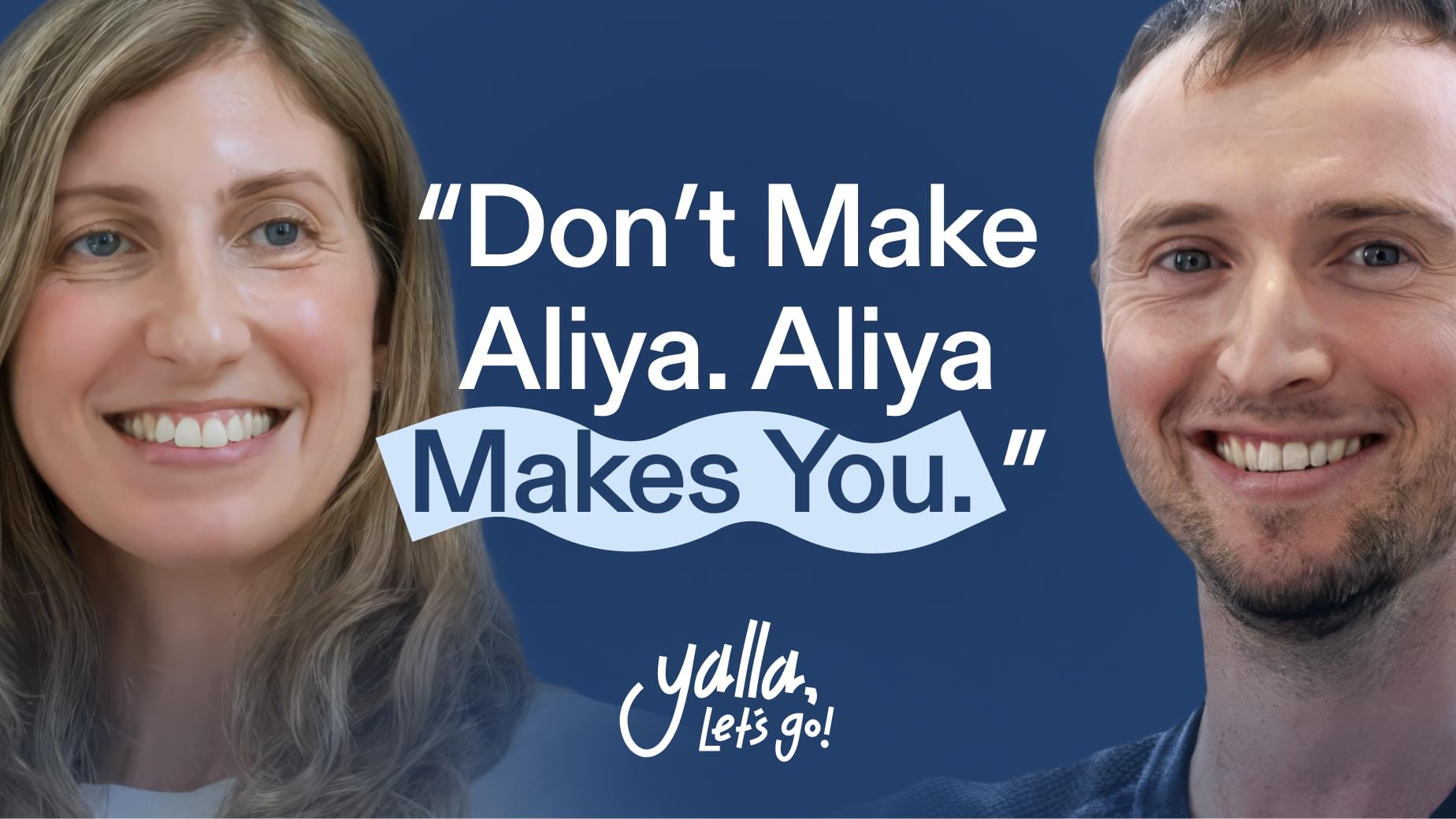
I would say — be resilient. Be resilient. If you're resilient, and you come here with the right intentions, it will work out. There will be challenges, but it will work out. And if I could ever do anything to help, please feel free to reach out to me. But if you're resilient, it'll work out. It'll work out even better than you can imagine, and it'll all come together. You just gotta be strong.
[Erica Marom — 21:35]
So when you're 80 years old and you're looking back on your life, what's one thing that you think will have been true about your life — because you made aliyah — that wouldn't have been true otherwise?
[Tamir Goodman — 21:43]
Well, to me — mekor habrachah [source of the blessing] — the source of everything for me is meeting my wife. Had I not gotten assaulted by the coach in America — let's say I would have played four years in college — or had I not gotten traded — who knows what would have happened to me. But specifically because of all those challenges, I landed my source of all happiness and blessing, which is my wife. And now it's our family. So I think when I'm looking back, when I'm 80, I'm going to be thinking that. But I actually think that every day. So between now and 80, I'll be thinking that every day.
[Abbey Onn — 22:23]
We're going to do a quick rapid fire. I'm going to ask you a question, you're going to answer in one word.
[Tamir Goodman — 22:26]
Okay.
[Abbey Onn — 22:27]
Aright. Favorite Israeli food or snack?
[Tamir Goodman — 22:28]
Israeli salad.
[Erica Marom — 22:30]
Maccabi Tel Aviv or Hapoel Yerushalayim?
[Tamir Goodman — 22:32]
I'm not allowed to answer that, because I'm gonna get in too much trouble from both sides.
[Abbey Onn — 22:39]
Favorite Hebrew word or slang?
[Tamir Goodman — 0:00]
Yihiyeh b'seder [it will be okay].
[Erica Marom — 22:44]
What's the thing you miss most from Towson?
[Tamir Goodman — 22:47]
I think there was just something really magical in Maryland about the fall — like the fall time, and sports coming back, and basketball season starting and stuff like that — was really magical. Just being on campus with your basketball gear, and everyone saying "good luck this season" — it was a pretty magical time.
[Erica Marom — 23:09]
What does your Shabbat — your Saturday — look like?
[Tamir Goodman — 23:12]
Exercising my soul, and spending time with the family.
[Erica Marom — 23:15]
What's your favorite "only in Israel" moment, in one sentence?
[Tamir Goodman — 23:20]
Seeing my daughter, son, and son-in-law bump into each other at the train station — even though they're all going to different bases — and just seeing how that comes together.
[Erica Marom — 23:34]
That's beautiful.
[Erica Marom — 23:35]
Thank you so much, Tamir, for joining us.
[Tamir Goodman — 23:37]
Thank you guys for thinking of me.
[Erica Marom — 23:39]
It's really lovely. Thank you. And thank you, of course, to our team — Uri, Nadav, Yotam, Dalit, Sara, Sofi, Jackie. Thank you so much for making this happen. And if you enjoyed this episode, share with everyone you know.

Follow Tamir on Linkedin
Subscribe to Yalla, Let’s Go
Learn more about Aleph
Sign up for Aleph’s monthly email newsletter
Subscribe to our YouTube channel
Follow us on Instagram
Follow us on TikTok
Follow Aleph on Twitter
Follow Aleph on LinkedIn
Follow Aleph on Instagram
Hosts: Erica Marom, Abbey Onn
Executive Producer: Sarah Bard
Producer: Sofi Levak, Dalit Merenfeld, Myron Shneider
Video and Editing: Nadav Elovic, Yotam Kushnir
Music and Creative Direction: Uri Ar
Content and Editorial: Jackie Goldberg
Design: Nimrod Sapir
Follow Tamir on Linkedin
Subscribe to Yalla, Let’s Go
Learn more about Aleph
Sign up for Aleph’s monthly email newsletter
Subscribe to our YouTube channel
Follow us on Instagram
Follow us on TikTok
Follow Aleph on Twitter
Follow Aleph on LinkedIn
Follow Aleph on Instagram
Hosts: Erica Marom, Abbey Onn
Executive Producer: Sarah Bard
Producer: Sofi Levak, Dalit Merenfeld, Myron Shneider
Video and Editing: Nadav Elovic, Yotam Kushnir
Music and Creative Direction: Uri Ar
Content and Editorial: Jackie Goldberg
Design: Nimrod Sapir
Follow Tamir on Linkedin
Subscribe to Yalla, Let’s Go
Learn more about Aleph
Sign up for Aleph’s monthly email newsletter
Subscribe to our YouTube channel
Follow us on Instagram
Follow us on TikTok
Follow Aleph on Twitter
Follow Aleph on LinkedIn
Follow Aleph on Instagram
Hosts: Erica Marom, Abbey Onn
Executive Producer: Sarah Bard
Producer: Sofi Levak, Dalit Merenfeld, Myron Shneider
Video and Editing: Nadav Elovic, Yotam Kushnir
Music and Creative Direction: Uri Ar
Content and Editorial: Jackie Goldberg
Design: Nimrod Sapir
.jpg)
.jpg)
.jpg)
.jpg)
.jpg)
.jpg)
.jpg)

.jpg)























.jpg)


.jpg)
.jpg)
.jpg)
.jpg)

.jpg)
.jpg)
.jpg)

.jpg)