Giovahnna Ziegler


How can values create value? On this podcast, Michael Eisenberg talks with business leaders and venture capitalists to explore the values and purpose behind their businesses, the impact technology can have on humanity, and the humanity behind digitization.




Giovahnna Ziegler
Giovahnna Ziegler
Giovahnna Ziegler
.jpg)
Giovahnna Ziegler
Giovahnna Ziegler
In this episode of Yalla, Let's Go!, Erica and Abbey sit down with Giovahnna "Gio" Ziegler - Brazilian olah, marketing leader in Israel's high-tech ecosystem, former contestant on Brazil's Next Top Model, best-selling author, and mother of two.
Gio shares her journey from Rio de Janeiro to Tel Aviv, why aliyah was a philosophical certainty more than a logical decision, how she built a successful career in Israeli tech without speaking Hebrew, and what it's like to raise trilingual kids in a Yemeni-Brazilian household. She opens up about the LGBTQ community in Israel vs. Brazil, why she'll never go back, and why Israelis' refusal to apologize in the supermarket is actually genius.
The conversation continues with:
- Growing up in a famous artistic family in Brazil - and rejecting it
- Being the first openly gay contestant on Brazil's Next Top Model
- Building a marketing career in Israeli tech from scratch
- Starting (and quickly shutting down) her own agency
- Raising kids in three languages in Tel Aviv
- The LGBTQ community in Israel: openness, acceptance, and belonging
- Why she feels Israeli - not Brazilian
This is a bold, funny, and deeply personal conversation about reinvention, belonging, and the life you build when you bet on yourself.
Subscribe for more conversations with people who live, work, build, and stay in Israel.
#GioZiegler #Israel #Aliyah #BrazilianOlah #IsraeliTech #LGBTQ #LifeInIsrael #YallaLetsGo #TelAviv #Marketing #JewishIdentity #NextTopModel
0:00 - Intro
0:49 - Meet Gio: From Rio to Tel Aviv
2:17 - Life Story in One Minute: Hippie Roots, Corporate Career, and Two Boys
2:44 - Why She Made Aliyah: A Philosophical Decision
3:53 - Not Another Boring Marketeer? Actually, Kind Of
5:20 - New York Times, South Africa, and Getting to Israel
6:57 - Growing Up in a Famous Artistic Family — And Rebelling
8:27 - Did Moving to Israel Mean a Career Setback? Bullshit, No.
8:55 - How She Cracked the Israeli Tech Market
10:13 - Starting Her Own Agency (And Why She's Shutting It Down)
11:19 - Brazil's Next Top Model: The Tyra Banks Contract, the NDA, and the Gay Twist
13:52 - From a House of Models to Her Wife Hofit
14:01 - Marrying Into a Yemeni Israeli Household
15:35 - IVF in Israel: What's Free, What's Not, and the Danish Donor
17:16 - The LGBTQ Community in Israel vs. Brazil
19:43 - Raising Trilingual Kids: Hebrew, Portuguese, and English
21:16 - Would She Ever Go Back to Brazil? Absolutely Not.
21:37 - What's Hard About Living in Israel (Lines. Just Lines.)
22:07 - Why She Loves Israelis: Unapologetic, Good-Hearted, and Consistent
23:18 - Advice for Anyone Considering Aliyah: Just Do It
24:07 - Rapid Fire: Israeli Salad, Kafkafim & the Haredi Kid
[Gio Zeigler — 0:00]
I trash Tyra Banks all the time. I'm like. And I have enough authority to trash her. She's like, "Gio, do as you want, but know that you will always be remembered as the beautiful gay lesbian." I was like, "Say no more." Came to Israel 10 years ago, met the love of my life. Everybody told me that my career was going to have a step back.
[Abbey Onn — 0:24]
Did you have a setback?
[Gio Zeigler — 0:25]
Bullshit. No.
[Erica Chernofsky — 0:27]
Have you ever thought about bringing your kids back to see where you grew up in Brazil? Is there any part of you that...
[Gio Zeigler — 0:32]
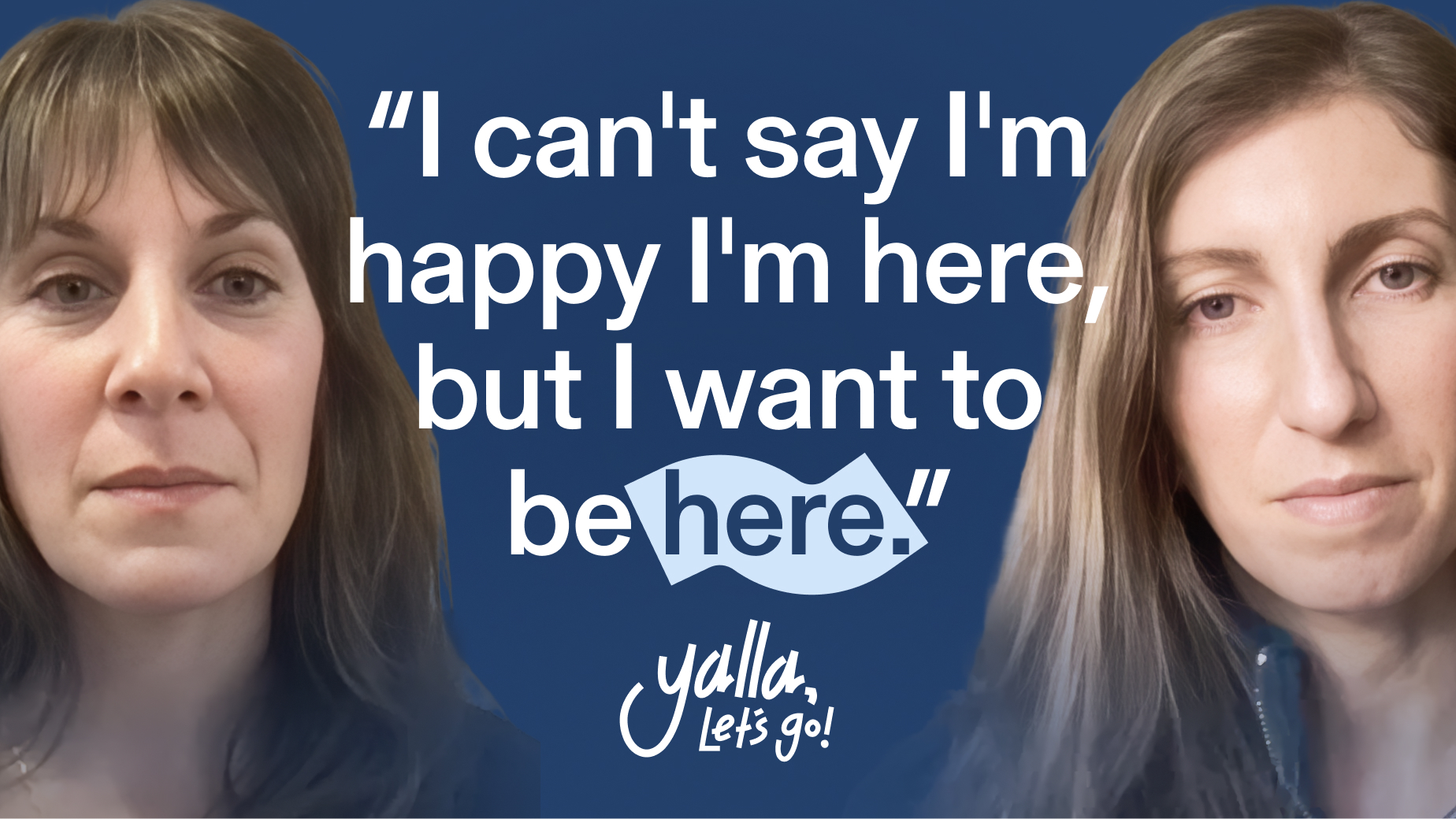
Absolutely not. I have no desire to go back to Brazil. I don't feel like I'm Brazilian anymore. I feel like I was born Israeli. I was just born in Brazil.
[Abbey Onn — 0:49]
Welcome back to Yalla, Let's Go!
[Abbey Onn — 0:52]
The podcast that Erica and I started to remind ourselves why we made aliyah [immigration to Israel]. We are going to have episodes hosting everyone you can imagine, from athletes to entrepreneurs, venture capitalists, cookbook authors, influencers, and marketeers. Today we're super excited to welcome Giovanna Ziegler, who is a marketeer, a former contestant on Brazil's Next Top Model, and a mother of two. But before we dig in, Erica, pulse check. How are you feeling about living in Israel right now?
[Erica Chernofsky — 1:21]
Right now, I'm feeling that I really miss my kid because he is on a week long trip in the Negev [south] and trips here. And first of all, they do so many more trips here than where we grew up.
[Erica Chernofsky — 1:34]
And the trips are just so different. Like, I don't know how it was for you, but growing up in Pennsylvania, they would take us to like museums or like Amish country or colonial Williamsburg. And here it's like go on a hike in the desert, camp out without a tent for an entire week. And I don't know, maybe that builds more character.
[Abbey Onn — 1:54]
Like life skills. But fair that you miss him.
[Erica Chernofsky — 1:56]
Yeah, yeah.
[Abbey Onn — 1:57]
Okay. All right.
[Abbey Onn — 1:59]
We're super excited to welcome Giovanna Ziegler. Jovi. Gio, we can call her any number of things. Olah [immigrant] from Brazil. Been here for quite a long time, leading in lots of different companies in Tel Aviv's high tech ecosystem as a marketeer. And Gio, if you can tell us your life story in less than one minute.
[Gio Zeigler — 2:17]
I can't, but I am Gio. Gio from Rio, grew up in a hippie home, decided to be rebellious and build a corporate career and give my grandmother a heart attack because I should be an artist instead. Came to Israel 10 years ago, met the love of my life, had the most beautiful kids, two boys, and I don't sleep for three years. That's my life in one minute.
[Erica Chernofsky — 2:44]
So tell us, why did you decide to leave Brazil and make aliyah?
[Gio Zeigler — 2:48]
For me, it's a very easy decision. I feel like it's much more of a philosophical decision than actually a logic decision. I think it's just the reason. I don't know. Do you believe in the Torah? Do I? Yeah. Yeah, sure, yes. So for me, it's like a very, very easy decision. If you believe in the Torah, you're like part of the prophecy. Right? So you're here in Israel. I never had like this religious side of me, but I did have, like this very Zionist side of understanding that, you know, the same way that we talk about maybe sometimes our grandparents, great grandparents, and it's like, wow, what they went through in order for us to be here. I think that's what people are going to talk about us in like, 50 years from now. They're not going to necessarily know our names, but the kids of our kids, of our kids, they're going to look back and say like, "Wow, my mom left very great life and came to this country while it's still, you know, building✓✎✕ itself. And that's why I'm here, and that's why I have this family, and that's why I do this."
[Erica Chernofsky — 3:53]
So you work as a marketing leader in the local high tech ecosystem here. And on your LinkedIn profile, right under your picture, it says that you're not another boring marketeer.
[Gio Zeigler — 4:02]
Yeah, that's B.S. I am. Yeah. 100%.
[Erica Chernofsky — 4:06]
You are boring?
[Gio Zeigler — 4:07]
100%. I don't really like to be ordinary, but many times I have to be. Marketing is a lot about numbers and a lot about data. People get confused and they think it's pure creativity. It has a very short window for creativity. And the reason why I'm such a good marketeer is because I know how to do the things. And I'm not saying they're completely templated, but they have an expression to be followed. I'm very good at bringing companies from zero to one. I'm very good in that stage. And I do that because I'm very much boring, because I do exactly what you should do. I think the creative part of marketing is to be a good storyteller. But even for that, you do have some rules. Yeah, I'm very boring.
[Abbey Onn — 4:55]
So I'm going to counter that and say that by disappointing your grandmother, you went to work for The New York Times in Brazil, you competed as Brazil's Next Top Model, and then you decided short stop in South Africa, which you can get into. And then you got to Israel. Talk to us about what you did when you got here and how you decided kind of what your first job would be and how you pivoted your career when you got here.
[Gio Zeigler — 5:20]
I do have to tell you a little bit more about my story in order to everything makes sense. So my grandma is a very famous artist in Brazil. Also my grandpa, also her husband, which is two different things. And my uncle, my mom, she's not famous, but she's like a musical theater actress, very recognized. And my family relates, like successes equal fame, you know, you're only successful if you're famous. So I was pushed since I was a little girl to be famous, to go there and do it. But there is one catch. My family, they're gifted. My mom was born with like perfect pitch. My grandma never needed classes, you know, everything just happened to them. And when I wasn't born with a perfect pitch, like, okay, you don't know how to sing. What can you do that is artistic? And they always liked the fact that I was a storyteller, that I was a writer, that I liked to read since a young age. And she was super supportive, like, just do it. Let's make plays. But I was always this very obnoxious kid. I was a very annoying kid. It's like she would give me a book to read or a script to play, and I was like, "Boring. I'm going to make this better." That was Shakespeare, you know, like... She loved that though. And she said, like, "You were made for the cameras. Gio, why don't you want to be? It's so good to be remembered." Like, remembered? I want to be forgotten. Like, I hate to be remembered. I don't want people in my business. When I was 15, my mom put me in an agency. And I liked the money, the freedom, you know, like, I started to do a few things. So from 15 till I was like 17, I worked as a model. I did like runaways and I did like catalogs. And when the subscriptions for the Brazil's Next Top Model started, my ex girlfriend, she called me and she said, like, "If you don't sign up, I'll sign you up." I was like, "But why? I don't want to be famous." And she's like, "Giovanna, never mind famous. What do you want to say to the world?" I was like, "Oh, it would be nice to bring like, I don't know, you know, a lesbian visibility." And she's like, "Not that, not that. Do like me." She's a very famous woman in Brazil, but she was not out. And she's like, "Do like me. Be famous first. Go do all the things and then you come out." But I don't want to be famous. That's your dream. If I want to be famous is to talk about, like, being gay. You know, like. And she's like, "Gio, do as you want, but you will always be remembered as the beautiful gay lesbian." I was like, "Say no more. That's all I want. That's okay. That's what I'm gonna do." So I signed up, and I remember in the... I was so young, I had braces on. I was still 17 when I signed up, and I was like, the first ever lesbian out person in Brazil. And, you know, that brought a lot of good things and bad things as well.
[Abbey Onn — 8:27]
Do you think that this expectation of fame or this pressure was one of the reasons that pushed you to move here a little bit, this notion of kind of restarting?
[Gio Zeigler — 8:35]
No, but I think, like, the only thing is, when I moved here, everybody told me that my career was going to have a step back. And I don't speak Hebrew. You know, they say, like, you are Latina, you have to prove yourself. Like, okay.
[Abbey Onn — 8:52]
Did you have a setback or how did you pivot?
[Gio Zeigler — 8:55]
Bullshit. No. I didn't have a step back. The only thing I took was a more conservative approach into understanding what the market here is and how people work here and, you know, to understand the chutzpah [audacity] and to understand the way people, the lingo. So I kept myself a little parve [neutral] and you know, just quiet and learning. And that seems very not like you. Very. Yeah, I'm very not like me. Thank you. It's true.
[Abbey Onn — 9:26]
Little chameleon.
[Gio Zeigler — 9:27]
Yeah, I had to. And. But, you know, people say, like, oh, Americans have it easy because they speak English. You have, you know, this Italian Sofia Vergara accent, you know. We're not gonna. She's not Italian. She's not. No, Italian Sofia Vergara. I don't know. Yeah. As if Sofia Vergara was Italian. It's your accent. So, like, you know. But it has some truth. I did lose a lot of times to Americans. And, like, why? Just because, you know, there's a presentation better, I think. But no, after I understood how to talk to people, I think I flew, if I may say. And then. But yeah, that was the only step back - that I have to be quiet.
[Abbey Onn — 10:13]
So you were the head of marketing and VP marketing in a number of really cool companies, but recently you decided to start your own agency.
[Gio Zeigler — 10:20]
Yeah.
[Abbey Onn — 10:21]
Can you talk about that decision and kind of what it means?
[Gio Zeigler — 10:23]
Yeah, terrible decision. I hated every moment of it. Like, I was like, I know a lot of people. I'm going to, you know, just start a new business. And I started to talk to people and people were like, yeah, I needed, you know, a person to do this and a person to do that. I'm like, damn, here I am being a generalist again. And I think agencies in Brazil, for example, it's... You go to agencies when you're in the top of your career. In Israel, I feel like it is exactly the opposite. You start at agencies and there's a rotativity in agencies. And people want in house, you know. The company grows and you want in house. So the job agencies get, it's very like, generic. It doesn't have personality. And I think they don't take you as serious as when you are a employer. So I'm giving up on that very quickly. Like, I don't want that. You're going back in house? A hundred percent. That was a terrible idea.
[Erica Chernofsky — 11:19]
So I want to go back for a minute to Brazil's Next Top Model.
[Gio Zeigler — 11:22]
Sure.
[Erica Chernofsky — 11:22]
Like, can you tell us a little bit about that experience?
[Gio Zeigler — 11:25]
Yes. I never say this about women specifically, but I always, I trash Tyra Banks all the time. I'm like. And I have enough authority to trash her. You know, there was this documentary about it.
[Erica Chernofsky — 11:40]
I know. I was literally just watching it.
[Gio Zeigler — 11:42]
I was fuming. Like, I hate this woman so much. I really don't like her. I think she's insane. When I received my contract on Brazil's Next Top Model, it's an American contract signed by Tyra that was translated. So it says, "Do not run this with your lawyers. Run this with ours. If you need a lawyer, we have one for you." And the girls are like, "Oh, that is so nice. Because I can't pay for a lawyer. So you give me a lawyer." It's like, no, stupid women get a lawyer. I didn't care. I'm Jewish. I have like at least three lawyers in the family. So, you know, "Marco, give me a help here." And he read the contract and he's like, yeah, so this is not valid by Brazilian law. This is not valid. This is not valid. If this happens, you can sue her. This says that they can voice over me if they need it. If I don't give the answer that they want. And a huge NDA that we cannot even talk about the contract with our therapist. And if we need a therapist, they can provide a therapist. Wow. Which they do, but it's their therapist. So she's very pro the program and the production is horrible. Like, it's. We didn't have as bad as the Americans, but it's horrible. It's totally true what they say. It's like everything, storytelling, they choose the story. And I knew my story. I knew. I'm the gay girl in a house full of beautiful women. And for example, in the first night in the house, we are 12 girls and we're 11 beds. So I'm like, I'm gonna sleep on the couch. And then there is one of the girls, my friend, she's like, "Gio sleep with me." And I was like, "They're gonna cut this and they're gonna put in the show, like, understand what you think. This is exactly what they want. And I can't sleep with you because I'm a cuddler. And they're going to catch this on camera." And like, that's the kind of thing. Like, they did a photo shoot with, like, men in their underwear. They thought that I was going to be uncomfortable. Like, I'm comfortable. You want me uncomfortable? Put me in the photo shoot with, like, 12 redheads. That's going to make me uncomfortable. I dominated that photo shoot. Ridiculous woman.
[Abbey Onn — 13:52]
Okay, I want to take a quick turn from one house of beautiful women to a house with one beautiful woman.
[Gio Zeigler — 13:58]
Right. My wife right?
[Abbey Onn — 13:58]
Your wife.
[Gio Zeigler — 13:59]
Yes, yes.
[Abbey Onn — 14:01]
You are married to Hofite. And I want to ask what it was like to marry into a Yemenite Israeli household and how that's going.
[Gio Zeigler — 14:09]
Great. Amazing. The food is amazing. No, listen, my wife is. She's a saint. Honestly, I love her and, you know her, so it's very easy for you to just agree. I met her in a bar. She was like this most beautiful person I've ever seen. I was like, okay, I'm gonna. You know, I'm gonna hit on that woman. And I went to hit on her and she looked at me and she's like, "No." I mean, that was the first thing she said. She looked me up and down, was like, absolutely not. And she left. I was like, "Why? What did I? Okay, no, is a full sentence. Okay, I respect you. However, I'm an olah chadasha [new immigrant] and I need friends, and I need gay friends because it's my community." And she's like, okay. Then, like, we went out as friends and we really liked each other. But I told her, like, I can't be your friend. You're very pretty. And I think, like, you're. I want to marry you. And then when she was ready, like, we married. We got married like six years later. And. Yes, and we've been together for almost 10 years and married for four. And we have two beautiful kids, Oz and Rafael. And yeah, we did all the processes here. We did the IVF, which was incredibly easy compared to everything else I've experienced in Israel medical care.
[Erica Chernofsky — 15:35]
Can you tell us a little bit about that?
[Gio Zeigler — 15:37]
Sure. I think it's just a very overwhelming process because, you know, you have banks of donors to find and you have like, thousands of people, and we're like, how do we even start? And we have a system, you know, like, no diseases that is compatible with our genes. We didn't want anybody too ethnical. So, like, no blue eyes with, you know, blonde hair, because it's very different from us. Funny story, we got like a brunette with gray green eyes, and my sons are both blonde with blue eyes. So I don't understand what happened. I hope it's the same donor that I chose. And it was like. Actually, I think basically they cover everything. We chose a guy from Denmark. We chose an open donor in case they want to meet him when they turn 18. They can. And I think it was the only thing we paid for was the sperm.
[Erica Chernofsky — 16:37]
Really?
[Gio Zeigler — 16:37]
Yeah. And it's very expensive, honey.
[Erica Chernofsky — 16:40]
Everything is free?
[Gio Zeigler — 16:41]
Yeah.
[Erica Chernofsky — 16:42]
Wow. And you can choose people. Like, the sperm donor bank in Israel isn't just Israelis?
[Gio Zeigler — 16:45]
I didn't choose an Israeli one. I chose a Danish one because it's like, I don't know, Israel is very small. And like, imagine like...
[Abbey Onn — 16:54]
Just walking by the dad on the street.
[Gio Zeigler — 16:55]
Yeah. Or even worse, like, my kids and other lesbian kids are going to be friends and then they're going to date and we don't know if they're related. I didn't want an Israeli sperm. That was the first thing we decided. So we went to Danish, like, yeah, we went to Danish bank and it was like, it cost us, I think, 20,000 shekels, the sperm.
[Erica Chernofsky — 17:16]
Can you tell us a little bit about the LGBTQ community in Israel and...
[Gio Zeigler — 17:19]
Yeah, actually, yes, because to be fair, when I arrived in Israel, everybody said it was a very gay friendly country. And it is true. The communities here are very organized compared to others. You know, like, they have specific places that are just for girls or just for boys or mix or, you know, if alternative people. So you have everything and it's very, like, open. It's still small country, so the community is also small. So everybody kind of know each other. But the first time I went out with my wife and her friends, I felt like I was. Do you know the L Word? Yeah. The HBO show. Yeah. TV show with, like, the lesbians. I felt like I was in one episode of that show because it was like, I don't know, eight friends with eight girlfriends. It was like 16 girls. And I entered the door and I was like, the new girl, the only olah chadasha I was like, oh, that's going to be interesting. And it was. But they're like this tight group of friends. And I was just very surprised because in Brazil, the LGBTQ, whatever community, it's very divided. Here they're pretty united. You know, like, even when we have different opinions politically, we know that we need to stick together because we're very, you know, we are minority. But I think the most interesting part is not the community itself, it's that the people, they don't care. In Brazil, for example, everything is liberal, right? Like, it's liberal to be gay. It's liberal to get married. But I couldn't walk with my girlfriends on the street holding hands without feeling scared. I think Brazil is the country that has more violence against LGBT people in the world. And here, it's just people don't even bat an eye. Like, they don't care. They don't care who you are walking with. And this says a lot about the community that I live. In every country, I think I can find a community. But in this country, it's like I can be myself outside of the community. That's the part that I care about.
[Erica Chernofsky — 19:29]
You feel accepted wherever you go.
[Gio Zeigler — 19:30]
Oh, yeah.
[Gio Zeigler — 19:32]
And I'm not like the token gay friend. I'm just Giovanna.
[Abbey Onn — 19:37]
You are not the token anything.
[Gio Zeigler — 19:39]
I might be for some people, that's fine, too. I don't care. I don't care.
[Abbey Onn — 19:43]
You're good at finding community. Your older son Oz, right now goes to a gan [daycare] that is run by Brazilians. So you're married to Hofit who's Yemeni, but you managed to find a gan that operates in Portuguese. Can you kind of talk about the importance of that and the Brazilian community?
[Gio Zeigler — 20:00]
Yeah, I mean, it was just important for me that the Oz and Rafael, too, that they're going to speak Portuguese. My family, they communicate better in their native language. And I don't know. I also think that if you know Portuguese, you have, like, open doors for, like, Spanish, Italian, French, even. I do want him to understand where I came from. So he speaks now three languages. We tried not to do that to him. The the poor baby. But we speak. Me and my wife, we speak in English with each other. And Oz sees, like, shows in English all the time. So he's now speaking English, full sentences. And I'm like, where did this come from? I don't know. It's insane, but it takes a while. And like, he's three and I see that he's like, slower in communication, but it's a challenge I think every, every...
[Erica Chernofsky — 20:55]
Every bilingual. Yeah, all bilingual kids have. Yeah.
[Abbey Onn — 20:58]
You know, we had this experience also, and then all of a sudden it all comes out and they're fine.
[Gio Zeigler — 21:02]
I'm waiting for that part. Yeah, but like, your kids are amazing. They have no accent in any of the languages they speak, and they speak like natives. That's gonna happen.
[Erica Chernofsky — 21:13]
It's worth it in the long run.
[Abbey Onn — 21:14]
Yeah, yeah, yeah. It's a long game.
[Erica Chernofsky — 21:16]
So. Have you ever thought about bringing your kids back to see where you grew up in Brazil? Is there any part of you that...
[Gio Zeigler — 21:22]
Absolutely not. I have no desire to go back to Brazil. I had to go back there for to bury my grandmother. And that's it. That's it. Like, I don't want to. Like, I don't feel like I'm Brazilian anymore. I feel like I was born Israeli. I was just born in Brazil. Honestly.
[Erica Chernofsky — 21:37]
Wow. Is there anything for you that's hard about living in Israel?
[Gio Zeigler — 21:41]
Yeah. You guys. Not you guys. Sorry.
[Erica Chernofsky — 21:44]
You guys? Us?
[Gio Zeigler — 21:46]
Yeah sorry sorry. Those people over there, they don't know how to form a line, you know? Like, I just want them to learn that even Brazilians, we're not the most organized people. We're not like. But the line is one after the other. Okay? Like, it's one here, one here, one here. It's so not hard. It's just that. And then you guys don't know how to do it.
[Erica Chernofsky — 22:07]
What do you love most about living here?
[Gio Zeigler — 22:09]
People. The people. The people are the most amazing thing in this country. They are unapologetically themselves and they are good hearted, like, for real. You know, they don't want you to say thank you. That's why they don't. And they don't say, excuse me. But I also love this about them. You know, one of the reasons I did aliyah I was in the supermarket and this guy just bumped onto me, like, but hard. It hurt. And I turned to him, already pissed. I was like, "Aren't you gonna say you're sorry?" He's like, "No, it wasn't on purpose. Of course. Nobody bumps on you on purpose." You know, and he walked away. And I was like, oh, my God, that's genius. Of course it wasn't on purpose. Nobody bumps on me on purpose. And then I understood why they don't apologize, because it's obvious that they're sorry. I was like, that makes some sense. I mean, they're consistent. And I just love these people. If you need something, they're going to organize and do it. They don't blame things around them. They do it. And in the long run, I think these are amazing people. And I wouldn't change these people to any other.
[Abbey Onn — 23:18]
So with 10 years experience, what advice would you give to someone who's considering making aliyah right now?
[Gio Zeigler — 23:23]
Just do it. Life is like this. You're always going to have distractions. But if you remember the final goal, these distractions are going to be so superficial to you. They're going to be very trivial. I think if you see Israel and understand why you're here, like, we are building this. We are building the future of our own, you know, our generations. Someday a guy is going to tell his kids that they are here because five generations ago, a crazy woman just decided to leave everything behind and come. So when you look at that part, everything else that you're considering, ah, the crush I had and the job I had and the Costco, not important.
[Abbey Onn — 24:07]
Okay. Rapid fire. It's going to be hard for you because we want you to say one word. You can do this. Favorite Israeli food or snack?
[Gio Zeigler — 24:18]
Israeli salad.
[Erica Chernofsky — 24:19]
Oh, interesting.
[Abbey Onn — 24:20]
First time.
[Erica Chernofsky — 24:21]
What's your favorite word in Hebrew?
[Gio Zeigler — 24:23]
My favorite. Kafkafim [flip flops]. I don't know why. No. Duvdevan [cherry]. Kafkafim. Duvdevan. I don't know. One of those.
[Abbey Onn — 24:33]
Favorite place in Israel?
[Gio Zeigler — 24:35]
My home.
[Abbey Onn — 24:37]
What does Shabbat or Saturday look like for you?Family.
[Erica Chernofsky — 24:41]
What is your only in Israel story in just one sentence?
[Gio Zeigler — 24:45]
For some reason, religious women trust me too much with their kids. They just handle them to me when they need to do something, like to pay something, they need to go into their wallet. They always gave them to me. And I'm this, you know, and I'm like, why me in this? And I'm like holding like this Haredi kid waiting for this woman to find her change.
[Erica Chernofsky — 25:16]
Gio, thank you so much for joining us and sharing the beautiful life you've built in the last decade here. We're so grateful. This was awesome. Thank you and thank you to our awesome team. Nadav, Yotam, Sofi, Dalit, Sarah, Uri, Jackie, Myron, everyone else, thank you so much for making this happen.
[Abbey Onn — 25:26]
Thank you guys.

Follow Gio on Linkedin
Subscribe to Yalla, Let’s Go
Learn more about Aleph
Sign up for Aleph’s monthly email newsletter
Subscribe to our YouTube channel
Follow us on Instagram
Follow us on TikTok
Follow Aleph on Twitter
Follow Aleph on LinkedIn
Follow Aleph on Instagram
Hosts: Erica Marom, Abbey Onn
Executive Producer: Sarah Bard
Producer: Sofi Levak, Dalit Merenfeld, Myron Shneider
Video and Editing: Nadav Elovic, Yotam Kushnir
Music and Creative Direction: Uri Ar
Content and Editorial: Jackie Goldberg
Design: Nimrod Sapir
Follow Gio on Linkedin
Subscribe to Yalla, Let’s Go
Learn more about Aleph
Sign up for Aleph’s monthly email newsletter
Subscribe to our YouTube channel
Follow us on Instagram
Follow us on TikTok
Follow Aleph on Twitter
Follow Aleph on LinkedIn
Follow Aleph on Instagram
Hosts: Erica Marom, Abbey Onn
Executive Producer: Sarah Bard
Producer: Sofi Levak, Dalit Merenfeld, Myron Shneider
Video and Editing: Nadav Elovic, Yotam Kushnir
Music and Creative Direction: Uri Ar
Content and Editorial: Jackie Goldberg
Design: Nimrod Sapir
Follow Gio on Linkedin
Subscribe to Yalla, Let’s Go
Learn more about Aleph
Sign up for Aleph’s monthly email newsletter
Subscribe to our YouTube channel
Follow us on Instagram
Follow us on TikTok
Follow Aleph on Twitter
Follow Aleph on LinkedIn
Follow Aleph on Instagram
Hosts: Erica Marom, Abbey Onn
Executive Producer: Sarah Bard
Producer: Sofi Levak, Dalit Merenfeld, Myron Shneider
Video and Editing: Nadav Elovic, Yotam Kushnir
Music and Creative Direction: Uri Ar
Content and Editorial: Jackie Goldberg
Design: Nimrod Sapir
.jpg)
.jpg)
.jpg)
.jpg)
.jpg)
.jpg)
.jpg)
.jpg)
.jpg)

.jpg)




















.jpg)
.jpg)
.jpg)

.jpg)
.jpg)
.jpg)
.jpg)
.jpg)
.jpg)
.jpg)

.jpg)