Aaron Bours
.png)

How can values create value? On this podcast, Michael Eisenberg talks with business leaders and venture capitalists to explore the values and purpose behind their businesses, the impact technology can have on humanity, and the humanity behind digitization.




Aaron Bours
Aaron Bours
Aaron Bours
.jpg)
Aaron Bours
Aaron Bours
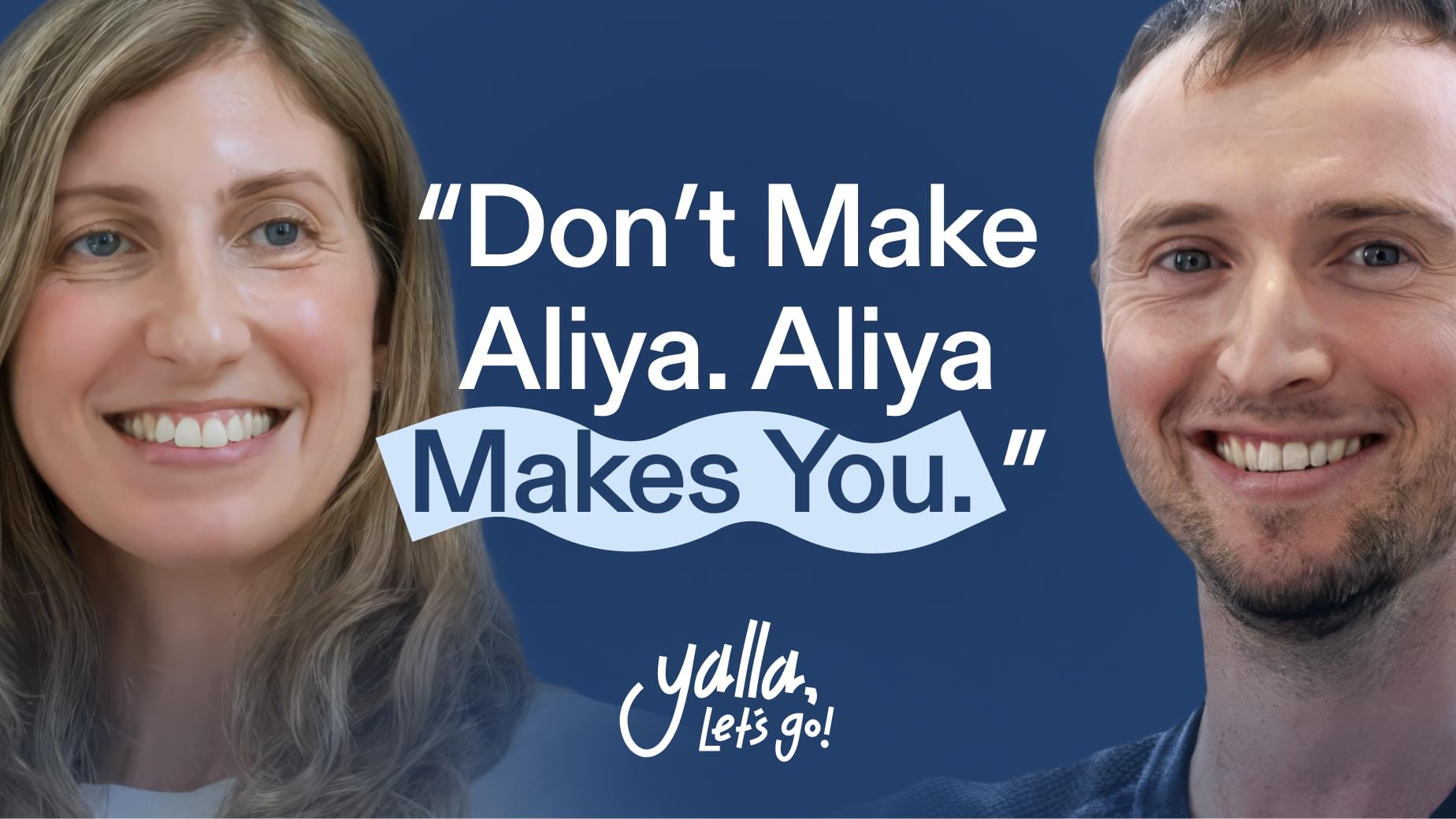
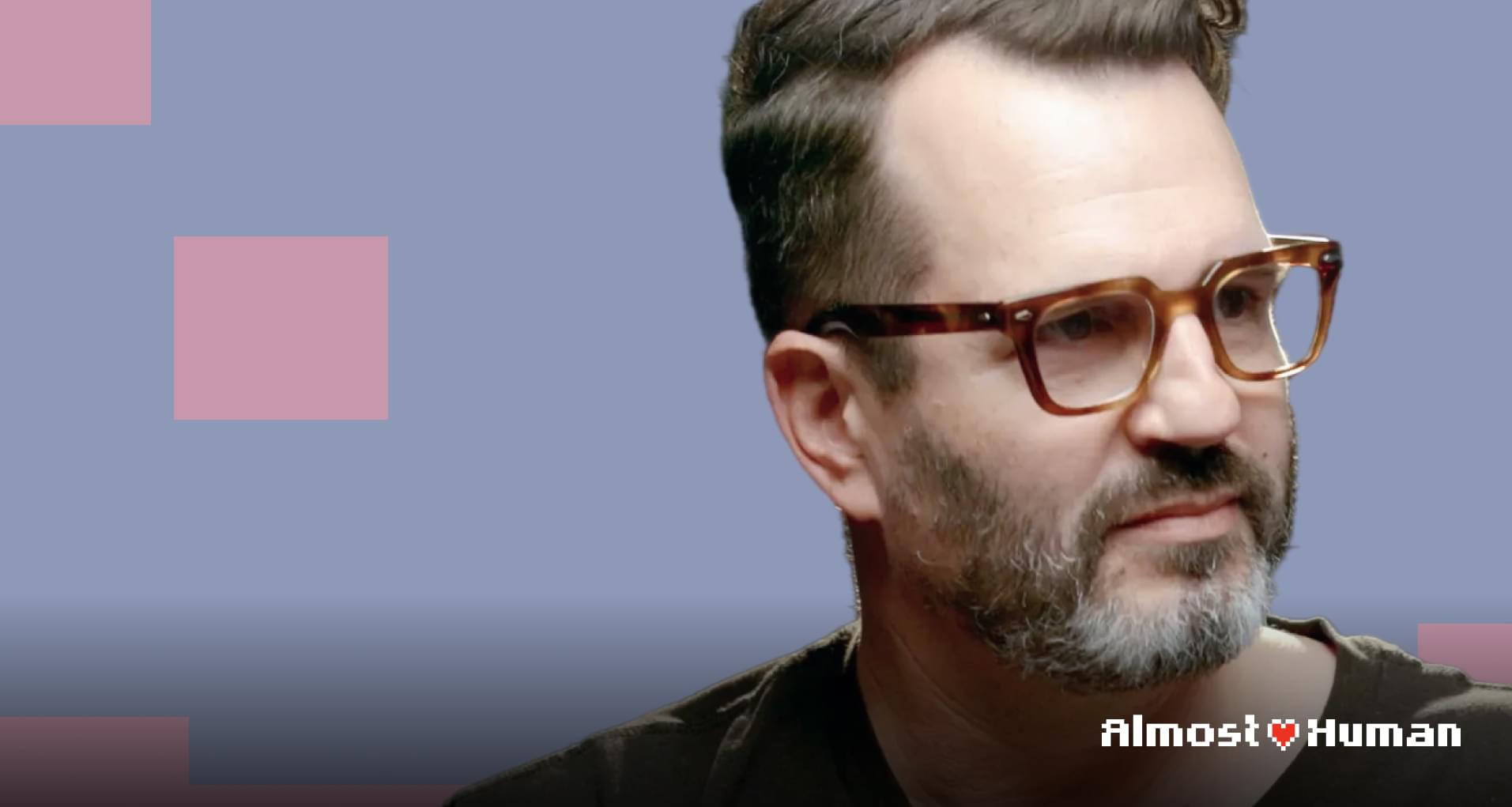
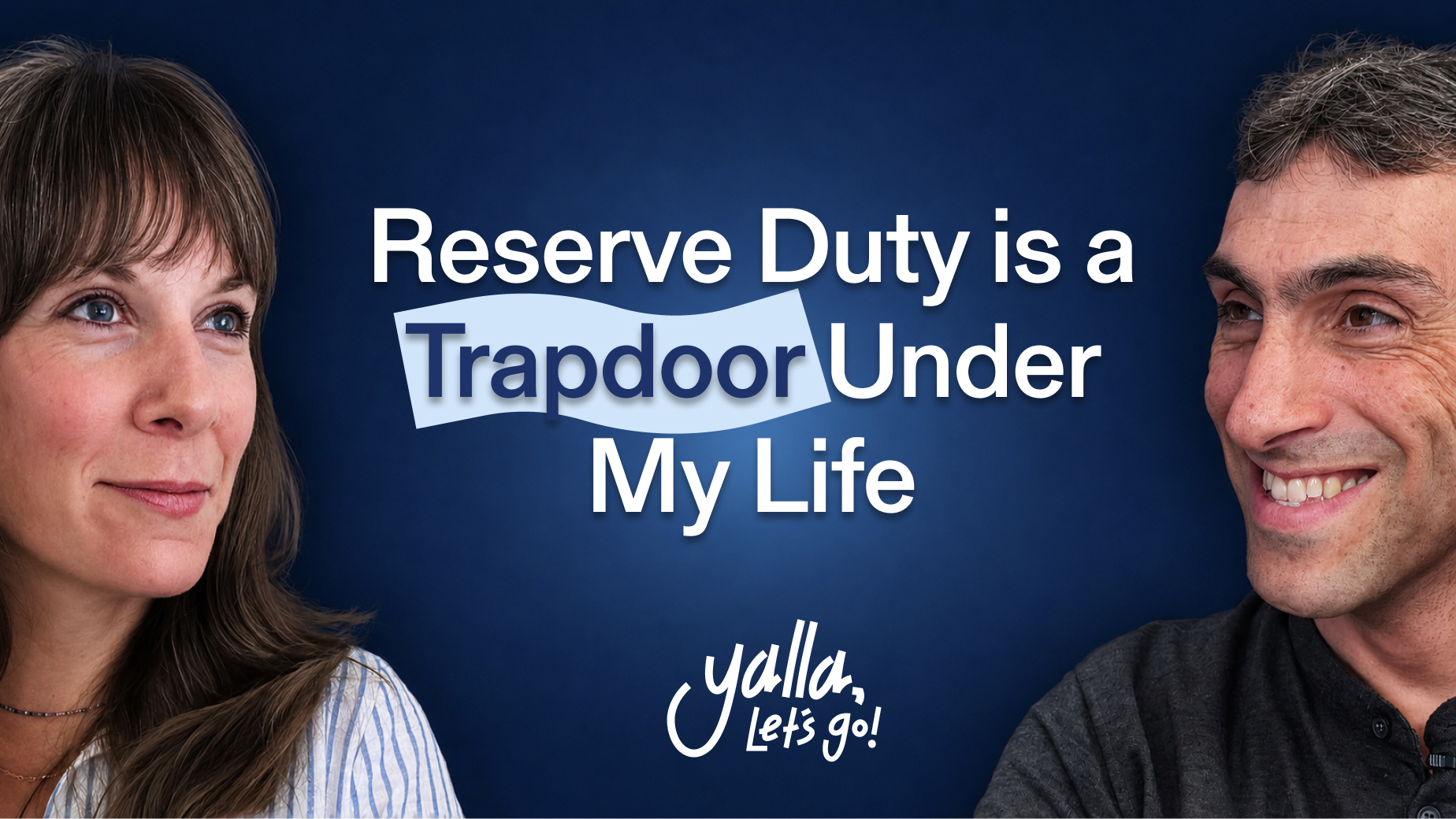
In this episode of Yalla, Let’s Go!, Erica and Abbey sit down with Aaron Bours, native New Yorker, lone soldier, IDF reservist, and CMO of health tech startup Hyro, for a deeply personal conversation about identity, duty, recovery, and belonging.
Aaron shares his journey from Great Neck, Long Island to Israel, why he joined Givati, how he built a career in Israeli tech, and what happened when he was called up on October 7 while in Las Vegas. He recounts his return to Israel, combat in Gaza, the moment he was shot in both legs while trying to save his officer, and the long road of surgeries, rehab, and returning to normal life.
Also on the docket:
- making Aliyah and adapting to life in Israel
- serving as a lone soldier
- Israeli tech, networking, and career-building
- October 7 and IDF reserve duty
- combat injury, trauma, and recovery
- honoring fallen soldiers
- why Aaron feels even more rooted in Israel today
- the beauty, bureaucracy, warmth, and complexity of living here
This is a powerful conversation about resilience, sacrifice, community, and what it truly means to build a life in Israel.
Subscribe for more conversations with people who live, work, build, and stay in Israel.
00:00 - War Called Him Back
00:52 - Why We Still Choose Israel (Even Now)
02:58 - From NYC to IDF to Tech CMO
04:37 - The Career Move That Changed Everything
06:00 - October 7th: The Moment Everything Changed
07:03 - Inside Gaza: What Combat Really Looked Like
09:20 - Shot in Both Legs Saving His Commander
10:17 - The Hardest Part of Rehabilitation
12:40 - Why Most Injured Soldiers Don’t Return to Work
14:35 - The Power of Community That Saved Aaron
15:06 - The Story of Omri
17:13 - Why Aaron Stayed After Almost Dying
18:56 - What Makes Israel Different
20:22 - Real Advice on Aliyah
21:39 - The Hardest Part of Living in Israel
23:20 - The Moment That Defined His Life
26:05 - The Most “Only in Israel” Story Ever
Aaron Bours (00:00.11)
I'm looking over the Vegas strip and at the same exact time getting an email from Delta that my flight was canceled back and that my units been called up because we’re Southern Command. There's no part of me that doubted that I would get on the flight and come back to fight. You come here with no friends, no family, no language, and it is not a forgiving place. While at the same time, it is incredibly accepting and warm and inviting. I had nine people from all over the world. Moldova, Canada, France, me, like learning Hebrew from a Ukrainian person who wasn't a teacher for Hebrew ever in her life until that day.
Was there ever any part of you that was like, why am I doing this? I could go back to my cushy, comfy New York life?
If anything, it only deepened my roots and strengthened my resolve to live here. Don't worry about looking dumb.
Erica Marom (00:52)
Cause you will look dumb. Wait till you have kids who make fun of you.
Abbey Onn (00:51.246)
That's right.
Abbey Onn (01:03.374)
Welcome to another episode of Yalla, Let's Go! , the podcast that Erica and I started to basically remind ourselves why we made Aliyah and choose to live in Israel. We are super excited because we're going to spend a number of episodes talking to people that work in tech, influencers, politicians, chefs, ask them all the questions about why they're here and why they stay. So before we get into it, I want to do a pulse check. Erica, are you feeling about living in Israel right now?
Erica Marom (1:30)
That's a hard question today for me, because recently my 16-year-old son – he got his first call from the army. He's now doing all of their like early assessments and tests. And I have so many feelings about it. I'm, you know, on the one hand, really proud of him. It's like such a great honor and he wants to serve his country and defend his country. I'm so proud of him that I've raised this strong and, you know, independent man.
On the other hand, he's my baby and I want to lock him in my basement. All I keep thinking about is when he was born, we were already living in Israel and a neighbor came over and she said to me this thing that at the time I thought was so weird. She said, “ I hope that by the time he's 18, Israel doesn't have mandatory army service anymore.” And here we are. And I can't believe I'm in this moment.
Abbey Onn (2:22)
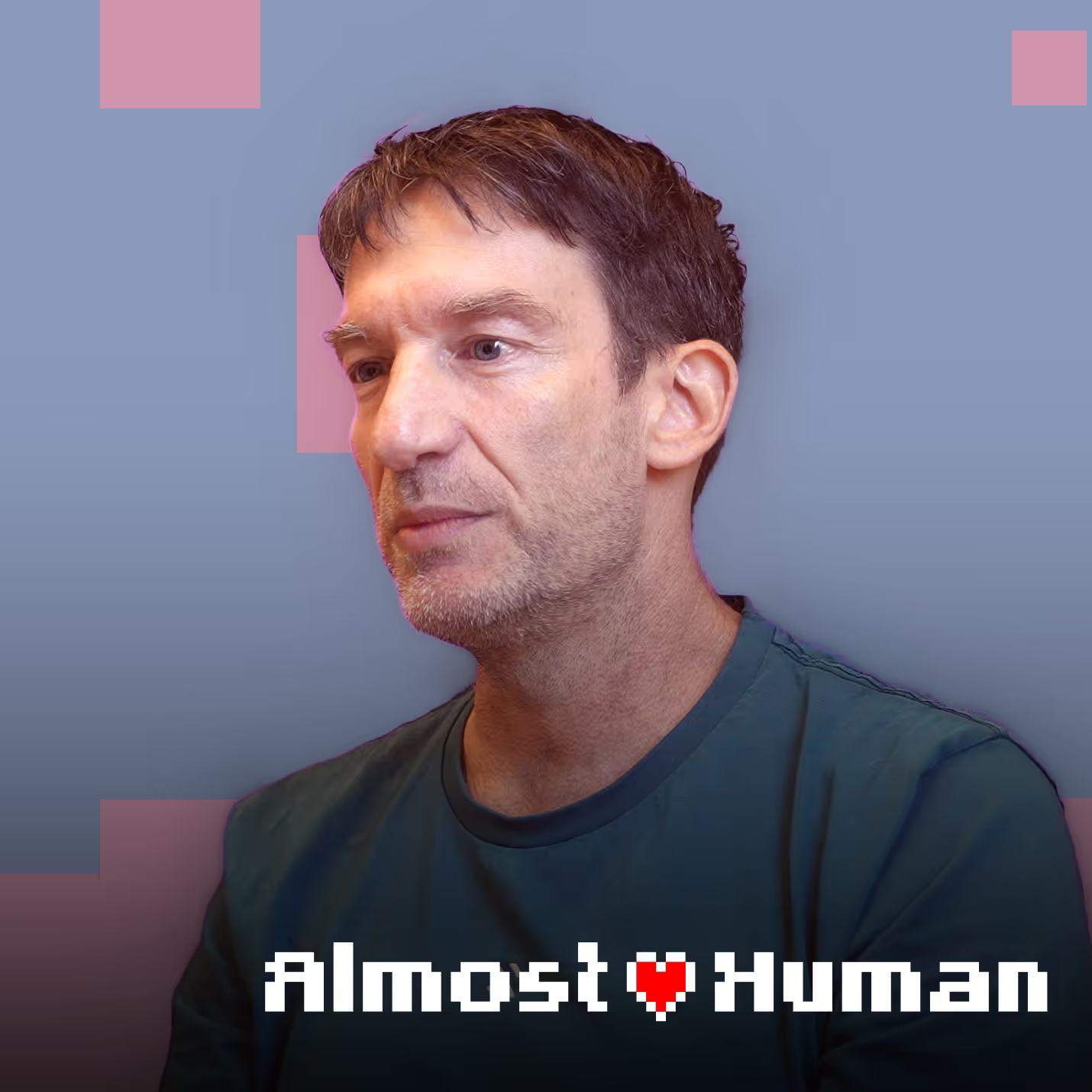
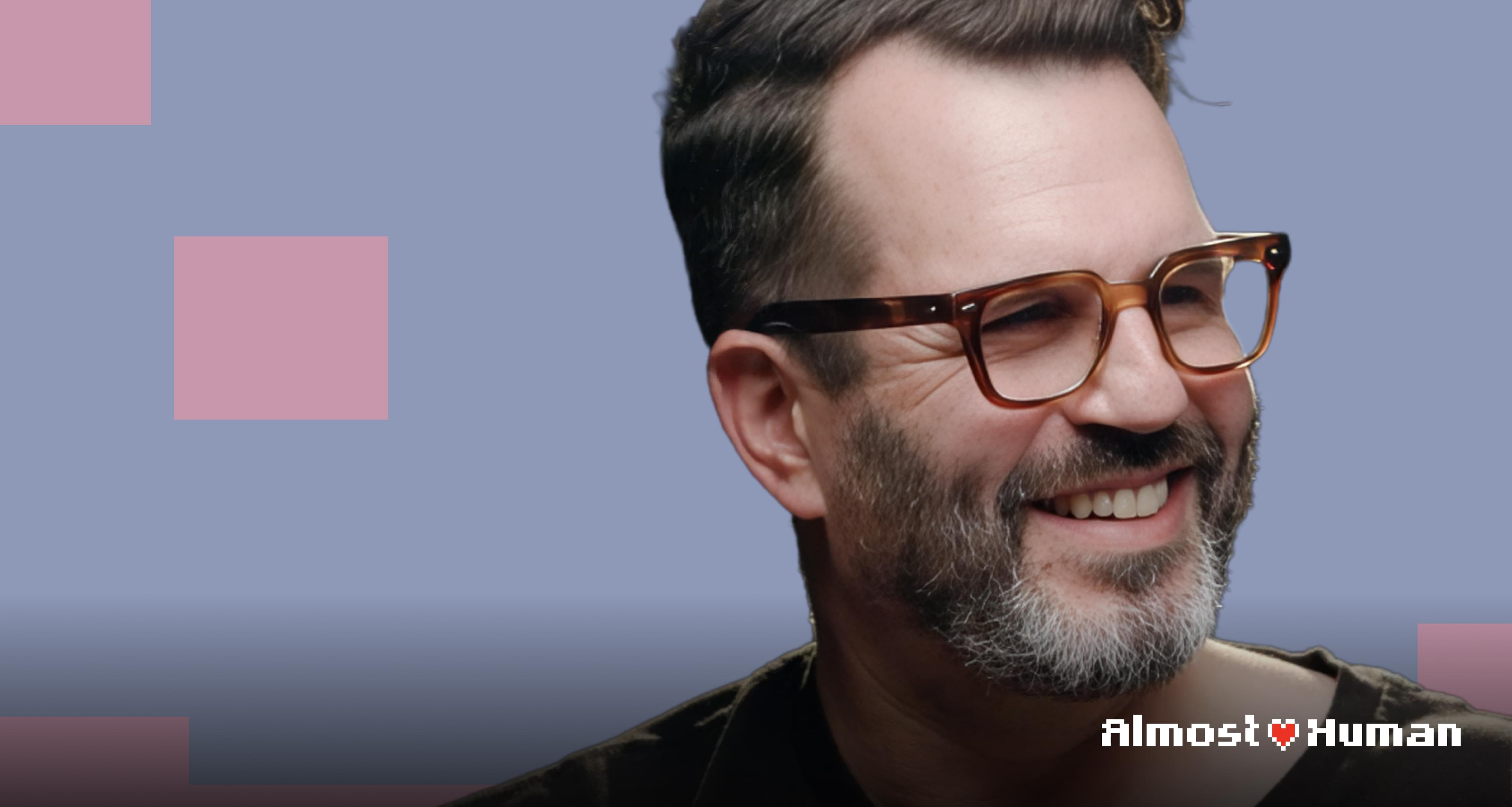
Yeah, I feel like this is something we say generation after generation in this country, and I'm two years behind you, and I feel like it's a mix of pride and scared shitless. So I'm with you. It actually relates a little bit to the guests that we're welcoming today. I am so, so honored and excited to welcome Aaron Bours, native New Yorker, reservist in the IDF and the CMO of a health tech startup called Hyro. Aaron is not only a national hero and treasure, but also a good friend. Spent 150 days doing rehab after being wounded in Gaza, and we're really excited to have you here. Thank you for being here.
Aaron Bours (02:58.904)
Thank you for having me.
Erica Marom (3:00)
So Aaron, tell us your life story in a minute or less.
Aaron Bours (3:04)
Whoa, okay. Moved here 15 years ago, grew up in Great Neck, Long Island, relatively privileged childhood. Came here to join the army to do Givati [84th Infantry Brigade] for two years. That ended up being a 15-year stint now in Israel. Studied at IDC in marketing, worked at Checkpoint, Google, been in conversational AI for 10 years now. CMO of a health tech startup, we do AI agents for big US health systems. And most recently, fought in Gaza, we were the second battalion in. Was gravely injured, shot in both my legs and made a relatively miraculous recovery in order to be back where I am today, which is walking, running, jumping and all that good stuff.
Erica Marom (3:47)
So you said that you made Aliyah and went straight into Givati. Why did you want to make Aliyah and serve in the Israel army?
Aaron Bours (03:52.942)
My parents actually met in Israel. My dad is Dutch, my mom is American. They are a love story bred in Tel Aviv. Shared an apartment together as roommates, became friends and then became more than friends. And they got married, moved back to the US when my mom's father died. My brother and I grew up feeling in this alternate reality, we could have been Israeli, and we would come here as kids. Six times, I think, until the age of 18, climbing Mount Masada, hiking in the Negev [south], planting trees in Golan Heights.
And all this culminated in a very, very strong identity towards Israel and a willingness to try and figure out what that was. And one of the deepest roots this country has is, of course, its defense force. And that's where I found my passion and followed that path.
Abbey Onn (4:37)
After serving, it's not always a straight line to figuring out what you're going to do professionally. And yet here you are today, kind of the highest levels of marketing at a massive company doing great things. Can you talk a little bit about how you built your career?
Aaron Bours (4:50)
I deferred going to college in order to serve as a lone soldier. And then after successfully doing that, I decided I wanted to stay. And so I found a school where I could learn in English and still develop a network that would help to serve me in a career, should I choose to go in this direction in Israel. So IDC Herzliya, now called Reichman University, finding future colleagues in tech. And that really gave me the foundation in order to, I guess, start that career.
Abbey Onn (5:18)
So what I hear you saying is network is important?
Aaron Bours (05:20.258)
Yeah, you would know as the Executive Director of Nevo and networking is probably number one. I mean, most of the amazing friendships that I made at the beginning were people who don't work in tech and they don't live in Tel Aviv. They're from all walks of life in Israel. I appreciate them tremendously. But for sure, I think the network that I built at IDC Herzliya has served me today in finding jobs and getting connected to people I want to hire.
Hopefully finding a future founder when I start my own company, so...
Abbey Onn (5:51)
You were called up on the 7th. If I remember correctly, you were in Vegas at a conference. Can you talk us through a little bit about that experience and what happened subsequently?
Aaron Bours (6:00)
I happened to be traveling, so I was going from Chicago to Vegas. Got off the plane. I got married about a month and a half before. My wife's Israeli, but she's way more panicked about these situations, I think, than I am. And so she called me like 20 times, said, “You have to see what's going on in Sderot. There's this white pickup truck with terrorists on the back, just like rolling through the streets.” And I'm calming her down and at the same time I understood that this is completely different than anything we've really faced before.
And I'm in Vegas. I got comped in a suite and I'm looking over the Vegas Strip. And at the same exact time that I'm putting my bag down, I'm getting an email from Delta that my flight was canceled back and that my unit's been called up because we're Southern Command. I served in Givati, right? So we're part of the Southern Command. And all of this is happening at once and I’m scrambling to try and figure out, okay, what am I going to do next? There's no part of me that doubted that I would get on the flight and come back to fight.
Abbey Onn (06:57.486)
Can you talk us through kind of what happened once you got back and then ultimately what happened on November 14th?
Aaron Bours (7:03)
Yeah. So going down south, a lot of pandemonium, a lot of grief stricken soldiers, but the motivation was the highest I’d ever seen it. We started training. We didn't exactly know what was happening. There was the Biden visit. So we started training with the assumption that it could be at the drop of a hat, within hours notice that they tell us we're into Gaza. And so relearning a lot of the urban warfare that kind of sits on the back burner.
Every reservist, it's like, these are above average individuals and extraordinary people asked to do extraordinary things. But at the end of the day, they're really just civilians trying to get by and this is, you know, their reserve duty is what it is in reserves. You see all these people that are transforming, the teacher becoming a fighter again, and the restaurant owner, the guy with four kids, everyone has to just focus on the job at hand. It was inspiring to see this happening.
I'd never seen the army so collected, together, unified, with clear missions in mind. You know, we started to train together, bond together, get ready to go in with all of these units. And October 30th, they called our number and we went in. We were one of the first battalions into the Gaza Strip. 15 days of intense fighting in Beit Hanoun, so it's the north of the Strip. And we were going house by house, essentially looking for tunnel entrances. We thought that by putting pressure on Hamas for the north and the active soldiers putting pressure from the middle, we would try to kind of bring them up from their labyrinth of tunnels. And we were doing work that we'd never done before as a unit. I mean, it was super impactful, right? We found six tunnels in 15 days. We would get shot at constantly, but they never really did that much damage. It was just a cacophony of ammunition going off and mortar shells and whatnot.
After 15 days, we walked in front of an UNRWA school, which we decided not to take down this type of infrastructure – schools, hospitals, places of worship, especially we try to avoid. And as we were crossing, my officer was shot. And I was at the time in a place of relative safety. I was at the entrance to one of the houses we needed to take. I turned around to see where he was. And so I saw him get shot and my friend as well. So both of them are now on the ground, about 20 meters from where I was.
I ran out to try to save my officer who I thought lost a lot of blood. He'd fainted. And as I was trying to pull him out of there, I was shot in both my legs. So, first by a sniper bullet in the right leg and then by an AK-47 in the left leg and crawled myself out to safety. The UNRWA school, it turns out there was a tunnel in the school, a weapons depot, four Hamas terrorists waiting for us, and a sniper behind the school. And even more in the 72 hours that would follow, they fought even more operators around that area. So really a compound that's been for education just totally abused for ambushes, attacks, on IDF soldiers.
Erica Marom (10:04)
And you had to have four surgeries. You were hospitalized for 150 days. Months of rehab. What was the hardest part for you of that recovery process?
Aaron Bours (10:17)
Well, there's the physical and the mental. I did almost lose my life and I think if it wasn't for modern protocols where they give you blood in the field. And I had a paramedic who deserves, in my opinion, the Medal of Honor – he saved nine people in total in his time in Gaza. His name is Andre Basco. I basically was a millimeter away from losing my life. And I had to learn again how to walk after multiple surgeries.
It was kind of being in this loop. And the hardest part through all of this was actually breaking the rehabilitative seal, this journey, and going back to work, going back to routine. Once you're in the rehabilitative state, it's like, okay, well, my entire day is around this. And so you can put that together. You can build your schedule. You have all these blocks that come together to create this really amazing cushion of rehab for your mental and physical state. And going back to routine, going back to the real world, going back to work and having actual like one-on-one meetings, you know, it's like these are things that are truly difficult to return to. And so I was 15 months essentially out of working full-time. And I'd say that that is the most difficult part. And now today you have so many injured soldiers that have not returned to work. I don't know a single injured soldier that was with me in Sheba Medical Center while I was recovering, who is actually going back successfully to work. There are some that tried, then failed. There are some that are now doing it in a staircase method, but they still can't turn on the switch. It's a really difficult process. I think there's so much emphasis put on physical recovery.
You have Achim L’Chaim [Brothers for Life] and B’lev Achad [With One Heart]. You have all of these organizations that are helping the soldiers to recover physically. But what you don't have is this career accelerator or this professional path creator that exists for injured soldiers. And I think that's where I would say there's a huge gap in the amount of care that these soldiers receive.
Erica Marom (12:31)
So what do you think was different for you that enabled you to kind of like be able to make that jump back into professional life after that kind of injury and rehabilitation?
Aaron Bours (12:40.814)
Nevo Network is the answer I would give.
Abbey Onn (12:44)
I was gonna say Tal.
Erica Marom (12:45)
Aw that’s such a good answer.
Aaron Bours (12:47)
Yeah, the Nevo Network. And no, I really, it wasn't, like I wouldn't say it was different in the sense that it wasn't really, really difficult. I think that I had a lot of luck at being the first employee in the startup at which I find myself today. So, Hyro, when I joined, we had $300,000 of funding. I was the first hire, essentially for the company. And so I've built this company essentially with the founders, about seven years now. And I think having that foundation to lean on and just being in a really strong state before I went, you know, out with injury for 15 months is a key factor in being able to come back a little bit more slowly. But that luxury doesn't exist most of the time. It's a very unique story. And most also executives that I know in tech, and this isn't to shame anybody, most of them don't find themselves in combat either. I don't know that many executives that were fighting in combat throughout this war. And that's not to say that there aren't. There are, for sure. And I believe there's a CEO who also lost his life fighting. But it is very rare. And so in its rarity also, being in those situations, also the luck that comes with that and going back to work and having a little bit of that cushion.
And I do have a strong support system, an amazing support system. I made a joke about Nevo, but actually the network was extremely important. There was, you know, coaches that helped me through this. There are just very good marketers that I got to through multiple communities that gave me these game plans of how to get back on the horse. And also my wife, Tal, was just incredibly supportive, friends. So I have a lot of people to thank and a lot of gratitude.
Abbey Onn (14:35)
I think there's something special about the kind of ecosystem, the professional ecosystem, being kind of small and tight where you can rely on it and people do understand things. So I'm grateful that that was helpful for you. I think we would be remiss before closing this part of the chapter to not talk about Omri. I think you are kind of endless in your effort to commemorate him – this officer you went to save because you thought he fainted, actually, had already been killed.
So if you can just speak about him for a moment, it would be important.
Aaron Bours (15:06.51)
For sure. So I served with Omri for about three and a half years in the reserves before this war. Omri was our Captain, so a Samech Mem Pei [Deputy Company Commander] in Hebrew. 27 years young, loved to play guitar, loved to travel like most Israelis do – Thailand and whatnot. A girlfriend of seven years named Noam and that he was planning to propose to. Tammy and Doron, his wonderful parents, who are left grieving and siblings as well. So Omri is someone that I think at the beginning, it was very clear to me that I was flying abroad and doing all of this advocacy in his honor. But I won't lie in saying that for me it was empowering and impactful as well in my own mental rehabilitation.
And to own that story, to be able to share that story at will with larger audiences, it made me feel completely in control of that trauma. And I think that I would also point to as a big part of why I was able to, I think, move forward so effectively. But it is incredible just the amount of people that have stood up and clapped and cried in Omri's name and in his honor. And it's something that I don't want to lose, ever in my lifetime. I walked around the city recently with Michael Rappaport and we put stickers up, you know, of Omri, all over Tel Aviv. I think it's those small things, but it's something. And I think we all have to do, collectively, an amazing job of honoring the soldiers who gave their lives to try and our Hamas to bring these hostages home.
Erican Marom (16:58)
With everything that you've been through these past couple of years, almost losing your life, was there ever any part of you that was like, why am I doing this? I could go back to Great Neck and just go back to my cushy, comfy New York life?
Aaron Bours (17:13.362)
Well, I think people, a lot of friends, I guess, assumed that after this happened, I'd want to break or I'd want to move somewhere else. Like, I want to take time to kind of relax or breathe a sigh of relief or something like that. But I think that if anything, it only deepened my roots and strengthened, kind of, my resolve to live here.
I mean, the support system has been unbelievable. The way that I was treated by Sheba Medical Center, by all of the visitors, the volunteers, Jews from all over the world, but mostly Jews right here at home. I spilled blood for this country. I almost, I did almost, lose my life fighting for this country and the people in it. And so it's only given me, I think, more fuel to my wife's, of course, dismay because she wants to live in New York. She has that, you know, Israeli, I think imaginative view of what New York is actually like, not like subways in the summer and frigid cold in the winter. She doesn't really understand.
Erica Marom (18:27)
The dirty, black snow.
Aaron Bours (18:28)
Yeah, exactly. She doesn't understand that New York is not the two weeks that you spent on Fifth Avenue and like on the top of the Empire State Building. But I am, I'm here. I've built a home here and I tried, you know, my best to give service to this country and people have paid it forward in spades. And so I'm happy.
Erica Marom (18:51)
What is it about this place that you feel so drawn to that you love? What do you love most about living here?
Aaron Bours (18:56.962)
The warmth, not from a temperature standpoint, because then maybe less…
Erica Marom (19:05)
Really? Coming from New York, that’s such a draw.
Aaron Bours (19:07)
Of the inferno in summer. No, it's the warmth of the people. And it's ever since I came here. The first year was... wrought with difficulty. You come here with no friends, no family, no language. And it is not a forgiving place. While at the same time, it is incredibly accepting and warm and inviting. And so I had hard days, but then the evenings were filled with offers to come for Shabbat dinners and even to live as an adopted son essentially in some of these homes. I had three adopted families when I was a lone soldier. I mean, people treating me like their own kin. I mean, that's, you just don't find that anywhere else in the world.
And then when I was injured, it was the same type of feeling, the tenfold of people wanting to give so much. I didn't even have the capacity to receive all of the love and support and charity and generosity of all of these amazing human beings in this country. So, yeah, I think that combined is just a recipe for a beautiful life here.
Abbey Onn (20:17)
What advice would you give now to someone considering Aliyah?
Aaron Bours (20:22)
Learn Hebrew. I know it's such a boring one, but it's true. The faster you can have basic conversations in Hebrew, the faster you can develop true, deep-rooted friendships in this country. And the second is to join clubs, take classes, go put yourself in situations with Israelis, and don't worry about sounding dumb or looking dumb – which is probably the number one reason why people stay in this country for a decade and don't learn Hebrew and don't have Israeli friends. Don't worry about looking dumb.
Erica Marom (20:55)
Because you will look dumb.
Aaron Bours (20:56)
You will look dumb for the first year and maybe the second year. By the third year, you're the smartest person in the room for having taken the leap and done those things to set yourself up for future success by knowing the language and breaking through cultural barriers.
Abbey Onn (21:08)
Even if you never get your Resh [Hebrew letter]...
Aaron Bours (21:10)
Even if you never get… I still have an accent. I have an accent. I mean, of course. Yeah, yeah.
Erica Marom (21:15.106)
Wait till you have kids who make fun of you.
Abbey Onn (21:16)
That's right. It’s gonna happen. Guess what – they’re gonna correct you and they're gonna laugh at you and they're gonna laugh at you in front of their friends. It's fine.
Erica Marom (21:26)
With, you know, this whole inspiring story that you've just told us, and it is really inspiring, I have to, like, be real for second and say living here is also really hard sometimes. What would you say is the hardest part for you about living in Israel?
Aaron Bours (21:39)
Bureaucracy. I can handle the ridiculousness of Israel. You know, the cultural nuances of people not holding the door open for you, or the cab drivers blowing smoke in your face. Those are the little things. And to be honest, sometimes it's like, it's just, that's the charm, right? But bureaucracies is heavy here. It's really heavy. And that's something where, again, learning Hebrew can really help you in the beginning. But the contracts you have to go through, you know, all the different agencies, especially as an injured soldier, the support system is incredible, but the actual operating system around injured soldiers, which is the Ministry of Defense, and to their credit, they're completely overwhelmed by what happened. And this is 6,000 wounded combat and then 19,000 injured soldiers total, right? In terms of also PTSD. The numbers are not like anything we’ve seen before. So completely understand that they've been overwhelmed. All of the different forms that I have to fill out for anything. We've added so many unnecessary steps and obstacles in these processes, especially as it relates to incoming, right? And when we talk about Olim, immigrants, we have not smoothed that out in the last 15 years that I've been here. So that's just something to take note of, watch out for, and improve.
Erica Marom (23:09)
Okay, last question. When you're 70 years old and you're looking back on your life here, what's one thing that you think will have been true because you made Aliyah and moved to Israel that otherwise wouldn't have happened?
Aaron Bours (23:20)
Well, I married an Israeli, so for the rest of my life, until she decides that she's had enough, I guess, my entire family, you know, is now Israeli by roots. And I think that that's something that I did when I was 18 years old. I didn't know that I would have Israeli kids. I didn't even think about that. I think Israel, and especially joining the Israeli Defense Forces, when we talk about defense, we talk about putting your life on the line, in the defense of other people, in the defense of Israeli civilians. And I think I got something here from that service that many people want but are fearful of going the distance to try to understand, to figure out. It's a test of your own moral code. And I think that what happened with my story and what happened here in Israel is that I was tested a few times in October, and then again in November of where I put my life on the line and would I do these things that I thought about myself when I was even 18, 19, and came and joined the army, right? And that for me is something invaluable. So being able to know now that I did risk my life for someone else, I did try to save another person. And I didn't cower in the face of flying bullets and Hamas terrorists scum. These are things that I think will empower me for the rest of my life. And I only think recently that I've started to actually lean on that as a source of motivation and power. And that's something where, you know, I think joining the IDF has given me those principles that allowed me to test those principles.
Erica Marom (25:10)
Okay, we're gonna get into rapid fire. Very fast.
Aaron Bours (25:14)
By the way, it’s very insensitive for you to say “Rapid fire” to a person who…
Erica Marom (25:17)
Oh, I’m so sorry, oh my God… These are going to be fast questions.
Abbey Onn (25:20)
We're going to ask you some fast questions.
Erica Marom (25:23)
If that’s okay.
Aaron Bours (25:24)
Oh, so like rapid fire?
Erica Marom (25:26)
Actually they’ll be regular questions but you give only one-word answers.
Aaron Bours (25:30)
Okay, great.
Abbey Onn (25:31)
Favorite Israeli snack?
Aaron Bours (25:33)
Bisli
Erica Marom (25:33.838)
Favorite place in Israel?
Aaron Bours (25:36)
Kibbutz Ein
Abbey Onn (25:37)
Favorite hebrew word or slang?
Aaron Bours (25:42)
Sababa [okay].
Erica Marom (25:43.022)
What do you miss most from back home?
Aaron Bours (25:47)
Oof, delis.
Abbey Onn (25:49)
What does Saturday or Shabbat look like for you?
Aaron Bours (25:52)
I walk, I walk every single Saturday, I walk to Yafo and back. It's about 10,000 steps and it sets me up for success ????? for the rest of the week.
Erica Marom (26:01)
What's your “Only in Israel” story in just one sentence?
Aaron Bours (26:05.154)
Well, only in Israel. They overbooked the base where I was supposed to do my basic training. And so we actually just had a table at the lishkat gius [Recruitment Bureau], at the base in Tel Hashomer. And you had nine people from all over the world, from all… Moldova, Canada, France, me, like learning Hebrew from a Ukrainian person who wasn't a teacher for Hebrew ever in her life until that day.
For three months, she was teaching us Hebrew, nine people who spoke different languages and she herself didn't speak English. And that's how we started our army service.
Abbey Onn (26:42)
Amazing. Aaron, thank you so much for the time and for the honesty and the authenticity.
Erica Marom (27:47)
And sharing your story with us. Thank you. Thank you also to our amazing team: Uri, Nadav, Sarah, Kira, Sophie, Dalit, for making this all happen, we couldn't do it without you.

Follow Aaron on Instagram
Follow Aaron on LinkedIn
Subscribe to Yalla, Let’s Go
Learn more about Aleph
Sign up for Aleph’s monthly email newsletter
Subscribe to our YouTube channel
Follow us on Instagram
Follow us on TikTok
Follow Aleph on Twitter
Follow Aleph on LinkedIn
Follow Aleph on Instagram
Hosts: Erica Marom, Abbey Onn
Executive Producer: Sarah Bard
Producer: Sofi Levak, Dalit Merenfeld, Myron Shneider
Video and Editing: Nadav Elovic
Music and Creative Direction: Uri Ar
Content and Editorial: Jackie Goldberg
Design: Nimrod Sapir
Follow Aaron on Instagram
Follow Aaron on LinkedIn
Subscribe to Yalla, Let’s Go
Learn more about Aleph
Sign up for Aleph’s monthly email newsletter
Subscribe to our YouTube channel
Follow us on Instagram
Follow us on TikTok
Follow Aleph on Twitter
Follow Aleph on LinkedIn
Follow Aleph on Instagram
Hosts: Erica Marom, Abbey Onn
Executive Producer: Sarah Bard
Producer: Sofi Levak, Dalit Merenfeld, Myron Shneider
Video and Editing: Nadav Elovic
Music and Creative Direction: Uri Ar
Content and Editorial: Jackie Goldberg
Design: Nimrod Sapir
Follow Aaron on Instagram
Follow Aaron on LinkedIn
Subscribe to Yalla, Let’s Go
Learn more about Aleph
Sign up for Aleph’s monthly email newsletter
Subscribe to our YouTube channel
Follow us on Instagram
Follow us on TikTok
Follow Aleph on Twitter
Follow Aleph on LinkedIn
Follow Aleph on Instagram
Hosts: Erica Marom, Abbey Onn
Executive Producer: Sarah Bard
Producer: Sofi Levak, Dalit Merenfeld, Myron Shneider
Video and Editing: Nadav Elovic
Music and Creative Direction: Uri Ar
Content and Editorial: Jackie Goldberg
Design: Nimrod Sapir
.jpg)
.jpg)
.jpg)
.jpg)
.jpg)
.jpg)

.jpg)















.jpg)
.jpg)
.jpg)
.jpg)
.jpg)
.jpg)
.jpg)
.jpg)
.jpg)