Avi Mayer

How can values create value? On this podcast, Michael Eisenberg talks with business leaders and venture capitalists to explore the values and purpose behind their businesses, the impact technology can have on humanity, and the humanity behind digitization.




Avi Mayer
Avi Mayer
Avi Mayer
.jpg)
Avi Mayer
Avi Mayer
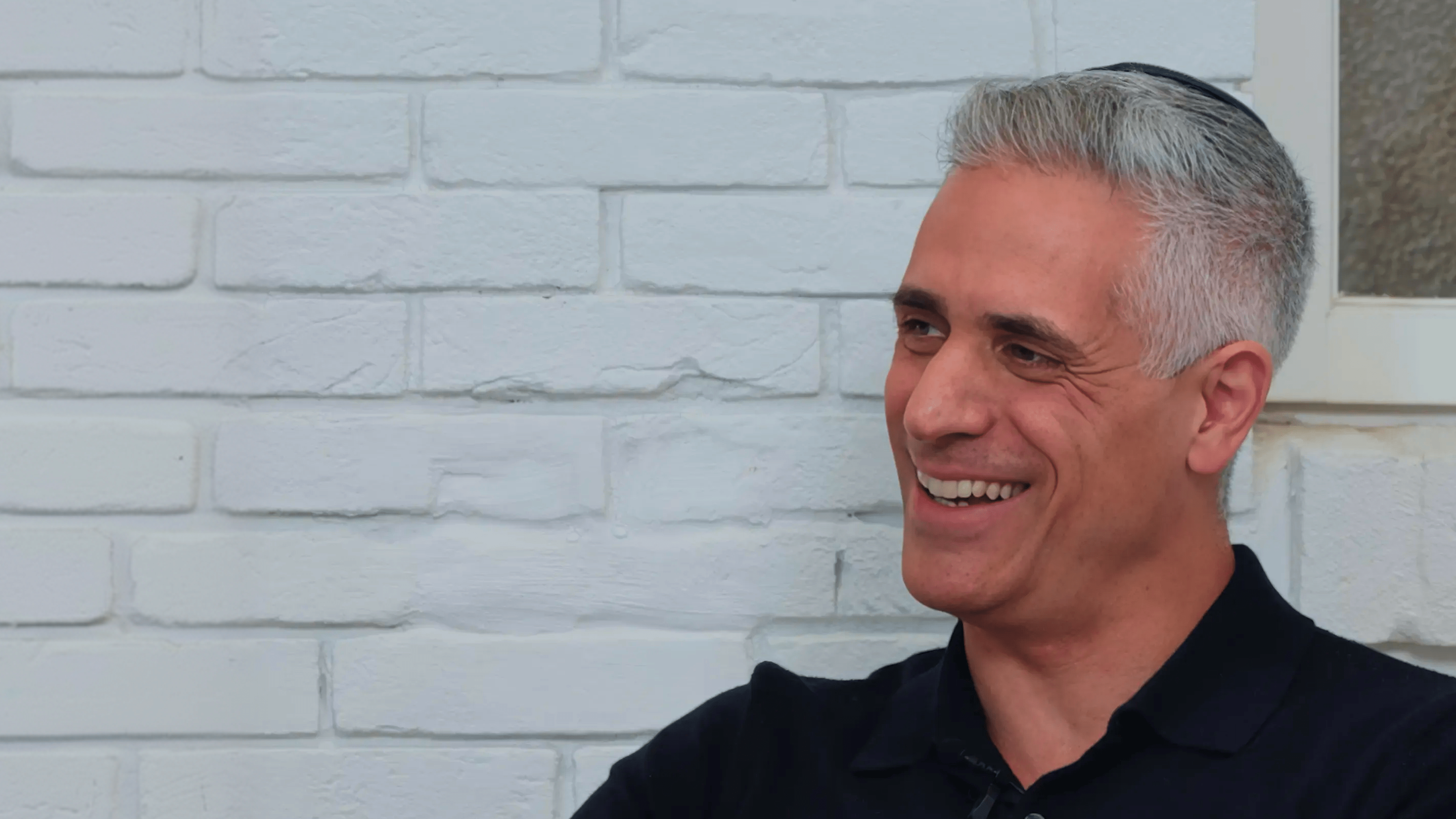
In this episode of Yalla, Let's Go!, Erica and Abbey sit down with Avi Mayer - founder of Jerusalem Journal and former Editor-in-Chief of The Jerusalem Post - for a candid conversation about identity, belonging, journalism, and what it really means to choose Israel.
Avi shares his journey from New York to Jerusalem at age six, navigating the Gulf War, the Oslo years, and the Second Intifada, before returning to serve in the IDF Spokesperson's Unit. He opens up about leading the Jerusalem Post on October 7th, the fog of war in the newsroom, the mental health toll on journalists, and why he left to build something new. He also gets into why Jerusalem — not Tel Aviv — feels like home, the value of representing Israel on the world stage, and his honest take on whether aliyah is for everyone.
The conversation continues with:
- Growing up in Israel during defining historical moments
- Building a career telling Israel's story: IDF, Jewish Agency, AJC
- Running a newsroom on the worst day in Israel's recent history
- Launching Jerusalem Journal and what was missing in the media landscape
- The tension and beauty of daily life in Israel
- Practical advice for anyone considering aliyah
This is a rich conversation about purpose, press, and the pull of a place you can truly call your own.
Subscribe for more conversations with people who live, work, build, and stay in Israel.
0:00 - Intro
0:50 - Meet Avi Mayer: The Journalist Who Chose to Tell Israel's Story
2:32 - From Great Neck to Jerusalem: A Life Built Between Two Worlds
3:45 - The Moment He Knew He Had to Come Back
4:38 - Growing Up Amid Terror: How Childhood in Israel Shaped Everything
6:05 - Finding His Purpose: Telling Israel's Story at Every Stage of His Career
7:00 - October 7th in the Newsroom: When Even the Best Sources Knew Nothing
8:11 - The Price Journalists Pay for Bearing Witness
9:30 - Fighting Disinformation with Good Journalism: Is It Enough?
11:23 - Why He Left the Jerusalem Post to Build Something New
12:32 - Why Jerusalem Feels Like Home When Everywhere Else Doesn't
13:29 - One Foot in Israel, One Eye on the World
14:18 - What's Hard About Living Here (Even When You Love It)
15:47 - This Is Mine: On Belonging, Beauty & the Pull of Israel
17:11 - Come With Your Eyes Wide Open: Advice for Anyone Considering Aliyah
18:03 - Is Aliyah for Everyone? His Honest Answer
18:45 - "I Bound My Life With the Life of My People"
19:28 - Rapid Fire: Krembos, Gushpanka & Trader Joe's
[Erica Marom: 00:00.2]
You were the editor in chief of the Jerusalem Post on October 7th.
[Avi Mayer: 00:03.6]
We didn't know what was going on. And we have the best sources in the country. We're plugged into everything, and like everyone else, we didn't have a clue. I think there's a lot of disinformation out there, and some very bad journalism. And I think the antidote to that is good journalism. And that means telling the Israel story in all of its complexity.
[Avi Mayer: 00:20.7]
The good, the bad, and the ugly. I've said that the government should pay for all Israelis to go abroad for, like, two or three weeks. I think it's good for everyone to have that release and then come back.
[Erica Marom: 00:30.6]
Do you think aliyah [immigration to Israel] is for everyone?
[Avi Mayer: 00:32.6]
I don't think it's for everyone, no. I think an attachment to Israel should and must be for everyone.
[Erica Marom: 00:50.6]
Welcome back to another episode of Yalla, Let's Go! The podcast that Abbey and I started to remind ourselves why we made aliyah and why we live in Israel. We're going to talk to people from all walks of life, athletes, chefs, journalists, venture capitalists, entrepreneurs, everybody you can imagine, and ask them the questions you really want to know about what it's like to live in Israel and hopefully convince ourselves to stay.
[Abbey Onn: 01:12.7]
Fair.
[Erica Marom: 01:13.2]
Right?
[Abbey Onn: 01:13.6]
Yeah.
[Erica Marom: 01:14.3]
So before we start with the amazing guest that we have today, pulse check. Abbey, how are you feeling today about living in Israel?
[Abbey Onn: 01:22.0]
I think I'm feeling like most Israelis, which is like, stress baking.
[Erica Marom: 01:26.9]
Right.
[Abbey Onn: 01:27.4]
Every single week, it's like, is Iran going to attack us this week? And my response is baking. So I tried a 6 strand challah this week, baking cookies with the kids. And I just feel like, we think we're going to diet in our house, and it doesn't happen because I continue to stress bake.
[Erica Marom: 01:46.9]
Or let's just eat well first.
[Abbey Onn: 01:48.0]
That's right. Or we're going to have lots of good things to eat. But I feel like it's, we're like living a regular life. We're going about our day, and at the same time, there's like a constant wave of things that I'm baking.
[Erica Marom: 01:58.9]
I totally feel you. Just, I'm not baking with it.
[Abbey Onn: 02:02.5]
Something else.
[Erica Marom: 02:03.3]
So we have with us today Avi Mayer. Thank you so much for joining us. Avi is the founder of the Jerusalem Journal, former Editor and Chief of the Jerusalem Post.
[Erica Marom: 02:11.6]
Thank you so much for joining us today.
[Avi Mayer: 02:13.0]
Thank you for having me and thank you for making me the beneficiary of your stress baking. These hamentaschen [triangular, filled pastries] are outstanding.
[Abbey Onn: 02:18.9]
Hamentaschen is a word that we are teaching our Israeli children instead of oznei haman. In the Diaspora, we say hamentaschen.
[Erica Marom: 02:26.4]
It's true. True story.
[Abbey Onn: 02:27.8]
Okay, challenge. I want you to tell me your life story in under a minute.
[Avi Mayer: 02:32.1]
Born in New York, raised in Jerusalem, where I arrived at the tender age of six, just before the Gulf War. The first one.
[Abbey Onn: 02:41.5]
Wow.
[Avi Mayer: 02:42.5]
Grew up here during the Oslo years and the second Intifada. At the age of 16, moved to Maryland, graduated high school there, came back here for a gap year, went back to the States for college where I was very involved on campus, and then worked for Hillel for a year, where you and I met, Abbey. At the end of which I found myself at a bit of a crossroads and I decided to come back to Israel to serve in the army.
[Avi Mayer: 03:06.0]
I served in the IDF spokesperson's unit as a spokesperson to the international media. Afterwards, I joined the Jewish Agency. Ended up being there for 7ish years, at the end of which I was the organization spokesperson and spokesperson of the then chairman, Natan Sharansky. I then joined the American Jewish Committee, where I was their Director of Communications for four years.
[Avi Mayer: 03:23.9]
And I started writing a book. And I was really quite happy until one day I got a call and I was offered, the job of Editor in Chief of Jerusalem Post, which I did for quite a bit. And then I left to start this new publication, Jerusalem Journal, which is where I'm at today.
[Erica Marom: 03:37.7]
So tell us, in all of the back and forth, you still decided at some point to come back here and join the IDF. Why did you decide to make aliyah?
[Avi Mayer: 03:45.1]
I guess my story is perhaps different than some people's in that I had grown up here, and I sort of found myself living two parallel lives where on the one hand I was sort of an American Jewish college student, but all my friends back here in Israel were going through the army process.
[Avi Mayer: 04:01.4]
And I always felt like that was something that I would always regret not having done. And, there were various points, various forks in the road where I could have chosen that throughout my college career. And for whatever reason, it didn't feel like the right time. And then when I concluded my year at Hillel, it felt like it was sort of a now or never moment.
[Avi Mayer: 04:18.0]
And it just, it happened. My parents were shocked. I think I was a little bit shocked too. But it was one of the best decisions I could have made.
[Abbey Onn: 04:24.8]
I want to go back a second because I love how you told your life story through the lens of who you are today. The Oslo years and like, there's like kind of the political happenings. But what do you remember from being a six year old and moving here?
[Avi Mayer: 04:38.4]
So one of the most potent memories I have from that period was the smell of the rubber, of the gas mask that I had to wear at the age of six. And being in my parents bedroom, which we turned into our sealed room with sheets of plastic and masking tape over the windows, was I guess, kind of traumatic in retrospect.
[Avi Mayer: 04:59.1]
But we sort of just took it in stride. This was our new reality. I don't think it scarred us too much, but there were experiences over the years that were not so easy. Two girls from my age group were killed in the Sbarro bombing, in the early 2000s.
[Avi Mayer: 05:16.3]
I lost other classmates in other terrorist attacks. And so I guess it's just part of life here. And so even though it feels like history, it was also very much a part of our lived experience. And so it's hard to sort of disentangle one from the other.
[Erica Marom: 05:31.7]
Do you think that's part of what made you want to come back here?
[Avi Mayer: 05:34.8]
I think it might have cemented my sense of belonging and my sense of shared destiny with the rest of Israel. I think it gave me a sense that it's my job to play my role in defending this country and ensuring its continued existence.
[Avi Mayer: 05:50.4]
And I think ultimately that's what drew me back here to serve in the military myself.
[Abbey Onn: 05:54.9]
The descriptions you've given of the work you've done speak to this idea of, securing the shared destiny. So can you talk a little bit about after the army, how you built your career and kind of how it evolved?
[Avi Mayer: 06:05.3]
I was fairly fortunate that my military service aligned closely with both what I studied and what I was sort of interested in, communications, speaking on behalf of Israel and the Jewish people. It's what I did a lot of in college. And it felt sort of like a natural stepping stone to everything that came after.
[Avi Mayer: 06:24.1]
And so when I found myself after my military service figuring out what I wanted to do next, the Jewish Agency felt like a natural place to be – the largest Jewish organization in the world, which is involved in so many different areas of Jewish life both in Israel and in Jewish communities across the globe.
[Avi Mayer: 06:40.3]
And it sort of propelled me into the trajectory I've been on ever since. And you know, some might say that communications and journalism are somewhat different areas, but to me it's all one in the same. Meaning, telling Israel's story in all of its complexity and all of its complicated beauty.
[Avi Mayer: 06:57.1]
In whatever way I can, whatever platform I have.
[Erica Marom: 07:00.0]
So you were the Editor in Chief of the Jerusalem Post on one of the most tragic and historic days in Israel's history, on October 7th. Can you talk a little bit about the experience of leading a media organization during that time?
[Avi Mayer: 07:13.9]
There's nothing that can prepare you for an experience like that. I don't think anything could prepare any of us for October 7th. But, it was a particularly pivotal place to be that day. The fog of war that we all experienced that morning was felt by our newsroom as well.
[Avi Mayer: 07:32.2]
It was, of course, a Shabbat morning. Many of us were in bed when the sirens started, both here in Tel Aviv and in Jerusalem, where I live. And I remember that for quite a few hours, we didn't know what was going on. And we have the best sources in the country. We're plugged into everything, and like everyone else, we didn't have a clue.
[Avi Mayer: 07:49.1]
And we had to sort of hit the ground running and do whatever we could to tell the story as comprehensively as possible, even as many of our journalists were sitting in their bomb shelters. Even as we were subjected to cyber attacks that took our website offline for several days, we did whatever we could to get Israel's story out there at one of the most painful moments of our history.
[Avi Mayer: 08:11.6]
I will say something that struck me about that period, which maybe wouldn't have occurred to me otherwise, is the psychological effect that this can have on the journalists themselves. Because those of us who aren't involved in the newsmaking industry have the privilege of turning off our TV sets or choosing not to look on social media, or not open the newspaper that day.
[Avi Mayer: 08:33.3]
But journalists have it as their mission to hear the most horrific stories, to see the most horrific images and footage, to be in the places where the most horrific things happen, because they then need to convey those stories and experiences to the world. And so we had to make mental health resources available to our journalists.
[Avi Mayer: 08:48.6]
I had to put some on leave, because they were simply struggling to grapple with the enormity of what they were experiencing. And that was a very powerful experience, I think, for all of us.
[Erica Marom: 09:01.0]
Wow. So I actually started my career at the Jerusalem Post more years ago than I want to say. Back when we used to say it was in the chicken slaughterhouse factory.
[Avi Mayer: 09:11.6]
It is not there anymore.
[Erica Marom: 09:12.7]
But that's what they used to say. It used to be. I don't know why we thought that maybe we found feathers. But before I worked at the BBC for many years. And I remember when I decided to become a journalist, I had this little note card in my wallet, and I wrote on it, when I was studying at NYU, that I wanted to change the way Israel's viewed by the world.
[Erica Marom: 09:30.7]
You know, in the role that you had at a very pivotal time in Israel's history as a journalist, do you think actually it is possible to successfully tell Israel's story to the world and make them see the truth of what's going on here? What needs to be done to make that happen?
[Avi Mayer: 09:46.0]
I think we have to try. And I think that the better the journalism, the more comprehensively a story is told, the better chance we have to actually tell that story to the world, in the way that it deserves to be told.
[Avi Mayer: 10:02.3]
I think there's a lot of disinformation out there, much of it intentional, and some very bad journalism. And I think the antidote to that is good journalism, and that means telling Israel's story in all of its complexity. The good, the bad, and the ugly. And there's a lot of good, and there's some bad, and there's also some ugly.
[Avi Mayer: 10:19.7]
I think that any journalistic endeavor that does that successfully is doing Israel a service. Because ultimately, the story that we have here is quite beautiful. It is imperfect. It is challenging, it is sometimes painful, but it is beautiful.
[Avi Mayer: 10:35.7]
It is full of a lot of beauty, and there's a lot of incredibly wonderful things that happen here. And that story deserves to be told. And so I think that is certainly something that we can do. It's certainly something that I've endeavored to do, and certainly something that I hope to do for the rest of my life.
[Abbey Onn: 10:49.3]
I remember reading your pieces, the pieces that you yourself wrote in the aftermath of the seventh, and was so grateful for them because they were so honest and so personal. And I come back to the piece where you wrote about the smell that will stay with you, and it's something that stays with me, like, your words stay with me from that time.
[Abbey Onn: 11:07.1]
And so you are really telling the story. Since your days at Jerusalem Post, you have started a new media outlet in the Jerusalem Journal. And I'm wondering what drove you to do it and what you felt was missing in the media landscape in Israel, in creating something new.
[Avi Mayer: 11:23.1]
So when I left the Jerusalem Post, I realized that the one part of the job I really enjoyed consistently, was having a weekly column, a space in which to share my own reflections on the issues of the day from my own perspective.
[Avi Mayer: 11:38.6]
And I thought about how I could sort of build that into something a little bit more comprehensive than just my voice. There are certainly many voices out there that deserve to be heard, and that's how this idea sort of developed, to sort of have a platform for a deeper look at the issues of the day. That's not necessarily bound to the news cycle, but it's sort of inspired by it and enables our readers to take a deeper dive into the issues that we think are most important, relating to Israel, the Jewish world, and the Middle East.
[Avi Mayer: 12:05.4]
We've done that with quite a lot of success over the few months that we've been around. We have thousands of subscribers from around the world. And it's been a real privilege to bring those stories and to bring that analysis to our audience.
[Erica Marom: 12:18.4]
So a lot of people think that making aliyah means moving to the merkaz or the center or the Tel Aviv area. That's where everything's happening. You live in Jerusalem, so I'd love to hear what is it about Jerusalem that called to you?
[Avi Mayer: 12:32.0]
I had grown up in Jerusalem, so it was a city that I knew, it's a city that's very familiar to me, and it's also where my family has been. I do love Tel Aviv. I try to get here at least once a week. I do love going to the beach, and it's something I miss in Jerusalem. But there's something to
the magic of being in the beating heart of the Jewish people and some would say the world, that I really appreciate.
[Avi Mayer: 12:55.4]
And I think that there's some added significance to life there that I don't necessarily feel elsewhere. Some would say it's a heavy city. I wouldn't necessarily disagree with that assessment. It can often feel very heavy and contested in many different ways. But I really love it. And it feels like a bit of a refuge to me every time I'm there.
[Abbey Onn: 13:13.5]
So, despite having officially kind of come back to Israel and made aliyah, I think for anyone that follows you on social media, indeed, you are at the airport more than anyone I know. So you're really like, as we say in Hebrew, al hakav [on the line]. You're going back and forth, and I think it's part of the storytelling.
[Abbey Onn: 13:29.2]
But can you talk about the importance of having a home here, but representing Israel's story abroad as well?
[Avi Mayer: 13:35.7]
I've been privileged to spend a lot of time in mostly Jewish communities around the world, particularly over the past two years or so. And I think it's been very valuable to those communities to have a living link to Israel at this pivotal time.
[Avi Mayer: 13:53.5]
To hear firsthand how Israelis are feeling, how we're experiencing the trials and tribulations of life here, but also the joys and the beauty. And I think it helps make real some of the things that they see on their phones or on their TV sets. And I think they find that to be of great value.
[Avi Mayer: 14:10.9]
So to the extent that I can serve as that human link, it's something that I'm always happy to do. And it's something that I consider to be a tremendous privilege as well.
[Erica Marom: 14:18.6]
So you talked a lot about, you know, our duty to tell the true stories of life here. You know, the good, the bad, and ugly. What are some of the things that are hard for you personally about living in Israel?
[Avi Mayer: 14:29.4]
It can often be very tense, to put it mildly. I can relate to the stress baking. I'm trying to think how it manifests in my life. I don't know if I stress bake. Maybe I stress workout.
[Abbey Onn: 14:38.8]
I want to stress work out.
[Erica Marom: 14:40.2]
You guys, seriously. Stress working out, stress baking.
[Avi Mayer: 14:44.8]
Well what do you do?
[Erica Marom: 14:46.1]
I stress eat or Netflix binge.
[Avi Mayer: 14:49.4]
If it enriches your life in some way, I'm all for it. So the tension can get to you. And it's good to have a release every so often. I've said that the government should pay for all Israelis to go abroad for, like, two or three weeks. I think it's good for everyone to have that release and then come back to real life again.
[Avi Mayer: 15:07.0]
I think it is tough at times realizing just how much hate is directed at this teeny sliver of land around the world. When I scroll through my various social media feeds and I see just how much hate we encounter, it can often be quite bracing.
[Avi Mayer: 15:23.3]
And I think that that's quite challenging as well. And I would say that anyone who comes from America or other Western countries and is used to certain luxuries or comforts of life that don't exist here may at times miss those, and I am certainly amongst them as well.
[Avi Mayer: 15:40.3]
But in all, I think life here outweighs any other considerations, and I don't regret coming here for even a moment.
[Erica Marom: 15:47.6]
So let's talk about the good a little bit. What do you love about living in Israel?
[Avi Mayer: 15:51.6]
I just feel like life here has added meaning. You know, I walk around even here. I was on Rothschild Boulevard on my way over here, and you see a park bench, and I realize it's my park bench. That pothole cover is my pothole cover.
[Avi Mayer: 16:09.7]
And I don't feel it anywhere else in the world. I don't feel that same sense of belonging and attachment in any other place in the world. No matter how much I might have loved being in those places or how beautiful they may be, this is mine. And I think that that is extremely powerful.
[Avi Mayer: 16:26.1]
I'll add to that that I feel like I'm amongst my people. I may find my people often challenging and to deal with in many different ways. I may vociferously disagree with many of them or even most of them, but they're still my people. And, I think that that is something, that you can't really put a price on.
[Avi Mayer: 16:45.1]
And life here is actually pretty great. You know, this is a gorgeous city. Perhaps not architecturally, but the weather is lovely. And the beaches are incredible. And I just can't imagine why anyone would want to live anywhere else.
[Avi Mayer: 17:01.6]
I'm really very, very happy here.
[Abbey Onn: 17:03.7]
So I'm guessing that, in your travels, you meet people who consider moving here, and I'm wondering what the number one piece of advice you would share with them if they were considering aliayh?
[Avi Mayer: 17:11.8]
I would say come with your eyes wide open. I think there are many young people in particular who are taught the value and importance of aliyah from a young age, which I think is incredible. And I think that should absolutely be a part of Jewish education in America.
[Avi Mayer: 17:30.0]
But it is not always flower beds and rainbows. It is often quite challenging. And so I would encourage anyone who's considering to make aliyah, to come here for perhaps a briefer period to try it out, to come on a pilot trip or an extended stay of whatever length they can enable or afford and see if this is a life that they could see making for themselves.
[Avi Mayer: 17:52.6]
Ultimately, I do think it's worthwhile, but it is not without its challenges. And I think being aware of those challenges will ensure that whatever decision you ultimately make and if you decide to come here, it will be as successful as it can possibly be.
[Erica Marom: 18:03.8]
Do you think aliyah is for everyone?
[Avi Mayer: 18:06.2]
I don't think it's for everyone, no. I think an attachment to Israel should and must be for everyone. But I don't think that this is necessarily a decision that every Jew around the world needs to make. And I think if it's something that anyone is considering, I would encourage them to, again, speak to folks who have done this, spend time here, to make themselves aware of the challenges but also the benefits of life in this country and to make an educated decision about whether or not this is right for them.
[Avi Mayer: 18:33.3]
I think it could be right for perhaps more people than know it. And I think that exploring that and seeing what life here could look like could help people make that decision in a more educated way.
[Erica Marom: 18:45.5]
So when you're 80 years old and you're looking back on your life, I know it's a long time away.
[Avi Mayer: 18:50.5]
So long.
[Erica Marom: 18:51.1]
So long away. What do you think is one thing that will have been true about your life because you've made aliyah and lived in Israel that wouldn't have been true otherwise?
[Avi Mayer: 18:58.4]
I think I will be able to say wholeheartedly that I bound my life with the life of my people. That I chose to cast my lot in with the lot of my people and my nation, good or bad, thick or thin, I was here with them, with all of us, along the way.
[Avi Mayer: 19:17.9]
And that is something that I value perhaps above most anything else. And I think that's something that I will consider to be a great privilege of my life.
[Abbey Onn: 19:28.3]
All right, now we're going to jump into some rapid fire. Okay. Favorite Israeli food or snack?
[Avi Mayer: 19:34.4]
Krembos.
[Abbey Onn: 19:36.5]
Good job.
[Avi Mayer: 19:37.0]
Oh, really? I mean, it seems so timely. It's the winter, this is Krembo season to me. I do have also, a party trick where I gulp one Krembo in a single gulp.
[Erica Marom: 19:49.9]
With the cookie attached?
[Avi Mayer: 19:51.4]
The whole thing. Yeah. Yeah. I mean, it's a shame we don't have any here. We can do, like, some outtake later or something. I know. Next time we'll give you some heads up. Yeah.
[Erica Marom: 20:01.4]
Okay. What's your favorite Hebrew word or slang?
[Avi Mayer: 20:04.2]
Gushpanka [stamp of approval].
[Abbey Onn: 20:06.1]
I learned that one.
[Erica Marom: 20:06.9]
What does that mean?
[Avi Mayer: 20:07.6]
So it's actually Aramaic. It means, like, a seal of approval. I just think it's the funniest word. Gushpanka. It's a hilarious word. I just love saying it. Gushpanka.
[Abbey Onn: 20:15.6]
Okay, other than the Jerusalem Journal, what is your favorite media to consume?
[Avi Mayer: 20:21.2]
Probably the Call Me Back podcast by Dan Senor. I learn something every time I listen to it. I think Dan does an incredible job, as do all of his contributors, and I don't miss a single episode.
[Erica Marom: 20:31.4]
What's your favorite place in Israel?
[Avi Mayer: 20:33.0]
Probably a tie between the, new National Library in Jerusalem, which is a stunning space and, I think one of the most beautiful buildings in this country. And my own backyard, which offers me sort of a quiet oasis of green in the hubbub of Jerusalem.
[Avi Mayer: 20:48.9]
And I really love having that.
[Abbey Onn: 20:51.0]
What do you miss most from back home?
[Avi Mayer: 20:53.4]
Trader Joe's. Definitely Trader Joe's. I mean, it's hard to replicate that here. I know we're such cliches. I will say it is good to be back there as frequently as I am, because I'm able to stock up fairly regularly. I will tell you that my kitchen is full of multiples of every single seasoning that they have.
[Avi Mayer: 21:10.9]
Not that I need all that much, but I just. It's like a, it is as it should be. Exactly.
[Erica Marom: 21:17.0]
So what's your only in Israel story in just one sentence?
[Avi Mayer: 21:20.6]
My only in Israel story in just one sentence? I was at a wedding last night, which is why my voice is kind of croaky and I feel a little hungover. Towards the end of the chuppah [wedding canopy] ceremony, the singer, the cantor who was conducting the service started chanting the prayer for IDF soldiers, and everyone stood up and sang along.
[Avi Mayer: 21:44.7]
And it was such a beautiful moment. There were soldiers in the crowd, mostly out of uniform. And again, it just sort of reminded us the sense of shared destiny, that even in the moment of tremendous joy, you're aware of the folks who are putting their lives on the line to ensure that we are able to experience that joy and able to experience life in this country.
[Avi Mayer: 22:06.3]
And that felt like an only in Israel moment to me.
[Erica Marom: 22:09.4]
Totally.
[Abbey Onn: 22:10.0]
Thank you.
[Erica Marom: 22:10.9]
Thank you so much for joining us.
[Avi Mayer: 22:12.3]
My pleasure. Thank you for having me. And thank you for these delicious hamentaschen.
[Abbey Onn: 22:15.3]
Hamantaschen. Not ozeni haman.
[Avi Mayer: 22:18.1]
Not ozeni haman.
[Abbey Onn: 22:18.1]
Avi, it was a joy. Thank you so much.
[Avi Mayer: 22:19.3]
Thank you.
[Erica Marom: 22:19.9]
And thank you, as always, to our team. Uri, Nadav, Sarah, Dalit, Sofi, Yotam, Jackie. Share this with all your friends.

Follow Avi on X
Subscribe to Yalla, Let’s Go
Learn more about Aleph
Sign up for Aleph’s monthly email newsletter
Subscribe to our YouTube channel
Follow us on Instagram
Follow us on TikTok
Follow Aleph on Twitter
Follow Aleph on LinkedIn
Follow Aleph on Instagram
Hosts: Erica Marom, Abbey Onn
Executive Producer: Sarah Bard
Producer: Sofi Levak, Dalit Merenfeld, Myron Shneider
Video and Editing: Nadav Elovic, Yotam Kushnir
Music and Creative Direction: Uri Ar
Content and Editorial: Jackie Goldberg
Design: Nimrod Sapir
Follow Avi on X
Subscribe to Yalla, Let’s Go
Learn more about Aleph
Sign up for Aleph’s monthly email newsletter
Subscribe to our YouTube channel
Follow us on Instagram
Follow us on TikTok
Follow Aleph on Twitter
Follow Aleph on LinkedIn
Follow Aleph on Instagram
Hosts: Erica Marom, Abbey Onn
Executive Producer: Sarah Bard
Producer: Sofi Levak, Dalit Merenfeld, Myron Shneider
Video and Editing: Nadav Elovic, Yotam Kushnir
Music and Creative Direction: Uri Ar
Content and Editorial: Jackie Goldberg
Design: Nimrod Sapir
Follow Avi on X
Subscribe to Yalla, Let’s Go
Learn more about Aleph
Sign up for Aleph’s monthly email newsletter
Subscribe to our YouTube channel
Follow us on Instagram
Follow us on TikTok
Follow Aleph on Twitter
Follow Aleph on LinkedIn
Follow Aleph on Instagram
Hosts: Erica Marom, Abbey Onn
Executive Producer: Sarah Bard
Producer: Sofi Levak, Dalit Merenfeld, Myron Shneider
Video and Editing: Nadav Elovic, Yotam Kushnir
Music and Creative Direction: Uri Ar
Content and Editorial: Jackie Goldberg
Design: Nimrod Sapir
.jpg)
.jpg)
.jpg)
.jpg)

.jpg)
.jpg)
.jpg)
.jpg)

.jpg)



























.jpg)
.jpg)
.jpg)


.jpg)
.jpg)
.jpg)
.jpg)

.jpg)
.jpg)
.jpg)

.jpg)