Eli David

How can values create value? On this podcast, Michael Eisenberg talks with business leaders and venture capitalists to explore the values and purpose behind their businesses, the impact technology can have on humanity, and the humanity behind digitization.




Eli David
Eli David
Eli David
.jpg)
Eli David
Eli David
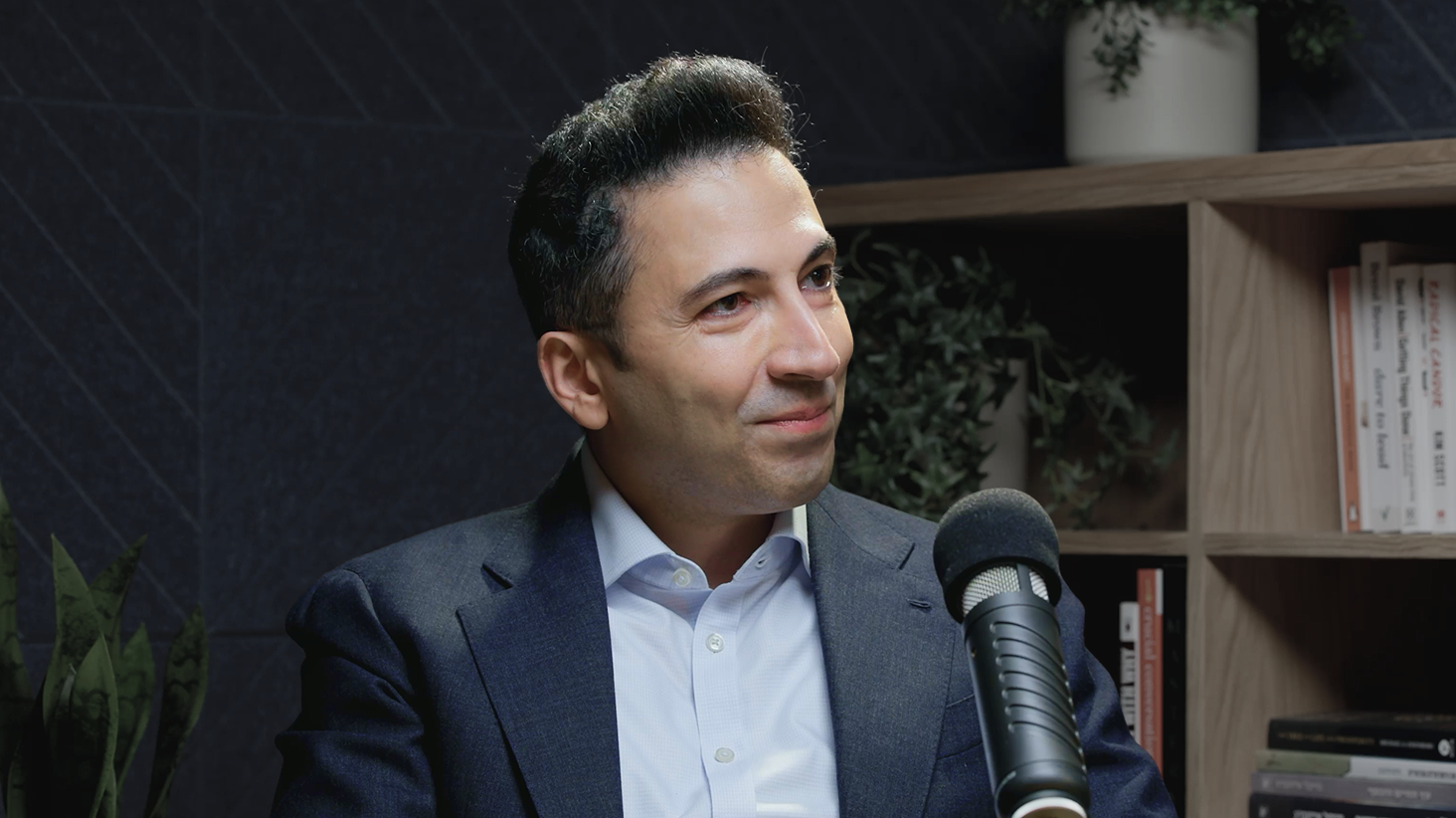
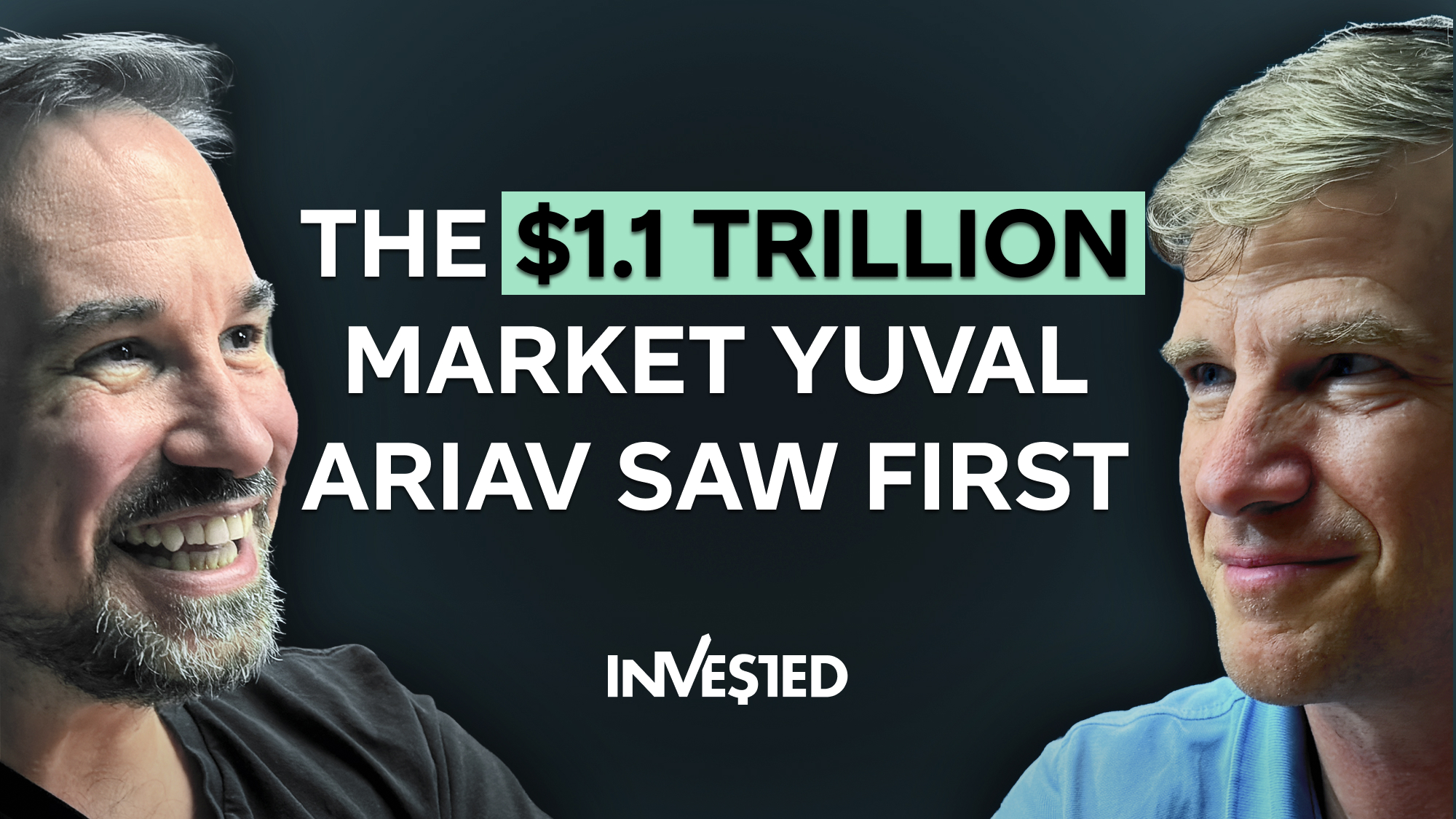
On this episode of Invested, Michael Eisenberg sits down with Dr. Eli David, a leading AI researcher, entrepreneur, and one of the most outspoken voices in tech today.
In this wide-ranging conversation, Michael and Eli explore the intersection of artificial intelligence, free speech, geopolitics, and the future of global power. From building and selling AI startups to amassing nearly a million followers on X through unapologetically unfiltered opinions, Eli shares why controversy, not consensus, drives both innovation and influence.
They dive deep into the current state of AI - why today’s models are fundamentally inefficient, how “woke” training and RLHF shape model behavior, and why Eli believes the future of AI will come from radically different architectures and massive efficiency gains. The discussion expands into the global AI race, where energy - not algorithms - may determine whether the US or China wins.
Beyond technology, the conversation turns sharply into politics and society: censorship vs. free speech, the role of social media as the modern town square, the implications of October 7th on global narratives, and why Eli believes the West is at a critical inflection point.
They discuss:
- How Eli grew from AI researcher to viral X personality
- Why unfiltered speech outperforms polished narratives
- The hidden biases inside AI models and training systems
- Why current AI is powerful - but deeply inefficient
- China vs. the US in the race for AI dominance
- Free speech, censorship, and the future of online platforms
- Israel’s role in the global AI ecosystem and talent war
- Why startups and controversy share the same DNA
Dr. Eli David is a leading AI researcher and entrepreneur who has founded several successful AI-based companies. In 2025, the State of Israel selected Dr. David as a national Torch Lighter at the 77th Independence Day ceremony - one of the country's highest civilian honors - in recognition of his pioneering contributions to AI.
If you want to understand where AI is really heading - and why the biggest debates around it are no longer technical but ideological - this is an essential and unfiltered conversation.
Please rate this episode 5 stars wherever you stream your podcasts!
00:00 - Intro
01:30 - From Unknown Founder to X Influencer
02:30 - October 7 Broke My Career - Then Blew It Up
03:30 - Posting War Footage Got Me Cancelled
04:30 - Why Macron Became My Favorite Target
05:30 - AI Humor Still “Too Soft”
06:30 - AI Is Rigged by “Woke” Trainers
08:00 - RLHF = Forced Political Bias
09:30 - Truth-Seeking AI Should Offend You
10:30 - Free Speech Has No Moral Authority
12:30 - Censorship Is Pure Power Struggle
14:00 - “Don’t Like It? Leave the Platform”
16:30 - No One Took Neural Nets Seriously
20:00 - AI Is Powerful - but Fundamentally Stupid
24:30 - China Winning AI Through Energy
28:30 - Experts Kill Innovation – Outsiders Win
33:00 - My Team is Smarter Than I Am
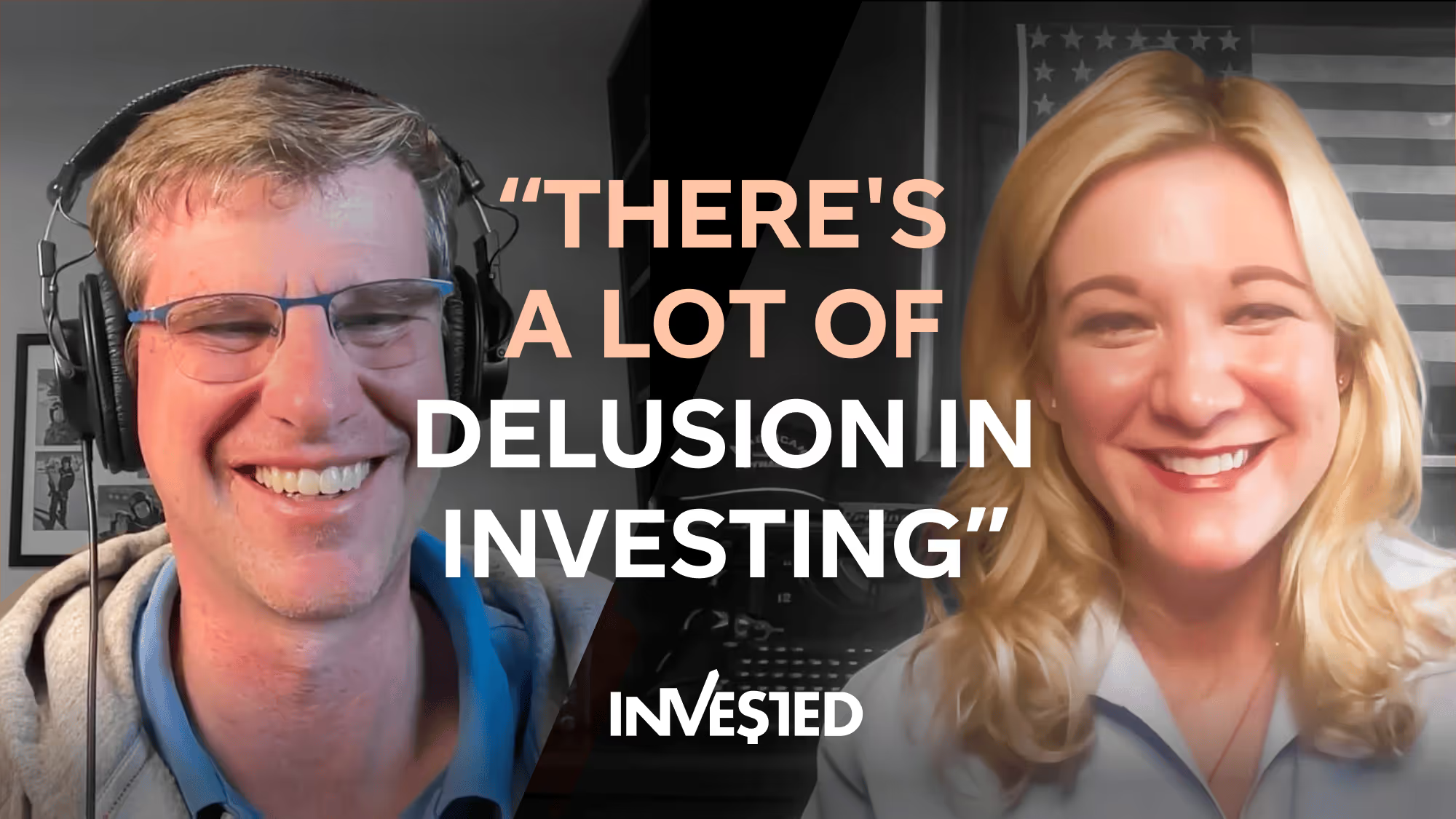
36:30 - Startups Require Delusion and Arrogance
41:30 - Iran Is the Real Global Threat
47:30 - AI Will Destroy SaaS… Eventually
51:00 - Israel Risks Losing AI Talent
Michael Eisenberg: 00:00.2
How does a somewhat anonymous AI company founder end up with about a million followers on X?
Dr. Eli David: 00:07.0
You're forcing me to reveal a big secret here.
Michael Eisenberg: 00:09.2
That's what we're here for. You use AI to come up with your witty lines when you're bashing Macron?
Dr. Eli David: 00:14.5
I just look at his page, and thankfully, every day he provides content. Such a pathetic guy. Every day there is something. I don't think the LLM was woke, but, those who trained it, they conveyed to it and forced upon it their own worldview.
Dr. Eli David: 00:30.4
I'd rather use an LLM that offends me instead of, "Oh, sorry, no, I cannot do that. That's offensive." I love my own ethics, and I think I should be in charge of all the ethics in the world. Do you agree with that?
Michael Eisenberg: 00:45.0
No.
Dr. Eli David: 00:45.4
No. You want your ethics to be in charge. Do my ethics prevail or yours?
Michael Eisenberg: 00:50.2
Five minutes into the conversation, we already understand that you don't have a good view of progressives and definitely don't like woke.
Dr. Eli David: 00:56.1
Oh, really? How did you get that idea?
Michael Eisenberg: 01:03.5
Welcome back to another episode of Invested. I'm thrilled to be here with Dr. Eli David. Welcome, Eli.
Dr. Eli David: 01:09.6
Great to be here.
Michael Eisenberg: 01:10.4
Little known fact about Eli is that not only is he an AI researcher, not only did he sell his tech company, which we'll dig into soon, but I think he's the Israeli entrepreneur and maybe the entrepreneur, period, with the largest number of X followers in the world.
Michael Eisenberg: 01:28.0
Is that correct?
Dr. Eli David: 01:28.8
So it happens. Yes.
Michael Eisenberg: 01:30.0
So that's what I want to start with, which is how does a somewhat anonymous, AI company founder end up with about a million followers on X?
Dr. Eli David: 01:40.4
The short answer is, I have no idea. The longer answer is before the year 2020, my Twitter was only about AI. I had a large following, a few hundred thousand, as an AI entrepreneur, scientist, one of the oldest people who's still doing neural net for 25 years.
Dr. Eli David: 01:57.4
We'll get to that. But since, I think around Covid, I just said, the hell with it. I will just speak out my mind. Whatever I think. No filters, no overthinking. I'll just post it – for myself. Venting. And people connect to people who are just speaking out their mind without filters.
Dr. Eli David: 02:17.2
And you see the trend. You see Javier Milei in Argentina. You see Trump. You see more and more people, leaders, founders. You see Elon Musk – speaking without filters engages people.
Michael Eisenberg: 02:30.0
Okay, and so what was the first Tweet, or what they now call X post, where you just vented and it blew up and you added, I don't know how many followers, a lot of followers?
Dr. Eli David: 02:39.4
I think one of the major things that changed was on October 7th I was in Tel Aviv, 6:30 AM in the safe room. And we have no idea what's happening. But as the sirens are going nonstop, just looking at the Telegram, looking at some Palestinian channels from Gaza.
Dr. Eli David: 03:02.3
He said they were celebrating, they were celebrating on their streets as our hostages, that was after an hour or two, hostages being paraded in their streets and all those so called innocent Palestinian civilians are just rejoicing. And I started nonstop just taking those videos and posting them to my audience.
Dr. Eli David: 03:22.5
The reaction was that many of my academic colleagues just blocked me on Twitter, so called canceled. But many more people started following, as somebody who is showing the world...
Dr. Eli David: 03:37.5
by the way, I hate the word hasbara. Hasbara means explanation. We're not explaining anything. I just want to convey what's happening. And many of those posts went to millions of views again and again, so...
Michael Eisenberg: 03:49.8
So prior to October 7th, how many followers did you have on X, Twitter?
Dr. Eli David: 03:54.2
Before October 7th, 300,000. Something like that.
Michael Eisenberg: 03:57.8
And now about a million?
Dr. Eli David: 03:58.9
Close to that.
Michael Eisenberg: 03:59.7
Now close to a million. And what is the most popular Tweet or post? The one that's kind of the vent hurt around the world.
Dr. Eli David: 04:11.0
Good question. I don't remember. There were a few that got several hundred million views.
Michael Eisenberg: 04:15.1
Yeah.
Dr. Eli David: 04:15.7
I think one of them was bashing Emmanuel Macron. Every time I'm bored I just look at his page and thankfully every day he provides content. Such a pathetic guy. Every day there is something and I just, I need to screenshot a comment on that and it gets to millions or tens of million views.
Michael Eisenberg: 04:38.2
You use AI to come up with your witty lines when you're bashing Macron?
Dr. Eli David: 04:42.0
I need to test that again. Seriously now. Last year it was GPT-4. I connected it to all my Tweets. I said, "Well your only goal is maximizing likes. So read my style to know my audience." And he started coming up with good drafts on the woke and progressive on the leftist and Gaza, all those stuff. They lack the punch.
Dr. Eli David: 05:07.8
And I did some A/B testing, not automated. It gives me a draft on something, I post it and I post my version of that a few hours later and it used to get much more likes. The difference being that AI doesn't have the kind of dark humor that works.
Dr. Eli David: 05:25.5
Even when I tell it, "Be more cynical," It's still not there. But it is improving. Right now, I think Grock and Gemini are much more cynical than I expected them to be.
Michael Eisenberg: 05:38.7
So, Eli David is both more cynical and more punchy than AI Eli David?
Dr. Eli David: 05:45.4
Yes.
Michael Eisenberg: 05:45.5
This is actually an important topic because, actually I'm about to publish this on Thursday for my weekly Torah piece that goes out to thousands of people, which is that the statistical models of AI actually flatten both human emotion and the range of human expression.
Michael Eisenberg: 06:05.9
Comes out of a tweet I posted earlier about Apple saying that they'll actually have the personal data on me to actually tweak it to make it more me and less kind of flattened statistics. Is it your sense that current AI is just flat?
Dr. Eli David: 06:19.2
Current AI is learning from humans. That's a first step. I think it is...
Michael Eisenberg: 06:23.8
The average human is boring. His name is not Eli David. Not as opinionated as you are.
Dr. Eli David: 06:29.0
I don't think anyone is boring. People's public persona is oftentimes boring because people don't say publicly what they think. And people who are considered a bit less boring are just people who speak out their mind more blatantly.
Dr. Eli David: 06:47.3
I'm sure, George W. Bush thought the same things as Trump is thinking just as aggressively and cynically.
Michael Eisenberg: 06:55.5
No, I doubt that, come on.
Dr. Eli David: 06:56.1
He was just filtering some of those things. They wouldn't just look at a progressive someone and say, "Hey, you're retarded." They wouldn't say that. It is unbecoming to say that.
Michael Eisenberg: 07:08.8
But you think he thought that?
Dr. Eli David: 07:10.3
Yes, of course, everyone thinks that. If you look at the...
Michael Eisenberg: 07:14.2
I don't think everyone thinks that.
Dr. Eli David: 07:15.9
Except you.
Michael Eisenberg: 07:18.3
I mean, there are different perspectives out there on this. But part of what you're saying, I think is because the LLMs scrape the web and people are filtering themselves on the web or they are self-censoring themselves on the web to some point. Therefore the kind of range of human emotions or the sharpness of the individual human is curbed.
Dr. Eli David: 07:37.6
Actually not. The first step the LLM learns, I think it is pretty sharp. The part that flattens it is that RLHF first – reinforcement learning by human feedback. But you take the raw LLM that would give you the recipe for building a homemade cyanide and everything and want to filter that out.
Dr. Eli David: 07:56.3
And the RLHF phase, you just say, "Good, not good, good, not good." And you are teaching it to be much more flat. Example of that was when GPT-3 was released. Its nickname was, remember, not ChatGPT but WokeGPT because you said, "Write a song that praises, Biden." "Oh, here it is." "Write a song that praises Trump." "No, sorry, I cannot do that." Because of course, those who did the RLHF they, I don't think the LLM was woke, but those who trained it, they conveyed to it and forced upon it their own worldview.
Dr. Eli David: 08:36.4
And by the way, in that respect, I fully agree with Elon Musk that the LLM must be maximally truth seeking. And I would add a quote from Ben Shapiro saying, "Fact, don't care about your feelings." I'd rather use an LLM that offends me and lets me manage that part instead of, "Oh, sorry, no, I cannot do that, that's offensive."
Michael Eisenberg: 08:59.2
Five minutes into the conversation, we already understand that you don't have a good view of progressives and definitely don't like woke and that...
Dr. Eli David: 09:06.4
Really, how did you get that idea?
Michael Eisenberg: 09:07.0
Yeah, maximum truth seeking and Elon Musk and Ben Shapiro, so your political views are clear at this point, which is good, that'll help us. But the question I want to ask is, part of model society, or part of society certainly has been, and the ability to live one with the other is there are filters on people.
Michael Eisenberg: 09:28.4
We don't walk around the street insulting people necessarily. In modern politics, it's become a common expression of this completely unfiltered view, to the point you made about President Bush, now President Trump. Is this good?
Dr. Eli David: 09:42.9
I think it's too complicated to just give it a label of good or bad. And in my views, I would say I'm more towards having a libertarian worldview and I respect that worldview because it is the most humble worldview.
Dr. Eli David: 10:00.0
Now when I say, "Well, I respect your freedom of speech to say whatever you want, even if it offends me," it's not because... it is exactly because I'm not confident in my own views. I think nobody can be confident in their own views. Do you today think exactly the same thing on every topic as I used to think five years ago or ten years ago?
Michael Eisenberg: 10:19.4
No, not even five months ago.
Dr. Eli David: 10:20.8
Exactly. With the pace of AI, not even two days ago.
Michael Eisenberg: 10:23.6
Yeah.
Dr. Eli David: 10:24.3
So you admit that either you are wrong today or you were wrong five years ago. Most probably I was wrong both today and five years ago. So what right do I have to say what is right and what is wrong? Or take another example, the censorship that we have in social media. Elon Musk came and said, "Who gives me the right to say, 'oh, this must be deleted.
Dr. Eli David: 10:49.4
And this must not be deleted'?" Personally, my account was suspended for three days, from Twitter, because I shared a peer reviewed report, a paper. I think it was from Lancet, one of the top medical journals. It said, "Those who get Covid vaccines can still get Covid and infect others." It was factual.
Dr. Eli David: 11:09.8
Today nobody would debate that. And I was suspended for three days because it may mislead some other people. Who gives the right to anyone to set censorship? The thing is, the moment...
Michael Eisenberg: 11:22.3
No, we all agree that there's some censorship, right? Nobody wants to put pornography on social media or anything like that. So everyone I think basically agrees that there is some censorship. The question is where you draw the line. Isn't that right?
Dr. Eli David: 11:34.2
There is one clear line that I think Elon Musk is repeatedly drawing that – legal and illegal.
Michael Eisenberg: 11:39.4
Right.
Dr. Eli David: 11:39.7
If you think certain content, for example, nobody can go on any social media and say, "Go kill that guy."
Michael Eisenberg: 11:47.3
Right.
Dr. Eli David: 11:47.7
Because that is illegal.
Michael Eisenberg: 11:49.0
Right.
Dr. Eli David: 11:49.4
And if the society as a whole believes that it is, nobody should ever offend certain thing, for example, then pass a law in the Knesset, in the Congress and say, "Offending such and such..." Look at what's happening in Britain.
Michael Eisenberg: 12:04.2
Yeah.
Dr. Eli David: 12:04.7
And the jihadists can do whatever they do. Nobody cares about that. But if you post something a bit nasty or saying that, God forbid, people who come to Britain must at some point learn English. I know it sounds radical, but maybe it's good to have. At 6:00 AM, you have policemen knocking on your door and taking you to interrogation because your post was offensive.
Dr. Eli David: 12:24.9
Do we want a dystopian 1984 style society like today's Britain? Well, I would not want to live there.
Michael Eisenberg: 12:31.0
But don't we also think that the law doesn't cover everything and there needs to be kind of, you know, ethics and morals fills in where the law doesn't exist yet or may not exist or can't cover every circumstance?
Dr. Eli David: 12:40.6
Absolutely. I love my own ethics and I think I should be in charge of all, all the ethics in the world. Do you agree with that?
Michael Eisenberg: 12:48.1
No.
Dr. Eli David: 12:48.4
No. No. You want your ethics to be in charge. And our ethics clashes at some point, right? Do my ethics prevail or yours?
Michael Eisenberg: 12:56.2
Right. But I think there are certain ethics, for example, just pornography is the easiest one. Right? I think we all basically agree this is a bad idea. Right? We also probably agree because there's kind of a law about it in the United States that shouting fire in a crowded room is also a illegal or bad idea.
Michael Eisenberg: 13:16.2
It's not protected under free speech. Right? The question becomes how do you interpret that or interpolate that into the world of social media? What does shouting fire in a crowded room look like? Right? In social Media.
Dr. Eli David: 13:26.5
Let me challenge even those two. On Twitter, you can post pornography. I have the right. Sorry, I don't have the right. Nobody gives me the right. You don't like it, get out of Twitter. I would like not to be exposed to pornography on Twitter, though I would be very angry if the Twitter's algorithm shows that content to me.
Dr. Eli David: 13:49.5
But there are, there is pornography on Twitter. If you post it and you flag it appropriately, Twitter does not delete it, it does not suspend your account.
Michael Eisenberg: 13:59.7
Right.
Dr. Eli David: 14:00.2
Everything is fine. Somebody who wants to see that, let them see that. And the offense I take is about people shouting at everything, "It is my right, my right not to see such and such." Why? Who gave you that right? If you don't like Twitter, go start your own social network.
Dr. Eli David: 14:17.3
Remember Blue Sky or whatever it's called?
Michael Eisenberg: 14:20.0
Yeah, I don't remember. Blue Kai, wasn't it Blue Kai, Blue Sky?
Dr. Eli David: 14:22.4
Blue Sky.
Michael Eisenberg: 14:23.3
I was never on it. I wouldn't know.
Dr. Eli David: 14:24.5
Why isn't it succeeding? Because nobody's offending. It's heavens. Right?
Michael Eisenberg: 14:28.5
Well, I don't think either of us would know if it's succeeding or not because neither of us were probably there. But other people might be having success.
Dr. Eli David: 14:34.5
Did you ever hear, you know, well, let's take, a woke leader here, Starmer or Macron. Did they ever post something to Blue sky and you go to CNN or...
Michael Eisenberg: 14:44.1
No, because Twitter's the town square. I mean, it's...
Dr. Eli David: 14:46.5
Why is that? Because everyone wants to...
Michael Eisenberg: 14:48.8
Elon, we apologize for calling it Twitter. It's X. But we'll go back to Twitter anyway. Yeah.
Dr. Eli David: 14:52.0
No, no, we call it Twitter when we want to bash it. It was the terrible Twitter and now it is the great X.
Michael Eisenberg: 14:58.5
So let's, let's just back up for a second, share with our audience your background because, you know, being a Twitter personality or an X personality wasn't your background. You're a scientist.
Dr. Eli David: 15:08.4
Yeah, my background is, can be summarized in neural network. I've been doing neural networks for 25 years. And there's an anecdote there. When I did my Master's in computer science, AI is a field that we have decades up there, and neural networks, which is the entire AI of today, was considered a refuted field 20 years ago. When I wanted to do neural net, and by the way, I didn't foresee that neural net would succeed.
Dr. Eli David: 15:36.0
I just said, "Well, these statistical methods are not working well. there is just one evidence of real intelligence – this box that we have here. Let's try to copy it." Real neural net, artificial neural net. So I started my, I did my Master's and my PhD.
Dr. Eli David: 15:52.6
It was a computer chess, chess playing program. And I went to the department chair of computer science, Bar Ilan University, and said, "Well look, I would like to teach a course on neural net." It was customary that PhD students can teach a course on their subject. "What?
Dr. Eli David: 16:08.6
Neural net? The next thing you will come and ask me to teach a course on astrology." So he went to the teaching committee and came back and said, "Eli, look, we unanimously agreed it's the most stupid idea anyone ever proposed. But because we like you and we want you to stay here when you finish your PhD, we approved your course with one condition.
Dr. Eli David: 16:27.9
Don't call it neural net. We don't want to put the university to shame, just invent another name." I made up biointelligent algorithm and I taught neural net 20 years ago.
Michael Eisenberg: 16:38.4
So your neural network course was called Biointelligent Algorithm,
Dr. Eli David: 16:42.2
Just not to say the N word: neural net.
Michael Eisenberg: 16:45.4
Okay.
Dr. Eli David: 16:45.7
So I've been doing neural net teaching at university for the past, almost 20 years. Founding, founded several neural net based startup, cyber neural net acceleration. My field of both entrepreneurial area and research area has always been in the neural net itself.
Dr. Eli David: 17:04.8
Some people's interest is neural net for vision or speech or text. My passion was always neural net itself. The architecture of neural net, how it's similar and how it's different from our own brain. Now when I teach neural net to my students, I always tell them, "Look, the fact that neural net is working so good today, GPT, Gemini, Anthropic, all of that, is not proof that we have good neural net architectures.
Dr. Eli David: 17:32.0
We can talk about that. I think all of today's neural net architectures are mind bogglingly stupid. But the fact that they work just shows that how many better neural net architectures are out there. Just to give an anecdote, at peak performance, when you play tournament chess, your brain never passes 30 watts of power consumption, usually around 20 watts.
Dr. Eli David: 17:55.9
A single GPU is using thousands of watts. You know why? Because if I ask you, Michael, what do you see here? Glass of water. A few tiny cortical columns got activated in your brain. When I showed this to a multimodal LLM like ChatGPT, almost the entire brain, or a third of the brain gets activated to say it's a glass of water.
Dr. Eli David: 18:17.9
So our algorithms, they're extremely inefficient. And that's my passion.
Michael Eisenberg: 18:22.7
But why don't you give our audience your working definition of what a neural network is?
Dr. Eli David: 18:26.1
The real one or the artificial one?
Michael Eisenberg: 18:29.6
Both.
Dr. Eli David: 18:30.0
Let's start from the real one. I had a neuroscience teacher, one of the greatest in Israel, he used to say, "If it is something smart, the brain cannot do that at the cell level." So it all starts from you have stem cells.
Dr. Eli David: 18:45.8
A stem cell can turn into a skin cell, a muscle cell. It turned into a brain cell, also known as a neuron. There is no magic there. It just fires electricity to each other. Now, we, our brain has different parts. The only interesting part is the neocortex, the outer cortex that only the mammals have it.
Dr. Eli David: 19:04.4
Neo – new, cortex – layer. All the other parts of the brain are boring stuff, just keeping us alive and all that stuff. So the neo...
Michael Eisenberg: 19:12.1
By the way, that's a base need in order to get to the neocortex. Just keeping us alive is not something to be...
Dr. Eli David: 19:16.9
Of course, but...
Michael Eisenberg: 19:18.0
...minimized that we're here, right.
Dr. Eli David: 19:20.2
Turtles are alive and I don't think they have cognition.
Michael Eisenberg: 19:23.0
Yeah.
Dr. Eli David: 19:23.3
Only mammals have neocortex. Now, in the neocortex it's not some magical things that gives us cognition. If you crack open my skull, take my brain out, remove those boring parts that just keep us alive. Take neocortex, spread it on this table.
Dr. Eli David: 19:39.2
You can spread it, by the way. It will be the size of about 30 centimeter by 30 centimeter napkin. For American viewers, that's some inches by some inches. 30 centimeters, a napkin. The width about two millimeters.
Dr. Eli David: 19:55.6
Imagine six playing cards stacked. Neocortex has six layers and you have around 16 billion neurons there. We used to think that the neurons are completely different. You know, the visual cortex at the back of our brain is the expert part in seeing.
Dr. Eli David: 20:14.1
The auditory cortex is expert at hearing. That's accurate and complete nonsense. Why? Already in the late 1980s, we know that if you take a newborn mouse, cut the optic nerve and auditory nerve, switch their places, the mouse starts hearing with the visual part and seeing with the auditory part.
Dr. Eli David: 20:32.7
Which proves that these are general purpose computing units. The reason the visual cortex is here, because the cable, the optic nerve, that brings the data from the camera, also known as eyes, ends up there. Those neurons just start doing that kind of processing.
Dr. Eli David: 20:49.6
It all sounds very simple. And by the way, what's the difference between our neocortex and that of a chimpanzee? Crack open the skull, take the neocortex, spread it on the table. Instead of 30 by 30, it will be a business envelope. Same six layers, same two things.
Dr. Eli David: 21:06.8
Why are primates smarter than others? For some reason we don't know, an evolutionary mutation, we have much fewer number of connections in our brain. An elephant's neocortex is much bigger than ours, but we have much more neurons there.
Dr. Eli David: 21:25.3
How can it be? Because, I'm a bit simplifying it, but an elephant's neocortex's neuron on average connects to about 100,000 other neurons. In primates, each neuron connects on average to only 10,000 other neurons.
Dr. Eli David: 21:41.5
You have much less space for the connectors, synapses, the cables, and you have more space for processors. We have much more neurons. Going back to the artificial neural net, artificial neural nets started from 1970s.
Dr. Eli David: 21:57.1
Just a crude mimicking of the brain. Let's draw a circle and call it a neuron. Let's connect a line and say, well, that's the synapse. How do we train this thing? It was a simple thing in 1970s. By the end of 1970s, oh, it doesn't work. Refuted.
Dr. Eli David: 22:12.9
Then in 1986, Geoffrey Hinton, the Nobel winner, the godfather of modern AI, and Rumalhart, they invented back propagation. Simple mathematical algorithm that any students today looks at it and say, "It took them 15 years to come up with that?" Yes, but the crazier part is that 40 years later, still all LLMs today, Gemini, ChatGPT, others are, trained with that simple 1986 algorithm.
Dr. Eli David: 22:39.2
Geoffrey Hinton himself finds this crazy. And he said, "If it were up to me, I would just start from scratch." Our brain is not calculating derivatives to do that. So the thing is, just like in the real neural nets, that intelligence comes from quantity, not quality.
Dr. Eli David: 22:57.8
As I told you, my brain is exactly the same as chimpanzee, I just have more neurons. The surprising and actually not surprising fact is that in artificial neural net, exact same thing is happening.
Michael Eisenberg: 23:10.6
The more GPUs you have...
Dr. Eli David: 23:12.8
More neurons. An argument I had 10 years ago with neural net guys. Finally, somebody's taking us seriously. Remember in 2012, computer vision? I was in a big conference. There was a discussion I had with somebody from the field of NLP, natural language processing.
Dr. Eli David: 23:31.8
And he said, today he's one of the greatest neural net text guys in Israel, he told me, "Well, Eli, your neural net works in vision and speech. Never work in text. Look, it doesn't work. It's a joke." And my response to him was, "All mammals can see, but only mammals with much bigger brains have language.
Dr. Eli David: 23:54.2
Humans, dolphins, whales. So it's just a matter of bigger neural nets." Back then, it was considered crazy. But today that's what we see. Neural net after neural net, bigger and bigger LLM is mainly quantity that's becoming bigger.
Michael Eisenberg: 24:09.4
So all these companies are investing massive amounts of money in building out bigger neural networks. More GPUs, more brain power, more horsepower. There's a compute bottleneck coming, that's I think obvious to anybody with a brain, that there's a compute bottleneck coming.
Michael Eisenberg: 24:25.4
But the point you made earlier is interesting, which is the energy efficiency of the GPUs compared to the brain is many orders of magnitude worse. So it's going to be hard to scale compute forever until they get to what everyone seems to call AGI.
Michael Eisenberg: 24:41.0
And this moment of course been around the corner for a long time and it's again around the corner in the next year or two years. Elon, I think, Musk has said it's like the next two or three years, but at the lack of energy efficiency for a GPU, how do you actually get to even compete with the human brain?
Dr. Eli David: 24:56.7
There are several paths here that in the next few years we're going down there. First of all, more and more investment will be made in the current transformer based neural net architectures that are heavy, dense, not efficient.
Dr. Eli David: 25:12.7
But everyone's doing that. I'm doing that because they work.
Michael Eisenberg: 25:16.8
But you believe in it, transform based architecture?
Dr. Eli David: 25:20.2
I believe it works.
Michael Eisenberg: 25:21.1
It works. Okay.
Dr. Eli David: 25:21.5
It works.
Michael Eisenberg: 25:22.2
Go on, sorry.
Dr. Eli David: 25:22.2
Of course it works. So it is not a matter of belief, it's a fact. They work. I do believe much more efficient versions of that, much sparser neural nets. For example, during the past year most LLMs are based on mixture of experts.
Dr. Eli David: 25:38.8
Essentially it is, imagine like different blocks of neurons, and it routes through them. Let's not activate the entire brain, just half of it or a quarter of it. It's a nice step towards what I imagine in a decade from now, we will have large LLMs.
Dr. Eli David: 25:59.5
Very, very, very large LLMs, that they will be based on not 64 or 128 experts that you route through them. You will have a million experts, mixture of experts will based on a billion experts and you route through them based on the complexity of the task.
Dr. Eli David: 26:17.9
My own, both research and the companies I've founded heavily tackle this problem. I do believe we can have much more efficient architectures. I have evidence of that. I've built that. Right now in my current company I get 10x on most LLMs.
Dr. Eli David: 26:35.0
I'm very happy on one hand and very frustrated because I know for sure there are out there Methods to get not 10x or 100x, there are methods to get a million x efficiency on what we have. And since all brightest humans right now are working on this, with all the investment, we will stumble upon them in the next few years.
Dr. Eli David: 26:59.9
But in parallel to that, we need the energy. I don't think there is a scenario that we will find such efficient neural nets and say, "Okay, we've got all the energy." And that's one of the things that's most concerning me. China is winning the race on the energy side.
Dr. Eli David: 27:18.6
On the software algorithmic side, it is almost close. You see what's happening past few days – Anthropic is complaining that China is distilling its models. So you have two superpowers, US and China. But in the energy, you see China is just building everything, nuclear, fossil, wind, solar, whatever they can, they're building it.
Dr. Eli David: 27:39.7
And we in the West are not doing that. And that's concerning.
Michael Eisenberg: 27:43.7
I need to ask something before I move on to what you're doing now. You mentioned like a million experts. You've made a career in a Twitter personality against bucking experts. In fact, I'd argue that experts have led us down a lot of wrong paths certainly over the last decade or two. So is thinking about LLMs as a community of experts a good idea?
Michael Eisenberg: 28:04.1
Or is it like we're going to get like reversion to a bad mean?
Dr. Eli David: 28:06.9
That's a perfect analogy because in this context using the word expert actually means random people. Right now, mixture of expert or experts, when I say, "Mixture of a million experts," are they really experts?
Dr. Eli David: 28:23.0
No. There are many groups of neurons, many groups of artificial neurons, many groups of people. And this is the belief that I have, and I think Elon expresses it very eloquently, that a million people out there that they express their voices at the long term they will be more accurate than four top experts in any field.
Dr. Eli David: 28:50.5
You know, I saw that...
Michael Eisenberg: 28:52.0
Wisdom of the crowds, or beyond that?
Dr. Eli David: 28:54.6
The term, specific term wisdom of the crowds I think has been abused a lot. I'm not using that term.
Michael Eisenberg: 29:00.7
Yeah.
Dr. Eli David: 29:01.0
I'm not saying that the majority of people are right. The majority of people are often wrong. But if you don't suppress and you don't force the view of the majority on the minority and allow the minority to be wrong, then among those wrong, you will have the seeds of the next revolutionary new idea.
Michael Eisenberg: 29:21.5
A lot of things start on the edge and I think that's poorly understood in the world. That kind of fringe phenomenon that make their way...
Dr. Eli David: 29:27.2
I came from there. I came from a field that in the main neural, AI conference, Triple AI, the biggest AI conference, you could not publish a single paper on neural net. When Yann Lecun published one of the groundbreaking papers on neural net and computer vision, 2011 or 12, his paper was rejected from the most prestigious computer vision conference and the reviews were essentially, "This paper claims the results are based on neural net.
Dr. Eli David: 29:57.0
We all know that neural net cannot do this, so the paper must be fake." Had you imposed your correct expertise, the field of neural network would have been killed. And you will still do stupid decision trees and SVMs and Bayesian networks today.
Dr. Eli David: 30:12.4
So I've seen it firsthand in my field that allowing those who are wrong, there are others who are wrong, there are people where believe that the super AI will come from a swarm optimization. It's some esoteric field in AI, or ant colony optimization.
Dr. Eli David: 30:29.8
I think they're wrong. But if I say, "Oh no, come on, don't publish your papers," maybe they're right, maybe the next thing will come from them. I believe, by the way, that the next wave of AI will come from evolutionary computation. That all these neural nets self evolve by competing and that social network of LLMs communicating with each other.
Dr. Eli David: 30:51.1
I saw that and say, "Yes, this is how it's going to happen."
Michael Eisenberg: 30:54.2
The Clawbot.
Dr. Eli David: 30:55.0
Yes.
Michael Eisenberg: 30:55.4
Yeah. Okay, what's the startup you're working on right now?
Dr. Eli David: 31:00.4
On LLM acceleration and optimization. Taking LLMs, state of the art LLMs, and optimizing them, making them run 10 times, 20 times faster and with much fewer amount of GPUs needed.
Michael Eisenberg: 31:15.6
What's the company name?
Dr. Eli David: 31:16.9
Two Delta.
Michael Eisenberg: 31:17.8
Two Delta. Why is it called Two Delta?
Dr. Eli David: 31:20.6
Oh, you're forcing me to reveal a big secret here.
Michael Eisenberg: 31:25.1
That's what we're here for.
Dr. Eli David: 31:25.8
Let's say the official version is that we make the LLMs much faster and also much cheaper to use.
Michael Eisenberg: 31:32.7
It's two Deltas, not two Sigmas or beyond three Sigmas.
Dr. Eli David: 31:35.7
That's right.
Michael Eisenberg: 31:36.6
Not two orders of magnitude either?
Dr. Eli David: 31:39.5
Two differentiations.
Michael Eisenberg: 31:40.7
Two differentiations. Tell everyone about your previous startup.
Dr. Eli David: 31:44.4
My previous startup was surprisingly also in neural network optimization called Deep Cube. And back then what we did was, in my current company, now we're using lots of different methods. I'm fortunate to have, almost all of the people I have now in my company are brighter than me and are better at neural networks than me because it's a more mature field.
Dr. Eli David: 32:07.3
My previous company, Deep Cube...
Michael Eisenberg: 32:08.7
Maybe because you're a good professor.
Dr. Eli David: 32:11.3
Or maybe because they are bright and they're doing things hands on. Give an anecdote. The other day I was sitting with them. They had some crazy optimization method they wanted to do on the LLMs.
Michael Eisenberg: 32:22.8
Yeah.
Dr. Eli David: 32:23.2
And look, I'm the old guy in neural nets with the wisdom. "I don't think it will work because such and such and such." And they're respectful of me. They say, "Okay, we will not do that." Yesterday they come back with the results. "Eli, you remember we talked about the method?
Dr. Eli David: 32:41.4
We went and tested it." Each test is running huge amount of GPUs and wasting lots of money, yes? It worked. It worked amazingly well. Actually, one of the best methods that we stumbled upon. And I told them a few days ago not to do that because it will not work. This is the joy of seeing brighter people than you.
Dr. Eli David: 32:59.4
And I said, "Okay, why are you asking me even? Go do whatever the hell you want to do." When the previous company was solely taking a single idea from neuroscience, that we had the most number of connections in our brain when we were two years old. And then from two years old until late teenagehood, our brain aggressively sparsifies connections.
Dr. Eli David: 33:21.5
That's why a 5 year old kid can learn 10 different languages easily. I'm trying to learn a new language for the past decade, and I barely can order in the restaurant.
Michael Eisenberg: 33:31.6
Which language?
Dr. Eli David: 33:32.3
French. Terrible, terrible language.
Michael Eisenberg: 33:34.0
Is that only so you can make fun of Macron?
Dr. Eli David: 33:35.8
Actually, I should stop speaking French and instead focus on Arabic. There's a joke, an Israeli comedian says that in Israel, as a third language, in addition to English, you have the option of French or Arabic. He said, "All my friends took French to be able to speak in Paris.
Dr. Eli David: 33:53.7
Only I took Arabic and now I'm the only one who can speak in Paris." So the idea I took in my previous company, Deep Cube, was let's take a big neural net, retrain it back to 2 year old, retrain it and aggressively sparsify it.
Dr. Eli David: 34:09.9
90% of the connections are gone. It works. We get the same accuracy. The problem, all the libraries today are based on doing dense multiplications, dense matrix multiplications, and it's all sparse. So we write an entire inference engine on CPUs for doing sparse compute.
Dr. Eli David: 34:29.0
We got about 20, 30x speed up on any AMD or Intel CPU. But that was in 2020, 21 when the largest model was called BERT. It had 300 million connections.
Dr. Eli David: 34:44.1
Today a model with 300 million would not even qualify to be called a small language model. We're talking about models with hundreds of billion of trailing connections. So unfortunately today CPU is irrelevant because well I take the model, make it ten times faster.
Dr. Eli David: 34:59.4
Forget about CPU, a hundred times faster is irrelevant. In the current company we're focusing on GPU and with many different methods. Previously, previously I founded, co-founded Deep Instinct. Cybersecurity company – again all the company was based on a very small neural net that is running an end device, your mobile device, your PC that for any computer file that it sees just passes the raw byte values through the neural nets and says if it's malicious or not.
Dr. Eli David: 35:28.7
But the bottom line, the only thing I know how to do is to build neural nets. All the others are auxiliary things.
Michael Eisenberg: 35:33.3
And what happened to Deep Instinct?
Dr. Eli David: 35:34.7
Still running.
Michael Eisenberg: 35:35.2
Still running? What happened to Deep Cube?
Dr. Eli David: 35:36.7
Deep Cube – we sold it.
Michael Eisenberg: 35:37.9
To who?
Dr. Eli David: 35:39.2
We sold it to Nano Dimension, a 3D printing company. Thing is they needed real time error correction within the 3D printing without GPUs. And they went around the world and everyone told them look, there is only one company that has this crazy technology, that we had.
Dr. Eli David: 35:54.8
So back then were negotiations with some other CPU producing companies and they came and we were just perfect fit for them and we sold to them.
Michael Eisenberg: 36:04.3
And that was the end of Deep Cube.
Dr. Eli David: 36:07.0
Yes.
Michael Eisenberg: 36:07.3
It's gone and you're no longer there.
Dr. Eli David: 36:09.8
I was there for some time. After that I worked with some Fortune 500 companies, private equities, AI transformation. I got bored to death. I've met my co-founder now Dvir Zeltzer, ex-Google, and I'm happiest I've ever been.
Dr. Eli David: 36:25.6
Back to building, back to the fun of startup. Corporate is boring. Startup is fun.
Michael Eisenberg: 36:30.2
What makes you happier, starting a company or being controversial on X?
Dr. Eli David: 36:34.8
They're exactly the same thing. Starting a company you need to have huge amount of chutzpah, audacity. To say, "Well look everyone in the world, you're all stupid. You don't know anything. Me and my five people, we are right and you're all wrong." That's what startup means.
Dr. Eli David: 36:53.6
Most of them fail, naturally. But you must love the fact that you're going against majority because that is exactly what startup is all about.
Michael Eisenberg: 37:02.5
What were your hobbies as a kid?
Dr. Eli David: 37:04.0
Chess.
Michael Eisenberg: 37:04.9
Chess. How many moves ahead could you think in chess?
Dr. Eli David: 37:08.1
By the way, that's why I got into AI. Did I tell you that?
Michael Eisenberg: 37:10.6
No.
Dr. Eli David: 37:11.1
My dream was to become a world chess champion. By the age of 16, I didn't become a grandmaster. Essentially you're told, "Look you're too old. Nothing good will ever come out of you. Go find something different." You know what happens in Israel when you don't get accepted to become an air force pilot?
Michael Eisenberg: 37:30.7
No.
Dr. Eli David: 37:31.3
You go to the anti aircraft missiles division. I don't fly, nobody flies. That's the reason I went into AI – to build a chess program to defeat these humans. Seriously. That was the reason.
Michael Eisenberg: 37:43.0
So you were in the anti missile defense program?
Dr. Eli David: 37:44.8
Yes. In chess.
Michael Eisenberg: 37:46.6
In chess.
Dr. Eli David: 37:47.5
I built all my neural nets, my PhD and Masters, was neural net for chess program, evolving chess engines.
Michael Eisenberg: 37:54.0
You've been passionate about what's going on in Iran since the protests started. It's all over your X account. Similar to what you said about October 7th, at the time. You have a view?
Dr. Eli David: 38:07.7
We have a chance that we've never had, we as Israel, to turn our only existential enemy into our greatest ally in the region. When you go to all the pro Israeli protests after October 7th, in every European city and every American city, in addition to Israeli flags and the flag of the host nation, we don't burn the local flag, we respect them.
Dr. Eli David: 38:36.5
You always see the sun and lion flag of Iran because Iranians know that we're fighting the same fight. We're fighting against the same tyrannical regiment that has built and is funding all the terrorists in the region.
Dr. Eli David: 38:52.4
You go to Lebanon, Hezbollah. It's Iran. The Shiite militias who kill Americans there. That's Iran. The Houthis in Yemen, they're Iran. Hamas funded and Iranian weapons are used there. And the same Islamic Republic has hijacked Iran and has massacred, as President Trump just yesterday in the State of The Union said, 32,000 people.
Dr. Eli David: 39:12.9
This is the greatest one day massacre in modern history. The only single day massacre that rivals it is the Babi Yar massacre in Holocaust which about 31,000 Jews were killed in a single day. Such a tyrannical regime.
Dr. Eli David: 39:29.1
We now have a chance, we the West, to help the Iranians get rid of it. And we will never forgive ourselves if we miss this opportunity. So yes, I'm very passionate about it. I mean all are seeing the brave Iranians going to streets yesterday in the universities, they massacred them and they're still going out and fighting for their freedom.
Dr. Eli David: 39:52.6
We need to help them.
Michael Eisenberg: 39:53.6
You mentioned before that you're a libertarian and certainly given your political views, there's a lot of overlap with some of the MAGA crowd, in America, which has become increasingly isolationist. What you're advocating now is what I would call anti-isolationism. You know, this is our moral responsibility to get after the mullahs or the ayatollahs in Iran and get rid of the tyrannical regime to free the Iranian people.
Michael Eisenberg: 40:17.8
How would you make the case to probably a lot of people who follow you on X, who are more isolationist than you, that this has to be done? And, why it's in America's interest?
Dr. Eli David: 40:26.6
Actually, many of the MAGA people are my friends and even I would consider myself maybe an honorary MAGA. I believe a great America, as the leader of the free world, is great for all the world. I have a MAGA hat that sometimes I wear the hat.
Dr. Eli David: 40:42.2
I believe that America should be great, and that is the interest of Israel – to have a strong, great America. To your question, as a libertarian, I'm skeptical about intervening in other stuff, but there is a range here. On one hand, you have warmongers, people who want to go to any war.
Dr. Eli David: 41:01.9
I wouldn't say for the fun of it, but just because they feel great and feel like they're great heroes, modern Churchills will just go to a war. On the other extreme, you have people who won't go to a war even when it's the last resort. Chamberlain. Let's take the example.
Dr. Eli David: 41:17.8
We have many examples in history. Chamberlain didn't want a war. He was right not to want a war. British people didn't want a war. And in adamantly trying not to get a war, they got the worst war in the history of humanity, trying to avoid, by not being brave enough to confront that war early enough.
Dr. Eli David: 41:40.2
President Trump yesterday mentioned that Iran is building intercontinental ballistic missiles. Why are they doing that? You don't need those missiles to hit Israel or to even hit large parts of Europe. They want to target America. To those of my American friends who say, "Nah, US should not do anything," Iran is building interconnect continental ballistic missiles and nuclear weapons.
Michael Eisenberg: 42:05.1
So the big Satan and little Satan argument – Israel is...
Dr. Eli David: 42:08.5
They're chanting, "Death to America." What else do you want to say? We woke up on October 7th learning that all these Hamas people saying, "Death to Israel and kill the Jews." You know what? In Arabic, kill the Jews doesn't mean a cappuccino with soy milk.
Dr. Eli David: 42:23.5
It means kill the Jews.
Michael Eisenberg: 42:25.0
Khaybar ya yahud.
Dr. Eli David: 42:25.9
Yes. And on October 7th, to their credit, they just did what they have been saying they want to do for decades. And we say, "Oh, no, he's not serious." Now take Iran seriously, the Islamic Republic regime, they're saying, "Death to America," they're building the weapon, the greatest weapon of mass destruction, and building intercontinental ballistic missiles.
Dr. Eli David: 42:46.5
Why do they want to do? To send flowers? To launch flowers over there? So any American who says, "No, we shouldn't intervene," may have to intervene when American soil is under threat. And on top of that, Obama, the weakest president in modern history.
Michael Eisenberg: 43:02.9
Who's weaker, Obama or Macron? So I'm clear.
Dr. Eli David: 43:05.6
No, Obama is weak. Macron is pathetic.
Michael Eisenberg: 43:07.7
Okay, so we're clear.
Dr. Eli David: 43:08.6
Don't put them in the same class.
Michael Eisenberg: 43:10.2
Okay.
Dr. Eli David: 43:10.4
Obama you can compare him to Jimmy Carter or to Biden. I wouldn't even compare Macron to them. So in 2009, Obama just stood idly and looked the other way as Iranians were being killed. I have no respect for that.
Dr. Eli David: 43:26.5
But he didn't say, "I'm with you," and then deserted them. President Trump said, to the record, "The Iranian protesters will be safe because the regime knows that if they start shooting, we will start shooting." The next day, he said, "The protesters must be brave and continue because we are with them." The next day he says, "We are locked and loaded and help is on its way." Now, to those who say that America should do nothing, these people essentially, like vultures, waiting for Trump to fail, those will be the first who say, "Here it is.
Dr. Eli David: 44:04.8
Trump betrayed the greatest promise." Trump's promise in all the campaigns has been: promises made, promises kept. And he keeps all his promises. Every presidential candidate in the history of the US said, "If I become president, I will move the US Embassy to Jerusalem." None of them stood behind that.
Dr. Eli David: 44:24.0
Trump, promises made, promises kept. And this is one of the biggest and most unequivocal personal promises he made. So I have absolutely no doubt that he will keep this promise as well.
Michael Eisenberg: 44:38.0
Back to AI for a minute. It's very hyped right now, obviously. I mean, you see what's happening in the public markets. Anthropic sneezes and all the software stocks get a cold. How real is it in terms of what you view as threatening the software businesses that are out there today, labor, et cetera? What are the reality and the hype?
Dr. Eli David: 44:54.5
I have some views, no conviction on anything I say. I feel like every day is like a quarter. Every day I wake up and I look at the latest with curiosity and a bit of a kind of, I have a panic attack every morning.
Dr. Eli David: 45:11.9
What did I miss when I was asleep? Because, on many mornings and every week I wake up and I do miss. Just two weeks ago, three top tier Chinese models were released in a single week. So, yeah, every day things are changing. My two cents, and we may be speaking in two months from now and I said, "Oh, forget about what I told you.
Dr. Eli David: 45:33.1
It was completely wrong." My two cents right now is that all this SaaS panic, software as a service panic, all those companies are going down. I think in the short term it is a bit exaggerated.
Dr. Eli David: 45:49.7
In the long term it is valid. Take a direct quote. Anthropic just posted blog post that it is now scanning security vulnerability.
Michael Eisenberg: 45:59.2
Yeah.
Dr. Eli David: 46:00.2
The next day, the stock of CrowdStrike, great cybersecurity company, it's a competitor of Deep Instinct. So I know how great it is. If I'm flattering my greatest competitor, you know that it's a great company. The stock went down 25%. His CEO George Courts says, "No, I will not do that." It went again after his comment.
Dr. Eli David: 46:21.5
It went down. In the short term, I don't think any big enterprise will say, "You know what, let's not renew our CrowdStrike or Palo Alto Networks or Checkpoint subscription. I will use Claude Code."
Michael Eisenberg: 46:33.8
Yeah.
Dr. Eli David: 46:34.1
Yeah. Really? You are the CISO, Chief information Security Officer, and now there is a hack you will sell to the director, to boards, "Oh, sorry. I just canceled all our cyber solution and delegated it to Claude Code and it hallucinated." No, you will not do that.
Michael Eisenberg: 46:50.3
I was trying to get Claude Code to do some work on my email today. It was off by a hundred miles. No, stop.
Dr. Eli David: 46:55.2
Yes. But again, as somebody who, I'm an old guy in neural net. I've been doing it for many years. When I give talks, I often asked to give a keynote speech on the latest in AI. And I start with 1970.
Dr. Eli David: 47:11.2
I end my talk, only the last two slides about what's happening today. Because what you try to convey, guys, forget about what's happening right now.
Michael Eisenberg: 47:19.3
Yeah.
Dr. Eli David: 47:19.8
Look at the pace of improvement, exponentially growing. So if today, in any task, Anthropic or Gemini is not embarrassingly stupid, if it is not embarrassingly stupid today, it means that in a year or two or three it will be super human good at that.
Dr. Eli David: 47:43.8
Assuming, that's my core assumption, that this pace of exponential improvement will continue. So I don't think the risk is that now the enterprise will say, "Oh, I'll use Claude Code instead of CrowdStrike and others." But there are two risks here. The competitor of CrowdStrike, just five people in six months can do what we needed in our generation 500 people and three years.
Dr. Eli David: 48:08.3
And the second, many of things enterprises can build for themselves. So in the long run, I think the SaaS world will get revolutionized just like every fabric of our lives will be revolutionized. I'm optimistic and worried, but in the short term, maybe it's an exaggeration.
Michael Eisenberg: 48:25.4
So earlier in the conversation you talked about this giant AI race between China and the United States and you talked about energy. You also posted on X, not long ago that Israel was the first country to deploy basically AI-built kinetic devices and drones and buggies and whatever in the battlefield.
Michael Eisenberg: 48:52.0
How do you think about Israel in this race or superpower competition, great power competition, between the United States and China? Number one. And if you were the AI czar of Israel, what should be our strategy?
Dr. Eli David: 49:03.4
Israel will play, must play a core part in the, as part of the Western alliance, also known as America and Israel. Europe, unfortunately, is on a path of self destruction of technology.
Dr. Eli David: 49:22.9
No technology there. They're just, the joke that America innovates, China replicates, and Europe regulates, couldn't be more accurate and that's unfortunate. So we have America and you have Israel.
Dr. Eli David: 49:38.4
In Israel, I don't believe we will build large language models to compete with Gemini and others. And we don't need to, we didn't build the Internet, America started it and built on top of that. But we have the highest density of talents per capita. We have proven it again and again.
Dr. Eli David: 49:54.7
If amazing breakthroughs will come in AI, just like we spoke earlier of sparsity, more efficient AIs. I believe many of them will and should come from Israel. But to do that we need talent. The first thing that I'm not sure the decision makers in my country are aware of that is that we must desperately fight for talent.
Dr. Eli David: 50:17.1
And the AI talent is a bit different than cybersecurity. You can take a bright 18 year old kid and in six months in the cyber units, turn him into a world class cyber expert. You cannot turn a bright kid in six months into an AI expert.
Dr. Eli David: 50:32.2
AI is science, a Bachelor's, Master's, PhD. Just like I cannot take a bright 18 year old kid and in six months turn him into a dentist. Right? We're fighting for talent. And talent goes where talent is. If you walk here in Tel Aviv, central Tel Aviv in Sarona, you have the highest number of cyber experts per square meter.
Dr. Eli David: 50:56.5
But if you do that, the same in AI today that is not the case. We need to attract the talents. Some of my friends in the government think we need to spend more money. I think that's insane. First of all, small country and I don't believe the government can spend money in any good way.
Dr. Eli David: 51:15.4
Every way the government spends money, I just see waste. Israel has become a startup nation because technology is maybe the only field the government in Israel hasn't tried to help. We have a Minister of Agriculture. That's why it's terrible.
Dr. Eli David: 51:30.5
We have a Ministry of Transportation. That's why it's terrible. We don't have a Ministry of High Tech. That's why it's good. The Ministry of Science, but thankfully it's irrelevant. Is not doing anything. Very good. I'm happy that it's not doing anything because it can only do harm. Israel must fight regulation.
Dr. Eli David: 51:46.5
Let me give an example. Michael, do you imagine a world in which in a year from now, two months from now, a solo entrepreneur with all these tools will build a good company?
Michael Eisenberg: 51:57.5
Yes.
Dr. Eli David: 51:57.9
Yes. For such an entrepreneur, my advice will be leave Israel and build your company outside Israel. You know why? Because of our stupid policies. Last year in the budget, the crazy people in the government decided, well, you know what?
Dr. Eli David: 52:13.7
If you have a company with just one person or two people, you're cheating us. So we will tax you as if you were a person. Will tax you out of existence. So go away. Instead of saying, "Come here, you're one person with idea.
Dr. Eli David: 52:30.8
Brilliant. I will give you more tax breaks to do that. Amazing. Come here."
Michael Eisenberg: 52:34.3
We failed together at fighting that online with our Finance Minister.
Dr. Eli David: 52:37.7
And we lost the fight. We lost the fight. But those are the kind of...
Michael Eisenberg: 52:40.8
I haven't given up yet. Have you given up? We're trying to reverse it.
Dr. Eli David: 52:44.2
I don't know about giving up. I'm just venting louder and louder. Maybe it will help, maybe it will not. I feel better that at least.
Michael Eisenberg: 52:51.1
I mean, you may need to say it in Hebrew, though.
Dr. Eli David: 52:53.4
Yeah, yeah. I'm retweeting you. You're retweeting me. Let's vent and see what happens. But that's the thing that's the trouble. You don't need another AI authority to sit and decide where to invest in, you know? I asked somebody from the Ministry of Science, "You have the national authority of investment...
Michael Eisenberg: 53:12.0
It's called the Israel Innovation Authority.
Dr. Eli David: 53:13.3
Israel Innovation Authority.
Michael Eisenberg: 53:15.2
IIA
Dr. Eli David: 53:15.2
What's IRA? What's your ROI? You know what it is? Return on investment.
Michael Eisenberg: 53:20.8
It's their budget. That's what it is.
Dr. Eli David: 53:22.2
No, nobody knows. Nobody knows.
Michael Eisenberg: 53:24.0
Just inputs, no output.
Dr. Eli David: 53:24.7
Nobody cares. But actually...
Michael Eisenberg: 53:26.4
They're very good people.
Dr. Eli David: 53:28.0
Very good people.
Michael Eisenberg: 53:28.6
We love these people.
Dr. Eli David: 53:29.2
Yeah, very good people. Yeah. But, like somebody said, it's a good people. I would be happy to introduce him to a family member as a date. I wouldn't want them to spend and waste my money. And actually the way they invest is not randomly. I wish it were random.
Dr. Eli David: 53:44.7
They are, they have...
Michael Eisenberg: 53:46.8
They're experts.
Dr. Eli David: 53:47.5
They're experts in identifying those startups which are so incompetent that they cannot raise money from any VC and they'll go and fund them. Go into any fake meat production startup in Israel. They have funding from Innovation Authority.
Michael Eisenberg: 54:04.1
That's unbelievable.
Dr. Eli David: 54:05.1
And it's my money. It's your money. Taxpayers' money.
Michael Eisenberg: 54:07.7
Yeah. And fake beef. Who wants that?
Dr. Eli David: 54:10.8
Nobody, obviously. Look at what happened Beyond Meat.
Michael Eisenberg: 54:13.2
Yeah.
Dr. Eli David: 54:13.6
99% down.
Michael Eisenberg: 54:14.7
And the agriculture ministry can't put milk on the shelves today. They failed at that too.
Dr. Eli David: 54:19.6
Don't get me started on that. You know that we are the only country in the world that has a honey commission.
Michael Eisenberg: 54:27.6
Yes.
Dr. Eli David: 54:28.1
Even in Soviet Union they didn't have. Just for our audience...
Michael Eisenberg: 54:31.2
I was fined for putting out beehives.
Dr. Eli David: 54:36.6
Really?
Michael Eisenberg: 54:37.0
Yeah, yeah, yeah. They stopped me.
Dr. Eli David: 54:38.4
Do you know that...
Michael Eisenberg: 54:38.9
I had to get rid of four of them.
Dr. Eli David: 54:39.6
They could have charged you with a criminal offense?
Michael Eisenberg: 54:41.3
I'm very well aware. Yeah.
Dr. Eli David: 54:43.7
So even in Soviet Union they didn't have that. So in Israel there is quota. Why? So that you don't protect your farmers, it's not the farmers. Those kind of cartels that are holding everything like good old Bolshevik country.
Michael Eisenberg: 54:59.8
There are still socialist roots here that we have to get rid of.
Dr. Eli David: 55:02.4
Exactly.
Michael Eisenberg: 55:03.1
Okay, we have to wrap up here, but I sense it's fair to say that you're a big fan of Elon Musk. Is that right?
Dr. Eli David: 55:09.4
Yes.
Michael Eisenberg: 55:09.4
Okay, so if you had one thing to say to Elon as it related to Israel and what he could do here, what would it be?
Dr. Eli David: 55:17.9
You need to visit here more and take action here.
Michael Eisenberg: 55:20.6
What action?
Dr. Eli David: 55:21.8
Invest. Build companies here. Don't invest in Israel. Don't invest in public sector at all. Private sector. Build your companies here. Start opening branches of your company here.
Michael Eisenberg: 55:31.6
Why?
Dr. Eli David: 55:31.6
Because you, Elon Musk, you chasing the best talent in the world. You believe in talent. Everything you do is bring the best talent. The great thing you did, you fired 80% of people in Twitter because you know that any good company is a small number of talented people are better than large number.
Dr. Eli David: 55:48.2
And here we have the highest number of talent per density per population. We need, you need a large presence of Tesla in Israel, of SpaceX in Israel, of your AI in Israel. Why? Because you will have the greatest return on investment.
Dr. Eli David: 56:05.1
If you chase your return on investment, it will be good for you, it will be good for the world, and it will be good for us.
Michael Eisenberg: 56:11.5
What are you going to be doing in 10 years?
Dr. Eli David: 56:13.3
I don't know.
Michael Eisenberg: 56:14.1
What do you think?
Dr. Eli David: 56:15.0
I'll be trolling for sure. And I will be doing things that make other people angry and vent my opinions. I will be right in some things. I will be wrong in most things, but that's the fun of it.
Michael Eisenberg: 56:29.4
Sounds like you're going into politics.
Dr. Eli David: 56:30.8
No.
Michael Eisenberg: 56:31.4
Oh okay.
Dr. Eli David: 56:31.4
You're going to politics.
Michael Eisenberg: 56:34.0
Like you said, you'll be wrong in most things. With that, thank you for joining us on this episode of Invested. Thank you, Eli. You can increase Eli's follower count on X and help him get to the million at Dr. Eli David D R E L I D A V I D.
Michael Eisenberg: 56:50.6
And if you're his millionth follower, he invites you to a long lecture on neural networks. Thanks, Eli, for joining us.
Dr. Eli David: 56:56.5
Thank you very much.
Michael Eisenberg: 56:57.2
If you enjoyed the podcast, please rate us five stars on Spotify, Apple Podcasts. Subscribe to the YouTube channel because you don't want to miss more conversations with interesting contrarian people like Dr. Eli David. Thanks, Eli.
Dr. Eli David: 57:09.4
Thank you.

Follow Eli on X
Subscribe to Invested
Learn more about Aleph
Subscribe to our YouTube channel
Follow Michael on Twitter
Follow Michael on LinkedIn
Follow Aleph on Twitter
Follow Aleph on LinkedIn
Follow Aleph on Instagram
Executive Producer: Erica Marom
Producer: Sofi Levak, Dalit Merenfeld, Myron Shneider
Video and Editing: Nadav Elovic
Music and Creative Direction: Uri Ar
Content and Editorial: Jackie Goldberg
Design: Nimrod Sapir
Follow Eli on X
Subscribe to Invested
Learn more about Aleph
Subscribe to our YouTube channel
Follow Michael on Twitter
Follow Michael on LinkedIn
Follow Aleph on Twitter
Follow Aleph on LinkedIn
Follow Aleph on Instagram
Executive Producer: Erica Marom
Producer: Sofi Levak, Dalit Merenfeld, Myron Shneider
Video and Editing: Nadav Elovic
Music and Creative Direction: Uri Ar
Content and Editorial: Jackie Goldberg
Design: Nimrod Sapir
Follow Eli on X
Subscribe to Invested
Learn more about Aleph
Subscribe to our YouTube channel
Follow Michael on Twitter
Follow Michael on LinkedIn
Follow Aleph on Twitter
Follow Aleph on LinkedIn
Follow Aleph on Instagram
Executive Producer: Erica Marom
Producer: Sofi Levak, Dalit Merenfeld, Myron Shneider
Video and Editing: Nadav Elovic
Music and Creative Direction: Uri Ar
Content and Editorial: Jackie Goldberg
Design: Nimrod Sapir
.jpg)

.jpg)
.jpg)
.jpg)
.jpg)
.jpg)
.jpg)






















.jpg)


.jpg)
.jpg)
.jpg)
.jpg)

.jpg)
.jpg)
.jpg)
.jpg)

.jpg)