Adeena Sussman


How can values create value? On this podcast, Michael Eisenberg talks with business leaders and venture capitalists to explore the values and purpose behind their businesses, the impact technology can have on humanity, and the humanity behind digitization.




Adeena Sussman
Adeena Sussman
Adeena Sussman

Adeena Sussman
Adeena Sussman
In this episode of Yalla, Let’s Go!, Erica and Abbey sit down with Adeena Sussman, bestselling cookbook author of Sababa, Shabbat, and her newest book Zariz, for a conversation about food, identity, and building a life in Israel.
Adeena shares her journey from Palo Alto to New York’s food scene to Tel Aviv, why she made aliyah, and how Israeli culture - especially the shuk - transformed her career and cooking style. She opens up about writing cookbooks rooted in Israeli ingredients, adapting Middle Eastern flavors for a global audience, and creating simple, joyful recipes during complex times.
They also discuss life in Israel today, community, October 7th, and why she continues to double down on building her life here.
Also on the docket:
- Making Aliyah and finding community in Israel
- Life in Tel Aviv and the Carmel Market (shuk)
- Israeli food culture and pantry staples
- Tahini, harissa, and modern Middle Eastern cooking
- Adeena’s new cookbook Zariz
- Cooking during wartime and simplifying recipes
- Career growth in Israel vs. New York
- October 7 and supporting Israel globally
- Advice for anyone considering moving to Israel
This is a conversation about food, culture, resilience, and creativity in Israel today.
00:00 - “I moved for love… and stayed for the food”
00:58 - The moment Israel felt like home
02:10 - From Palo Alto to NYC to Tel Aviv
03:32 - 20 years in NYC… and why she left
04:41 - Why Israel changed everything
05:21 - Inside the shuk: chaos, culture, and community
07:17 - The secret to making Israeli food accessible
09:59 - The tahini obsession (and why it works in everything)
12:10 - Writing a cookbook after October 7th
14:20 - How Israel transformed her career
16:42 - Living through October 7th in Israel
18:10 - The hard truth about life in Israel
19:14 - What makes Israeli food so different
20:37 - Thinking about aliyah? Hear this first
22:03 - The legacy she wants to leave
22:18 - Rapid fire: best food, spots & Shabbat secrets
[Erica Marom: 00:00.3]
Why did you decide to make aliyah [immigration to Israel]? Why did you decide to come back here?
[Adeena Sussman: 00:03.9]
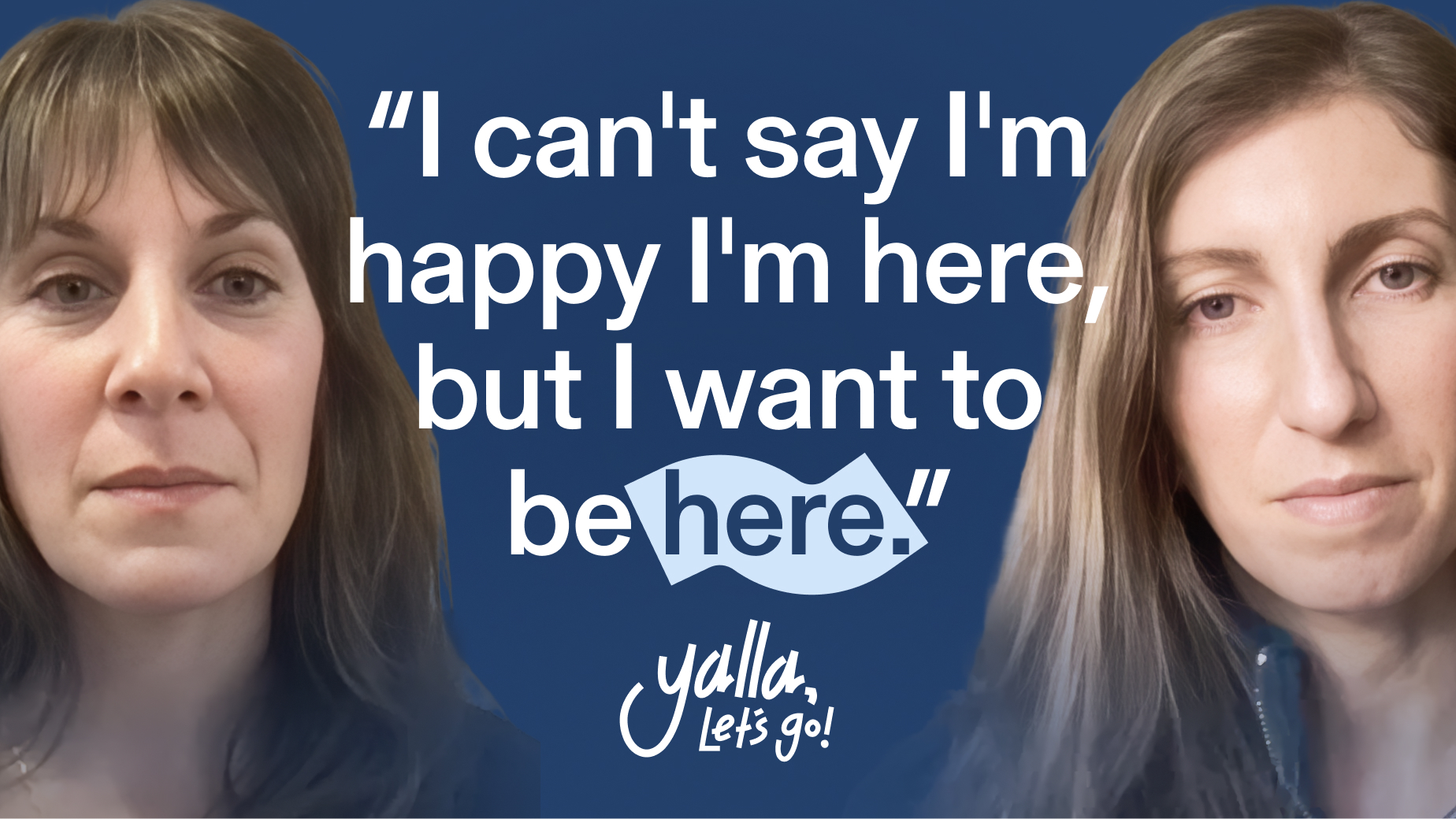
Well, I say I moved here for love and stayed for the food.
[Abbey Onn: 00:07.4]
Zariz is coming out on April 28th.
[Adeena Sussman: 00:09.6]
Zariz, my new cookbook.
[Abbey Onn: 00:11.2]
So talk to us a little bit about how you figured out a way to take local ingredients and make them accessible to people who didn't grow up here.
[Adeena Sussman: 00:19.0]
You know, I say that the shuk was my ulpan [Hebrew study course], Israeli food is my ulpan. And, like, food was just the natural lens for me, and I just took it from there. Making aliyah, you know, just the term itself is loaded with meaning. You know, if you move from LA to Chicago, no one bats an eyelash.
[Adeena Sussman: 00:36.3]
If you move from New York to Tel Aviv, it's like a world changing event. I lived in New York for 20 years and nobody ever knew my name at the coffee shop. And, you know, now I have these decade long relationships with venders in the shuk [market]. And I go to Cafe Tamati, and somehow when I'm 50 meters away, the coffee starts being made, and by the time I get there, like, it comes out exactly like, they know my order.
[Adeena Sussman: 00:58.1]
You know, it's like, Cheers.
[Erica Marom: 00:59.7]
Everybody knows your name in that reference, yeah.
[Adeena Sussman: 01:01.3]
Those things are meaningful.
[Abbey Onn: 01:14.1]
Welcome back to another episode of Yalla, Let's Go! The podcast that Erica and I started to remind ourselves why we made Aliyah and choose to live in Israel as our home. We are going to use this podcast to talk to people from all walks of life.
[Abbey Onn: 01:29.3]
People who work in tech, athletes, chefs, venture capitalists, and more. And we're super excited to dig into today's episode. But before we do that, I want to check in with you, Erica, p check. How are you feeling about living in Israel?
[Erica Marom: 01:43.3]
Well, it's raining, and it's been raining and stormy all weekend, so that means everything shuts down as if it's like a snowstorm in New York. And we had no electricity for most of Shabbat, so we literally had Friday night dinner in the dark by candlelight of the candles we lit for Shabbat.
[Erica Marom: 02:00.4]
And it was like also romantic and cozy and also like, I'm living in, like, the 1800s, so...
[Abbey Onn: 02:06.2]
Rainstorm in Israel equals going back 200 years.
[Erica Marom: 02:10.0]
Yeah.
[Abbey Onn: 02:10.4]
Okay. We're super excited to welcome Adeena Sussman, who is an international sensation both as a cookbook author and a chef, and an American who made aliyah to Israel. Adeena, thank you so much for joining us.
[Adeena Sussman: 02:21.7]
Hello, ladies. Thanks for having me.
[Erica Marom: 02:24.5]
So tell us your life story in less than a minute.
[Abbey Onn: 02:27.4]
You can do it.
[Adeena Sussman: 02:28.2]
I like this. Can you, like, speed it up? Grew up in Palo Alto, California, from a very tiny Orthodox community. Mother, amazing chef. I'm doing this like, less words.
[Abbey Onn: 02:39.6]
You can do it.
[Adeena Sussman: 02:40.6]
Always wanted to work in food. Didn't know what that would mean when I graduated from high school in 1988, when going to culinary school meant you couldn't get into college, or that was how it was perceived. Now I love that kids have so many more options and could go straight to culinary school. Moved to Israel after college for five years.
[Adeena Sussman: 02:57.3]
Fell in love with seasonal market cooking when I lived in Jerusalem, moved back to New York, worked for 20 years in the food world. Decided I wanted to be a cookbook writer. Somehow managed to make that happen. Co-authored 15 cookbooks, including four New York Times bestsellers, three with Chrissy Teigen.
[Adeena Sussman: 03:16.9]
Met my husband 11 years ago. Made aliyah about seven years ago. My first cookbook, Sababa, came out six and a half years ago. And my second book, Shabbat, which, was a New York Times bestseller, came out in 2023.
[Erica Marom: 03:32.5]
Tell us, why did you decide to make aliyah?
[Adeena Sussman: 03:36.0]
Well, I say I moved here for love and stayed for the food. But, I mean, Israel has always been a part of my DNA. I was actually conceived in Jerusalem in a Zionist home. Came here when I was nine for two months, we took like a top to bottom trip in like a tiny rental car.
[Adeena Sussman: 03:54.2]
Slept on friends couches, kind of the thing. It was like the best experience of our lives. I drank so much fresh carrot juice that my fingernails turned orange. I think since then I just have always been captivated by this place. And also as someone who, an out-of-towner, as people call Jews not from New York, I think I always just saw a super strong connection to this place and how I could express my Jewish identity here.
[Adeena Sussman: 04:20.1]
And I had been spending more time in Israel and writing a lot about Israeli food and wine, which was really advancing as my career in the food world kind of moved forward. And then when I met Jay, he had been living here for decades, and I was 43, had never been married.
[Adeena Sussman: 04:38.1]
We got engaged and here I am.
[Erica Marom: 04:40.6]
And here you are.
[Adeena Sussman: 04:41.4]
Yeah, it's history. And you know, I'm a super late bloomer. I'm still blooming. Everything's happening. And I think Israel is an amazing place where you can really create your own story. And that's one of the things I love about being here. I meet people every day who are just mapping out their own life.
[Adeena Sussman: 04:56.7]
And there's just this throw it against the wall and see what sticks mentality combined with super high education and intelligence and moxie and all the things that you need to kind of find your lane.
[Adeena Sussman: 05:13.0]
And I think there are just so many lanes here. And that's one of the things I really love about living here.
[Erica Marom: 05:18.4]
So you basically made aliyah to Shuk HaCarmel [the Carmel Market].
[Adeena Sussman: 05:21.2]
I live in the shuk, essentially.
[Erica Marom: 05:23.1]
So tell us about what is life like in the shuk?
[Adeena Sussman: 05:26.4]
It's messy and loud and dirty and delicious and fun and wild and, you know, it's really, the shuk is, I would say the shuk is my Tel Aviv community in addition to my other communities that I have built and that I have.
[Adeena Sussman: 05:45.0]
You know, it's a very diverse place. The Muslims, Jews, Coptic Christians, Thai people, Philippine people working there. It's a place where you really can understand the rhythms of Israeli life based upon what holidays are happening in different religions, what's open, what's closed.
[Adeena Sussman: 06:06.4]
The first day that I set foot in the shuk, when my husband and I got our apartment together when we were still a young couple. It was around this time of year and I got to the shuk, and I write about this in Sababa.
[Adeena Sussman: 06:22.2]
Like, I was literally the first person in the shuk at like seven. You know, as a New Yorker, like, you never leave the street at 7am and the street is empty. And I thought, "Oh, the shuk will be bustling. I want to get out there early." You know, we got there and Tel Aviv is a sleepy town.
[Adeena Sussman: 06:37.9]
I always say Jerusalem is a town that's dictated by religion. You know, people go to synagogue and then they start their day. Tel Aviv, you know, people are rubbing their eyes at 8:30. And so I remember just being the first person there and like, half the things weren't open. And then a massive, massive rainstorm set forth and I was up to my ankles in a river of water.
[Adeena Sussman: 07:00.1]
But I loved the whole experience. And I just was like, this is my place. And yeah, so, you know, I started spending time there. And, I think at first a lot of the vendors were like, who's this nice lady on a long vacation? But then, you know, got to know the vendors and the different people.
[Adeena Sussman: 07:17.7]
And I'm a very inquisitive person. I ask a lot of questions. I really prefer to focus on other people other than myself. Like my window to, like, discovery with food and culture. And I'm lucky I speak Hebrew, so that was helpful.
[Adeena Sussman: 07:35.1]
And yeah, I just, I decided to make the shuk the subject of Sababa because, you know, I say that the shuk was my ulpan. Israeli food is my ulpan. I spoke Hebrew, but I needed a framework to sort of like, get myself integrated into Israeli culture fast.
[Adeena Sussman: 07:52.2]
And like, food was just the natural lens for me. And I just took it from there.
[Erica Marom: 07:57.4]
Yeah.
[Adeena Sussman: 07:58.0]
Yeah.
[Erica Marom: 07:58.4]
Wow, that's beautiful.
[Abbey Onn: 07:59.3]
That's amazing. So, you know this, and it's without exaggeration, that Sababa's my bible. Like...
[Adeena Sussman: 08:05.1]
Sababa is really. It's really something. Sababa really touched a nerve with a lot of people.
[Abbey Onn: 08:11.3]
It did. It influenced absolutely how I cook and I think about food in Israel and...
[Adeena Sussman: 08:15.2]
Tell me why.
[Abbey Onn: 08:16.0]
You figured out a way to take local ingredients and make them accessible to people who didn't grow up here. I think you did it for Americans that live in Israel and you did it also for a global audience.
[Adeena Sussman: 08:26.1]
Yeah, I did it for myself. That was, I think I am the kind of person, like, I don't want to buy pomegranate molasses and then have it sit on the shelf and get dusty without using it up.
[Abbey Onn: 08:35.4]
Correct.
[Adeena Sussman: 08:36.0]
You know, so I wanted to take all those staples and like, really show people that this is my new, this is my Middle Eastern pantry. These are my Israeli ingredients or the things I use daily and that you can use daily. And in ways that maybe Israelis would not think to use them because, you know, when you're, I'm sort of think of myself as like an insider, outsider in this culinary culture.
[Adeena Sussman: 08:55.8]
And so I'm able to step back and be like, "Hey, you could put tahini in a blondie or you could make a magic shell with tahini And like, Israelis were like, "Whoa!" you know?
[Abbey Onn: 09:04.4]
I also have a Polish mother in law who like, literally last week was like, "What's harissa?" And I was like, "What? Have you not read Sababa?" Like, do you not know harissa and amba? All these things that now feel like part of my kitchen, that wouldn't necessarily have been.
[Adeena Sussman: 09:18.5]
I'm so happy. I hear that. I love that. And I think that's what, and the, it really is a primer to Israeli cooking for people who maybe didn't grow up with it or don't have a natural sort of entree to it. So the front is all the staple ingredients and where they're from, which is a whole nother fun discussion.
[Abbey Onn: 09:38.1]
Yeah, yeah.
[Adeena Sussman: 09:38.7]
And also how to make them if you live somewhere where they're not accessible to you. Like, almost all this stuff, I decoded how to make pomegranate molasses, even if you, how to preserve lemons. How to make za'atar if you can't buy za'atar. How to make baharat, you know, and, you know, I wasn't reinventing the wheel in some cases, but like you said, I was just decoding it.
[Erica Marom: 09:59.8]
What's your favorite of all these ingredients?
[Adeena Sussman: 10:01.8]
tahini I mean, it rhymes with my name and... No, I've kind of been known, come known for tahini Like, my tahini things, tahini blondies. My tahini caramel chart. My tahini granola. My tahini magic shell. Like, I just, my friend...
[Erica Marom: 10:17.1]
Magic shell, like, what? For the ice cream?
[Abbey Onn: 10:19.0]
Yes. Oh, my God.
[Erica Marom: 10:19.9]
Wow. Oh, I haven't discovered this.
[Adeena Sussman: 10:21.6]
Yeah, yeah, yeah. But tahini's just, you know, Mike calls it the mother sauce of Israeli cooking. And, you know, similar to olive oil. Like, it's not an ingredient. It's like a condiment. Like, in itself, it has so much depth and also history and cultural context to this place.
[Adeena Sussman: 10:39.0]
And it's just so delicious. So I think tahini, and also it just, you know, if you keep it in a cool, dark place, it lasts for a year. You can pull it out whenever you need it. And, you know, it's just so... Yesterday I was, there's a Birthright Creators trip in Israel, and it's a really lovely Mexican woman, Chana Magent, asked if she could come over and we filmed a video for fish tacos.
[Adeena Sussman: 11:03.1]
And she, and so she said, "I'll bring everything." And I was like, "Are you sure?" Like, you know, and she's like, "Yeah, I want to bring all this." So she brought the traditional ingredients and she, it was going to really be a very traditional kind of Mexican fish taco. And she brought mayonnaise to make the crema. And I said, "What if we made the dressing with preserved lemon instead of lemon?" Because she brought lemons.
[Adeena Sussman: 11:22.6]
And then, we said, "What if we use tahini instead of mayonnaise?" And then I said, "How about we put pomegranate seeds on the top of the taco?" And then all of a sudden, this traditional Mexican thing had, like a local sort of infusion that sort of made it different and made it feel of this place.
[Adeena Sussman: 11:39.8]
But like, with her Mexican Jewish culture, you know, and her just Mexican cook... So that's like sort of what I love to do and always, like, really trying to respect the origins of the thing.
[Abbey Onn: 11:50.6]
Right.
[Adeena Sussman: 11:50.9]
Not trying to own it, not trying to claim it, just trying to, like, celebrate it and then, like do something fun and interesting with it. I'm also all about, like, really traditional recipes. Like, you know, not everything needs to have a twist, but it's fun to do that.
[Abbey Onn: 12:06.1]
So I think one of the origin like, ways of cooking in Israel is quick cooking.
[Adeena Sussman: 12:10.5]
Yeah.
[Abbey Onn: 12:10.8]
Doing things really quickly. So you said you have Zariz is coming out on April 28th.
[Adeena Sussman: 12:16.0]
Zariz, my new cookbook.
[Abbey Onn: 12:17.6]
So talk to us a little bit about how you got inspired to come up with a book full of kind of quick recipes.
[Adeena Sussman: 12:23.0]
I mean, I think of Zariz as kind of like the cooler, younger, like, sibling to like, Sababa and Shabbat, which are kind of like, these books have gravitas. They're like big subjects. Like, Sababa was how did I integrate into Israeli culture through the lens of food? And Shabbat was the venn diagram of my Israeli identity, my Jewish identity, and my cooking identity.
[Adeena Sussman: 12:42.4]
And like, a subject that I felt could really express all those identities.
[Abbey Onn: 12:46.2]
Right.
[Adeena Sussman: 12:47.2]
And then Zariz was October 7th happened, and I had to write a new cookbook. And I realized that, like, I needed simple cooking for complicated times. And, like, and also that that is really the way that I cook at home during the week. And so I really tried to be very intentional about the number of ingredients in my dishes and how many pots and pans are involved and how many cooking methods and sort of stripping back the cooking itself without losing the DNA of how I cook and the ingredients that I use.
[Adeena Sussman: 13:21.3]
So, you know, it's not like a three ingredient, five minute experience. Like, I still really believe in, like, all the sensory pleasures of cooking. The sizzling, the aromas, the cooking, still all about the cooking. It's just about making it like a really great experience for my readers and my cooks who are like, you know, really the...
[Adeena Sussman: 13:44.1]
Everything I do, I do for you, you know, and like, you know, my books are just very straightforward. It's like appetizers, soups, salads, chicken main courses. Because that's the way we all cook. Right?
[Erica Marom: 13:55.3]
Yeah.
[Adeena Sussman: 13:55.8]
You know, I didn't know things like harira and chorba and all these amazing soups that are, you know, can be rooted in this place because of all the amazing diversity of ethnic roots that come here. And in this book, there's actually a really great soup chapter.
[Abbey Onn: 14:11.5]
Look, it's very clear that your career changed when you moved here. But can you reflect a little bit on how or what you think kind of stands out?
[Adeena Sussman: 14:19.7]
I always say, you know, especially in these challenging times, like, I'm not turning my back on Israel, I'm doubling down on Israel because all the best things that happened to me in my career happened here. Because I'm so connected to this place. And, you know, it doesn't mean that I agree with the policies of the Israeli government.
[Adeena Sussman: 14:38.5]
It doesn't mean that my ideology aligns with anyone else's. It's about how I live my life in Israel.
[Abbey Onn: 14:47.1]
Right.
[Adeena Sussman: 14:47.9]
And, you know, I got here, I was a little bit older. I knew what I wanted to do, I knew how I wanted to live my life. And I always believe that you need to really be deep into a culture, like, to write about it. I didn't want to feel like an interloper or dilettante in Israeli culture.
[Adeena Sussman: 15:04.0]
And once I was living here, it kind of all made sense because it was all very first person. But we have one of the highest, you know, ratios of startups and unicorns and all this stuff here. But there's still this very, like, cozy, intimate way that you can make connections here and meet people. And, you know, I always say to young people who are trying to work here, like, if you want to meet someone, write them, call them, and you'd be shocked.
[Adeena Sussman: 15:24.9]
They will probably meet you for a coffee, you know, and, like, I've been on the receiving end of that and now I'm trying to be on the giving end of that because that was something that was really helpful for me. But I think that living in Israel gives you the kind of boost and sort of like, guts to ask because of the chutzpah [Erica Maromudacity] of, like, Israeli life and that, you know, it doesn't matter whether you're 21 or 45, like, if you have something to offer, like, you know, people are interested in hearing about it.
[Adeena Sussman: 15:51.9]
So I think there's that sort of, again, that sort of looseness, that allows people to find their space. But then there's really strong business culture and everyone works really hard and there's a lot of ambition and a lot of focus.
[Adeena Sussman: 16:07.9]
And also I think one thing that's really beautiful is, you know, like, my whole Shabbat book is about how we take off time here. And, you know, I remember when I first got here, I was still kind of writing people like WhatsApps or emails, like on the weekend, you know?
[Abbey Onn: 16:22.2]
Yeah
[Adeena Sussman: 16:22.2]
And people wouldn't respond. And I was like, oh, this is different than New York.
[Erica Marom: 16:26.8]
What is hard for you about living in Israel? You've been an ardent supporter of Israel over the last couple of years. You are a global figure. You been a supporter of the hostages, of displaced families. It has been a difficult time here. How have you, how has that been for you?
[Adeena Sussman: 16:42.3]
You know, obviously, personally, it's just been a devastating time in Israel. And there's been a lot of heaviness and sadness and, you know, I mean, Abby, and you know, early on in the war, you know, having a friend who had one of several, which is just, really, really emphasizes how small Israeli culture is.
[Adeena Sussman: 17:01.1]
Like, almost everyone knew someone who had a relative or a friend or someone who was a hostage, you know, or was killed on October 7th. I tried to keep moving forward, stay connected with how I was feeling emotionally about the situation. I do feel like Israelis are better than I am about this like, just doing it, you know, it's like, you know, just get it done kind of a thing.
[Adeena Sussman: 17:24.7]
And so I had to make sure that, like, I was processing and yeah, I mean, is life in the United States easier? Like, can you get your Trader Joe's snacks whenever you want them and, you know, not have to import three pound boxes of Diamond kosher salt to Israel? Which is what I do.
[Adeena Sussman: 17:45.0]
First of all, life in Israel is a lot easier in those ways than it used to be. And, you know, when I was here for the year in 1989, in yeshiva [Torah study school], like Shufersal, which is the big supermarket chain here, had American Month because you couldn't get Skippy peanut butter or aluminum foil or those things, like, and they would bring it in and have the celebration of the Skippy peanut butter, you know, so obviously things have changed a lot.
[Erica Marom: 18:10.5]
You can get Ziploc bags here now.
[Adeena Sussman: 18:13.0]
I know mind blown, for sure. But I honestly have to say my daily life is very, very beautiful here and very meaningful. And I lived in New York for 20 years and nobody ever knew my name at the coffee shop.
[Adeena Sussman: 18:29.8]
And, you know, now I have these decade long relationships with vendors in the shuk And I go to Cafe Tamati and, you know, somehow when I'm 50 meters away, the coffee starts being made and by the time I get there, like, it comes out exactly like they know my order. You know, it's like, Cheers.
[Erica Marom: 18:45.1]
Everybody knows your name with that reference, yeah.
[Adeena Sussman: 18:47.8]
So, you know, those things are meaningful, you know, in addition to the fact that I, you know, I love Israel. And, you know, I think that it's more important than ever that we have a place that Jewish people can have safety and you know, so no, I never really thought about leaving.
[Adeena Sussman: 19:07.0]
Although I have, I do have several friends who have left this, in the last couple of years.
[Erica Marom: 19:11.8]
What do you love most about living here?
[Adeena Sussman: 19:14.0]
I always say the level of the food in Israel, whether it's like a Michelin level restaurant or street food, the freshness is what really hits you in the face. Like the bread is going to be from that day, if not a few hours old, the hummus gets thrown away at two in the afternoon, the vegetable, the breakfast sandwich was made by the cafe and not some shrink wrapped hockey puck of eggs that you microwave, you know.
[Adeena Sussman: 19:38.6]
And I think there's that immediacy that you see in the food that is sort of a motif for life in Israel. Like it's, everything's fresh and for better or for worse. You know, I like, I'm a more, I would say I'm a lover, not a fighter. I'm a little bit conflict averse and living in Israel has encouraged me to be a little more direct and actually it's really helped me in my business and my work and be more assertive and like not mince words and waste time saying things that are not meaningful or you know, and there's less cushion in life in Israel, which I love and also can sometimes make me uncomfortable.
[Erica Marom: 20:15.2]
Yeah.
[Adeena Sussman: 20:15.5]
But I like that. I like that. And also one other thing I love, this is related to the food world, is you can go to any restaurant in Tel Aviv, the coolest place in town, and there will be 80 year olds and 20 year olds and everyone is eating in the same place. And I think no one feels out of place.
[Adeena Sussman: 20:31.9]
There's like everyone's together in the same places and there's something that I really love about that.
[Abbey Onn: 20:37.1]
If you could give one piece of advice to someone who is considering moving here, what would it be?
[Adeena Sussman: 20:41.3]
I would say don't announce that you're moving to making aliyah or moving to Israel. Just do it and don't put so much pressure on yourself. Just say I'm going to go spend some time in Israel. Don't, you don't need to make any big pronouncements and you know, shed a giant magnifying glass on yourself and then feel, it's sort of like, you know, I got married at 45 and like it's sort of like dating like when you have a new boyfriend, like when it's serious, you don't really tell everyone right away.
[Abbey Onn: 21:06.6]
Right.
[Adeena Sussman: 21:06.9]
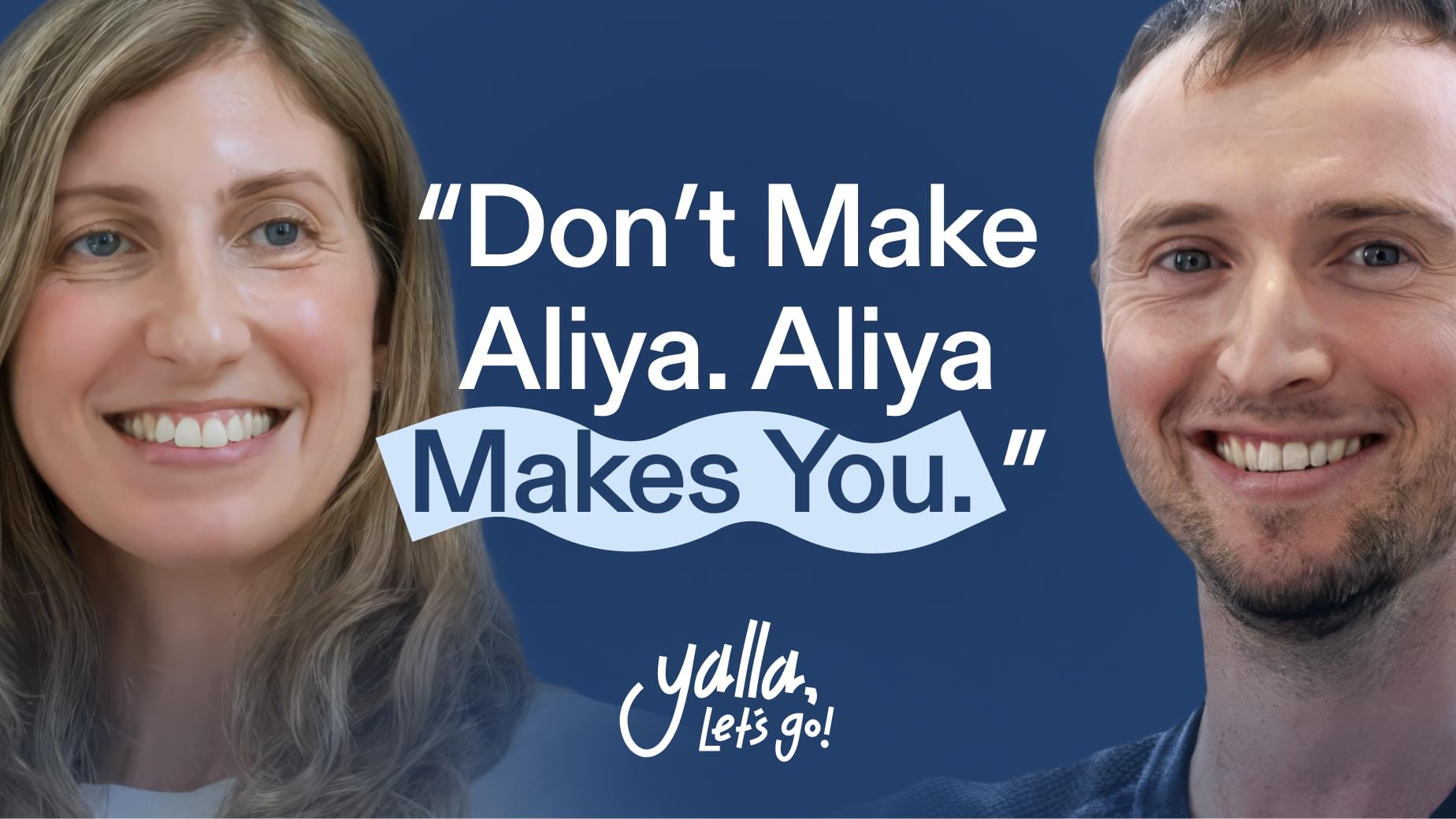
Because you just want to, like, let it, let it happen naturally and not jinx it and sort of, I feel like there is a lot of, you know, making aliyah, you know, just the term itself is loaded with meaning. You know, if you move from LA to Chicago, no one bats an eyelash. If you move from New York to Tel Aviv, it's like a world changing event.
[Abbey Onn: 21:25.3]
Correct.
[Adeena Sussman: 21:25.8]
And so I would encourage people to just live your life and then like, everything else will follow and also reach out to people, build community. I think it's easier to make friends here than it is in other places. I think also for Anglos or for Olim [immigrants], there is a sort of parity that we feel with one another of experience.
[Adeena Sussman: 21:48.1]
And, you know, I think it's, you'll find your people here.
[Erica Marom: 21:51.5]
So when you're 70 years old and you're looking back on your life here, what's one thing that you think will have been true about your life because you made aliyah, because you are living in Israel, that wouldn't have been true otherwise?
[Adeena Sussman: 22:03.4]
That people who would have never known about this place or this food got a window into Israeli society through a different lens that's not political or not religious.
[Abbey Onn: 22:14.2]
Okay, we're going to do a little bit of rapid fire. It's going to be hard. But favorite Israeli food?
[Adeena Sussman: 22:18.5]
Controversial. Love hummus, but love tahini, prepared tahini much more.
[Erica Marom: 22:25.4]
What's your favorite restaurant in Israel?
[Adeena Sussman: 22:27.4]
Oh, in Jerusalem, Azura, which is an Iraqi, home style soul food place. In Tel Aviv... Wow. We go to Habasta all the time. It's a restaurant right in our neighborhood. It's not kosher.
[Adeena Sussman: 22:43.5]
They have a lot of salads though, and wonderful things, for people who do keep kosher or vegetarian. I would say our current favorite restaurant is Chacoli, which is the new fish place that's also very meaningful because it's built on the beach where the dolphinarium was, which was the site of a big terror attack where almost 20 Russian teenagers were killed.
[Adeena Sussman: 23:04.7]
And there's this beautiful, lively place with a full, aquatic sports center that was built by the municipality, Hotel Aviv. And it sort of brought new life to this kind of space that was sort of for a long time kind of in betwix, in between.
[Abbey Onn: 23:18.3]
Your favorite Hebrew word or slang?
[Adeena Sussman: 23:20.3]
You know, I like mabruk is like a great one. Like, congratulations.
[Abbey Onn: 23:24.3]
What does Shabbat look like for you?
[Adeena Sussman: 23:27.3]
Saturday is our big entertaining day. I like the sort of lazier kind of open ended meal, like with a big pot of something and a lot of fresh salads, and Challah that I make and people coming over, in and out. Like there's like a hamin [stew] button that goes off in people's head.
[Adeena Sussman: 23:43.7]
Like the minute it rains, like, everyone's making cholent or jacina or whatever their culture's version of an overnight cooked stew is. So, like, if it, I mean, if it's raining this Saturday, I'll be making a cholent for Shabbat.
[Erica Marom: 23:57.0]
Ooh. What's the cholent secret? I'm sorry, I have to know. Is there a secret ingredient I have to put in my cholent?
[Adeena Sussman: 24:01.6]
I mean, like, most things, salt. Also, you want to make sure there's a good amount of fat in the cholent because it cooks for a long time. So, like, don't use lean meat. Use like a fatty cut of meat that's going to, like, enrich the stew.
[Erica Marom: 24:13.9]
Thank you.
[Abbey Onn: 24:14.4]
Thank you so much.
[Adeena Sussman: 24:15.3]
Thank you.
[Erica Marom: 24:16.2]
Thank you so much for listening to this episode of Yalla, Let's Go! We first of all want to thank everyone on our team, Nadav, Sarah, Kira, Dalit, Sofi, Uri. Thank you for everyone who helped make this possible. And please share this with all your friends.

Follow Adeena on Instagram: https://www.instagram.com/adeenasussman/
Subscribe to Yalla, Let’s Go here: https://www.aleph.vc/yalla-lets-go
Learn more about Aleph: aleph.vc
Sign up for Aleph’s monthly email newsletter: https://newsletter.aleph.vc/
Subscribe to our YouTube channel: https://www.youtube.com/@yallaletsgopodcast
Follow us on Instagram: https://www.instagram.com/yallaletsgopodcast/
Follow us on TikTok: https://www.tiktok.com/@yallaletsgopodcast
Follow Aleph on Twitter: https://x.com/aleph
Follow Aleph on LinkedIn: https://www.linkedin.com/company/aleph-vc/
Follow Aleph on Instagram: https://www.instagram.com/aleph.vc/
Hosts: Erica Marom, Abbey Onn
Executive Producer: Sarah Bard
Producer: Sofi Levak, Dalit Merenfeld
Video and Editing: Nadav Elovic
Music and Creative Direction: Uri Ar
Content and Editorial: Jackie Goldberg
Design: Nimrod Sapir
Follow Adeena on Instagram: https://www.instagram.com/adeenasussman/
Subscribe to Yalla, Let’s Go here: https://www.aleph.vc/yalla-lets-go
Learn more about Aleph: aleph.vc
Sign up for Aleph’s monthly email newsletter: https://newsletter.aleph.vc/
Subscribe to our YouTube channel: https://www.youtube.com/@yallaletsgopodcast
Follow us on Instagram: https://www.instagram.com/yallaletsgopodcast/
Follow us on TikTok: https://www.tiktok.com/@yallaletsgopodcast
Follow Aleph on Twitter: https://x.com/aleph
Follow Aleph on LinkedIn: https://www.linkedin.com/company/aleph-vc/
Follow Aleph on Instagram: https://www.instagram.com/aleph.vc/
Hosts: Erica Marom, Abbey Onn
Executive Producer: Sarah Bard
Producer: Sofi Levak, Dalit Merenfeld
Video and Editing: Nadav Elovic
Music and Creative Direction: Uri Ar
Content and Editorial: Jackie Goldberg
Design: Nimrod Sapir
Follow Adeena on Instagram: https://www.instagram.com/adeenasussman/
Subscribe to Yalla, Let’s Go here: https://www.aleph.vc/yalla-lets-go
Learn more about Aleph: aleph.vc
Sign up for Aleph’s monthly email newsletter: https://newsletter.aleph.vc/
Subscribe to our YouTube channel: https://www.youtube.com/@yallaletsgopodcast
Follow us on Instagram: https://www.instagram.com/yallaletsgopodcast/
Follow us on TikTok: https://www.tiktok.com/@yallaletsgopodcast
Follow Aleph on Twitter: https://x.com/aleph
Follow Aleph on LinkedIn: https://www.linkedin.com/company/aleph-vc/
Follow Aleph on Instagram: https://www.instagram.com/aleph.vc/
Hosts: Erica Marom, Abbey Onn
Executive Producer: Sarah Bard
Producer: Sofi Levak, Dalit Merenfeld
Video and Editing: Nadav Elovic
Music and Creative Direction: Uri Ar
Content and Editorial: Jackie Goldberg
Design: Nimrod Sapir
.jpg)

.jpg)
.jpg)

.jpg)
.jpg)
.jpg)
.jpg)

.jpg)








































.jpg)
.jpg)


.jpg)
.jpg)
.jpg)
.jpg)

.jpg)
.jpg)
.jpg)
.jpg)
.jpg)