How We’re Surviving the (3rd) Iran War

How can values create value? On this podcast, Michael Eisenberg talks with business leaders and venture capitalists to explore the values and purpose behind their businesses, the impact technology can have on humanity, and the humanity behind digitization.




How We’re Surviving the (3rd) Iran War
How We’re Surviving the (3rd) Iran War
How We’re Surviving the (3rd) Iran War
How We’re Surviving the (3rd) Iran War
How We’re Surviving the (3rd) Iran War
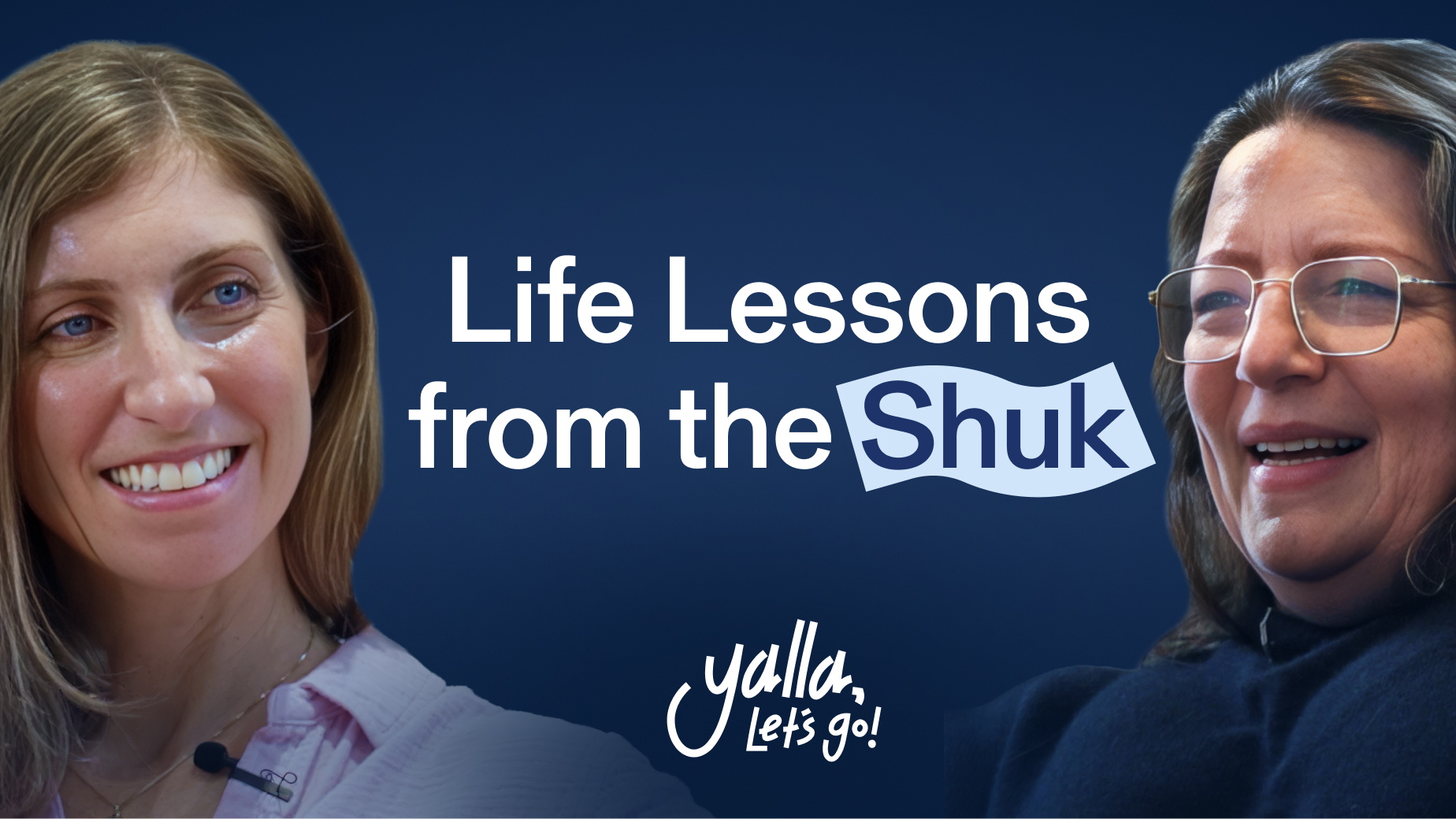
Abbey and Erica record an unusual and very real episode of Yalla, Let’s Go! in the middle of the February 2026 war with Iran.
00:00 – Why we recorded this episode during the Iran war
01:00 – How this war feels different from previous ones
03:00 – The moment you ask: why am I raising my kids here?
04:30 – Erica’s emergency mission to get her son home from Jerusalem
07:50 – The reality of missile attacks and constant sirens
08:30 – Israeli resilience during Purim in bomb shelters
09:30 – The psychological impact of running to shelters
11:00 – “Keep calm and carry on” - working during war
12:40 – Why Israelis take the fastest showers in the world
13:30 – Racing home from the supermarket before the siren
15:00 – What the war sounds like for kids
16:30 – Zoom meetings interrupted by rockets
17:20 – Why we’re still here
20:00 – The moment that defined staying in Israel
Abbey
Welcome back to an unusual but timely episode of Yalla! Let's go. I'm Abbey and Erica's with me from her home. We are on day four or five of this current war between Israel, the United States and Iran. And we just wanted to take a moment and bring you perspective of what it's been like to live through the last few days.
So, as we always do, I want to check in with Erica and just say, pulse check. How are you feeling about living in Israel these days?
Erica
Well, right now I feel super anxious because we just got out, and we all just got out of our shelters, from quite a few sirens, one after the other. It's amazing that we actually were able to do this recording. And who knows, maybe we should do it super fast, because we'll have to go run in again in a second.
I feel super anxious. This is our third war, it feels like, with Iran. And the second one in June was so frightening – that 12 day war.
And I don't know, for some reason this one feels different. After October 7th, I had this feeling, I talked to you about this before, of just like, trying to get the hell out of here. I just wanted to get on a plane and go stay with my aunt in America. And, I don't know, maybe the last two years of war have made me more resilient.
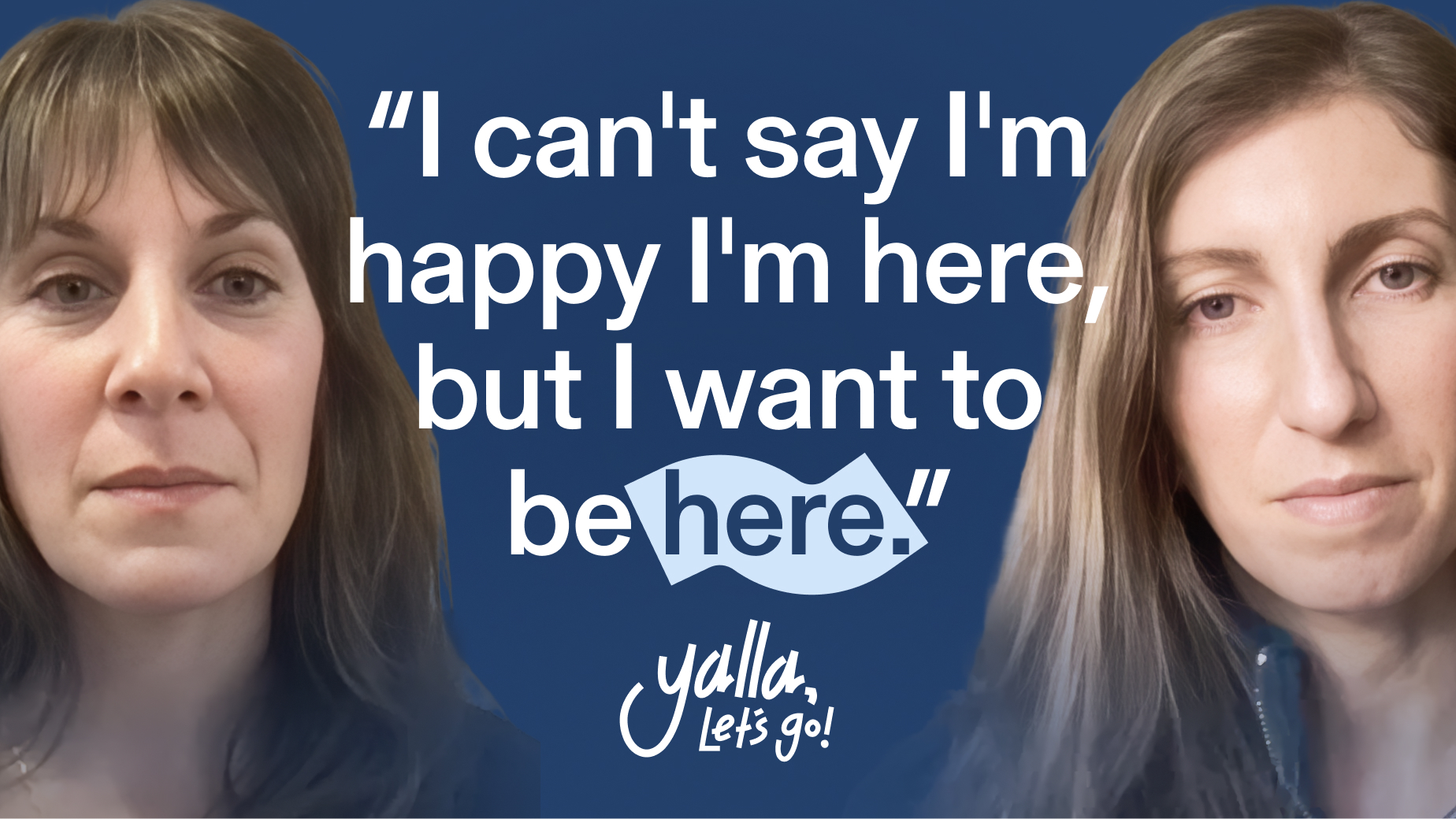
But I just feel different about it now. I'm scared. I'm stressed. It's so difficult, especially with the kids. But I do feel like… I can't say I'm happy I'm here, but I want to be here. I want to be here while this is happening, and I feel like we're all together in this, if that makes any sense.
00:02:03:07 - 00:02:22:23
Abbey
I honestly feel a little bit different. I feel like, in the aftermath of October 7th, I didn't have the urge to flee. As much as everyone I knew outside of Israel was saying to me, like, “Are you coming? Are you moving? Are you leaving?” The expectation was like, we were packing our bags on October 8th and moving back to America.
And I think I felt in those days after the seventh, that Israelis came together in such an amazing way that I really felt part of something bigger, even in our worst moments and our worst days. But as you said, the Iran war in June was awful. And this, I feel a little bit less like there's this, communal, pull together from neighbors and people around because the war is very different.
It's not, thank God we don't have hostages, and currently we don't have displaced families, and we don't have quite as many soldiers that have been called up. And so the kind of communal need feels really different. And we kind of feel like we're a little bit more on our own. And it makes me, two and a half years later, I have a heightened awareness of the impact on my children.
00:03:10:13 - 00:03:35:21
Abbey
And when the sirens started on Saturday morning, i think it was 8:15. And then for that day, I think we spent six, seven, eight hours in a bomb shelter. And you're and you're asking yourself, you're sitting in there with your husband, my husband, with my children saying, what am I doing? What are we doing here? I have a real understanding of the value, the kind of regional and global value of what's happening.
But as a person, you ask yourself, why am I raising my children in Israel? Why am I living my life here? And I think on Saturday I really had that kind of moment of reflection, and a challenge for myself. I don't have a clean answer. I don't have something I can wrap up in a bow. But I think these last few days, I'm struggling with that.
My kids are older and they feel a little angrier right now.
00:04:01:18 - 00:04:22:10
Erica
We've discussed this so many times, you and I, over the last couple of years and gone back and forth. It's hard. It's hard with the kids. It's just hard with them. I mean, Saturday morning for me was my worst nightmare. My kid was on, my oldest was on a trip, a school trip for a week in the Negev [south] that I didn't want him to go on because every day we were like, “Is Iran going to attack us? Are they not going to attack us?”
And they came to Jerusalem for Shabbat. And on Friday my husband went to bring him some food and I said, just bring him home. Just bring him home. Something's gonna happen. I don’t have a good feeling. Just bring him home. And, you know, like so many times, my kids and my husband tell me, like, “We're not in America, mom. Like, let us grow up as Israeli kids. Stop, like taking us out of what everybody else is doing and making us live the way, you know, an American kid would live. We're not in America. We're in Israel. Let us be Israeli kids, and let me be with my class and let me be with my group. Everyone else is staying.”
And I was like, “Okay, fine, stay. Stay with your class. Everything's fine.” And then obviously everything, and I said to him, “Keep your phone with you at all times. I don't care what's happening. Shabbat, not Shabbat. You keep your phone in your pocket at all times.”
And Saturday morning happened, and I obviously, you know, immediately called my son. And he's like in the middle of Jerusalem in some building with like 100 other kids. And I looked at my husband and I was like, okay, go get him. You just have to go get him. Who knows what's going to happen. This is war. Like, you don't know what's going to be in five minutes or in an hour. This could get a hundred times worse. There’s no way of knowing. There's so much uncertainty. And we keep Shabbat. So, you know, for us, it was like, should we go pick him up? And should we drive to Jerusalem on Shabbat, should we not do this? But for us…
00:05:49:22 - 00:05:52:05
Abbey
How far is Jerusalem from your house?
00:05:52:07 - 00:05:56:11
Erica
He was in a further part of Jerusalem. It was about a 30-35 minute drive.
00:05:56:13 - 00:05:57:09
Abbey
Super stressful.
00:05:57:11 - 00:06:17:03
Erica
So stressful. And we just decided, you know, at the end of the day, you're talking about human life. This is like not a question of for us of like breaking Shabbat. And my husband left and then there was a siren and he came back and then he left and there was a siren, and he came back. And then we got a notice that, the Home Front Command said, told the kids in the school, you can't be here anymore. It's not even safe for you guys to be in this building anymore. We need to send all of you home somehow.
00:06:21:12 - 00:06:23:08
Abbey
Oh, that's the most stressful message ever.
00:06:23:08 - 00:06:42:00
Erica
It was so stressful. And they were like, okay, we're going to send bulletproof buses to pick all the kids up at this certain time. Like, my husband and I just looked at each other and he's like, “I'm just going, I'm going.” And we were in the mamad. We were in the safe room. And the minute he left the house, there was not a minute that we could be out of that safe room.
There were constant sirens, constant booms of missiles falling, or of Iron Dome striking the missiles out of the air. The phone with the buzzing. It was the most stressful hour of my life until my husband got home with him. The whole time he's… And my husband's like, “Don't call me, don't call me. I need to drive as fast as I can, just let me focus on the road.”
And so I'm like messaging with my son every few minutes and I'd hear a boom and I'd be like, “Are you okay?” And I wait for him to answer. What was that boom? Was that boom a missile hitting their car? You know, it was just so frightening. When he walked in the door, I just collapsed into tears.
It was. I don't think people understand how real this is, you know?
Abbey
Right.
Erica
You're not here. There were nine people killed in Beit Shemesh this week. This is life and death. This is war. Yeah. This is scary.
00:07:39:15 - 00:08:05:17
Abbey
Families who lost siblings, people who lost their lives. Now, I think right now, more so in the last only four days, four days, five days. We've seen a ton of resilience on social media. We see Israelis, we're also celebrating Purim this week. Right? We're celebrating this really ironic story of, you know, Persia and Jews and how we overcome people that hate us.
And we see…
00:08:06:16 - 00:08:09:22
Erica
The irony of it happening now.
00:08:10:00 - 00:08:38:06
Abbey
You really have to question exactly who pulled those strings. But you see, my social media is full of Israelis in costumes, throwing Purim parties and reading the Megillah, the scroll of the story of Purim, in in bomb shelters and in parking lots. And this is the best of Israel. I really think this is the resilience and the joy of the Jewish people living here.
And on the other hand, what you just described is also a reality that I don't think is really being talked about during this war. I'll say I have fewer people checking in with me. I think that there's more complexity around this somehow. And I'm also not sharing as much. And so, you know, we moved just a few months ago.
I’ve talked about it before on the podcast and for the first time, we have a miklat, which is our own fortified cement bomb shelter in our basement, which is basically as safe as we can be because it's underground, partially underground, and the walls are fortified cement. And up until this, any time that we went to a bomb shelter, we were living in an apartment building.
So we would, everyone have to get up out of their beds, go down the stairs into, a miklat of the building. But, above ground with 45 neighbors, and everyone had on their radios, and everyone's listening to news ,and and you're you know, it was June, so it was so hot and sweaty and just, you know, crammed full of people.
And so this experience feels really, really different because it's just our family members. And it’s also, like, I have to tell you, I don’t know if I can put it into words, but this notion of the five of us walking into a room and shutting a door against terror feels really, really, scary and kind of, anachronistic in the worst way.
Like, how is it possible that Jews are still walking into rooms to hide from terror, or that it just feels really, really, challenging for me. And I don't think the rest of the world understands what it means for the citizens of these countries that are going through this. And I'm just, I don't know, it's the middle of the night sirens. It's the first thing in the morning sirens. It's the three back to back sirens we just had, where this country, we're still on work Zooms today. We're still trying to live our lives. And the kind of cognitive dissonance around that. How are you holding with that? Are you managing to work?
00:10:46:18 - 00:11:07:05
Erica
That's very hard because Israel very much has this concept of like, keep calm and carry on. Right? This is part of our resilience. We pride ourselves on the fact that on October 8th, we were all doing something, we were all helping. We were all out there or doing whatever needed to be done. The next day, we're all back at work, you know, like we pride ourselves on this fact.
But the day to day of that is super hard, you know? When you haven't slept a full night of sleep in days, whether because you're running to your mamad all the time or because you're just so anxious, even if you got a few hours, or you could have gotten a few hours, but you're too anxious to sleep because you're literally living a war.
And then you wake up in the morning and you have kids who don't have any sort of routine. They're not doing Zoom school. It's not like Covid. They need to be kept busy. You do have work responsibilities, but also you're trying to keep yourself sane, but also you want to go outside and exercise. But also maybe there's a siren and you want to take a shower.
What happens if there's a siren while you're showering? But also, but also… the day to day is just, you know, trying to keep calm and carry on. It's like a great slogan. And I love that, you know, we all do that and I am happy to keep busy. But it's hard. It's emotionally exhausting.
00:12:05:07
Abbey
I'll say two things. One, I was in the US for a couple weeks this summer, and one of my best friends came to visit me and, and I said, “I just have to take a really quick shower. And then, you know, let's hang out.” And I showered and she said to me, “What was that?”
She goes, “That was the fastest shower I've ever seen.” And I was like, “Yeah. So Iran had just attacked us. And we shower really fast, right? Like it's like, in, out. You do not waste your time, right? Cause this notion that in my last house, I was going to have to run to a room with almost 45 neighbors, you didn't want to be wet in a towel.
So we definitely shower really quickly in this country. And two, the other day we'd had a siren and it had been quiet for a minute. And so I said to my youngest, because again, you need to get out of your house. But nobody wants to go out by themselves. He has the hardest time with the noises on our phones, which I think kind of live deep in our soul somewhere.
So I said let's just walk to the super. It's like a 2 and a half minute walk. We get there and we get the first warning that there's going to be a siren. And he's like, “We go home now?” And I was like, “Oh, no, wait a second.” Everybody left the store and I was like, “Okay, we are playing Supermarket Sweep. We are going to get all the things we need. We're going to go as fast as possible and then either we buy them and we go to the shelter of the supermarket or we're going to make it home.” And we got through the buying. He goes, “Mom, I know a shortcut.” And I was like, “Great.” My husband called me. I was like, “We're coming, have the gate open.” And like as we're rounding the corner, the siren is blaring outside.
And you need food, so you have to go to the super. But this notion that when you leave your house, you are putting yourself at risk of being outside during a rocket or missile attack. I'll say one more thing.
I talked to a girlfriend last night in the US, and we just had a ballistic missile attack from Iran and a rocket attack from Lebanon, from Hezbollah. And I said to her, “The Lebanon attack was really hard for me because there was no warning. And so all of a sudden the sirens go, and you just had to, like, jump up and run to your shelter.”
And she was like… and I said, “But the other one, you know, the warning…” And she was like, “Did you hear yourself? Just like, that's not normal.” And that just connects to what I was saying before is like, we have normalized these things, which on the one hand have built our resilience, but on the other hand, why?
00:14:31:01 - 00:14:54:18
Erica
No, none of it is normal. And I will say I asked my kids the other day, “what's the hardest part of this for you guys?” And I thought they’d say school, not seeing their friends, the stress, whatever. And my youngest said exactly what you just said: the sounds of the war, right? The crazy sound we have on our phones, the sirens, the booms. Just the sounds, he said, that's the scariest part for him. And I think, like apropos what you said about everything that you're seeing on social media, you're seeing Israeli resilience on social media. You know, yesterday was Purim and it was the day my kids were so looking forward to. Costumes, they always had a big family costume. They love giving out mishloach manot, which are like the food baskets that we give to friends.
They love having the big festive meal together that we do with friends, and it meant so much to them. I think putting on a costume yesterday was so difficult for me to do when I just wanted to be in sweatpants and a sweatshirt and putting on that Hermione costume for my ten year old, who just wanted us all to dress up as Harry Potter with him, that's what you see, because that's what we're doing to stay, have any semblance of sanity, of like, we are normal people.
We're trying, we're trying to be normal people living normal lives because we need to keep sane. But it felt insane dressing up while there's a war going on, and there's literally missiles being shot at us numerous times a day.
00:16:03:22 - 00:16:23:06
Abbey
Yep. I had a Zoom meeting yesterday. We sat down. We're having a nice conversation. We're getting started, and then we both look at each other and we're like, “Oh, rocket!” And we're like, “Should we wait?” And then it was one of those ones where the siren came kind of more quickly. And so we go to the bomb shelter and I come out of the bomb shelter, and he was like, “Okay, let's just jump back on?” And I was like, “Sure. Yalla [let’s go].”
And it's like, there is this crazy continuity and resilience. And you're like, I wonder sometimes what we're building it for, what is going to be harder than this in our lives and in our children's lives, that they're going to need this reserve of resilience?
00:16:43:01 - 00:17:03:00
Erica
Oh, God. That's very scary to think about, but I have a different question for you. You know, we started this podcast, right? Because we wanted to feel positive about being here. We wanted to want to be here again.
Abbey
How’s that going?
Erica
Yeah, exactly. It was going okay until a few days ago. What for you is the silver lining? What for you is the reason that, I know neither of us can get on planes, even if we want to right now, because, the sky ss close. But why are you still here? Like, what are you thinking in your mind is like, I'm still here, and here's why?
00:17:17:17 - 00:17:40:21
Abbey
We've been here, this month, it's going to be 11 years and this feels like our home, right? It feels more home to me in some ways than where I grew up in Virginia. And it certainly feels more home than where I moved from in Boston. You know, our family is here, our friends are here. I have meaningful work here.
I love living here. I love walking outside. I love the smells. I love that the Jewish calendar dictates life and that, you know with each holiday comes a different flower and a different smell in the air. And I love that cadence. I love living here more than I've loved living anywhere else. I just, I don't know for myself or my children what the kind of long term trauma is going to be of the last two and a half years.
And I very much I, and I'm and I'm married to someone who says like, “This is our one shot at life and we should always be thoughtful about living it the best way.” And I hold both of those things together, and there's dissonance there, really. It's really something that we're constantly evaluating, not of moving necessarily, but are we living the best way possible?
But right now, I will say the having the miklat in our basement is a massive upgrade. And the fact that we have a backyard. So even if we can't ride bikes or go out in the neighborhood, at least we can access some sunshine. And I feel really, really grateful because my brother-in-law is living in a building in Tel Aviv that doesn't have any sort of shelter.
So every time a siren rings, he's running down three flights of stairs, across the street to find the closest shelter to him. And that's the truth for a lot of people. Not everyone is as lucky as the two of us to have a shelter in their home. It's really, it's something else. And so I feel really grateful for those things.
I feel like I can hold both of those things at the same time. What are you feeling like right now? What's your silver lining?
00:19:24:04 - 00:19:45:02
Erica
You know, for me, I just keep coming back to, and this always makes me get teary eyed. But on October 8th, you know, I remember I was standing with my husband in the doorway of my house, and we were, I had managed to get us on flights and we were arguing about whether we should go or not.
And he had already been called to reserve duty. And we were like, you know, doing the thing you're not supposed to do as parents like yelling. And the kids are around and having this like, existential life discussion of should we leave or should we stay?
00:19:57:07 - 00:19:58:18
Abbey
So many.
00:19:58:23 - 00:20:31:07
Erica
My middle son, he looks at us and he goes, “San I, can I say something?” And we're like, “Yeah, what?!” You know, and he's like, “I think that maybe leaving Israel and going to America might be the smart thing to do, but it's not the right thing to do.” And to me, it just encapsulates everything, because we are raising kids who just are so resilient and so emotionally intelligent and have so much meaning and understanding in their lives.
From everything that they've been through. They're more independent, they're more resourceful. They understand what's important, what life is really about. There's no nonsense superficiality. You know, like when I was 16 years old, all I cared about was my hair and boys, you know what I mean? And I think our kids, I have to tell myself this, you know, I have to tell myself this.
Our kids are growing up, and I think, I hope that they're going to be stronger because of this. They're going to do better for the uncertain future that awaits us. They're going to be better equipped to handle that I was.
00:21:06:05 - 00:21:29:13
Abbey
For sure. I think if we zoom out, the future is uncertain everywhere. Right? I think that's what we keep coming back to when we have this existential reflection. It's uncertain everywhere. And if it's going to be uncertain everywhere, I think we'd rather be somewhere where we feel part of something bigger and that there's a sense of meaning and that we are giving something to our children that we weren't able to get ourselves.
00:21:29:18 - 00:21:47:01
Erica
Exactly. And at the end of the day, it's, you know, we had a guest on our podcast, an episode we that we haven't released yet. And I, I really it really what he said really resonates me. This is our place, this is our home. And we've thrown our lot in with the fate of our people and the fate of our country.
00:21:47:06 - 00:21:51:18
Erica
And you want to know what there's something comforting in that to me.
00:21:51:20 - 00:22:04:23
Abbey
Yeah. Okay. Well, you reminded me why we're here, so I'm always happy to see you and hear the way you're thinking about it. And I'm really grateful for the time. And I am deeply amazed that we made this through without an alert or a siren watch.
00:22:05:02 - 00:22:06:08
Erica
And you believe it?
00:22:06:10 - 00:22:12:10
Abbey
I thought it took us guys. It took us forever to get here because of alert after alert after siren after siren. So this is a really big deal.
00:22:12:14 - 00:22:28:05
Erica
Wow. We had 20 minutes of nothing. It's a miracle. Amazing. But when I'm just grateful to be able to help, I'm listening to have you in my life and to be able to have people in my life to have this conversation with who just get it. Yeah. And I hope that this is meaningful for anyone that's listening.
00:22:28:06 - 00:22:46:00
Abbey
Absolutely. And and we're here, if there's any questions, we'll we'll keep asking all the people we can think of. And absolutely, we are grateful to have the kind of best group around us. So just stay safe and, and we'll talk again soon. Yeah. No. That's cool.
Follow Abbey on Instagram: https://www.instagram.com/vivaayam/
Follow Erica on Instagram: https://www.instagram.com/ericamarom/
Subscribe to Yalla, Let’s Go here: https://www.aleph.vc/yalla-lets-go
Learn more about Aleph: aleph.vc
Sign up for Aleph’s monthly email newsletter: https://newsletter.aleph.vc/
Subscribe to our YouTube channel: https://www.youtube.com/@yallaletsgopodcast
Follow us on Instagram: https://www.instagram.com/yallaletsgopodcast/
Follow us on TikTok: https://www.tiktok.com/@yallaletsgopodcast
Follow Aleph on Twitter: https://x.com/aleph
Follow Aleph on LinkedIn: https://www.linkedin.com/company/aleph-vc/
Follow Aleph on Instagram: https://www.instagram.com/aleph.vc/
Hosts: Erica Marom, Abbey Onn
Executive Producer: Sarah Bard
Producer: Dalit Merenfeld
Video and Editing: Nadav Elovic
Music and Creative Direction: Uri Ar
Content and Editorial: Jackie Goldberg
Design: Nimrod Sapir
Follow Abbey on Instagram: https://www.instagram.com/vivaayam/
Follow Erica on Instagram: https://www.instagram.com/ericamarom/
Subscribe to Yalla, Let’s Go here: https://www.aleph.vc/yalla-lets-go
Learn more about Aleph: aleph.vc
Sign up for Aleph’s monthly email newsletter: https://newsletter.aleph.vc/
Subscribe to our YouTube channel: https://www.youtube.com/@yallaletsgopodcast
Follow us on Instagram: https://www.instagram.com/yallaletsgopodcast/
Follow us on TikTok: https://www.tiktok.com/@yallaletsgopodcast
Follow Aleph on Twitter: https://x.com/aleph
Follow Aleph on LinkedIn: https://www.linkedin.com/company/aleph-vc/
Follow Aleph on Instagram: https://www.instagram.com/aleph.vc/
Hosts: Erica Marom, Abbey Onn
Executive Producer: Sarah Bard
Producer: Dalit Merenfeld
Video and Editing: Nadav Elovic
Music and Creative Direction: Uri Ar
Content and Editorial: Jackie Goldberg
Design: Nimrod Sapir
Follow Abbey on Instagram: https://www.instagram.com/vivaayam/
Follow Erica on Instagram: https://www.instagram.com/ericamarom/
Subscribe to Yalla, Let’s Go here: https://www.aleph.vc/yalla-lets-go
Learn more about Aleph: aleph.vc
Sign up for Aleph’s monthly email newsletter: https://newsletter.aleph.vc/
Subscribe to our YouTube channel: https://www.youtube.com/@yallaletsgopodcast
Follow us on Instagram: https://www.instagram.com/yallaletsgopodcast/
Follow us on TikTok: https://www.tiktok.com/@yallaletsgopodcast
Follow Aleph on Twitter: https://x.com/aleph
Follow Aleph on LinkedIn: https://www.linkedin.com/company/aleph-vc/
Follow Aleph on Instagram: https://www.instagram.com/aleph.vc/
Hosts: Erica Marom, Abbey Onn
Executive Producer: Sarah Bard
Producer: Dalit Merenfeld
Video and Editing: Nadav Elovic
Music and Creative Direction: Uri Ar
Content and Editorial: Jackie Goldberg
Design: Nimrod Sapir
.jpg)
.jpg)
.jpg)
.jpg)

.jpg)
.jpg)
.jpg)
.jpg)

.jpg)
























.jpg)
.jpg)
.jpg)
.jpg)
.jpg)
.jpg)
.jpg)
.jpg)
.jpg)
.jpg)
.jpg)
.jpg)