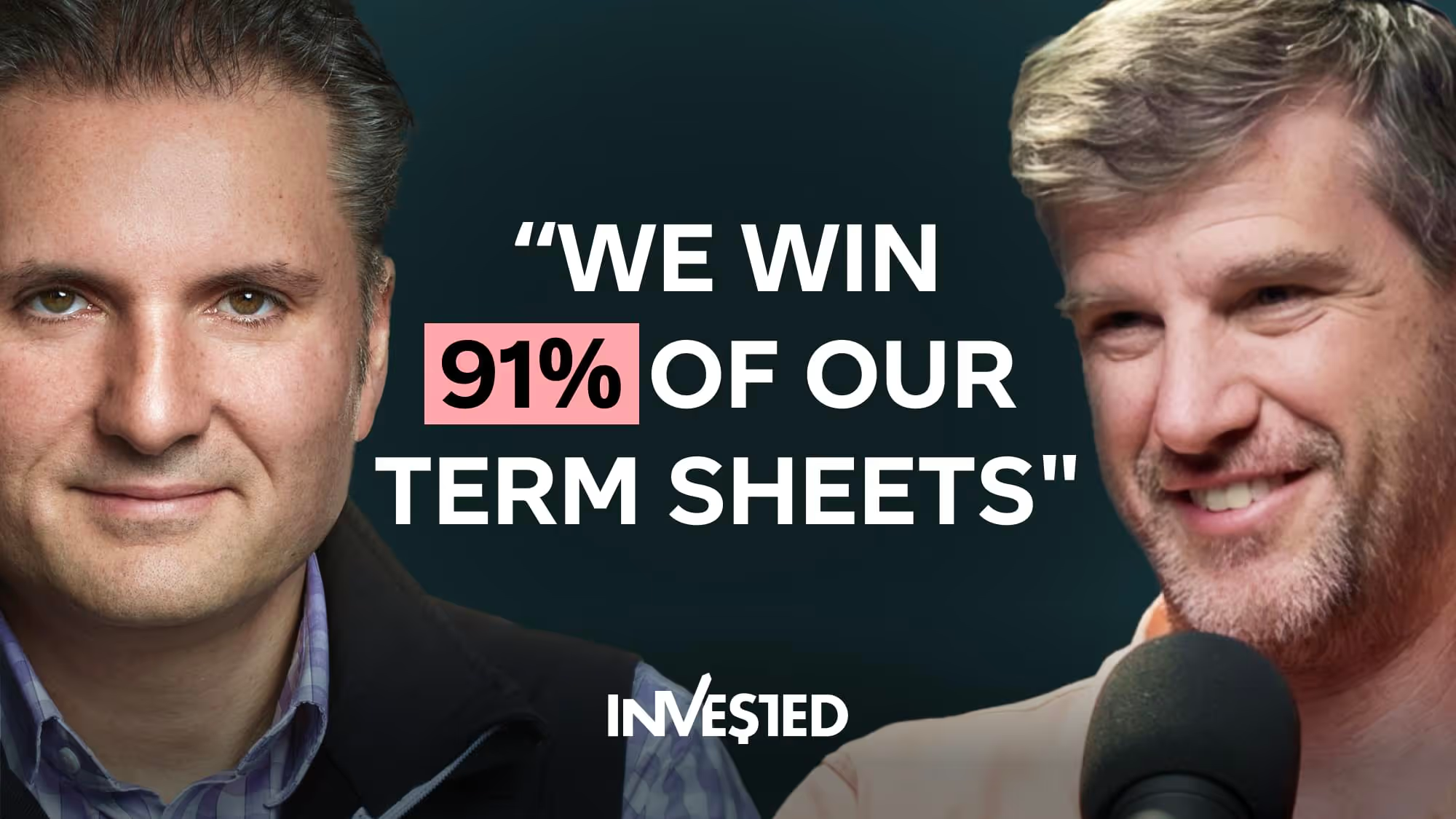
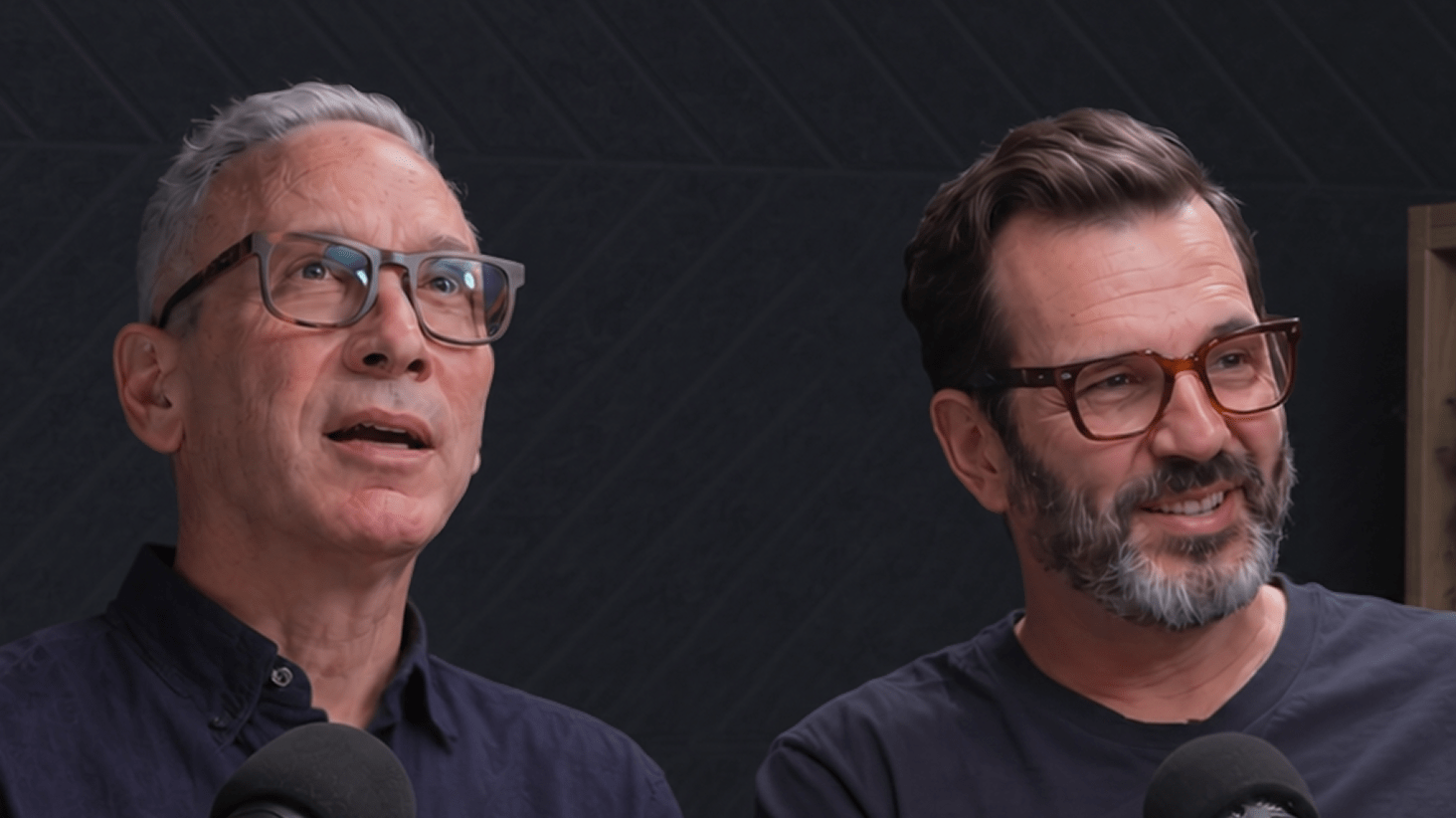
Shai Wininger and Daniel Schreiber

How can values create value? On this podcast, Michael Eisenberg talks with business leaders and venture capitalists to explore the values and purpose behind their businesses, the impact technology can have on humanity, and the humanity behind digitization.


Shai Wininger and Daniel Schreiber
Shai Wininger and Daniel Schreiber
Shai Wininger and Daniel Schreiber
Shai Wininger and Daniel Schreiber
Shai Wininger and Daniel Schreiber
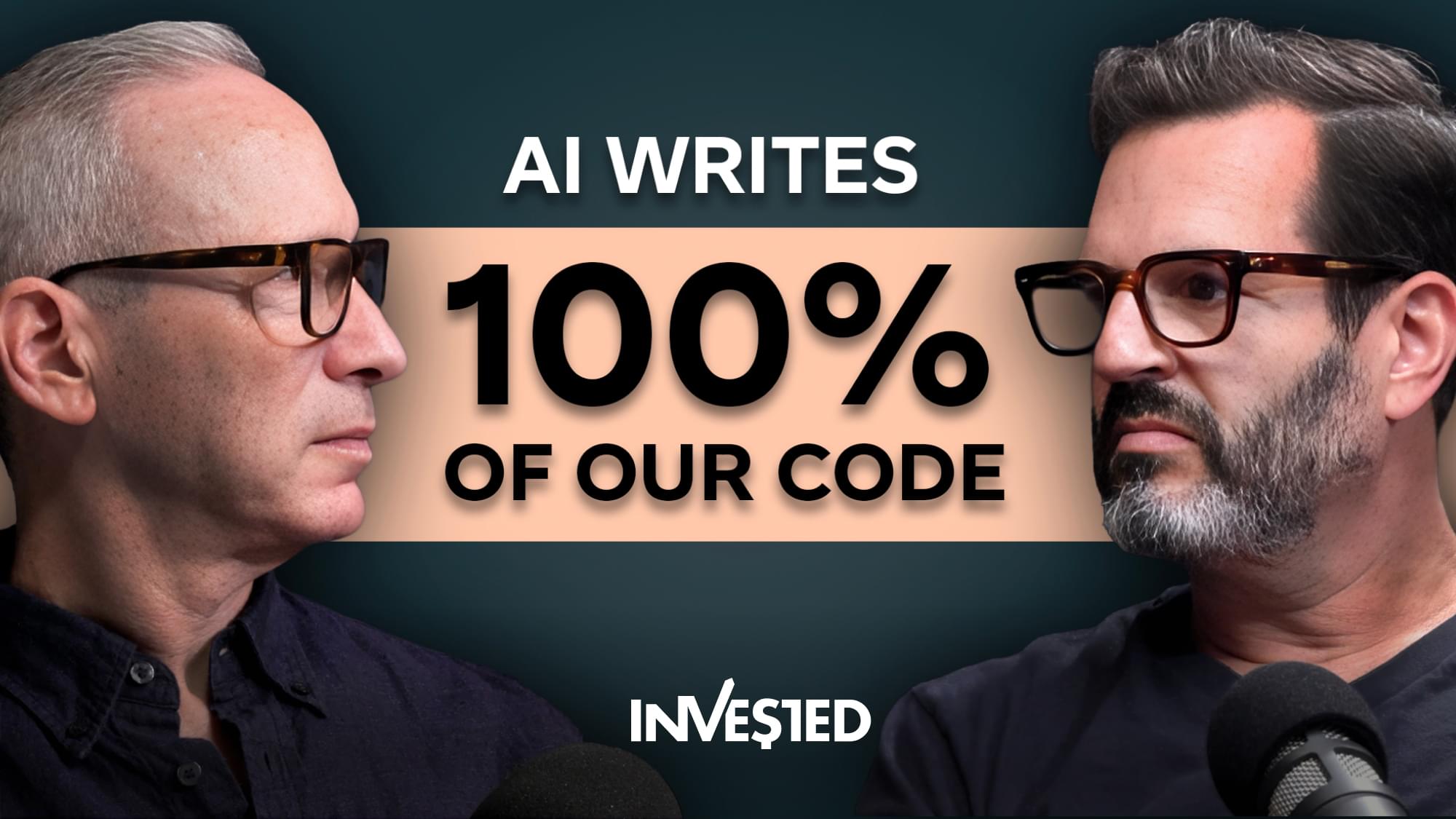
Lemonade co-founders Daniel Schreiber (CEO) and Shai Wininger (President) on why State Farm can't retrofit AI and why AI writes 99% of Lemonade's code.
On this episode of Invested, Michael Eisenberg talks with Daniel and Shai about what separates an AI-native company from a legacy company that uses AI as a tool. Daniel explains why Lemonade's technology lead keeps widening even though it spent about half a billion dollars on engineering over 10 years, while incumbents like Travelers and Allianz spent $1 to $4 billion each, every year. Shai explains why even he couldn't make State Farm AI-native, comparing it to putting Tesla's FSD computer in an old Dodge, and describes Lemonade's approach of building machines that build machines. They also cover the move from AI-first to AI-only, machine review of regulatory filings, telematics and fairness in insurance pricing, and Lemonade's 50% discount for Tesla FSD miles.
Daniel Schreiber is Co-Founder, Chief Executive Officer, and Chairman of the board of Lemonade (NYSE:LMND), the leading AI-powered insurance company. Daniel is also Chairman of the MOSAIC AI Policy Institute, a nonprofit with the mission of ensuring artificial intelligence benefits all parts of society. Daniel’s previous roles include President of Powermat, the pioneer of wireless charging, SVP Global Marketing and General Manager at SanDisk, the Fortune 500 global leader in flash memory chips, and founder and CEO of Alchemedia, a content security software company. Daniel began his career as a corporate-commercial attorney, having obtained a First Class Honors Law degree from King’s College London.
Shai Wininger is a veteran tech entrepreneur and inventor, who most recently co-founded Lemonade, a licensed insurance company powered by artificial intelligence and behavioral economics. He previously founded Fiverr.com, the world’s largest marketplace for creative and professional services.
00:00 - Intro
00:48 - What Makes a Company AI-Native
02:04 - Maya the Bot and AI Jim Before LLMs
06:29 - Why Lemonade Is Retiring Maya and Jim
07:48 - GEICO's 600 Systems vs. One Data Lake
08:28 - $500M vs. $2 Trillion on Insurance Engineering
11:09 - Closed-Loop Predictions, Garbage In, Garbage Out
14:58 - Giving the AI Arms and Legs
17:29 - Could Shai Make State Farm AI-Native?
18:56 - Tesla's FSD Computer in an Old Dodge
22:24 - From Fiverr to Lemonade's Engineering Culture
24:37 - Machines That Build Machines
27:04 - What Is an Autonomous Organization?
27:54 - More Revenue With Fewer Employees
28:59 - Cost of Compute vs. Cost of Humans
32:59 - Cooper, Lemonade's 2017 Engineering Bot
35:27 - The Horseless Carriage Era of AI
37:36 - 99% of Lemonade's Code Is Written by AI
39:00 - From AI-First to AI-Only
42:47 - Competing With Consumer AI Agents
46:21 - Recursive Self-Improvement and the Widening Gap
48:50 - Loss Ratios and Better Risk Selection
50:32 - Regulators, Credit Scores and Fair Pricing
54:57 - Machine Review of Regulatory Filings
57:22 - Tesla FSD and the 50% Discount
59:58 - Self-Driving Cars and a Shrinking Insurance Market
1:01:05 - The AI-Native Companies They Respect Most
[Daniel Schreiber — 0:00]
All our code, at first approximation, 100% of our code is written by AI.
[Michael Eisenberg — 0:03]
I appointed you, tomorrow, the CTO of State Farm. Can you make it an AI-native company? Would it work?
[Shai Wininger — 0:10]
Machines that will then end up building other machines that will then end up building the products that you sell.
[Daniel Schreiber — 0:16]
Entrepreneurs today best not learn from companies even founded 10 years ago, let alone older ones. We're being outspent by several orders of magnitude. And yet our technology eclipses what's available to the incumbency. And it comes back to your underlying question.
[Michael Eisenberg — 0:31]
What are the other interactions that an AI-native company can have with other sensors? In the case of Tesla, or AI?
[Shai Wininger — 0:38]
Use your imagination. But we honestly can't talk about it.
[Michael Eisenberg — 0:48]
Welcome back to another episode of Invested. We're going to do something a little different today. I have with me the co-founders of Lemonade, Daniel Schreiber and Shai Wininger. And our goal is to talk about Lemonade, not its financial results necessarily, not how it got started, which I did with Daniel in a previous episode, which you can go back and listen to, but to talk about what it's like to build an AI-native company. The era we're in right now, where everybody's talking about AI, but few people are talking about AI as infrastructure, a new way of building a company. And Lemonade, which was started in 2015, started talking about bots and not brokers before bots were popular, talked about artificial intelligence, now, of course, called superintelligence, before anyone knew what that meant. And so what we're going to explore over the next hour is how an AI-native company is just simply different than both a legacy company or a company that simply employs AI as tooling. Daniel, Shai, welcome. I want to start at the beginning. What gave you the idea in 2015 that AI was going to be a thing and that you could actually build a company natively on AI, quote unquote, bots, not brokers?
[Daniel Schreiber — 2:04]
AI didn't entirely start with the ChatGPT moment. And even in 2015, there were aspects of AI that were very powerful. Machine learning was changing a lot of things. You saw at Google, at the time, was using image recognition, and certainly starting an insurance company, which is all about number crunching. It was clear to us, even with the AI at the time, that an entirely different approach to data collection and curation would allow us to do a better job of what is at the very core of insurance, which is ingesting data and making predictions on its basis. And we're reaping the fruits of that today. But at least on one part of what makes insurance insurance, AI at the time was already very, very powerful, and it would have been unforgivable to start a company without basing ourselves on the data science of the day. But it did go beyond that. We started with Maya the bot. We didn't talk just about machine learning, but about artificial intelligence. Shai had a vision for an entirely different user interface. Today, chatting to a bot seems intuitive and obvious, but it was quite a novelty at the time, and you couldn't use large language models, so you had to use alternate technologies to simulate or arrive at a similar kind of conversational experience. So Shai's product vision was definitely ahead of the day, not only in terms of the data structures, but in terms of the human interface. So Maya was selling you insurance from day one. Jim was paying claims in as little as three seconds before LLMs existed, in 2016 already. So definitely the building blocks were there from the very beginning.
[Michael Eisenberg — 3:40]
When you imagine the chat interface in 2015, '16, like, why? Right now it's obvious, to Daniel's point. ChatGPT has popularized it. But like, why?
[Shai Wininger — 3:54]
I think there's this idea of the suspense of disbelief, where you can stretch a certain idea to a distance before it breaks. And so when we came into this market, this is a category that's very traditional by the way that it operates. People buy insurance from real people, and they fill forms, and they do things that have been done in a certain way for many, many years. And when you go into a category like this, being too far ahead could be problematic from a conversion perspective, from being able to convince a customer that you can be trusted. And so there has to be kind of a bridge that connects between the old and the new, at least until you get to a level of market education that allows you to tell a new story, which is, I think, where we are today, and where the entire kind of market and technology caught up with conversational interface and stuff like that. When we started, we wanted to create something that looks kind of like what you'd experience if you speak to your insurance agent, a human one, but be digital and have all of the benefits of interacting with something that's immediate and instant. So the conversational AI is just like that bridge. It's kind of a way to communicate with a machine without knowing that you're communicating with a machine. In the early days, we even branded the bot. We used to call it AI Maya and AI Jim for the claims, and we had Maya, who, by the way, is still with Lemonade.
[Michael Eisenberg — 5:40]
The real person behind the—
[Shai Wininger — 5:41]
The real person behind the photo and the name. And we used her picture to kind of make you feel that you're speaking to a real human behind the scenes. And we found out it worked really well. People believed it, and they actually responded to emails and chat interactions in a way that they would respond to a real human.
[Michael Eisenberg — 6:06]
It's interesting you say that. One of the things I paid attention to over the last three months is that the new consumer bots are called Grok, Instinct, and Muse, whereas the Lemonade conversational partners are Maya and Jim. That's 10 years. People, I guess, get used to talking to a machine now.
[Shai Wininger — 6:17]
Yeah.
[Michael Eisenberg — 6:29]
What are the benefits today to speaking to Jim and Maya versus Grok and Muse?
[Shai Wininger — 6:34]
We actually started to sunset the names because we feel like it kind of goes back to a period where you used to have to call bots in a human name so that people would agree to interact with them. I think today is the opposite. When you open even ChatGPT, you don't have a name, you don't have the thumbnail next to the bot that you're communicating with. So it's basically, the rules of the game are out there. Everybody knows. So it's okay to speak to an AI now, and you don't have to have this connective tissue to allow you to trust it. I think those names now, and I tweeted about this a few days ago, everything's moving in such a fast pace that names are the new dot-com domains. It's like everybody's grabbing every name possible in the English language. And so you just need to move away from things that are dictionary words or things that people recognize. And I think those companies are trying to do that with all kinds of quirky names, just to get that unique brand name to stick without overlapping any other product.
[Michael Eisenberg — 7:48]
I want to go back to what you said, Daniel, before about data. The CEO of GEICO was famous for saying, I think at some point, that they had, I don't remember, 60 or 600 data systems that were hard to connect using AI. Lemonade was architected on this single data lake, picking up every signal. That started 10 years ago. Fast forward to today and explain what is the foundational difference between a Lemonade built on this AI-enabling architecture versus what every other non-native AI company needs to do to compete with this.
[Daniel Schreiber — 8:28]
We spoke about the machine learning at the time, we spoke about the chatbot, and organizationally, we were very attuned to the need to automate things from day one. I have a blog post from 2017, the title of which is "Don't hire more people, build smarter AIs." In the last 10 years since we launched the company, we spent something of the order of $500 million on engineering. If you look at our financial report, sum it all up, it'll be about half a billion dollars. During those same 10 years, you look at the incumbency, from Travelers all the way to Allianz in Europe, and you'll see that they spent one to four billion dollars each, each year.
[Michael Eisenberg — 9:08]
On engineering?
[Daniel Schreiber — 9:09]
Just on R&D and engineering technology. So we spent something like half a billion dollars over 10 years. They spent something between 10 and 40 billion dollars over 10 years.
[Michael Eisenberg — 9:20]
Each.
[Daniel Schreiber — 9:20]
Each. On aggregate, it's about two trillion dollars that the industry has spent on engineering. Now, I raise that because it's tempting to think, oh, everybody's talking about AI now, and just as soon as State Farm wakes up and starts figuring out that they can do cool stuff with AI, they'll throw money at it and they'll catch up. But actually, the difference between what Lemonade has today and what the incumbency has today is greater than it's ever been. Two years ago, we were less distinguished. And four and six and eight and ten years ago, there was no distinction at all. We were just starting out. So what we're seeing is that the gap is gaping rather than closing, which means that this is not a problem that you can solve just by throwing money at the problem. If throwing money at the problem was the solution, we would have lost our edge. We'd never have started, we could never have done it, and we'd have lost our edge rather than seeing our edge increase dramatically. So we're being outspent by several orders of magnitude, and yet our technology eclipses what's available to the incumbency. And it comes back to your underlying question. If you are using technology off the shelf, you're paying vendors for shrink-wrap systems, so to speak, or consultants to come and deploy stuff, you can do okay. You are never going to distinguish yourself with technology. If it's not in your DNA, if you weren't founded as a tech company, if you're not led by people like Shai and other engineering cultural icons that we have, then you will be good enough. You will be fine. And if you have 600 systems that don't really talk to one another, then you won't even be fine. You will have tons of data that is entirely inaccessible. Not only do you have hundreds of systems that don't talk to one another, but you have very poorly tagged data. Something like 50% of claims among US insurance incumbents are tagged as "other."
[Michael Eisenberg — 11:08]
What does that mean?
[Daniel Schreiber — 11:09]
It means that they had a dropdown menu. The person filing the claim just clicks "other" every time rather than making a designation. They're labeling their data very, very poorly. Garbage in, garbage out. If you want to create a company like Lemonade, it starts off with, you have to be able to make predictions, and then you have to be able to close the loop on those predictions. Lemonade is architected in a way that is akin to an AI. Every time a customer, prospect, hits our website or our app, we instantaneously, in real time, are making a series of predictions about him or her. Will they convert? Will they claim? Will they churn? Will they cross-sell? We're making a series of predictions from which we extrapolate a lifetime value, a projected lifetime value, and then we'll decide how hard we want to fight to get the next customer from that campaign or that territory or that product, because we've got an internal bidding system for our marketing spend. Well, we're making those predictions. We have made to date real-time, real-world predictions over a billion times. We're making millions of these predictions each week. So it starts off with architecting yourself in that way so that you're constantly making predictions. By making predictions, which I think none of the incumbents do, at least I'm not aware of it—
[Michael Eisenberg — 12:19]
They make no predictions?
[Daniel Schreiber — 12:20]
I'm not aware of it. I don't want to say, I'm not aware of it. But even if they do, think back, and this is my first point, think back to that Ajit statement. You can't close the loop. Just throwing predictions out into the ether is useless. If you are making predictions and you don't have an architecture to your business, so a single system not only makes predictions, but then observes the real world to see, did they churn? Did they claim? What was the size of the claim? And then a continuous cycle of improvement, which is how AIs get smarter. They're continuously compounding small improvements. You do that enough times, and you end up with a dramatically different machine. So the first element, you must build your company in such a way that it makes predictions, makes observations, and then learns from those in order to improve. So if you haven't built a closed loop, forget about it.
[Michael Eisenberg — 13:06]
From the beginning?
[Daniel Schreiber — 13:08]
Yeah, it's very hard to retrofit these things. Very hard. Which brings me to the second point: garbage in, garbage out. Even if you have a closed loop, if you've got humans ticking boxes of "other," and you've got systems that can't communicate effectively because they were built up higgledy-piggledy over the decades through acquisition and different vendors doing different things, then you also can't close the loop. You've got garbage in, garbage out. Even if you can do all of those things, if you haven't built an autonomous organization, if you have humans in the loop, then you're not moving at the pace that you need to move. You're not making predictions, you're not closing the loop on them. When you close the loop, you need high-quality data. Otherwise, you're feeding the machine garbage in, garbage out. And if you haven't automated that process, imagine an LLM, which takes several months of training. It takes several months because there's no humans in the loop. It's doing trillions of permutations. You stick one human in the loop, and those months turn into millions of years. It cannot be done. So you need all of these aspects. And once you've done all of that, you've got a closed-loop prediction system, you've got fine-tuned and tagged data, and you've got an automated system so that this continuously happens. Then you have a smart intelligence, an informed, predictive intelligence, but it's still a brain in a vat. It is just a very smart thing sitting on a shelf. If you want it to actually make decisions, and particularly take actions, then it needs arms and legs. It needs to be able to interact with the system. It can't just sit there like Joshua in, what's it called, you know that movie, the War Games? Do you remember that computer?
[Michael Eisenberg — 14:45]
I do remember that computer, but I don't remember who Joshua is, to be honest.
[Daniel Schreiber — 14:47]
That's what they called him.
[Michael Eisenberg — 14:48]
Oh, yeah, yeah.
[Daniel Schreiber — 14:49]
If memory serves, he was called WOPR.
[Shai Wininger — 14:51]
Big green box.
[Daniel Schreiber — 14:51]
Yeah. You can't just have a brain—
[Michael Eisenberg — 14:54]
For the audience, if you haven't watched War Games, it's a classic movie from when I was a kid.
[Michael Eisenberg — 14:57]
But I don't remember it.
[Daniel Schreiber — 14:58]
Yeah, my point being, and I'm sorry, I'll wrap up with this, a brain standing on its own is useless. You have to have built all of your systems so that it can log in, it can see accounts, it can act on them, it can make changes to payments, it can determine claims and then pay the claims, it can ask the customer. So you build the intelligence, you build, you give it arms and legs. Not one of those aspects, to the best of my knowledge, exists, and I may be doing a bit of an injustice to somebody, but to the best of my knowledge, none of them, let alone all of them, exist elsewhere.
[Michael Eisenberg — 15:31]
So I want to try to put a bow on this in a tight way. AI-native companies must have complete data from all parts of the business, right? Collect every piece of data. That includes the marketing front end, all the way back to claims, to, in the case of insurance, to weather, to whatever it is. Two, it must be architected from the start to take those inputs and learn from them, posit a thesis, predict. And by the way, LLMs are just predictive technology as they are. And so this is a prediction machine, not just for insurance, but in general, AI is a prediction machine. And number three, you need to be able to trust the system and execute on it in order for this to actually not just work, but keep getting better. And the claim is, no pun intended, the claim is that if you weren't architected this way from the start—this is not a technology claim. This is an AI claim. You started by saying Shai's a technologist. The company was started by technologists, not by insurance people. The claim is much deeper than that. The claim is it's not a technology company. It's an AI-native company that's built to be an ongoing prediction machine, much the same way that LLMs are prediction machines, in a way that has so many parameters to it that also the time on the road, 10 years on the road, makes it tough to catch up with, because you've been computing this, millions of computations a day, for all these years, and therefore it's getting much, much better, much, much faster than anybody else. Is that a reasonable summary?
[Michael Eisenberg — 17:13]
If you're interested in finding out ahead of time what's going on in Israeli tech, what the latest trends are, who's breaking not only news, but breaking the trend lines, then you want to subscribe to Aleph's newsletter and you can sign up right in the show notes in the description of the show. Please subscribe to the newsletter.
[Michael Eisenberg — 17:29]
Okay, so I want to ask you a question. I appointed you, tomorrow, the CTO of State Farm. Can you make it an AI-native company? Would it work?
[Shai Wininger — 17:36]
No.
[Michael Eisenberg — 17:37]
No? But it's the same guy.
[Shai Wininger — 17:39]
Impossible.
[Michael Eisenberg — 17:40]
Why?
[Shai Wininger — 17:41]
You need to do two things that I don't think can be done, can be retrofitted. One is change the company's culture completely, to move it from a conservative, defensive, kind of keep-the-business-going mentality to something that not only embraces change, but actually looks for it. That mindset is something that you gotta have in the team, because think about what we're doing here with AI. We're basically changing what we do every day. We need to be interested in something like that. We need to be interested in the outcome if we're successful, right? So I think culture is a big one, and trying to constantly challenge the way that things are done and have been done for a million years, looking for ways to hack everything. That's the mindset that, without it, you can have all the AI in the world, but nobody is going to use it for anything substantial. They're just going to keep it kind of hidden somewhere, because the outcome of it, if it's successful, is not going to be something that the team wants.
[Michael Eisenberg — 18:53]
Okay, so one is culture. What's the second one?
[Shai Wininger — 18:56]
The second one is just the chassis. It's the way that things are built. So think about taking Tesla's FSD computer and putting it on an old Dodge car. It can't run.
[Michael Eisenberg — 19:13]
Why not?
[Shai Wininger — 19:14]
Because it doesn't have the sensors, it doesn't have the complete system that's interconnected. It can't have something that instantly changes the engine's speed, or blocks the car from doing something, or changes the course, or moves the wheel. All those machines have to work together in order for something like the computer to make sense, to work.
[Michael Eisenberg — 19:37]
So this is a really important point.
[Shai Wininger — 19:39]
It's just something that's sitting on the shelf, like Daniel said.
[Michael Eisenberg — 19:41]
So you're making an additional point here that I think is an important nuance. I just want to make sure I understand it. A vertically integrated system, in your view, will defeat a cobbled-together system. So for argument's sake, if I changed the culture at State Farm and I brought Anthropic or OpenAI in, I still won't achieve the AI benefits that Lemonade would have, because it's not a fully integrated system into every aspect of the company.
[Shai Wininger — 20:19]
That's correct. The amount of—
[Michael Eisenberg — 20:21]
That's a strong statement.
[Shai Wininger — 20:23]
The amount of different systems that are sometimes connected, sometimes not connected, in multiple different ways. By the way, probably most of these systems were built and designed for human use. Not for AI, not for agents, not even for background users. You have to have a screen, you have to move the mouse, you have to click something and change things. Some of these systems require you to print out things and then sign them, or do things and then scan. So these are not systems that were built to be run autonomously. When you build a system from scratch, and you build it in a way that, by design, the first purpose of that system is to run autonomously, you build it completely different than you would any other system.
[Michael Eisenberg — 21:10]
So part of your claim, and I want to really put a fine point on this, because I hadn't thought about it at all, is there is a series of companies now, Tesla as an example, Lemonade as another example, I'm sure there are others, they're not coming to my head right now, who have built closed systems to solve a real business or physics problem, as the case may be, that only their closed-system architecture can make this happen properly. And it will be very difficult for more open systems or cobbled-together systems, even if they are AI at their core, to compete with them.
[Shai Wininger — 21:51]
That's correct. SpaceX is another one.
[Michael Eisenberg — 21:53]
SpaceX is another one.
[Shai Wininger — 21:54]
Think about the—
[Michael Eisenberg — 21:54]
The Elon Musk closed approach—
[Shai Wininger — 21:57]
Yeah.
[Michael Eisenberg — 21:58]
—you think is the winning approach in the age of AI?
[Shai Wininger — 22:00]
I think you gotta have at least—
[Michael Eisenberg — 22:02]
Vertical integration.
[Shai Wininger — 22:03]
—components that were designed and built together. Even if you're not inventing everything from scratch, you gotta build the right infrastructure that's a combination of things that you brought from the outside. But it has to be a certain level of quality of design that's built for autonomous usage and not for human usage.
[Michael Eisenberg — 22:24]
This is not your first company. You started Fiverr before this. What's different about the engineering team and engineering approach you built at Lemonade compared to Fiverr, compared to what you see other people doing?
[Shai Wininger — 22:35]
I think at Lemonade, we started with understanding that data science and AI is going to be at the core of everything we do. And way before we had the data to do it, by the way, we said, we're going to collect data for a few years and then hope that we have enough to start making sense out of it, because you don't really have anything to do with the amounts of data as a startup company just getting into the market. So it requires a certain leap of faith when you start a company and you want to design it for success. So we brought in much more, I'd say, statistics and science into the team than we needed to have at Fiverr. But I think it changes something in the engineering culture of the company. There's a certain level of excellence, that you understand that one of your moats is winning with technology that nobody else has. And for us, if you map the market, if you look at, there's always this idea of a way in. When you think about how can you be competitive in a certain category, you map everybody that's out there, you look at it from a brand perspective, from a product perspective, right? All that stuff. And obviously, when you look at insurance, it's very visible that they're not technology companies. These are traditional, old-school organizations that have been around for a lot of years. And so when we mapped what's our way into this market, beyond the customer experience and the speed in which we move and all that, it was clear that technology, that's our biggest chance to win. Just to build something that will have no chance of getting built anywhere else.
[Michael Eisenberg — 24:22]
But what about the engineering—
[Shai Wininger — 24:24]
It created a culture of excellence in the technology organization that I never saw in any other company.
[Michael Eisenberg — 24:29]
It's just excellence? Because I think a lot of people can claim excellence. Is there anything different about how you build the organization? The tools you would use, how you'd think about it?
[Shai Wininger — 24:37]
Yeah. I think the idea of creating an autonomous organization led us to a set of choices and design concepts for our technology that are different. We think about the things we build as machines that will then end up building other machines that will then end up building the products that you sell. So it's almost like two degrees of separation.
[Michael Eisenberg — 25:04]
What does that mean?
[Shai Wininger — 25:05]
From a meta-thinking perspective, so you build things in a generic way. You build the tools, you build a wrench. You don't build a sofa.
[Michael Eisenberg — 25:13]
You build a wrench so that the wrench can build another wrench?
[Shai Wininger — 25:17]
The wrench can build a machine.
[Michael Eisenberg — 25:18]
Yeah.
[Shai Wininger — 25:19]
With that, you can manufacture furniture, and one of those items would be a chair or a table. So it allows you to create an inventory of capabilities that can then be interconnected to create business value. A lot of those tools that we've built, I think we have probably dozens of machine learning models and data science models in production right now that are running, that are not your average LLM kind of SOTA models, frontier models. This is homegrown, built-from-scratch data science models that are specific for the needs that we have in insurance. Predicting the future, predicting risk, predicting cross sales, all kinds of things. The interconnectivity of those tools were not clear to us when we started them. We just knew that we're going to use these components at some point together, but we started to build them in an isolated mode. We knew that we're going to have something that predicts whether your card is going to pass in the next installment fee or not, if it's going to fail, right?
[Michael Eisenberg — 25:53]
A credit card?
[Shai Wininger — 26:28]
And so we started with those discrete capabilities of predicting the future. And then over time, when we started to get the data, where we had enough data to make sense out of those weak signals, we knew that that has a direct correlation to other things that are related to you as a risk in insurance that has nothing to do with your credit card, right? So I think a lot of that early design concept of creating the tools, creating the machines and not the products, is what makes the Lemonade engineering team different, and the way that we think different.
[Michael Eisenberg — 27:04]
What's an autonomous organization?
[Shai Wininger — 27:06]
It depends from which angle you look at it. I think the pure example of this is an organization that operates like software, that has versions that you launch with a certain initial design and purpose, with a set of goals that are pretty abstract, by the way, but they're there. And then it has the capabilities to run itself, to self-govern, to work, and to advance, from a business perspective, given those set of objectives, by itself, without any human intervention. That's the purest form.
[Michael Eisenberg — 27:54]
It's not your first rodeo either. What's different about being CEO of an AI-native company versus your previous companies?
[Daniel Schreiber — 28:03]
Ultimately, the AI becomes a superset of what a brain can do. And that today is becoming ever more true. The overlap is kind of arresting when you look at it today. And if you think that from the get-go, then you're constantly pushing back against hiring people when you can do something autonomously or automatically. And that changes a lot of things. It changes your culture, and Shai spoke about that. It changes your economics pretty profoundly. Over the course of the last four years or so, our company has added almost two million customers. I think our revenue is something like three or four times higher than it was back then, and yet we have fewer employees today than we had about three or four years ago. So just the economic power of that is incredibly rewarding. The speed at which you move is radically different, because software doesn't sleep and all that kind of stuff. So it changes, it's really no stone unturned. It really changes everything about your company.
[Michael Eisenberg — 28:59]
What's the difference between having started an AI-native company 11 years ago in terms of the cost of compute? Because one of the things many organizations are going through right now is, the cost of compute starts to compete with the cost of humans in many cases. When you're running Anthropic or OpenAI, are you running up against it at all?
[Daniel Schreiber — 29:21]
I reject the premise.
[Michael Eisenberg — 29:22]
Okay, good.
[Daniel Schreiber — 29:24]
We're mindful of tokens, and we try not to be wasteful of any resource, and we try to route prompts to the most optimized model that we can.
[Michael Eisenberg — 29:35]
Well, you also started before these models existed.
[Daniel Schreiber — 29:36]
That's true as well.
[Michael Eisenberg — 29:37]
Yeah.
[Daniel Schreiber — 29:38]
But we don't see what I read about, which is, oh, the cost of tokens competes with the—it's not our experience. But more to the point, the cost of a given level of intelligence in AI is dropping by about a factor of 10 year on year.
[Michael Eisenberg — 29:52]
Yes.
[Daniel Schreiber — 29:53]
Over a two-year period, that means that you're 99% cheaper. So suddenly people got into tokenmaxxing and did silly things, and that became a topic. But if you look at the trend over the last few years, and you look at the sums being invested, and project that forward over the next couple of years.
[Shai Wininger — 30:08]
Yeah, I can tell you, but from a different angle. I think what many companies are seeing is just a matter of prioritization and deciding what to build, because there's something that we never had before as an industry, which is almost endless capacity.
[Michael Eisenberg — 30:26]
What does that mean?
[Shai Wininger — 30:28]
You have a startup with 10, 20 engineers. You used to have a certain capacity in the team to build very few things. So you have to think well before you go on and build something, right? And so, very rigorous process of prioritization, making sure that you're working on the right things. With AI, suddenly that idea almost goes away, because everybody in the organization feels that they can just build whatever they want and don't have to wait for the engineering team to do that for them.
[Michael Eisenberg — 30:59]
Your products are shipping much faster right now.
[Shai Wininger — 31:01]
Products are shipping faster. But I think from companies, just to your question, what companies are feeling now is that when capacity is unlimited, it takes away that practice, or could take away the practice, of figuring out what you really need to build.
[Michael Eisenberg — 31:23]
Constraints create discipline.
[Shai Wininger — 31:24]
Just because you can build something doesn't mean you should. And the cost of maintaining it, and the focus from the organization, and getting those tools to be safe and robust and all that stuff, still has costs. And so I feel like, when you direct that energy into the right place, then it's very, very powerful, and then there's no question it doesn't match the cost of human labor. But when it's spread across the organization, and there's no control, and everybody's building everything they want, 99% of that never sees the light of day. Then on a blended level, you may get to that point.
[Michael Eisenberg — 32:05]
And how do you force people into the constraints to only build what you actually should be building?
[Shai Wininger — 32:09]
I think this is something that, again, it goes back to culture. Being very critical about things. Having a culture of the data-first mindset, where everything has to be proven statistically in order to get budget or to get focus from the organization. You need to have—well, there's obviously sometimes you need those kind of big leaps, right? And you don't have the data, and that's fine. But for the day-to-day job, or the type of things that you get a lot of attention from the organization to go to, just making sure that you're working on the right things and measuring along the way. Constantly making sure that the value that you expect to get from features and products that you're building is actually coming back.
[Michael Eisenberg — 32:59]
My aha moment on the autonomous organization, ironically, I invested in this business, when it was just the two of you, bots and not brokers and AI, and, okay, great. Then I saw Cooper, right, who was the first kind of, for lack of a better term, engineering bot, who deployed, would handle filing with the regulator. I'd like you to tell everyone about Cooper, and I want to use that actually as a jumping-off point to something much larger.
[Shai Wininger — 33:28]
Well, Cooper, I had to take a second to remember the name, because it's ancient history.
[Michael Eisenberg — 33:33]
It was like 2017, I think, or something.
[Shai Wininger — 33:37]
Yeah, yeah. It's a long time ago, but I think it was pretty novel at the time. It was basically trying to do things without LLMs that LLMs do today for us, right? You think about the Dots and Grokbot and Muse and all those things that are basically different harnesses over the existing LLMs, and the agents that we all have, but they have connection to a lot of the things you have on your computer, in your company, whatever, and they help you achieve things. It just goes back to Daniel's point before, about the plumbing, right? About the ability to actually have the connection to things you actually need to do. Not just getting an answer, but actually getting actions done.
[Shai Wininger — 34:24]
And that was the idea behind Cooper.
[Michael Eisenberg — 34:25]
To orchestrate and act.
[Daniel Schreiber — 34:27]
Not just to ask questions and get responses back, but actually get things done in the organization. And again, going back to that prioritization thing, we started with the things that take the most time and are the most repetitive. So where do we overall spend the most resources? That was the time that we moved really fast with a small team, and we needed to improve the team's efficiency in deploying software, in doing things related to our insurance. And so we just took those things and automated them using the AI that was there available to us, and it was all available through Slack. These things today seem like basic stuff. It's not even interesting to talk about anymore. At the time, it was pretty neat.
[Michael Eisenberg — 35:19]
It's been a short eight or nine years since that happened. And you said it was cute back— it was amazing back then. Today, it's kind of cute.
[Shai Wininger — 35:25]
It's almost embarrassing to talk about.
[Michael Eisenberg — 35:26]
It's like Grokbot.
[Shai Wininger — 35:27]
Yeah.
[Michael Eisenberg — 35:27]
What is going to be cute that you're doing today, in eight or nine years? That's the first part of the question. The second part of the question is, take me to 10 years from now. What is dramatically different, driven by AI, at Lemonade, an AI-native company, that is not seeable or understandable fully today?
[Daniel Schreiber — 35:55]
Kind of by definition, asking me to see what's unseeable is tricky, but I'll do my best.
[Michael Eisenberg — 36:00]
That's what entrepreneurs do.
[Daniel Schreiber — 36:01]
Yeah, that's fine. Mission accepted. I think in not too long, we will look back at the state of play in late 2026 as the horseless carriage. In other words, we are still in the early innings, where we're excited about AI and its capacities. We're adopting it, but all of our organizations are still architected around humans. So we talk about, can we do something with software instead of a human? But that something is a bundle of jobs that are very human-like in their shape. Up until now, hitherto, it was staffed by a person, and people have all different aspects to them, and they do different things. So a job today is a bundle of tasks that have a very human shape. And we're the horseless carriage in the sense that we are taking an entirely new technology, the combustion engine, and we're saying, oh, we've got an old chariot, and we're just going to replace the horse with a one-horsepower engine from Daimler or whatever. And it takes a while until you realize, whoa, whoa, whoa, this is such a radically different thing that we've built, and we should stop making it fit to the shape of a horse. This is something entirely different. And I think organizations, including our own, aspects of it, and Shai and I spend a while talking about this, how do you push back against this? Your frame of reference is the familiar, and the familiar is humans in all of these roles. And then you're really displacing or replacing AI or technology wherever you can, but it's still taking a human shape. All our code, at first approximation, 100% of our code is written by AI.
[Michael Eisenberg — 37:36]
Today?
[Daniel Schreiber — 37:36]
Today. I think 99 is the exact number, but let's round it to 100. But we're not seeing a hundred or thousand-fold increase in our productivity yet. We are seeing an increase in productivity in places. It can be two, three, or 4x, or even more in certain pockets of the organization, but it's not what you would have imagined, simply because you've now got endless agents writing code. And I think that what we're creating is an incredible amount of capacity, like Shai said earlier, but we're damming it. We haven't unleashed it all. We're creating this huge reservoir of intelligence that can do everything, but the humans are the dam. And what you start seeing is, you break aspect after aspect. You start finding ways in which you can allow all that intelligence to flow, and you remove one after the other of the dikes that are holding it in place, and eventually you get a gushing sound. And you ask me what happens in eight, nine, or 10 years from now. I think it happens before then, is you'll stop talking about AI-native or AI-first, and you'll be talking about AI-only. And I don't mean by that that there'll be zero humans employed in the organization, but I'm talking about workflows, central workflows, that happen 24/7 while you sleep, without any dependency on humans. And that unleashes the kind of gushing sound, and then you're out of the horseless carriage era into an entirely different kind of efficiency driven by AI that we're not really seeing, other than in small pockets.
[Shai Wininger — 39:00]
I think we're, as humans, and I see this with the team, even with our engineers, all the time, is this idea of the illusion of control that is very hard to let go. I think we're still, to Daniel's point, even if we build that very efficiently, we're still building for humans first and AI later. Not just us at Lemonade, I think generally speaking. It's still, at least, how we used to work up until recently. And I think the way that it's going to change is to have this idea of inversion of control. To understand that we're going to be in control, philosophically, that's fine. We're still going to be around. We're still going to define things like general objectives and the preference and taste and stuff like that. A lot of the workflows and projects and ideas in the company would not come from humans. They would involve humans. There's going to be, I think, a kind of a collaborative process, but it's not necessarily going to start with a human clicking a button and then waiting for an AI to finish what they're doing and come back with answers. I think a lot of that's going to be driven proactively by AI, and calling in the humans whenever they're needed. And this is how we're already building all of the new technology that we're now—
[Michael Eisenberg — 40:42]
So specifically, what can't— what can't I imagine five to seven years from now that's going to happen at Lemonade, or an AI organization?
[Daniel Schreiber — 40:52]
Your imagination is pretty good. I think you'd probably imagine all of it. This is a great opportunity to plug Lemonade's Investor Day, where we're actually going to show this. So if I'm kind of talking about F-35s or hand-waving at the moment, mid-November, you're going to see us show some of these technologies. But I think the inversion that Shai is talking about is a helpful way to think about it. And it goes back to my neural networks running on protein, or whatever. If instead of asking the question, what can AI do, you invert it and start saying, what can it not do? And you start thinking about not how an organization is built, but how you would build it today. Entrepreneurs today best not learn from companies even founded 10 years ago, let alone older ones, because entrepreneurs today, the solopreneur, et cetera, are discovering tools that the capacity of a good entrepreneur, somebody like Shai, who has technical and product and marketing sophistication, business sophistication, almost today, late 2026, almost everything downstream from that kind of person can be automated today. Forget retrofitting organizations that weren't built this way. So if you start thinking about that, and you think, okay, if you have somebody with sufficient vision and understanding, you give them a generous token allocation, nothing like what it would cost to do it with humans, and you start seeing them fly, at pace and at a quality that was just unavailable to them before. And think about that kind of company, what it looks like five years from now. Lemonade is morphing into that, because we've been manifestly concerned about this from day one, and we keep shape-shifting in order to stay at the cutting edge. And if you ask about other organizations, ones that were natively formed that way will be really unrecognizable by the standards of the day today.
[Michael Eisenberg — 42:47]
So I can't remember if it was JPMorgan or Morgan Stanley or one of those guys wrote a note about companies affected by these new consumer agents like Muse and Grokbot and Instinct. On the loser side was Lemonade, which kind of made me scratch my head. But how would you hope to respond to the advent of agents like Grok and Muse going forward, as an AI-native company?
[Shai Wininger — 43:14]
I think eventually the interface, or the way that we are used to interacting with software, is going to change dramatically. And there's going to be, I believe there's going to be much, much simpler, unified interface that each person will choose, whatever they prefer. I think at some point it's going to flow into the operating system of the phone and of the device that we're using. But given that the interface is going to be unified, just like it is if you use one of those Muse and Grokbot tools, a lot of the interface of those companies that it interacts with is hidden from you. You're not seeing that.
[Michael Eisenberg — 44:09]
That's right.
[Shai Wininger — 44:09]
So you're basically moving into what we call a headless setup for those products, where they provide something for another tool to use. Almost like a B2B2C kind of thing. I think we're going to see a lot of that. I'm not sure if it's going to be 100% of the time, but I think a lot of that's going to happen. And so as we build our systems today, we're already designing them for that future, so that they can work in either shape or form you want. You can interact with our insurance through Slack, or you can interact with it through the app that Lemonade has, or you can interact with it through a Muse or whatever you want. We don't mind. The thing that we bring to the table, and I think both Daniel and I agree on this, is that our right to win will be on two things. And when they're put together, I think companies will be unstoppable, regardless of their brand or interface or whatever it is, in insurance at least. First one is price. You gotta win on price. The second one is experience. And when you have both, by far—
[Michael Eisenberg — 45:25]
Experience meaning customer experience?
[Shai Wininger — 45:27]
Customer experience, yes. And when I mean customer experience and experience in general, the fulfillment of insurance goes beyond the experience of opening an app and interacting with some buttons, right? Eventually, hopefully not, but eventually, someone's going to need to file a claim. There's going to be some damage happening somewhere, and they're going to experience the real insurance company underlying. And so that is the harder part of insurance. Not selling the policy, but actually maintaining and supporting it. And I think that's where the difference is going to come. So we're building Lemonade, and we have been building Lemonade that way for a very long time, to be the best-priced insurance out there by far for the customers we want, and to have the best experience by far for the customers we want.
[Michael Eisenberg — 46:21]
I sat in a meeting in New York a week and a half ago that involved government officials and representatives of the big LLMs and some other companies, some other meaningful companies in the tech ecosystem. And I would say the most interesting and controversial topic was RSI, recursive self-improvement.
[Daniel Schreiber — 46:41]
I think there's a deeper point, and RSI impacts it. Yes, the incumbency is moving. The frontier is moving so much faster. The acceleration that we're seeing in AI has been stunning, and we've seen very little recursive learning so far. It's beginning perhaps to kick in. We're seeing release cycles compress. Lemonade is at that frontier. Our cycles are attuned to what's happening at the frontier. So we are moving at that pace, which means that the difference between us and them, because of the advances in AI, is actually growing rather than shrinking. If you're moving, but you're moving slower than the frontier, then you're falling behind even as you're making progress, paradoxical as that may be. So we, at a company level, we welcome it. We are built for this moment. We will adopt these technologies. We do. Every time a new model comes out, we know the next day what it's done to our automation rates, et cetera. So for us, bring it on. This is fantastic. The more the merrier. I think at a strategic level, it just promises to allow us to alight, take off, accelerate all the more so.
[Michael Eisenberg — 47:54]
Do you feel the story of the legacy incumbents is something like, how did you go bankrupt? First slowly, and then suddenly.
[Daniel Schreiber — 48:00]
I don't think they're going bankrupt anytime soon.
[Michael Eisenberg — 48:05]
So we're still in the slowly phase, then.
[Daniel Schreiber — 48:08]
But I think they have decades of longevity ahead of them.
[Michael Eisenberg — 48:11]
They've been around for a couple-plus hundred years, in some cases, or more.
[Daniel Schreiber — 48:13]
They have, which— longevity is not the same as immortality.
[Michael Eisenberg — 48:15]
Yeah.
[Daniel Schreiber — 48:17]
So, that's fine. But they have such reserves of capital and of customer bases and user experience that it will take them a long time. I think that's one thing that hurts them, is the very, very rare instance where you see an incumbent managing to reinvent themselves is when they had a near-death moment.
[Michael Eisenberg — 48:35]
Yeah.
[Daniel Schreiber — 48:36]
IBM couldn't make payroll, almost. And then the pressure, it's do or die, and then you can reinvent yourself. Even that, you could count on the fingers of one hand the number of incumbents who, when the substrate beneath them changed, they changed with it.
[Michael Eisenberg — 48:50]
Right. But they argued for years that you were taking on too much risk. You're growing at 30% a year. No insurance grows at 32, 33% a year, increasing growth rate. No insurance company's got, like, an increasing growth rate and it's not taking on bad risks. The counterargument is no, our AI models show that we've got this under control. And the shrinking loss ratios at Lemonade would suggest that you were correct and the legacy incumbents were wrong. But the inverse is also true. If they're not growing with the AI models, or figuring out what is the right risk to take in this day and age, they could end up with worse loss ratios over time as you eat up the good business.
[Daniel Schreiber — 49:23]
They absolutely will.
[Michael Eisenberg — 49:24]
They absolutely will.
[Daniel Schreiber — 49:25]
They absolutely will. We will see, we are seeing, we will see a positive selection. Our ability to out-see, those kind of X-ray goggles, allow us to see customers with much higher fidelity. Where incumbents see a monolithic group, we keep de-averaging and seeing more and more nuanced pictures, which will allow us to price better. The people who should not be priced as average, because they're good customers, will be attracted to Lemonade, because we will identify them as good drivers, good risks. They'll get better rates with us. Those who are bad risks will say, "Oh, these Lemonade guys, they're not cheap at all. They're charging me more than GEICO and Progressive." And good riddance. Let them go and be treated like average in a place that can't tell the difference. We don't need them on our book. So I definitely think that's true. But at the same time, we're in a multi-trillion-dollar industry. We're one point something billion dollars at the moment of premiums. We could 10x our business, and we'd barely make an indent in their business. We'll 10x it again, they'll begin to feel it. But that alone won't bring them down. So I don't want to predict the demise of others. We're not focused on the demise of others. We're focused on accelerating our own success and growth.
[Michael Eisenberg — 50:32]
Your business is growing quickly. It's at the frontier of AI. It's in a traditionally regulated industry. You had issues early on getting approval by the regulator initially, because they didn't know what to do with this thing called AI back eight or nine years ago, as the case may be. The government, even the most advanced government, probably, in the world with respect to AI, which is the United States, I think, at this point, maybe Singapore is a little more advanced, is still light years behind where you're up to. How is the interaction with the regulator going to play out over the next five years, as you're going to accelerate ever faster, and they still have the regulations and their people and their rules?
[Daniel Schreiber — 51:16]
It's definitely a challenge. There are aspects of that that slow us down. There are many states in the United States, and all the countries in Europe, where we can't file or change prices at will. We take it upon ourselves, as much as we can, to do outreach to the regulators, to be available to them, to answer questions, to educate them. But it is our contention, and we've been making this case increasingly to regulators, that AI will increase compliance and increase fairness, rather than come at the expense of compliance and fairness.
[Michael Eisenberg — 51:46]
Explain.
[Daniel Schreiber — 51:46]
Sure. Start with the fairness argument, and then I'll come to the compliance piece. Insurance regulation is really a consumer protection agency, right? They want to make sure that, A, we charge fair rates to customers, we're not gouging or otherwise harming our customers, and secondly, that we have enough money to pay when things come due. So forget the money side of it for a second, which is relatively straightforward. Regulators are very concerned that we will use unfair pricing mechanisms. So, for example, as Shai referenced earlier, your credit behavior, or credit score, is predictive not only about whether you will pay your bills, but it turns out it's predictive of loads of insurance risks as well. And that's because being a responsible human being is a generalized condition. If you pay your bills, chances are you don't let your gutters overflow, and you don't leave candles unsupervised in your kitchen, and you put on the alarm when you leave your home. All these things, they travel as a cluster. Responsible people are responsible in all aspects of life. Most regulators in the United States, for that reason, allow credit scores as a pricing factor, and it can be very dramatic. You can see two or three times higher rates or lower rates in certain states and certain risks because of your credit score. Others, California is one of them, say, credit scores, we don't like that, because in addition to being predictive of all those things, it's actually highly predictive of skin color, and therefore it's a proxy for race, and therefore we don't want to allow it. And you can have the debate about that, but you're talking about relatively few kind of proxy discussions. Can you price car insurance differently for men and women? Every mile driven, men are more likely to have a crash. Can I therefore charge men more than women? In most states in America, they say yes. The Europeans say no, that's unfair discrimination. So a lot of regulations around these kinds of fairness issues. As soon as you use the kinds of data models that we're talking about, and you continuously de-average, you actually lose interest in those proxies. Today, car insurance in America is priced on things that will make us move uncomfortably in our chair. Your gender, I just mentioned. Your credit score, I just mentioned. Your marital status, your educational level. These are the things, because they turn out to be predictive proxies. But from a fairness point of view, they're a little bit icky. If I'm using continuous telematics to watch how you actually drive, as an insurance company, I totally lose interest in your age, in your gender, in your credit score, because I don't need a proxy for how you drive. I see how you drive. I'm going to price you based on not those things that are rough approximates for how you drive, but actually how you drive. And this is monumentally important if you're in the business of increasing fairness, because it means, rather than using some distant proxy that has a correlation to how you drive, and replacing it with actually how you drive, I become much fairer. And I'm pricing Michael qua Michael, not based on any of those other proxies. I think that that is a transition that regulation has to go through and regulators have to get comfortable with. But the fundamental flow of data science is towards greater fairness, not unfair discrimination.
[Shai Wininger — 54:57]
Yeah, I want to add something to that. And I think there's the other side as well, the side of the regulator. And for them, their work is just going to become more complicated. If you think about the translation layer that exists between companies like us and them, it goes through paper.
[Michael Eisenberg — 55:19]
Yes.
[Shai Wininger — 55:20]
So we have models, and we have all the compute that we're running and everything else. At the end of the day, we need to adjust our filings to the way that they want to receive them. So it's funny, you can take a very, very advanced model and then dumb it down to a very big table of different outcomes, and this could end up being a 20,000-page document, just because you need to put in all of the permutations, all of the changes, because that's how they want to receive it in order to review it. But it just creates a new problem, because now you have to have a human go over 20,000 pages, which is not humanly possible. So I think the next evolution of regulation, and it goes back to Daniel's point about this actually becoming a good thing for regulation, is that it's just going to move from a human review to a machine review.
[Michael Eisenberg — 56:20]
When?
[Shai Wininger — 56:21]
I think, I hope to participate, I hope Lemonade will be able to participate in this somehow. I hope Lemonade will be able to lead this somehow. We'll see, from an attention and focus perspective. But it's a dream of ours to help the regulators actually become better and more effective, and help them control us.
[Michael Eisenberg — 56:39]
Would you develop a product— would you develop a product for regulators? Talk about a closed system. Would you develop a product for regulators to be able to parse filings?
[Shai Wininger — 56:46]
Yeah.
[Michael Eisenberg — 56:47]
You would?
[Shai Wininger — 56:47]
Yeah.
[Michael Eisenberg — 56:48]
Interesting.
[Shai Wininger — 56:48]
Not just parse, but actually review them. And if you think about it, there has to be a single brain that has the ground truth for what's allowed and what's not. And then, as an insurer, use the brain to get the regulators'— I'm sorry, to get the rules in order to build the right policy. And as a regulator, you use the brain to look at the outcomes of what the companies have made. And so a good outcome would be something like a technological system that will help regulators become better.
[Michael Eisenberg — 57:22]
All right, my last question. Actually, that's the perfect— those are the two perfect segues to the last question. We talked about closed systems and how AI builds on itself, and you talked about the regulator. Now, with all this data that we're throwing out there, and permutations needing to have its own system to regulate, what you start to see is a daisy-chaining of systems that has the ability to make consumer life more fair, better, accelerate your business, because you're AI-native. The living example of that, in the case of Lemonade, is Tesla FSD, right? Which is, you are giving a 50% discount to when the human gives up control. Basically, if you let the car drive, because your data says that FSD is safer than human drivers, because you can get access to the data from a Tesla, because not having humans in control is better. It drives more safely than humans. And so let's play forward five to seven years. What are the other interactions that an AI-native company can have with other sensors, in the case of Tesla, or AI behaviors?
[Shai Wininger — 58:34]
Use your imagination, but we honestly can't talk about it.
[Michael Eisenberg — 58:40]
It's always better to interview private companies here. I have to use my imagination, huh?
[Shai Wininger — 58:42]
Yeah.
[Michael Eisenberg — 58:45]
And I don't actually know, by the way, just to be fair. So, but you do see a world.
[Shai Wininger — 58:52]
There are a lot of opportunities in the future.
[Michael Eisenberg — 58:54]
Do robots need insurance?
[Shai Wininger — 58:56]
No comment. For companies who are built in a way that is parametric, that allows them to interact and to integrate with other technological products on a very fundamental way. And so cars, smart cars, is one. Use your imagination for—
[Michael Eisenberg — 59:17]
Smart homes, in theory.
[Shai Wininger — 59:19]
Theoretically, yes.
[Michael Eisenberg — 59:20]
Most homes are pretty dumb still.
[Shai Wininger — 59:21]
If you're able to get something out of it that's valuable, that helps you either determine or prevent a certain loss from happening, then yes. Not everything is like that.
[Michael Eisenberg — 59:32]
So just, again, play this moving forward. In theory, in a world like that, insurance rates should actually be dropping like this for good people or good behaviors, assuming that these are human-induced risks and not, for example, weather-induced risks. In theory, also, for example, if I know bad weather is coming, I can tell you not to go out and drive, because it'll raise your insurance premiums. So this all can be, in a reductionist way, come down to cost.
[Daniel Schreiber — 59:58]
Autonomous driving is a good example of this. Insurance rates will drop—
[Michael Eisenberg — 60:03]
Over time.
[Daniel Schreiber — 60:04]
Yes. What we're seeing already with Teslas today, and cars like that, is that the severity is greater. Repairing a Tesla, something that is not so much mechanical as electronic, is more expensive to repair. But the likelihood, the frequency of those kinds of claims, drops off quite a lot. And the more of those cars are out there, less humans will get killed in car crashes and less repairs will be needed. And if you're sitting at the board of Progressive or State Farm or GEICO, on a 40, 50, 60, $70 billion book, and I'm telling you now that the entirety of the industry will shrink from 350 billion to 250 billion, that would be concerning to you. For Lemonade, it's a non-issue. The market is, at first approximation, endlessly big. And endless minus 10% is still endlessly big. So we're just in a very different part of the cycle. And we're building ourselves from day one for those kinds of technological powers, and our telematics from day one has been built for that. But for the incumbency, there is a threat that they'll see a shrinking industry.
[Michael Eisenberg — 61:05]
Who is the AI-native company you respect most, other than Lemonade?
[Shai Wininger — 61:10]
Tesla and SpaceX.
[Michael Eisenberg — 61:12]
And you?
[Daniel Schreiber — 61:15]
I'll go with Tesla.
[Michael Eisenberg — 61:17]
Daniel, Shai, thank you for doing this. It was a super interesting discussion. And if you enjoyed this podcast, please rate us five stars on Spotify and Apple Podcasts, subscribe to the YouTube channel. And if you want to get the podcast with insights like this about AI-native companies before everybody else does, subscribe to our newsletter at aleph.vc.

Follow Daniel on LinkedIn
Follow Daniel on X
Read Daniel on Substack
Follow Shai on X
Subscribe to Invested
Learn more about Aleph
Subscribe to our YouTube channel
Follow Michael on X
Follow Michael on LinkedIn
Follow Aleph on X
Follow Aleph on LinkedIn
Follow Aleph on Instagram
Executive Producer: Erica Marom
Producer: Sofi Levak, Dalit Merenfeld
Video and Editing: Nadav Elovic
Music and Creative Direction: Uri Ar
Content and Editorial: Jackie Goldberg
Design: Nimrod Sapir