Melissa Weiss

Jewish Insider's Melissa Weiss on Building a Newsroom from Tel Aviv, the Challenges of Dating Israeli Men, and Her 20-Year Road to Aliyah

How can values create value? On this podcast, Michael Eisenberg talks with business leaders and venture capitalists to explore the values and purpose behind their businesses, the impact technology can have on humanity, and the humanity behind digitization.

Subscribe and listen anywhere:

Melissa Weiss

Jewish Insider's Melissa Weiss on Building a Newsroom from Tel Aviv, the Challenges of Dating Israeli Men, and Her 20-Year Road to Aliyah

How can values create value? On this podcast, Michael Eisenberg talks with business leaders and venture capitalists to explore the values and purpose behind their businesses, the impact technology can have on humanity, and the humanity behind digitization.

Subscribe and listen anywhere:

Melissa Weiss

Jewish Insider's Melissa Weiss on Building a Newsroom from Tel Aviv, the Challenges of Dating Israeli Men, and Her 20-Year Road to Aliyah

How can values create value? On this podcast, Michael Eisenberg talks with business leaders and venture capitalists to explore the values and purpose behind their businesses, the impact technology can have on humanity, and the humanity behind digitization.

Subscribe and listen anywhere:

Melissa Weiss

June 9, 2026

Melissa Weiss

June 9, 2026

Melissa Weiss

June 9, 2026

Melissa Weiss

June 9, 2026
Subscribe and listen anywhere:
KEY TOPICS

0:00 - Intro

0:57 - Meet Melissa Weiss: Executive Editor of Jewish Insider and Tel Aviv Olah

3:02 - From the Catskills to Tel Aviv: Melissa's Path to Aliyah

4:04 - Why She Finally Made Aliyah After 20 Years of Thinking About It

5:48 - From Advocacy to Journalism: The Israel Project, Campus Coalitions, and Jewish Insider

7:33 - Running Jewish Insider's Israel Operations: Building a Newsroom Across Time Zones

8:24 - Covering DC Politics from Tel Aviv: How She Stays Plugged In

9:54 - Journalism Under Fire: Reporting October 7th, Iran, and Wartime Israel

12:17 - Sending the Newsletter From the Bomb Shelter: Normalizing the Abnormal

13:05 - Building Community as a Single Anglo Immigrant in Tel Aviv

15:35 - Dating in Tel Aviv: Apps, the Beach, and Israeli Men

17:57 - Has She Ever Considered Leaving? Her Answer.

18:10 - What It Means to Wake Up Every Day with Purpose

20:10 - What Grates on Her About Life in Israel

21:38 - The Go-To Girl: Building a Reputation as a Resource for Fellow Olim

23:00 - Aliyah Advice: Roll With the Punches, Lose the Expectations

24:44 - At 80, Looking Back: She Did the One Thing She Always Wanted

25:26 - Rapid Fire: Pomelo, Mamash & the Mount of Beatitudes

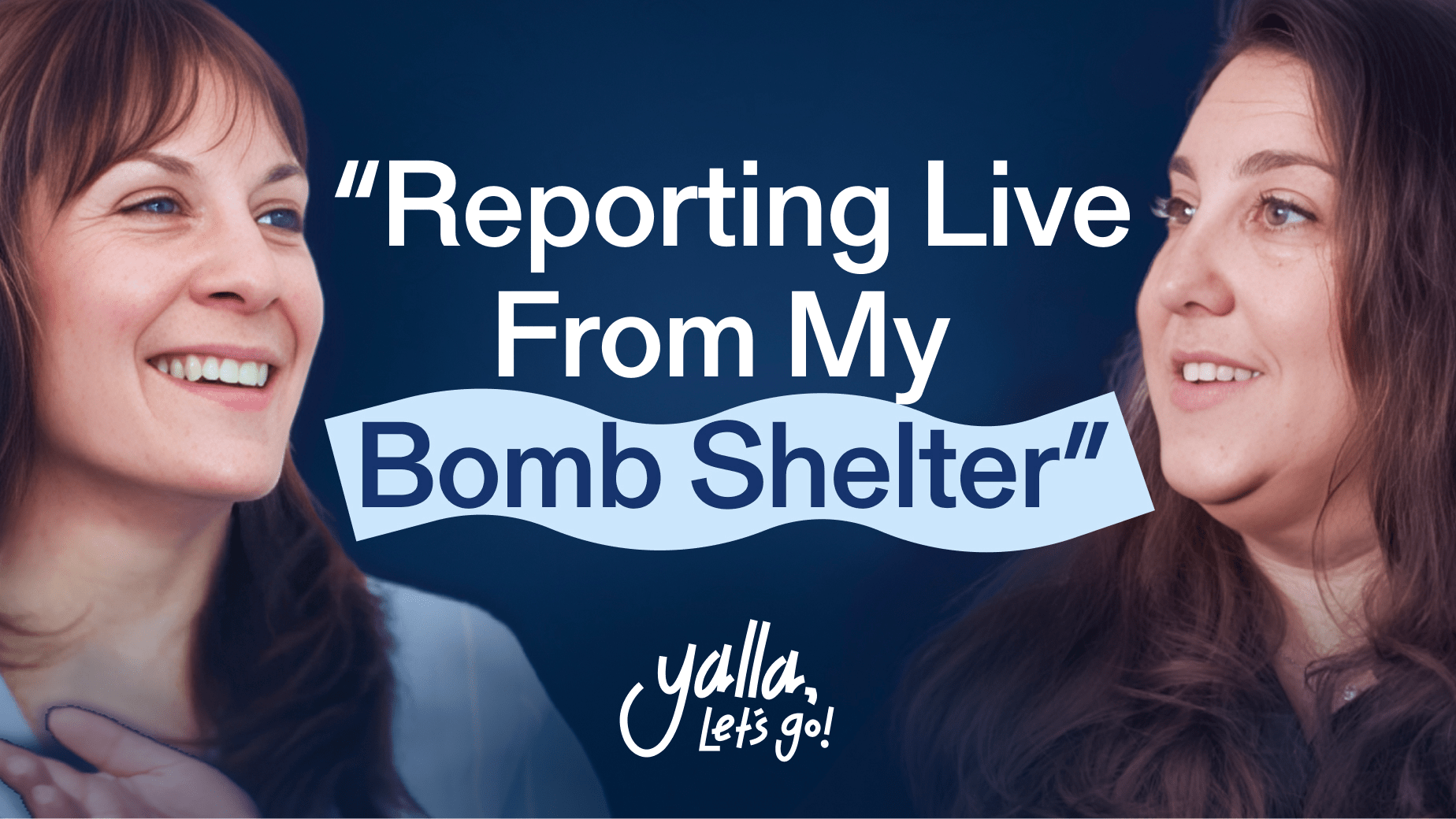
In this episode of Yalla, Let's Go!, Erica and Abbey sit down with Melissa Weiss — executive editor of Jewish Insider and olah from the United States — for a candid conversation about journalism in wartime Israel, building community as a single immigrant, and why she has never once considered leaving.

Melissa grew up in a small, secular Jewish community in upstate New York before discovering Israel through youth groups, Birthright, and winter break trips. After living in South Korea, Washington DC, New York, and Mexico City, she made aliyah four years ago — and hasn't looked back. She now leads Jewish Insider's Israel operations from Tel Aviv, covering US-Israel politics, campus antisemitism, and the war, often while sirens are going off overhead.

Also in the episode:

  • From the Catskills to Tel Aviv: Melissa's unlikely path to aliyah
  • Building Jewish Insider from Israel — covering DC politics from a Tel Aviv time zone
  • Reporting during October 7th, the Iran war, and life between bomb shelters and deadlines
  • Making friends, finding community, and dating as a single Anglo immigrant in Israel
  • The bureaucracy, the beauty, and the Shabbat smells from her mirpeset
  • Aliyah advice: rolling with the punches when nothing is intuitive
  • At 80, looking back: finally doing the one thing she always wanted to do

This is a warm, funny, and deeply honest conversation about purpose, resilience, and what it means to build a life in Israel from scratch.

Subscribe for more conversations with people who live, work, build, and stay in Israel.

#MelissaWeiss #JewishInsider #Israel #Aliyah #TelAviv #JournalismInIsrael #October7 #IsraeliLife #AngloCommunity #JewishIdentity #YallaLetsGo #LifeInIsrael #WomenInJournalism #MakingAliyah #WarCorrespondent

No transcript found

[Melissa Weiss — 0:00]

Life is hard here and it’s not for everybody.I was so worried, because I'd never spent any sort of meaningful time inIsrael. There was a siren, an azaka, and we ended up going into thebasement of a Thai massage parlor, and there was a hit like two blocks from us.We are at this really crazy moment in time in Jewish history, in world history,where this exists. She said that she woke up every single day feeling like shehad purpose. Dating Israelis is difficult. And sometimes, I’ll let my Israeligirlfriends look at my app messages. And they are astounded by the things thatmen will say, that they would never say to an Israeli woman.


[Erica Marom]

Like what? Like what? Tell us.


[Erica Marom — 0:34]

When you're 80 years old and you're lookingback at your life, what's one thing that you think will have been true becauseyou made aliyah [immigration to Israel] that wouldn't have been true otherwise?


[Melissa Weiss — 0:42]

Oh, God, that is such a good question.


[Abbey Onn — 0:45]

Said the journalist.


[Erica Marom — 0:57]

Welcome back to another episode of Yalla,Let's Go! — the podcast that Abbey and I started to remind ourselves why wemade aliyah. We're talking to people from all walks of life. We've got chefs,athletes, VCs, people who work in high tech, journalists — anyone that you canimagine — and asking them the questions you really want to know about what it'sreally like to make a life in Israel. So let's get started. Abbey, pulse check.Tell me about life in Israel right now.


[Abbey Onn — 1:24]

Okay, so I'm going to go with one of the moreannoying moments that happened in Israel — and happened to me a couple times inthe last week. So I have a great thing happening at work, and it's a bit of anexpansion of the organization that I run. But in order to do it, I had to go tothe bank. So for those of you that don't live here, the bank has very weirdhours. This is not to do with that, but it is one of the things you have tolearn — they, like, take a nap in the middle of the day and close from 2 to 4.This moment, I went into the bank. They sent me an email. They told me who hadto be there, what documentation I needed to bring, what I needed to do. We gotthere — I drove into Tel Aviv from outside of Tel Aviv with the accountant, whoalso doesn't live here — and they're like, "Where's your stamp?" AndI was like, "Where's my what?" I was like, "Here is the emailthat said Abbey, and this person, and this paperwork, and this ID — and wheredoes it say stamp?" And they're like, "Zeh yadua [it's known]."


[Erica Marom — 0:00]

Why didn't you bring your stamp?


[Abbey Onn — 0:00]

It's known that you need to bring your stamp.It's not known, because if it was known, I would have brought my stamp. Andthis notion that is so often said here — it's known, it's just a known thing.And it's not known, dude. Write it in your email. Use your words. Tell me — Ididn't grow up here. I didn't. So I had to go back this morning, and I broughtmy stamp, and now, success. But, like...


[Erica Marom — 0:00]

Bureaucracy.


[Abbey Onn — 0:00]

It's not known.


[Erica Marom — 2:39]

So we're here today with Melissa Weiss. Thankyou so much for joining us. Melissa is the executive editor of Jewish Insiderand an olah [female immigrant to Israel] from the United States.


[Melissa Weiss — 2:49]

I am those things.


[Erica Marom — 2:50]

Thank you so much for coming today.


[Melissa Weiss — 2:52]

Thank you for having me. This is so exciting.I started listening to the podcast, and I think it's great. And we do need thisat this moment — a reminder of why we're here, in really tough times.


[Erica Marom — 3:02]

Yeah. So tell us — we want to hear about you.Tell us your life story in under a minute.


[Melissa Weiss — 3:05]

Okay. I was born and raised in upstate NewYork, in the Catskill Mountains. I grew up in a very small town, very secular —an even smaller Jewish community. And so my world was very small. My Jewishworld was even smaller. And it wasn't until I started doing youth group stuffin high school, and then I went to a university that had a huge Jewishpopulation — and that was my first time really seeing a Jewish world beyond,like, my synagogue. And from there, I went on Birthright. And then I went onevery winter break trip to Israel. And that was where my claws kind of gothooked in, onto this idea that this would be a place that eventually I wouldend up. And it took a while, right? That was more than 20 years ago. But Ilived a lot of places. I moved to South Korea after college. Then I moved toWashington, to New York, to Mexico City. And then finally, four years ago, Imade aliyah.


[Abbey Onn — 4:03]

Wow.


[Erica Marom — 4:04]

Wow. So tell us why, after all of thosetravels and growing up in the US, you decided that this is the place you wantedto make your home.


[Melissa Weiss — 4:11]

So this was always something I thought I woulddo, but I don't have family here. I didn't have anything that was reallydrawing me or going to root me. And there was so much else I wanted to do andsee and explore. And so anytime I had an opportunity to either come here for aprogram, or to live here, or whatever it was, I always chose something else.Yeah — I wasn't ready. And it's funny, because now if I go back and I look atmy journals from college, I see in there, I say, like, "Israel is it forme. I'm going to do this. It's only a matter of time." And it was only amatter of time — it just, that time was like 20 years. But I think all of thosethings, I think I needed to have all of those different experiences in all ofthose places, personally and professionally, before I was ready to do this. Andthen since I've come here, I joke that my life here is kind of like SlumdogMillionaire, where all of the pieces just kind of like, all of the things he'sdone over the course of his life have fallen into place for him to have donethe things he's done and to answer the questions on the show. I feel like whenI came here, all of the different pieces of my life and all of the differentexperiences that I've had had kind of led me to a life here that I was very,very happy with.


[Abbey Onn — 5:31]

I love that. I really identify with, like, thesmaller Jewish community and then figuring out this kind of Israel moment. Youand I share a background with the Israel on Campus Coalition, so I would lovefor you to talk a little bit about what drove you from advocacy into journalism— how you made that shift.


[Melissa Weiss — 5:48]

So I had wanted to be a journalist since I wasin college. I studied journalism at the University of Maryland. All of myinternships through college were Baltimore Sun, USA Today. I thought I wasgoing to be a journalist. And then I graduated in 2008, which was therecession, and there were no journalism jobs. There were no jobs, period. Butthere were definitely no journalism jobs. And so it was a thing I was justmaybe not going to get to do. And so when I eventually moved to Washington, Igot a job at the Israel Project — which doesn't exist anymore, but when it did,it worked with journalists. And my thought was, if I can't be a journalist, Ican work with them. I know how they think. I know what they want. I know whatthey need for their stories. Like, maybe this is for me. And it was. And so Idid — you know, I worked in communications there, and it was a great fiveyears. And then I wanted something different. I wanted a new challenge. And soI ended up at the Israel on Campus Coalition, running their communications. Andwhen I say it's like the Slumdog Millionaire stuff — now I look at the thingsthat we're covering at Jewish Insider, and there's so much happening on collegecampuses, and I feel like, wow. No one has sat through more BDS hearings than —you know, no journalist, I should say, has sat through more BDS hearings than Ihave. I have been on the ground at all of these campuses. I've seen thesethings play out in real time. I get this stuff, and I have the historicalknowledge now, so that when things happen on these different campuses, or thereare these larger trends, I can say, "Oh, well, think about what washappening five years ago, 10 years ago." I've got the knowledge for that.


[Abbey Onn — 7:23]

So talk to me a little bit about — you movedhere four years ago, which means you've been building Jewish Insider from here.Talk to me about how you've been doing that. You've kind of taken it from astaff of five to something much larger.


[Melissa Weiss — 7:33]

Yeah, we're huge now. By comparison — therewere just a few of us when I started. We've always had a presence in Israel;usually it's been one person, maybe two people. But as we grew, and as thingswere developing here, there's more of a need, right? It's great to have morepeople on the ground covering the things that people care about. So when Ipitched this, it wasn't a, "Well, let's think about it. I don't know, areyou sure about this?" It was great. It's great to have more people in futuretime zones thinking ahead, so that we can be doing things while our US team isasleep — and vice versa. And this way, there's always people online, there'salways people working. News is always happening. News doesn't stop because youtake a nap or go to sleep. And so having more people in more time zones hasalways been something that's been really good for us.


[Abbey Onn — 8:24]

You know, Jewish Insider is, like, veryplugged into the DC politics scene, right? So how do you stay connected to thatfrom here?


[Melissa Weiss — 8:31]

So, I mean, I was a DC creature before I wasjust about anything else, right? I lived there for seven years. In college, Iinterned on Capitol Hill. I just — I mean, I read a lot. If you work injournalism, you're by definition a news junkie. And so I'm always readingthings. Once I send out our daily newsletter, the Daily Kickoff, I read, like,10 different newsletters that are based out of the States that are almost allpolitical, because I just want to know what's going on. I'll listen to thepolitical podcasts. And, you know, I think it's important. I think asjournalists who are English-speaking, who live here, we have a really uniqueability to explain what's happening here to a US audience, but also take what'shappening in the US and explain it to Israelis. Because — I don't know if youboth feel this way — but there really is, to me, this disconnect. People arejust talking at each other, and no one is hearing each other, and no one isunderstanding each other. And I think that's only gotten worse and worse andworse as the years have gone on and as social media has become what it is. Andso to the extent that we, as Jewish Insider, and I, as Melissa, can serve askind of a bridge to explain these different places and people to each other — Ithink that's doing some bit of good in the world. I hope it is.


[Erica Marom — 9:49]

Yeah, I'm sure it is. Yeah. So let's talkabout being a journalist in Israel for a minute.


[Melissa Weiss — 9:54]

Oh, boy.


[Erica Marom — 9:55]

A background that you and I both share. Youwere here after October 7th, and for the past two and a half years ofon-and-off war — with Iran, and Hezbollah in Lebanon, and, you know, Yemen, whoelse? Can you talk a little bit about what that's like — to be a reporter in aplace where you've actually made your life, where you live, when there'srockets falling in your neighborhood in Tel Aviv, but you have to be thatoutsider journalist? Because, I remember, it's really not an easy role to takeon.


[Melissa Weiss — 10:25]

It's not. And, you know, it was a lot harder,I think, in the months after October 7th. Because just because I'd only beenhere for a year and a half doesn't mean that October 7th didn't impact me insome way. I knew people who were killed in Nova [the Nova music festival]. Ihad friends whose relatives, whose best friends, were taken hostage. It wasalso very personal for me. And so it's hard to separate yourself. But I thinkas journalists, we have to do that with any situation. Journalists who were inNew York after 9/11, anyone who goes through these traumatic experiences — youkind of have to put it aside and just do the work. And it's hard, and it'schallenging, but I think that's one of the things we know when we sign up forthis kind of thing. But I mean, listen, when there are missiles that are beingfired at Tel Aviv, I will turn on my camera and I will say, "This iswhat's going on, you can hear the sirens." Or — a few weeks ago, I was inthe shuk [open-air market], I was getting my hair cut, and there was a siren,an azaka [air-raid alert]. And we ended up going into the basement of a Thaimassage parlor, which is apparently where everyone in the shuk goes. And therewas a hit, like, two blocks from us. And so as soon as we were out, I wentstraight there and I just started recording. And I think not enough people aredoing that — showing what is actually happening on the ground. What you see onsocial media, what you see online, that's one segment of it. But when you'regetting it straight from the people who are on the ground, who are experiencingit, it's a lot different.


[Erica Marom — 12:05]

What happened to your haircut?


[Melissa Weiss — 12:08]

It was good. We were in the very final stagesof it.


[Erica Marom — 12:12]

That could sound like a disaster.


[Melissa Weiss — 0:00]

No, no, no — so she clipped it up, and we wentright back to it. And she blew it dry.


[Abbey Onn — 12:17]

Which is amazing, right? You're, like, in themiddle of something. You stop it, you go, you come right back, and you justpick up.


[Melissa Weiss — 12:18]

It's just what you do. And I think that's whatpeople don't really understand. We will have these very disruptive 15 minutes —you just have to go back to whatever you were doing. I can't tell you thenumber of times, over the course of the last two months, that I have sent outthe newsletter from my bomb shelter, literally with sirens going overhead. Idon't think people realize, when they open their email in their inbox — oh,this was sent while someone was listening to cluster bombs exploding around her.


[Abbey Onn — 12:49]

It's a weird upside to resilience.


[Melissa Weiss — 12:51]

Yeah, it's crazy, but it's something thatisn't supposed to be normal, that we treat as normal. And I don't think thatmost of the people who watch this from afar understand what that means.


[Abbey Onn — 13:05]

I think your job allows you to plug intoIsrael in this really specific way, and I think maybe gives you more ins thanthe regular immigrants. How are you building life here personally? How are youmaking friends, building community?


[Melissa Weiss — 13:17]

So Israel was always the place where — waybefore I made aliyah — if I stepped back and said, "Where do I have themost friends who are like me — my age, single, professional, all of thesethings?" the answer was always Israel, and specifically Tel Aviv. Youknow, going back to, like, my late 20s, this was always the place where peoplewere. So when I moved here, I had, like, a group of friends already. And I hadfriends — they weren't consolidated, they were from every part of my life. Butthe thing is, when you move here, everyone you know in your whole life wholives here just reaches out. So old colleagues, college classmates, people Iknew in Washington, people I hadn't spoken to in, like, 15 years would reachout and say, "Let's get a drink, let's get coffee." And so now someof the people that I'm friends with are people that I knew 10, 15 years ago,and we were always acquaintances — but now we're both doing this crazy thing,building a life in this country. And it's a real bonding experience.


[Erica Marom — 14:19]

It's very bonding.


[Erica Marom — 14:20]

Yeah, very bonding.


[Abbey Onn — 14:22]

Don't recommend it, yet very bonding.


[Melissa Weiss — 0:00]

You know — I don't have family here, like Isaid, but these people are really, they are my family. They're the people Ispend every Shabbat [the Jewish Sabbath] with. They are — when I needsomething, or when something goes wrong, they are the people that I call. Whenmy family comes to visit, they meet my other family.


[Melissa Weiss — 14:40]

Yeah. Are most of your friends Israeli, or arethey other olim [immigrants to Israel]?


[Melissa Weiss — 14:43]

So it's a mix. Obviously, like, Anglos tend tocongregate. But I have friends who are Israeli — old colleagues, people whomaybe were born here, were here for the first years of their life, and thenmoved abroad and then have come back. It's a real mix. But I would say that amajority are probably olim. But I think that also is just what happens when youmove to a country when you're in your mid-30s. You know, it's hard anywhere, Ithink, to make friends — but especially in a society like Israel that is verymuch family-oriented. People have their people, people have their army people.These relationships are very hard to break into. And I think that also extendsto dating, obviously. All of that is very hard.


[Erica Marom — 15:35]

So let's talk a little bit about that. Tell usabout what it's like to date in Tel Aviv. Like, are you using apps? Are youmeeting people on the beach? Where is the scene? Tell us about it.


[Melissa Weiss — 15:45]

So I was sitting on the beach the other day,and there was a girl sitting next to me — she was drinking mate, so I was like,okay, she's Argentinian. And this guy — I just see it happen. He was sittingnext to her for like 10 minutes, and gets up to throw something out. When hecomes back, he sits right next to her and starts asking her about the mate. AndI'm like, I'm seeing it in the wild.


[Abbey Onn — 16:06]

That's very old school, by the way.


[Melissa Weiss — 16:08]

So old school. Truthfully, dating the last twoand a half years has been difficult, just because no one's in the mindset forit. But also, dating Israelis is difficult because, again, it's afamily-oriented society, and Israeli men are looking for women who have astrong family unit here. It's difficult. So when they see someone who'sAmerican, or British, or Australian, whatever it is, they're less serious tous. And sometimes I'll let my Israeli girlfriends look at my app messages, andthey are astounded by the things that men will say that they would never say toan Israeli woman.


[Erica Marom — 16:45]

Like what? Like what? Tell us.


[Melissa Weiss — 16:47]

Okay, great. So last week—


[Melissa Weiss — 16:50]

We need to know what's happening.


[Erica Marom — 16:51]

Let us live vicariously through you.


[Melissa Weiss — 16:52]

So last week I got a nice message from a guy,and he said he would have picked me up in the miklat [communcal bomb shelter].Or — he asked if I'd met anyone nice in the miklat. And I was like, "Well,I have a mamad, so I'm picking up my two cats." And he was like,"Well, if I saw you, I would have dropped a line." I was like,"Okay — what would you have said?" And, whatever, he dropped a line,and I was like, "Oh, that was good. It would have worked." And then hewas like, "Let's get out the blow-up air mattress." And I was like,"What?" Immediately! So I showed that to an Israeli friend, and shewas so taken aback. And I let her send a response — I was like, "How wouldyou try to, like, salvage this?" And so she responded, and was like,"Slow down, tiger." And he never responded.


[Erica Marom — 17:39]

Wow.


[Melissa Weiss — 17:40]

Yeah. So, I mean, it's that, instead of—


[Abbey Onn — 17:42]

I understand what you're saying now. But —less serious.


[Melissa Weiss — 0:00]

Yeah, yeah, yeah, yeah.


[Erica Marom — 17:44]

You know, you've been here for quite a fewyears now. Life here can be very rewarding. It can also be really rough. Hasthere ever been a moment when you were, like, considering, "Maybe I shouldgo back"?


[Melissa Weiss — 17:57]

No.


[Erica Marom — 17:58]

Why?


[Abbey Onn — 17:58]

She just said to us that she was getting herhair cut, and there was a hit two blocks away — and then just said no.


[Erica Marom — 18:03]

Okay. But you know what? Everyone has thosemoments — like, in the middle of the night, when it's 3am and you're running toyour mamad [safe room], you're exhausted. Was there ever a moment?


[Melissa Weiss — 18:10]

Not a single moment. I've never had a moment.Because — you know, I've lived most of my life in the States. I came here on atrip, like, eight years ago, and I remember going out to dinner with a friendof mine, and we walked home after. And she had been in Israel probably for,like, seven, eight years at that point. And I don't even know how we weretalking about, like, living here, it being hard, all of these things. And shesaid that every single day, she woke up feeling like she had purpose. And whenshe said that, then I didn't — I didn't even know what that meant. Like, whatdoes it mean to live with purpose, and to feel like you were doing somethingmeaningful every single day? And I'll tell you, for the last almost four years,I wake up every day feeling like I have purpose. Feeling like I am buildingsomething — personally, my own life, but I'm also part of building somethingbigger. We are at this really crazy moment in time in Jewish history, in worldhistory, where this exists. It would be insane not to at least try to be a partof it. But I wasn't here on October 7th. It was chag [holiday]. I was inAmsterdam for the weekend. And my family wanted me to come back to the States —not a chance. I was trying to get back sooner. My flight was on, like, October9th, and I was like, "Can I get back on the 8th? Can I get backsooner?" And same thing with the first Iran war — I got stranded in Paris,and the whole time I was trying to figure out, "How can I get back here assoon as possible?"


[Abbey Onn — 19:55]

We should worry when she leaves, by the way.


[Erica Marom — 19:57]

Yeah. That's when we know that there's aproblem.


[Melissa Weiss — 20:01]

It's a running joke with my friends that youcan't leave — because when you leave is when wars happen. But I think the lastsix weeks have kind of put that to bed...


[Erica Marom — 20:10]

Is there anything here that, like, grates onyour nerves about life in Israel?


[Melissa Weiss — 20:16]

I mean, you know, there are indignities indaily life. There are the frustrations, like you had at the bank — all of theselittle tiny things. But you just kind of have to shrug it off, because, yeah,life is harder here. But life is really, really easy in the States, where wecame from. Like, it's so easy. It's too easy. And when it's too easy, youforget what is worthwhile, and why this is all worthwhile. And so I think youhave to have the struggles here, because I think they make you really appreciateeverything else you have. Like, there's nothing that I love more than sittingon my mirpeset [balcony] on a Friday afternoon and just, like, smelling — thesmells of people cooking Shabbat dinner are everywhere. Like, I'm sittingoutside and I smell it. Wow.


[Melissa Weiss — 21:10]

I would never get that in the States. Never.It's an amazing thing, just to see people getting to live their Judaism in avery normal way — in a way that just integrates into their life, instead of itbeing this thing that separates them from everyone around them. It's an amazingthing to see, and it's an amazing thing to be a part of.


[Abbey Onn — 21:38]

So in addition to all the amazing stuff you'vedone at work, you've also created a reputation for yourself as, like, a go-togirl in your community for advice — for, like, plumbers, electricians... Ishould have called you before I went to the bank. How did you build thisreputation, and how do you know so much?


[Melissa Weiss — 21:59]

A little bit of trial and error, but honestly,a lot of it is the people who came before me. There's been so many times whenI've needed something, or I've wondered how to do something, and someone hasalready gone through that struggle, that challenge, whatever it is — there's ananswer, and you just kind of work your way through it. You know, if I screw up— and I screw up plenty — those are lessons learned. I struggled to find a goodpet sitter, and then once I found one, she's the one I send to everyone. Andthere are bad ones, and I'll warn people against the bad ones too. But I thinkthat because so many people were resources to me when I moved here, I want toput that back out in the universe, and don't keep it to yourself. Plus, theFacebook group Bell Aviv.


[Melissa Weiss — 22:52]

Wow. Wow.


[Melissa Weiss — 22:54]

Everything — all of my, you know, where I getmy nails done, where I get my hair done, all of these things. Belle Aviv.


[Abbey Onn — 23:00]

If you could take all of that and roll it intoone big piece of advice that you would give to someone who's thinking aboutmaking aliyah, or just showed up — what would you say?


[Melissa Weiss — 23:08]

If it's what your heart wants, then you'regoing to do it. Life is hard here, and it's not for everybody. I didn't evenknow if it was for me when I did this. I was so worried — because I'd neverspent any sort of meaningful time in Israel before I made aliyah — that I wasgoing to get here and I was going to hate it. And then I was going to have to,one, find a new country to live in, maybe find a new job, find a new careerpath. I was so worried that everything I had built my whole life toward was goingto fall apart when I got here, and I'd realize that maybe this wasn't for me.But I got here, and that didn't happen. And it was for me. And so — I didn't goin with any expectations. You know, I think you can't here, because this placeis so crazy and nonsensical most of the time. And if you can roll with thepunches — you know, I'm a very relaxed, chill person by nature — and I think ifyou can kind of infuse that into your life, and into dealing with insane thingslike the bank, and the post office, which you didn't talk about, but the postoffice—


[Abbey Onn — 24:14]

You now need to reserve online before you go.I don't understand it. I don't understand that you can't just show up and,like, do something. You have to make an appointment online.


[Melissa Weiss — 24:22]

All of these things are crazy. Like, when Ipicked up my passport — my government-issued Israeli passport — I had to go to,like, the Israeli version of a bodega to go get it. That's crazy. My passport!


[Abbey Onn — 0:00]

It's insane.


[Melissa Weiss — 0:00]

It's insane. So if you can roll with thosepunches, and just —


[Abbey Onn — 24:41]

If you can laugh at them...Yeah, exactly.


[Melissa Weiss — 24:42]

It's the only way you'll get through it.


[Erica Marom — 24:44]

So when you're 80 years old and you're lookingback at your life, what's one thing that you think will have been true becauseyou made aliyah that wouldn't have been true otherwise?


[Melissa Weiss — 24:53]

Oh, God, that is such a good question.


[Abbey Onn — 24:55]

Said the journalist.


[Melissa Weiss — 24:56]

Seriously — that I did the one thing that Ihad always wanted to do. And I think I kind of forgot that this was somethingthat I had always wanted to do. And then when I found my old journal, I wasjust reading through these entries that I made when I was 18 years old, 19years old, and I was like, "Wow, this really — this has been the onething."


[Abbey Onn — 25:23]

It's gorgeous.


[Erica Marom — 25:23]

You followed your dreams.


[Melissa Weiss — 25:25]

I followed my dreams.


[Abbey Onn — 25:26]

Okay, we're gonna do some rapid fire. Youready? We're looking for one word.


[Melissa Weiss — 25:31]

Okay.


[Abbey Onn — 25:31]

Favorite Israeli fruit or snack?


[Melissa Weiss — 25:33]

Pomelo.


[Abbey Onn — 0:00]

Agree.


[Melissa Weiss — 0:00]

But specifically not the full ones that growon the trees — they have to be the ones where...


[Abbey Onn — 0:00]

Somebody already did the work for you.


[Melissa Weiss — 0:00]

Yes, absolutely — they're packaged up. Youjust take it home, unwrap them, and go.


[Erica Marom — 25:46]

Favorite Israeli slang?


[Melissa Weiss — 25:48]

Mamash [really / totally].


[Abbey Onn — 25:49]

Favorite place in Israel.


[Melissa Weiss — 25:51]

The Mount of Beatitudes. You're not going toget anyone else who says that


[Abbey Onn — 25:52]

Or who can spell it.


[Melissa Weiss — 25:56]

No, it's just — it's the most... Sorry, I knowit's one word, but no one's going to say it, so I should get to promote it. Ithink I've never felt more at peace anywhere in the world than I have when I'vebeen at the Mount of Beatitudes. There's just something that... wow.


[Erica Marom — 26:13]

What's your best source for Israeli news?


[Melissa Weiss — 26:16]

Ooh. So I'm actually a big proponent ofjournalists — not necessarily news outlets. Though, you know, I think Times ofIsrael is great. Journalists that I follow: Manny Fabian, Lazar Berman,Suleiman Maswadeh, all of my colleagues here. Obviously. I think you have tofocus on the ones who do the best kind of journalism — the stuff where they'renot always relying on anonymous sources and sketchy sourcing in general. Peoplewho have a track record for being correct, and not biased. I think that's thekind of stuff you have to seek out, and it's hard to find sometimes here.


[Abbey Onn — 26:56]

Okay. Thing that you miss most from the US?


[Melissa Weiss — 27:00]

Snow.


[Abbey Onn — 27:01]

Fair — upstate New York.


[Melissa Weiss — 27:02]

Yeah.


[Erica Marom — 27:02]

What's your "only in Israel" moment,in one sentence?


[Melissa Weiss — 27:07]

I mean — the number of times that I have had aShabbat dinner just go totally awry because of an impending Iranian ballisticmissile attack. Which is a sentence I didn't think I'd ever say. That kind ofthing. Especially because a lot of my friends are journalists — when thosethings happen, all of a sudden people have to do live shots, people have togo...


[Abbey Onn — 27:34]

Not the way that I was thinking it was goingawry. Got it.


[Melissa Weiss — 27:37]

Right.


[Melissa Weiss — 27:38]

It's a little bit different. But, you know,it's what happens here. It's what happens here, right now.


[Abbey Onn — 27:43]

What does Shabbat or Saturday look like foryou?


[Melissa Weiss — 27:46]

Oh, my gosh. Well, every Shabbat since thebeginning of the war, I've had this kind of core group of friends — I mean,we've spent just about every Shabbat together. It's my saving grace.Absolutely. So Friday nights are always with them. And then Saturdays, you know— brunch, beach, just relaxing. Really kind of taking in Shabbat in the HolyLand.


[Erica Marom — 28:16]

Thank you so much for joining us.


[Melissa Weiss — 28:18]

Thanks for having me.


[Erica Marom — 28:20]

Thank you to all of our team, and thank you.If you enjoyed this episode, please share it with all of your friends. And,yalla, let's go!


60 seconds with
Melissa Weiss
Show References

Follow Melissa on X

Subscribe to Yalla, Let’s Go

Learn more about Aleph 

Sign up for Aleph’s monthly email newsletter

Subscribe to our YouTube channel

Follow us on Instagram

Follow us on TikTok

Follow Aleph on Twitter

‍Follow Aleph on LinkedIn

‍Follow Aleph on Instagram

Credits

Hosts: Erica Marom, Abbey Onn 

Executive Producer: Sarah Bard

Producer: Sofi Levak, Dalit Merenfeld, Myron Shneider

Video and Editing: Nadav Elovic, Yotam Kushnir

Music and Creative Direction: Uri Ar 

Content and Editorial: Jackie Goldberg

Design: Nimrod Sapir

60 seconds with
Melissa Weiss
Show References

Follow Melissa on X

Subscribe to Yalla, Let’s Go

Learn more about Aleph 

Sign up for Aleph’s monthly email newsletter

Subscribe to our YouTube channel

Follow us on Instagram

Follow us on TikTok

Follow Aleph on Twitter

‍Follow Aleph on LinkedIn

‍Follow Aleph on Instagram

Credits

Hosts: Erica Marom, Abbey Onn 

Executive Producer: Sarah Bard

Producer: Sofi Levak, Dalit Merenfeld, Myron Shneider

Video and Editing: Nadav Elovic, Yotam Kushnir

Music and Creative Direction: Uri Ar 

Content and Editorial: Jackie Goldberg

Design: Nimrod Sapir

My Israeli Fadicha
Show References

Follow Melissa on X

Subscribe to Yalla, Let’s Go

Learn more about Aleph 

Sign up for Aleph’s monthly email newsletter

Subscribe to our YouTube channel

Follow us on Instagram

Follow us on TikTok

Follow Aleph on Twitter

‍Follow Aleph on LinkedIn

‍Follow Aleph on Instagram

Credits

Hosts: Erica Marom, Abbey Onn 

Executive Producer: Sarah Bard

Producer: Sofi Levak, Dalit Merenfeld, Myron Shneider

Video and Editing: Nadav Elovic, Yotam Kushnir

Music and Creative Direction: Uri Ar 

Content and Editorial: Jackie Goldberg

Design: Nimrod Sapir

Latest Episodes

David Siegel, Former CEO of Meetup & Investopedia, on Solving the Loneliness Crisis, Rescuing Meetup from WeWork, and Why Israelis are Happier than Americans

February 14, 2024

Oren Zeev, Solo VC Managing $3B, on Why Code Is No Longer a Moat, Surviving Navan's Worst IPO of 2025, and the Dangerous 10x Growth Mindset

February 14, 2024

Elad Raz, Co-Founder and CEO at NextSilicon, on Outperforming Nvidia on Efficiency, the Architecture No One Thought Possible, and What Happens When the Memory Bottleneck Breaks

February 14, 2024

Amir Fischer, Teen Venture Capitalist, on Raising $2M, Cold-Emailing Billionaires, and Why His Generation May Have the Most Agency Ever

February 14, 2024

Dr. Eli David, Top AI Researcher and Entrepreneur, on Free Speech, Woke AI, and Why We’re so Much Smarter Than Elephants

February 14, 2024

Ami Daniel, Co-Founder and CEO of Windward, on Global Supply Chain Disruptions, How Much Ransom Costs to Cross the Strait of Hormuz, Global Navies’ Capabilities, and How Long This Whole Thing Will Last

February 14, 2024

Israel’s Resilience, Innovation, and the Future of Techno-Geopolitics | An Invested Special Episode

February 14, 2024

Zach Greenberger & Eran Shir on Nexar’s Dominating the AV Market, Real-World Data Moats, & the Playbook for Building an Agentic Company

February 14, 2024

SpotitEarly CEO Shlomi Madar on How Their Dogs Can Sniff Early-Stage Cancer, Why Dogs + AI is a Critical Combination, and Whether Cancer Screening Should be Regulated

February 14, 2024

Lightspark Co-Founder David Marcus on Bitcoin Hitting 7 Figures, Lessons from Building and Losing Libra (Diem), Why College is Cancer & Fighting for Existential Values

February 14, 2024

Special Episode: A Lookback on Some of the Strongest Business Leaders of 2025

February 14, 2024

David Magerman on Building Renaissance Technologies, Why AI is “An Automatic Machine Gun We’re Giving Children,” and Sacrificing Relationships for Success

February 14, 2024

Founding Partner of Uncork Jeff Clavier on Being the First Seed Investor, When Your First LP is Your Wife, Passing on Uber & LinkedIn and the ‘3 Asses’ Rule

February 14, 2024

USVP GP Jacques Benkoski on What Entrepreneurs Get Wrong About Go to Market, Building Value as an Investor & Why ‘Crossing the Chasm’ is Outdated

February 14, 2024

Carta CEO Henry Ward on the Death of CartaX, a Controversial AI Take, Only Hiring Missionaries & the EQ Mistakes That Break Companies

February 14, 2024

Nuseir Yassin, AKA Nas Daily, on Being the First Israeli-Arab to Build a Unicorn, the Death of Organic Content & the New Marketing Playbook, and the Cost of Advocating for Peace Between Jews and Muslims

February 14, 2024

Gavin Baker, Managing Partner of Atreides, on Everything You Wanted to Know About Semiconductors & Why Global Warming is a Solved Problem

February 14, 2024

General Catalyst Co-Founder David Fialkow on Pitching VCs Through ‘Hot Buttons,’ Billion-Dollar Storytelling & Bringing Down a Cult

February 14, 2024

Mati Gill, CEO of AION Labs, on Funding Life-Saving Startups, Lessons From Working at Teva Pharmaceuticals in Crisis & Life After Getting Shot

February 14, 2024

Nir Zohar on His Evolution from Wix Coffee Maker to COO, Why the Wix Management Team Has Offsites in the Water, the Super Bowl Ad that Changed Everything and Why Wix Bought Base44–”One Guy”–for $80 Million

February 14, 2024

Gigi Levy-Weiss on How the Israeli Air Force is the Best Model for Running a Company, How Playtika Exploded Overnight by Accident, the Uncomfortable Truths About Working in Gambling, and the Coolest Companies in the NFX Portfolio

February 14, 2024

Fiverr CEO Micha Kaufman on How a Story in CNBC Beat Fiverr’s $8M Super Bowl Ad, the Right Way to Go Public, How Your Boss isn’t Responsible for Your Career, Why Freelancers Move Faster Than Employees, and How AI is Raising the Floor–not the Ceiling

February 14, 2024

From DNA to Star Trek: Samuel Arbesman on Reconciling Science with Tradition, Building Personalized “Sims” for Your Body, and What it Means to be a Scientist in VC

February 14, 2024

Dream Founders Shalev Hulio and Sebastian Kurz on How Dream Became the World’s Fastest-Growing Cyber Startup Within 18 Months, Building the First AI Native Cybersecurity Company, and Whether it’s Possible to Ethically Use Offensive Cyber

February 14, 2024

Israel <> Iran War: Special Episode of Invested

February 14, 2024

Ex-Fiverr Chief Business Officer Gali Arnon on the Strategy That Turned Fiverr From the Cheap Services Brand into the World’s Top Talent Marketplace, How the Role of the CMO Has Changed, and Making Your Mother-in-Law Proud

February 14, 2024

StarkWare Co-Founder Eli Ben-Sasson on the Future of Blockchain, Zero Knowledge (ZK) Proofs and How They “Solve Integrity” and Why We No Longer Have to Trust the Banks or Government

February 14, 2024

Katie Stanton on What You Never Heard About Obama, Operating Vs. Investing, Behind the Scenes at Twitter, Yahoo! and Google, and Using Your Network to Get Ahead

February 14, 2024

Benchmark GP Sarah Tavel on What She Learned at Bessemer, Greylock, Pinterest and Benchmark, Being an Operator vs. an Investor, and How to Create an AI Moat

February 14, 2024

Omri Casspi on Life After the NBA as a Venture Capitalist, Bringing Elon Musk to Israel, Sports Philosophy in Investing, Getting Founders to Trust Him, and the Story He Never Told Anyone | Invested

February 14, 2024

Amir Shevat on Growing Developer Relations at Google, Microsoft, Slack, Twitch and Twitter; the Future of Engineering; Getting Fired Overnight by Elon Musk & Publicly Calling Him Out

February 14, 2024

Ex-Amazon Dan Davidi on Replacing Fuel with His Company Ohr, Literally Reinventing Rocket Science, and Whether Synthetic Biology is Playing God

February 14, 2024

Ex-CEO of Waze Noam Bardin on What Really Happens at Google, Life After a Billion-Dollar Acquisition, Building the Ultimate Community-Based Business, and What No One Gets About OKRs

February 14, 2024

Investor Sender Cohen on Learnings From Working With Stan Druckenmiller and George Soros, TLV vs. Dubai, and Why He Pays Someone to Keep Him Off the Internet

February 14, 2024

Andreessen GP Katherine Boyle on the Battle for America’s Future, Why She Left Silicon Valley for Florida & Why it’s Good to be Bored in Church | Invested

February 14, 2024

Special Episode: Why TikTok Should be Banned in the U.S.

February 14, 2024

The Information Founder Jessica Lessin on Building the World’s Top Tech Media Outlet, Why Citizen Journalism Won’t Replace Traditional Media, and the Future of Journalism | Jessica Lessin on Invested

February 14, 2024

Vee Founder May Piamenta on Selling Her First Company at 16, Smuggling a Computer Onto an Army Base, Laying Off Her Entire Company and Knowing When to Pivot

February 14, 2024

Adam Fisher, Partner at Bessemer Venture Partners, on What it Takes to be a Great VC, Lessons from Wix and Fiverr, and Why Israel Should Let Go of the “Startup Nation” Narrative

February 14, 2024

Harvard Professor Roland Fryer on Relentlessly Pursuing Truth, ‘Closing Social Gaps with Market Caps,’ and Celebrating Failure

February 14, 2024

Harry Stebbings on Starting 20VC, Being Underestimated, Investing, and Wealth vs. Happiness

February 14, 2024

Yasmin Lukatz on Investing in a Time of War, Founding ICON, How to Make a Difference, and Being on Shark Tank

February 14, 2024

Yonatan Adiri on Stepping Down as CEO of Healthy.io, the Future of Healthcare, and What’s Next for Him - Part Two

February 14, 2024

AI Expert Oren Etzioni on How Deepfakes are Influencing Global Events, Our Moral Obligations Around AI & the Fight Against Disinformation | Invested

February 14, 2024

Yonatan Adiri on Founding Healthy.io, Challenges in HealthTech, and Working with Shimon Peres - Part One

February 14, 2024

Izhar Shay on Losing His Son Yaron Oree, the October 7th Attack, an Initiative for the Fallen, and Moving Forward

February 14, 2024

Yoav Shoham on What Machines Understand About Us, Leading AI in Israel & Stanford, AI21 Labs Innovations, and How We’re Wrong About AGI

February 14, 2024

Sam Lessin on What Entrepreneurs Don’t Realize About VCs, When the State Should Intervene with Tech, the Future of Crypto and the Evolution of Truth

February 14, 2024

Ami Daniel on the October 7th Massacre, Rescuing Survivors Using Tech, and Managing a Company During War

February 14, 2024

Matan Bar on Melio’s Humble Beginnings, The Power of Storytelling, Making Tough Decisions as a CEO, and Meeting George W. Bush

February 14, 2024

Marc Rowan on Having the Courage to Speak Up, Apollo’s Investing Strategy, Commitment to Israel, and Looking Ahead

February 14, 2024

Palantir Co-Founder Joe Lonsdale on Fixing America, Disrupting Defense Innovation & Building the University of Austin

February 14, 2024

Lior Eshkol on How Wolt Israel Became a Cultural Icon, the Essence of the Israeli Consumer & Navigating the Company Through Crisis

February 14, 2024

Jacob Helberg on the China Doomsday Scenario, the Dangers of Wokeism, and What America Needs to Win the Technological Arms Race

February 14, 2024

Eyal Waldman on Building Mellanox, Employing Palestinians and Israelis Together, and The Future of AI

February 14, 2024

Eyal Waldman on What Went Wrong on October 7th, His Personal Loss and Plan for Peace, and Mellanox’s Impact on AI

February 14, 2024

Jon Pelson on China's Influence, TikTok, Huawei and Different Values

February 14, 2024

Kathryn Mayne on VC, Investing in People, Taking Risks and Why Israel is Special

February 14, 2024

Daniel Schreiber on Storytelling, Good vs. Bad Investors, Running a Public Company

February 14, 2024

Russ Roberts on the Difficulty of Giving Good Advice, Work-Life Balance, Our Obsession with Productivity, Storytelling and Wild Problems

February 14, 2024

Jeff Swartz on Timberland, Social Impact, Philanthropy, Having Too Many Words and Lots of Dreams

February 14, 2024

Ron Gura on Empathy, Grief and Scaling Humanity

February 14, 2024

Aryeh Bourkoff on Empathy, Digital Communities, Relationships vs. Transactions, Being Self-Aware, Dreaming about Being Shy and Lazy

February 14, 2024

Stefan Tompson on Founding Visegrad24, Fake News, Fighting for Israel and the West

February 14, 2024

Bradley Tusk on Investing Like a Politician in Regulated Industries, the Flaws of Elite Education, and the Fragmented Future of America

February 14, 2024

Bradley Tusk on How to Save Democracy Before it’s Too Late, the Problem With Our Political Structures, and the Power of Mobile Voting

February 14, 2024

Ben Lang on Being Early at Notion, How to Build Community, Angel Investing and Taking Risks

February 14, 2024

Beezer Clarkson on How to Get a “Yes” from Investors, Advice to Young VCs, Fund Mission vs. Returns, and What Diversity Means in Venture

February 14, 2024

Alon Arvatz on the Future of Israeli Cybersecurity, Exiting Multiple Companies, Leaving Money on the Table, and Making Financial Literacy Accessible

February 14, 2024

Michael looks back on the incredible and tragic stories from October 7th within the Israeli tech ecosystem that were shared on the Invested podcast over the past year.

February 14, 2024

Barak Herscowitz on TikTok’s Anti-Israel Bias, the Memo That Got Leaked, Resigning From TikTok, and the Story Israel Needs to be Telling

February 14, 2024

Antonio Garcia-Martinez on the Hippie Influence over Silicon Valley, Behind the Scenes at Facebook, Writing ‘Chaos Monkeys’ and Founding Spindl

February 14, 2024

Alex Konrad on Covering Israeli & Gazan Tech, the Forbes Midas List, & Civic Resilience

February 14, 2024

Orit Farkash HaCohen on AI Regulation, Burnout, Israel’s Natural Gas Exploration, and Diversity in High-Tech

February 14, 2024

Recommended

placeholder image

Three founders, one impossible idea, and Apple’s second-largest acquisition ever. One mistake, and a few learnings.

February 14, 2024
placeholder image

New Space Meetup Join us for a meetup featuring the latest developments in Space tech and ventures, with speakers from the IDF, Utilis, Effe

February 14, 2024
placeholder image

Apply to Aleph.bet B2B Pricing

February 14, 2024
placeholder image

The Future of Talent Why is it so hard to recruit engineers? Maybe we’re going about it all wrong. Avishai Ish-Shalom, Aleph’s Engineer-in-R

February 14, 2024
placeholder image

HoneyBook Raises $28M Series C Read Michael Eisenberg’s blog post about HoneyBook’s journey to cracking a new market, now servicing solopren

February 14, 2024
placeholder image

Firewall Podcast Comes to Israel

February 14, 2024
placeholder image

Usability Testing 101

February 14, 2024
placeholder image

What I Hate About High Tech When Erica Marom joined Aleph, she fell in love with the energy of the Israeli high tech community. But as a for

February 14, 2024
placeholder image

Beyond Innovation Tourism

February 14, 2024
placeholder image

30 Time Management To-Dos We all struggle to manage our time better, so Eden Shochat has prepared a cheat sheet to ease our path to producti

February 14, 2024
placeholder image

A Seat at the Table As Nexar’s GM Mobility Solutions, Kate Balingit partners with the world’s largest auto manufacturers. She shares five le

February 14, 2024
placeholder image

Aleph III We are pleased to announce the closing of Aleph III, a $200 million fund, to continue partnering with great Israeli entrepreneurs

February 14, 2024
placeholder image

Aleph DreamBuilders Erica Marom shares the philosophy behind the creation of Aleph DreamBuilders, a new video series capturing our founders’

February 14, 2024
placeholder image

Don’t Bail Out Israeli Startups In an op-ed in Israeli newspaper Calcalist, Adam Fisher of Bessemer Venture Partners, Rona Segev of TLV Part

February 14, 2024
placeholder image

Dear Entrepreneur Amid the COVID-19 pandemic, Aleph Equal Partner Michael Eisenberg writes in an open letter that this is a time for empathy

February 14, 2024
placeholder image

The Houseparty Exit A year on, Eden Shochat shares a personal perspective on the sale of Houseparty, why exits are not black and white, and

February 14, 2024
placeholder image

$LMND — Aleph’s First IPO Lemonade is a meaningful company with values at its core, a reflection of its founders, Daniel Schreiber and Shai

February 14, 2024
placeholder image

Investing in Great People Michael Eisenberg says investing in great people has always been his strategy, but keeping small business in busin

February 14, 2024
placeholder image

Branding for Founders Uri Ar and Erica Marom, aka Urica™, share the 3-step practical guide they use as a basis for helping startups build th

February 14, 2024
placeholder image

Why You Need Sales Ops Sales Operations is misunderstood, says Leore Spira, head of Sales Ops at Syte, and formerly of Anodot. Once consider

February 14, 2024
placeholder image

Melio Raises $250M

February 14, 2024
placeholder image

A Deal of Biblical Proportions Michael Eisenberg attended the first-ever Business Summit of the Abraham Accords in Abu Dhabi, and says lsrae

February 14, 2024
placeholder image

Eran Shir, Nexar — Aleph DreamBuilders Nexar CEO Eran Shir says he never met a pessimistic entrepreneur. Intrigued by the challenges of mobi

February 14, 2024
placeholder image

Aleph’s New Partner

February 14, 2024
placeholder image

Bringg Raises $100M at $1B Valuation Bringg, a last-mile delivery platform for retailers, helps companies scale up and optimize their custom

February 14, 2024
placeholder image

Games and the Economy Digital games teach us that economies should be expressions of culture, says Michael Eisenberg. He explores the econom

February 14, 2024
placeholder image

Michael’s New Book The most successful companies of the 21st century are values-driven, because the best way to be successful is to make oth

February 14, 2024
placeholder image

Invest in Relationships In an era of transactional investing, Michael Eisenberg says relationships are both scarce and proprietary. Reflecti

February 14, 2024
placeholder image

Aleph’s Latest Investment

February 14, 2024
placeholder image

Announcing Fund IV We are pleased to announce Aleph IV, a $300 million fund. We are humbled and honored by the ongoing support of our LPs, t

February 14, 2024
placeholder image

Trullion Raises $15M Trullion raised $15M in a Series A funding round, as they continue to create business transparency by powering real-tim

February 14, 2024
placeholder image

Placer Raises $100M

February 14, 2024
placeholder image

anecdotes Raises $25M

February 14, 2024
placeholder image

RiseUp Raises $30M

February 14, 2024
placeholder image

Coralogix Raises $142M

February 14, 2024
placeholder image

Unit Raises $100M

February 14, 2024
placeholder image

Healthy.io Receives FDA Clearance Healthy.io received landmark FDA clearance for Minuteful Kidney, holding promise to reduce dialysis rates

February 14, 2024
placeholder image

Raftt Emerges From Stealth

February 14, 2024
placeholder image

Agora Raises $20M

February 14, 2024
placeholder image

SecuriThings Raises $21M

February 14, 2024
placeholder image

AutoLeadStar Raises $40M

February 14, 2024
placeholder image

I am a very disorganized person. There. I said it. Whenever I make this point, though, people I work with smirk and say, “Yeah, right, sure

February 14, 2024
placeholder image

Almost all blogs on budgets begin with some statement on how tedious yet important budgets are. This one is no different (Budgets are tediou

February 14, 2024
placeholder image

The Community Factor Tamar Abramson, Community Lead at RiseUp, shares how their community led to massive product adoption and real social ch

February 14, 2024
placeholder image

A few weeks ago, Eden prompted a casual Facebook conversation about a cap table he reviewed that was beyond repair. Our community expressed

February 14, 2024
placeholder image

This is a story about a spreadsheet that started on a whim. I keep a list of seed investors that I’d send to entrepreneurs when I thought th

February 14, 2024
placeholder image

This blog post was written with Yam Goddard following a meetup for the Aleph portfolio designers community.

February 14, 2024
placeholder image

Time spent on optimizing time is time well spent. I’m writing this post to share how I manage my time, which is usually split between managi

February 14, 2024
placeholder image

Most people do not have enough information to properly evaluate the offer they receive, compare it against industry benchmarks, negotiate it

February 14, 2024
placeholder image

In my previous post (see here) I discussed the ramifications of the Israeli 102 Section approach to taxation of stock option grants and its

February 14, 2024
placeholder image

An employer brand is defined as a company’s reputation as a place to work and its employee value proposition. Big firms spend millions of do

February 14, 2024
placeholder image

A How To Guide on how to maximize user testing for interpreting analytics and evaluating decisions.

February 14, 2024
placeholder image

Five lessons I learned from bringing new technologies to the world’s biggest companies

February 14, 2024
placeholder image

There are very few lawyers who actually love their job (or admit they do). I was one of them. Five years ago, I was working as a tech lawyer

February 14, 2024
placeholder image

Every couple months, we hold a workshop where executives of larger (10M+ users) companies share their experiences and best practices with a

February 14, 2024
placeholder image

Every time Aleph General Partner Tomer Diari dropped the words “crypto” or “Web3'’ into a conversation here at Aleph, he would be greeted wi

February 14, 2024
placeholder image

A year ago I returned from maternity leave with my second daughter, right in the midst of the Coronavirus pandemic. After months of homescho

February 14, 2024
placeholder image

We, Aleph, were the trigger for Sarah Lacy’s thought-provoking post on the premature celebration of Israel’s arrival as an internet/mobile “

February 14, 2024
placeholder image

As Aleph’s one year anniversary approaches, we wanted to publicly revisit our commitment to our limited partners and entrepreneurs. Our five

February 14, 2024
placeholder image

We are thrilled to announce that Eran Shir will be joining Aleph as an Entrepreneur In Residence.

February 14, 2024
placeholder image

Oona Rokyta (Image courtesy of Waggener Edstrom) I have a default setting. It’s to convey to people how they may be seen by others. For as l

February 14, 2024
placeholder image

What a beautiful coastline to host some of the greatest entrepreneurs out there today. On Israel Independence day last week, the press repor

February 14, 2024
placeholder image

If you are reading this and know who Conduit or Wix are for more than 2 years, you are probably Israeli. In fact, as I sat on their boards,

February 14, 2024
placeholder image

You have probably heard of Google I/O. Unless you are an Israeli “Maker” like me, you probably have not heard of Geekcon. So why was I invit

February 14, 2024
placeholder image

I have spent much of the last 20 years of my life investing in entrepreneurs trying to change the world through innovation. These entreprene

February 14, 2024
placeholder image

A few months ago, I talked about Geekcon and what a special experience it is every year for geeks to come together, learn from each other th

February 14, 2024
placeholder image

This post was written in light of the Aleph.bet: Creating your Startup Culture which took place in March 19th, 2015.

February 14, 2024
placeholder image

Some things take a while but are well worth the wait. We spent a year trying to convince Ron Gura to join the Aleph family as an entrepreneu

February 14, 2024
placeholder image

As you start down the path of growing a huge company that enters all sorts of markets successfully, you’re going to be thinking about all so

February 14, 2024
placeholder image

We are looking for a product & data buff for an internship role at Aleph. When Michael & I set out to create Aleph, we decided to make it an

February 14, 2024
placeholder image

There’s got to be a science to pitching that will secure you buckets of funding, right? Add x and y, multiply by 5 and divide by 2.7 to arri

February 14, 2024
placeholder image

We recently brought Marty Cagan over to Israel to work with some of our companies. Marty has a 30 year history in defining and building prod

February 14, 2024
placeholder image

For those still not familiar with Aleph.bet, it is our growth workshop. Every two months or so we hold a session where executives of larger

February 14, 2024
placeholder image

This week saw a remarkable display of action from Israel’s high tech entrepreneurial leaders to save our community’s reputation from irreput

February 14, 2024
placeholder image

I am sure any engineer or executive at a Unicorn company or a tech company valued at hundreds of millions of dollars is sitting around askin

February 14, 2024
placeholder image

I’m hardly a feminist. I admit that in law school I viewed all the feminist law/philosophy classes as “out-of-date” and targeted at angry wo

February 14, 2024
placeholder image

Aaron shares Aleph’s core values and hallmark qualities: a tireless work ethic on behalf of entrepreneurs; Zionism; business ethics; transpa

February 14, 2024
placeholder image

When I chose the name for my personal blog (sixkidsandafulltimejob), I looked for something that would be a conversation starter. I realized

February 14, 2024
placeholder image

We are a network in service of entrepreneurs. A network that builds services for entrepreneurs. Having just celebrated another anniversary a

February 14, 2024
placeholder image

In Pirkei Avot (“Ethics of the Fathers”, part of the Jewish oral tradition), there is an outline of some different ways that people acquire

February 14, 2024
placeholder image

Over the last decade, we have seen the “Startup Nation” story become a main Israeli narrative, worldwide. The world’s opinion of Israel is t

February 14, 2024
placeholder image

Please join me in welcoming two new members to the Aleph family: Nadav “Wiz” Weizmann as an Entrepreneur in Residence and Mor Sela as an Eng

February 14, 2024
placeholder image

Not long after news of Intel’s acquisition of Mobileye leaked, the inevitable melancholy about the selling out of scale-up nation hit my Fac

February 14, 2024
placeholder image

A few years ago, I dedicated my life to the first 2 years of the wonderful Onavo. I thought I knew what Founders, Startups and Venture Capit

February 14, 2024
placeholder image

In this new capacity, I’ll be joining the company’s global leadership team and among my many missions ahead I am establishing WeWork’s produ

February 14, 2024
placeholder image

In How to Castrate a Bull: Unexpected Lessons on Risk, Growth, and Success in Business, NetApp founder, Dave Hitz, skillfully retells the ba

February 14, 2024
placeholder image

When I joined Google in 2010, I was shocked to learn that every secret project the company was working on, every strategy, almost every plan

February 14, 2024
placeholder image

Almost two years ago, my wife and I went to a highly enjoyable Bon Jovi concert in Park Hayarkon, Tel Aviv. The band was in top form and pla

February 14, 2024
placeholder image

Six weeks ago, Tzvika, our head of platform encouraged me to include a small link in my email signature asking “Can Aleph help you make Aliy

February 14, 2024
placeholder image

When I first entered the Israeli venture capital business some two decades ago, there were certain canonical beliefs about how to build a su

February 14, 2024
placeholder image

A year ago, we decided to pack our office on Rothschild 32 and move for one year to WeWork’s then recently opened office in Sarona. We wante

February 14, 2024
placeholder image

The last week has been a whirlwind at the Aleph portfolio. Lemonade, which is now a household name in insurance and not beverages, announced

February 14, 2024
placeholder image

Sometimes you need to get lucky. But as Jim Collins says in Good To Great, “The critical question is not ‘Are you lucky?’ but ‘Do you get a

February 14, 2024
placeholder image

This series was written in light of a talk I gave at the Aleph.Bet: Building a Successful SaaS Business workshop which took place on Februar

February 14, 2024
placeholder image

TLDR: After 4 years of activity, 4514 questions, 23856 answers and 6614 appreciations, we have decided to shutdown the Karma app as we know

February 14, 2024
placeholder image

This is the second part of our two-part series focused on exploring metrics for when you’re in the growth stage of building your start-up.

February 14, 2024
placeholder image

Hi everyone — my name is Uri Ar and I’m joining Aleph as an EIR. I think the E is supposed to stand for Experience Designer. Right now it st

February 14, 2024
placeholder image

They come from 10 different countries and speak 8 languages. Now they want to help Israeli startups succeed in the global market.

February 14, 2024
placeholder image

Startup founders often underestimate the importance of preparing for an announcement and think they can hire a PR firm to do all the heavy l

February 14, 2024
placeholder image

Once upon a time there was a girl who loved telling stories. Before she even knew how to write, she would dictate them into her father’s dic

February 14, 2024

Recommended

placeholder image

Founders: Stop Selling SaaS and Start Selling Services

February 14, 2024
placeholder image

The IPO Boom is Over. What Should Your Startup Do Instead?

February 14, 2024
placeholder image

February 14, 2024
placeholder image

Starting a vertical SaaS, or vertical software company, can be a great move for entrepreneurs who want to avoid fierce competition and crowd

February 14, 2024
placeholder image

“Companies are going to start running out of money," says Yael Elad, in the latest video of our Partner Perspective series. "And they are go

February 14, 2024
placeholder image

How did sales cycles change in the second half of 2022 and what was their effect on B2B businesses? “So all in all, the fact that sales cycl

February 14, 2024
placeholder image

“I’m trying to come up with the next generation Twilio, the next generation Auth0, the next generation Stripe…” says Tomer Diari, in the lat

February 14, 2024
placeholder image

“Companies should focus on capital conservation, which they can do in two ways,” says Yael Elad, as she discusses the short and long-term im

February 14, 2024
placeholder image

What could you accomplish with 100 super capable employees that have the full knowledge of the world, and that you can train to do anything

February 14, 2024
placeholder image

Contrary to popular belief, starting a horizontal SaaS sets your company up for all kinds of obstacles and challenges - not the least of whi

February 14, 2024
placeholder image

Businesses close. It's an unfortunate but common reality of entrepreneurship, and not something to be ashamed of. As Yael Elad, Operating Pa

February 14, 2024
placeholder image

Where to incorporate is a decades-old question, and it's been asked by Israeli founders since the tech industry has existed. In this Partner

February 14, 2024
placeholder image

Right now, every company thinks that having a separate AI group is the way to go. That's wrong, says Eden Shochat, VC and Equal Partner and

February 14, 2024

Recommended

placeholder image

Apple Acquires Q.AI in Second Biggest Acquisition Ever: the Story of Q

February 14, 2024
placeholder image

Web3 Experts on The Future of Web3 Security: How to Hack the Unhackable, and What We Can Do About it

February 14, 2024
placeholder image

Here's Your Playbook for Building a Vertical Software Company That Captures Your Market

February 14, 2024
placeholder image

Meet Ampliphy: Automating Serendipity at Scale

February 14, 2024
placeholder image

The State of Tech Investing in Israel, with Michael Eisenberg | CNBC Money Movers

February 14, 2024
placeholder image

The Future of AI

February 14, 2024
placeholder image

How to Cultivate a Startup Culture of Growth (Hebrew)

February 14, 2024
placeholder image

What it Really Means to be an Entrepreneur | Our Founders Share Their Stories

February 14, 2024
placeholder image

[Teaser] Aleph: Tales from the Crypto - Incentive Systems in Web3

February 14, 2024
placeholder image

[Full Panel] Aleph: Tales from the Crypto - Incentive Systems in Web3

February 14, 2024
placeholder image

Aleph – Urica Employer Branding Workshop Clip

February 14, 2024
placeholder image

Michael Eisenberg Talks to Oxford MBA Students - April, 2020

February 14, 2024
placeholder image

Aleph in Shorts: Yael Elad - How to Extend Your Runway in Times of Crisis

February 14, 2024
placeholder image

Michael Eisenberg and Jonathan Medved at OurCrowd Summit 2020

February 14, 2024
placeholder image

Eden’s Guide to Time Management

February 14, 2024
placeholder image

Productivity Friends

February 14, 2024
placeholder image

Productivity Enemies

February 14, 2024

Recommended

placeholder image

Shai Wininger, Co-Founder & President of Lemonade, joins Almost Human to break down what it actually takes to build AI-native products in the real world. From 1-person engineering teams to specs written as tests, Shai shares how Lemonade rebuilt its stack, org, and workflows so AI isn’t a demo, it ships.

February 14, 2024
placeholder image

SMBs are the biggest AI opportunity if you focus on workflows, not models. Eden & Monday.com’s Assaf Elovic on AI that users trust.

February 14, 2024
placeholder image

Facetune’s founder is rebuilding video. Eden talks with Lightricks CEO Zeev Farbman on real-time video AI, edge vs cloud, and fast-decaying models.

February 14, 2024
placeholder image

When AI runs the business. Eden Shochat with Daisy CTO Nir Hemed on autonomous agents, property management, and human–AI collaboration.

February 14, 2024
placeholder image

Meta-learning: AI that learns how to learn. Eden Shochat with Liran Tam on shipping faster, tiny data, less compute, and beating Big Tech.

February 14, 2024
placeholder image

February 14, 2024
placeholder image

AI isn’t just chatbots. Eden Shochat with BuzzFeed’s Gilad Lotan on embeddings, vectors, personalization, and the future of adtech.

February 14, 2024
placeholder image

AI hype is loud. Almost Human cuts through it. Eden Shochat on real AI shifts, tools that matter, and founders shaping Israel’s tech future.

February 14, 2024
placeholder image

AI agents, human escalation, autonomous companies.

February 14, 2024

Recommended

placeholder image

Jewish Insider's Melissa Weiss on Building a Newsroom from Tel Aviv, the Challenges of Dating Israeli Men, and Her 20-Year Road to Aliyah

February 14, 2024
placeholder image

Lena Russovsky was Shlepped to Israel from Moscow at 9 Years Old, Now She's a Journalist, Activist, and Entrepreneur

February 14, 2024
placeholder image

Pro-Basketball Player Tamir Goodman on Hidden Blessings in Adversity, Basketball as a Vehicle and Not Destination, and How it All Came Together in Israel

February 14, 2024
placeholder image

Gio from Rio: On Leaving Modeling for Marketing, LGBTQ Life in Israel, and Having Tri-Lingual Kids

February 14, 2024
placeholder image

The Good, Some Bad, And Some Ugly: Avi Mayer, Former Editor-In-Chief Of The Jerusalem Post, On October 7th Journalism, Tel Aviv Vs. Jerusalem, And Feeling Connected To Pot Holes

February 14, 2024
placeholder image

NYT Bestselling Cookbook Author Adeena Sussman on Finding Love (of Tahini and People) and Why It Matters That the Coffee Shop Knows Her Order

February 14, 2024
placeholder image

Wounded in Gaza, Still Fighting for Israel: Aaron Bours’ Story of Resilience, Loss & Purpose

February 14, 2024
placeholder image

Abbey and Erica record an unusual and very real episode of Yalla, Let’s Go! in the middle of the February 2026 war with Iran.

February 14, 2024
placeholder image

From Mumbai to Missiles: Revital Moses on Making Aliyah, Building a 90K YouTube Community & Bridging India and Israel

February 14, 2024
placeholder image

Aleeza Ben Shalom, Host of Netflix’s Jewish Matchmaking, Says Israel is the Best Place to Find Love

February 14, 2024
placeholder image

Avi Lewis, Software Engineer at Meta, Says This is How to Land a Tech Job in Israel

February 14, 2024