Yuval Ariav
.png)

How can values create value? On this podcast, Michael Eisenberg talks with business leaders and venture capitalists to explore the values and purpose behind their businesses, the impact technology can have on humanity, and the humanity behind digitization.




Yuval Ariav
Yuval Ariav
Yuval Ariav
Yuval Ariav
Yuval Ariav
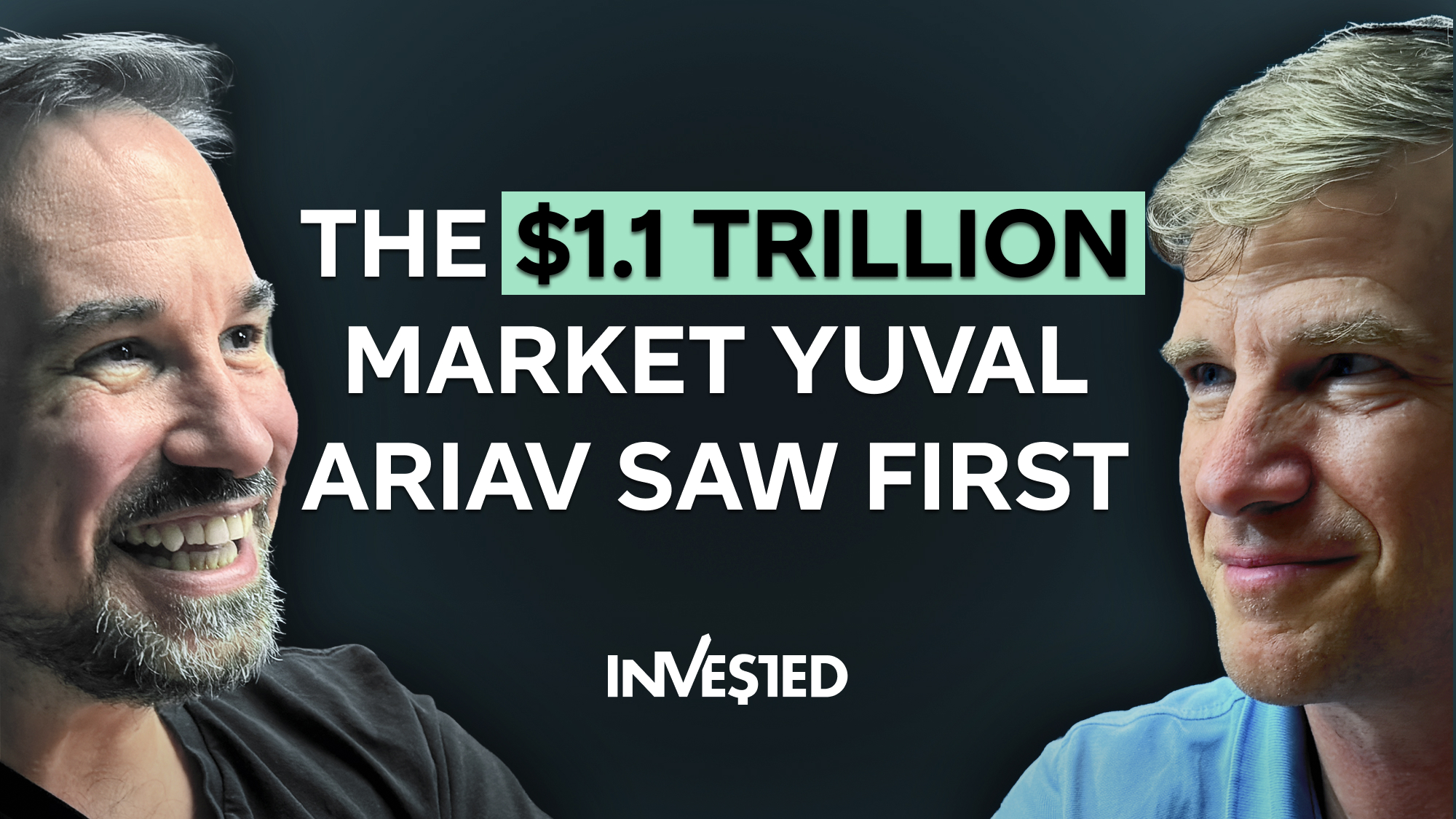
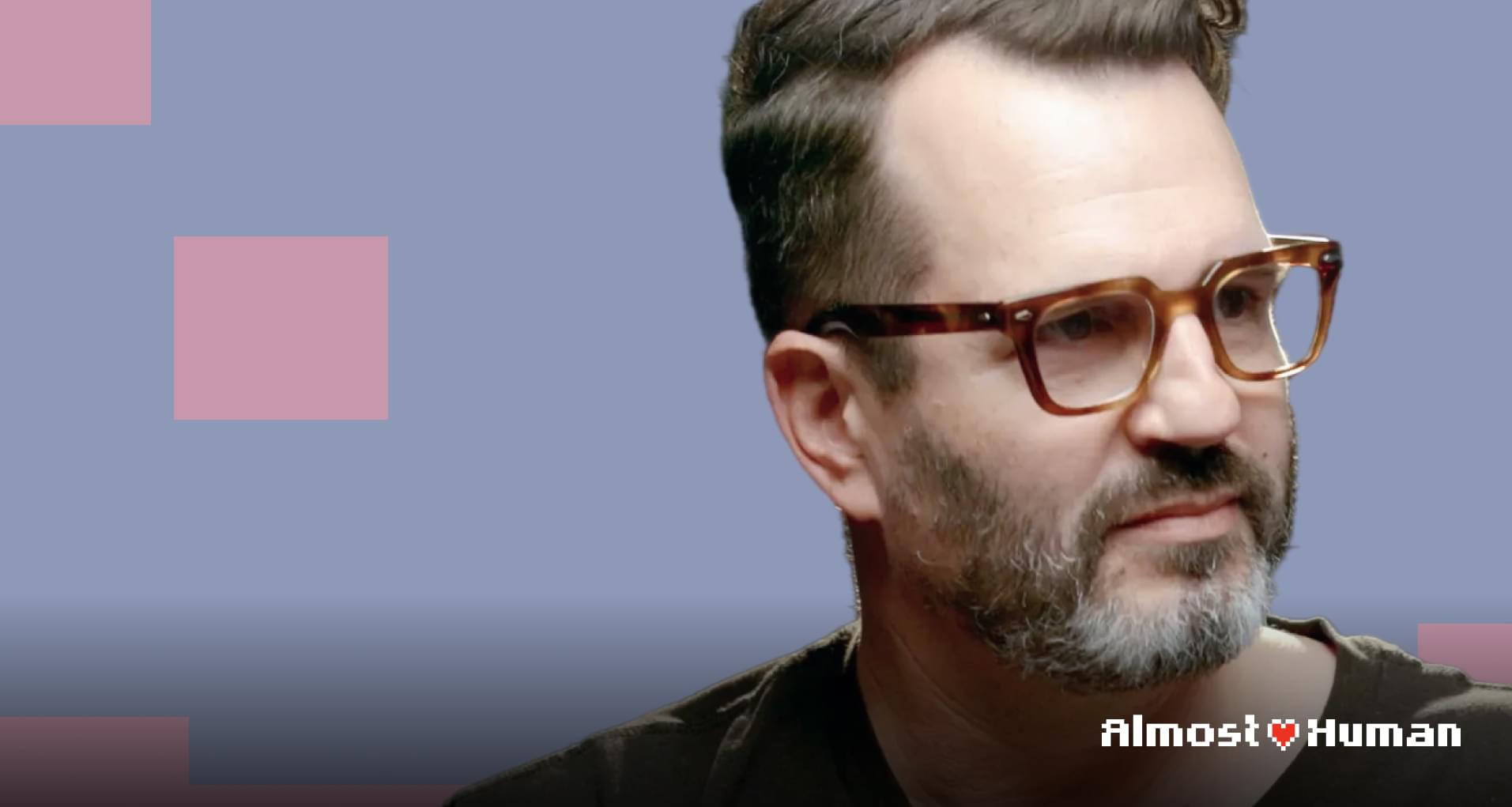
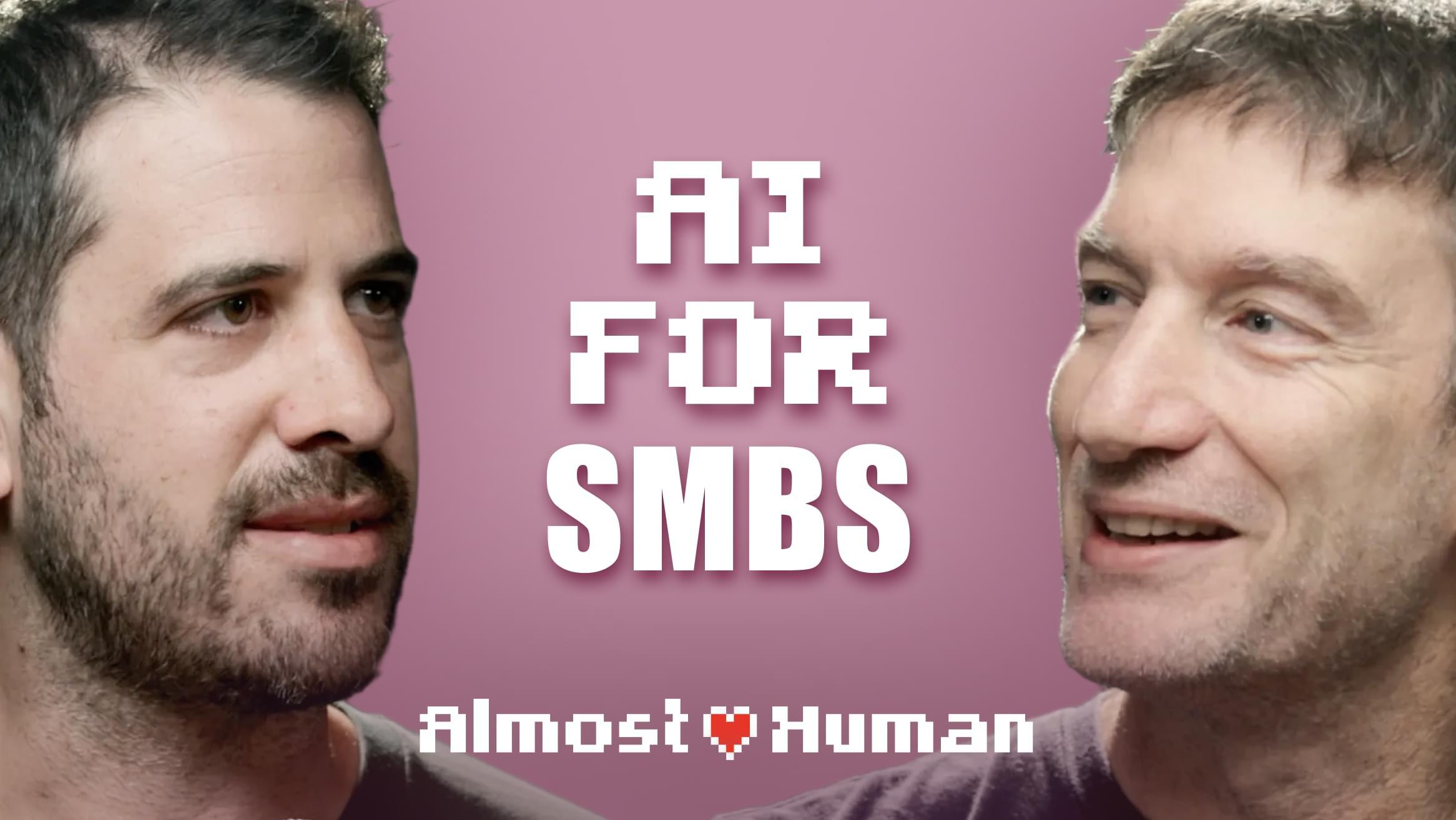
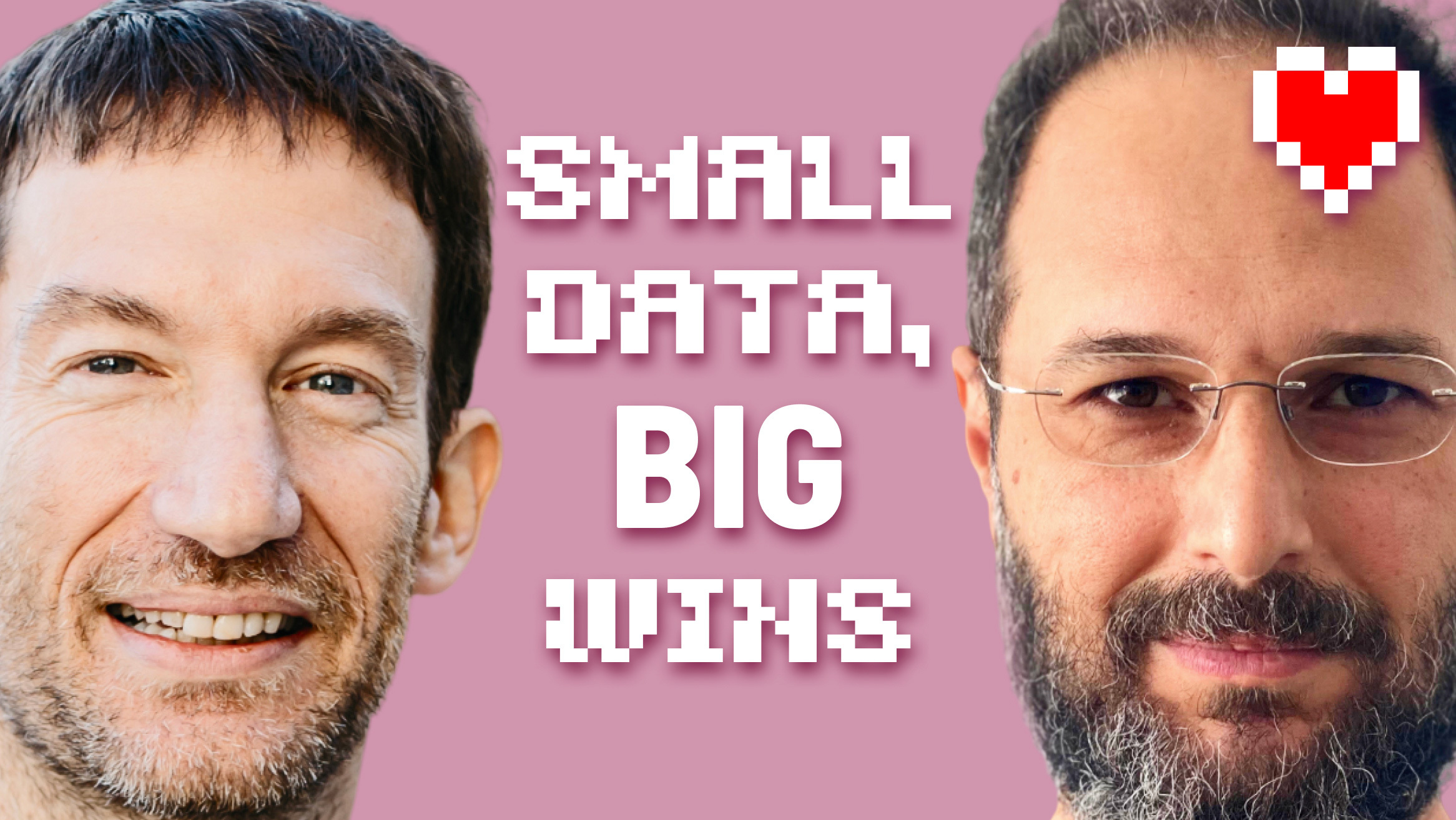
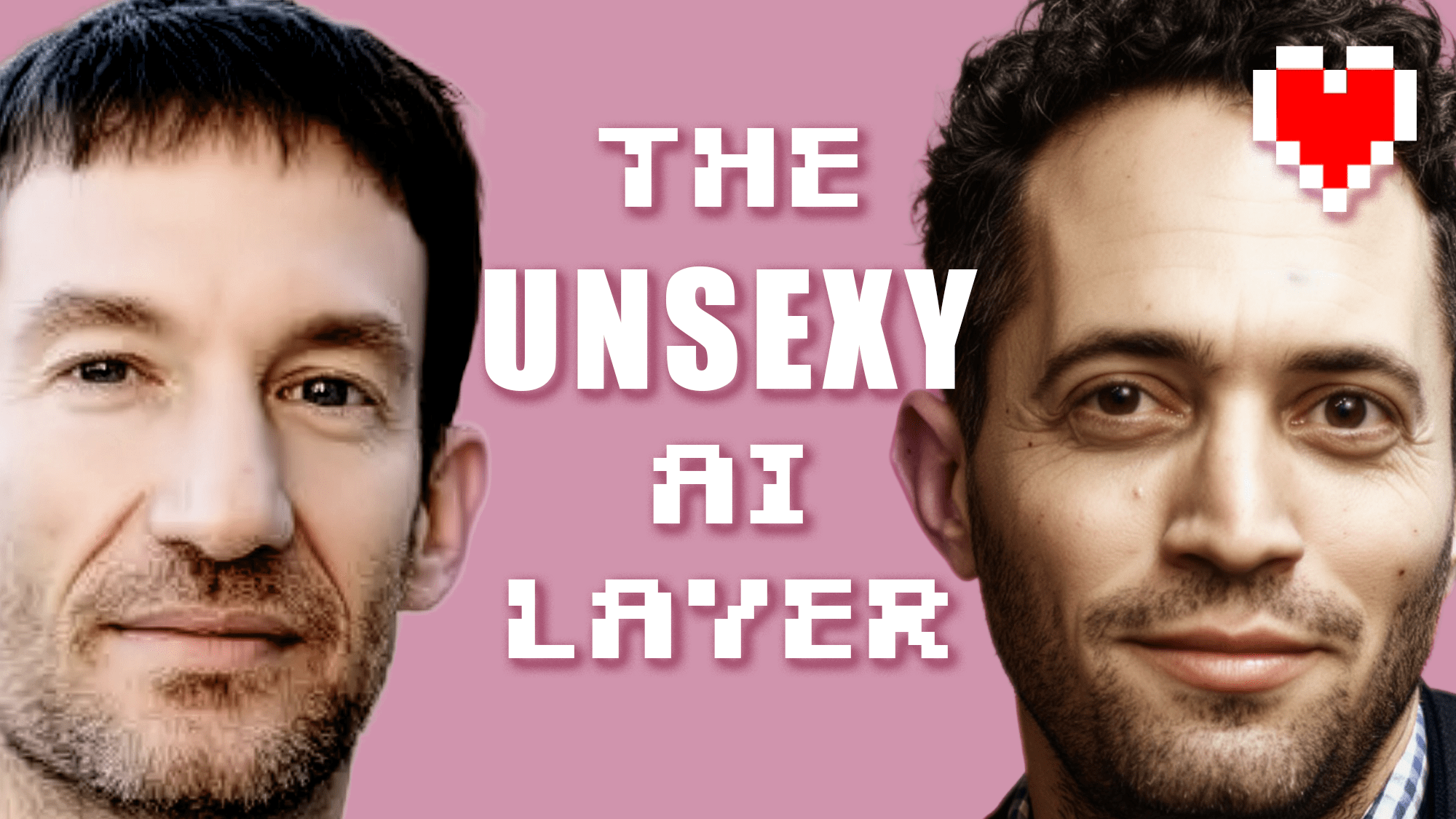
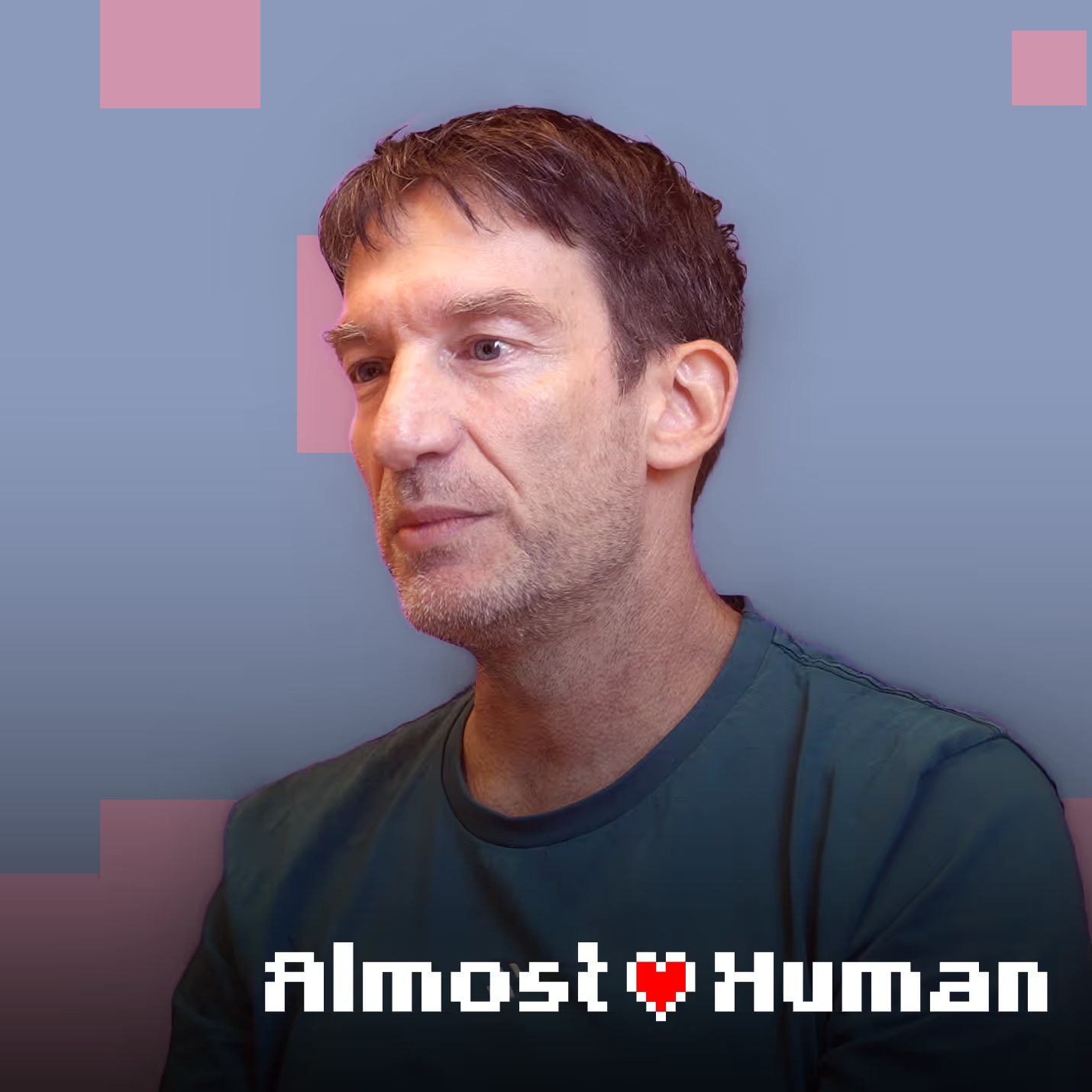
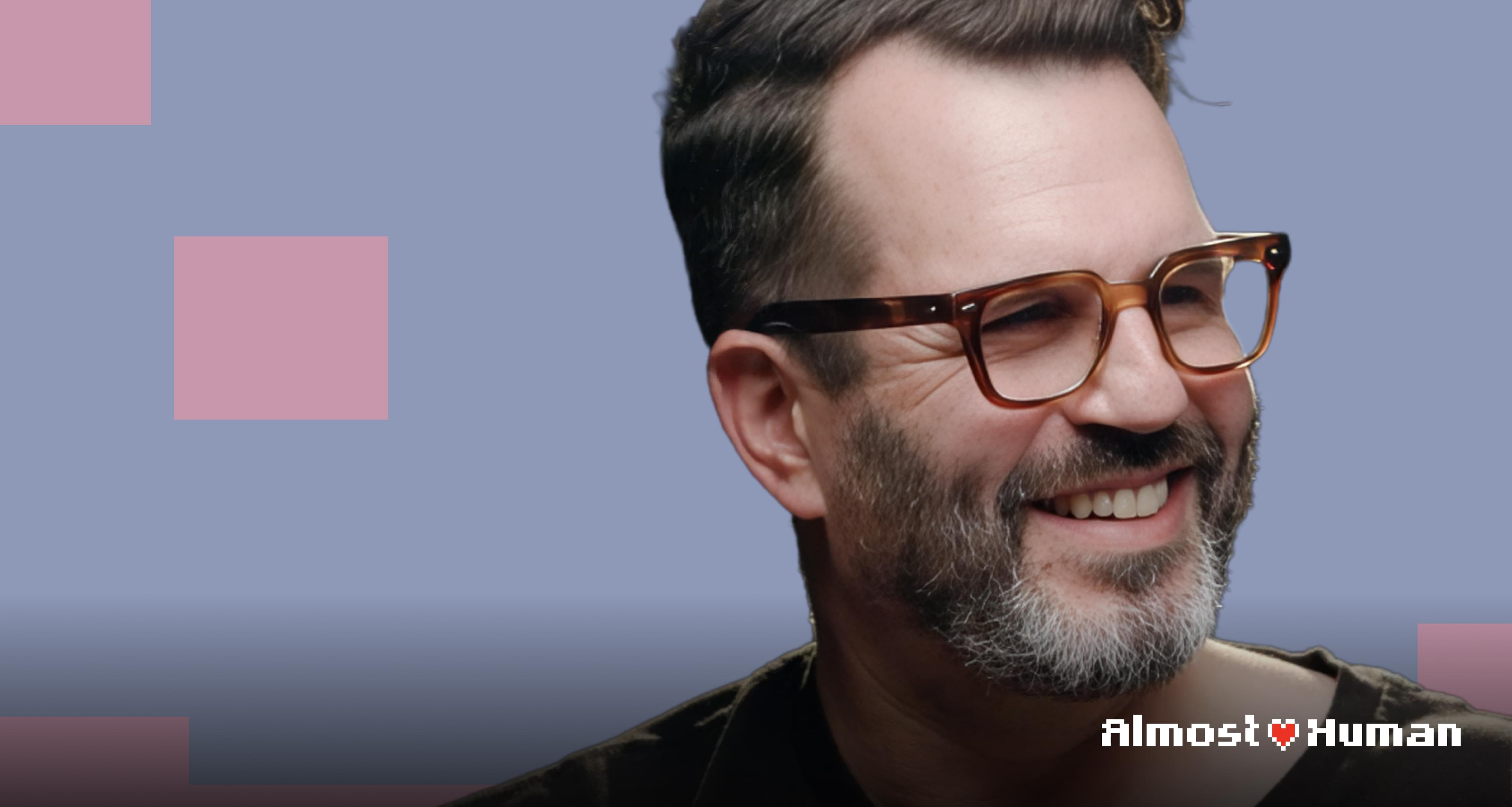
On this episode of Invested, Michael Eisenberg sits down with Yuval Ariav, Managing Partner of Symbol, a first-check VC focused on pre-consensus investments in Israel. Yuval also teaches at Columbia University about the intersection of data, business, and society. Before starting to invest, Yuval founded Fundbox, an Israeli fintech unicorn, and headed Product and Engineering for Onavo, an Israeli analytics company backed by Sequoia and acquired by Meta in 2013.
In this conversation, Michael and Yuval unpack what it means to invest before the consensus forms - and why the best venture opportunities often look strange, niche, or even wrong at first. They discuss why hot seed rounds can force bad decision-making, how a solo GP builds co-founder-level conviction, and why Symbol wants to become the go-to first-check fund for Israel's weirdest venture opportunities.
The conversation goes far beyond venture capital. Yuval and Michael dig into Columbia, academia, social unrest, the collapse of critical thinking, identity politics, and what happens when technology lets money, influence, and opinion compound faster than society can absorb. Yuval also explains why he believes NextSilicon could become "Israel's NVIDIA," why Jiga is attacking a trillion-dollar procurement market most VCs ignore, and how theater production in New York unexpectedly helped him build a better venture network.
They discuss:
· Pre-consensus vs. non-consensus investing
· Why hot VC rounds can destroy conviction
· How Symbol backs weird Israeli startups early
· Columbia, activism, and critical thinking
· Why media shapes identity
· How compounding power fuels social unrest
· Why NextSilicon could become Israel's NVIDIA
· Jiga and the trillion-dollar invisible procurement market
If you want to understand first-check investing, Israeli venture capital, AI infrastructure, compounding social power, and the future of universities, this episode is essential viewing.
Please rate this episode 5 stars wherever you stream your podcasts!
00:00 - The 12-Hour VC Decision
01:13 - Pre-Consensus vs. Consensus Venture Capital
05:12 - Hot Deals vs. Real Conviction
09:28 - Backing Israel's Weirdest Startups
12:26 - Nearly Buying Symbol.com for $10K
16:29 - Turning Columbia Students Into LPs
19:11 - Theater Production as VC Networking
22:36 - Writing Brutally Short Investment Memos
26:44 - When Compounding Breaks Society
30:16 - Are We Already in Social Unrest?
32:03 - What Really Happened at Columbia
36:34 - Academia's Activist Costume
42:22 - Is Identity Downstream of Media?
50:22 - Could NextSilicon Become Israel's NVIDIA?
54:02 - The Trillion-Dollar Market VCs Ignore
[Yuval Ariav — 0:00]
Decided to do a deal that I diligenced for 10 weeks and I had less than 12 hours to make up my mind.
[Michael Eisenberg — 0:06]
Did you do it?
[Yuval Ariav — 0:07]
We want to make Symbol into the go-to first-check fund for the weird Israeli venture opportunities. Been somewhat active in theater production in New York, which also has helped me a great ton.
[Michael Eisenberg — 0:19]
I didn't know that actors and backstage people were active investors. How's that helped you?
[Yuval Ariav — 0:22]
You would be surprised.
[Michael Eisenberg — 0:25]
Really?
[Yuval Ariav — 0:25]
You would be surprised. I think it can become one of the biggest Israeli companies ever.
[Michael Eisenberg — 0:30]
Ever. In history.
[Yuval Ariav — 0:32]
In history.
[Michael Eisenberg — 0:00]
How big is big?
[Yuval Ariav — 0:00]
I think it could be Israel's NVIDIA.
[Michael Eisenberg — 0:40]
Welcome back to another episode of Invested. I'm thrilled to be here with Yuval Ariav of Symbol Capital. Welcome, Yuval.
[Yuval Ariav — 0:48]
Thank you. Good to see you.
[Michael Eisenberg — 0:50]
We're continuing our custom of introducing Aleph's competitors into the whole world so that they can pick up LPs and promote their portfolio companies. No, Symbol is actually a great collaborator and you've always been a great collaborator here in Israel. The venture system is still very collaborative. It's not as competitive as perhaps other places in the world. So it's great to have you.
[Yuval Ariav — 1:11]
Yeah. And it's been great working with you guys.
[Michael Eisenberg — 1:13]
Yuval, I want to jump right in. And so in Aleph, one of the things we always provided, prided ourselves on was being non-consensus.
[Michael Eisenberg — 1:21]
And the firm is designed around non-consensus decision making.
[Michael Eisenberg — 1:25]
You define Symbol's kind of ethos as pre-consensus. What does that mean?
[Yuval Ariav — 1:30]
When you talk about consensus, you usually mean in the VC community, right? And for us and for me, I think the best things that, the best investments that I've made were investments that were non-consensus when they started. But then once they prove something or a couple of things that are very fundamental to business, everybody immediately understands them. And I think that stems from, if you think kind of the average VC, how they think about what can be big. A lot of it is just looking at comps. They're looking at other companies that grew very, very big and say, okay, does this look like that? And I think a lot of non-consensus, pre-consensus. And I think this is something we share, is trying to imagine what this could be despite not necessarily having that comp to point to. But once the business proves something, then everybody can imagine it.
[Michael Eisenberg — 2:24]
So is this just a question of timing? Like, okay, at some point this will be consensus, but right now it's not?
[Yuval Ariav — 2:32]
I think there are definitely things that, definitely pre-consensus investments that have to do with timing, but a lot of it, whether it's timing, whether it's timing the company makes, has to do with proving something that folks don't think that the company can prove, whether it's because of past kind of common knowledge, common wisdom in the VC community that was maybe true for companies that started in 2010, but does not yet hold now. And so you kind of need this refresher to the market of saying, oh, everybody thought that consumer fintech is X, but this was because a lot of folks today, they have the scars on their backs from companies that started maybe seven, eight, nine years ago. But then for companies today you say, well, I'm kind of diving into this and I have a thesis for why these lessons don't hold anymore. And so a lot of pre-consensus is the company having, you betting on a company that has enough, two, three years to prove something that basically invalidates a lot of the common wisdom. And then once investors see that, their imagination starts coming, kind of resets and they're thinking about what it could become.
[Michael Eisenberg — 3:47]
So Howard Marks is famous for his four quadrants, which you can have a good investment and the bad investment. You never make money on the bad investment. But even the good investment, you don't make money if you're in the consensus because it's priced in. I think that's not the point you're trying to make. The point you're trying to make is, I think, is that people have frames of reference that are born of experience. And because their frame of reference is born of experience, they wouldn't understand that actually some of those things that may have been true 10 years or didn't work out 10 years ago, actually today could work out. Is that pre-consensus?
[Yuval Ariav — 4:21]
I think that's a big part of it. I think what follows from there, and this is kind of going back to the Howard Marks thing, is that in today's VC landscape, which I think is generally very bifurcated.
[Michael Eisenberg — 4:35]
What does that mean?
[Yuval Ariav — 4:36]
I mean that as opposed to maybe 15 years ago where if you looked at players in VC, I'm talking very, very early-stage. To me it feels like there's two categories of VC now, which is a lot of it is like very obvious, momentum driven kind of very consensus stuff where tons of pools of capital, it's like they're very legible for them and they kind of, you know...
[Michael Eisenberg — 0:00]
Open AI, anthropic.
[Yuval Ariav — 0:00]
Yes, but even, but, but even in our own, you know, market, you know, I think there are very, you know, classic central casting types of opportunities.
[Michael Eisenberg — 5:10]
Cyber.
[Yuval Ariav — 5:12]
Yeah. And then there's, and then there's things that are, that are not that. And I think one of the things that flows from pre-consensus is that the deals are largely, they don't have the competitive dynamics. And more importantly, as a VC, I can tell you an anecdote that I think about six months ago or nine months ago in the same week, I decided to do a deal that I diligenced for 10 weeks, which is not something you tend to do in Israel for very hot deals. You don't have that time. And that deal was kind of sub 10 million valuation. And at the same week, a friend of mine just raised his seed 20 on an 80 and I had less than 12 hours to make up my mind.
[Michael Eisenberg — 6:07]
Did you do it?
[Yuval Ariav — 6:07]
No, not because I don't think it's going to be an amazing investment. I think it is going to be an amazing investment, but that's not the model that I do. My model is super high conviction, higher ownership than what I would get putting in half a million into that kind of round.
[Michael Eisenberg — 6:24]
So pre-consensus in your mind then means it also gives you time to look at the deal and competition's not around because it's a really out there idea?
[Yuval Ariav — 6:33]
That's a big part of it. It's not that, it's not about the competition per se, it's about that I like to go in with, for lack of a better term, co-founder conviction. I want to feel that if I wasn't doing what I'm doing today, I would want to join these folks and to do what they're doing as a co-founder. Right. I think that makes me a good partner for the long run. I think that helps you mitigate a lot of the, kind of the risk and a lot of the friction that might arrive later on. And I'm a, I'm a soul player. Right.
[Michael Eisenberg — 7:10]
You're a solo – we should say that you're a solo GP – we'll come back to that.
[Yuval Ariav — 7:12]
I know, but also like, I'm a sachkan neshama. I'm a soul player.
[Michael Eisenberg — 7:15]
Oh, soul. Like S O U L. Not S O L E. Right.
[Yuval Ariav — 7:18]
Correct, correct. Right.
[Michael Eisenberg — 7:19]
You play from the heart.
[Yuval Ariav — 7:20]
Exactly, exactly.
[Michael Eisenberg — 7:22]
Part of my job on this is to translate like Hebrew slang into English. That's really why, there's the only reason I host a podcast.
[Yuval Ariav — 0:00]
Super important.
[Michael Eisenberg — 7:29]
A little cultural translation.
[Michael Eisenberg — 7:31]
Yeah.
[Yuval Ariav — 7:32]
And so I think. And that's a big part of it. And I think for me, it's important to know the people. It's important to really get conviction on the market. I don't look at the product as much initially because, you know, nine times out of 10, the product you see when they pitch you is, you know, maybe draft one of five what's actually going to, you know, we kind of mentioned, we kind of talked about Jiga earlier. That's a really good example of this.
[Michael Eisenberg — 7:54]
Yeah, we'll come back to that.
[Yuval Ariav — 7:55]
So we'll come back to that.
[Michael Eisenberg — 7:56]
But let me ask you this. So when you say you want to be the co-founder, what you've I think basically says the way you make decisions is based on the team and.
[Michael Eisenberg — 8:02]
not on anything else.
[Michael Eisenberg — 8:03]
Is that a fair comment?
[Yuval Ariav — 8:05]
Not only. So first of all, just to put a finer point on it, I don't want to be the co-founder. Right. I want to go in knowing that if I didn't do what I am doing today, I have the level of conviction that this is what I want to spend, I would want to spend my time.
[Michael Eisenberg — 8:25]
You want to have conviction, but you don't want to work that hard.
[Yuval Ariav — 8:28]
Exactly. That's why I'm a VC.
[Yuval Ariav — 8:30]
Right.
[Yuval Ariav — 8:30]
I think the team is a big part of it, but also the market opportunity is a big part of it.
[Yuval Ariav — 8:37]
Right.
[Yuval Ariav — 8:37]
Because you want to know that where you're working with these folks, you do something that's actually going to be meaningful both in terms of impact and financially and you want to make sure that you're spending your time on the right things.
[Michael Eisenberg — 8:49]
So you're a solo gp. Correct?
[Yuval Ariav — 0:00]
Correct.
[Michael Eisenberg — 0:00]
Okay. How big is the fund?
[Yuval Ariav — 8:54]
So our fund one was 50. Our fund two, we're just raising it now. It's probably going to end up being 75.
[Michael Eisenberg — 8:59]
75 million. Why is that the right size? One of the things you mentioned earlier was like this, the venture market's bifurcated. Which I kind of agree with. And you've got these giant pools of capital then call it, you've got these funds, although we're a dying breed like Aleph, which is the 2 to 300 range, there's fuwer and fewer of them and people raising growth funds and whatnot. And then there's your 50, $75 million. Why is that the right size fund for what you're trying to do?
[Yuval Ariav — 9:28]
Right. So for me everything flows from a strategy which is, I want Symbol to become, we're not an early-stage fund. We're a first-check fund. By definition, we do the first priced round or first SAFE in a company. We have obviously reserves or follow-ons. But we will not first invest in a company that's series A. And then we want to make Symbol into the go-to first-check fund for the weird Israeli venture opportunities. Right. The non-consensus, pre-consensus stuff.
[Michael Eisenberg — 9:59]
We now have non-consensus, pre-consensus and weird. I'm collecting...
[Yuval Ariav — 10:02]
Correct. Yes.
[Michael Eisenberg — 10:03]
I'm collecting synonyms.
[Yuval Ariav — 10:05]
Amazing. And I think what that means is, again, what we tend to do is we are, the way we construct our portfolio is we have, you know, 16 to 18 investments. We, for most of them, we lead or co-lead. So we want to buy, you know, reasonably high ownership upfront. We believe that in Israel generally, you know, smaller portfolios with higher ownership tend to pay off better. Can talk about why that is. And so if you look at the type of deal that we do at pre-seed and seed, if you look at the checks we want to write, if you look at the valuations that were in the market and the ownership targets, it comes out to about, you know, an average, let's say $2 million on average for initial check. You factor in, you know, X percent reserves, you come up to about these numbers. So in fund one, our average ownership at entry was, we targeted 15%, ended up being 16%. Fund two, the reason why it's larger, it's probably going to be maybe two more investments and we wanna up the 15 to about 20. That comes out to about 75.
[Michael Eisenberg — 11:12]
You're not changing the check size?
[Yuval Ariav — 11:14]
I think check sizes are going to be slightly larger. I can tell you in Fund 1, there were investments that we've made that we led. We didn't co-lead. We led. But then because we didn't want to put in large enough checks up front, we put, maybe our cap was like three and a half. Right. Million. But the round maybe was five. I would have wanted to put four and a half if I could. Right. And so I think the average is actually going to increase by a bit and the size of the portfolio is going to increase.
[Michael Eisenberg — 11:43]
You're moving up. Soon enough you'll have a growth fund.
[Yuval Ariav — 11:46]
Exactly. Tomorrow. Yes, yes, yes, yes.
[Michael Eisenberg — 11:48]
Why is the fund called Symbol?
[Yuval Ariav — 11:52]
So in line with the strategy, this is, it's based on a lot of things. And part of it is. So when I was looking at a fund name is, I wanted a name that was working in English and in Hebrew. I wanted a name that can stand by itself. It doesn't have to be Symbol Ventures or it can be just that name, kind of like Aleph. I wanted a name where the domain was there.
[Michael Eisenberg — 12:16]
Symbol dot?
[Yuval Ariav — 12:17]
Well, symbol dot VC. I actually almost got the dot com. There is a very, very interesting domain negotiation story we can go into.
[Michael Eisenberg — 12:25]
No, do it right now.
[Yuval Ariav — 12:26]
All right. So I really wanted to buy symbol.com. apparently it's one of the first 50 domains ever to be written in the world, which added about a million and a half dollars to the asking price. However...
[Michael Eisenberg — 12:40]
That's over one year's management fee.
[Yuval Ariav — 12:43]
However, I actually almost got it for $10,000. So I did a whole history dissertation on this domain. So it was initially registered by a British company that did fast barcode scanner. That company was acquired by a company called Zebra, which is still up until this day. And that company sold its IP portfolio to Motorola. And so when I did this...
[Michael Eisenberg — 13:12]
This is archaeology, not history.
[Yuval Ariav — 13:15]
Geology of, internet geology. And so when I finished all of this, I figured out who the person, who is the IP portfolio manager within Motorola who owns this, and I wrote him directly. And we started negotiating. And we kind of started throwing numbers. It was like, maybe it's 20, maybe it's 10. And I did not believe that I was going to make this deal. It was like. Because I knew today it's, if you look at how much it's value, it's like two and a half million dollars. And then he went cold on me, or she went cold on me. And apparently at some point she wrote me back saying something like, oh, we decided to reevaluate our assets and we're not in a position to sell this now.
[Michael Eisenberg — 13:58]
They probably discovered it's worth more than the clamshell.
[Yuval Ariav — 13:59]
Exactly. Exactly.
[Michael Eisenberg — 14:01]
If you're interested in finding out ahead of time what's going on in Israeli tech, what the latest trends are, who's breaking not only news, but breaking the trend lines, then you want to subscribe to Aleph's newsletter and you can sign up right in the show notes in the description of the show. Please subscribe to the newsletter.
[Yuval Ariav — 0:00]
So it's Symbol dot VC.
[Yuval Ariav — 14:19]
It's Symbol dot VC. Okay. And so the reason why I went with Symbol, besides all the things I said, is based on a very kind of very personal story. I didn't grow up in Israel. I grew up in Brazil and in Spain. In Spain I grew up in an international school. And when I was, I think in 10th grade, maybe 9th grade, one of the things they taught us in every class was critical thinking, which I wish they would do more of today in school.
[Michael Eisenberg — 14:46]
Oh, I was gonna say Spain's not very good at critical thinking.
[Yuval Ariav — 14:48]
Yeah, yeah. This was actually the reason why I found myself in that school because it was not a Spanish education. But one day she gave us homework, and she said, " Your homework is to write a critical thinking essay, pick one truth that everybody believes, and write an essay convincing us why that's not the truth.״ And the truth that I picked at the time was that the wheel was the greatest invention in the history of humanity. And I said that I thought that was actually not true. I thought what was true is that symbols were the greatest invention. So that ability not just to memorialize knowledge, but the ability to take something that's a very abstract, maybe complicated concept and denote it in a way that streamlines communication and compresses it, I thought was a very big thing. And when I thought about the pre-consensus stuff, which a lot of it, as you know, is taking a lot of things that a ton of people believe is true and kind of being a bit of a heretic and say maybe that does not hold anymore, that felt like a very apt name.
[Michael Eisenberg — 16:01]
Before we come back to your portfolio, I need to ask you, you're also a professor at Columbia, correct? How do you juggle being a professor and being a venture capitalist? And by the way, aren't those two very different skills? The only guy I think I know who was like a professor for real and a venture capitalist was Felda Hardymon at Bessemer. Andy Rachleff went off and did it afterwards when he was finished at Benchmark. Obviously people have taught along the way classes, but I think they are almost a full time professor. The only one I can think of is Felda Hardymon.
[Yuval Ariav — 16:29]
Interesting. So first off, I'm not a full time professor. So the way I do it today, this is actually going to be my 11th year of teaching, is I teach once, sometimes twice a year. And I teach what's called term A at Columbia, which means that Instead of teaching one academic hour a week for 12 weeks, I teach twice back to back for six weeks. And so what I will usually do is I will move to New York for six to eight weeks, but that will happen once, maybe twice a year. I'm very passionate about what I teach and I think it informs a lot of my investment decisions. I can go into that soon. And basically I teach the way in which the spread of data and AI and technology changes the way both traditional industries, but also societies behave. Which I think obviously when you're trying to underwrite something decade in advance, two decades in advance, that helps. But moreover, I'm putting conveniently the Israeli part of it, which we'll get to in a minute, to the side, the Columbia experience has allowed me to introduce a ton of mutations into my network that would never have done otherwise.
[Michael Eisenberg — 0:00]
Give us an example.
[Yuval Ariav — 0:00]
Just as an example, out of my $50 million Fund 1, $9 million came from investor management, family offices, and other investors that my students went to work at later. One of my.
[Michael Eisenberg — 17:56]
You're educating the cadre of LPs.
[Yuval Ariav — 17:58]
Exactly, exactly. And you know what? It's not even what I aim to do.
[Michael Eisenberg — 18:03]
But is there any correlation between the grades you give them and the fact they invest in the fund?
[Yuval Ariav — 18:06]
Of course. That's how I have the grading curve.
[Michael Eisenberg — 18:10]
Yeah.
[Yuval Ariav — 18:11]
I'll give you another example. I think in my first or second year teaching, one of my students is now the guy who manages all of the financial services groups for all of the Amazon vendors at Amazon. Right. I invest a ton in financial services for, in general, and also for supply chain. Obviously a very good contact. I can go on and on, but my. Obviously being a VC and being any type of businessman today is a very networked endeavor. Right. And I feel like when you're here in Israel, the people you'll be able to network into are largely the people that Israelis will be able to network into, because you're getting those intros from Israelis. And so I'm always looking for opportunities to what I call, like, introduce mutations into my network. So trying to get to people at random or to places where I will meet people in random. Just expand my network into places I've never been to.
[Michael Eisenberg — 19:07]
Where other places do you randomly meet people other than Columbia University?
[Yuval Ariav — 19:11]
So that's been very. That's been very good. I, in the last five years, have been somewhat active in theater production in New York, which also has helped me a great ton.
[Michael Eisenberg — 19:23]
I didn't know that actors and backstage people were active investors. How's that helped you?
[Yuval Ariav — 19:27]
You would be surprised.
[Michael Eisenberg — 19:29]
Really?
[Yuval Ariav — 19:29]
You would be surprised. And maybe not the actors, but there is a whole industry that is very similar to VC in terms of thinking outcome distribution, trying to get an edge due with information that attracts very, very smart people.
[Michael Eisenberg — 19:50]
Hits in theater even, I think less frequent than hits in venture capital.
[Yuval Ariav — 19:54]
Correct . And their upside is not as big. Yeah, yeah.
[Michael Eisenberg — 19:57]
It's a highly asymmetric industry. Or it's the wrong way. It's got. It's got a tight. It's not even that asymmetric at the end of the day, but it's.
[Yuval Ariav — 20:07]
Yeah. The other thing.
[Michael Eisenberg — 20:08]
One Hamilton in a lifetime.
[Yuval Ariav — 20:10]
Correct. Also, if you're talking about any market that matters. Both in London and in New York, but also in other places. It is the case that out of the dozens per market, viable commercial theaters, they're all controlled by maybe three or four families, production companies. And so the bottleneck you have a lot of, they have a lot of pricing power.
[Michael Eisenberg — 20:36]
So who's the most interesting person you met in theater that was helpful to your venture career?
[Yuval Ariav — 20:40]
So I met the director of Hadestown, which is one of my favorite pieces of art over the last 10, 15 years.
[Michael Eisenberg — 20:52]
What is your favorite Broadway show?
[Yuval Ariav — 20:54]
Probably Hadestown.
[Michael Eisenberg — 20:56]
Okay. Yeah.
[Yuval Ariav — 20:56]
I think from. From an artistic perspective, it's probably my favorite. It's. I don't know if. I don't know if you've seen it, but it's. It's a. I love how. I love words and writing. I think there was a lot of. A lot of power and a lot of intelligence in taking very complex. Yes.
[Michael Eisenberg — 21:14]
Symbol.
[Yuval Ariav — 21:15]
Yes. Very complex themes and truths and putting them into very small, you know, into very succinct way of communicating. And I think that play does excellent work exploring a ton of different themes and overlaying them in a way that kind of feels like almost invisible in a good way.
[Michael Eisenberg — 21:35]
Given the fact that you like succinct communications, is podcast a good medium?
[Yuval Ariav — 21:39]
I think there's a more interesting question, which is one of the things I'm struggling with is, you know, we're living in a world that has more and more complexity. Right. Because time goes on. You know, we're building on top of the things we've built and perfected. And I think the thing that, for me is a question. It's a question when I teach at Columbia as well, is are we as people collectively losing our attention span? And what that does. And that's part of why I like very succinct communication.
[Michael Eisenberg — 22:18]
Yes, that's a question. You don't think this is true?
[Yuval Ariav — 0:00]
No, it's true.
[Michael Eisenberg — 0:00]
Okay.
[Yuval Ariav — 22:21]
Yeah. But part of the reason why I like synced communication, why I think it's so important, it's the ability to cut through a ton of, you know, a ton of noise that exists out there that only goes up and up.
[Michael Eisenberg — 22:36]
Do you write investment memos at Symbol?
[Yuval Ariav — 22:37]
Yes, but they're very. Do, you know, smart brevity.
[Michael Eisenberg — 0:00]
I mean, I know the term smart brevity, so.
[Yuval Ariav — 0:00]
But do you know the format? You read Axios, right?
[Michael Eisenberg — 22:47]
I do read Axios.
[Yuval Ariav — 22:48]
You know, Axios has their format.
[Michael Eisenberg — 22:50]
I try. I shouldn't say I read Axios. When it's sent to me, I read Axios.
[Yuval Ariav — 22:53]
Okay. But you know that they have a very, like a very. Right, that's. There is a format.
[Michael Eisenberg — 22:58]
The four bullets. Yeah.
[Yuval Ariav — 22:59]
So I, so I try to write it in that, in that way.
[Michael Eisenberg — 23:02]
How long is your investment memo?
[Yuval Ariav — 23:05]
Depends, but it's a few pages.
[Michael Eisenberg — 23:07]
Have you gone back and looked at your investment memos? And how, how good are you at it? Is it accurate? Do you identify the right issues?
[Yuval Ariav — 23:13]
For the large parts, I think my mistakes were something that I didn't even think about versus something that I thought about and I got wrong.
[Michael Eisenberg — 23:27]
So you're always right if you think about it, but if you don't think about it.
[Yuval Ariav — 23:30]
I try.
[Yuval Ariav — 23:30]
Yes.
[Yuval Ariav — 23:31]
So every investment memo I try to, it ends with a risk analysis. Right. Like, here are the risks I'm seeing. What are the likelihood? What is the severity? What do you do to mitigate? When down the road, can you catch it? So you can decide on a follow on investment or something like that? Right. But most things were not, you know, it's things you couldn't even think about.
[Michael Eisenberg — 23:52]
Do you have a similar section in the memo on upsides?
[Yuval Ariav — 23:55]
The whole memo is based on upsides.
[Michael Eisenberg — 23:57]
Got it.
[Yuval Ariav — 23:57]
So I, I always take the very maximalist view of. I try to take the maximalist view because to me that's the business. That's how I think about investments. Right. You gotta, you know, I'm, I try to identify all the places where I think this could fail and then see if I believe that you can cross them in terms of belief. But then I try to be very optimistic about that. Try to say, okay, if all this goes wrong, this could be $100 million company.
[Michael Eisenberg — 24:29]
Give us the TL;DR, the smart brevity on your course at Columbia.
[Yuval Ariav — 24:31]
What technology has done in the last 50 years, you could give countless examples of how it's changed business. But at least one of the models that I teach and I believe in, is that each and every one of these advancements, what it ultimately leads to is that you can just compound things faster.
[Yuval Ariav — 25:04]
Okay. Once you look at that through that framework, you can then ask yourself, well, how does hiring impact that compounding? How does better data impact the compounding? How does the way you store data impact compounding? How does fitting your data to the business model, all that. And then the logical next thing that you were talking about is historically a lot of that compounding has been either held back or controlled by regulators. Not necessarily by the way, regulators who are government entities. Today, the biggest data regulator in the world is Apple. But at least in the past, because compounding was less profound than, less stronger than it is today, what that meant is that regulators had way more time to react. And so basically what the course is trying to take this framework and then first look at the last 20, 25 years through that lens and then look at things that are happening now and trying to say, well, if you buy into this framework and you buy into all of these assumptions about the businesses today, what do you think is going to happen?
[Michael Eisenberg — 26:26]
So how to think about a world in which compounding, for argument's sake, is not 5% a year, but 8% a year? It's like what Elon Musk said the other day, that he thinks that the economy can 10x itself in the next 10 years just because the rate of change is getting that much faster. What happens when the rate of change gets this fast?
[Yuval Ariav — 26:44]
I think that's more of a sociological problem because I think my sense is that the rate of compounding doesn't work for everybody. Right. It works for very, increasingly smaller number of people more than it does to others.
[Michael Eisenberg — 26:58]
What does it mean it works for a small number of people. What does that mean?
[Yuval Ariav — 27:04]
What is compounding? Compounding is you have something, you have an asset, right. And you can make that asset more valuable by doing transactions with the market. And that asset could be wealth, it could be stock, it could be your opinion, could be your political power. Right. It's not just in financial domain. And the more today, at least, the more your preexisting asset is larger, is more diversified, the more you can compound, the faster you can compound and the yield you can get is better.
[Michael Eisenberg — 27:42]
Say this again.
[Yuval Ariav — 27:44]
The more you have now, the faster you can compound.
[Michael Eisenberg — 0:00]
The more I have
[Yuval Ariav — 0:00]
The more I have. Yes, yes. If you have $100 million that you can deploy, you can probably compound that faster. Not just because you have more transactions than you could do with the market, and so the base is higher, but also the rate is higher.
[Michael Eisenberg — 28:07]
The rate of compounding.
[Yuval Ariav — 28:08]
Yes.
[Michael Eisenberg — 28:08]
And that's not just true of financial assets in your business.
[Yuval Ariav — 28:10]
It's not. It's not. It's true of.
[Michael Eisenberg — 28:11]
Social capital.
[Yuval Ariav — 28:13]
Social capital. It's true of what, it's true of what I call opinion capital, which is if you have a million follower account on Twitter, you're going to compound that way quicker because that's how the algorithm works, that's how psychology works, than if you have a thousand.
[Michael Eisenberg — 28:31]
Right. This is just true. The world is more networked today. It Was true about viruses too, right? If you think about COVID, et cetra.
[Yuval Ariav — 28:35]
It is because of two things.
[Michael Eisenberg — 28:38]
True of IQ as well. Right. You know, the Flynn effect on IQ that I IQ is compounding, increasing.
[Yuval Ariav — 28:45]
Yes.
[Michael Eisenberg — 28:46]
Because you have just more networks, smart people can find smart more people. That's the theory.
[Yuval Ariav — 28:49]
Correct.
[Yuval Ariav — 28:51]
Yeah. But, but I, I don't think people think that because of compounding of IQ in a hundred years you're going to have people with 10,000 IQ.
[Michael Eisenberg — 29:01]
Right.
[Yuval Ariav — 29:01]
Right. So I think the rate is much lower. But, and, and so what happens is you get, what that just means is that yes, maybe the economy is going to like Elon says, grow 10x 10,000x in the next however many, that's probably going to disproportionately serve, you know, obviously. And so the question
[Michael Eisenberg — 29:26]
So the course is kind of on network effects and kind of how advantage will centralize over time due to compounding.
[Yuval Ariav — 29:33]
Correct. And whether what are some things that could cause it to, could cause that to break.
[Michael Eisenberg — 29:40]
So what are some examples of something that can cause that to break?
[Yuval Ariav — 29:43]
Historically that's been, you know, masses that are rising. It's been
[Michael Eisenberg — 29:50]
Social unrest. Regulation.
[Yuval Ariav — 29:51]
Yes, yes.
[Michael Eisenberg — 29:52]
Standard Oil.
[Yuval Ariav — 29:53]
Correct, correct.
[Michael Eisenberg — 29:54]
What else? War.
[Yuval Ariav — 29:58]
I think war is a byproduct of that. It's not a direct byproduct, but it is definitely a byproduct.
[Yuval Ariav — 30:04]
Whenever you think the system can't work for you anymore, you can't get to, not even the top, but then my sense is if enough people think that they can mobilize their collective power and do something about it.
[Michael Eisenberg — 30:16]
And when's that happening? Are we already in it?
[Yuval Ariav — 30:19]
I think to an extent we're already in it.
[Michael Eisenberg — 30:21]
We're already in it.
[Yuval Ariav — 30:22]
Yeah.
[Michael Eisenberg — 30:22]
So give us some examples of that happening already right now.
[Yuval Ariav — 30:25]
Mamdani in New York, I think is one. If you're looking across.
[Michael Eisenberg — 30:33]
He is a reaction, in your opinion, to other people enjoying exponential outcomes or he is able to mobilize exponentially because of his charisma?
[Yuval Ariav — 30:45]
Both.
[Michael Eisenberg — 30:46]
Both. Okay.
[Yuval Ariav — 30:46]
Yes. And I think on the right side of the U.S. political, you have people who would in no other normal situation would have the following that they have, because they were able to compound a lot of their opinion capital through these networked.
[Michael Eisenberg — 31:07]
Tucker Carlson is an example, you think?
[Yuval Ariav — 31:09]
Is a very good example. Yeah. Candace Owens.
[Michael Eisenberg — 31:12]
Okay. But is social unrest, are we here already for social unrest against this?
[Yuval Ariav — 31:17]
It's hard to say.
[Michael Eisenberg — 31:21]
What happens when the masses rise up against this exponentialization of this?
[Yuval Ariav — 31:26]
Look, I think in democracy the natural outlet of that will be elections and will be a swing in, which you can argue we've seen some in Trump. You can argue we're going to see maybe with, if they're on Democratic, they're going to advance some DSA folks. You can argue that. And I think if enough time passes where even through democracy, you don't think you can have that, then maybe it's something that's more political. More political violence, more. Yeah.
[Michael Eisenberg — 31:59]
A teacher at Columbia - do you think what happened to Columbia is a reaction to that or is that something else?
[Yuval Ariav — 32:03]
No, I don't think. I think.
[Michael Eisenberg — 32:04]
What happened in Columbia there? You're on ground zero of Columbia. What happened? Tell us about that.
[Yuval Ariav — 32:12]
So I, about a year ago, I remembered that I never watched the Sopranos and I started watching them.
[Michael Eisenberg — 32:22]
I didn't remember I didn't watch the Sopranos because that's something I would if I wanted to remember. Yeah, I haven't watched.
[Yuval Ariav — 32:28]
I had like, I had like a list of shows that I wanted to watch or like really good shows. And I kind of went through the list and...
[Michael Eisenberg — 32:38]
You binge watched the Sopranos.
[Yuval Ariav — 32:40]
I binge watched the Sopranos.
[Michael Eisenberg — 32:41]
Okay.
[Yuval Ariav — 32:41]
There is an episode called Columbus Day, which, and this episode aired in mid-1999.
[Michael Eisenberg — 32:48]
Okay.
[Yuval Ariav — 32:49]
Okay.
[Michael Eisenberg — 32:50]
27 years ago.
[Yuval Ariav — 32:52]
Yes. Where his daughter goes to Columbia and she comes back and they talk about Columbus Day and she tells them she doesn't want to call it Columbus Day, it's indigenous people day. And they get into a ton of discussion about how Columbus killed the indigenous and he was a colonizer. And you could see things that are being said today that have existed, you know, back then, you know, 27 years ago. And so I think, and Columbia has always been, I think, you know, kind of like on the very extreme of social movements.
[Michael Eisenberg — 33:34]
Yeah.
[Yuval Ariav — 33:34]
I think fundamentally what happened at Columbia, and I'm not one of these folks who say we lost the U.S. campuses, because we lost the...
[Michael Eisenberg — 0:00]
We, meaning?
[Yuval Ariav — 0:00]
We, the Israelis.
[Michael Eisenberg — 33:45]
Right. Or Jews.
[Yuval Ariav — 33:46]
Yeah. Because look, we lost the Ivy Leagues.
[Yuval Ariav — 33:49]
Right.
[Yuval Ariav — 33:50]
But I have people that I work with in the US Whose kids go to, you know, universities in Texas and then, you know,
[Michael Eisenberg — 0:00]
Vanderbilt.
[Yuval Ariav — 0:00]
Yeah. And you know, they either between, you know, the campus doesn't care or, you know, they're slightly pro Israel. But I gotta tell you, even at Columbia. Right. If you look at the, if I'm not mistaken, the distribution of political opinion at Columbia is roughly, it's roughly, I think 65% liberal, non progressive liberal, Clinton Democrat type, 20% conservative, and 15% progressive.
[Yuval Ariav — 34:39]
Right.
[Yuval Ariav — 34:40]
You wouldn't know it from what you've read about Columbia.
[Yuval Ariav — 34:43]
Right.
[Yuval Ariav — 34:43]
I teach at the business school. Yeah, most people are.
[Michael Eisenberg — 34:46]
That's where you'll find all 20% of the conservatives are probably at the business school and the STEM.
[Yuval Ariav — 34:52]
Correct.
[Michael Eisenberg — 0:00]
Liberal arts is filled with.
[Yuval Ariav — 0:00]
Correct. Although a ton of the folks at a business school are first generation. They're not necessarily conservative. The folks who are second, third, or kind of U.S. forever. Yeah, you're right. But a ton of them are not.
[Michael Eisenberg — 35:08]
So what happened in Columbia? You were there.
[Yuval Ariav — 35:11]
I think it's a combination of, I would say neglect of the academic duty.
[Michael Eisenberg — 0:00]
What does that mean?
[Yuval Ariav — 0:00]
For me, I think a lot of the responsibility for what the academy needs to do is teach people how to think. Right. And I don't think you can teach people how to think without repeatedly showing them competing views and training them on how to think critically and how to change your opinion and how to steelman yourself. And generally speaking, I don't think, it's not all of the academia, I think in these schools, which are largely social sciences, that...
[Michael Eisenberg — 36:01]
They became communist or socialist indoctrination systems instead of free thinking institutions?
[Yuval Ariav — 36:04]
Even if not that, the fact that you're, even if you don't have a professor that actively preaches a specific viewpoint every time, every class, the fact that you are selecting a very narrow subset of reading materials, the fact that the course reacts to only a very narrow subset of recent historical events, that matters.
[Michael Eisenberg — 36:32]
Why do you think this happened?
[Yuval Ariav — 36:34]
As I said, I think generally speaking, the university has lost that ethos. I think a big part of it is in terms of who you picked for tenure and how you pick them for tenure. And I think kind of like this, I think happened in academia sooner than it happened or earlier than it happened in media and news media, people donned an activist costume. They went into an activist persona.
[Yuval Ariav — 37:07]
Right.
[Yuval Ariav — 37:08]
And they prioritized that persona over their, let's call it, professional reason for being.
[Michael Eisenberg — 37:15]
Why would they do that?
[Yuval Ariav — 37:17]
Because I think that gives you more identity.
[Michael Eisenberg — 0:00]
Because people needed identity?
[Yuval Ariav — 0:00]
Yeah
[Michael Eisenberg — 37:21]
Why are they so lost?
[Yuval Ariav — 37:24]
I think generally in the west, we've somehow. So I. Okay, I'll tell you. In the past, largely because I think when we were, as a society, our view to the world was more editorialized through a very small number of media outlets. You had tastemakers, which generally could nudge us into identity. And I think part of that is the sense of the importance of community. Part of that is in the things that you read and saw. There was an echo of the general values of society. You were holding people in power and in business and government to account over these values. And I think a big part of that was lost when we decided that we don't want any middlemen. For me, at least, and this has some guest appearance on my course, when we talk about kind of data and people segmentation and what that's doing, you know, identity is, I'm not going to say anything that's too novel here, but obviously identity corresponds to what we feel about, what we feel is good or evil, right? Because identity is values and ton of value, not all of them, but a lot of them have a moral dimension to them. Right. But I think the opposite is also true, which is when our identity is weak, either our community identity, our national identity, or whatever, sometimes perceived evil can very easily hijack our identity. And I think to your question earlier, I think that is a lot of what's going on. That's definitely what's going on today with the younger generations. Right. I think in Israel, I wouldn't say we're immune from it, but the fact that we are living in a very tough neighborhood and that our history has been, you know, Israeli society is on the very, very low, like, low bottom rung of the Maslow's pyramid of needs. And I think that grounds you in identity. It grounds you in, you know, an actual reason for living. And I think, you know, I keep telling people, I think if you're, if you're my age, right? Or if you're, let's say, 10 years younger, you're in your 30s in the U.S., you probably don't, you were probably not terribly scarred by 9/11, right. And so you kind of lived your life not really understanding that there is real evil in the world. And I think what that does over time, especially with what's happening with social media today, to one's sense of identity, it causes it to fracture. To fracture, sorry. And then you get culture wars, you get identity politics, you get all that.
[Michael Eisenberg — 40:21]
I was thinking earlier this week, we're talking now, as the talks are going on between Iran in the United States and Lucerne. So on Saturday, Shabbat, I was sitting around in my house and I was thinking about this topic, literally. I was asking myself, growing up in New York, what were the incidents that seared some of my conscience? And one of them was the marching of 51. I think it was American employees of the embassy out blindfolded. I remember in 1979, 1979, out of the U.S. embassy in Iran. I think as an American, that was a humiliating scene. And then I think about, like a year later, the United States winning the Olympic hockey game against, you know, all odds, Russia, the miracle team. And that was also a searing event, but it was, it was in context of Ronald Reagan fighting the Russians and Ayatollah Khomeini, these evil Iranians marching out American civilians, you know, blindfolded. And those are searing memories. But nobody today remembers these things. And 9/11 obviously is another one for Americans. But to your point, in Israel, I don't think we have that confusion.
[Yuval Ariav — 41:31]
Do you remember as a kid when you, when you saw that on TV or on read the news, do you remember the channel you watched? Do you remember the network you watched it on?
[Michael Eisenberg — 41:41]
I know if I remember the network I watched it on, but I definitely remember the network I watched the shooting of Ronald Reagan on.
[Yuval Ariav — 41:46]
Yeah.
[Michael Eisenberg — 41:47]
And it was CBS. I remember that.
[Yuval Ariav — 41:50]
So the interesting thing to what I said earlier, which is take yourself back to that time, there must have been maybe 10 networks you could have consumed that data on, that information on, and they wouldn't say two different things from each other.
[Michael Eisenberg — 42:03]
Not terribly.
[Yuval Ariav — 42:04]
Right. Not terribly. Which is not the case today. You look at, you look at Charlie Kirk, you look at the Trump trial, the assassination, you know, the, what happened just now with Vance in Switzerland. Yeah, right. You could get, you know, just completely different narratives.
[Michael Eisenberg — 42:19]
So you think, you think identity is downstream of media?
[Yuval Ariav — 42:22]
Absolutely, yeah.
[Michael Eisenberg — 42:23]
Interesting. Yeah. Give us your background. I know we're like 45 minutes in this podcast and sure. But give us your like full background and I want to talk about a few portfolio before we wrap.
[Yuval Ariav — 42:33]
Sure. So I had what I now realize is the fortune of being born here in Israel, but actually not spending all of my early life here. My parents are both agronomists and when I was a kid they got a job working in Brazil in the jungle. That's where I grew up until I was six. Went back to Israel to do primary school. My dad got a job in Madrid, in Spain. His condition was that, in Spain they don't teach you English. And so my dad's condition was that if we're gonna move, his kids are gonna go to an English-speaking school, of which there were two. There was a British school and American school. And so I ended up in an American school. International. Amazing, amazing, amazing experience. I think it shaped a lot of what I do today. Went back to Israel to finish bagruyot.
[Michael Eisenberg — 43:35]
That's metriculation exams in high school.
[Yuval Ariav — 43:37]
Joined the army. Initially I really wanted to be a fighter pilot because I was an 80s kid. Ended up being taken to an intelligence unit as a translator because I spoke a ton of languages at that point. Two days later, my CO came to me and said, oh, by the way, we're canceling the translation post. And this was. I was supposed to be a translator in a unit that was complete, that was full of math and computer science whizzes. And they said, well, you're here. We don't really know what to do with you, but you can stay. And then, you know, I was great. And two weeks later I found myself being horribly bored. I started teaching myself programming and reverse engineering. At some point, Elad, the CEO of NextSilicon, came into my room with a giant book of Windows NT internals reference. He said, here, study this. And so I ended up staying ten years. Was an incredible time, both from just a mission perspective, but you get to work with some of the brightest minds, the toughest problems. It was until today, the most intellectually exhilarating time of my life. Left the service at 27, joined up a couple friends who started Onavo, which was a mobile data analytics company. One of the first one was started as a B2C company, then ended up being hybrid B2B, B2C. Ran product engineering there for a while. Left before the acquisition, started Fundbox.
[Michael Eisenberg — 43:38]
The acquisition by Facebook?
[Yuval Ariav — 43:39]
By Facebook, yes.
[Michael Eisenberg — 45:13]
Many people say that how Facebook figured out how to get in the App Store. You should say that also. I won't ask you.
[Yuval Ariav — 45:18]
Yes, it's funny because when I started teaching at Columbia, which was 2016, I taught fall semesters which started at September and like clockwork for like five years straight, every last week of August the Wall Street Journal did an expose on Facebook and Onavo and some other thing that did, which was a great segue into the. It was incredible. Then I started Fundbox, which was a very, very fast-growing Israeli fintech company, still private, break-even, kind of doing quite well. Ran product engineering for both these companies. Also ran marketing for Fundbox. Basically, our team invented Embedded Finance in 2014 where we took the Fundbox product and sold it as an API to Intuit QuickBooks. Just an integration that's alive until today. And then in the last eight years I've been investing. I started as an angel investor and a general partner in a fund called LionBird. And then five years ago I set up Symbol.
[Michael Eisenberg — 46:26]
So you mentioned Elad from NextSilicon. So let's talk about a couple of portfolio companies. So why did you invest in Next? First of all, Elad was on the podcast.
[Yuval Ariav — 46:36]
Yeah.
[Michael Eisenberg — 46:37]
So why'd you invest In NextSilicon? What about it is pre-consensus?
[Yuval Ariav — 46:41]
All right, so NextSilicon was an interesting investment. So originally Elad asked me to be the CEO of the company and to be his co-founder.
[Michael Eisenberg — 46:50]
There you go again. It's that co-founder thing.
[Yuval Ariav — 46:53]
I was kind of tempted but at the time I had just committed to be a GP at LionBird and committed to LPs and I'm not a type of person to, you know, kind of commit to that and then say well I have something else going. But at the time, I don't know if you remember that time, there was a really interest, there was a bunch of companies started, all of which wanted to do AI, but not AI in the LLM sense, but kind of like AI inference in the 2018, 2019 sense. And the thesis back then was that if that's what you did, you had a very, very small number of companies who could be potential buyers for product, potential customers. Right. Basically just the hyperscalers. And they were very over being pitched by ASIC companies to do that. And so we said we need a way to prove this technology and also that technology is very, very specific. We can kind of talk about that, but we need a way to prove that in a way that's not dependent on the hyperscalers. Very few investors got that approach.
[Yuval Ariav — 48:07]
Right.
[Yuval Ariav — 48:08]
And I think that if the company went ahead and did AI first, it probably wouldn't have existed today. The other thing is that the technical approach there is very difficult to get your head around. Right. Most hardware investors really understand taking a specific computational challenge and then dedicating all of your R&D to specifically and drastically optimizing that and then saying well if you do that then your chip is going to be this much better because that's the way everybody does it. Right. The NextSilicon architecture is something that no other to my knowledge, besides maybe one startup is doing. And so that was also a. So the risk that investors took wasn't just a strategy risk, it was also a technical risk. And I think once kind of the rough circuit of Series A, which is when Aleph invested, when we built the simulator and it was slightly de-risk the tech, then everybody started to get it.
[Michael Eisenberg — 49:23]
Elad said I should ask you, by the way, why did you turn down his offer to be the CEO? Like what were you thinking?
[Yuval Ariav — 49:30]
Yeah, to be honest, I think that if I hadn't turned him down, I think it's hard for me to imagine doing a better job than him. That company, in terms of the details that you have to be able to attend to.
[Michael Eisenberg — 49:52]
Yeah.
[Yuval Ariav — 49:53]
Not of the technology, not just of the technology, but how that technology relates to the business needs of the customers is something that I know I can probably count on, you know, like single hand the people who I know, and I've worked with some very, very clever people, who will be able to contain all of that complexity and mobilize a team of hundreds of people around.
[Michael Eisenberg — 50:17]
Dan Loeb was also an investor in the company. Wrote to me like a week ago. He thinks this could become the next Cerebras. Do you agree?
[Yuval Ariav — 50:22]
Yes, I think it can become one of the biggest Israeli companies.
[Michael Eisenberg — 0:00]
Ever?
[Yuval Ariav — 0:00]
Ever.
[Michael Eisenberg — 50:26]
In history?
[Yuval Ariav — 50:27]
In history.
[Michael Eisenberg — 50:28]
How big is big?
[Yuval Ariav — 50:30]
I think it could be as real as NVIDIA.
[Michael Eisenberg — 50:33]
What's exponential about it? You think NextSilicon could be Israel's NVIDIA? What's instead of what's exponential, what's the catalyst for that?
[Yuval Ariav — 50:42]
When, when I say Israel's NVIDIA, I don't mean it can be like however many trillion dollar company tomorrow, right?
[Michael Eisenberg — 50:49]
That's the expectation you just created. I just want to point that out.
[Yuval Ariav — 50:52]
It is, you know what I mean is...
[Michael Eisenberg — 0:00]
He's neck and neck with Elon now, I think.
[Yuval Ariav — 0:00]
Well, yes, obviously. And, and, and I think you can take him. I think that if you look at the big semi companies, right, none of them are a one ASIC company, right? They're platform companies. And so you know what a CPU and what a GPU is and why they're different and why each one is good for different use cases, right? And I think the very exciting thing for me about NextSilicon is that it's a platform company, right? And I think it's a platform company that is uniquely, whose architecture is uniquely built for the challenges that we face today. Let me be specific about it. If you look at what's happening today in the world of compute, there are two competing timelines, all right? There is the timeline of how long, once you've made a decision that you want to build a chip to optimize a specific algorithm or computational building block of an algorithm, how long from that decision to the fact that you can have something back and you can start working on it, how long that takes. If you look at the length of that process, it does not materially moved in the last 25 years. Still takes a few years. You have to move a lot of atoms, a lot of. If you look at how many new computational building blocks and algorithms we are thinking up and we are using, that looks like exponential growth. And so the problem is that if today you decide that you want to optimize a computational building block in the latest OpenAI sub algorithm, sub model, by the time in 3, 4 years that that's going to be back in your hands, that could have been completely irrelevant.
[Yuval Ariav — 52:54]
Right.
[Yuval Ariav — 52:55]
And so it's not only that NextSilicon is a different architecture, is it's an architecture with zero time to market in terms of you don't need to build a new chip every time you have a new algorithm.
[Michael Eisenberg — 53:08]
Right.
[Yuval Ariav — 53:08]
And I think. And if you look at the other.
[Michael Eisenberg — 53:10]
The chip matches itself to the software.
[Yuval Ariav — 53:12]
Yeah, exactly. And that to me is a. If you look at all the platforms that exist, there are not that many. It's the only platform that has that. Right. And so I think we're going to be, as time goes on, more hard pressed to future proof our hardware. And I think to my knowledge, NextSilicon is the only platform that allows that.
[Michael Eisenberg — 53:32]
So I guess after you talk about NextSilicon is like, you know, Israel's NVIDIA multitrillion dollar company, it's hard to answer the next question, which, what's another company you want to talk about your portfolio or the next best or the one that will outrun NextSilicon?
[Yuval Ariav — 53:48]
So another one that we're, that we're investing together is Jiga, which to me I think it's a very special company. Yeah.
[Michael Eisenberg — 53:58]
Why don't you tell everyone what it does? And then explain what was pre-consensus about it.
[Yuval Ariav — 54:02]
Sure, sure. That's actually a very, very good. It's a very good initial story. So what Jiga does basically is every time you need to buy hardware as an organization that's not off the shelf, you're not buying it with SKU, you need somebody to manufacture it for you. That procurement process is very, very difficult, long, and it takes a ton of resources. And why? Because it's a very technical procurement process. At the end of the day, your mechanical engineers have to sit with the mechanical engineers on the factory that makes it for you. They have to talk. And what's that done traditionally is done that for a lot of these companies, the people who actually run the procurement process are the engineers. And that takes a ton of their time. They become procurement bureaucrats. They don't like that. What Jiga does is it basically goes to these folks and it says we're going to streamline all of that. We're going to run the awarding process, the vetting, we're going to check certification, we're going to give you a few quotes and we're going to make sure that the delivery and the fulfillment works. Wherever there is hardware products, whether it's medical devices or defense or aerospace or wherever there are automotive everywhere, people can use Jiga. Now, usually when I tell people about Jiga, their initial reaction is, yeah, but how big is that? Right? Because it's not something we consider. You look in this room, there's probably tons of things here that have been custom manufactured, but it's not something we notice in the day to day. It's invisible. And so if you look at that market and you ask yourself how much spend worldwide is for that type of hardware procurement, I believe in 2025 was something close to $1.1 trillion. I believe the equivalent global spend for all of advertising and marketing combined is not that much more than that. Right. And while everybody, I think in tech can name a bunch of really great companies that kind of are managing that budget, the advertising in custom manufacturing, there isn't. And so for me, kind of talking about what could go right when I met them, I was struck by the opportunity. At Symbol, we have like, we joke about having like the Symbol Index, which is how much money flows through the market divided by how much VC market is flowing through the market. And the larger that number is, the more we're excited and looking at that market, it had like a huge, very high
[Michael Eisenberg — 0:00]
Discrepancy.
[Yuval Ariav — 0:00]
Yeah exactly.
[Michael Eisenberg — 56:51]
Inverse ratio.
[Yuval Ariav — 56:52]
Yes. However, when they started, and by the way, they were one of the first Israeli companies on YC, this was because of COVID, COVID opened YC to be an online. They were one of the first there and so they had a ton of visibility here in the market. When they finished, they finished YC with, with a product with, with revenue, referenceable customers that you could talk to. And yet I think both because the market is very niche and so if you want to diligence it, you have to do a lot of work, and it feels small, but also because it's so far removed from the Israeli mainstream, I think a lot of people, nobody told them, nobody said no, we don't think it's a good investment. What they told is, oh, this is great. Come back to us in the next round.
[Michael Eisenberg — 57:41]
round when these guys also aren't out of central casting and they're not.
[Yuval Ariav — 57:45]
Yes, absolutely. They're on, out of central
[Michael Eisenberg — 0:00]
They're procurement guys.
[Yuval Ariav — 0:00]
So yeah, yes, they're very eclectic background.
[Michael Eisenberg — 57:53]
Yes.
[Yuval Ariav — 57:54]
And yeah, but absolutely, they're not your average. Yeah. And so, and so for, we probably spend I think two and a half months with them. We actually sent them a term sheet before we did the first close on the first fund.
[Michael Eisenberg — 58:10]
Oh, wow. Yeah. It was pre-consensus, even in your fund.
[Yuval Ariav — 58:14]
Exactly, exactly. I almost didn't approve it for myself. And I'm very happy to have made that investment. Not just because, you know,
[Michael Eisenberg — 0:00]
It's growth's exponential.
[Yuval Ariav — 0:00]
Yes, the growth is incredible. But because it's, you know, it's. If that company becomes as large as we think it can become, these are folks who I'll be honored to have helped to be the next role models of founders in Israel.
[Michael Eisenberg — 58:39]
Yeah, I agree with that.
[Yuval Ariav — 58:40]
Right.
[Michael Eisenberg — 58:40]
Incredible. Just incredible people. Salt of the earth. Yeah.
[Yuval Ariav — 58:43]
Resilience. Smart, you know, humble in the right way, but, like, not, you know, kind of downplaying themselves.
[Michael Eisenberg — 58:52]
Amazing.
[Yuval Ariav — 58:53]
Yeah.
[Michael Eisenberg — 58:54]
Final question for you.
[Yuval Ariav — 58:55]
Yeah.
[Michael Eisenberg — 58:56]
Who's somebody that should get some more attention around us that's not getting enough that you want to give a shout out to?
[Yuval Ariav — 59:03]
Ooh, anyone in the ecosystem?
[Michael Eisenberg — 59:05]
Anyone you want.
[Yuval Ariav — 59:11]
I have one in mind, but I think she'll kill me for.
[Michael Eisenberg — 59:13]
Don't hesitate.
[Yuval Ariav — 59:14]
Yeah. So my partner in the fund is Racheli.
[Michael Eisenberg — 59:21]
Racheli Kogan.
[Yuval Ariav — 59:22]
Kogan. Who also worked a bit here while we were raising our first fund.
[Michael Eisenberg — 59:26]
Yeah.
[Yuval Ariav — 59:27]
There aren't that many people in the ecosystem who have quite the same combination of the caliber of both heart and brain that she has.
[Michael Eisenberg — 59:38]
Yeah. She has incredibly high EQ.
[Yuval Ariav — 59:40]
Yes. Incredibly high and incredibly high IQ.
[Michael Eisenberg — 59:43]
High IQ too, yes.
[Yuval Ariav — 59:43]
We will sit together. You know, with founders, it's kind of like she has X rays into people's souls. It's just unbelievable. And then in the same meeting, she'll ask something where, she'll ask sometimes like, okay, this, you know, just on the. Just analyzing the business situation. That is, oh, wow. Yeah. That is a very, very good question. And I don't think there are that many people who have that quite that combination. And, you know, I feel very lucky to have her on my team and to work with her. And she is, you know, what she in a lot of ways, what I kind of want us to present to the world.
[Michael Eisenberg — 60:32]
Yuval, thank you.
[Yuval Ariav — 60:33]
And thank you for the opportunity. This was great.
[Michael Eisenberg — 60:34]
If you enjoyed this episode of Invested, please rate us five stars on Spotify and Apple Podcasts and subscribe to our YouTube channel. And if you want to learn more about Yuval Ariav on X, he is at Y U V A L A R I A V. And the same is true on LinkedIn.
[Yuval Ariav — 60:53]
Correct.
[Michael Eisenberg — 60:53]
Thanks, Yuval.
[Yuval Ariav — 60:54]
Thank you very much.

Follow Yuval on Linkedin
Subscribe to Invested
Learn more about Aleph
Subscribe to our YouTube channel
Follow Michael on Twitter
Follow Michael on LinkedIn
Follow Aleph on Twitter
Follow Aleph on LinkedIn
Follow Aleph on Instagram
Executive Producer: Erica Marom
Producer: Sofi Levak, Myron Shneider, Dalit Merenfeld
Video and Editing: Nadav Elovic
Music and Creative Direction: Uri Ar
Content and Editorial: Jackie Goldberg
Design: Nimrod Sapir
Follow Yuval on Linkedin
Subscribe to Invested
Learn more about Aleph
Subscribe to our YouTube channel
Follow Michael on Twitter
Follow Michael on LinkedIn
Follow Aleph on Twitter
Follow Aleph on LinkedIn
Follow Aleph on Instagram
Executive Producer: Erica Marom
Producer: Sofi Levak, Myron Shneider, Dalit Merenfeld
Video and Editing: Nadav Elovic
Music and Creative Direction: Uri Ar
Content and Editorial: Jackie Goldberg
Design: Nimrod Sapir
Follow Yuval on Linkedin
Subscribe to Invested
Learn more about Aleph
Subscribe to our YouTube channel
Follow Michael on Twitter
Follow Michael on LinkedIn
Follow Aleph on Twitter
Follow Aleph on LinkedIn
Follow Aleph on Instagram
Executive Producer: Erica Marom
Producer: Sofi Levak, Myron Shneider, Dalit Merenfeld
Video and Editing: Nadav Elovic
Music and Creative Direction: Uri Ar
Content and Editorial: Jackie Goldberg
Design: Nimrod Sapir
.jpg)
.jpg)
.jpg)
.jpg)
.jpg)
.jpg)
.jpg)
.jpg)













.jpg)
.jpg)

.jpg)
.jpg)
.jpg)
.jpg)

.jpg)
.jpg)
.jpg)
.jpg)
.jpg)