Gili Fleekop
.jpg)

How can values create value? On this podcast, Michael Eisenberg talks with business leaders and venture capitalists to explore the values and purpose behind their businesses, the impact technology can have on humanity, and the humanity behind digitization.




Gili Fleekop
Gili Fleekop
Gili Fleekop
.jpg)
Gili Fleekop
Gili Fleekop
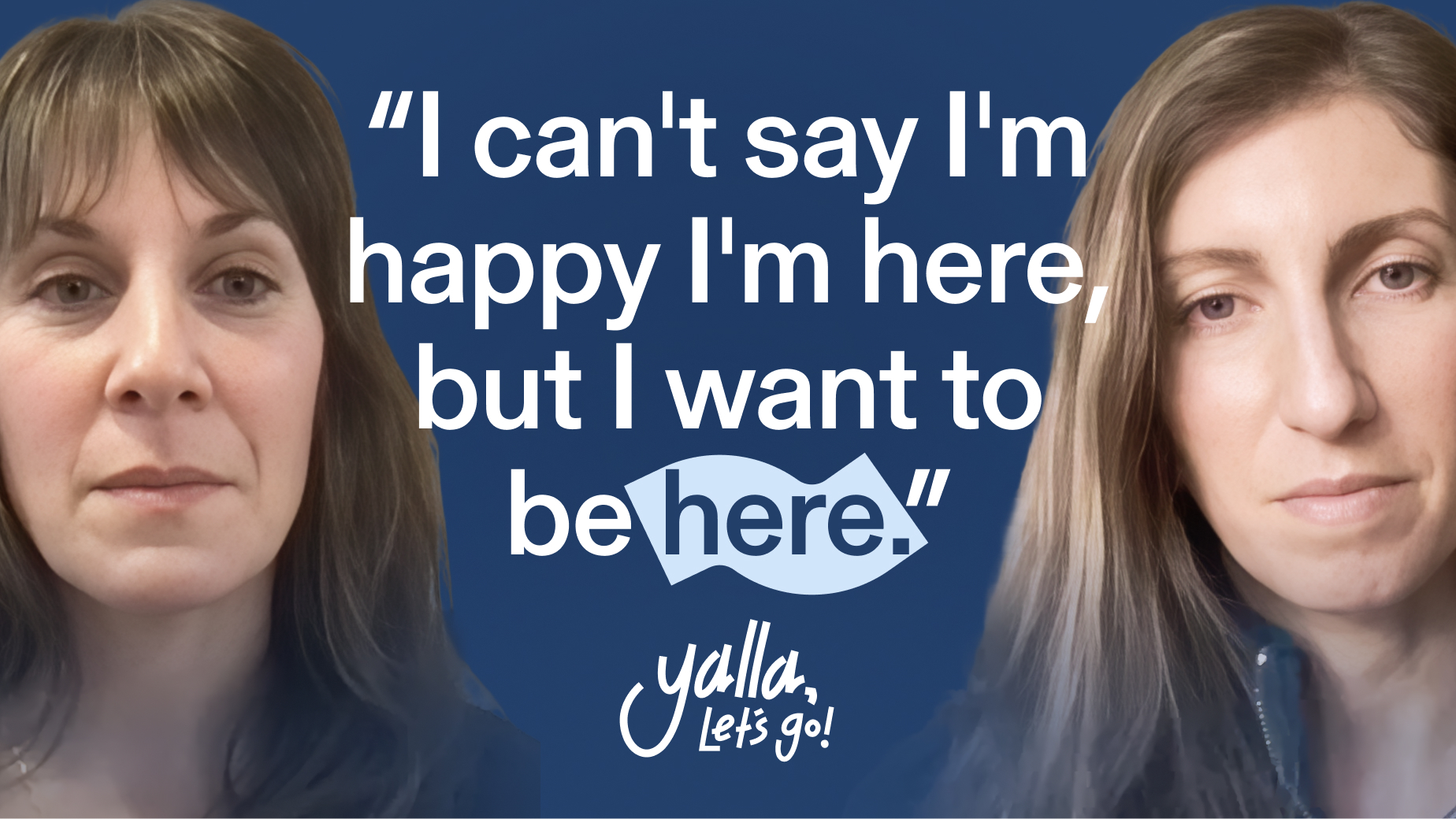
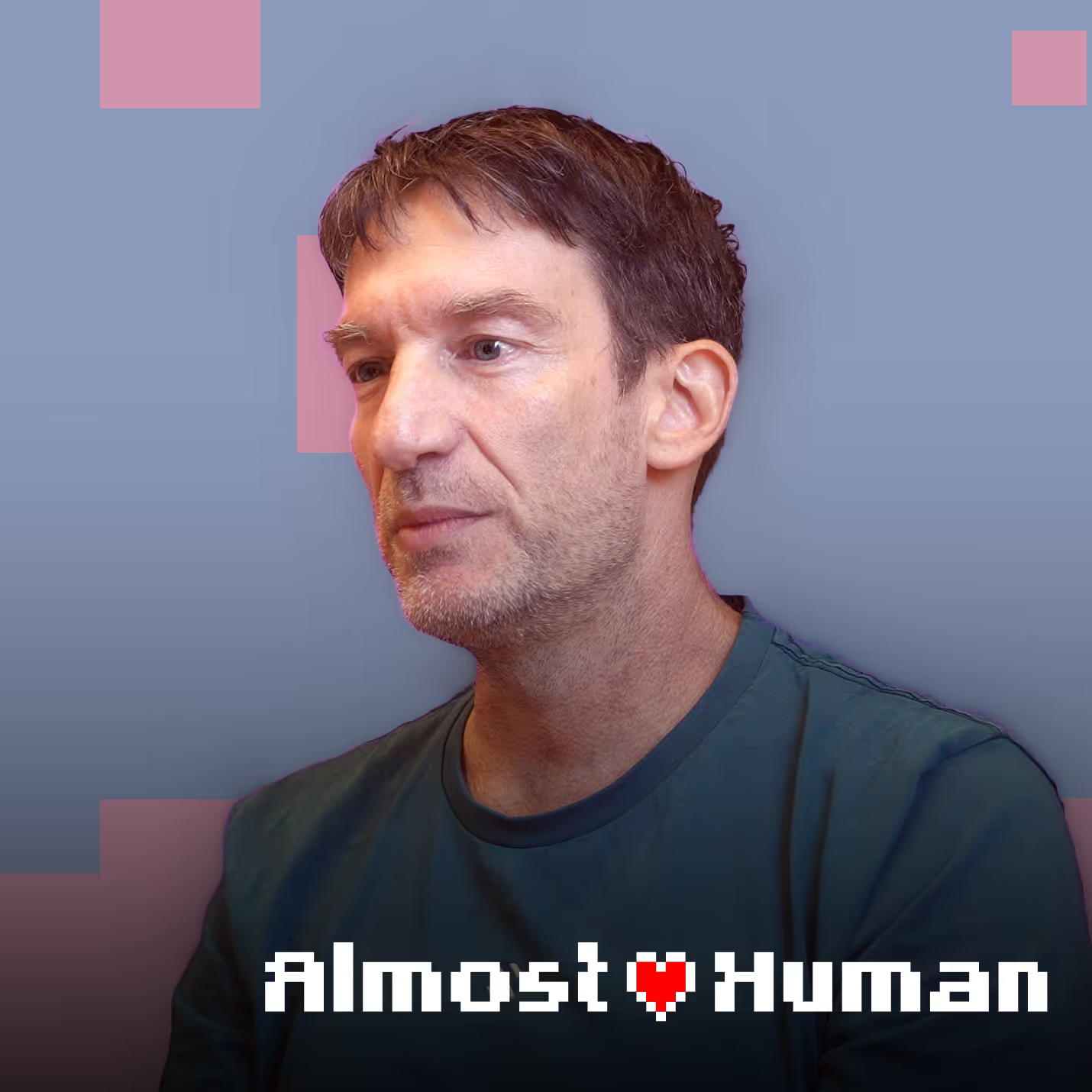
In this episode of Yalla, Let’s Go!, Erica and Abbey sit down with Gili Fleekop — known online as Gili from Philly — co-founder of TikTok marketing agency Pink Chili, former social media lead at ironSource, and founder of Unit 107, the volunteer-run supply initiative that raised close to $400,000 for Israeli soldiers after October 7th.
Gili shares her journey from the Philadelphia suburbs — raised by an Israeli mother and an American father — to building a life in Israel after a year of service with the American Jewish Joint Distribution Committee. She opens up about landing her breakthrough role at ironSource after more than 50 rejections, teaching herself social media from scratch, and turning her personal TikTok following into a fully-inbound marketing agency with her co-founder Noam. She also talks about mobilizing hundreds of volunteers to support reservists after October 7th, marrying her husband Gavriel at the Great Synagogue of Rome, and why she sometimes considers a move back to the US over her fears about the state of Israeli AI and tech.
The conversation continues with:
- Growing up in “mini Israel”: Philadelphia’s tight-knit Israeli-American community
- Getting rejected by ironSource, then talking her way back in
- Teaching herself social media and building a following of over 50,000 on TikTok
- Co-founding Pink Chili, a fully-inbound TikTok agency for tech companies
- Founding Unit 107 and mobilizing 400 volunteers to support reservists
- Marrying Gavriel at the Great Synagogue of Rome
- Her concerns about Israel’s position in the global AI race
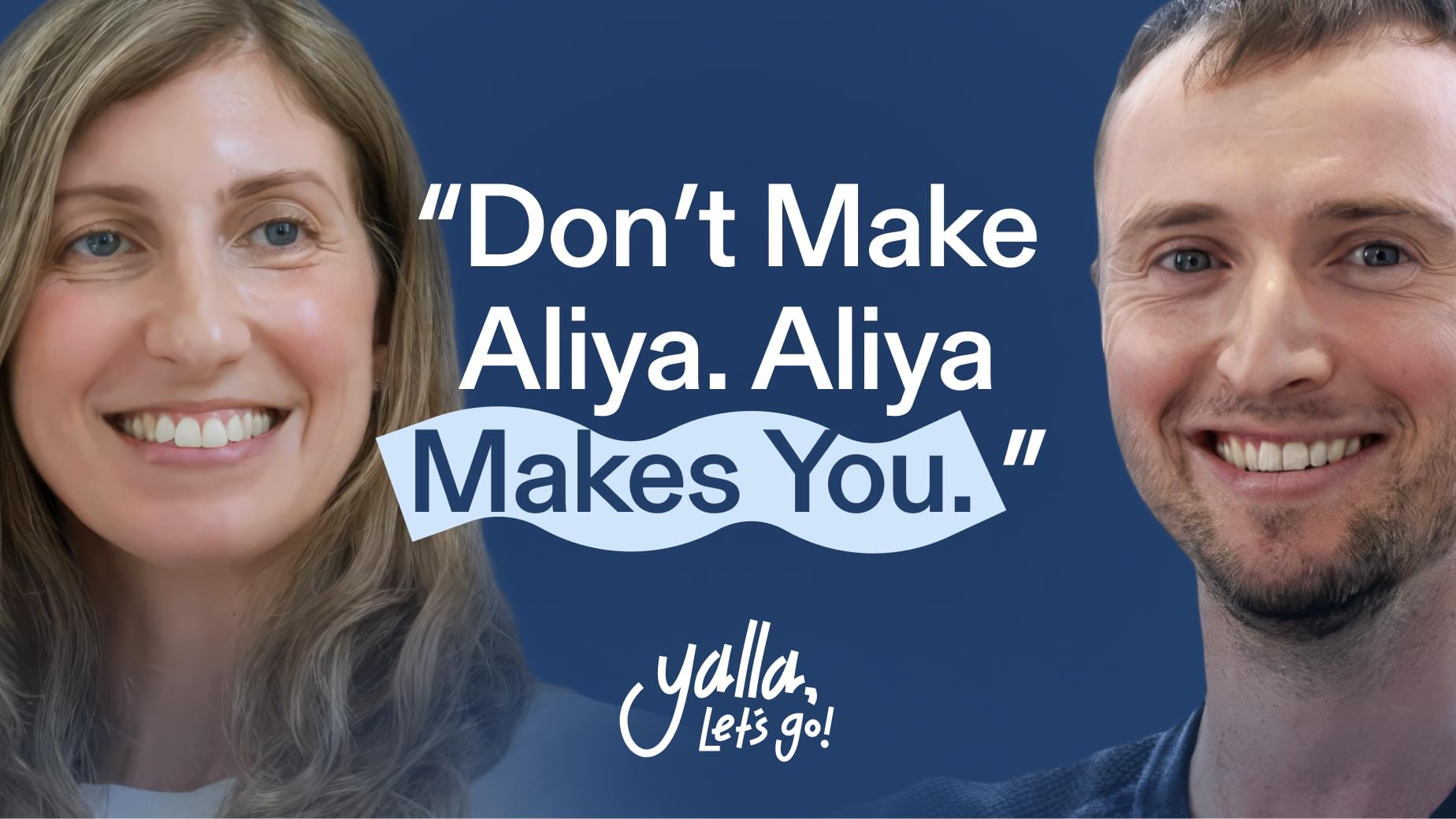
- Aliyah advice: be fearless and never take no for an answer
This is a candid, high-energy conversation about hustle, faith, and finding your niche by betting on yourself.
Subscribe for more conversations with people who live, work, build, and stay in Israel.
#GiliFleekop #GiliFromPhilly #PinkChili #Israel #Aliyah #TikTok #IsraeliTech #Unit107 #October7 #IronSource #Entrepreneur #TikTokMarketing #YallaLetsGo #LifeInIsrael #WomenInTech
0:00 - Intro
1:34 - Pulse Check: Abbey's Overwhelming, Wonderful Israeli Summer
2:18 - Mazal Tov! Planning a Rome Wedding From Tel Aviv
3:32 - Gili's Life Story: Philosophy, the Joint, and Finding Her Path
4:48 - Growing Up in an Israeli-American Home in the Philly Suburbs
6:30 - Fake It Till You Make It: Her Path to ironSource
9:09 - Learning Instagram and TikTok From Scratch, Overnight
9:54 - Giving Herself a “PhD” in Social Media
10:57 - When ironSource TikToks Became a Recruiting Machine
11:02 - Quitting Together: Launching Pink Chili With Co-Founder Noam
12:53 - Building a TikTok Agency as an American-Israeli Founding Duo
14:07 - Going Viral and Staying Authentic on TikTok
14:59 - The Law of Attraction: Filling a Room of 200 to Land Clients
16:44 - Is TikTok as Lucrative in Israel as in the US?
17:37 - October 7th From America: Founding Unit 107
19:54 - Marrying a Reservist and Why Supporting Soldiers Is Her Mission
21:11 - Philly as “Mini Israel”: Chef Mike, Zahav, and the Soom Sisters
22:52 - Would She Leave Israel? Her Fears About Israeli AI
24:33 - Aliyah Advice: Be Fearless and Never Take No for an Answer
25:30 - What She Loves Most About Life in Israel
26:57 - At 80, Looking Back: The Business Only Israel Could Give Her
27:27 - Rapid Fire: Bamba, Tachles & the Ambassador in Ulpan
[Gili Fleekop — 0:00]
So I think I may share a little bit more of a pessimistic perspective on aliyah [immigration to Israel] with having an Israeli parent. If you look at it, you're like, this girl is a hot mess express. Like, who is she? And she basically said to me, like, "I don't think you're a strong enough writer, but how are you with social media?" So Philly is mini Israel, is what I call it.
[Erica Marom — 0:21]
Do you ever think of moving back to Philly? Do you ever think of leaving Israel?
[Gili Fleekop — 0:26]
I definitely do. We were able to raise close to $400,000, helped close to 15 to 20,000 soldiers. To this day, like, helping reservists is, like, my mission in life right now.
[Erica Marom — 0:49]
Welcome back to another episode of Yalla, Let's Go! — the podcast Abbey and I started to remind ourselves why we made aliyah, and hopefully convince some of you guys that it's a good idea too. We're going to talk to people from all walks of life. We've talked to people who work in high tech. We've talked to athletes, chefs, influencers, journalists. So many people. And ask them the questions you really want to know about what it means to build a life in Israel. Today we're going to talk to Gili Fleekop, also known online as Gili from Philly, who made aliyah from the US, built her own TikTok marketing agency from scratch that crossed over a million dollars in revenue, and she's here with us today. But first, as always, let's ask Abbey for a pulse check. How are you feeling about living in Israel right now?
[Abbey Onn — 1:34]
Today I feel very overwhelmed. It's summer, it's hot, it's our favorite season. I have six events at night this week.
[Erica Marom — 1:42]
Oh, my God.
[Abbey Onn — 1:43]
That's more than I can handle. I had an amazing Nevo event this week with a really cool tech leader. My daughter had her end-of-year dance performance, which was just the most emotional. I have two weddings, and it's my best friend's birthday, and I had a friend surprise me from Argentina. So I am stacked socially, which feels awesome. And also, like, I could use, like, a little afternoon nap.
[Erica Marom — 2:05]
Wow. Like, when are you gonna, like, watch Netflix and binge?
[Abbey Onn — 2:09]
I'm gonna have to schedule that in.
[Erica Marom — 2:10]
Yeah.
[Abbey Onn — 2:11]
Good things, but overwhelming.
[Erica Marom — 2:13]
Okay. So, Gili, thank you so much for joining us. We're so excited that you're here.
[Gili Fleekop — 2:17]
Thanks for having me.
[Erica Marom — 2:18]
Normally we always start off with asking people to tell us their life story in less than a minute, but first, I have to congratulate you — you recently got married.
[Gili Fleekop — 2:26]
Thank you so much.
[Erica Marom — 2:28]
Mazal tov! And you got married in Italy, right?
[Gili Fleekop — 2:31]
Yes, in Rome, in the Great Synagogue of Rome, which I feel like every Jew visiting Italy has seen – the big church-looking synagogue.
[Erica Marom — 2:38]
Wow. So first tell us, how did you plan a wedding from Israel in Rome?
[Gili Fleekop — 2:43]
So I'm a very last-minute person. So we planned the wedding, like, two to three months before. And I have a little bit of a hot take on weddings, though. I was obviously really excited about it, but I wasn't the kind of person growing up that fantasized about my wedding. And I always viewed it as, like, a five-hour event. So I just kind of approached it with, like, a very chill... I booked everything without ever, I booked the venue, everyone, without stepping foot and seeing anything. Everything was online. And just to, like, laugh my way through it. Gavriel and I — my husband — just, we basically said, whatever is going to happen is going to happen. And it was funny and great and silly. And I think that's, like, my approach in life too, is not to take things too seriously. So it was a very, like, light, fun...
[Erica Marom — 3:25]
That's a good approach also for life in Israel.
[Gili Fleekop — 3:27]
Yes. That's what has helped me survive here. Yeah, for sure.
[Erica Marom — 3:30]
Okay, so now tell us your life story.
[Gili Fleekop — 3:32]
My life story. Okay. In one minute. So I'm from Philly. Gili from Philly is my nickname. I have an Israeli mother and an American — Jewish American — father from Philadelphia. Grew up in the suburbs of Philly. Went to study philosophy. Was always a very philosophical kid. My rabbi growing up — you know, I sat in his office when I was in, like, fourth grade and asked him, if God created us, who created God? And he was like, "You're in fourth grade. Like, please go home. Just stop." So I think that really led me to study philosophy and just, like, question the world. And for four years in college, I did not have one internship. I did not do any networking. All I did was read and think and learn. And I'm really, really grateful, because it was a privilege to have that. And then after college, I was super lost. Didn't know what I wanted to do. Ended up here. I did a year of service with the American Jewish Joint Distribution Committee. Such a mouthful. JDC is what I call them — or in Israel, the Joint. I spent a year working with youth at risk, and then I got into tech and one thing led to another. Started my agency. So that's the condensed version of it.
[Abbey Onn — 4:34]
Amazing.
[Gili Fleekop — 4:34]
Yes.
[Abbey Onn — 4:35]
All right, let's go back to Philly for a second. You grew up with a gorgeous American mom and your dad. You had Bamba in your lunchbox.
[Gili Fleekop — 4:42]
Yes.
[Abbey Onn — 4:43]
It was always in your world. But when did aliyah become a thing for you?
[Gili Fleekop — 4:48]
So I think I may share a little bit more of a pessimistic perspective on aliyah, with having an Israeli parent that left Israel. I think a lot of my friends that made aliyah that have, you know, two non-Israeli parents, they feel very, like, supported moving to Israel. "Making aliyah is such an accomplishment. My parents are so proud of me." And for me, it was, like, quite the opposite. Like, my mom really did not want me moving to Israel. And it's a very common trope with Israeli American kids, is that their parents will say, like, "I gave everything to raise you in America and give you all the opportunities — you're going back now?" So there is a lot of tension in that story, to be honest. But I always joke with my parents that they raised us in such a Zionist home. Bamba. My mom would dance around — my mom loves Israeli music — dance around the kitchen. Only had Israeli friends over. She would drive 30 minutes out of her way. There was one supermarket in northeast Philly that sold Hawaii shampoo. Do you know what I'm talking about?
[Abbey Onn — 5:46]
Of course.
[Gili Fleekop — 5:47]
And she was like, "I'm getting you Hawaii shampoo, and we're gonna go." And we'd pack our suitcases when we went to Israel full of Kariot and all these snacks, to have that Israeli lived experience in the house. So when I was ready to make aliyah, and it was, like, such an obvious thing for me, it was this, like, dissonance. And my mom was like, "No, I don't want you to." And I was like, "But you know I grew up loving Israel." So it's a whole different thing. But it's very interesting. I think a lot of Israelis that left and started lives in America want their kids to stay in America, which makes sense. You want to...
[Abbey Onn — 6:17]
So after you got here, you did this year of service, which is a really great kind of first integration. But you went from that to ironSource, one of Israel's largest IPOs. Talk to me about that. How did you go from year of service to a huge tech company?
[Gili Fleekop — 6:30]
So another philosophy of mine is fake it till you make it. I really, really deeply believe in that.
[Erica Marom — 6:36]
So do we. So do we.
[Gili Fleekop — 6:38]
Yes. Amazing. So what happened is, I spent this year essentially volunteering. I was working with youth at risk in Bat Yam. I was teaching English. I was working on a lot of cool grants with the Joint. And I always — I studied philosophy, so I didn't really know what was meant for me. I did not even know what a KPI was. I didn't know how to open a Google Doc. Like, I was the farthest thing from tech. Just so funny now, because I'm utterly in love and obsessed with the tech scene now. So it's just crazy how much you can develop and shift. And so what happened was, I wanted to stay in Israel, and I said, you know, I like writing. I've always been a good writer. So let me apply to some writing jobs. And I got a million no's. I literally saved them all. I think it's over, like, 50. Every tech company denied me. No one even looked at me. And I got interviews, and then suddenly my luck shifted, and I had, like, three offers in a week.
[Abbey Onn — 7:30]
Wow.
[Gili Fleekop — 7:30]
And one of them was, like, a really big — like, similar to ironSource, I won't say the name. And I said to them, "Okay, is this offer, you know, 100% set in stone? I'm going to say no to two other offers." They said, "Yes." I said, "Great." I remember I went home that night, I went and bought work clothes, and I was so excited. And then two days later, they just never sent the contract and they rescinded the offer — this was like, a massive tech company.
[Erica Marom — 7:54]
Oh, my God.
[Gili Fleekop — 7:54]
And I said to them, I just gave up two offers. And then I was back to square one. I was like, I have no more offers anymore. Like, I couldn't go back. And it was messy. And I remember I applied to ironSource for a content writing position, and they brought me in for an interview. And I knew — like, I'm a very, like, trust your gut. I knew I had to work there. I was like, this is the place I have to work. I really, really liked the hiring manager, who was my manager there. And I went home and I was like, that's where I'm gonna work. I did all the assignments, I did everything. And I got a denial email. And I was like, this is not sitting right. Like, this is not the way it's meant to be. And I basically was like, I'm just — they closed the door, I'm trying the window. And I sent this, like, very — I'm a huge Adam Grant, I love Adam Grant. And I wrote this whole email, like, "I really believe in hiring on the potential of someone and not the experience. I promise you, I'm going to be the hungriest, hardest-working person you'll ever see. Just give me another chance." And they didn't answer me, and I just, like, kept emailing them. And then Jaz, who was my manager at the time, was like, "Okay, this girl's hungry. Let's bring her back. Like, she's annoying me. Let's bring her back." And she basically said to me, like, "I don't think you're a strong enough writer, but how are you with social media?" Now back to the fake it till you make it: I never had social media. I was a philosophy major. I never had Instagram. I think I opened Facebook a little bit and deleted it, to find apartments. But, like, I was not a social media person.
[Abbey Onn — 9:07]
Wow.
[Erica Marom — 9:08]
So weird to hear you say that.
[Gili Fleekop — 9:09]
The joke in my friend group at college was, like, "Gili doesn't have Instagram. Show her what's going on in the world." Like, I was just knee-deep in just, like, studying and learning. And I was very nerdy in college. Like, didn't go to parties and just, like, learned. And so what happened was, she said, "How are you with social media?" And I said, "Great, great." I went home that night and I watched, like, four hours of how to upload an Instagram story, how to open an Instagram account. I knew nothing. And I joined ironSource and I delivered my promise. I was, like, the hardest working. I was super hungry, super motivated, and every single day I was feeling I was being paid to learn. Because they would say, "Gili, can you make an Instagram story of that?" And I would go into the bathroom stall and be like, "How to make an Instagram story?" and, like, try to figure it out.
[Erica Marom — 9:51]
And this is, like, before ChatGPT.
[Gili Fleekop — 9:53]
Yeah, yeah.
[Gili Fleekop — 9:54]
And I just told myself, I'm going to be the best. What my dad — and my great grandfather told my dad — either love what you do or do what you love, and, like, 500%. And I was like, I'm going to be obsessed with this and I'm going to just learn everything there is. And I treated it like a degree. And I would, you know, go home nights and weekends and just watch as many social media YouTube videos, podcasts, read everything about every algorithm, and just was like, I'm going to get a PhD in this. I'm going to give myself a PhD in social media. And slowly — you know, I'm a quick learner — I was able to, like, really grow. And then I was like, you know, I'm gonna, for fun, post on the weekends, because I now know social media. And before I knew it, I got 50,000 followers on TikTok. My TikToks were bringing in more CVs to ironSource than any other campaign at the time, because I was averaging 5 million views a month. Like, it was crazy reach. And the recruiters would come and knock on the marketing team, like, "Another CV from Gili from Philly. And a developer just walked in, heard of us through Gili from Philly." And I was like, wait, there is something here that we need to capitalize on. And that was, like, the moment everything shifted, essentially.
[Erica Marom — 10:57]
So when did — how did it make you think, though, that this could be an actual business?
[Gili Fleekop — 11:02]
So looking back, like, you know, in retrospect, everything is so clear. Looking back, it wasn't that clear that it was going to be a business at first. So I knew that I wanted to be an entrepreneur really, really early on, because I was working and grinding my ass off. And I was like, I want to do this for myself, because it doesn't matter how hard I'm going to work for ironSource, I'm not going to get more money. And I really realized that, like, six months in. And it was in my head for a long time. And Noam, who's my now co-founder, was on the marketing team with me, and I came to her and I was like, "I want to start something. Let's start a tech company. We're really good. We're content creators. Let's do it." I would every Friday just, like, watch "What is VC?" on YouTube. Like, I knew nothing. And Noam actually was like, "Gili, forget about VC for a second. We both know how to create content and how to do something that we can make money from day one. Like, we have profitable skills that requires no overhead costs." And she was the one that's like, "Let's just start this. Let's do TikToks for tech companies." And at first I was really apprehensive, because I was like, I don't know, there's no buy-in right now. And then everything — it was just very fast — everything changed. And I was like, okay, let's do it. We quit together. We quit on the same day. And a month later we had our first client, and we're building out Pink Chili. And the first chunk of Pink Chili was just getting buy-in from tech. I would host a free webinar every month, and sometimes five people will join, sometimes 50 people would join. And it would just be, why you should have a TikTok account if you're running a tech company or startup. And it was just getting buy-in and convincing C-suite execs, founders — why you need this, why you need this. That was the first approach to how we started it.
[Abbey Onn — 12:39]
It's super interesting. And the fact that you and Noam took the plunge together the same day is gorgeous. What has it been like really building a business as an immigrant with an Israeli co-founder? Talk us through some of the early challenges and early successes.
[Gili Fleekop — 12:53]
For sure. So we definitely complement each other, because I bring, like, the type A American — arrive 45 minutes early to a meeting. I've had four film days in the past four days. Like, even now, when I'm five years into my business and I don't need to prove myself anymore, I always arrive at least 30 minutes early to a film day, and I sit and get a coffee outside the office, because that's how I was raised. Like, it's just the American mentality. Whereas Noam is quintessential Israeli, gets everything done, and is just, like, a Jill of all trades and just, like, incredible. And, like, is the opposite of me. Like, she's type B, she's much more relaxed, she's less stressed than me, and we really balance each other out. So she's always dealt with, like, the Israeli side of our business, right? And I've dealt with, like, a little bit more of the American side, is what I say. And I think I wouldn't have really been able to do it without her. She did all of the back end, she does all the bookkeeping, she does all the Hebrew accounts, I do all of the English accounts. So we really complete each other.
[Erica Marom — 13:53]
So you have yourself over 50,000 — or 54,000 — followers on your personal TikTok account. Can you tell us a story of, like, I don't know, a TikTok that you made that went viral? And how also did it feel to share your personal journey with the rest of the world?
[Gili Fleekop — 14:07]
Yeah, well, so it was so crazy, because I was such a private person all my life, and I never chased, like, vanity metrics. And because I never, like, cared about what my feed looked like and everything — like, all of my videos are so embarrassing. Like, my hair is always a mess, I'm in pajamas. Like, I'm walking on the street. And if you look at it, you're like, this girl is, like, a hot mess express. Like, who is she? But I think I was just super authentic. And I was like, I'm going to show all of you what it's actually like to live in Israel, to work at a tech company. And I know TikTok has a lot of bad reputation, and nothing's perfect, but there's a lot of good in it as well. So I try to focus on that.
[Abbey Onn — 14:45]
Listen, you've taken this idea of giving your services and trying to help people. In the very beginning, you hosted an event for 200 people to try to get a client? Why? How?
[Gili Fleekop — 14:59]
I really believe — so, I'm obviously married, but when I was single, and also my single friends — I really believe in the law of attraction. So, like, I always tell my friends, if you're gonna go on a date with a guy and you're gonna give off desperate energy, no one's gonna want you. So you have to walk into any meeting, really, believing that they would be lucky to work with you, lucky to date you, lucky to be your friend — anything. And so that was an example of that. It's, like, let's not — I'm not going to go cold-pitch clients. I'm going to host the coolest event and fill the room and make it really cool and sexy. And they're lucky to come. And if they want to work with me, they can reach out to me. We've never done one outbound in Pink Chili in five years. 100% inbound. We haven't spent a dollar in marketing or sales. We have no BDRs. And our pipeline — we've only, like, grown year over year, month over month. And I really believe, I really believe in that. So that event was, like, quintessential — let's attract people to us. And I think that's also with personal branding, whether it's LinkedIn or TikTok. If you're looking for a job, for example — of course it's important to apply. But imagine if you posted on LinkedIn every day with, like, a really interesting challenge. Like, my husband was looking for a job, and I said, let's do a challenge. He's a vibe coder. Let's build something every week and write on LinkedIn: "I'm going to build something new every week until I get hired." That is much different than knocking on the door — "Hi, can I please work with you?" Right? So just changing the way you wrap things. And I really believe in that. I think that's also one of the reasons Pink Chili was so successful, is we never gave off desperate energy. I never negotiate. I try not to. If someone's, like, being a little bit Israeli — "Oh, give me a discount" — I'm like, I'm not selling bananas at the shuk [open-air market]. If you want my services, take them. I don't need you. I would love to work with you, but that's...
[Abbey Onn — 16:34]
Gili, you're such a guru.
[Erica Marom — 16:37]
So I have a question. Is it lucrative for influencers in Israel to have TikTok the same way it is in the US?
[Gili Fleekop — 16:44]
Well — because, I think, TikTok Israel — and I'm not 100% sure if this is still true — doesn't have the same creator fund. It's a little bit different. But I would say, like, TikTok is top-of-funnel marketing, and, like, you can use TikToks and your TikTok page to drive more people to more, you know, like, converting — whether it's, like, a newsletter or long form, a YouTube, a podcast. So I do think it's very lucrative if you know how to approach it. For sure.
[Abbey Onn — 17:13]
All right, I want to pivot a little bit.
[Gili Fleekop — 17:14]
Yes.
[Abbey Onn — 17:15]
On October 7th, you were in the United States. And you being there, I think, helped inspire what you did in the months after. You created Unit 107, this massive supply chain organization that raised hundreds of thousands of dollars and brought thousands of pieces of gear to Israel in its massive time of need. Can you talk us through those days?
[Gili Fleekop — 17:37]
Yes. Actually, Daniil and I were here — we're chatting about it. Every time I talk about it, I get nostalgic, because I was probably, like, the most proud of that in my career. Essentially what happened — so October 7th, I happened to be in America at the time. I thought I was gonna get my MBA, so I was back in America doing a tour of different MBA schools. And I wake up to everything. Woke up at 4 a.m. to calls from our family, and I just was, like, itching — like, I have to do something. And October 8th, I was already hosting a webinar about hasbara [Israeli public diplomacy] and marketing and how to post about Israel. Maybe, like, eight people came. I don't know. I don't really remember it. But I remember thinking, like, this doesn't feel like enough for me. Like, I don't mind giving free consulting and writing people's posts, but, like, I really want to make a deeper impact. And then a day later, October 9th, I'm on a Zoom with some friends, and it all came through Nevo. I texted in Nevo, like, "Who can help me raise money? Who can help me get supplies?" One thing led to another. It happened so fast. And then we were able to mobilize 400 volunteers. We treated it like a startup. We wanted no red tape, obviously, no salaries, no NGO. As much as I love NGOs — but you never know what's going on. A lot of times, black boxes. Fully grassroots. Let's just get money. Let's buy things on Amazon or wholesale. Let's pack it in luggages and suitcases and ship it to Israel with individual flyers. And then Daniil did all of the driving to bases. So already on October 9th, we had our first shipment of shlukerim [CamelBaks] — which, I learned that word in the army. We had a lot of requests for, like, CamelBaks. And to be honest, it was the most incredible thing. It was the hardest thing I've ever done in my life. I would look at my phone screen time every day, and it was, like, 18 hours. Like, crazy. I wasn't sleeping. I lost a lot of weight. I had no appetite. I was in front of my laptop, my computer, all hours of the day, and waking up at night to make sure deliveries were going according to schedule. But we were able to raise close to $400,000, helped close to 15 to 20,000 soldiers. And I'm really, really, really proud of that. And to this day, helping reservists is, like, my mission in life right now. So it's something I'm also working on.
[Abbey Onn — 19:51]
Why are you so proud? What did it do for you?
[Gili Fleekop — 19:54]
So it's crazy, because my husband's a reservist, but all of this passion started before I met him. And I'm not a particularly religious person, but I'm a spiritual person. And I truly believe that Hashem [God] made me meet Gav. It all came from that. Because Gav has done 400-plus days of miluim, front lines in Tzanhanim, paratroopers. Now I get to experience it more deeply. But it doesn't mean that I didn't — like, I really experienced it deeply before. I think growing up with an Israeli mom who was so proud of her army service and would always show us pictures, and just have a very deep connection to the Holocaust — and my great-grandparents are survivors. And just knowing deep in my core that we couldn't have any of this — we can't. Every time I have a coffee in Tel Aviv, I sit there and I say, there is a soldier right now that hasn't slept, that's on some shitty command, that's in shmira [on guard duty]. And I can't be here if he's not there, or she's not there. It's really at the forefront of my mind since I was a kid. And so now, obviously, I married a man who's an active reservist, and that made it deeper. But it's always been a passion of mine, for sure.
[Erica Marom — 20:56]
You grew up in a community in Philly which always had a really big representation of Israelis — Israeli businesses, Israeli restaurants, even within your own family. And olim [immigrants to Israel] often play a critical role as ambassadors to their home community. Can you talk a little bit about the relationship between Philly and Israel?
[Gili Fleekop — 21:11]
Totally. So Philly is mini Israel, is what I call it. My actual street growing up had five Israeli families, and sometimes I would only hear Hebrew on night walks — like, "Hey, Pnina! Ma nishma [what's up], Gali?" Like, it was like a kibbutz. So of course we have Chef Mike, who has, you know, the best Israeli cuisine ever. And people fly to Philly to try it. And we went to Zahav, like, the weekend it opened. And my cousins actually started a tahini company called Soom. They're three sisters — Jackie, Shelby, and Amy — that work closely with Chef Mike. So there's a lot of Philly Israel pride. We also have just a beautiful community of people relocating a lot. Teva had a major factory there, so a lot of families were coming in. My mom, when she moved to Philly — she moved in the 90s — she really knew no English. She had a high school degree. And she had — you know, me and my brother are 16 months apart, so she had two little babies at home, and didn't have that network, and had a hard time finding Israelis. And so she's made it, like, a life purpose and a passion to help as many Israelis as she can. So growing up, we've always had these, like, random people that just moved from Israel at our Shabbat dinner. And just, like, we have friends, Hunter and Nir from Nevo. My mom will literally text me, like, "I'm with Hunter and Nir today." I'm like, have fun. So she's like a mom in every sense of the way. Like, just hugs and helps. And, yeah, there's, like, a Philly Facebook group of just women that moved to Philly from Israel, and they all support each other. And I'm really, really — I love Philly. I'm really, really proud of the community we have there.
[Erica Marom — 22:48]
Do you ever think of moving back to Philly? Do you ever think of leaving Israel?
[Gili Fleekop — 22:52]
I definitely do. I don't know. I don't want to, like, overstep in any way. I love Israel so much. I'm, like, having extreme fears about the state of Israeli tech right now. I did a LinkedIn post this week how, when it comes to, like, the AI race, I'm really deeply concerned about Israel. And that is kind of one of my fears when I think about the future of my career. Like, we have no frontier models. There's one or two out there — Decart's really cool. But we have no commercial offices of Anthropic or OpenAI. Like, just a lot of things in my brain that keep me up at night. And I understand that I tend to spiral sometimes, but I think about moving to America for the sake sometimes of my career. In all honesty.
[Abbey Onn — 23:34]
That's super interesting. I feel like there's lots of other things at play in this country right now that we could be afraid of. And it's so interesting that the lack of AI is a big fear.
[Gili Fleekop — 23:43]
So I texted Abbey yesterday — I want to host a women in AI event. Another thing that I'm really passionate — I have so many passions, when I have time to talk about it — is I go to these AI or tech events, and there's no women in the crowd. I literally collect pictures on my phone of me at events, and it's me and, like, three other girls.
[Erica Marom — 23:59]
Yeah.
[Gili Fleekop — 23:59]
And it annoys me and it frustrates me. And I want to try to understand why that is — what the bottleneck is. So I think about moving to America for that. I was going to get my MBA. I got in. I ended up not going. I think about it a lot. I could see myself going to America for five to 10 years and coming back once I've generated enough wealth to come back here and live here. So we'll see.
[Abbey Onn — 24:25]
In the meantime, you have had such a diverse experience as an olah [female immigrant]. What is the number one piece of advice you would offer someone who's considering it or who just arrived?
[Gili Fleekop — 24:33]
So I think it's just to be fearless and say things with conviction. And I think growing up, my dad always said to me, "You're just as smart as everyone else in the room." And I think it can be really scary to walk into a room that maybe you're not speaking the same language or have the same life experience — maybe you weren't in the army, whatever it may be. And so I would just say, be fearless and be confident. And really, like, my motto — back to my ironSource story — is, like, don't take no for an answer. Like, if you know that, like, you're meant for something — if you know, whether it's a job or an opportunity — like, try the window. Push all the obstacles away. Like, hard work can lead you anywhere. Like, truly, I believe that. I had no experience. I was a philosophy major. I was, like, this naive 21-year-old, and I just, like, really believe in bulldozing your way to where you want to go.
[Erica Marom — 25:27]
So what do you love most about living here?
[Gili Fleekop — 25:30]
I love the people. I love laughing. Like, it is, like, my favorite pastime, is a deep laugh. And I feel like I'll walk on Bograshov, and, like, Yitzchak, my juice guy, and I are cracking up. Like, literally, when I was single, he would make me juice and, like, give a bracha [blessing] of me getting married. And, like, yesterday, brachaed me to have kids. I'm like, "Yitzchak, slow down, buddy." Like, I'm always, always bantering. Like, I just love a good laugh. And I think people — you would think, oh, there's so much stress here. But, like, people laugh a lot, and I really love that. I love that I can have a Shabbat dinner — and this has literally happened before — through Nevo friends, and there was, like, 20 countries represented at my Shabbat dinner table. I just love the spontaneity as well, I'll say. Yesterday I was at a film day and I was telling my client, I love the fact that you can call someone on the walk home from work — "Where are you? Let's sit now." In America, I feel like when I'm hanging out with my friends, I'll be like, "Hey, do you want to hang out next, in three Tuesdays from now at 8 p.m.? We can make a reservation." No — I want to come now. "Yeah, where are you at?" "Yeah, where are you at?" All the time. Like, my friends, all the time — let's go to dinner right now. Let's get hummus right now. Come over now. So I think having that spontaneity in life — you cannot get that anywhere else besides Israel. And I really try to use that as much as I can. I'm constantly having, like, last-minute things and parties and meals and coffees. I really love it.
[Erica Marom — 26:48]
When you're looking back on your life and you're 80 years old, 90 years old, 100 years old — what's one thing that you think will have been true because you made aliyah, that wouldn't have been true otherwise?
[Gili Fleekop — 26:57]
I think starting my own business, being an entrepreneur. I think it is a small pond here, so if you're ambitious enough, you can be a big fish. I don't think, if I had never made aliyah — I don't think I would be able to brand myself as clearly as, like, the TikTok tech girl. Because there's a million of me's in New York or SF, whereas here, I'm maybe one of a few.
[Abbey Onn — 27:19]
Okay. Rapid fire.
[Gili Fleekop — 27:20]
Yeah.
[Abbey Onn — 27:20]
We're gonna ask you a couple questions. One answer.
[Gili Fleekop — 27:23]
One word or?
[Abbey Onn — 27:24]
One word?
[Gili Fleekop — 27:25]
Okay.
[Abbey Onn — 27:25]
Favorite Israeli food or snack?
[Gili Fleekop — 27:27]
Oh, my God, I'm such a foodie. One second. Okay, let's be classic for snack. Bamba.
[Erica Marom — 27:33]
Favorite Hebrew word or slang?
[Gili Fleekop — 27:34]
Tachles [bottom line].
[Abbey Onn — 27:36]
Favorite place in Israel?
[Gili Fleekop — 27:38]
Tel Aviv.
[Erica Marom — 27:39]
What's the thing you miss most from America?
[Gili Fleekop — 27:41]
Trader Joe's.
[Abbey Onn — 27:43]
Thousand percent. Favorite TikTok influencer that's Israeli?
[Gili Fleekop — 27:48]
Yochanan Twina.
[Erica Marom — 27:49]
What's your only-in-Israel moment, in one sentence?
[Gili Fleekop — 27:53]
In my ulpan [Hebrew-immersion class], when I first moved here, we got paired in buddies, and my buddy was the ambassador to the Netherlands.
[Erica Marom — 27:59]
Oh, totally only in Israel.
[Gili Fleekop — 28:00]
In a public Tel Aviv University ulpan. So that was only in Israel.
[Abbey Onn — 28:06]
Thousand percent.
[Erica Marom — 28:08]
Gili, thank you so much.
[Gili Fleekop — 28:09]
Thank you.
[Erica Marom — 28:09]
This is a joy.
[Gili Fleekop — 28:10]
It was so much fun.
[Erica Marom — 28:12]
Thank you. And if you enjoyed this episode, please share with everyone you know. Yalla, let's go!
[Abbey Onn — 28:16]
Yalla, let's go!

Follow Gili on Linkedin
Subscribe to Yalla, Let’s Go
Learn more about Aleph
Sign up for Aleph’s monthly email newsletter
Subscribe to our YouTube channel
Follow us on Instagram
Follow us on TikTok
Follow Aleph on Twitter
Follow Aleph on LinkedIn
Follow Aleph on Instagram
Hosts: Erica Marom, Abbey Onn
Executive Producer: Sarah Bard
Producer: Sofi Levak, Dalit Merenfeld, Myron Shneider
Video and Editing: Nadav Elovic
Music and Creative Direction: Uri Ar
Content and Editorial: Jackie Goldberg
Design: Nimrod Sapir
Follow Gili on Linkedin
Subscribe to Yalla, Let’s Go
Learn more about Aleph
Sign up for Aleph’s monthly email newsletter
Subscribe to our YouTube channel
Follow us on Instagram
Follow us on TikTok
Follow Aleph on Twitter
Follow Aleph on LinkedIn
Follow Aleph on Instagram
Hosts: Erica Marom, Abbey Onn
Executive Producer: Sarah Bard
Producer: Sofi Levak, Dalit Merenfeld, Myron Shneider
Video and Editing: Nadav Elovic
Music and Creative Direction: Uri Ar
Content and Editorial: Jackie Goldberg
Design: Nimrod Sapir
Follow Gili on Linkedin
Subscribe to Yalla, Let’s Go
Learn more about Aleph
Sign up for Aleph’s monthly email newsletter
Subscribe to our YouTube channel
Follow us on Instagram
Follow us on TikTok
Follow Aleph on Twitter
Follow Aleph on LinkedIn
Follow Aleph on Instagram
Hosts: Erica Marom, Abbey Onn
Executive Producer: Sarah Bard
Producer: Sofi Levak, Dalit Merenfeld, Myron Shneider
Video and Editing: Nadav Elovic
Music and Creative Direction: Uri Ar
Content and Editorial: Jackie Goldberg
Design: Nimrod Sapir
.jpg)
.jpg)
.jpg)
.jpg)
.jpg)
.jpg)
.jpg)
.jpg)
.jpg)


















.jpg)
.jpg)
.jpg)

.jpg)
.jpg)
.jpg)
.jpg)
.jpg)
.jpg)
.jpg)
.jpg)