Abbey Onn


How can values create value? On this podcast, Michael Eisenberg talks with business leaders and venture capitalists to explore the values and purpose behind their businesses, the impact technology can have on humanity, and the humanity behind digitization.




Abbey Onn
Abbey Onn
Abbey Onn
.jpg)
Abbey Onn
Abbey Onn
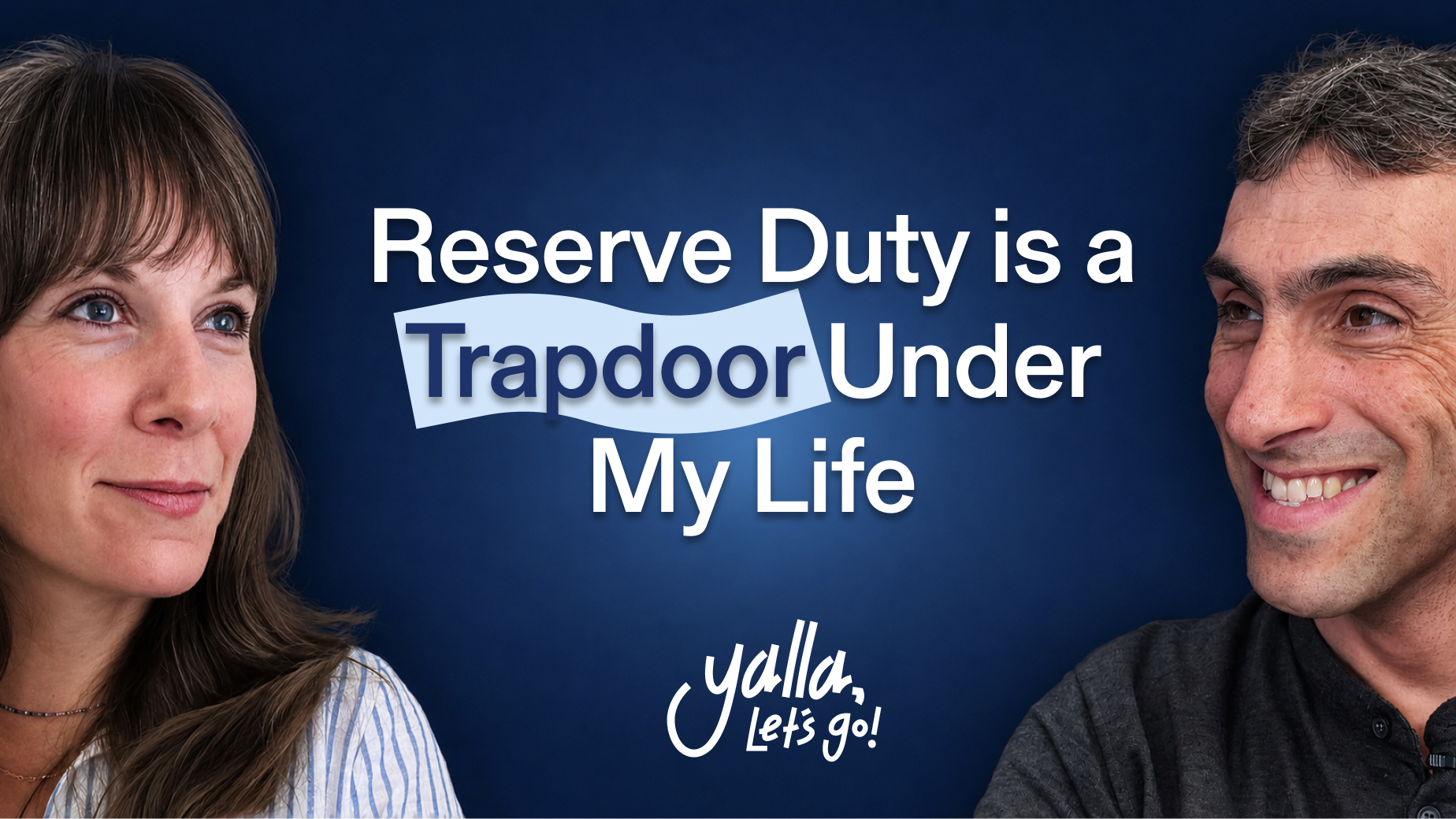
In this special episode of Yalla, Let's Go!, Erica Marom turns the microphone on her own co-host — Abbey Onn, Executive Director and co-founder of Nevo Network, the fellowship and professional community that has become the leading network for olim in Israeli high tech. Abbey moved from Fairfax, Virginia to Herzliya 11 years ago, and for the first time she is the one in the guest seat.
Abbey traces her path from directing Hillel's Hurricane Katrina response — 3,000 Jewish students rebuilding the Gulf Coast — to leadership development at Harvard's Kennedy School, to a hard professional landing in Israel with two toddlers and no network. She explains the data point that built Nevo: one in three English-speaking olim leave within three years, and how Nevo pushed retention above 90%. She also speaks, with extraordinary clarity, about October 7th, when five members of her family were taken from Kibbutz Nir Oz, and about the months she spent as the English-speaking voice of the hostage families — speaking to Secretary of State Blinken, leading the Zoom with President Biden, and meeting with 17 senators.
The conversation continues with:
- From Fairfax to Herzliya: Hillel, Brandeis, Harvard, and 17 suitcases
- Telling Michael Eisenberg his idea was wrong — and pitching him Nevo instead
- Why one in three English-speaking olim leave, and how Nevo changed the number
- The Herzog Prize and a government grant to expand beyond tech
- October 7th: Carmela and Noya Dan, and the fight to bring Ofer, Sahar and Erez home
- Raising Israeli-American kids, and preparing an American son for the IDF
- Why she sends her Israeli kids to American summer camp
- Loving Israel and doubting the decision, at the same time
- Aliyah advice: learn Hebrew, then go meet people for coffee
This is an honest, unguarded conversation about belonging, advocacy, and what it costs — and gives — to build a life here.
Subscribe for more conversations with people who live, work, build, and stay in Israel.
#AbbeyOnn #NevoNetwork #Israel #Aliyah #OlimInTech #IsraeliTech #October7 #NirOz #Hostages #YallaLetsGo #LifeInIsrael #Herzliya #JewishIdentity #MakingAliyah #IsraeliAmerican
0:00 - Intro
1:10 - Meet Abbey Onn: Yalla, Let's Go! Co-Host in the Guest Seat
2:12 - From Fairfax, Virginia to Israel: Brandeis, Hillel, and Hurricane Katrina
3:42 - Why She and Oded Made Aliyah: Family, Pace of Life, and 15 Feet of Boston Snow
6:55 - Running a Nonprofit While Raising Two Toddlers in a New Country
7:25 - Meeting Michael Eisenberg of Aleph and the Idea That Became Nevo
8:48 - Telling Michael Eisenberg His Idea Was Wrong
9:12 - One in Three English-Speaking Olim Leave Israel Within Three Years
9:56 - Building Nevo Network: From 66% Retention to Over 90%
10:24 - Why Nevo Focuses on Tech, and Why Doctors Are Next
11:17 - Winning the President's Award for Extraordinary Impact on Olim
11:48 - Why Belonging Is the One Thing Olim Are Missing
12:24 - How to Get Involved With Nevo Network
12:41 - Raising Kids in Israel: A Children-Led Society
13:51 - Small Kids, Small Problems: Preparing an American Son for the IDF
15:22 - Raising Israeli-American Kids Between Two Identities
16:16 - Hebrew With Each Other, English With Ima: Language at Home
17:30 - Why She Sends Her Israeli Kids to American Summer Camp
19:04 - October 7th: Five Family Members Taken from Kibbutz Nir Oz
21:10 - The Video of Erez and the Phone Call That Changed Everything
22:25 - Speaking to Secretary of State Blinken and Leading the Zoom With President Biden
24:07 - Losing Carmela and Noya Dan, and the Fight for the Hostages
26:36 - The Weight of Passing This Jewish Legacy to Her Children
27:24 - How She Told Her Kids the Truth About October 7th
29:32 - A Heart Connection She Can't Explain, and the Doubt She Carries
30:35 - Why She Feels Safer and More Herself in Israel Than in the US
31:57 - Would She Ever Move Back to America?
33:00 - Aliyah Advice #1: You Cannot Stay in Israel Without Hebrew
33:55 - Aliyah Advice #2: Your Full-Time Job Is Meeting People for Coffee
34:54 - At 120, Looking Back: A Life Lived Outdoors
35:26 - Rapid Fire: Prichiot, Lidaskes & Nachsholim
[Erica Marom — 0:00]
This is a very special episode. I'm going to be interviewing Abbey, and she now is in the guest seat.
[Abbey Onn — 0:00]
This is harder.
[Abbey Onn — 0:09]
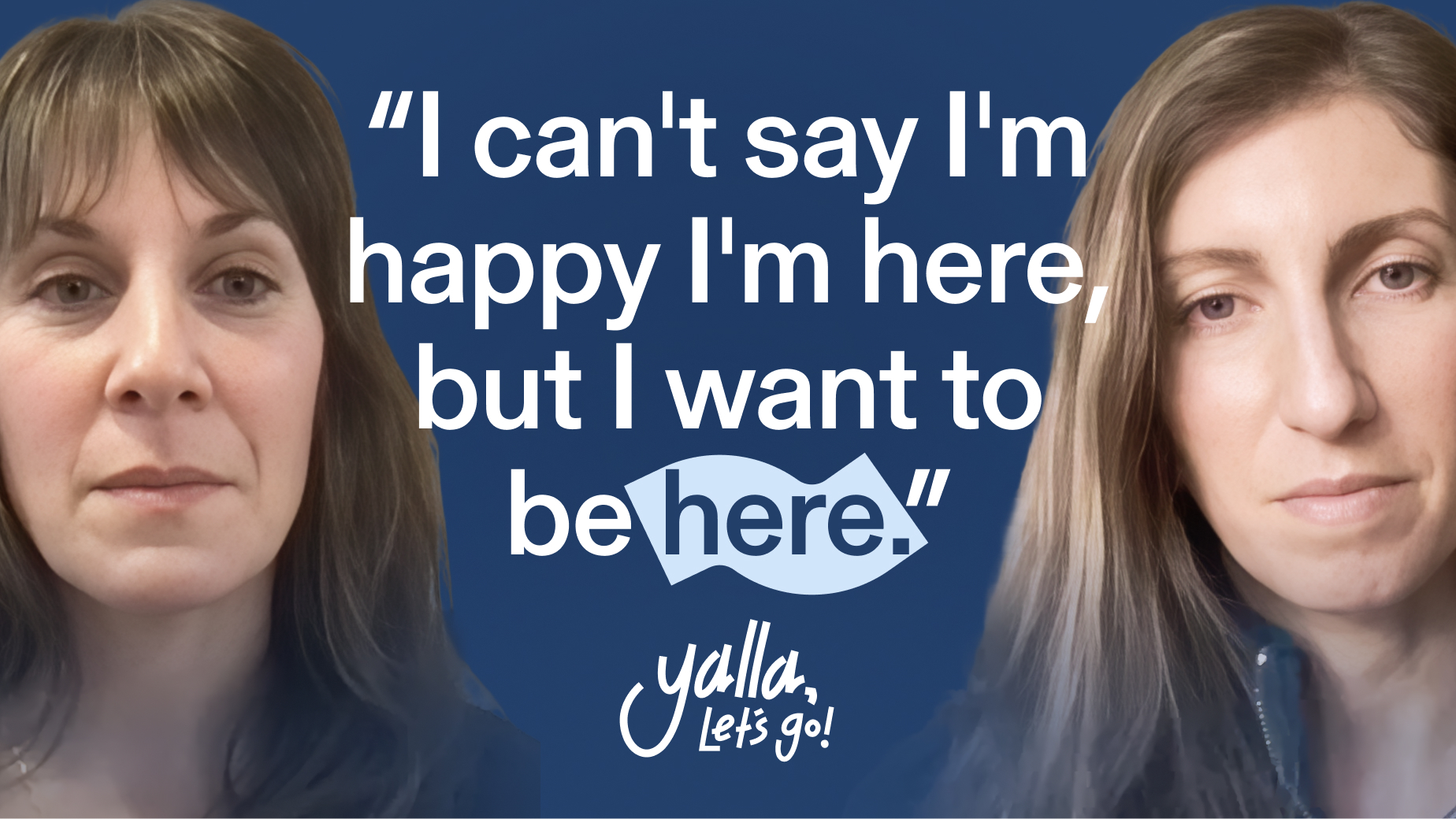
I feel like a heart connection to living here in a way that I can't explain. It doesn't make sense. It does not make sense. And at the same time, I wonder every day if I'm making a mistake as a parent raising my children here.
[Abbey Onn — 0:20]
There were terrorists on a kibbutz, that they were hearing gunfire, that people were breaking into their homes, that they were trying to get into their safe rooms.
[Abbey Onn — 0:26]
It was Jillian that called me, and she said, there is a video that I think is your cousin's son. And it was a video of Erez being taken away by terrorists.
[Abbey Onn — 0:34]
I was the one that was chosen to speak to Blinken. Two days later, led the Zoom with President Biden.
[Abbey Onn — 0:40]
We feel something different living here that we didn't have at home.
[Erica Marom — 0:43]
What is that? What is it that you love so much about living here?
[Erica Marom — 0:47]
You meet with olim [immigrants to Israel] all the time, whether they're in Nevo or not in Nevo, giving them insight about how you make a life here. What is your number one piece of advice for people who are considering making aliyah [immigration to Israel]?
[Abbey Onn — 0:57]
I'm going to go with two, if that's okay. Just because I feel like this is actually what I do.
[Erica Marom — 1:10]
Welcome back to another episode of Yalla, Let's Go! — the podcast that Abbey and I started to remind ourselves why we made aliyah and moved to Israel. We talk to people from all walks of life, from chefs, journalists, venture capitalists, people who work in high tech, athletes, or anyone you can imagine, to ask them the questions you really want to know about what it's like to live in Israel. You might be wondering why I'm sitting on this couch by myself and where is Abbey? This is a very special episode. I'm going to be interviewing Abbey, and she now is in the guest seat.
[Erica Marom — 1:43]
Abbey.
[Abbey Onn — 1:43]
This is harder.
[Erica Marom — 1:43]
It's really weird to be on the couch by myself. I'm so excited to get the chance to tell your story.
[Abbey Onn — 1:52]
Thank you so much for having me on your podcast.
[Erica Marom — 1:53]
So Abbey is my good friend, my co-host, my sister from another mister, colleague in some ways. Sometimes I feel like we work together. And you have such an amazing story to tell. Let's just get into it. Tell me your life story in under a minute.
[Abbey Onn — 2:12]
Okay, I'm going to do my very best. Born and raised in Fairfax, Virginia, just outside of Washington, D.C. Studied between Boston and D.C. Have a degree in journalism and literature, have a second degree in Near Eastern and Judaic Studies from Brandeis. Have lived in Virginia, Massachusetts, New Hampshire, California, North Carolina. Spent a ton of time in the Gulf Coast.
[Abbey Onn — 2:38]
My first real job was directing Hillel — the Jewish student organization in the U.S. — their response to Hurricane Katrina, and brought 3,000 Jewish students to do rebuilding work in the Gulf Coast, so Louisiana and Mississippi. Trained a ton of staff all over the country to do that work. And one of the staff that I trained was a shaliach [emissary], a representative of Israel to the University of Texas. He is currently my husband. We didn't start dating then, but that's how we met. And ultimately, about a year and a half later, we reconnected. I left my role at Hillel and we traveled for nine months. I came home engaged to someone my parents had never met, and we were married three months later.
[Erica Marom — 3:18]
Wow.
[Abbey Onn — 3:19]
That was almost 17, 18 years ago at this point. And since then, we've lived between the U.S. and Israel. And I can remember in the nine months of traveling — this is not a minute — we talked a lot about what it would be like to live in Israel. Since then, I have worked for Duke, Harvard, UNC, and then ultimately made aliyah and have run two nonprofits since being here.
[Erica Marom — 3:42]
So why did you and Oded decide to make aliyah?
[Abbey Onn — 3:46]
So in the nine months of traveling, five of those months we spent living in a van in Australia and New Zealand. And I can remember crying myself to sleep those nights, because he said it's really critical for him to live in Israel. This is where his family is. This was the kind of pace of life that he saw for himself. And I just thought, how am I going to do that? How? How? But I knew I was in love with him, and I knew my future was with him.
[Abbey Onn — 4:09]
And ultimately, in our first year of marriage, we lived here. And then we came back to the U.S. for five years, where he did an MBA and we both worked. And we were living in Boston, and we were both working in very high-pressure organizations, and life was expensive, and Boston was very cold, and we were really questioning, is this what we wanted? It proceeded to snow 15 feet, and that made our decision for us. He really was like, we cannot do this. I was still working at Harvard in the middle of the school year, and he was like, we're out. And within six weeks, we folded up our entire life and, with like 17 suitcases and two very small children, moved to Herzliya. So it had always been on the table, but I think the snow kind of was a deciding factor.
[Erica Marom — 4:55]
No, but really, like, forget the snow for a second. Like, why?
[Abbey Onn — 5:00]
Yeah.
[Erica Marom — 5:00]
Why?
[Abbey Onn — 5:02]
Family, culture, pace of life. Meaning.
[Abbey Onn — 5:06]
Right.
[Abbey Onn — 5:06]
We were both working jobs, we were both doing all the things we were supposed to do, and we weren't enjoying it.
[Erica Marom — 5:15]
Had you been here before?
[Abbey Onn — 5:16]
Yeah, I'd studied at Hebrew U when I was 19. I'd come back a bunch of different times.
[Erica Marom — 5:21]
Rothberg International School?
[Abbey Onn — 5:21]
Indeed.
[Erica Marom — 5:22]
What up?
[Abbey Onn — 5:24]
It was a vibe. It was pre-Intifada. It was a vibe. It was my first time in Israel. I have a ton of family here. And for me, it felt like an adventure. It felt like I wanted to get out of my comfort zone. I wanted to stretch myself.
[Abbey Onn — 5:39]
It was super scary, though. It was really scary to walk away from my friends. We were living a few minutes away from my parents and brother. And my brother was just here on a visit, and he said — we were talking about the differences — and I said, it's home here. And he said, I actually get that. I understand that. And in those 11 years, it's become home.
[Erica Marom — 5:59]
So you were working at Harvard as Director of Leadership Development at the Kennedy School. And when you moved to Israel, like, what was that landing like for you professionally?
[Abbey Onn — 6:10]
Not so soft. I had an idea that I would just show up at the IDC — now Reichman — and be like, hey guys, I worked at Harvard, because they kind of think that they're Harvard, and that they would just find a job for me, because it's 10 minutes from my house and it felt comfortable to go from one university to another. It did not work simply.
[Abbey Onn — 6:30]
I looked for a lot of roles in nonprofit, and I had a two- and an almost four-year-old when I made aliyah. My husband immediately found a role in tech, and I was left trying to figure out how to get them to gan [kindergarten] in the morning, how to be there in the afternoon. I didn't want to give them away to a nanny in the afternoon, so I didn't feel like I could go directly to an office job. I wanted to be there to pick them up in the afternoon and see them and be with them.
[Abbey Onn — 6:55]
And I ended up taking on a nonprofit that friends of mine, while I was at Harvard, had founded, and building that out. And that felt like I could stay sitting up straight. I wasn't leaning in professionally, but I wasn't not doing anything. And I ran that for the first four years here, and it began to slowly build a network for me. It kept me connected to the American Jewish organizations, and I began to meet people in tech. But it was a slow roll at first.
[Erica Marom — 7:25]
And then you met Michael Eisenberg.
[Abbey Onn — 7:27]
Yeah, casual.
[Erica Marom — 7:28]
How did that happen?
[Abbey Onn — 7:30]
Someone who I'd met in the first organization that I was running knew Michael really well. And Michael had this idea — a bunch of philanthropists at the time had this idea — that they wanted to create the follow-up to Birthright, to Taglit. And they weren't sure what it should be, but they thought it should be a two-year fellowship where they brought technologists to make aliyah. And what I was doing at the time was somewhat similar, and so someone recommended that we speak.
[Abbey Onn — 7:54]
I remember, it wasn't long after I gave birth to Yuval, to my third, and I had an hour-long conversation with him, and he's like, can you meet right now? And I was like, no, I'm in the suburbs with like a small child and I have to pick up two more. And he's like, all right, let's meet tomorrow. And I didn't know what to wear, because I was like, he's a venture capital. Like, do I wear black pants? Do I wear jeans? Like, I don't know what cultural norm to follow. And we met in this, like, awkward mall somewhere, and we spoke for maybe two and a half hours. And he said to me, I've spoken to 50 people about this role. I want you to go build a proposal and come back to me with it. And from there—
[Erica Marom — 8:29]
And from there, Nevo. You're the executive director of Nevo.
[Abbey Onn — 8:32]
Yes.
[Erica Marom — 8:33]
Which is a fellowship program for olim who work in high tech. Can you tell us a little bit about how you built that together with Michael and, you know, like, the impact that it's had today?
[Abbey Onn — 8:44]
I can try. I mean, that's my job.
[Abbey Onn — 8:48]
So I initially took the idea that Michael wanted, right, to try to build this thing to bring technologists from abroad. And after four months, I came and did probably the scariest thing I've done since founding Nevo, which was tell Michael it was a bad idea. Right? I had to come to this person who himself invests in ideas and say this idea that he had come up with wasn't the right one. It was super expensive, and the ROI was very unclear.
[Abbey Onn — 9:12]
And at the same time, Birthright had had someone doing very similar work, and we both kind of told them at the same time it was a no-go. Michael and I walked out of that meeting, and he looked at me, he goes, do you have another idea? And I was like, I do. One, I said, look, listen, there's one piece of data that I caught onto. One in three English-speaking olim will leave within the first three years. There's a ton, a ton, a ton of investment in getting people to uproot their lives and move to Israel. 33% of them are going home.
[Abbey Onn — 9:39]
And what are they telling people when they get back there? They're not saying, oh, it was a really fun experiment. They're saying, I didn't have friends, I didn't have a network, I didn't find my job, I didn't have a place to go for Friday night. It was a bust. 33% of that investment is a bust. That's a bad stat.
[Abbey Onn — 9:56]
I said, Michael, you've built the best network of any immigrant in tech in Israel. Let me use your network to help build a network for the rest of us, to make sure that we stay here and we succeed. Because if we succeed, we will be the example for anyone else that's looking to come. And we'll be the person and the people that are here to welcome them when they get here, and make sure that they have a community and a network and a way forward, so that that stat changes from 66 that are staying to — the Nevo stats are above 90.
[Erica Marom — 10:24]
Wow. Wow. And how did you guys decide to focus specifically on high tech and not doctors or lawyers or teachers or—
[Abbey Onn — 10:31]
Excellent question. Look, tech is the economic engine of the country, and the place where I would say the majority of olim are going. It's not to say that they're not doing other things. They absolutely are. And we're actually at a junction right now where we're about to launch other cohorts in other communities, doctors being one of them.
[Abbey Onn — 10:47]
But tech is the one place where you can come in and not recertify, and your mother tongue can be a value for you. Right? So either you're speaking English, because generally we're not launching startups that impact Israel, but the rest of the world. But there are a lot of local networks, that — or local markets — that can be really valuable. So Spanish and French and German can be an asset to the company.
[Erica Marom — 11:11]
And you guys are now on cohort number—
[Abbey Onn — 11:12]
Six, and we're about to launch seven. And we have olim from 26 countries.
[Erica Marom — 11:17]
Wow. And you won an award from the President of Israel this year.
[Abbey Onn — 11:20]
We did. For extraordinary impact on olim.
[Erica Marom — 11:22]
Wow.
[Abbey Onn — 11:23]
Which was really, really lovely. And it feels like we're just at the beginning. We just got this grant from the government to expand this model that we've built and take it to other locations — not just the center — and other sectors, so not just tech. So we're beginning to figure out what it looks like to build professional networks, so that any oleh [immigrant to Israel] that shows up here has someone to call and a way forward professionally, but also socially.
[Abbey Onn — 11:48]
I think a sense of belonging is so critical in Israel. And that — I look at Oded, my husband, as a foil. Born and raised in Israel, he speaks Hebrew, he served in Shmoneh Matayim [Unit 8200], in the intelligence in the army, did a degree in computer science and history at Tel Aviv, and he's never looked for a job. He is a unicorn of a human, and he is the best. And it is almost everything that someone making aliyah lacks when they get here, that we're trying to help rebuild for them.
[Erica Marom — 12:13]
And I know everybody wants to be part of Nevo. So if someone's watching this and they have FOMO and they want to be part of Nevo — which you should, because Nevo is awesome — what, how can they get involved?
[Abbey Onn — 12:24]
They should go to our website. We have an amazing database of anyone that's gone through the program that's willing to get on the phone or Zoom or meet them for a coffee and help them figure out next steps. We have a fellowship for people in tech, and we're launching communities for tech and doctors and more. And so they should follow us on LinkedIn or our website, Instagram.
[Erica Marom — 12:41]
So let's talk about you for a second. Personal Abbey. Tell me about raising kids. You know, you came here with two small kids. You had your third while you were living here. Now they're all, you know, growing up. And what is it like raising kids in Israel?
[Abbey Onn — 12:55]
It is, on one hand — I wouldn't recommend raising them anywhere else. In their younger years, it was for me the best decision we made. Kids are not a distraction and not to exclude them here. They are absolutely welcome at every table, no matter if it's a family table or a cafe.
[Abbey Onn — 13:13]
I think children are — we're a children-led society, and I think that felt really different than the United States. I learned so much about Israeli culture through raising them, and so I feel really grateful that I had that opportunity. I learned a different language at every stage of their development.
[Erica Marom — 13:31]
The WhatsApp groups for gan.
[Abbey Onn — 13:32]
I mean, I can remember nursing Yuval and texting my best friend being like, what does this word mean? Like, I don't understand. But there, a thousand percent, I learned so much. And at the same time, it feels like the biggest cultural leap that I'm making is understanding specifically not how to raise small children, but how to raise big kids. Right?
[Abbey Onn — 13:51]
My youngest just turned 10, and my oldest is about to start high school. And getting ready as an American at 14 or 15 to think about college versus getting ready to think at 14 or 15 about the army is extremely different. It is — it sits on me in a way that I can't describe, the heaviness of it. And parenting my oldest through that, I feel ill-equipped. And almost like without you, I wouldn't know where to turn to have those conversations, because how do you advise them on what majors to choose in high school? How do you advise them on what it means to serve in the army?
[Abbey Onn — 14:29]
Look, those conversations are by far the hardest that I've had as a parent. And I am surrounded in Nevo by people who are having so many new babies. And I don't always say it, but it's like, there's so much truth in the little kids. Like, small kids, small problems.
[Erica Marom — 14:29]
Big kids, big problems.
[Abbey Onn — 14:29]
Big kids, huge problems. Huge problems compounded by being an immigrant in a society where you don't understand the education system. I didn't serve in the army, and I'm preparing a boy child to go to the army while we're currently at war.
[Erica Marom — 15:00]
Yeah.
[Abbey Onn — 15:00]
And it feels almost impossible to conceive.
[Erica Marom — 15:04]
Yeah, it's very overwhelming. Very overwhelming. We talk about this all the time. You know, you guys spend your summers in the U.S.
[Abbey Onn — 15:12]
Yeah.
[Erica Marom — 15:13]
And with your kids, you know, at summer camp, and you live here most of the year, and you're raising Israeli kids. But they're also very American.
[Abbey Onn — 15:22]
Yeah, very much.
[Erica Marom — 15:24]
You know, we have the same situation at home as well. And how do you kind of balance, you know, or how do they balance building these identities that are at once both Israeli and American?
[Abbey Onn — 15:36]
I think they kind of swing a little bit. There's a pendulum of being really proud Israelis, and then also owning this American identity — that their English is perfect, that they are perfect Hebrew accent, perfect English accent, or American accent. When Aviv was going into kitah aleph [first grade], I made a decision to take each kid solo to the U.S. for a couple of weeks. Not only because it was more financially affordable than taking all five of us, but that I would get one-on-one time, and that they wouldn't have the ability to speak to their siblings in Hebrew. That when they were with just me, they would have to be in English, and they would have to meet their friends on their own level. And that gave them kind of a reset.
[Abbey Onn — 16:16]
When I went to pick my Maya — before I had Yuval, when I picked her up at gan when we just moved here — I said, hey Maya, I'm here. And she goes, "Ima, anachnu medabrim b'Ivrit. Kacha osim et zeh ba'aretz." She was two. She said to me, Mom, speak to me in Hebrew. That's what you do in Israel. And so they, like, immediately when they got here, swung to Hebrew. And I was like, I need to slowly bring you back to, like, remembering that you were born in the United States and you speak English.
[Erica Marom — 16:43]
So what language did you guys speak at home?
[Abbey Onn — 16:44]
Both, always. Oded spoke to them in Hebrew when they were born in America, and they showed up in Israel with perfect, perfect Hebrew. And I continue to speak to them in English here, even if they have friends over. And I'll say, "Do you guys want lunch? Atem rotzim le'echol mashu?" And so I'll say both. They're always hearing it. And I would always say to them, you have to respond to me in English. You can say it in Hebrew too, but you have to respond in English.
[Erica Marom — 17:05]
Interesting. So your kids came and they already knew Hebrew?
[Abbey Onn — 17:07]
Both of mine. They didn't have a language barrier. I will tell this. This is my favorite story about Maya. My dad came to babysit when she — Aviv was two and a half and she was one and a half. And he said, "Maya, you're so chamud [cute, masculine]". And she said, "Zaidy [Grandpa], Aviv is chamud. I'm chamuda [cute, feminine]." She corrected his grammar at 18 months. It's crazy.
[Erica Marom — 17:24]
Because at home we only speak English, and my kids only speak English with each other.
[Abbey Onn — 17:30]
That's super interesting. So my kids speak Hebrew with each other, and they speak English to me. But then they show up at camp. So the trips, one-on-one — I always had this dream of taking them to summer camp, because it felt like such an important part of American Jewish identity, and very, very different than how we're raising them. So we're not — we have Friday night dinner, we say kiddush [the blessing over wine], we celebrate all the holidays, but we're not a Shabbat-observant religious family.
[Abbey Onn — 17:55]
And so bringing them to the United States and putting them in summer camp, and letting them kind of spend time with their contemporaries, but also celebrate Shabbat [the Jewish sabbath] and Havdalah [the ceremony that closes it] and to say blessings before and after meals — which is very, very American, even if you're not religious — felt really important. And also just felt, in the last couple of years, like a huge gift to give them in the middle of an ongoing war, to know that for three to four weeks a year they were somewhere where their Jewish identity could be loud and proud, and that they wouldn't have to fear — not sirens or rockets or anti-Semitism. Right? Because that's something that when I talk to my kids about their experience at camp, they say their friends are experiencing.
[Erica Marom — 18:37]
Yeah.
[Abbey Onn — 18:38]
And so they say, on one hand, we have war. On the other hand, these kids are being called names in the halls at school. And we don't know how to hold both of those things.
[Erica Marom — 18:45]
Yeah. But they are holding both of these identities, you know — of also understanding what it is to be culturally very American, understanding what it is to be culturally very Israeli. Same as we do, although maybe we're less Israeli.
[Abbey Onn — 18:57]
Yeah, we're getting there.
[Erica Marom — 18:58]
Yeah. I don't think I can pretend I'm too Israeli. Am I Israeli? No, not at all.
[Erica Marom — 19:04]
So I want to segue for a minute to October 7th, which, you know, was a really tragic day for all of us, but particularly for you, when you found out that your family had been taken hostage into Gaza.
[Abbey Onn — 19:22]
Yes.
[Erica Marom — 19:23]
Can you tell us a little bit about, you know, what that day was like for you? And, you know, you spent months afterwards campaigning for your family, campaigning for all the hostages. I don't think there was a news channel that you weren't on, speaking so eloquently and gracefully about bringing the hostages home and the situation that was going on here. And you were really a voice for all of those families. Can you tell us a little bit about that?
[Abbey Onn — 19:50]
Yes, thank you. So, like all of us, I think, in the country, we woke up to a siren that morning. Without understanding anything, we came upstairs, and our older son is the only one that had a phone. And we just kind of took away his phone, which stayed away for months. And Oded and I kind of got on our phones and we began to see the first images. We have a family WhatsApp group, and we began to see messages. We have family on Nir Oz, which is one of the kibbutzim in the south.
[Abbey Onn — 20:19]
My great-uncle made aliyah almost a hundred years ago, and he helped build a kibbutz in the north called Ein HaShofet. His daughter went to do her year of service on Nir Oz, met her husband, and stayed there for six decades. So she, and then all of my cousins, kind of spent their lives there. And we began to understand from their text messages that my mother's cousin Carmela and her granddaughter were in one house. My cousin Hadass was in a different house, and her ex-husband and their two children were in a different, and then their older son was in — everyone was going through different experiences.
[Abbey Onn — 20:54]
But we understood, over the morning hours, that there were terrorists on a kibbutz, that they were hearing gunfire, that people were breaking into their homes, that they were trying to get into their safe rooms. And at a certain point, we lost communication with them. And by evening, we understood that something awful had happened.
[Abbey Onn — 21:10]
And the next morning, I was in touch with the people that were not on Nir Oz, and we were trying to figure out what to do. And they had put together — we knew at that point that five of our family members had not been found by the end of the day — and they put together a piece of paper with their five faces and names in English, Hebrew, and French, because my family are also French citizens. And I said, look, let me take the English and let me go to the U.S. government, like, to the embassy, and see what I can do. And I started calling the embassy, and I also sent that piece of paper to Nevo. And it was Jillian that called me, and she said, I think you need to look on Instagram. There is a video that I think is your cousin's son. And it was a video of Erez being taken away by terrorists.
[Erica Marom — 21:52]
I remember that video.
[Abbey Onn — 21:53]
And Oded and I were sitting on our porch, and we just burst into tears, because it— you think the worst, and then you can see it. He was 11 years old, which was Aviv's age. And it was just shocking. So from that, the embassy became the State Department, that became the FBI. The United States government was coordinated beyond belief. Shocked. Like, if you could laugh and be shocked, it was the United States government, the way that they were operating.
[Abbey Onn — 22:25]
And the next day, Lester Holt was in my house interviewing me. And everything felt extremely surreal. October 11th, I went to the first version of the mateh [headquarters], of the hostage, like, headquarters. I remember driving into Tel Aviv. I think for me, this was the worst day of the war. My cousin, who — her daughter was with Carmela in the safe room — she should have been at that meeting and couldn't. And she said, Abbey, please go.
[Abbey Onn — 22:59]
I drove to Tel Aviv to go meet the Secretary of State, Blinken, and Oded. And we just thought, like, the world had ended, right? Like, how is it possible that four days in we don't know where they are and people are still being killed? And I went and wrote remarks, and then sat in a room in a hotel with anyone who had American family that they believe had been either killed or taken hostage. So you can imagine, we know all of these people now.
[Abbey Onn — 23:27]
I'm not sure why, but I was the one that was chosen to speak to Blinken. And then two days later, led the Zoom with President Biden. And then after that, met with 17 senators as they came to Israel. And it was, again — you were holding this kind of gratitude in the way the United States showed up in those early weeks, and the kind of mind-blowing surrealism of — there was one point where we had a birthday party. Carmela turned 80 in that time, and we brought news to cover it, because we just wanted people to pay attention to this thing that felt—
[Abbey Onn — 24:07]
I remember those early days, I couldn't sleep, I couldn't eat, I couldn't brush my teeth without thinking, they're not brushing their teeth, they're not showering, they're not eating. I couldn't conceive. Ten days later, we understood that Carmela and Noya had not been taken hostage, but that they had been killed in their safe room. So my work at that point with the U.S. government changed significantly, because Carmela was an American citizen, which is how I was advocating to the U.S. government on their behalf.
[Abbey Onn — 24:38]
And then the work turned more, I think, into a broader effort on behalf of all the hostages, because Ofer and Sahar and Erez were indeed hostages. We were working with the U.S. government, with the French government. I'd say that we were working with the Israeli government, but they were not participating at that point.
[Erica Marom — 24:38]
Not functioning.
[Abbey Onn — 24:38]
Were not reaching out. And we were extremely, extremely vocal, both in the U.S. and in Israel.
[Abbey Onn — 25:11]
Hadass — Hadass, my cousin, the mother of the two children — had worked to bring together mainly women, but anyone that would stand outside the Kirya, the government building, and protest, until the first agreement happened in the end of November that brought home both Sahar and Erez. And so I think that there was massive relief on the notion that there were no children, and at that point, some of the women that were coming home. But I don't think we understood that the fight to bring the rest of the hostages would last as long as it did, and that you would continue to meet with every kind of government official, generally not in Israel, anywhere else, to try to win this fight and try to bring these people home. Of course, not all of them alive.
[Abbey Onn — 25:58]
I can tell you, when I saw Ofer after this, he said to me, I didn't see much news while I was there, but they told me that someone in the United States had my face on a sign. And I knew it was you. And I was like, it wasn't me, right? Your face was everywhere.
[Abbey Onn — 26:12]
Right.
[Abbey Onn — 26:12]
Like, I was in Israel. But his assumption that I had gone to the United States with his face on a sign was amazing. And is, you know, at this point — we, the family that was on Nir Oz, is now in Kiryat Gat. This entire community has been uprooted. There are people who — so many that were lost on the 7th, so many that were lost and could have been brought home.
[Abbey Onn — 26:36]
And this massive community of Israelis, whether they were on these kibbutzim or had served or were in miluim [reserve duty], that are in this weird kind of healing that it feels extremely unclear. But is— on my side of the family, I don't have Holocaust survivors. On Oded's—
[Abbey Onn — 26:56]
He does.
[Abbey Onn — 26:57]
And it feels like a really hard legacy to pass on to our children, that there are people that — that his father, you know, was born in Poland and came here and lived in a refugee camp — and that this should be the story for my family, that this story of being a Jew is escaping, trying to be killed all the time, and then to have what's happened in the last few years happen. It feels very, very heavy.
[Erica Marom — 27:24]
How was that for your kids?
[Erica Marom — 27:26]
There's only so much you can hide from them.
[Abbey Onn — 27:28]
So for the first — until we knew that Carmela and Noya had been murdered, we didn't tell them anything. Oded and I sat outside and they were inside. We didn't have news. They didn't have phones. And then we understood that we needed to be as straight as possible with them. And we sat and said, this is what happened on the 7th. This is how it impacted our family. This is what's happening in the country. And from here on out, we are going to give you as concrete of information as we possibly can, and we're going to answer your questions as best as we can, and we're still not going to expose you to any sort of news.
[Abbey Onn — 27:59]
And I think they hold it with a heavy heart. I think they hold some sort of pride that they know that we raised our voice when we could. Right? I think often when you are put in a situation, you can either show up or not show up. And I think as a family, we showed up. I myself, but my larger family on all of the sides in Israel and beyond, I think really showed up and really fought. And I think they feel proud of that.
[Abbey Onn — 28:25]
And I think they hold a very complex identity of living through war and feeling very resentful for missing school and not getting to dress up for Purim and being in bomb shelters and all of those things. And at the same time, they have this awful understanding that to be a Jew in the world is to be hated. And I don't think that they would have that same understanding if the 7th of October hadn't happened, and they didn't have this dual identity. And so I think they hold — it's very complex and very, very heavy, and yet realistic.
[Erica Marom — 29:00]
So, you know, we talk about all the time about how the last couple of years have affected us and our — more importantly — our families and our kids, and why we're still here. And the whole reason that we're doing this podcast together is because we did kind of forget, you know, why we made aliyah, or at least felt disconnected from that with the heaviness of watching our kids carry the tragedies of the last couple of years.
[Abbey Onn — 29:26]
Right.
[Erica Marom — 29:27]
Can you talk a little bit about how you feel about that now?
[Abbey Onn — 29:32]
I walk around Tel Aviv and I think sometimes to myself, I wouldn't choose to be anywhere else. I love it here so much. And I've lived, as I said, endless amounts of places. And I feel like a heart connection to living here in a way that I can't explain. It doesn't make sense. It does not make sense. And at the same time, I wonder every day if I'm making a mistake as a parent raising my children here. Right? Before October 7th, as I said, it was the best place in the world that I could imagine to raise them.
[Abbey Onn — 29:58]
And now I just wonder, do they need to carry this heaviness? Do they need to go through this? You get one shot at this. And I fear often that I'm making a mistake, and I don't have a good answer. I love living here. I love the community that we have here. I love that I feel something bigger. By the way, my family challenges me all the time. They're like, if we could move, we would move. Right? Because this is insane. And at the same time, I think as Americans, we feel something different living here that we didn't have at home.
[Erica Marom — 30:31]
What is that? What is it that you love so much about living here?
[Abbey Onn — 30:35]
I walk outside and I feel part of something. I feel — one, I grew up in Virginia with a lot of anti-Semitism. I don't fear that here. It feels to me that the threat is known, and I know how to manage it. It's not unknown. In the United States, it feels very unknown.
[Abbey Onn — 30:48]
Even on a regular day without terrorism, the, like, civilian crime here is very low. In the United States, that's not true. In the United States, I was afraid of more on a regular basis. And here I know the threat is clear, and I know how to manage it. And so I feel less afraid, and I feel more myself. I felt other growing up in the United States. I grew up in a place where there were not a lot of Jews, there were a lot of Christians and a lot of anti-Semitism. And I always knew that I was something else.
[Abbey Onn — 31:22]
And here, even if I'm not a religious Jew, I feel part of this larger society. Even if I don't agree with parts of what's happening here, I feel like my voice matters. I feel like I have the ability to make change here more easily than I do in the United States. And so when I challenge myself, if I'm making a mistake, I also say, I truly believe that Israel needs to exist as a home for the Jews, and I want to be the kind of person that is fighting for the kind of Israel that I think should exist. And so I don't feel that bigger, like, fight, I guess, somewhere else.
[Erica Marom — 31:57]
Do you ever imagine that you would leave Israel with your kids, with your family, and go back to the U.S. permanently?
[Abbey Onn — 32:03]
No, I don't think I'd ever go back to the U.S. That, for me, is not — certainly not for Oded. And I also don't think for me, as much as I love my friends in America. We definitely think about other places. I think we also thought we'd be the kind of family that would do, like, a relocation or something like that. My father's here, and he's not in great health. And so right now, no relocation in the near future.
[Abbey Onn — 32:28]
But I don't see us going back to the United States. I do think that, you know, could we do a year in Barcelona? Could we do, like, a good six months in Thailand? Could we be, like, those kind of Israelis? Sure. Yeah. Right? Like, we're— We love.
[Erica Marom — 32:28]
Thailand for sure.
[Abbey Onn — 32:28]
We love the world. We love new experiences. We travel. Our kids have been to almost 20 countries. Like, we really believe in being out in the world. But this is home.
[Erica Marom — 32:49]
You meet with olim all the time, whether they're in Nevo or not in Nevo, giving them advice, giving them insight about how you make a life here. What is your number one piece of advice for people who are considering making aliyah?
[Abbey Onn — 33:00]
I'm going to go with two, if that's okay. Just because I feel like this is actually what I do. The first one is not unique, and I feel really sorry to say it, but you have to learn Hebrew. I feel like you cannot stay in Israel without Hebrew. When COVID happened, I had three small children and everything was hard and overwhelming, and I said to Oded, it's now or never. And I signed up for Citizen Cafe online, and I did two rounds of Zoom.
[Abbey Onn — 33:25]
And I said, like, God forbid my job goes away — my Hebrew is not at a level where I could work here. I can, you know, chit-chat with you, but I need to level up. And I really did. And it changed the way that I view the country. I can speak to anyone about anything, and I still get new levels of vocabulary. The war brought me a whole new set of vocabulary that I didn't have before. But I feel like it is not only a technical, but it is a cultural commodity, that without it you won't succeed.
[Abbey Onn — 33:55]
I spoke to a new oleh yesterday and I said to him, your full-time job here is to meet people for coffee. This is a network-based society. It's not only because I created one professionally, but I truly believe the more people you meet, the better you're going to be situated here. The more people that you can show them who you are and what you're about, and can feel your energy, and know that you're here and want to build and stay — the better chance you have of succeeding.
[Abbey Onn — 34:21]
And so I would say get out of your apartment, get off of LinkedIn, get offline, and go meet people in a cafe. Go find an activity. Go build your groups of people, slowly but surely. It's hard. It's work. I mean it. Like, that is the work — is to go meet people. The more— This is a country where you ask anyone to meet you, 15 minutes, coffee, walk, whatever, they're going to say yes. People are in cafes from morning to night, every age, every kind of person. Go meet people.
[Erica Marom — 34:54]
Okay. When you're looking back on your life, when you're 100 years old, 120 years old, and you're looking back on your life — what's one thing that you think will have been true because you made aliyah that wouldn't have been true otherwise?
[Abbey Onn — 35:05]
This is probably not what you expect, but I think I live my life more outdoors than I would have anywhere else. We spend our time at the beach and camping, and now in our backyard. And for me, that is joy. And it is a combination of nature and friends that I don't think I would have accessed somewhere else. And it's part of what is truly Israeli for me.
[Erica Marom — 35:26]
That's beautiful. Thank you, Abbey. Okay, we're doing our rapid fire now.
[Abbey Onn — 35:29]
I'm ready. I hope.
[Erica Marom — 35:30]
Okay. What is your favorite Israeli snack?
[Abbey Onn — 35:33]
I don't know how to say this properly, but like the little rice crisps that are honey flavored, and dipping them into cottage cheese. Do not at me. It is the best. It is a jam. Prichiot [rice crisps] with cottage cheese, but the honey flavor.
[Erica Marom — 35:45]
What is your favorite Hebrew word or slang?
[Abbey Onn — 35:48]
Ani b'shok [I'm in shock].
[Erica Marom — 35:50]
It's like English.
[Abbey Onn — 35:51]
I know, but I love it. Lidaskes [to discuss]. I love when you make, like, an English word into Hebrew. To discuss. Lidaskes.
[Erica Marom — 35:57]
Yeah.
[Erica Marom — 35:58]
Proyekt [project].
[Erica Marom — 36:00]
Make it a Hebrew word. God. What's your favorite place in Israel?
[Abbey Onn — 36:03]
Nachsholim. They have these, like, little bays, and then you can just hike up and walk right back to the water, and it's the best.
[Erica Marom — 36:11]
What does Shabbat look like for you?
[Abbey Onn — 36:13]
Family, outside, food, something homemade, friends.
[Erica Marom — 36:17]
Give me an only-in-Israel moment in one sentence.
[Abbey Onn — 36:21]
I went to get a prescription recently, and I was trying to be super Israeli, and I was like, I need this now. And he looked at me — pharmacist, Arab — and he's like, At lo rotzah ledaber iti ktzat? Lehagid li boker tov? Ma kore? [You don't want to talk to me a little? Say good morning to me? How's it going?] And I was like, I'm so sorry. I did not say good morning.
[Abbey Onn — 36:38]
And I was like, this is Israel. Like, we are all here. We are all coexisting, for better or worse. And you're right. I should have said good morning and asked you kindly for what I need.
[Erica Marom — 36:38]
Always say good morning.
[Abbey Onn — 36:38]
And that, like, we're in community here. It's not transactional ever.
[Erica Marom — 36:54]
Thank you, Abbey, for telling us your story and agreeing to sit on the other side of the couch.
[Abbey Onn — 36:58]
It's so hard and awkward, and I loved it because of you.
[Erica Marom — 37:00]
Thank you. Thank you. Thank you, everyone, for joining us. Please share this episode with everyone you know, so everyone can hear Abbey's amazing story. And we'll see you next time. Yalla, Let's Go! Yalla, Let's Go!

Follow Abbey on LinkedIn
Learn more about Nevo Network
Subscribe to Yalla, Let’s Go
Learn more about Aleph
Sign up for Aleph’s monthly email newsletter
Subscribe to our YouTube channel
Follow us on Instagram
Follow us on TikTok
Follow Aleph on Twitter
Follow Aleph on LinkedIn
Follow Aleph on Instagram
Hosts: Erica Marom, Abbey Onn
Executive Producer: Sarah Bard
Producer: Sofi Levak, Dalit Merenfeld
Video and Editing: Nadav Elovic
Music and Creative Direction: Uri Ar
Content and Editorial: Jackie Goldberg
Design: Nimrod Sapir
Follow Abbey on LinkedIn
Learn more about Nevo Network
Subscribe to Yalla, Let’s Go
Learn more about Aleph
Sign up for Aleph’s monthly email newsletter
Subscribe to our YouTube channel
Follow us on Instagram
Follow us on TikTok
Follow Aleph on Twitter
Follow Aleph on LinkedIn
Follow Aleph on Instagram
Hosts: Erica Marom, Abbey Onn
Executive Producer: Sarah Bard
Producer: Sofi Levak, Dalit Merenfeld
Video and Editing: Nadav Elovic
Music and Creative Direction: Uri Ar
Content and Editorial: Jackie Goldberg
Design: Nimrod Sapir
Follow Abbey on LinkedIn
Learn more about Nevo Network
Subscribe to Yalla, Let’s Go
Learn more about Aleph
Sign up for Aleph’s monthly email newsletter
Subscribe to our YouTube channel
Follow us on Instagram
Follow us on TikTok
Follow Aleph on Twitter
Follow Aleph on LinkedIn
Follow Aleph on Instagram
Hosts: Erica Marom, Abbey Onn
Executive Producer: Sarah Bard
Producer: Sofi Levak, Dalit Merenfeld
Video and Editing: Nadav Elovic
Music and Creative Direction: Uri Ar
Content and Editorial: Jackie Goldberg
Design: Nimrod Sapir
.jpg)
.jpg)
.jpg)
.jpg)
.jpg)
.jpg)

.jpg)















.jpg)
.jpg)
.jpg)
.jpg)
.jpg)
.jpg)
.jpg)
.jpg)
.jpg)