Josh Kopelman

How can values create value? On this podcast, Michael Eisenberg talks with business leaders and venture capitalists to explore the values and purpose behind their businesses, the impact technology can have on humanity, and the humanity behind digitization.


Josh Kopelman
Josh Kopelman
Josh Kopelman
Josh Kopelman
Josh Kopelman
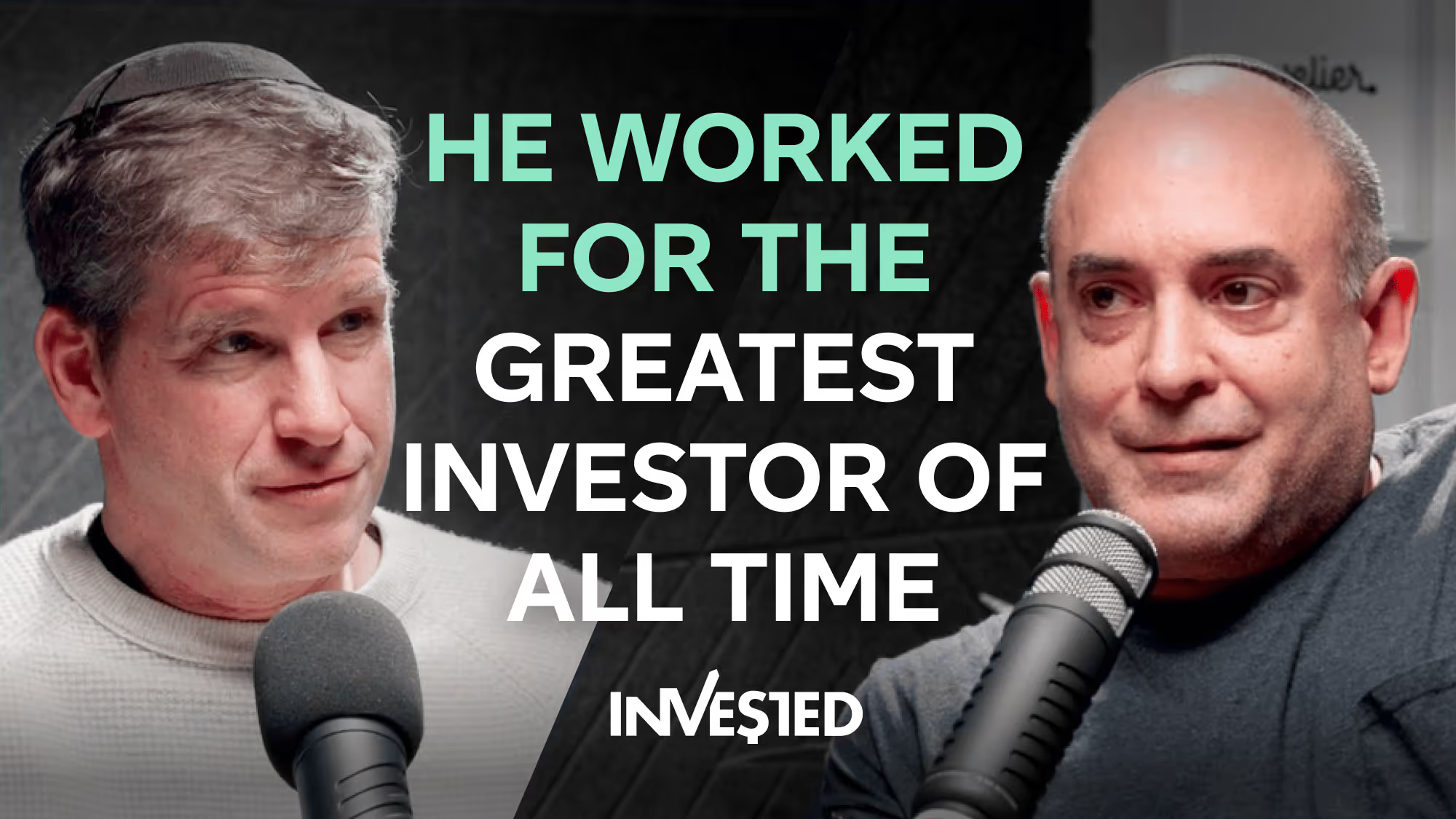
Josh Kopelman, founding partner of First Round Capital and Half.com founder, on OpenAI and Anthropic's valuations and whether AI breaks seed investing.
On this episode of Invested, Michael Eisenberg talks with Josh Kopelman about building Half.com at the height of the dot-com era, when the company convinced Halfway, Oregon to rename itself Half.com, put coupon codes on 2 million fortune cookies, and sold to eBay in 2000. Josh compares that bubble to today's AI boom and explains why First Round's fund grew from a little under $150 million in 2004 to about half a billion without changing its strategy. He also argues that late-stage bets on SpaceX, Anthropic and OpenAI are a cyclical trade, while seed is a business that can make money in both risk-on and risk-off markets.
Josh goes back to Infonautics, the company he co-founded as a Wharton student, which scanned newspapers and magazines into Homework Helper for AOL, CompuServe and Prodigy before search engines existed. He explains why founders are cartographers, why he stays up until 3 a.m. building MCP servers with Claude Code even though he is not a strong engineer, why he doesn't think AI breaks the seed model, and how The Philadelphia Inquirer, where he served as chairman, went from "default dead" to "default alive."
Josh also describes publicly calling out Web Summit founder Paddy Cosgrave's tweets after October 7th, what it cost him, and what First Round looks for in Israeli founders.
Josh is a founding Partner at First Round Capital, a seed-stage technology venture fund. Josh has been an active entrepreneur and investor in the Internet industry since its commercialization.
In 1992, while he was a student at the Wharton School of the University of Pennsylvania, Josh co-founded Infonautics Corporation – and took it public on the NASDAQ stock exchange in 1996. Josh founded Half.com in July of 1999, and led it to become one of the largest sellers of used books, movies and music in the world. Half.com was acquired by eBay in July 2000 -- and Josh remained with eBay for three years, running the Half.com business unit and growing eBay’s Media marketplace to almost half a billion dollars in annual gross merchandise sales. In late 2003 Josh helped to found TurnTide, an anti-spam company that created the world's first anti-spam router.
Josh founded First Round Capital in 2004 to reinvent seed-stage investing. And since that time the firm has invested in over 350 emerging technology startups – becoming one of the most active venture capital firms in the country. Josh was ranked 3rd on the 2018 New York Times list of Top Venture Capitalists and consistently ranks in the top 20 of the Forbes Midas List of the top 100 tech investors. Josh has been named as one of the top ten ‘angel investors’ in the United States by Newsweek magazine, one of "Tech's New Kingmakers" by Business 2.0 magazine and a "Rising VC Star" by Fortune magazine. Josh also is the proud winner of a second place ribbon in the 2011 Nantucket Watermelon Eating competition.
Josh is an inventor on sixteen U.S. Patents for his work in Internet technology. In June 2000, he was awarded Ernst and Young’s prestigious “Entrepreneur of the Year” award for the Greater Philadelphia region.
Josh earned a Bachelor of Science degree cum laude in Entrepreneurial Management and Marketing from The Wharton School of the University of Pennsylvania.
00:00 - Intro
01:46 - Half.com's Origin: eBay Meets Amazon
04:22 - Renaming Halfway, Oregon to Half.com
06:53 - Half.com Ads in Internet World Urinals
08:21 - Why Rate Card Is for Suckers
09:07 - Coupons on 2 Million Fortune Cookies
11:58 - Dot-Com Bubble vs. Today's AI Boom
16:20 - Why the Washout Belongs in Private Markets
17:29 - First Round's Fund Size From $150M to Half a Billion
19:28 - SpaceX, Anthropic and OpenAI vs. 20 Years of Exits
25:05 - Why Late-Stage AI Bets Are a Cyclical Trade
30:03 - Unvarnished Opinion, Unwavering Support
33:24 - Venture Conviction and Knowing the Risks
36:16 - Co-Founding Infonautics as a Wharton Student
40:27 - Infonautics' Bet on Closed Information
43:59 - Why Founders Are Cartographers
47:58 - Building MCP Servers With Claude Code
49:19 - What Y Combinator Got Right
52:07 - Does AI Break the Seed Model?
54:06 - First Round's "Imagine If" Brand
56:02 - Saving The Philadelphia Inquirer
59:32 - Calling Out Web Summit After October 7th
1:01:30 - Digitizing the Jewish Encyclopedia for Sefaria
1:02:18 - Investing in Israeli Founders
1:02:42 - Imagine If the Truth Was Knowable
[Josh Kopelman — 0:00]
If you want to get on the map, just convince a damn town to change its name to Half.com. You ever go to the urinals and you see those little urinal guards? We went and got them printed up to say, "Don't piss away half your money, shop at Half.com." It was the ultimate form of streaming media. I believe that your fund size is not a strategy. Your fund size is a tactic to achieve a strategy. Back in 2004, when we started, it was a little under 150. Our last fund was about half a billion. Founders are cartographers, and we raise navigators. Paddy once started tweeting about Israel as a genocidal actor. I just started screenshotting his tweets because I figured he would at some point want to take them down. And then I started tweeting about it.
[Michael Eisenberg — 0:42]
What's the price you paid?
[Michael Eisenberg — 0:49]
Welcome back to another episode of Invested. I'm thrilled to be here with my old friend. Not that either of us are old, although we are the same age, Josh Kopelman. Welcome, Josh.
[Josh Kopelman — 0:57]
Thanks. Great to be here.
[Michael Eisenberg — 0:58]
Everyone introduces you as the founder of First Round Capital. I still remember you as the founder of Half.com and Infonautics.
[Josh Kopelman — 1:05]
Wow.
[Michael Eisenberg — 1:05]
Does that make us both old?
[Josh Kopelman — 1:07]
It really does.
[Michael Eisenberg — 1:08]
We're going to tell those stories in a second, but you cannot listen to this podcast on 2X, because otherwise you'll never be able to keep up with Josh.
[Josh Kopelman — 1:17]
Well, you speak pretty fast yourself.
[Michael Eisenberg — 1:21]
Josh, I actually want to start with Half.com. Can we?
[Josh Kopelman — 1:23]
Sure.
[Michael Eisenberg — 1:24]
Okay. So we both lived through the Internet bubble or the takeoff of the Internet, and very few people know that you were actually a key part of the early Internet, having sold one of the first kind of, I think, successful companies in the early Internet era. I just want you to tell us the story of Half.com because I think it's really insightful for this era.
[Josh Kopelman — 1:46]
Sure. So started Half.com in 98, 99. So right in the insanity of the dot-com era. And the basic premise was the following, that most people buy a book, buy a DVD, buy a CD. That's how you bought media at the time and watched it once, read it once, and they had hundreds of dollars, if not thousands of dollars of value trapped on their bookshelves. So what if there was a way for you to buy a book or a movie or a disc for half price and then turn around and sell it for half price?
[Josh Kopelman — 2:30]
And originally, we were actually going to be called eBizon because we thought it was the best of eBay combined with the best of Amazon. Right? It was like person to person, like eBay, but structured commerce with a shopping cart, credit cards, like Amazon. And our lawyers told us that eBay and Amazon were ruthless competitors, but the one thing they would both agree on was suing us. So we changed our name to Half.com, launched in February of 2000. We were able to coordinate a stunt and launched on the Today Show. And then eBay came knocking a few months later. And I feel like we were one of the last chairs, if not the last chair in the game of Internet musical chairs, because the music stopped and we caught a chair.
[Michael Eisenberg — 3:18]
I mean, my memory may be fuzzy, but my recollection is that Nasdaq had already peaked. But this was considered a very successful outcome at the time, meaning that Nasdaq wasn't really crashing at the time. And I think there were a lot of public companies at the time that looked at Half.com as a harbinger of, hey, the music is still going on. It was a successful exit.
[Josh Kopelman — 3:40]
It was a very successful exit in a very short period of time. You know, our investors, like, their biggest challenge was it might not have been long enough for long-term capital gains. Yeah, we were pretty fortunate. And the timing, the exit, the scale of the exit, given that the Nasdaq peaked in March of 2000 and we sold in— we closed, eBay called us in February 2000 and we closed in June of 2000.
[Michael Eisenberg — 4:09]
Amazing.
[Josh Kopelman — 4:09]
Yeah.
[Michael Eisenberg — 4:10]
Amazing. Now, can you tell everyone about the stunt, which wasn't just the Today Show, but there was a stunt about a naming.
[Josh Kopelman — 4:17]
Oh yeah. So everybody—
[Michael Eisenberg — 4:19]
I'm old, but I still remember these things.
[Josh Kopelman — 4:20]
You have a good memory.
[Josh Kopelman — 4:21]
I'm really impressed.
[Josh Kopelman — 4:22]
There's nowhere to hide here. Look, this was back when Pets.com was spending tens of millions of dollars buying media with their sock puppet and trying to create awareness and recognition was really expensive. We didn't have a lot of money. We raised venture, but we didn't have Pets.com money. So we kept saying we wanted to do something at launch to really put us on the map. And we kept brainstorming in a room and, like, "No, that's not audacious enough. It has to really put us on the map." And then finally, after like four hours of fruitless conversation, Mark Hughes, who I give full credit to on this, our head of marketing, basically said, "Well, if you want to get on the map, just convince a damn town to change its name to Half.com." And there was this, like, laughter slash, "huh?" Like, you know, it was a little odd, like you didn't know, is this a good idea, because I just want to get out of this room, or is this a good idea?
[Josh Kopelman — 5:17]
So we went and we searched all towns, like Half Moon Bay. Well, that's probably expensive. And the smallest town with the word "half" in it was Halfway, Oregon, population 350-something, and it was a gold rush town that got left behind. Needless to say, the next day Mark Hughes was on a plane to meet with the mayor of Halfway, Oregon. And they agreed to change their name from Halfway, Oregon to Half.com, Oregon. And that got us tens of millions of dollars of free media. A four-minute segment on the Today Show, Wall Street Journal, 60 Minutes. It just put us on the map.
[Michael Eisenberg — 5:56]
It literally put you on the map.
[Josh Kopelman — 5:57]
Literally put us on the map. It was a one-year deal. We wanted it to be permanent.
[Michael Eisenberg — 6:01]
It was only a one-year deal?
[Josh Kopelman — 6:02]
We wanted it to be permanent. We were willing to pay them more, but they only wanted a one-year deal.
[Michael Eisenberg — 6:06]
So it was like a licensing deal for the name of the town.
[Josh Kopelman — 6:08]
They changed their name for a year. We got them 20 computers for the school. We hired four people, so over 1% of the town to work in customer service. And the.
[Michael Eisenberg — 6:08]
For Half.com?
[Michael Eisenberg — 6:19]
For Half.com.
[Josh Kopelman — 6:21]
Yeah. And the big thing was the snowplow. They needed a snowplow, and that's what closed the deal.
[Michael Eisenberg — 6:27]
You bought a snowplow with venture capital dollars?
[Josh Kopelman — 6:29]
Yes, we bought a snowplow and donated it to Half.com, Oregon.
[Michael Eisenberg — 6:34]
I didn't know that part of the story.
[Josh Kopelman — 6:35]
Oh yeah, that was what closed the deal.
[Michael Eisenberg — 6:37]
I thought that buying an endless amount of NVIDIA chips with venture capital dollars was a big one. But buying a snowplow, that's a new one.
[Josh Kopelman — 6:43]
Yeah.
[Michael Eisenberg — 6:45]
At Shopping.com, at the same time, we were dressing people up in jumpsuits with bags, helping people carry their Christmas shopping from Fifth Avenue in Manhattan.
[Josh Kopelman — 6:52]
Yeah. Everyone had to do stuff.
[Michael Eisenberg — 6:52]
I thought that was odd.
[Josh Kopelman — 6:53]
Everyone had to do stuff. I mean, we wanted to advertise at Internet World, which was the big trade show at the time. And again, the ads were so crazy expensive. So we went and got a bunch of interns. And meanwhile, it's not so much today, but Internet World was all male. It was all male. So, you ever go to the urinals and you see those little urinal guards to prevent cigarettes from getting flicked down there? They all say, like— they all have something like 1-800-urinal-guard or something like that. So we went and got them printed up to say, "Don't piss away half your money, shop at Half.com." And we said, "Who the hell's going to go put them in?" So we hired interns.
[Josh Kopelman — 7:37]
We hired like five interns to do hands-on viral marketing. Well, we gave them gloves so they didn't catch a virus. And, you know, it was the ultimate form of streaming media. And we went and just went to the Javits Center in the morning and to Penn Station and just said, "Go put these in the urinals." And our hunch was that no one's job was to pull them out. They sat there for a year and a half.
[Michael Eisenberg — 8:08]
Is that right?
[Josh Kopelman — 8:08]
They sat there for a year and a half. But it got us a ton of attention as well. Like, yeah, so just stupid things like that. We had, like, why not?
[Michael Eisenberg — 8:17]
What's the takeaway for entrepreneurs from all this?
[Josh Kopelman — 8:21]
I don't know. Don't buy rate card. Don't buy rate card. Like, you know, you could buy, then, like, for Half.com a one-page, a full-page ad in the book section for one day, one week, was like $50,000. The urinals were like $2,000. The town was less, you know. And so I think people tend to be really creative in building a product and then get really traditional on marketing. "Oh, there's a way that it should be done." And at least for consumer products, we saw that you could be just as creative, if not more creative in figuring out distribution and go-to-market. And rate card is for suckers.
[Michael Eisenberg — 9:03]
Was there anything else other than naming a town and the urinals?
[Josh Kopelman — 9:07]
So my VP, same Mark Hughes— we were out to dinner at Chinese food, and we were talking about the New York Times Book Review. And it made sense. It's where everyone went to find out books at the time. But it was $50,000 and no one reads it. So we finished the meal and they give you the fortune cookies. You crack it open and there's a little fortune in it. And one side is a fortune and the other side are your lucky numbers. And he's like, "Everybody reads these." So the next day he went to Wonton Foods in Brooklyn, New York, and apparently Wonton Foods manufactures and sells 2 million fortune cookies a week to every Chinese restaurant on the East Coast.
[Josh Kopelman — 9:50]
And he walked in and he realized no one spoke a lick of English. So the next day he brought a Chinese translator and just asked them, "How lucky are your lucky numbers? How much money do you make on them?" And they're like, "Nothing." So he's like, "Well, what if I put a coupon code on the back of them, and I'll give you $10 every time one of these is redeemed?" You know, and it said, "Save a fortune at Half.com." And we were on the back of 2 million fortune cookies like a week later. And it was, for years, one of our biggest channels of customer acquisition because everybody reads it, and it is outside of, like, the media noise.
[Josh Kopelman — 10:35]
Just getting attention was part of it. So just countless examples of things like that.
[Michael Eisenberg — 10:39]
It's like Lemonade doing graffiti on ads today instead of buying the ad space itself. That's amazing. So in the course of the last 10 minutes of conversation, you've mentioned eBay and Amazon on the one hand, you mentioned Internet World, which doesn't exist anymore. I think we met the first time at Demo.
[Michael Eisenberg — 10:55]
It could be.
[Josh Kopelman — 10:56]
Yes.
[Michael Eisenberg — 10:56]
Which is another now extinct—
[Michael Eisenberg — 10:58]
Either Demo or PC Forum. I can't remember which.
[Michael Eisenberg — 11:02]
Both of them.
[Josh Kopelman — 11:02]
Both of them. What does that say about us? I guess we're endangered species.
[Michael Eisenberg — 11:07]
We are endangered species. I think you mentioned Pets.com and before we sat down here, we talked about Globe.com and we talked about JDS Uniphase. And these are all companies that were worth lots of money, at least on paper, in the stock market. In many cases that went to zero. And a lot of conferences, by the way, which were the place to be. You had to be on stage at Demo to launch your company.
[Josh Kopelman — 11:31]
Yes.
[Michael Eisenberg — 11:35]
If you weren't at PC Forum—
[Josh Kopelman — 11:35]
We launched Half.com at Demo.
[Michael Eisenberg — 11:36]
You launched Half.com at Demo. And so, if you weren't at PC Forum, right? Chris Shipley at the time and Esther Dyson at PC Forum. If you weren't at PC Forum, you weren't part of like the digerati. And then there was Stewart Alsop's conference in Scottsdale.
[Josh Kopelman — 11:51]
Agenda.
[Michael Eisenberg — 11:52]
Agenda. Those were, like— none of us exist anymore.
[Josh Kopelman — 11:55]
Nothing.
[Michael Eisenberg — 11:55]
We're still around. But none of this exists anymore.
[Josh Kopelman — 11:57]
Yes.
[Michael Eisenberg — 11:58]
What does that tell you about the current moment we're in where again, it feels like things are taking off to the moon. There's a lot of companies, by the way, today. Big difference between now and then was revenue run rate. Although JDS Uniphase had a real revenue run rate at the time, but Globe.com didn't.
[Josh Kopelman — 12:13]
JDS Uniphase was probably worth over $20 billion with less than $30 million in trailing 12 months revenue.
[Michael Eisenberg — 12:18]
Was it that little?
[Josh Kopelman — 12:18]
Yeah. Sycamore Networks. There are a bunch in the fiber space. Yeah, I think that.
[Michael Eisenberg — 12:18]
What was the other one with the C?
[Michael Eisenberg — 12:23]
It was called— that was sold to Cisco. It was Chromatis, which is the Israeli one and there was the US one called also with the C. Because every time Sevin Rosen backed a company, it had to be called C—
[Michael Eisenberg — 12:34]
—with a C.
[Josh Kopelman — 12:34]
Yeah, I don't remember. Yeah, I think, look, I— we've seen this in every cycle. Companies, rightly so, during speculative times, get valued based on their high potential rather than their high revenue or their high, like, actual financial numbers. Like, VCs do this all the time. In every cycle it's happened. So what happened, I think, back in the dot-com era, is those companies went public. I took one public, Infonautics, trailing 12 months revenue $600,000.
[Michael Eisenberg — 13:12]
What year was that?
[Josh Kopelman — 13:13]
That was in '95. You had companies that were valued based on their potential and what ended up happening is not a lot of them lived up to that potential. Right now I'd say that's not happening truly in the public markets, but that is happening in the private markets. Probably the $1 to $10 billion range in the private markets are the companies that tend to be valued most on potential, like potential energy rather than latent energy. In terms of potential business, they're being valued into the future and guess what? Several of them will be worth that and more. We're funding— you know, we're in those companies and we're hoping that potential gets actualized.
[Josh Kopelman — 13:57]
But probably like most cycles, the majority of them will not. And you could just go down the dot-com list and look at the dozens and dozens of companies that got funded and got public that no longer operate and, you know, ceased operations. But that's the business we're in. You and I, we recognize potential in people, potential in markets and we invest in that. And we overpay for it, and the industries get overcapitalized. A lot fail, but some succeed.
[Michael Eisenberg — 14:37]
And does this moment rhyme to you with the previous one or do you think it's different?
[Josh Kopelman — 14:41]
It's familiar in that if you ask me, again, you're seeing speed to revenue, which is very different than the last. So it's not a direct pattern match, but there's enough here where you say in moments of excess, in moments of exuberance, in moments of risk-on, which I'd say the industry has been in over the last several years, you're going to see a number of companies get funded at valuations that won't end up being long-term durable, but that's fine because enough will get funded and will exceed all of their expectations, that, I just think that's the business we're in. That's the business that founders are in and funders are in.
[Michael Eisenberg — 15:28]
It's a hits business.
[Josh Kopelman — 15:29]
It's a hits business. And in the moments like this, more capital gets spread to try to create as many hits as possible. And I have no ability right now to assess, is this '97, where we have three more years of boomtown, or is this '99, where we have three more quarters? I don't know.
[Michael Eisenberg — 15:54]
Or is it February 2000 where you want to sell your company? Do you think there's a difference? You made the point— you alluded to the point that back then this had played out in the public markets. Like everyone went public.
[Josh Kopelman — 16:05]
Yes.
[Michael Eisenberg — 16:05]
Today's playing out in the private markets.
[Josh Kopelman — 16:07]
Private markets are a better product for founders right now.
[Michael Eisenberg — 16:10]
Yeah, but is there a difference when ultimately a lot of these companies get washed out?
[Josh Kopelman — 16:14]
Yep.
[Michael Eisenberg — 16:16]
Does it matter if it happens in the public or the private markets?
[Josh Kopelman — 16:20]
You're talking about the washout in particular? I'd argue that if I had to sort of look societally, I think it's probably better it's in the private markets than the public markets. Because what tends to have happened, if you look at what happened to the dot-com boom, is VCs foisted these stocks at these inflated prices on the public markets, on individuals who were speculating. And when you sit down and say who took the gains and who took the losses, you had sort of VC and their ecosystem taking the gains and the public market and Joe Public investor taking the losses. Whereas if it's playing out in the private markets right now, the gains and losses are kind of owned by the same people.
[Michael Eisenberg — 17:11]
Although the pension funds, one could argue, although it's not at that level of scale or in the private markets, it's pretty hard right now.
[Josh Kopelman — 17:17]
They're very—
[Josh Kopelman — 17:18]
Yes.
[Michael Eisenberg — 17:18]
You started First Round Capital— correct me if I'm wrong— with about a $150 million first fund.
[Josh Kopelman — 17:22]
That's right.
[Michael Eisenberg — 17:23]
Okay. And you ran the $150 million fund strategy for how many funds?
[Josh Kopelman — 17:23]
That fund—
[Josh Kopelman — 17:29]
Strategy— it grew almost every year. What we— I believe that your fund size is not a strategy. Your fund size is a tactic to achieve a strategy. So for us, our strategy might be we want to have 70 companies per fund to give us diversity. We want to own 12, 15% of a company going in to have ownership. We want to have some time diversity. So we want it to be at least two years, ideally two and a half. So if that's our strategy, then we sit down and say, okay, based on the market today, we want to own 12 and a half percent of a company and we want to have— yeah, we want to have 70 of them. What would we need to deploy? And so back in 2004, when we started, it was a little under 150 million.
[Josh Kopelman — 18:12]
Today our last fund was about half a billion. Why? Same exact strategy. It's just that if you plot a chart from 2004 to 2026 of seed round sizes or seed round valuations, you'll see from 2004 to 2026 it went up about 4x. And so our fund just moves up. Like, I don't believe that you build a fund strategy around a number. I think the best thing is to understand what your strategy is and say, what does it take to execute that strategy in the market, recognizing you're a player in the market. As much as I'd love to get 2004 valuations, not happening.
[Michael Eisenberg — 18:55]
And exit sizes are up enough to cover for that?
[Josh Kopelman — 18:55]
Yes.
[Michael Eisenberg — 18:55]
, and then some.
[Josh Kopelman — 18:59]
And then some.
[Michael Eisenberg — 18:59]
For the winners.
[Josh Kopelman — 18:59]
Look, for the winners from 2004 to 2014, so in our first 10 years, U.S. public and M&A exits was about a trillion dollars. And so the first decade, there was about a trillion dollars of value created. From 2014 to 2024, the next decade was $2 trillion. So it doubled.
[Michael Eisenberg — 19:25]
And the concentration, though, I believe is bigger between 2014 and today.
[Josh Kopelman — 19:28]
Yes. And now, today, one could argue that SpaceX, Anthropic, and OpenAI— there's, like, if you add them up— SpaceX, where is it now? About a trillion and a half. Anthropic, probably the same, maybe more, maybe less. But call it—
[Michael Eisenberg — 19:49]
Gavin Baker has been on this podcast. He thinks we're at the $3 trillion, I think.
[Josh Kopelman — 19:51]
But yeah. But even if you say that, if you say that the three of them all average a trillion and a half— that's four and a half trillion dollars.
[Michael Eisenberg — 20:00]
Yep.
[Josh Kopelman — 20:00]
Those three companies are more than double the entire amount of exits during the last 10 years of every company. Put another way, those three companies will have created more value than every exit in the last 20 years, and more. And so I think what we're seeing now is, yes, I would argue that the exit size and scale of exits is more than enough to cover, you know, the valuation increase at the seed stage, at the early stage. Yes, the— like, the seed stage is an evergreen business. And what do I mean by that? Like, if we invest at a $20 post or $30 post, if it's a great company, we'll do well—
[Michael Eisenberg — 20:47]
Yep.
[Josh Kopelman — 20:51]
and if the company's not great, we're going to lose it all. Late stage, the folks that are coming in now at the $10 billion, $20 billion, $50 billion prices, historically that's been a cyclical play, not an evergreen play. It worked really well for Tiger Global until it didn't. It worked really well for SoftBank until it didn't. But by the way, they made all the money hand over fist while it was working. And so I think, you know, I'm not smart enough to be able to time the cycles, so I'd much rather play in the kiddie pool— play in the shallow section— and play in a business where we could make money whether it's a risk-on environment or a risk-off environment, and not have to play into a cycle.
[Michael Eisenberg — 21:43]
If I go back to your Half.com story and to the kind of early Internet stories, the timing there was critical. Right. If you cash out before the bloom came off the rose or the market tipped or whatever you want to call it the bubble burst, you were fine. And actually people thought you were a genius. And if you didn't, had you missed that Half.com window by another 30 or 45 days, could have had a very—
[Josh Kopelman — 22:06]
a very different outcome.
[Michael Eisenberg — 22:07]
Different outcome. And so when you look today, for example at OpenAI or Anthropic at that end and other companies I'm sure you're investing in, how do you think about the timing of the exit from those? How do you think about the lasting or staying power of what you now refer to as the trillion-dollar companies, Anthropic and OpenAI, which will account for a large percent of venture returns?
[Josh Kopelman — 22:30]
I'm not sure I spend a ton of time thinking about it just because it's not my day job. My day job is helping founders at the earliest possible stages, the hunt for product-market fit. I'd much rather spend time on that than trying to guess the durability of trillion-dollar valuations. But I'd also say there's another key difference which is over the last 20 years, the capital markets, as I said earlier, public markets versus private markets: private markets is a better product for most founders.
[Michael Eisenberg — 23:02]
Yep.
[Josh Kopelman — 23:03]
It's regulatory, less complex. The stock trades on appointment rather than day in or day out. And the private markets have basically solved a lot of the challenges of— you want liquidity? Sure. We have a vibrant secondary market now that didn't exist when you were at Shopping.com and when I was at—
[Michael Eisenberg — 23:22]
It's not like the public market, still, though. It's by appointment. It's got complexities. You have to coordinate with the founders, the board. You can block it. There's a lot of things to— it's not the same level of liquidity.
[Josh Kopelman — 23:22]
Not the same—
[Josh Kopelman — 23:35]
But at least in today's market, you know, we're seeing founders take advantage of that. And I think that's not a bad thing because we want a founder to be motivated to go long. We want a founder to— you know, VCs are diversified. VCs have a— you have a portfolio of a couple dozen, you know, two dozen, three dozen companies. I have a bigger portfolio. Why shouldn't a founder be diversified a little bit?
[Michael Eisenberg — 24:00]
Because it's his.
[Josh Kopelman — 24:03]
Should be his or her decision.
[Michael Eisenberg — 24:04]
Yeah.
[Josh Kopelman — 24:05]
It should be their decision. And, like, I don't like—
[Michael Eisenberg — 24:08]
Is that a signal for you if a founder decides to sell?
[Josh Kopelman — 24:10]
No. In some cases it enables the founder to go long. I've had plenty of companies in the last few years. We've had some companies sell right under a billion dollars. And those were companies that I think my partners and I thought had the opportunity to go on to be worth multiples of that. But I don't begrudge the founder of that. That's what they wanted to do. Had they actually taken— in those cases, those founders had not taken secondary. And I've had plenty of founders who have taken some secondary off the table, and it motivated them to turn down some of the offers. And again, it should be their call, not the investor's call. Like we're in service of the founder. And so I feel like it's been a healthy development.
[Michael Eisenberg — 24:52]
This has always been a home run business or hits business as they say. It seems to be getting more so. One of the things you hear from LPs is, "Hey, we're in Anthropic, OpenAI, or SpaceX," because those are the big three today.
[Josh Kopelman — 25:05]
That's cyclical. That's cyclical. That's a cyclical trade. That's the—
[Michael Eisenberg — 25:09]
Explain what you mean by cyclical trade.
[Josh Kopelman — 25:10]
What I mean by cyclical is that you see these businesses, you have LPs that were able to get— "I bought into Anthropic at $200 billion, and now they're looking like geniuses." And that's because you're in the back end of a boom cycle where things compound and asymptote very quickly. That's a new phenomenon. But by the way, you saw similar types of trades in the dot-com boom where things— JDS, as we were talking about, Sycamore— tens of billions of dollars on very—
[Michael Eisenberg — 25:45]
That didn't asymptote that well.
[Josh Kopelman — 25:45]
It went—
[Josh Kopelman — 25:48]
up and then it cratered. Right? 99% drop or liquidations or bankruptcies. So I think what I'm arguing is that, sure, that trade, that's a good trade for LPs while you can do it, and while it works. The question, though, is there's always— there has to be an ultimate buyer after you.
[Michael Eisenberg — 26:10]
And who's that marginal buyer today in the private markets?
[Josh Kopelman — 26:15]
Yeah. I think the private markets ultimately expect the ultimate buyer to be the public markets.
[Michael Eisenberg — 26:20]
Right. And if that doesn't happen, because the better product is in the private markets and the value accretion happens in the private markets.
[Josh Kopelman — 26:26]
Yeah.
[Michael Eisenberg — 26:26]
I mean, you're handing the public a bag that is asymmetrical.
[Josh Kopelman — 26:26]
I'm not sitting here saying, like, the last thing I want to do is be shitting on OpenAI or Anthropic. I think they've built amazing businesses and those investors. And I think there's a very legitimate strategy on buying in the private markets, expecting these to be— you know, again, there's not just one way to make money in this business. I just think an evergreen strategy is like, you know, that businesses go through cycles. We go through risk-on and risk-off.
[Michael Eisenberg — 26:55]
Yep.
[Josh Kopelman — 26:56]
We go from FOMO to fear. And so the trade that you're talking about is a risk-on trade. And it works well in risk-on environments. It doesn't work well in risk-off environments. You get stuck holding assets where, you know, the challenge of the private markets is it trades by appointment, or it doesn't trade.
[Michael Eisenberg — 27:17]
Right.
[Josh Kopelman — 27:18]
And we saw, during the— like, if you look at the number of unicorns minted from 2017 to 2021, more than half of them today— so you're talking about hundreds and hundreds of them— haven't raised money in four to five years. More than half of them are either shrinking or growing at less than 20%, and.
[Michael Eisenberg — 27:18]
They're zombies.
[Josh Kopelman — 27:18]
Yeah.
[Michael Eisenberg — 27:18]
From a financial perspective.
[Josh Kopelman — 27:18]
I still respect the hell out of the founders that show up every day to try to grow back into that valuation. And we've seen some of them do it, right?
[Josh Kopelman — 27:18]
We've seen.
[Michael Eisenberg — 27:18]
It happened to us.
[Josh Kopelman — 27:18]
We saw companies that raised— they had $8 million in revenue and raised money at a crazy multiple in 2021.
[Josh Kopelman — 28:04]
That money gave them the runway. The company is now north of 12x the revenue and is probably just now growing into that valuation. And I have a ton of respect for those founders. They're doing it the hard way. They're eating glass for years—
[Michael Eisenberg — 28:23]
Yep.
[Josh Kopelman — 28:23]
to grow into that price. But just know that's part of what happens in this business. So as an industry, we price ahead. That's what we do. We don't price behind, we price ahead. And the more you're risk-on, the further ahead you price.
[Michael Eisenberg — 28:41]
You've used the term trade a bunch here.
[Josh Kopelman — 28:43]
Yes.
[Michael Eisenberg — 28:43]
Do you think the founders think about this as a trade?
[Josh Kopelman — 28:47]
I'm differentiating between the people buying into these trillion-dollar companies.
[Michael Eisenberg — 28:53]
That's a trade.
[Josh Kopelman — 28:54]
The founder doesn't know who they are.
[Michael Eisenberg — 28:56]
Right.
[Josh Kopelman — 28:56]
You're a pension fund putting a billion dollars into a $30 billion— you're not investing to partner with a company. You're not partnering with the founder. It's a trade. Previously, that would happen in the public markets. You would go on a Robinhood or your broker, and you'd trade the stock. Today, you trade the stock in the private markets. I would differentiate that as a trade versus partnering with founders in the seed, A, or B phase stage, where that isn't a trade, that's a partnership.
[Michael Eisenberg — 29:32]
Historically, the venture capital business has been what I would call a young man's game.
[Josh Kopelman — 29:36]
Yes.
[Michael Eisenberg — 29:36]
Bill Gurley and I used to joke about this a fair amount. When was the point that we became old guys in the game? So you and I are the same age. We've been doing this for a fairly long time. You had a startup career before doing this. I had no career before doing this. And we're both doing this a long time at this point.
[Josh Kopelman — 29:54]
Yes.
[Michael Eisenberg — 29:54]
Are you able to still partner with these younger founders? Are you still as relevant? Do they think you're as old? Why do they want to partner with you?
[Josh Kopelman — 30:03]
I think every founder is different, but in general, I've been fortunate that I've seen a lot of movies. I just have hundreds and hundreds of founders, both the ones we backed and the ones we said no to, where we should have invested. Venture is a humbling business. I look back now at the tables I pounded inside my partner meeting to either invest or not invest over the last several decades and realized that my level of confidence, yeah, it's okay to be wrong, but the level of confidence I had in those decisions is the thing I regret. So I feel right now the benefit that I offer founders and the reason founders choose to partner with me is because I feel like I owe them two things.
[Josh Kopelman — 30:51]
I owe them my unvarnished opinion. Whether I agree with them or not, they should, like, they have a lot of choices as to who to choose. You know, it's a founder's market. They have a lot of choices as to whose capital to choose. So if they're going to choose mine, they should at least get what they're paying for, which is the benefit of the movies I've seen where I could tell them most of the time when the movie starts like this, it finishes like that. But after I offer them my unvarnished opinion, I also recognize now that I owe them my unwavering support. I am one data point. Every day, founders are just like besieged by data from their employees, from their customers, from their prospects that don't convert to customers, from the press, from their shareholders, from the VCs that don't convert into shareholders.
[Josh Kopelman — 31:36]
And they have 10 times the context and the data. So I feel like, look, if I offer them my unvarnished opinion, then they're driving the bus as they should. And a large part of what we do is incredibly relevant. Right? Going from zero to one. The hunt for product-market fit, your pricing, positioning, distribution, go-to-market. All of those challenges are real challenges that every business faces. Whether you're building hardware or software, whether you're AI or SaaS, whether you're putting rockets in space or doorbells on doors, like these are the business. These are the challenges that every founder has in the beginning.
[Josh Kopelman — 32:18]
The first 24 months of a company's life are just a magical time. You are hiring the 10, 20 people that are going to hire everyone else. You're not just writing what the culture is, but you're actually instantiating it through your actions. And sort of having been privileged enough to partner with so many founders at this stage, I just consider myself really fortunate to have learned an incredible amount from the people I invest in.
[Michael Eisenberg — 32:45]
I want to push back on something you said about your own humility, which is you said, "If I regret one thing, it's the conviction— the level of conviction I had." I think one of the interesting things about the venture business is you actually need to have that conviction to invest the money even when you're wrong. Because, A, the founders are looking for that conviction from the partner they're going to partner with, because it's a hard journey for the founders and you have that conviction. So even though you're going to be wrong about your level of conviction and six times out of seven, it's for the one that you happen to be right about and being along with the founder of that journey, you need that level of conviction.
[Josh Kopelman — 33:24]
I hear that, and there's a lot of truth to that. Where I'd push is that I think situational awareness is really important.
[Michael Eisenberg — 33:34]
That's a hot phrase these days.
[Josh Kopelman — 33:36]
Yeah, well, I'll change the phrase, but it's okay.
[Michael Eisenberg — 33:39]
It's good. Look, he's back in the game now. I think the honeymoon's over. He's back in the game.
[Josh Kopelman — 33:44]
Good for him.
[Michael Eisenberg — 33:44]
Yeah.
[Josh Kopelman — 33:45]
Good for him. And he learned a lesson. Good for him.
[Michael Eisenberg — 33:47]
Listen, I think he's directionally— my own view is he's directionally right, just overlevered.
[Josh Kopelman — 33:51]
Yeah, he won't be. He won't be going forward. And so I think it's fair to acknowledge that when you start a company, there are more unknowns than knowns. There are. And so actually when I say, sort of, talk about the conviction, I— I mean that I would sort of just focus on the few data points that were known and I wouldn't sort of acknowledge. Look, VCs in general, we have to be risk-seeking. Like that's what we are. We get paid to seek risk, not avoid risk, period. Like we work on behalf of our limited partners to seek risk out.
[Josh Kopelman — 34:31]
But I also feel it's important to be able to identify the risks you are taking. And so I feel that it's fine to have conviction in a company and to believe that, but you should at least do so knowing the full sets of risks that you and the founder are signing up to on this journey. And you could have conviction that you will overcome those risks. You could have belief that the bet is worth— it's a big enough, bold enough bet and that you should swing and you're excited to partner with the founder on that swing, but you shouldn't delude yourself, I think, into sort of ignoring the areas that are against you, I think, because if you actually know those things, you could structure a strategy and build a plan around them rather than hiding it.
[Michael Eisenberg — 35:21]
Did you know all the risks at Birchbox, at Uber, at...
[Josh Kopelman — 35:21]
No.
[Michael Eisenberg — 35:21]
At Roblox, at— what was the first investment of First Round Capital?
[Josh Kopelman — 35:31]
I couldn't even tell you.
[Michael Eisenberg — 35:35]
Did you know the full set? There's no way to know this.
[Josh Kopelman — 35:39]
No. Nor do I think you could know all of them, but you could know some of them.
[Michael Eisenberg — 35:42]
Some, yeah.
[Josh Kopelman — 35:43]
Yeah.
[Michael Eisenberg — 35:43]
I keep finding I'm undone by risks that I didn't know existed.
[Josh Kopelman — 35:46]
Yes.
[Michael Eisenberg — 35:47]
And in many cases were unknowable.
[Josh Kopelman — 35:49]
Yeah, that's fair. But there are knowable ones.
[Michael Eisenberg — 35:51]
There are some knowable ones.
[Josh Kopelman — 35:52]
Yep.
[Michael Eisenberg — 35:53]
Rumsfeld's unknown unknowns, though, that both the upside and the downside tend to inform us. So at 16, you started in Infonautics. I want to go back to that one second.
[Josh Kopelman — 36:02]
16.
[Michael Eisenberg — 36:02]
Were you 16? How old were you?
[Josh Kopelman — 36:03]
No, I was in Infonautics. I was 20.
[Michael Eisenberg — 36:07]
20. You were still a student, though, right?
[Josh Kopelman — 36:09]
Right.
[Michael Eisenberg — 36:11]
And what did you see that caused you to start Infonautics?
[Josh Kopelman — 36:16]
So I co-founded Infonautics. Look, I think we grew up at a magical time. Went to college, got there in 1989, the web browser didn't exist. NCSA Mosaic, the first web browser came out '91. And you know, I graduated barely because I started— I co-founded a company in '91, but I graduated barely in '93. So we went from a world with no Internet to a world where the Internet existed. We went from a college with no email address to— they still didn't give them out to everyone by the time we graduated, but you could go get one.
[Josh Kopelman — 36:59]
So I had one of the first UPenn email addresses because I went to get it. And so I think it was my sophomore year, the web browser came out and I just got hooked. I just went down that rabbit hole. And what's really interesting is I think when new technologies come out, there's a very interesting phenomenon that happens. It's happened multiple times over the last few decades. It's a leveling thing for a short period of time when a new technology comes out, the gap between the expert who's been in the business for 20 years and the rookie who's, you know, sophomore in college levels.
[Josh Kopelman — 37:43]
And that's kind of what happened, you know, in '91, '92, '93. I spent all my time pretty much on the Internet building an Internet company, going deep in what's happening. And I think by the time I graduated there weren't many people, if any people, who were in the traditional package software way of selling and building software that had more Internet experience than I did. By the way, you saw the same thing happen when Bitcoin came out.
[Michael Eisenberg — 38:13]
Yep.
[Josh Kopelman — 38:13]
When Bitcoin came out, there were people in dorm rooms at universities who had far better understanding and trading strategies around Bitcoin than like the derivatives or special desks at Goldman Sachs, JP Morgan, or Morgan Stanley. Now over time it catches up, but there is a moment in time where it really favors the rookie over the incumbent. And I just feel very fortunate that the Internet wave was one of those times. And you know, and I was that rookie.
[Michael Eisenberg — 38:48]
What did Infonautics do?
[Josh Kopelman — 38:50]
So Infonautics built— so, back in the day, there was no— this was pre-search engine.
[Michael Eisenberg — 38:56]
Yep. Nobody's going to believe this story. So it's just important to get it out for the modern world.
[Josh Kopelman — 39:00]
There was not— like, newspapers weren't online, magazines weren't online, Wikipedia didn't exist. So if you were a kid in school and you did research, you went to your library and physically found things. Maybe the library was advanced and had a CD-ROM. So we said, well, why don't we build— I think LexisNexis was around at the time, Westlaw, and there was a dial-up service called Dialog, which had, like, news wires for business. And we said, why don't we build something— and CompuServe, AOL, and Prodigy were the three big online channels. And we said, why don't we build something for students? So we built a product called Homework Helper that we sold to America Online, and we sold on Prodigy and CompuServe.
[Josh Kopelman — 39:45]
And it was the first educational-focused sort of reference. So we went and got newspapers. What's crazy is newspapers didn't have digital archives. They didn't even have digital formats. They went straight to printing press and there was no, like— so we were scanning newspapers in. We were shipping— we cut deals with 50 magazines, from Newsweek to Time to newspapers to CliffsNotes to encyclopedias, and we were shipping it all overseas to be scanned and keyed in. And we made it searchable and we sold it to families, schools, libraries.
[Josh Kopelman — 40:27]
We were ahead of our time in so many places. But we were wrong in that we bet that information will be protected and closed. We bet on closed rather than open. And what ended up happening is, like, you know, everyone ended up hosting their own information on their own web servers. Newspapers went open, magazines went open rather than closed.
[Michael Eisenberg — 40:52]
You know what's stunning to me, as I think about this? This whole conversation going on now about Anthropic cutting the bindings off of books and scanning them to teach the LLMs. It's like back to the future.
[Josh Kopelman — 41:03]
And then, you know, and then Google— there was a period of time where Google was doing— they had a massive class action lawsuit in that area.
[Michael Eisenberg — 41:08]
You were way ahead of your time.
[Josh Kopelman — 41:09]
Now, we had permission from every single source that we put in there. You know, the other thing— I learned so much. The other screw-up was we went to the publishers with a business model. We said, "We want to sell to consumers for this price, and we'll set aside that amount of money." It was only like 18 months later that we realized if we need to change our price or our strategy, we had to go back and renegotiate with every single one of these publishers to have the flexibility to be agile.
[Michael Eisenberg — 41:41]
And what happened to Infonautics in the end?
[Josh Kopelman — 41:42]
Infonautics went public and ultimately ended up merging with a company called Tucows that I believe is still around now.
[Michael Eisenberg — 41:42]
Is it really, Tucows?
[Josh Kopelman — 41:42]
I think so. Infonautics outlasted its bankers. It was Hambrecht & Quist, Cowen, and Oppenheimer.
[Michael Eisenberg — 42:02]
But Oppenheimer's still around.
[Josh Kopelman — 42:04]
Yep, but—
[Michael Eisenberg — 42:05]
And Cowen, I believe, is still around, actually. And Hambrecht & Quist became part of J.P. Morgan. This was the old days of the Four Horsemen.
[Josh Kopelman — 42:11]
Yep.
[Michael Eisenberg — 42:12]
Hambrecht & Quist, Robertson Stephens, Montgomery Securities. And.
[Josh Kopelman — 42:12]
Look at you.
[Michael Eisenberg — 42:12]
I'm doing a lot of work on this...
[Josh Kopelman — 42:12]
Good memory.
[Michael Eisenberg — 42:12]
...These days. I think that time may be coming back. I'm hoping it's going to come back on the Tel Aviv Stock Exchange as the place where these Infonautics companies go public, maybe with a little more revenue, even adjusted for inflation, than that. And so at 20, I was— the university I went to, where I edited the college paper, was one of the first places to get desktop publishing, which nobody knows what that is anymore. But PageMaker, Aldus PageMaker—
[Josh Kopelman — 42:44]
Yeah.
[Michael Eisenberg — 42:44]
And Quark. In the days where the real newspapers, like the ones you did business with, wouldn't let desktop publishing, because that's not the way you lay out a newspaper.
[Josh Kopelman — 42:44]
That's right.
[Michael Eisenberg — 42:44]
The Harvard Crimson wouldn't have it. And so I'm thinking today about 16- to 20-year-olds. And I had sitting in that seat not long ago, a young man named Amir Fisher, who's 16. He made a fascinating observation. He said that my high school class is divided between people who spend their time on AI and learning on YouTube versus those that are on TikTok and Instagram. And the brain can compound a lot faster taking in content from YouTube— and he's talking about educational content from YouTube— and AI, whereas it decompounds, so to speak, when it's on TikTok and Instagram, which I thought was a profound comment for a 16-year-old.
[Michael Eisenberg — 43:31]
For anyone.
[Josh Kopelman — 43:31]
It's a profound comment.
[Michael Eisenberg — 43:32]
It's a profound comment. But the point about the 16-year-old, the teenage brain compounding at that rate is stunning. So here you are at our ripe old age, but you started compounding when you were in college. What are you telling kids today who are teenagers to do to compound their brains or to compound the learnings, for example, that you got at Infonautics at that time, that you then parlayed into Half.com and a venture career?
[Josh Kopelman — 43:59]
I think it's an incredible— it's a scary time because there's so much uncertainty. The aperture of possible scenarios is so broad. But I also think it's an incredible time in that the ability to use AI to learn and to create is unlike anything I've ever experienced before. And so if you are 16 years old and you're into fantasy football, great. You could do fantasy football. Just— Claude, code a tool to help you win the draft. And, like, it's not hard to do, it's pretty forgiving, and it gets better with every release.
[Josh Kopelman — 44:40]
If you're into research, great. Claude— like, I just believe that you have the ability to, like, create things. Look, by and large, most of our societies have created a culture of conformity. And what does that mean? It means that they figured out that in order to educate the widest number of people, to achieve the widest possible outcome, to get as many of them up to middle class, they have a pipeline and it's this conveyor belt that we put kids on. We put them on this conveyor belt and we say, all right, in high school, you're gonna take these classes and a teacher's gonna stand up and teach you this thing from this curriculum.
[Josh Kopelman — 45:20]
And then towards the end of high school, you need to have the right summer internships or summer activities to get into, you know, the right recommendations to get into the right college, where, again, you need to have the the right major, right advisors, right summer jobs in order to land. And like, these kids are on this conveyor belt of conformity. You know, like, there's an overused term, but I think it's true, which is, like, we've taken the agency away from these kids. Even in college, they show up their first day, the teacher hands them, here's the syllabus for the class. Like the students don't need to guess what to read. The teacher tells them what and when. The students don't need to guess what's going to be on the test.
[Josh Kopelman — 46:04]
The teachers actually give them test prep. The teachers give them the cheat codes to the class and say, "Your final is 50%, the midterm is 30%." Class participate, whatever it is, they know what winning looks like. Yet in life, no one, when you're starting a company, no one tells you what to read and when to read it. No one tells you what winning looks like. And so much of what, like we've seen with founders is, they can't follow a map. They have to build their own map. Founders are cartographers and we raise navigators. And I think AI is enabling— it is reducing the friction to be a cartographer, to have agency to build and to create.
[Josh Kopelman — 46:53]
You know, like, what— when, for most of our careers, software engineers were the folks that created value.
[Michael Eisenberg — 47:02]
Yes.
[Josh Kopelman — 47:03]
They sat down and listened. You know, they were the ones, they were like the scribes who could like hear what you want to build and instantiate it in their language, which was code. And they were the limited commodity. We're rapidly approaching a point where English is going to be the language of creating software or creating something. And that's going to be massively freeing. So that for me, I think that at least for the next five to 10 years, not just being AI-native, but AI-fluent and taking the tooling that's already so powerful and bringing it into your areas of interest, your areas like the areas of focus.
[Michael Eisenberg — 47:50]
I want to ask a nitpicky question by asking, is AI a language or a tool? Is English the language and AI the tool or is AI a different language?
[Josh Kopelman — 47:58]
I don't know. I would argue that the way it's being built today is English is the language. Right? I found myself up till three in the morning because I have so many Claude coding and I'm not a strong engineer and I'm speaking English to it.
[Michael Eisenberg — 48:14]
What are you running?
[Josh Kopelman — 48:15]
So I'm building MCP servers for things that don't have MCP servers because I'm hooked on like the ability to query things. So, you know, whether it's, like, "Oh, you have Ring cameras. There's no MCP." No problem, I'll build one. And you know, and so that's pretty much what I'm doing. And my basic setup is just a Claude Code setup. Like it's, it's a tool. Like you could be a collector of baseball cards and you want a tool to manage that. You could be in fantasy sports, you could, you could be doing medical, you could be like, you think you want to be a doctor? Great. Like just build something.
[Michael Eisenberg — 48:45]
Is your wife building?
[Josh Kopelman — 48:47]
She is building with different tooling. So she's using a program called Town, which is a First Round company, but it's, like— it's basically like a managed Claude bot type of thing. And she's using that to help her manage her life.
[Michael Eisenberg — 49:02]
My wife decided this summer to teach herself Claude Code.
[Josh Kopelman — 49:05]
And?
[Michael Eisenberg — 49:06]
I'm waiting to see the results still. No, no— she just started a few weeks ago. And I think it's inspiring. It is. It's inspiring, and I think it's giving—
[Josh Kopelman — 49:16]
And I think five years from now you won't even view it as code.
[Michael Eisenberg — 49:18]
I agree.
[Josh Kopelman — 49:19]
Five years from now, like, there's so many things that YC got right that I didn't give them credit for in the beginning. I was skeptical, but one of the things that I think they realized early on was that it's far easier to take a 23-year-old engineer and teach him or her business, teach them how to sell, teach them what the words revenue and margin mean, and the hunt for product-market fit than it is to take someone who spent 20 years in business and teach them how to code and sort of that whole generation of, you know, sub-26-year-old technical founders just got put in business because of that. And they were right and it created a ton of value for the ecosystem. It'd be interesting to see five years from now if that is still the case.
[Michael Eisenberg — 50:08]
I think that's profound.
[Michael Eisenberg — 50:09]
I agree with that.
[Josh Kopelman — 50:09]
Because I would argue that they previously recognized the value that these scribes have, and these scribes captured so much of the value. Why should they be translating someone else's program? Business idea. We'll just give them the business. And it was so much easier to teach them business than teach everyone else to code. Not today, but maybe 2030. Around 2030, where you just, like, extrapolate the data points, I wonder what it means for the— and again, I don't want to speak in absolutes. Of course there's going to be massive opportunities for technical founders, but I think there will also be a ton of value unlocked, created, for non-technical founders who previously didn't even know where to start.
[Michael Eisenberg — 50:53]
So if that was YC 12 or 13 years ago and today the world is headed to what you described.
[Josh Kopelman — 50:58]
It's one scenario.
[Michael Eisenberg — 50:59]
One scenario. What are you investing in today?
[Josh Kopelman — 51:04]
Today?
[Michael Eisenberg — 51:05]
What do you want to invest in today?
[Josh Kopelman — 51:07]
I mean at the seed stage we pick people and problems we want to—
[Michael Eisenberg — 51:11]
No theses?
[Josh Kopelman — 51:12]
What?
[Michael Eisenberg — 51:13]
No thesis.
[Josh Kopelman — 51:13]
We are not thematic.
[Michael Eisenberg — 51:14]
Okay, so no theses but what do you want to invest in? People in—
[Josh Kopelman — 51:17]
I mean, no, but we invest so early that by the time we as a firm are smart enough to come up with a thesis, it's too late. So we're hearing from founders about problems that we didn't know about. We love founders who have gone unreasonably deep with customers. That could be a technical founder, could be a non-technical founder. And we love problems that are urgent, large and pervasive. And we've done a lot of application layer in AI, but we've also done some infra, we've done tooling and dev tools. We've done military and defense tech, we've done life sciences. In some cases.
[Michael Eisenberg — 51:17]
There's a thesis that
[Michael Eisenberg — 52:07]
AI breaks the seed model. You clearly disagree with that. So give me the case as to why AI does not break the seed model.
[Josh Kopelman — 52:14]
And you're saying it breaks the seed model because companies don't need seed capital to get started?
[Michael Eisenberg — 52:17]
Yeah. Get much farther along. Yeah.
[Josh Kopelman — 52:21]
I don't know. I think that at least what we've seen is that to date, even— let me give you an example. You could have five, you could have 10 different companies using today's tools to create a company in the same space. We see that all the time. There are 10 companies chasing the same market. They all don't build the same thing. It's not like they say, "Oh, we all have access to the great tools." It's not like all 10 of them build exceptional businesses. The deviation of those businesses is massive. Why? It comes down to the people. It comes down to who do they have around the table. And today, it all costs money.
[Josh Kopelman — 53:06]
Whether we're funding— like, now, could things change? Of course. Like if you look, you and I, historically we've been in the money business. That's it. Like, we sell money. We sell money for stock. Like, you're a money salesman and I'm a money salesman. Now we give advice and other things around that, but like we're money salesmen. And what did people who bought our product, the founders, they bought our money. What do they do with it? Historically, they probably spent 60 to 70% of that on people.
[Michael Eisenberg — 53:33]
Yep.
[Josh Kopelman — 53:34]
Maybe now they're spending it on tokens. But they're still going to need the money, and they're still going to spend it. And in a competitive environment where things are moving really fast, where the barriers to entry compress, the need to actually accelerate that spending actually increases.
[Michael Eisenberg — 53:51]
Before I switch gears for a couple of last questions, you said we sell money, which I agree with. And when you sell a commodity product, like money, brand matters.
[Josh Kopelman — 54:00]
Yes.
[Michael Eisenberg — 54:01]
What does the Josh Kopelman and First Round Capital brand stand for?
[Josh Kopelman — 54:06]
Well, I'll talk about First Round. I think if we do one thing, we want to be known for backing founders at that.
[Michael Eisenberg — 54:06]
First round.
[Josh Kopelman — 54:06]
— well, at the "imagine if" stage, right? Like, last year we saw about— over 10,000 businesses, all different. But all those founders used some variation of those two words, probably the most powerful words in history: "Imagine if." Imagine if all children are created equal. Imagine if there was no taxation without representation. Everything unreasonable got started by someone seeing the world differently.
[Josh Kopelman — 54:46]
And every founder walks in because it all is imagination at the stage we see it walks in with their version of an "imagine if." And we believe that through trial and error, through partnering with founders in good times and bad, in the hunt to sort of turn their "imagine if" to reality, we've learned a lot of lessons about that process. And we believe that we could be incredibly valuable. And we've proven to be valuable to founders who want to turn their "imagine if" into an "obvious." It no longer requires imagination to— sort of something real and enduring and durable.
[Michael Eisenberg — 55:32]
What's your "imagine if"?
[Josh Kopelman — 55:32]
For First Round?
[Michael Eisenberg — 55:32]
For you?
[Josh Kopelman — 55:39]
I think for me, I still— I get very excited about the phase that we play. I just get very excited about partnering with founders from day one. And so imagine if there was a partner who's been there, done that, seen that, who could be an ally in your corner. And that's what I tend to aspire to be.
[Michael Eisenberg — 56:02]
So you got involved with the Philadelphia Inquirer, going to switch gears a little bit— the local newspaper?
[Josh Kopelman — 56:10]
Yes.
[Michael Eisenberg — 56:11]
By the way, did you scan that for Infonautics or no?
[Josh Kopelman — 56:14]
No, we didn't do a deal with that.
[Michael Eisenberg — 56:15]
Why did you get— you took over as chairman of the Philadelphia Inquirer, am I correct?
[Josh Kopelman — 56:18]
Yeah. So the Philadelphia Inquirer is the largest US local newspaper that got— that Jerry Lenfest was a Philadelphia philanthropist. He started Gerald Cable and Lenfest Cable and sold it to Comcast and did very well. And he saw the Philadelphia Inquirer and he bought it and donated it to a nonprofit. So Philadelphia was, and I still believe is, the largest nonprofit-owned newspaper in the United States. And he asked me to join the board and I said no. And he asked me a few other times. And then finally there was an incredible investigative reporting series that they did in Philadelphia where they sent people to school playgrounds, reporters, to sample the soil around the schools, and detected a ton of asbestos.
[Josh Kopelman — 57:09]
And it caused massive change both at the state level, but even the EPA coming in and, you know, our kids were playing in that. And when Jerry Lenfest showed that to me, he's like, "Who else is going to do this? Who else is going to be present in your community doing a public service?" And the Inquirer, like all newspapers, is under massive assault, a disruptive business model. And I know the disruptor's playbook. I could sing that A to Z. Being on the other side, you have to sing Z, Y, X. It's going the other way. And that's really hard. Trying to figure out how to help an organization adjust and adapt.
[Michael Eisenberg — 57:52]
And what did you do?
[Josh Kopelman — 57:53]
So we've done a ton of things. We— I mean, when we started off, there were three separate newsrooms. You had the Philadelphia Daily News, the Philadelphia Inquirer, and Philly.com. So the mayor held a press conference, three reporters went. Yeah. You know, baseball game. Three reporters. We went down to one newsroom. We went to a digital-first format where historically you would write an article for the paper and then figure out— like, right now, we were— you know, digital is our product. We've embraced podcasting. We sold our printing press. Right? Like, we had a printing press at a plant and we sold it. It's a little bit like The Giving Tree, where, you know, you keep cutting off branches.
[Michael Eisenberg — 58:32]
You hope it's still there.
[Josh Kopelman — 58:33]
Yeah. And hope you don't end up— you hope you end up with more than a stump. But, you know, our digital product, now we went from having no mobile app to a full mobile app. Digital represents, like, the entire future of that business.
[Michael Eisenberg — 58:45]
Does it make money?
[Josh Kopelman — 58:47]
We are, with philanthropy, we are finally breaking even with philanthropy each year. And philanthropy is going to be a part of it. Like, philanthropy has to be a part of it. And, you know, I think basically the newspaper went from default dead over the last 10 years to default alive.
[Michael Eisenberg — 59:03]
That's amazing.
[Josh Kopelman — 59:04]
Yeah. And look, it's— yeah. And it's not as large of a newsroom, but it still packs a pretty important punch to our community, both in terms of health and wellness and local reporting, but also just a quality of life of living in a town. And I think hopefully we're sharing some of those lessons through our partners, like at the Lenfest Institute, which Jerry set up with other local news organizations to help them evolve as well.
[Michael Eisenberg — 59:32]
So speaking of taking on hard problems and impossible problems, post October 7th—
[Josh Kopelman — 59:36]
Yes.
[Michael Eisenberg — 59:36]
You took on Web Summit and Paddy Cosgrave. Maybe some other people had some hands in that too.
[Josh Kopelman — 59:42]
Yep.
[Michael Eisenberg — 59:44]
You paid a price for that, I think.
[Josh Kopelman — 59:45]
I did.
[Michael Eisenberg — 59:47]
Take us through your thinking. The price you paid, why you decided to do it. I consider you, by the way, among not just venture capitalists but people generally, fearless.
[Josh Kopelman — 59:57]
I appreciate it.
[Michael Eisenberg — 59:58]
Well, it was—
[Josh Kopelman — 59:59]
Look, I think in the States, we were just all traumatized by what happened on October 7th. And I live in Philadelphia. On October 8th— Rittenhouse Square is the main square, it's like Central Park in New York, in Philadelphia— on October 8th, there was a massive pro— like, anti-Israel protest, screaming of genocide, like— the buildings were still burning. We didn't know what happened. And it was the day after, and I think maybe the day after that, Paddy started tweeting about Israel as a genocidal actor.
[Josh Kopelman — 60:39]
And so I just felt like, I don't know, it kind of triggered me, which was I just started screenshotting his tweets because I figured he would at some point want to take them down. And then I started tweeting about it because just a few months earlier, he invited me to— I think, was it Doha? I forget where Web Summit was going to be that year.
[Michael Eisenberg — 61:00]
It was in Portugal or Doha.
[Josh Kopelman — 61:02]
Yeah.
[Michael Eisenberg — 61:02]
I was also invited before.
[Josh Kopelman — 61:03]
Yeah. And yeah.
[Michael Eisenberg — 61:04]
Yeah.
[Josh Kopelman — 61:04]
I don't know. I feel it was a fraction of the commitment you've shown, and I appreciate everything you've done.
[Michael Eisenberg — 61:14]
What's the price you've paid?
[Josh Kopelman — 61:18]
Look, there are people out there who won't do business with me. There are people out there who are tweeting about me supporting genocidal actors. And I'm here in Tel Aviv.
[Michael Eisenberg — 61:28]
You're okay.
[Josh Kopelman — 61:29]
I'm okay.
[Michael Eisenberg — 61:30]
You're okay. You and Rena, your wife, also had the Jewish Encyclopedia.
[Josh Kopelman — 61:35]
Oh, boy. You really dig deep.
[Michael Eisenberg — 61:35]
Converted to digital.
[Michael Eisenberg — 61:37]
We have a crack team here.
[Josh Kopelman — 61:39]
Well, yeah. So when I was—
[Michael Eisenberg — 61:40]
Don't mess with Dalit.
[Josh Kopelman — 61:42]
Well, look, when we had Infonautics, we understood how to take content and get it available online. And I found this encyclopedia. It was the first Jewish encyclopedia ever created. It was published by Funk and Wagnalls who ended up publishing an encyclopedia. And it was out of copyright, so the copyright lapsed. So I said, all right, I'm doing all this stuff for work, scanning all this stuff in and making it searchable. Why don't I make that searchable? And so we put that online. Now we ended up giving it to Sefaria. And it's part of their—
[Michael Eisenberg — 62:12]
They're doing incredible work at Sefaria.
[Josh Kopelman — 62:13]
They really are. They really are. It's part of their collection. But, yeah, that was a random piece of trivia.
[Michael Eisenberg — 62:18]
Have you invested in Israel from First Round Capital? I know the answer to that question is yes.
[Josh Kopelman — 62:21]
Yes.
[Michael Eisenberg — 62:21]
Now you're here in Tel Aviv, what are you looking for?
[Josh Kopelman — 62:24]
Looking for founders picking incredible problems, I think, for us, you know, and probably looking for companies here where the US is their first market, just because that's where we could be the most helpful and impactful.
[Michael Eisenberg — 62:39]
I want to go back to a question I asked before to wrap up.
[Josh Kopelman — 62:41]
Yes.
[Michael Eisenberg — 62:42]
You had a Josh Kopelman "imagine if." Imagine if for the world, or for Israel.
[Michael Eisenberg — 62:48]
What is it.
[Josh Kopelman — 62:48]
Right now? I think narrative gets lost. I think facts are supposed to set you free. The truth is supposed to set you free. It's really hard for people to discern the truth. So my broad "imagine if" would be: imagine if the truth was knowable.
[Michael Eisenberg — 63:11]
What would you do to make that happen?
[Josh Kopelman — 63:13]
I don't know. I think a lot of it comes down to storytelling. I think a lot of it comes down to advocacy and sharing facts.
[Michael Eisenberg — 63:20]
We need a Demo for sharing facts. You bring Chris Shipley back for Demo to sharing facts. You should become the storyteller for this. You're the best at it, I know.
[Josh Kopelman — 63:31]
Well, thank you.
[Michael Eisenberg — 63:33]
Thanks, Josh, for joining me in doing this on short notice. Also, this is fun.
[Josh Kopelman — 63:36]
Happy to do it.
[Michael Eisenberg — 63:37]
We'll do another one.
[Josh Kopelman — 63:38]
Take care.
[Michael Eisenberg — 63:38]
If you enjoyed this episode with Josh Kopelman, please rate us five stars on Apple Podcasts and Spotify. Subscribe to the YouTube channel. If you want to get the content early, subscribe to the Aleph newsletter on our website, Aleph, A-L-E-P-H-V-C. And if you want to learn more about Josh Kopelman, you can follow him on X at J-O-S-H-K, Josh K. I got that right.
[Josh Kopelman — 63:59]
You got that right.
[Michael Eisenberg — 64:00]
Thanks Josh. Appreciate it.

Follow Josh on LinkedIn
Follow Josh on X
Learn more about First Round Capital
Subscribe to Invested
Learn more about Aleph
Subscribe to our YouTube channel
Follow Michael on Twitter
Follow Michael on LinkedIn
Follow Aleph on Twitter
Follow Aleph on LinkedIn
Follow Aleph on Instagram
Executive Producer: Erica Marom
Producer: Sofi Levak, Dalit Merenfeld
Video and Editing: Nadav Elovic
Music and Creative Direction: Uri Ar
Content and Editorial: Jackie Goldberg
Design: Nimrod Sapir