Yoni Heilman


How can values create value? On this podcast, Michael Eisenberg talks with business leaders and venture capitalists to explore the values and purpose behind their businesses, the impact technology can have on humanity, and the humanity behind digitization.




Yoni Heilman
Yoni Heilman
Yoni Heilman

Yoni Heilman
Yoni Heilman
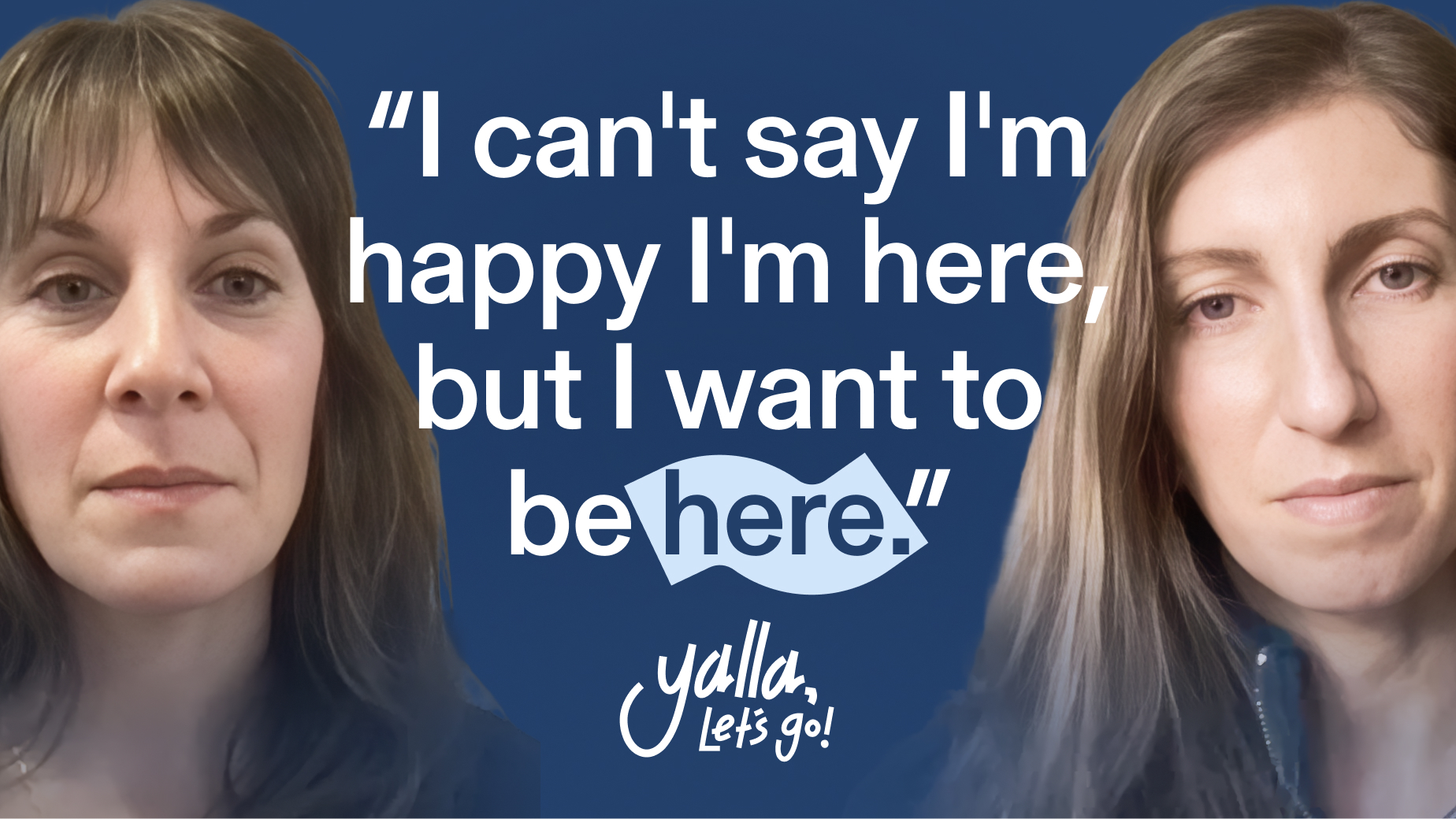
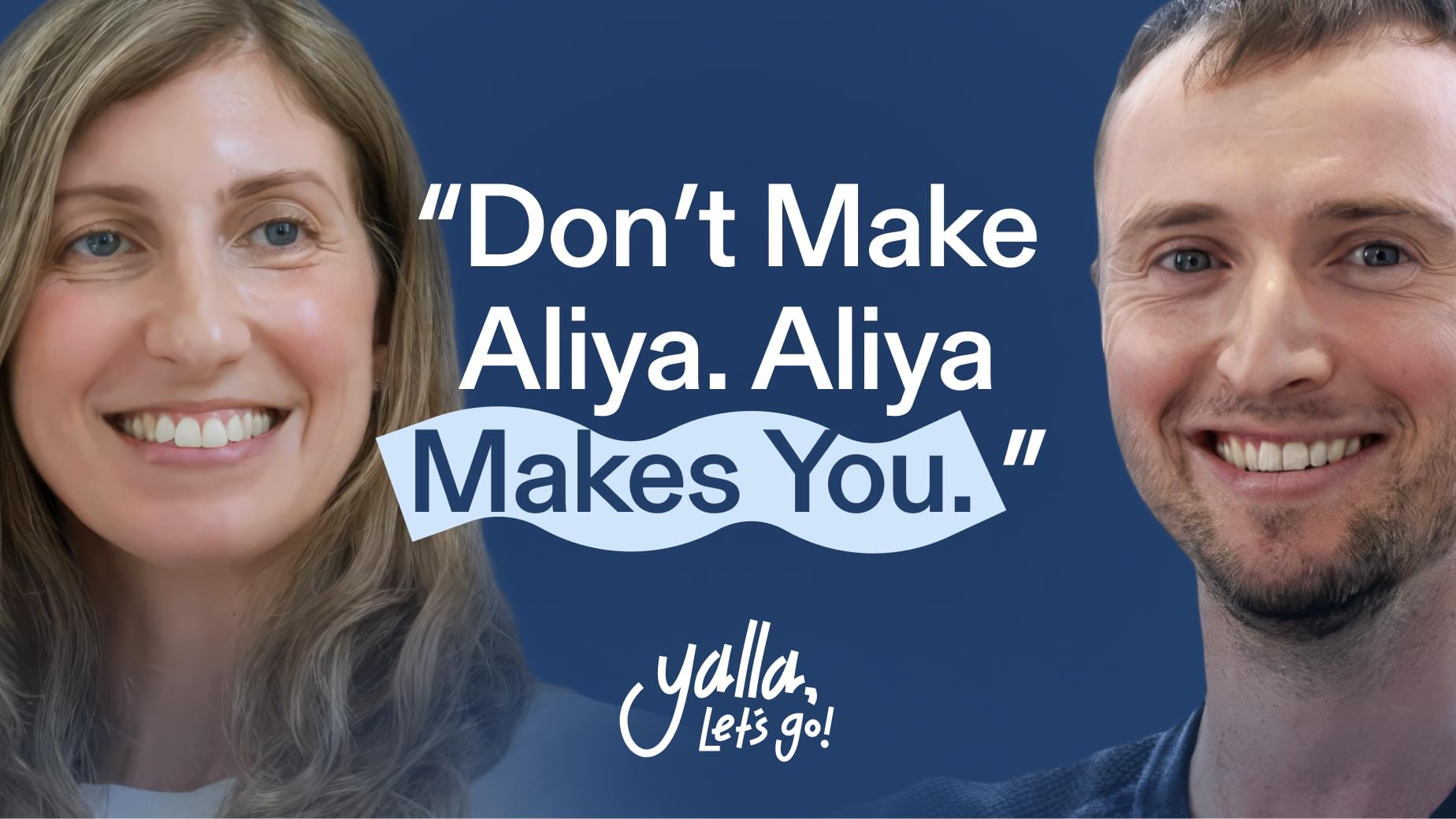
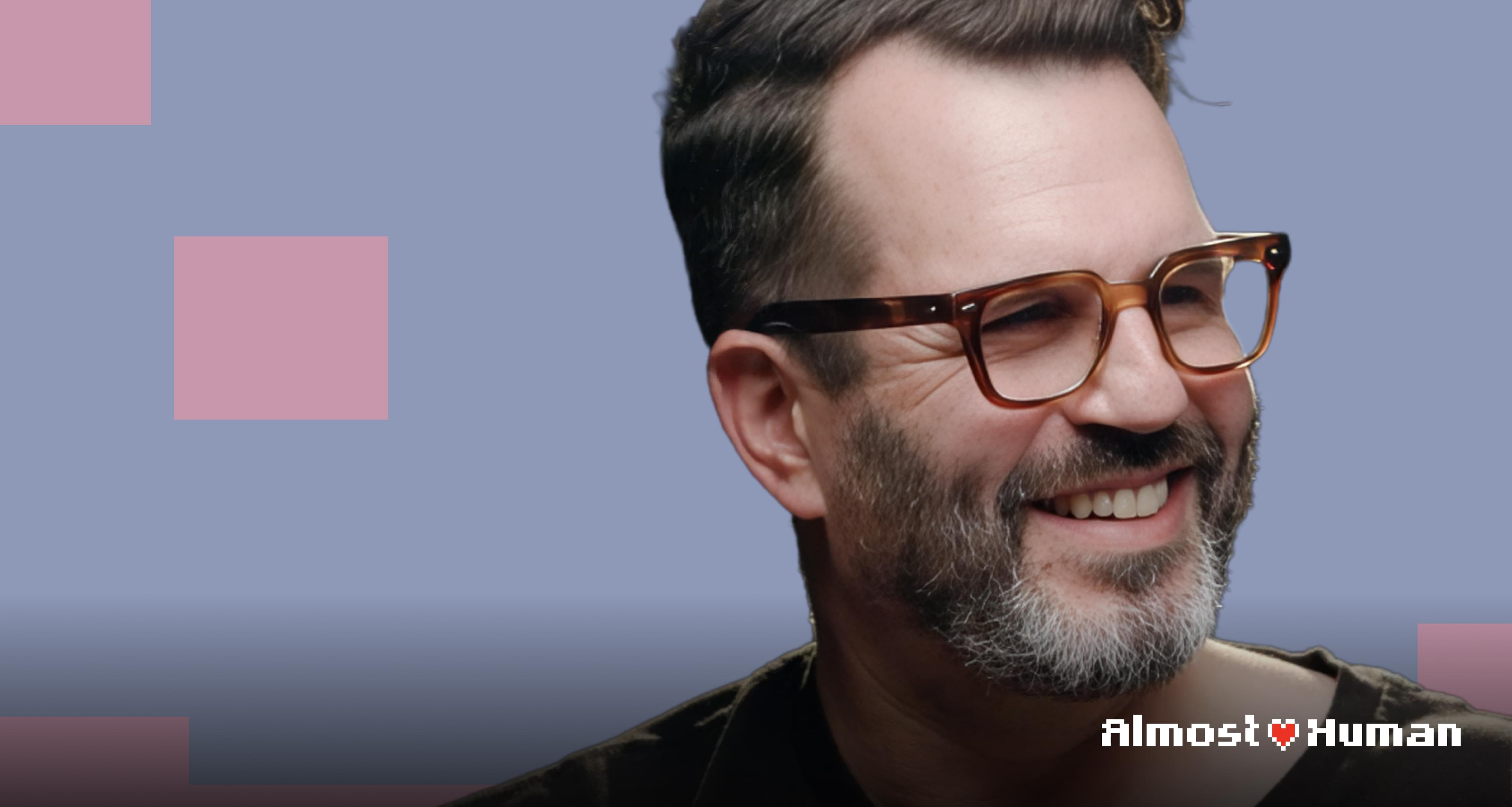
In this episode of Yalla, Let's Go!, Erica and Abbey sit down with Yoni Heilman — CEO of TAMID Group, IDF reservist with more than 400 days of miluim since October 7th, and the show's first guest to have made aliyah twice — for a conversation about coming back for good in the middle of COVID, writing from inside the war, and why life in Israel is never just fine: it's either amazing or crisis.
Yoni was born in New York and spent his early years in Israel, leaving him with what he calls bicultural personality disorder: feeling like both a foreigner and a native in both countries. His career has crossed every sector — IDF soldier, US Congressional staffer, Knesset intern, Birthright Israel, a startup — before a group of undergraduates recruited him to run TAMID Group, the nonprofit connecting business-minded students on nearly 60 campuses (20 to 30 percent of them not Jewish) to Israel's startup ecosystem. He opens up about the WhatsApp group he started for his wife on the first night of the war that became SAPIR Journal's Diary of an IDF Soldier, the Columbia chapter president who kept building through the encampments, the summer cohort evacuated by boat, and the check-in agent who invited his family to her Seder the day they left Israel with an expired passport.
Also in the episode:
- Making aliyah twice: looking backward the first time, looking forward the second
- Why TAMID works: business, not politics — "we're not advocates, we're activists"
- Are ambitious students more or less interested in Israel since October 7th?
- Not canceling the summer programs: a cohort evacuated by boat, and 130 students who flew in during the war with Iran
- "I'm a sharpshooter." "How old are you?" "38." "Okay, take care."
- 400+ days of miluim and the trap door under his life
- Raising kids who will serve in the same army he serves in
- What "never again" really means: agency, not just safety
- Why Modi'in, why there's no third aliyah coming, and feeling safer in Israel than in America
- At 80, looking back: grandchildren for whom Israel will be native
This is a raw, honest conversation about aliyah, service and belonging — and why life in Israel is never just fine.
Subscribe for more conversations with people who live, work, build, and stay in Israel.
#YoniHeilman #TAMID #Israel #Aliyah #IDF #Miluim #October7 #SapirJournal #Modiin #YallaLetsGo #LifeInIsrael #MakingAliyah #JewishIdentity #StartupNation #AmericanJews
0:00 - Intro
1:06 - Welcome to Yalla, Let's Go!
1:31 - Pulse Check: A Student Driver on the Highway
2:02 - Meet Yoni Heilman: CEO of TAMID Group and IDF Reservist
2:23 - Life Story in One Minute: New York, Israel, and Every Sector
3:33 - Second Aliyah at the Height of Corona
4:07 - The First Guest to Make Aliyah Twice
4:19 - First vs. Second Aliyah: Looking Backward, Then Looking Forward
5:36 - The Honest Hard Things: Banks, the Post Office and the Stroller in the Checkout Lane
6:15 - Never Just Fine: Either Really Difficult or Really Amazing
6:46 - Why TAMID Works: Started by Students, Business Over Politics
8:08 - Are Ambitious Students More or Less Interested in Israel?
9:41 - The Columbia Chapter President at the Height of the Encampments
10:23 - "We're Not Advocates, We're Activists"
10:51 - Running TAMID After October 7th: A Surge in Interest
12:48 - Why TAMID Didn't Cancel Its Summer Programs in Israel
13:50 - Evacuated by Boat, and 130 Students Who Flew In During the Iran War
14:20 - The Decision to Serve: A Promise Made at 20
15:12 - "I'm a Sharpshooter." "How Old Are You?" "38." "Okay, Take Care."
16:13 - October 7th: Having a Place to Go
16:43 - 400 Days of Miluim: "I'm In Between"
17:58 - Yoni's Updates: The WhatsApp Group That Became the SAPIR Journal Diary
21:27 - Raising Kids Who Will Serve in the Same Army
23:10 - Bicultural Personality Disorder: More American or More Israeli?
24:22 - Feeling Powerless in America, Feeling Agency in Israel
25:01 - What "Never Again" Really Means
25:45 - Why Modi'in: Comfortable, Convenient and Five Minutes from a Forest
27:08 - Will There Be a Third Aliyah? "I Couldn't."
28:06 - His Daughter's Walk After Dark: Feeling Safer in Israel Than in America
28:45 - What He Loves Most: Being Part of the Future of the Jewish People
29:00 - Aliyah Advice for 2026: Look Forward, Not Back
29:50 - At 80, Looking Back: Grandchildren for Whom Israel Will Be Native
30:22 - Rapid Fire: Shakshuka, Shpachtel and the Golan
31:06 - Only in Israel: An Expired Passport and an Invitation to Seder
[Erica Marom — 0:00]
You're serving in reserve duty. You're raising kids here. How does it feel knowing that you're raising kids and that they're also going to be serving in the same army you're serving in?
[Erica Marom — 0:13]
You're our first guest who's made aliyah [immigration to Israel] twice.
[Yoni Heilman — 0:16]
You know, the second aliyah is always the most successful, if you learn your history.
[Erica Marom — 0:21]
You're still here.
[Yoni Heilman — 0:22]
I could spend my life living in America and life would be fine. And living here, it would always be either really difficult or really amazing.
[Yoni Heilman — 0:33]
It's never just fine.
[Abbey Onn — 0:33]
Right.
[Yoni Heilman — 0:33]
It's either amazing or crisis.
[Erica Marom — 0:38]
Yeah.
[Yoni Heilman — 0:39]
I reached out to my commanding officer and I said, "I'm back. Put me on the roster." And he said, "Great. What's your specialty?" And I said, "I'm a sharpshooter." And he said, "Great. How old are you?" And I said, "38." He said, "Okay. Take care."
[Abbey Onn — 1:06]
Welcome back to Yalla, Let's Go! — the podcast that Erica and I started to remind ourselves, and you, why we made aliyah. Or maybe to inspire some of you to consider it. We're talking to olim [immigrants to Israel] that have moved to Israel from all walks of life. People in tech, venture capital, politicians, athletes, and more. And today we're super excited to welcome Yoni to the podcast. But before we do, I want to ask you, Erica, pulse check. How are you feeling about living in Israel these days?
[Erica Marom — 1:31]
Well, we just had an interesting milestone. My son is learning how to drive here. My husband insisted that he learn on a stick shift. I don't remember why. Something about making him a better driver, something like that. And after his second lesson, I found out that he was already driving on the highway. Like.
[Abbey Onn — 1:31]
Oh no.
[Erica Marom — 1:31]
Only in Israel. Only in Israel. So if you're behind a slow student driver, please don't honk him, because it might be my son.
[Abbey Onn — 1:59]
I'm always behind those people, and I really want to honk an adult.
[Abbey Onn — 2:02]
I know you're having a similar situation right now, but before we get there, Yoni, I want to welcome you to the podcast. Yoni is the CEO of TAMID, an amazing student organization that spans Israel and the United States, an IDF reservist that has been serving in Gaza since October 7th, and someone who has been making aliyah his entire life.
[Yoni Heilman — 2:21]
Thank you for having me.
[Abbey Onn — 2:22]
Welcome.
[Abbey Onn — 2:23]
All right, we're going to challenge you and ask you to tell us your life story in under a minute.
[Yoni Heilman — 2:26]
Okay. Born in New York. My father's work meant that I spent my early formative years — a lot of them — here in Israel. My later formative years was not in Israel, and that sort of planted the seed of always wanting to come back, to return, to connect people to Israel.
[Yoni Heilman — 2:48]
I went to college in the US, but I paused in the middle to come to Israel and serve in the army. Started my career working for the Israeli government in America, and then the U.S. government. Then we made aliyah, worked in the Israeli government. I discovered that there was world and impact beyond government and I ended up at Birthright, bringing, connecting Jews to Israel and to Judaism, which led me to business school back in America, brief stint at a startup. And then I got recruited by a passel of undergraduates to run this student organization, connecting young future business leaders to Israel.
[Yoni Heilman — 3:33]
Made my second aliyah about six years ago, in the height of Corona, and we've been here ever since.
[Yoni Heilman — 3:42]
There was a time when I used to say that my career was every sector. It was for-profit and non-profit and government and military. That has been very true in the last two and a half years. I spent more than 400 days in miluim [reserve duty], and in between, a little bit of normal life. And I get to spend every day connecting people to Israel. And that's how it all started, I guess.
[Abbey Onn — 4:07]
It's amazing.
[Erica Marom — 4:07]
You're our first guest who's made aliyah twice.
[Yoni Heilman — 4:11]
You know, the second aliyah is always the most successful, if you learn your history.
[Erica Marom — 4:16]
You're still here.
[Yoni Heilman — 4:17]
I'm still here.
[Erica Marom — 4:19]
So tell us what didn't work the first time and what made you want to come the second time? And during COVID, of all times.
[Yoni Heilman — 4:23]
Oh, that was accidental. I think the first time, I had always wanted to live in Israel. The kind of upbringing that I had — I often refer to it as bicultural personality disorder. I can feel both like a foreigner and a native in both Israel and the United States.
[Yoni Heilman — 4:42]
But the first time that I made aliyah, it was, I think, looking backward. It was looking at the history of the Jewish people. It was thinking about Zionism, thinking about the story of Israel. And I moved here based on ideals, thinking about having spent part of my childhood growing up here. And to a certain extent, it was a successful aliyah, but there were challenges.
[Yoni Heilman — 5:09]
And when we left, there was a strong possibility we were going to return, which was solidified when we were not here any longer and we started to have kids, started to grow up. And the second time we moved here, it was really looking forward. It was thinking about, what do I want my home to look like? Where do I want to be raising my children? What do I want their lives to look like? And that was the second aliyah.
[Abbey Onn — 5:36]
Can I ask what was one of the challenges in the first aliyah? It's okay to say the hard things.
[Erica Marom — 5:41]
We want to be honest.
[Yoni Heilman — 5:46]
It was — sometimes it's just a lot of the, like, day-to-day things. It's the banks, it's the post office. It's going to the grocery store with your kid in a stroller, but the stroller doesn't fit through the checkout lane. So when you finished buying your stuff, you have to turn around and stare down everybody behind you and go backwards out the store. And they give you a look like, why didn't you think of this?
[Yoni Heilman — 6:15]
You know, living back in America, my sense was that I could spend my life living in America and life would be fine. And living here, it would always be either really difficult or really amazing. And that has been borne out in the last six and a half years.
[Erica Marom — 6:36]
I think we agree.
[Abbey Onn — 6:37]
It is both. It is both at the same time. And it's never fine.
[Yoni Heilman — 6:40]
It's never just fine.
[Abbey Onn — 6:41]
Right.
[Yoni Heilman — 6:41]
It's either amazing or crisis.
[Erica Marom — 6:44]
Yeah. Crisis. Yeah.
[Abbey Onn — 6:46]
Okay, so in the middle of amazing and crisis, you are leading TAMID, which is an amazing student organization working with both Jewish and non-Jewish students to connect them to Israel, and has been super successful — I think because it works in a non-political framework. Can you talk to me about why you think TAMID has been so successful?
[Yoni Heilman — 7:04]
I think it starts because it was started by students, and they were programming for themselves. Right? Like, I know what I want for myself. And these were college students who got to campus and they wanted to, you know, tell Israel's story, and very quickly realized nobody cares. Whether or not they have an opinion about Israel, people didn't come to college to form political opinions or talk about it. They came to further themselves.
[Yoni Heilman — 7:30]
And so they realized, instead of asking, how do I make other people around me care about Israel? — the question they needed to ask was, how do we — what do students want for themselves, and how can we make Israel part of that? And so it became all about, you know, you want to be successful, you want to be head and shoulders above the rest, you want to find your way in your career, learn from the best, learn from the most innovative, tenacious, eager, motivated, inspired people in the world. And that was the genesis of TAMID.
[Abbey Onn — 8:06]
Flipping the paradigm.
[Yoni Heilman — 8:08]
Yeah.
[Erica Marom — 8:08]
So you're working with the most ambitious students, bringing them here. Has their sentiment changed? Are they more or less interested in aliyah than they were maybe five years ago? Has their sentiment towards Israel as a place to build your career — has that become less attractive?
[Yoni Heilman — 8:26]
So first of all, when it comes to aliyah, bear in mind that 20 to 30% of our students aren't Jewish. Aliyah is not on their agenda. And even for those who are Jewish, the majority of them are not connected to Israel. The vast majority of our students, when they're involved with TAMID on campus, they don't do anything else connected to Israel.
[Yoni Heilman — 8:44]
These students are not — they encounter us at a club fair in the beginning of their first year in college. They're not thinking, should I get involved with Hillel or Chabad or TAMID? They're thinking, is it going to be the business fraternity or the entrepreneurship club or TAMID?
[Erica Marom — 8:59]
But has this idea of, like, using this as a stepping stone for building your career — has it become less attractive, more attractive? Has it changed at all?
[Yoni Heilman — 9:07]
I think it is growing. I think the perception of Israel as a place of entrepreneurship — of, and I don't mean that in the sense of building a startup specifically, but the motivation to succeed and to tackle problems in a certain way — I think that that idea is really strongly held for the kinds of students who are thinking, I need to be successful in my career and I want to set myself apart. And the politics is just noise.
[Yoni Heilman — 9:41]
You know, a student of ours — I was in New York at the height of the encampments and the protests in the spring of 2024, and I had dinner with our chapter presidents in New York, and I asked them what it's like running a TAMID chapter on campus these days. And the chapter president of our Columbia chapter, she said to me, "Listen, don't worry, we've been blacklisted like all the other, you know, Israel-oriented groups." But she said, "It's a very tiny minority of the students who are actually engaged in all this political — in the political fights and in the center of campus. And the vast majority of us are hurrying past on their way to class, or to finish that project, or to land that internship."
[Yoni Heilman — 10:23]
And so involvement in TAMID doesn't require anyone to carry a flag through campus. We're not advocates, but she said, we're activists. Our activism is sitting in a team room on a Zoom call with an Israeli company, half of whose team has been called out to war, and we're helping them get to the next quarter. And that's what makes TAMID attractive to these students, and it carries them into really amazing careers.
[Erica Marom — 10:51]
So after October 7th, as you mentioned, there were all of these really ugly campus protests. What was it like to run TAMID during that time?
[Yoni Heilman — 10:58]
So from some of that answer, you have to ask my colleagues. I was off in miluim.
[Yoni Heilman — 11:06]
But for us it was about holding to what we are and who we are. We declare ourselves as non-political and non-religious, which doesn't mean that the people at TAMID don't have those opinions. It means that we are not seeking people with a certain political or religious identity, and we're not seeking to change it.
[Erica Marom — 11:26]
That often also doesn't matter, because it's how it's perceived, right? And it's perceived as being associated with Israel.
[Yoni Heilman — 11:32]
True, true. But for the most part what we had was — we had a surge in interest. I mean, certainly for a lot of, I think, Jews, even less affiliated Jews who were suddenly feeling this connection to Israel and saw that TAMID was for them: the constellation of both something that was engaging with a community they felt safer with, and also a way to help their careers.
[Yoni Heilman — 11:55]
But a lot of non-Jews also. You know, our approach is really not engaging them with theoretical idea, or the democracy in the Middle East, or the Jewish homeland. It's about engaging them with people. And it's somehow — for these kinds of students, it's very easy for them to see, you know, they are joining TAMID and thinking, I'm going to get to meet and work with amazing people. I'm going to get to learn to think how they think. And it's been a wild ride in the last couple years.
[Erica Marom — 12:30]
So interest only increased?
[Yoni Heilman — 12:32]
Interest, yes. I mean, there were certainly spots. We had a couple of chapters outside the US that encountered a little bit of institutional kind of pushback, and one was shut down. But for the most part our numbers have grown.
[Erica Marom — 12:48]
Wow.
[Abbey Onn — 12:48]
It's amazing. And the immediate aftermath, or the kind of summer right afterwards, you guys didn't cancel your programs in Israel. Can you talk me through that decision?
[Yoni Heilman — 12:57]
It wasn't a very hard decision. We always want to bring people to Israel. Our summer program, where we bring students to Israel for the summer to intern at various Israeli companies, is just one small part of our program. The students who come on our summer program have usually been involved on campus for a couple of years.
[Yoni Heilman — 13:17]
So we already saw, we already knew that our chapters were strong, that engagement was strong and was in fact growing. And so the decision to bring them here in the summer was mostly a question of: are we prepared to handle any challenging geopolitical situations that might arise? And the first summer we had a small group, but a really strong group. The next summer we had a group that we had to evacuate by boat.
[Abbey Onn — 13:17]
I met them their first day, right before they left.
[Erica Marom — 13:49]
Wow.
[Yoni Heilman — 13:50]
But the majority of whom then, the minute there was a ceasefire, came back. And now we have — again, we have about 130 students here right now who woke up in the morning, they had to head to the airport, to see that Israel was again at war with Iran. And they boarded those flights not knowing what was going to happen.
[Erica Marom — 14:14]
Oh, that. Our one day war.
[Abbey Onn — 14:14]
The 17-hour war.
[Yoni Heilman — 14:16]
That was that day.
[Abbey Onn — 14:18]
Oh gosh, that's crazy.
[Erica Marom — 14:19]
Yeah, that is crazy.
[Erica Marom — 14:20]
So you mentioned that you spent a lot of the last few years in miluim, in reserve duty. You have a family here, you have kids. You're the CEO of an American nonprofit organization. What made you decide to do that? And what was it like for you and for your family?
[Yoni Heilman — 14:37]
It was — I mean, it was an easy decision. It was a decision that I made when I was 20. And I decided that though I was in college in the United States, I knew that my future was going to be living in this country, and I wanted to feel like I had, you know, paid my dues and earned my spot. And so when I joined the army — briefly, because I was in the middle of college — I did it with the thought that if ever the call should come, I would be trained and prepared to answer. I did not expect that that day would actually come.
[Yoni Heilman — 15:12]
And in fact, when we moved back to Israel the second time, I reached out to my commanding officer and I said, "I'm back. Put me on the roster." And he said, "Great. What's your specialty?" And I said, "I'm a sharpshooter." And he said, "Great. How old are you?" And I said, "38." He said, "Okay, take care."
[Yoni Heilman — 15:33]
And I didn't know really what to do with that. I reached out to another officer of mine and I said, "Listen, I don't want to push myself where I don't belong, but if you have somewhere to use me, you know, put me somewhere." And he said, "Oh, okay, I'm going to put you on the operations team." I said, "Great. What's that?" He said, "You'll figure it out." And in September 2023, we had a week of training where I first met my new team. And I was like, "Oh, so this is what it's like."
[Erica Marom — 15:59]
Wow, that was good timing.
[Yoni Heilman — 16:00]
And at the end of that week, we said what we always say, which is, you know, "See you at the war." And so when the call came on October 7th, I had a place to go.
[Yoni Heilman — 16:13]
I spent those first few months feeling very grateful that I did not find myself caught on October 7th feeling like I could be doing something — I know what I could be doing, but I'm just outside the system and I don't know how to get in. And that's sort of like an oleh [immigrant] thing, because if I were a native Israeli, I would have just finagled my way into things, but I was not enough of one to feel like I would have known what to do. But I was there.
[Erica Marom — 16:43]
And how was that experience? I mean, you served for how many days?
[Yoni Heilman — 16:47]
400 something.
[Erica Marom — 16:48]
So how was that experience for you and for your family?
[Yoni Heilman — 16:53]
Difficult. It's — you're speaking about it in the past tense. I think about it in the present tense. People say to me all the time, they say, "So are you done?" And I say, "I'm in between." The last almost three years now, I've averaged six months between call-ups. Somebody asked my wife, they're like, "Why does Yoni travel so much for work?" And she said, "Because he has to fit it in between."
[Yoni Heilman — 17:20]
So, yeah, I've been home now for three months, two months. It feels like forever. That was so long ago. And, you know, there's also — it sort of feels like there's a trap door under my life, and at some point it will open. And I'm very lucky that I have a really amazing team that have learned to carry the work forward. I have an amazing board, we have amazing donors, I have an amazing wife and kids who .
[Erica Marom — 17:20]
For sure.
[Yoni Heilman — 17:20]
It's not easy and it's never the same, but we know how to do it.
[Abbey Onn — 17:58]
So I am lucky enough to know you outside of the podcast and be on the WhatsApp list where you so eloquently and beautifully shared your thoughts, amazingly, in Hebrew and in English. How did you get to the point where you decided that you want to share your thoughts? How did you find the time and energy? And what impact did you see from it?
[Yoni Heilman — 18:24]
So it was the first night of the war — I think it was Saturday night, on the 7th. And I quickly realized I'm going to be updating my wife and my parents and my in-laws. So I just made a quick group. I called it Yoni's Updates. And I was just like, I'm going to just tell you, in the vague terms that I can and filtered how I have to, what's going on.
[Yoni Heilman — 18:50]
What came out was more of a — just an emotional outpouring of what I was experiencing, both because I couldn't describe where I was or what I was doing, and also because that was sort of less relevant. And very quickly it sort of started to get shared. And somewhere in my head I understood: I am a native English speaker who understands the American cultural mindset, but I also understand the Israeli cultural mindset, and I can describe what I'm doing in a way that might be helpful for some people.
[Yoni Heilman — 19:24]
But I wrote to my wife, really. And I kind of ignored and allowed myself very easily to forget that the group was 100, and then 200, and then 500. I just sort of ignored that. It was picked up by the Sapir Journal. I didn't know if anyone was reading the Sapir Journal. I knew of it.
[Abbey Onn — 19:43]
They are.
[Yoni Heilman — 19:46]
And I wrote — you asked how. I had to write. I had to. You know, I was doing eight-hour shifts that were extraordinarily intense, experiencing things I had never experienced before. And I would come out of an eight-hour shift and not be able to rest or eat or anything until I poured it out onto a page. At first in English, then I started to do it in Hebrew.
[Yoni Heilman — 20:17]
And it was unfiltered and raw, and I was always tired and emotional. And sometimes — the group still exists. I only end up having things to write when I'm experiencing that kind of intensity. But.
[Abbey Onn — 20:33]
We're still reading.
[Yoni Heilman — 20:36]
Yeah. It's still weird for me to encounter people and realize, oh, they've read. I'll run into somebody, they'll say, "Oh, I have been reading your innermost thoughts and feelings that you've been writing to us for the last two and a half years." And I'm sort of, yeah.
[Erica Marom — 20:51]
I know you better than you think we do.
[Yoni Heilman — 20:53]
It's kind of strange, and sometimes not. I remember mentioning something to someone and they had just told me they read everything. And I said, "Oh, but you read when I wrote about that in my updates." And she looked at me, she said, "You did not write about that story."
[Yoni Heilman — 21:08]
And I was sure. And I went back, and I read. I threw out a half a sentence which had this extraordinary depth to it, which I knew, and I felt I had put it on the page, but I hadn't described any of it.
[Abbey Onn — 21:26]
So interesting.
[Erica Marom — 21:27]
You're serving in reserve duty. You're raising kids here. How old are your kids?
[Yoni Heilman — 21:34]
16, 12 and 9. I lost a year, so I have to always pause and make sure I got it right.
[Abbey Onn — 21:41]
That's fair.
[Erica Marom — 21:42]
How does it feel knowing that you're raising kids and that they're also going to be serving in the same army you're serving in?
[Erica Marom — 21:53]
It's hard.
[Yoni Heilman — 21:53]
It's hard.
[Yoni Heilman — 21:57]
But I also got to see, in the first few weeks of the war, one of the officers I was working most closely with was there with her father and two of her brothers. And I was just — I remember thinking, wow, what an extraordinary situation to be in.
[Yoni Heilman — 22:17]
Then I saw it looks like it does at home. He's giving her orders, but she doesn't necessarily answer to him. And she doesn't put — it was like an interesting — but then, you know, someone brought, you know, mom's food, and suddenly there was, like, a family eating around a dinner table. And I was just, like, sitting, watching how amazing this was to see them interacting.
[Yoni Heilman — 22:39]
It's so — part of it can sort of, in an interesting way, be exciting. Like, how cool would it be to, like, run into my daughter in reserve duty? And also.
[Erica Marom — 22:39]
Cool.
[Erica Marom — 22:52]
Scary.
[Yoni Heilman — 22:52]
Scary. And also, I know a friend of mine recently said every additional day of reserve duty that he does, he feels like maybe this is one less day my kids will do.
[Erica Marom — 23:06]
Wow, I love that.
[Abbey Onn — 23:08]
So.
[Erica Marom — 23:08]
I love that.
[Abbey Onn — 23:10]
Thank you for your service and for your reflections. I can't remember your acronym, but your dual personality disorder.
[Yoni Heilman — 23:21]
Bicultural personality disorder.
[Abbey Onn — 23:22]
Okay, we need to make an acronym. Do you feel more American or more Israeli? Can you choose?
[Yoni Heilman — 23:31]
On average, more Israeli. Much more in the last couple of years.
[Abbey Onn — 23:37]
When do you feel that? When you go to the United States, or do you feel it here?
[Yoni Heilman — 23:41]
I feel it in miluim. I feel it there, my identity as an oleh is maybe forgotten. And I benefit partly because I learned my Hebrew here, so unless I'm speaking very fast and very tiredly, I sound Israeli.
[Yoni Heilman — 23:59]
I feel it in America for the first time. I never felt it before October 7th in America, but now when I go to America, I feel like I'm pretending to be comfortable as an American Jew. But I just — I don't. My experience of the world is different. The way I feel in the world is different.
[Yoni Heilman — 24:22]
I think a lot of the way American Jews perceive themselves right now, in this moment, is tied to everything going on. I was in New York a few weeks ago, and a friend of mine said to me, "I feel powerless in this country as a Jew." And we have our problems here. I feel powerful. I feel strength. We don't always know how to use it, and we make lots of mistakes, but we have agency.
[Yoni Heilman — 25:01]
Something people ask me a lot about over the last couple of years was this idea — a lot of people have talked about this idea of never again, and what it means. And many people felt that October 7th was this breach of contract, where we allowed "again" to happen.
[Yoni Heilman — 25:20]
I don't see the idea of never again as: never again will Jews be murdered because they are Jewish. I see it as: never again will we allow ourselves to not have agency, to act when Jews are murdered for being Jewish. And so.
[Erica Marom — 25:20]
That's powerful.
[Yoni Heilman — 25:20]
And it's a big difference between being a Jew in Israel these days and being a Jew not in Israel.
[Erica Marom — 25:44]
Yeah.
[Abbey Onn — 25:45]
Wow.
[Erica Marom — 25:45]
I want to shift focus for one second.
[Yoni Heilman — 25:47]
Away from the war?
[Erica Marom — 25:49]
Away from the war. A lot of people, when they're making aliyah — one of the big questions is where should they live? And people always focus on Tel Aviv and Jerusalem and these — Ra'anana. You live in Modi'in. It's a very olim-friendly city. I'd love to hear how you chose this place and what it's like living there. Do you recommend it to others?
[Yoni Heilman — 26:09]
I love Modi'in. My experience with people who don't like Modi'in who are olim is — either, or just generally, either the real estate is too expensive (we rent), or the city's too small. I'm from America. I'm never gonna feel like a city is too small if I can leave a built-up area and be in a forest in space of five minutes.
[Yoni Heilman — 26:39]
We started in Jerusalem, and I had grown up a lot of the time in Jerusalem and I felt like that was my home. And then becoming an adult and becoming a commuter and becoming a parent in Jerusalem — suddenly it felt claustrophobic. I love Jerusalem on Shabbat [the Sabbath], but when I need to travel, commute, shop, send my kids to school, Modi'in's just comfortable and convenient. And it's a wonderful city.
[Abbey Onn — 27:08]
Do you ever think about going back? Is there going to be a third aliyah?
[Yoni Heilman — 27:11]
No. No, I couldn't. I couldn't.
[Erica Marom — 27:15]
Second time's the charm.
[Yoni Heilman — 27:16]
First of all, I did go back. You know, I think you've asked other guests, would you ever go back? I went back.
[Erica Marom — 27:23]
So why not this time?
[Yoni Heilman — 27:27]
I think part — when you make aliyah from a place like America, part of the challenge, as opposed to coming from somewhere where you're, you know — is, is it still comfortable back there? I could still go back there and live comfortably. We went back there, we lived comfortably. We saw how it didn't feel right. We were able to, you know — it's like the grass was greener. We went back to the grass and it wasn't as green as we'd remembered.
[Yoni Heilman — 27:53]
And as I said earlier, we live here because we see our future here. We see our kids growing up here. We see the culture that they're growing up in and the way they're growing up.
[Yoni Heilman — 28:06]
Sometimes people say to me, doesn't it feel — how do you feel having moved to a country that's so dangerous? And I say to them, well, let me tell you about my teenage daughter, who once a week after dark leaves our house, walks past the train station and walks past the mall into a park where she has a workout class with a couple of other women. Perfectly safe. She's getting stronger emotionally and physically in that environment. I couldn't say that sentence if I lived anywhere in America. So I feel a lot safer here.
[Abbey Onn — 28:45]
I agree.
[Erica Marom — 28:45]
What do you love most about living here?
[Yoni Heilman — 28:52]
I love feeling like I am a part of the future of the Jewish people.
[Abbey Onn — 29:00]
I love that. All right, number one piece of advice for people considering aliyah, or have just made aliyah now, 2026, post-October 7th.
[Yoni Heilman — 29:13]
It's always either amazing or really difficult. The aliyah process itself is not living in Israel. Living in Israel is a long-term prospect. It's watching your kids go through the school, it's meeting colleagues at work. It's traveling in this small country and seeing all the different amazing parts of it.
[Yoni Heilman — 29:36]
If you're going to make aliyah, you need to be not comparing your new reality to your old one, but looking forward and thinking about where you want your life — what you want your life to look like in five or 10 years.
[Abbey Onn — 29:50]
I like that. I agree.
[Erica Marom — 29:50]
So when you're 80 years old and looking back on your life, what's one thing that you think will have been true because you made aliyah that wouldn't have been true otherwise?
[Yoni Heilman — 30:04]
I think that my grandchildren, God willing — for them, being Jewish and living in Israel and being part of the center of the story of the Jewish people will be natural. Will be native to them.
[Abbey Onn — 30:22]
Wow. Okay, we are going to move into our rapid fire.
[Erica Marom — 30:27]
One-word answers. One word, quick.
[Yoni Heilman — 30:29]
Okay.
[Abbey Onn — 30:29]
All right. Favorite Israeli food or snack?
[Yoni Heilman — 30:31]
Shakshuka.
[Abbey Onn — 30:32]
Oh, good.
[Erica Marom — 30:34]
Favorite Hebrew word or slang?
[Yoni Heilman — 30:37]
Shpachtel [putty knife]. How can you not say that word as many times as possible?
[Abbey Onn — 30:44]
Favorite place in Israel?
[Yoni Heilman — 30:44]
Anywhere unfiltered.
[Yoni Heilman — 30:49]
Right now, the Golan, I think.
[Erica Marom — 30:51]
What do you miss most from back home?
[Yoni Heilman — 30:53]
Fall foliage.
[Abbey Onn — 30:56]
What does Shabbat or Saturday look like for you?
[Yoni Heilman — 31:01]
Coffee on the porch with my wife. Reading books with my kids.
[Erica Marom — 31:06]
What's your only-in-Israel moment, in one sentence?
[Yoni Heilman — 31:12]
Probably when the woman at the check-in counter, when we were first leaving Israel and my passport was expired — we learned at that moment — invited us to her house for Seder [Passover meal].
[Erica Marom — 31:27]
That is very "only in Israel."
[Yoni Heilman — 31:29]
Yes.
[Erica Marom — 31:30]
Wow.
[Abbey Onn — 31:30]
Amazing.
[Yoni Heilman — 31:31]
She said, "Just go back home and then renew your passport." My wife burst into tears. "We don't have a home. We just left our home. We have no more lease. All of our things are packed up." And she said, "Just come to us for Seder."
[Erica Marom — 31:45]
So what did you do?
[Yoni Heilman — 31:47]
Her advisor came and said, "Americans can enter America on an expired passport." And she said, "Oh."
[Abbey Onn — 31:47]
Next year.
[Erica Marom — 31:53]
Yeah. Yeah.
[Abbey Onn — 31:55]
Yoni, thank you so much for joining us.
[Yoni Heilman — 31:56]
Thank you for having me.
[Abbey Onn — 31:57]
It's amazing.
[Erica Marom — 31:58]
This was wonderful.
[Abbey Onn — 32:00]
And thank you for listening. Please watch and share with all of your friends, and tune in next time.
[Erica Marom — 32:07]
Yalla, Let's Go!
[Abbey Onn — 32:08]
Yalla, Let's Go!

Follow Yoni on LinkedIn
Learn more about TAMID Group
Read Yoni's Diary of an IDF Soldier
Subscribe to Yalla, Let's Go
Learn more about Aleph
Sign up for Aleph's monthly email newsletter
Subscribe to our YouTube channel
Follow us on Instagram
Follow us on TikTok
Follow Aleph on Twitter
Follow Aleph on LinkedIn
Follow Aleph on Instagram
Hosts: Erica Marom, Abbey Onn
Executive Producer: Sarah Bard
Producer: Dalit Merenfeld, Sofi Levak
Video and Editing: Nadav Elovic
Music and Creative Direction: Uri Ar
Content and Editorial: Jackie Goldberg
Design: Nimrod Sapir
Follow Yoni on LinkedIn
Learn more about TAMID Group
Read Yoni's Diary of an IDF Soldier
Subscribe to Yalla, Let's Go
Learn more about Aleph
Sign up for Aleph's monthly email newsletter
Subscribe to our YouTube channel
Follow us on Instagram
Follow us on TikTok
Follow Aleph on Twitter
Follow Aleph on LinkedIn
Follow Aleph on Instagram
Hosts: Erica Marom, Abbey Onn
Executive Producer: Sarah Bard
Producer: Dalit Merenfeld, Sofi Levak
Video and Editing: Nadav Elovic
Music and Creative Direction: Uri Ar
Content and Editorial: Jackie Goldberg
Design: Nimrod Sapir
Follow Yoni on LinkedIn
Learn more about TAMID Group
Read Yoni's Diary of an IDF Soldier
Subscribe to Yalla, Let's Go
Learn more about Aleph
Sign up for Aleph's monthly email newsletter
Subscribe to our YouTube channel
Follow us on Instagram
Follow us on TikTok
Follow Aleph on Twitter
Follow Aleph on LinkedIn
Follow Aleph on Instagram
Hosts: Erica Marom, Abbey Onn
Executive Producer: Sarah Bard
Producer: Dalit Merenfeld, Sofi Levak
Video and Editing: Nadav Elovic
Music and Creative Direction: Uri Ar
Content and Editorial: Jackie Goldberg
Design: Nimrod Sapir
.jpg)
.jpg)
.jpg)
.jpg)

.jpg)
.jpg)
.jpg)
.jpg)

.jpg)



























.jpg)
.jpg)
.jpg)

.jpg)
.jpg)
.jpg)
.jpg)

.jpg)
.jpg)
.jpg)
.jpg)

.jpg)