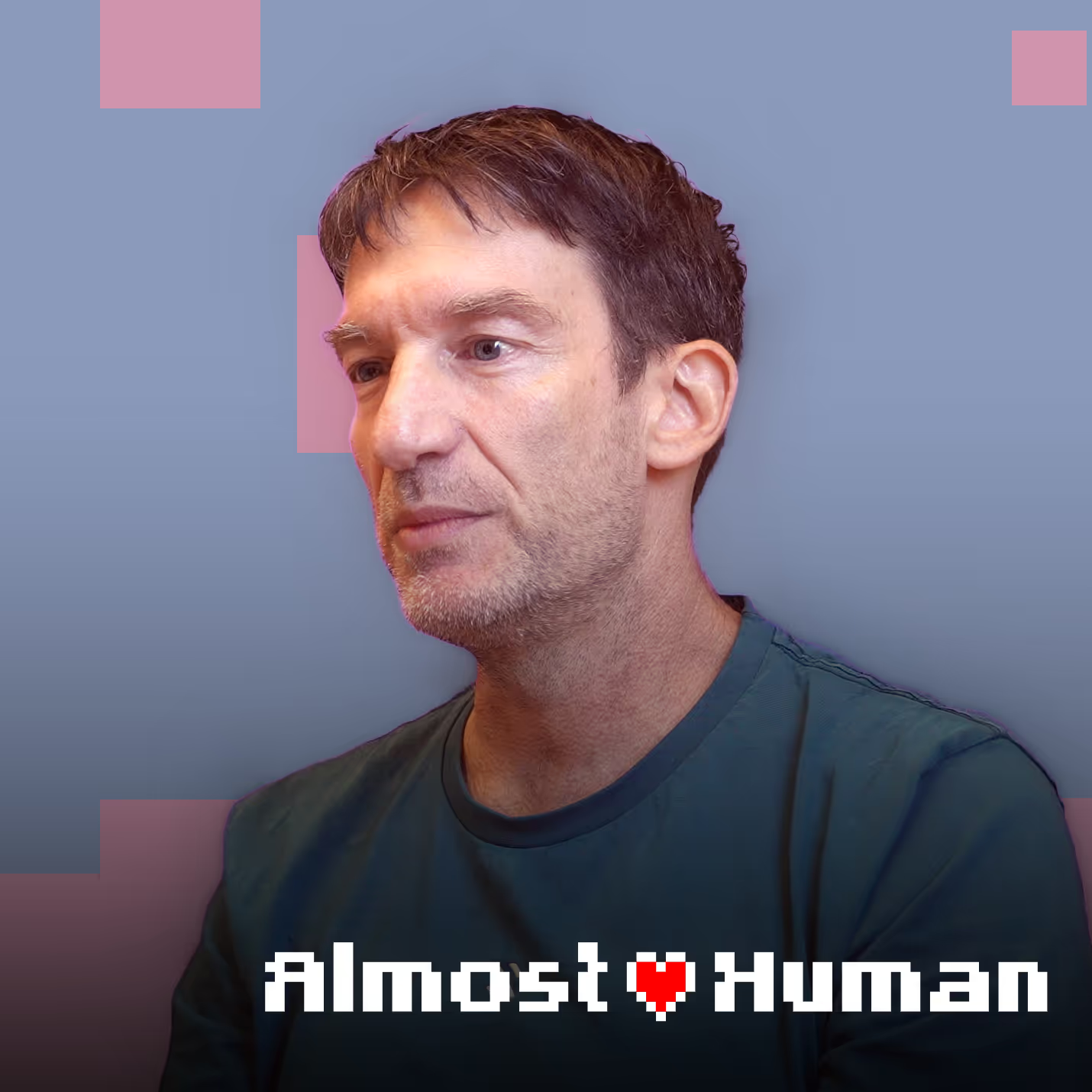
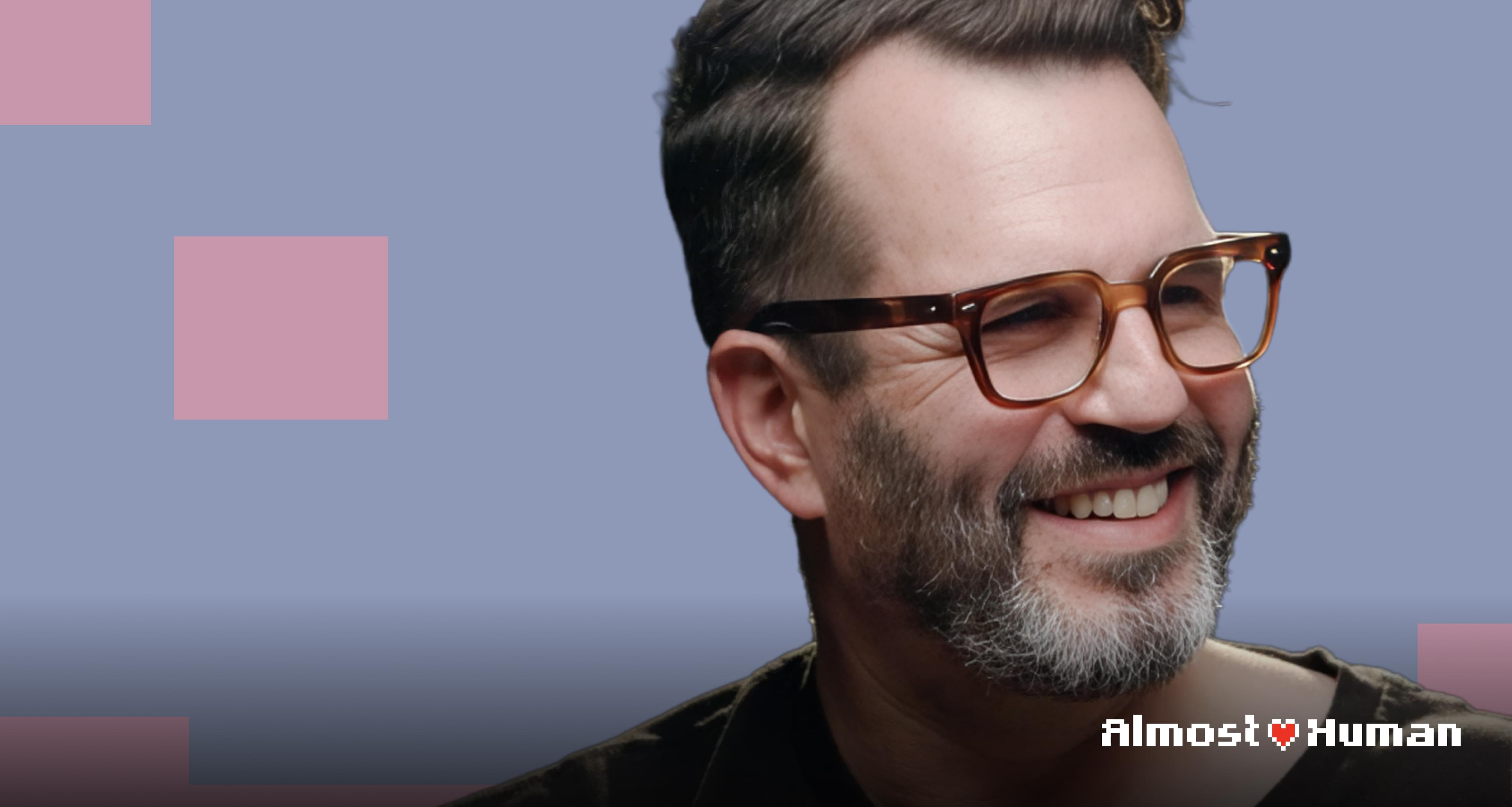
Douglas Atkin


How can values create value? On this podcast, Michael Eisenberg talks with business leaders and venture capitalists to explore the values and purpose behind their businesses, the impact technology can have on humanity, and the humanity behind digitization.




Douglas Atkin
Douglas Atkin
Douglas Atkin
Douglas Atkin
Douglas Atkin
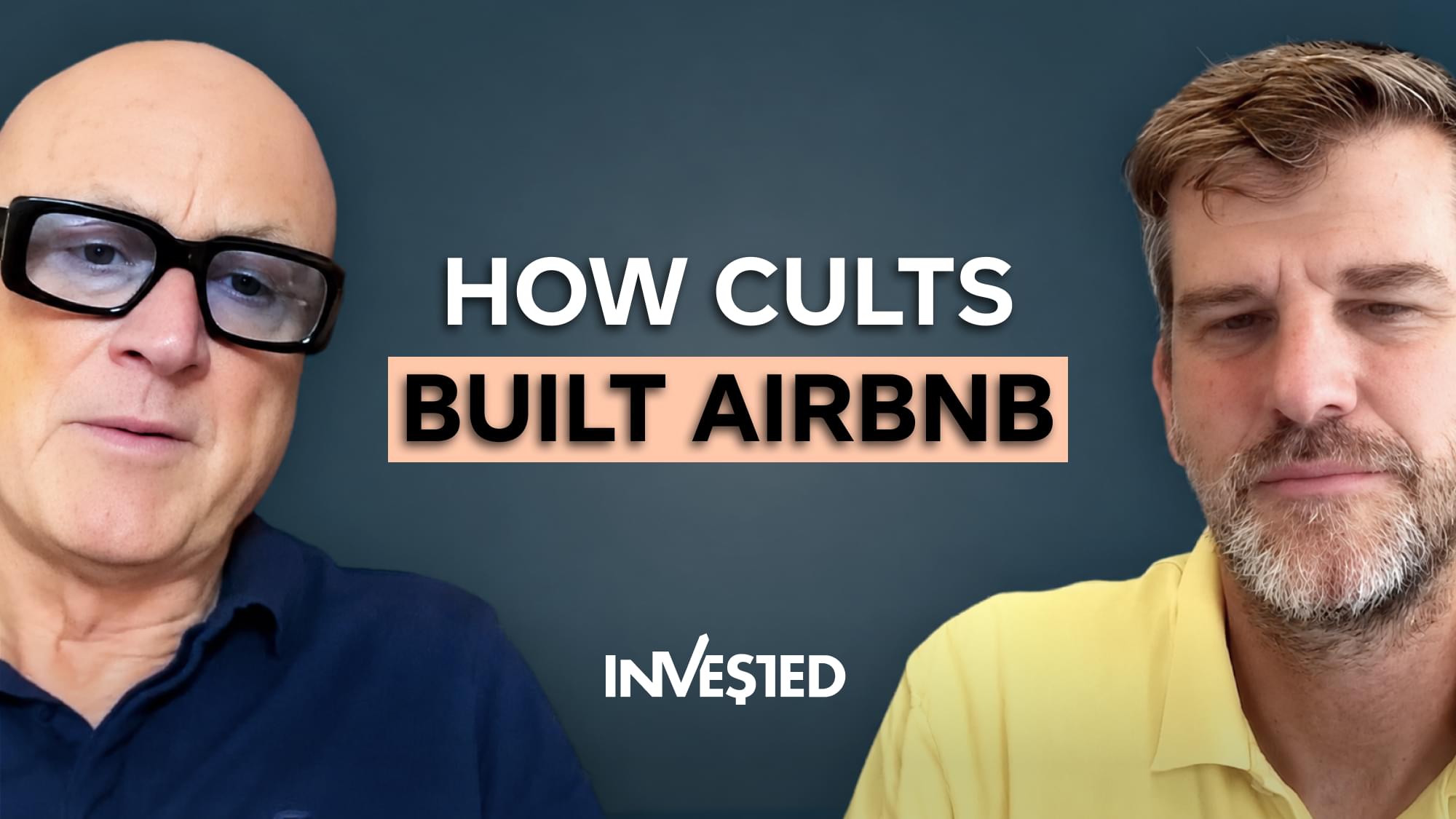
On this episode of Invested, Michael Eisenberg sits down with Douglas Atkin, former Global Head of Community at Airbnb and author of The Culting of Brands, for a conversation about why people join cults, what that reveals about brands and politics, and how you build something people genuinely belong to. Douglas explains what he found when he set out to study the most extreme forms of belonging — that cult members are almost always ordinary, well-educated, socially capable people, and that they join, stay, and leave for exactly the same reasons as members of brand communities.
Michael and Douglas trace that insight from a focus group of teenagers talking about sneakers, to Meetup, to Airbnb — where Douglas spent three and a half weeks interviewing hundreds of hosts and guests and came back with the purpose that still runs the company: create a world where anyone can belong anywhere. He tells the story of what it cost to live that purpose, from taking the Attorney General of New York to court over a subpoena for 15,000 hosts’ data, to giving two non-marketers veto power over a marketing hire, to Airbnb turning away over a million would-be customers who wouldn’t sign its core values.
They also go deep on the darker mechanics of belonging: how demonization defines a group and manufactures solidarity, why the far right has run that playbook so effectively, what the decline of religion has to do with the rise of cultic politics, and what Douglas would actually prescribe for the loneliness epidemic.
They discuss:
- Why the people who join cults are completely normal — and why that matters
- The four Ds of difference, and why a cult is a new idea while a sect is a splinter
- How demonization creates belonging by defining the in-group and inventing a threat
- Why brands took over religion’s role, and why politics is now taking over from brands
- The first golden rule of community: rub your members together until they get sticky
- Why it takes showing up four times before a community becomes hard to pull apart
- How Airbnb found “Belong Anywhere” by talking to hundreds of hosts and guests
- Why a purpose is only real if it costs you something in the short term
- The New York subpoena fight, and organizing hosts into political activists
- Core values interviews with veto power, and turning away a million customers
- The community commitment curve, and how to move people from clicking to face-to-face
- Why working from home was a bad idea, and what actually treats loneliness
Douglas was ‘Global Head of Community’ at Airbnb, on its Leadership Team and was also ‘Architect of Purpose, Culture and Core Values’. He worked at Airbnb from 2012-2017 during its hyper-growth years. He led the development of Airbnb’s Purpose to ‘Create a world where Anyone can Belong Anywhere’. He also led all Community initiatives including grass-roots organizing and Movement-making techniques to mobilize Airbnb Hosts and Guests to take political action that changed laws to recognize home sharing.
He was Co-Founder of ‘Peers’, a movement for the Peer-to-Peer economy.
Douglas was the author of ‘The Culting of Brands: Turn your Customers into Believers’.
He Co-Founded Purpose, an organization that creates Movements, and was on the Board of one of its creations: AllOut, the world’s first and largest LGBTQ rights Movement.
He was Partner and Chief Community Officer at Meetup in 2007-8.
Prior to all this Community, Purpose and Movement-making stuff he was a Branding expert and Strategic Planner at several leading London and New York firms.
Chairman of the U.S. Account Planning Group for three years.
If you want to understand community, cults, purpose, culture, movement-making, and why belonging is both the best and the most dangerous thing about human beings — this episode is essential listening.
Please rate this episode 5 stars wherever you stream your podcasts!
00:00 - Intro
01:25 - “Loyalty Is Dead. Branding Is Over.”
03:49 - The People Who Join Cults Are Normal
06:20 - How Flickr’s Founders Pulled Him Into Tech
08:33 - Why Apple Fans Talk Like Missionaries
11:20 - Cults vs. Sects: The Four Ds of Difference
13:25 - How Demonization Creates Belonging
16:45 - The Far Right’s Demonization Playbook
18:50 - Cultic Politics and the Decline of Religion
24:50 - “Rub Your Members Together Until They Get Sticky”
28:56 - The Breakfast That Led to Airbnb
31:20 - How “Belong Anywhere” Was Born
32:30 - New York Subpoenaed 15,000 Hosts
35:54 - Obama’s Organizers Trained Airbnb Hosts
43:48 - The Interview That Can Veto Your Hire
45:43 - Airbnb Turned Away a Million Customers
47:08 - The “Equal Opportunity Genitalia” Logo
49:05 - Burnt Out at the Top of Hypergrowth
52:12 - Working From Home Was a Disaster
52:34 - The Community Commitment Curve
53:51 - Curing the Loneliness Epidemic
57:58 - 29 Rights, 29 Countries, One Movement
61:19 - The Dark Side of Strong Community
[Michael Eisenberg — 0:00]
You were Airbnb between 2012 and 2017. The go-go years. Hypergrowth. And then you left.
[Douglas Atkin — 0:05]
Yeah, hypergrowth.
[Michael Eisenberg — 0:06]
Why'd you leave?
[Michael Eisenberg — 0:08]
You mentioned the logo. If my memory serves me correctly, that logo was somewhat controversial.
[Douglas Atkin — 0:13]
Oh, we loved it. I called it the equal opportunity genitalia logo, because there's something in there for everyone.
[Douglas Atkin — 0:20]
No one's loyal to Marriott like the way they are to Airbnb. No one loves Hilton, you know, Holiday Inns or anything. They just don't.
[Douglas Atkin — 0:26]
And then I thought, well, why stop there? Why not study the original? Why not study cults? TO Deconstruct what it took to create that kind of commitment.
[Michael Eisenberg — 0:36]
If I asked you, the expert, where is humanity? Where are we in 50 years? Does it get better? Is it getting better? Is it getting worse?
[Michael Eisenberg — 0:52]
Welcome back to another episode of Invested. I am thrilled to have with me my old friend — we were just reminiscing that we haven't seen each other in way too long — Douglas Atkin. Douglas, welcome. And Douglas and I met the first time around WeWork, and there's a theme there between Airbnb and WeWork, which we'll get into. And Douglas started at Meetup, but Douglas actually wrote the book on cults. And that's where I want to start, was when I first met him. He said — I said, "How do you know so much about community?" He said, "Well, I wrote the book on cults." So, Douglas, tell us about the book on cults.
[Douglas Atkin — 1:25]
So it all started — I had no intention of writing a book, but it became one. And this was before anyone was talking about community in business. I mean, no one was. But how it started for me was, I used to work in branding and advertising, and I was in my ad agency in New York, in SoHo, and I had some clients come in, quite a famous sports fashion brand. And they were depressed, saying, "Loyalty is dead. Branding is over. We and our competitors copy each other within days. There's no point of difference anymore."
[Douglas Atkin — 2:02]
And then, by coincidence, that same night, I happened to go to a focus group of teenagers that I'd already organized, who were talking about their favorite brand of sneaker. And, you know, sneakers, they're just — they're also, you know, they're a commodity product. They basically function exactly the same. They're bits of rubber and plastic. But you couldn't tell these kids that. They were incredibly committed to this particular brand, happened to be Converse, and they were talking in almost religious terms about these sneakers.
[Douglas Atkin — 2:39]
So there was, two things occurred to me. First was, the marketers, the professionals I had met that morning, were wrong. You can create commitment even in a commodity market where everything is functionally the same. And secondly, the thing that occurred to me was that their commitment was so strong and almost cult-like, I thought, why don't I study best-in-class cult brands? Brands at the time that would have to be like, you know, Apple and Harley.
[Douglas Atkin — 3:10]
And then I thought, well, why stop there? Why not study the original? Why not study cults? Maybe if I can study the most extreme form of belonging and belief, I would be more easily able to deconstruct what it took to create that kind of commitment. Cults that had become religions, such as the Mormons, the Marines, Trekkies, sports team fans, everything. And it worked out, because everyone joined and stayed for the same reasons.
[Douglas Atkin — 3:49]
Well, the first thing to say is, one of the first things I learned and saw were that the people who join cults are completely normal. This was a really important finding, because if they had been marginal, if they had been, you know, kind of not normal, if they'd been, as most people think they are, socially inept or psychologically flawed, then they wouldn't have been good objects for study, because then I couldn't apply the knowledge I had learned from them to the general. But they were perfectly normal. And not just normal, but the opposite of what you expect. They tend to be well educated, come from stable homes, are not socially inept at all. If they'd been socially inept, cults would never grow, because they wouldn't be able to recruit. And a little bit more idealistic than the general population.
[Douglas Atkin — 4:45]
And the second thing I learned is that the reason why people join and stay and believe and belong was the same. It didn't matter if I was talking to members of the Krishna cult and other full-on cults, religious cults, or members of the Harley fraternity. At the time, the motivations were exactly the same. It was just a matter of degree. Not always, actually. I mean, there were members of the Apple and Harley cult and other cults, brand cults, I spoke to at the time who seemed to be equally committed to full-on religious cults. So anyway, that became a good thing, and so I was able to deconstruct about — I think I came up with 12 key insights into why and how people join and stay, and also what makes them leave, which was also an important finding.
[Douglas Atkin — 5:40]
And I never intended it to become a book. But I used that information when I was at this ad agency to pitch for a new bank launched by Citigroup, which we won using the information. And the co-founder got me to meet a really good book agent in the US, and then it became a book. And that's what got me out of branding and into tech, because, as I say, no one was talking about community and business at the time. And I launched the book and was out, you know, doing a tour saying cult community is the next big thing in business. And people were kind of buying the argument, but there was no, you know — it was new.
[Douglas Atkin — 6:20]
But lucky for me, some of the found— Also because this is in 2004, there were no social media. There was no Facebook, no Twitter, nothing. But the founders of some of those social networks, lucky for me, read the book, and that's what got me out of advertising and branding, which I was getting a little bit tired of, and into tech. And I ended up joining Meetup, because the founders of Flickr, Caterina Fake and Stuart Butterfield, read the book and they showed it to me one day. They were on the board of Meetup. That's how I ended up there. And they showed it me one day, and they showed me all the Post-it notes and the markings, said, "Look, we used this book to build Flickr." And that made the whole damn thing worthwhile, because it was really hard work, writing — research and writing a book while, as you know, while working hard.
[Michael Eisenberg — 7:17]
You know, by the way, I only hope our audience knows who Flickr was, but—
[Douglas Atkin — 7:21]
I know, I know.
[Michael Eisenberg — 7:23]
I'm old enough to know what Flickr was. But it was like — Flickr was like the place to go put your photographs back in the day, and find photographs back in the day. I think it was bought by Yahoo at some point, if I remember correctly.
[Douglas Atkin — 7:34]
Yeah, it was, for too little. And they—
[Michael Eisenberg — 7:37]
$30 million, if I remember correctly.
[Douglas Atkin — 7:39]
Yeah, it was. Yeah, it was the first social network, actually, really.
[Douglas Atkin — 7:44]
I mean, MySpace and others were around a bit, but that was — it was really, well. And then they went on. Stuart Butterfield went on to start...
[Michael Eisenberg — 7:44]
Slack.
[Douglas Atkin — 7:56]
Yeah, yeah, yeah.
[Michael Eisenberg — 7:56]
Which started as kind of a social network for games, if I remember correctly.
[Douglas Atkin — 8:00]
Exactly.
[Michael Eisenberg — 8:01]
And they became Slack which was the messaging platform. But I want to go back to your comment about religious language. So you said these very normal people, because if they weren't normal, they couldn't influence other people to join cult brands, as the case may be. But the cults use almost religious language. Can you double click on that for a second? What is religious language? Why is that important? Why does that matter? How does that affect these normal people to join the cult, or—
[Douglas Atkin — 8:33]
Yeah, I mean, they were kind of using it unconsciously, really. It was simply an indicator of their degree of commitment. I mean, for example, the ones I can remember I wrote about were some of the people I spoke to who used Apple at the time — Macs. They would say things like, sometimes I talk to people who use PCs and they're almost damaged by PCs. It's like their brains have been damaged. I kind of get what they mean, because you do have to like go through a mental — it used to be, have to go through a mental gymnastics to simply use the damn thing.
[Douglas Atkin — 9:09]
And then this other guy, he was a student, he could barely afford his lunch, and he said, sometimes I, you know, I just upgrade my Mac — this is before the phones even — just so that the mothership Apple can get my money. I want them to have my money. You know, it was like paying it into — it was like a tithe almost into the religion.
[Douglas Atkin — 9:35]
And they definitely use the religious language in terms of, you know, being missionaries and recruiting people. I mean, definitely when I was interviewing Saturn at the time — I love Saturn, because it was a mass cult brand. It was not a, you know, a niche cult brand. It was mass, and with a very generic product. But people would buy six of these things for all of their families, and they would go to — God, I've forgotten what it was called, but there was this thing called the Gathering, something like the Gathering, that Saturn would run once a year. And instead of going to Disney, Disney World or whatever, they would go to a car factory in Tennessee to meet the makers of the cars and other purchasers of Saturns. So they were like religious gatherings.
[Michael Eisenberg — 10:26]
And if you were a cult, what is the language you would use to recruit these members?
[Douglas Atkin — 10:32]
A full-on cult or a cult brand? It's basically the same.
[Michael Eisenberg — 10:35]
A full-on cult.
[Douglas Atkin — 10:38]
Yeah, exactly. Very similar. Like, for example, when I talked to members of Krishna, I remember this one woman saying that, like the Apple person, that the people who weren't members of, recruit members, were damaged. They had to be, you know, saved, basically. They had to be fixed. They had to be recruited in and become part of the family.
[Michael Eisenberg — 11:06]
I seem to recall you once telling me that people often on the inside of brands, but also specifically, even more so, on the inside of cults, they talk about other people's not being able to understand.
[Michael Eisenberg — 11:15]
This is like a language almost that you can't understand until you're swept up in it.
[Douglas Atkin — 11:20]
Yeah, yeah, yeah. I mean, so one of the — I talk about the four Ds of difference. The thing about a cult, as opposed to, say, a sect — a sect is an extreme version of an existing belief system, an existing religion. A cult is a new idea around which adherents gather and become passionate, etc. So for example, Christianity is one of several new ideas, one of several mystery cults in the Eastern Mediterranean, where you are right now, that existed 2,000 years ago. And normally they're persecuted out of existence by the incumbents, because they're a threat.
[Douglas Atkin — 11:59]
This is true both in the religious world and in the brand world. For example, British Airways tried to persecute Virgin Atlantic out of existence in its early days. They did what they came to be known as the dirty tricks. They even — and then Virgin. I love Virgin.
[Douglas Atkin — 12:18]
So my point about this overall is that you need to be — to be a successful cult or cult brand, you need to focus on your difference. And the way it works generally is to say to recruits, you're different from everyone else. We're different in exactly the same way. Come in and join us, and feel at home and at one with your true family.
[Douglas Atkin — 12:45]
And so one of the ways of creating — the fourth way of creating an extreme sense of difference — is demonization, and creating a sense of the other. This has become very topical in politics over the past few years, but it's always been topical. I mean, religious leaders and political leaders for thousands of years have used demonization. The word demonization comes from the Christian church, that would take local gods, like the gods of nature or whatever, and literally demonize them, put horns on them if they didn't have them, and turn them into devils, and say they're bad, we're good.
[Douglas Atkin — 13:25]
Demonization has two really, really powerful belonging effects. One is, by demonizing the other, you define yourself. So you are the white version of the black you're describing. And demonization also creates a sense of threat, an outside threat, which creates a strong solidarity within. And so the sense of otherness is a technique used by most strong cult-like organizations, whether it's a commercial and branded, or whether it's a religion or a political party.
[Douglas Atkin — 14:03]
For example — this, by the way, I wanted to tell you about this maybe sometime in this interview, this podcast. I'm working on two new communities right now, global ones, and they're both in response to the demonization by the far right of queer people, particularly trans. Demonization, of course — you're in Tel Aviv. If you're Jewish, very familiar: in the Second World War, when the Germans demonized the Jews. It's a classic, classic technique. So going back to your question, there was always the sense of the other. And the other either was a threat, or you save people from the other in order to — and bring them in, and make them part of yours.
[Michael Eisenberg — 14:52]
You touched on the movement of culting to politics, and particularly in the moment that we're in right now. I actually wanted to get to this later, but if we're here, we're going to pursue it one second. Do you think that there's something different about politics today that has caught on to more of this us versus the other, the demonization part of it, the cancel culture elements of it? The political party is a sense of belonging in a way that maybe we didn't have in the past, other than in communism. Is there something about this moment that's kind of brought this to the fore, accelerated it, or has it always been this way?
[Douglas Atkin — 15:30]
I think it's always — I mean, I'm not a historian, but from what I can tell, it's always been this way. It tends to come out more when people feel a general sense of insecurity or threat. Normally economically. I mean, better historians — historians have written about the rise of Nazi Germany, happened after the Second World War, and Germany had to pay a really harsh economic price for the damage it did.
[Michael Eisenberg — 15:30]
After the First World War.
[Douglas Atkin — 15:30]
First World War, sorry. Yes. And then — so that led to the — exactly, all of that.
[Douglas Atkin — 16:07]
So it was easy. And the demons they picked on, so-called demons, were the Jews and the queers and Romanies and so on, as a way — it's always used by populists, and Hitler was a fantastic populist — as a way of distracting from the fact that yes, there are real problems and people do feel insecure, but these populist leaders don't have the answer to them. And so they distract, and create a sense of powerful unity. That's the main reason they do it, is the unity, by demonizing the other.
[Douglas Atkin — 16:45]
No, I think the same thing's happening, particularly in America right now, but in other economies around the world, and the far right. There is a playbook. This sounds like a conspiracy theory. It's not. It is a conspiracy. There is a playbook for this that was initially publicly written in Florida, in the DeSantis — Governor DeSantis — that's been picked up by the Republican Party, namely Trump and that lot, and then also around the world. And there's a lot of swap between it and the Orbán administration and Putin and others. They're copying many of the same techniques, and that's why they're often demonizing the same targets, which at this moment happen to be queers and immigrants, and particularly trans.
[Douglas Atkin — 17:31]
Trans – It's always good to demonize something that can be an abstract threat. So one of the reasons that trans were picked is because it was a deliberate — and I know this because I know a close friend of mine is the leader of the Equality Florida, which is the queer organization that's toe to toe with DeSantis for the past 10 years. And they know the enemy quite well there. And it was a real strategy by the Republican Party in Florida to pick trans, because they realized as a demonization target they'd lost the gay marriage as a target. They just lost it.
[Douglas Atkin — 18:12]
So they thought, what is a population that most suburban mothers will never meet, and that is obviously very different looking, another? And they picked on drag and trans, thinking, tiny population, no one will ever meet them. They seem very other. Perfect. Let's pick on that. And so they did. And that's been picked up all over the world with dire consequences. I have really close friends who live in sub-Saharan Africa, in Senegal, in Uganda, whose lives are under threat every day as a result.
[Michael Eisenberg — 18:50]
Do you think the rise of, it's called, cultic politics also coincides with the decline of religion?
[Douglas Atkin — 18:59]
Yes, I mean, you know, I saw a similar thing. So when I was doing a lot of research on cults and religions, for that matter, I was interviewing all these people, but I was also reading a lot of books by sociologists of religion and so on, and sociologists like Robert Putnam, who wrote Bowling Alone, and others. The general consensus amongst those academics and experts is that there is a — and this is not just academics of religion, but also sociologists, psychologists — is there is a need to belong in the human species.
[Douglas Atkin — 19:44]
We needed it to survive. Literally. I mean, the moment a man in a bear suit, you know, faced a saber-toothed tiger with nothing but a pointy stick, realized he needed his tribe to defend himself, we became a community-led animal that needed a community to survive. And it's still true now. People live longer, survive heart attacks at a much higher rate, if you're part of a tight social network. Not meaning social networks, I'm meaning like family and friends.
[Michael Eisenberg — 20:14]
Yeah, like real live people that you can be together with.
[Douglas Atkin — 20:18]
Yes. In real life, people you can be together with. But we need it to survive. I mean, literally we need it to survive. We still do. Even though there's no saber-toothed tigers.
[Douglas Atkin — 20:29]
So religion has always, throughout history, provided a really good means for belonging and belief. A lot of people also need to believe in something, have a purpose. Most people do, in fact. And so there's been a useful vehicle for that, whatever religion it is, whenever it was, thousands of years ago or now.
[Douglas Atkin — 20:51]
And when I was doing the research for the book — that's when the start, I was doing it in America, a lot of it — and the decline in religion was already being tracked by Pew and other research companies. And I could see that people were finding, there is this, you know, kind of desperate desire to belong and believe. If it's not being satisfied by one thing, it'll be satisfied by another. Which I think is your point, and I think that's true. So brands were taking over that role at the time, which is why I launched the book. And now I think it's politics.
[Michael Eisenberg — 21:25]
I actually want to move on to Airbnb and Meetup, et cetera, and a bunch of other things. But before you get there, you mentioned kind of the populist right as kind of feeding on this, and Hitler. Do you think the same thing exists, for example, on the left, or the Muslim Brotherhood or other places like that? Or is it a unique feature of the right?
[Douglas Atkin — 21:40]
I think the right are doing it extremely well. No, I think the trouble with the left, I mean, the good and the bad thing is, it's definitely happening on the left too. The left tends to indulge in infighting much more than the right. Like, in going back to pre-war Germany, Spain and Italy, there were equally strong movements on the left. They all defeated themselves by defeating each other instead of focusing on the real enemy. And so, yeah, definitely in the left. But we, the left, can't get shit together to organize into a, into a — into really powerful. I have no idea. Maybe because they're ideological purists, even more so than the far right, and they fight each other on ideological purism. I don't know. I don't know enough about it. It's not my forte.
[Michael Eisenberg — 22:32]
If you're interested in finding out ahead of time what's going on in Israeli tech, what the latest trends are, who's breaking not only news but breaking the trend lines, then you want to subscribe to Aleph's newsletter, and you can sign up right in the show notes in the description of the show. Please subscribe to the newsletter.
[Michael Eisenberg — 22:48]
All right, so let's move on, one second, because — so you wrote this book on the cults, and you translated that at this moment in history of 2004 to, like, the first era of social networks, which was Flickr and Meetup. How did you join Meetup?
[Douglas Atkin — 23:02]
Oh, because Caterina Fake was on the board of — advisory board of Meetup. And she sent my book to Scott Heiferman, who founded Meetup, and said, this book is all about Meetup without being about Meetup. Because, you know, Meetup had — I wasn't aware of it when I was researching the book. And so I went — so Scott Heiferman reached out. I left branding and advertising and started being a consultant. And then he just invited me to be his partner. So I was one of four partners running Meetup in its early days, which was great.
[Douglas Atkin — 23:38]
I loved it, because it meant that I learned a lot about community in general, cults in specifically. But working at Meetup enabled me to learn a lot about everyday community. Community is the people who like to form groups of pug lovers, or vampires. There was one group I met, they thought that — they didn't like pretending to be vampires, they thought they were vampires. Or, you know, belly dancers, or whatever it was. The diversity was amazing. I loved it. But I learned a lot.
[Douglas Atkin — 24:14]
And again, what you haven't asked me is, what are the key ingredients of a strong belonging community?
[Michael Eisenberg — 24:14]
And that's where I was headed with Meetup, because these are micro-communities of belonging.
[Douglas Atkin — 24:28]
Micro-communities of belonging.
[Douglas Atkin — 24:29]
Yeah, yeah.
[Douglas Atkin — 24:30]
Very successful ones, generally, because there's a lot of intimacy. So let me explain this. The first, the most important principle for the creator, to create a strong community — and I'm going to say it in a way that is memorable, slightly rude. You need to rub your members together until they get sticky.
[Douglas Atkin — 24:49]
All right?
[Douglas Atkin — 24:50]
Rub your members together until they get sticky. What do I mean by that? You need frequent and deep interaction between your members. Why? Well, what I saw at Meetup was that we did this research to find out what made successful meetups. And the meetups that had the highest ratings, the NPS scores, were the ones where people had shown up four times or more.
[Douglas Atkin — 25:25]
Meaning that– and we asked why. Why do you feel particularly committed to this meetup? And what was interesting was that the reasons why they were there, they became so committed, was because it took showing up four times or more to form relationships with other people in the group, to form friendships and bonds. And so people were going to see Julie and Mustafa, not just to practice Spanish, or whatever the purpose of the meetup was, or to do yoga, or to go watch foreign films. Whatever the subject, they were doing that too. But this other reason became more important.
[Douglas Atkin — 26:05]
And those bonds are extremely difficult to pull apart. That was the source of the strength of those communities. And so you need this frequency and depth. And the thing about Meetup groups is they're face to face. You have to leave your warm home on a cold night, show up and meet complete strangers, and then become friends. So they're very intimate, close communities.
[Douglas Atkin — 26:31]
So that's the first golden rule, is rub your members together until they get sticky. This was also reinforced by the research I'd done on cults. There was a great social study done on the Divine Light Mission, which was a famous cult in the 70s — quasi-religious cult, sort of hippie Christian cult — and also the Mormons. And there was a direct correlation between frequency and depth of interaction and commitment to the belief system and following the rules of the organization.
[Douglas Atkin — 27:02]
So that's the first one. The second one seems it's the most important, but it's actually secondary to the first. And that is, you need to have a very clear, strong ideology, a belief system, a purpose. And because people need to glom onto that and say, I believe in that. And I also feel a deep sense of belonging with people who believe in the same values. So super, super important. This is why the far right has very, very clear values. I don't subscribe to them at all, but they're very clear. And so it's attracting people to them. But actually, what becomes more important is the interactions between the other members who also buy into the same thing. That's actually what creates the stickiness.
[Michael Eisenberg — 27:49]
So you started by saying that there's like a kernel of content. Vampire, yoga.
[Douglas Atkin — 27:55]
Yeah.
[Michael Eisenberg — 27:55]
Whatever.
[Michael Eisenberg — 27:57]
That brings people together, and then they get rubbed together over this small kernel of content until they become sticky. And then you add that there's like a belief system that they buy into. Is that a precursor, or does that develop through the stickiness? Is that created over time? And if you're not a cult but a brand, or a community or set of communities like Meetup, how do you endow the somewhat sticky members who've been rubbed together at least four times with that set of values that they need to have, and, you know, encourage them to be carriers?
[Douglas Atkin — 28:32]
So the answer is the purpose. Now, the purpose is — I'm now going to switch to Airbnb, all right, and use that as an example, because I ended up working — it's the first thing I worked on at Airbnb was the purpose.
[Michael Eisenberg — 28:47]
I was so upset when you went to Airbnb, by the way, because I was so desperate for you to come to WeWork and help us.
[Douglas Atkin — 28:52]
I know. I remember that. Yeah.
[Michael Eisenberg — 28:54]
I remember sitting with you in a coffee shop and saying, "Don't!"
[Douglas Atkin — 28:56]
I don't know if I ever told you this, but, you know, I was about to say, I went to Airbnb in a kind of weird way. One of the founders read my book and some blog posts, and he invited me to do a fireside chat. So I met him — well, I met him for breakfast. Joe Gebbia. I met him for breakfast in New York in 2012. We got on like a house on fire. He said, I like the way you think. And he invited me to do this fireside chat. So I did the fireside chat in San Francisco to all 140 employees. That's all they were at the time. Now I think there's like 8,000. About community.
[Douglas Atkin — 29:32]
And then I realized, hang on a second, they seem to be interviewing me a bit. But anyway, I didn't think much about it, and I left. And then they asked me back to do a gig, and I flew that night from New York back to San Francisco, met up with Brian again — Brian Chesky, who's still the CEO and co-founder. And he said, you know a lot about brands. Can you help us figure out what ours is? And that took me by surprise, because, you know, I thought I was there to do something about community. And so I said to him, let me think about that, and can I talk to you in the morning?
[Douglas Atkin — 30:06]
So I came back in the morning and said, look, yes, we can talk about the brand, but I think what's more important is we talk about the purpose of Airbnb. Because clearly people — guests, hosts, employees, who also guests and hosts — are extremely committed to Airbnb. Why? What role does it play in their lives? If we can figure out the role that it plays in their lives, we might get an idea of what your purpose is. And if we can figure out what the purpose is of the organization, then that governs everything. That governs what products you launch and what you don't, what you choose not to launch. It governs the kinds of people you hire and the ones you avoid and fire. It governs how you decorate the office. It governs what companies you might choose to buy or not buy. And it also can govern the brand. So I think we should do that first.
[Douglas Atkin — 31:00]
And then he kind of looked — he's very good at, when he's thinking. He's a great listener, Brian. One of the reasons I love Brian is he's a great listener. And he thought about it, and then gave me one of these dead-eyed stares and said, okay, do that. And internally I'll go, oh shit, what have I talked myself into? That's a big job. Fucking hell, can I do this?
[Douglas Atkin — 31:20]
So anyway, so I did. That's what I did during that gig. In three and a half weeks, we ended up talking to over 500 guests and hosts, and used particular research techniques that surfaced the role that Airbnb played in the lives of, why they were so committed. And that's what actually led to Airbnb's purpose, which — it is, the longer version, which is still short, is, we want to create a world where anyone can belong anywhere. And we shortened it to Belong Anywhere. And it still is that purpose.
[Douglas Atkin — 31:53]
And one of the reasons I loved working at Airbnb and loved my founders and my colleagues is, we lived that purpose every day. We used it every day to make highly costly decisions. Really, you know, decisions that — a purpose is only good in any organization, whether it's a commercial organization or a religion or a political party, if it costs something. If you use it every day and there's a real short-term cost, you bear the short-term cost, because long term it will have a better, longer, more profitable in the company's life term.
[Douglas Atkin — 32:30]
So for example, in Airbnb, let me give you a very specific example. After six months of being there — so in 2013, middle of 2013, the Attorney General of New York issued a subpoena against us for all of our hosts' information, which at the time was 15,000 hosts. And bear in mind, New York was our largest market. It was about 50% of our business at the time. This is very early days.
[Douglas Atkin — 32:56]
And we knew that if we adhered to that subpoena, our hosts would feel betrayed, because they had just prosecuted a host who we then also was — was not un-prosecuted, but, you know, it was dismissed in court, thinking he was a landlord, bad landlord, which he wasn't. And he'd been fined $35,000 just a few months previously. So our hosts were petrified. And I knew this because I was talking to them a lot.
[Douglas Atkin — 33:32]
This was a big deal. And so what are we going to do? Because no one — as it's — in fact, at one point we decided in the end not to, to squash the subpoena and take the Attorney General to court. And they were aghast. I mean, no one had ever said no to the Attorney General of New York's subpoenas. He just got billions out of the international banks the previous week for causing the 2008 recession.
[Douglas Atkin — 33:59]
So.
[Douglas Atkin — 34:00]
And here we were, literally no one had heard of us. We were a cocky little startup from California, and no one had heard of us. And we were saying no to the Attorney General. And their lawyers literally said to us, do you have any lawyers? Because no one says no to the Attorney General. But my argument to Brian at the time was, we have to say no, because we have to be in lockstep with our hosts. Without our hosts, we have no business. And we can't betray them. We have to feel their pain as much as they feel it.
[Douglas Atkin — 34:30]
And I said, but we have one huge advantage, which is our hosts and our guests. So we had known that the hotel lobby had been to see the Attorney General the previous week, coincidentally, who issues a subpoena against us. And this was just at the time when the hotels were beginning to stop laughing at us and dismissing us, and beginning to take us seriously as a threat.
[Douglas Atkin — 34:56]
So what I said to Brian was, look, we can't compete with them on money power and lobbying power. We have one lobbyist for the whole world. They have, you know, like phalanxes of them just for New York. There's no way we can beat them on that. So they have lobbying power and people power, I mean money power. But we have people power. We have a lot. No one's loyal to Marriott like the way they are to Airbnb. No one's loyal to Hilton. No one loves Hilton or any of these, you know, Holiday Inns or anything. They just don't. So we have that power.
[Douglas Atkin — 35:32]
And I just learned, because what I did before I joined Airbnb was doing a startup, which still exists, this consultancy which helps mobilize millions into social movements for social change. So I said, I know how to do this. So let's organize them. Like a crazy five months.
[Douglas Atkin — 35:54]
I got some of Barack Obama's grassroots organizing team from the White House, because he had written the playbook on that, hired them to train our hosts to become political activists, basically. They went up to Albany, lobbied the politicians. We had this petition. We kicked it off with this petition, which I thought we'd get 10,000. Which we found this amazing host who was a veteran of the war, Iraq war, and was now being an Airbnb host to pay for her new career, to go to college.
[Douglas Atkin — 36:24]
And we expected 10,000 signees. We got 350,000 from around the world. That got the notice of the press. The press wrote us up. We totally won the cultural narrative around it. And a whole population of New York and the world, actually, because it became a kind of worldwide story, was on our side. And we won in court. We squashed his subpoena, because it was simply a fishing expedition.
[Douglas Atkin — 36:51]
Now, where did all that come from, to answer your question? It came from the fact that we believe in belonging. And one of our core, prime core value was, be a host. So within the company, be a host to your colleagues, help them be successful, nurture them and everything else, which is incredibly strong. Well, one of the reasons why it's an amazing culture. But of course, we had to be hosts to our hosts. We had to nurture them and make them successful. And we had to make sure they felt they belonged and were safe in a hostile world. And so that's what we did.
[Douglas Atkin — 37:29]
And during that period, I was every week flying to New York from San Francisco, often with Brian and Joe and Nate and our one lobbyist, and having town hall meetings that the press began showing up, TV cameras and things, and telling the hosts everything as it happened, as we knew it. You know, warts and all. Bad news, good news. We just were — they just became in. They were part of the family. And we won that particular fight.
[Michael Eisenberg — 37:58]
But I want to double click on this for a second, because it sounds — I want to go back to the woman who was renting out her apartment so that she could go to college. And to make it — so this woman just, it was transactional.
[Michael Eisenberg — 38:11]
Right?
[Michael Eisenberg — 38:12]
She started to make a buck, and—
[Douglas Atkin — 38:15]
Yes.
[Michael Eisenberg — 38:15]
And she didn't belong to anything, really. She was making a buck. But you transformed it into belonging. And so the question is, you know, like, if I come to a Meetup where I want to be a vampire, or I want to do yoga, I have an interest in that already, and Meetup is kind of this receptacle for that. And, you know, if people are Christians, they go to a church. Right? But this woman was just making a buck, and you activated her into an activist and someone who wanted to belong. Which, I don't think she was missing a sense of belonging before, was she?
[Douglas Atkin — 38:52]
No.
[Michael Eisenberg — 38:52]
Or she didn't know it?
[Douglas Atkin — 38:54]
No. Most people want to belong.
[Michael Eisenberg — 38:57]
Right.
[Douglas Atkin — 38:58]
You're right. So the truth is that — and I dug into this a lot, especially when I was doing that, researching those 500 people to figure out what the purpose was — is that the initial reasons people participated in Airbnb was transactional. For a guest, at the time, Airbnb was cheaper than hotels, so you went for a cheap stay. If you're a host — remember, this is like 2012, the effects of the 2008 recession was still really badly felt — and many hosts were doing it because they couldn't afford to pay their mortgage or rent. And so it was transactional.
[Douglas Atkin — 39:36]
But they became committed, because once they started participating, they realized the powerful, non-transactional, more emotional benefits that were involved. And that was a lot of — it was a sense of belonging. Belonging to a group of travelers who valued authentic travel, where you're interacting with locals and living a local's life, rather than getting on a double-decker bus and taking photographs, for example.
[Douglas Atkin — 40:04]
Or as a host, where your motivation — thousands of them told me this — you know, I try and make my guests feel like they're members of the family. They'll take them to the football matches with them, they'll host dinner parties and have the guests attend with their friends. They would give them their favorite, you know, their advice on where to go, where not to go, all those kinds of things.
[Michael Eisenberg — 40:27]
But is that really a belonging? I mean, this is like, how do I make my service better? By the way, I know people who are obsessing over Marriott, right? They want those points more than anything. They don't really belong. They don't associate with the brands. They want those points. So that's kind of a proxy.
[Douglas Atkin — 40:43]
That's all transactional.
[Michael Eisenberg — 40:44]
But, you know, part of belonging in a cult is, I can get someone to do something that they probably don't want to do, necessarily. In the Airbnb case, you know, one, it's self-interested in some way.
[Douglas Atkin — 40:44]
Of course.
[Michael Eisenberg — 40:44]
And number two, if these people met each other — I'm making this up — you brought 500 Airbnb hosts together in Times Square. It doesn't feel like they would glom onto each other. They wouldn't say, hey, I belong to this group called Airbnb, would they?
[Douglas Atkin — 41:14]
You'd be surprised. Because generally.
[Michael Eisenberg — 41:14]
You're right.
[Douglas Atkin — 41:20]
Well, I mean, I created these groups just to see if there was a community to begin with. Right at the beginning of Airbnb, I created this platform where hosts could basically create meetups for other hosts. And they did. And especially in the early days, when being an Airbnb host was extremely unusual, when your family was telling you, please don't invite strange men into your bed at night, which is literally what they were doing. You'll be murdered, you know. Or guests, you know, telling their friends, oh, we stayed in this person's home. You what? Did you know them? No, never met them before.
[Douglas Atkin — 42:01]
And then in the end, the hosts were forming community also for transactional reasons. They wanted to give each other tips and learn from each other about how to do it right and so on. But in the end, there was this guy called Robert — Roberto, actually — in New York. I remember him saying, you know, I live in New York, I'm a real estate agent. I have a, you know, a tough day. But when I know that I'm going home to welcome my guests, I ramp up my hostiness. And he gave it a word, which I love.
[Douglas Atkin — 42:33]
I said, well, what is hostiness? So basically, he was ramping up his empathy. So that he could switch from being, you know, a ballsy real estate agency, but not known for their empathy, real estate agents. And to welcome these people who've flown from Europe or Israel or wherever, and be empathetic, and say, okay, what can I do for you? What do you need most of? Shall I disappear? Come back in half an hour? Do you want to know how the air conditioning works? Do you want to go out and buy a grab? I can take you to my favorite cafe.
[Douglas Atkin — 43:04]
So he ramped up his hostiness. So Airbnb hosts develop over time. They become extreme empaths. And there is this huge community of empaths, in a way, they become — he described himself as a better human being for being an Airbnb host.
[Michael Eisenberg — 43:23]
What do you think is the biggest price Airbnb paid for the purpose of belonging anywhere?
[Douglas Atkin — 43:27]
Oh, God, we paid loads. So actually, let me tell you, we had these core values, which I managed to shorten from six, which is too many, to three, basically four. We really lived by them. We made decisions about them every single day. So I'm going to give you a very personal example.
[Douglas Atkin — 43:48]
One of the ways we made sure that the core values and the culture was so strong is that whenever we interviewed someone to work at Airbnb, you'd have eight interviews. Say if you're a software, or say you're, I don't know, a marketing person. You'd have eight interviews with marketing department to see if you're a good marketer, your skill set is there. Then you'd have two interviews with people at Airbnb who have nothing to do with marketing. They may write software, they may be a partnerships person, and they were not interviewing you to see if you're a good marketing person. They were to see if your personal core values, the values you use as a person to make the biggest decisions of your life, were aligned with the core values of Airbnb. And if they weren't, they had veto power, and they would use it. And so you could be the best marketer, but if you didn't pass the core values interviews, you were not hired.
[Douglas Atkin — 44:42]
There was one particular, really, really important. So there was a cost, right? So there was a cost to me one time. I wanted to parachute this woman into Seattle. She was a grassroots activist, to deal with a particular political problem we have with the city council there. It was urgent. I needed to go in, like, a day or day two. And she passed all of her, you know, skill interviews, but failed the core values. That meant she couldn't be hired.
[Douglas Atkin — 45:09]
And of course, I just went apeshit, went, what the hell am I going to do? And then, you know, then I said, well, I have to adhere by this, because I think she's a perfect match, but I respect these two core values interviewers who don't. And so I will have to run around at cost, political cost as well, in Seattle, and deal with that. Because if she joined and was a really bad fit, she would be poison in the system, and would ultimately destroy Airbnb from within, as would everyone else.
[Michael Eisenberg — 45:43]
There's a story, Douglas, that you rejected a million customers because they wouldn't sign the Airbnb—
[Douglas Atkin — 45:51]
Yeah, I don't know. I wrote about this. I wrote about all this stuff, by the way, in some articles on Medium a while ago.
[Michael Eisenberg — 45:56]
Is that true?
[Douglas Atkin — 45:58]
Yeah. Yeah. I asked Airbnb. So there is — when you join as a host or a guest, you're asked to respect Belong Anywhere and the core values, because they're core values not just for employees. They're the core values for members to be a host, and so on.
[Douglas Atkin — 46:19]
So, and I saw, this had been going for about a year after we had launched the new logo and Belong Anywhere as the purpose. No, actually, been going on, like, two or three years. So I asked someone who I knew there and said, how many people didn't sign and therefore didn't join? They said, it's well over a million right now, and rising.
[Douglas Atkin — 46:39]
So, yes. I mean, it's only real — it's only a real — most purpose in most companies and organizations are on, you know, mugs, and a slogan on a wall in the PowerPoint presentation, or if they still exist. For them to have a real impact on the organization, they have to be lived and adhered to.
[Michael Eisenberg — 47:02]
By the way, you mentioned the logo. If my memory serves me correctly, that logo was somewhat controversial.
[Douglas Atkin — 47:08]
Oh, we loved it. I called it the equal opportunity genitalia logo, because there's something in there for everyone. You know, it depends — you could see tits, boobs and everything else, depending on who you are. And when it was launched, that's what people were writing about. And our social media team encouraged it, actually.
[Michael Eisenberg — 47:28]
Is that right?
[Douglas Atkin — 47:28]
Because the whole idea of the logo was to represent the purpose, which we, you know, I think we launched it in 2015. The purpose. Belonging.
[Michael Eisenberg — 47:39]
How does genitalia help you belong everywhere? I missed that. Sorry.
[Douglas Atkin — 47:43]
I'll tell you. Well, actually, there's a great little video that brings it alive, that shows you the graphic examples of how it comes from a person, a locator and a place and so on. But the whole idea was, we wanted our community to draw their own logo, to own it. It had to be something they could draw themselves. So most companies, the moment someone fiddles with their logo, they've got phalanxes of lawyers persecuting you. We wanted to encourage people to fiddle with our logo, to fiddle with the genitalia, as it were. And so this was very important design criteria from Joe, and Andrew, one of the designers, and Brian, was drawing it yourself. And so that led to that. And it was a kind of an A for Airbnb, but it was also an upside-down heart for love and belonging and all those things.
[Michael Eisenberg — 48:39]
I feel like I need to ask you. You mentioned Joe Gebbia very fondly many times in this interview. He's, of course, in the Trump administration, which I think you spoke a little less fondly about 30 minutes ago.
[Douglas Atkin — 48:50]
I don't know what happened.
[Michael Eisenberg — 48:52]
Ouch. Before I move on to, you know, our last topic — you were at Airbnb between 2012 and 2017. The go-go years. Hypergrowth. And then you left.
[Douglas Atkin — 49:01]
Yeah. Hypergrowth, yeah.
[Michael Eisenberg — 49:03]
Why'd you leave?
[Douglas Atkin — 49:05]
Because I burnt out. Burnt out. Well, I mean, I'm susceptible. I get migraine, and I was getting — ultimately, I had a permanent migraine and I had to leave. I didn't want to leave at all, but I had to. And a lot of people, literally half — and I mean literally half my age — who joined at the same time also left for the same reasons. Burnout.
[Douglas Atkin — 49:26]
But the one thing I want to say, it wasn't bad burnout. It was kind of good burnout. It was performance burnout, not stress from fear at all. I mean, if there was any fear, it was a fear of not performing to the mission, to the expectations of everyone else in the company, who you genuinely — there's only one person in the whole company I just did not like. Which, you know, by the time I left, I think there was like 2,000 people in the company. I joined, there's about 160. I think only one person — everyone else, they were amazing, because, you know, they're recruited with the same values. And they left because they often, you know, were kicked out, not just because they didn't perform well, but because they were not performing — they could perform really well, but whilst abusing the values, and then they were kicked out for that reason.
[Michael Eisenberg — 50:21]
So you talked a lot before about belonging. We talked before about social networks, the early ones — Flickr, MySpace, which both of us are old enough to remember at this point. People have forgotten Friendster. But like, there's been more persistent ones: Facebook, Meetup, Twitter, etc. Yet with all of this, loneliness is like an epidemic. The Surgeon General called it an epidemic. We all see it's getting worse. And people are driven also to, I would call, all sorts of loneliness-induced strange behavior, and even radical behavior going on. What's going wrong? Help us — you're like the expert at this. Help us understand the moment we're in. Why, with all this kind of likes and see-me on social media, people aren't getting together? The kind of meetup economy, so to speak, has not brought people closer together. People are more alone. And then transfer that into the AI world also, while you're at it.
[Douglas Atkin — 51:20]
So I think it's mixed. So there's good and bad with social media. The good thing is that people are engaging with other people. They're not just sitting in front of the TV alone watching TV. It is an engagement media. They have to be more careful about whether they're engaging with bots or not. But also, many forms of social media are creating many forms of genuine community, like the Meetup and Airbnb.
[Douglas Atkin — 51:45]
But I think there are other engines, social engines, that are driving loneliness, especially in the US. I mean, one of the highest forms of death for men over 50 is suicide. Then there is this ghettoization and demonization thing that's happening, that's being totally accelerated by social media. Of course, it's a complete disaster.
[Douglas Atkin — 52:12]
So I think it's fundamental that our political leaders and corporate leaders — the whole idea of working from home, to me, for example, was a disastrous idea, really bad idea. One of the whole reasons for going to work is creating face-to-face contact and social, real social engagement.
[Michael Eisenberg — 52:32]
To rub people together to make them sticky.
[Douglas Atkin — 52:34]
You've got to rub people together to make them sticky. There is this — I talked to you about it before — this thing I kind of devised called the community commitment curve.
[Michael Eisenberg — 52:41]
Yeah.
[Michael Eisenberg — 52:42]
Describe it.
[Michael Eisenberg — 52:45]
Yeah.
[Douglas Atkin — 52:45]
So this, the upper level is degrees of commitment, and this is time. So over time you make small asks, like, look at our community webpage, if it's a meetup or something. Then join. Then interact with other people. Then join, then show up, then show up again, then comment and post and whatnot — or that comes earlier, actually. Then organize a meetup.
[Douglas Atkin — 53:16]
So there are these — you make small, incrementally harder asks, that don't feel so hard because of the commitments you've already made, and you end up ramping a greater proportion of people up to the top. And up near the top is face-to-face contact, and down at the bottom is the easy stuff like clicking, liking and whatever else. So the whole goal, I think, for political leaders in the world, is to move people from lower commitment, easier asks like clicking, up the curve to face-to-face contact.
[Michael Eisenberg — 53:51]
If you were the chief doctor of the loneliness epidemic right now, what would you devise to save the world from the loneliness epidemic? I think, by the way, Douglas, this — if there's one guy who can solve this problem on planet Earth, other than with the reemergence of religion, which we can talk about another time, it's you. So you're the—
[Douglas Atkin — 54:15]
No, it's not me.
[Michael Eisenberg — 54:16]
You're the loneliness doctor. Yes, it is.
[Douglas Atkin — 54:18]
No, no, no. Well, it's all the kind of mechanisms, and whether that's executed by churches or social groups or companies or city councils organizing street parties, organizing ways to get people out of their homes and face-to-face contact. The most important thing to do that, you have to use some of the things that people think are what keep people at home.
[Douglas Atkin — 54:46]
So, for example, let me talk about Meetup, which is a really good example. When I was at Meetup, we had this terrible problem, in that only 40% of the people who joined a meetup group online, like to a hiking meetup, say — only 40% of the people would actually show up to go hiking, or whatever it was. That was a terrible drop-off. 60% failure rate.
[Douglas Atkin — 55:12]
And this is how we devised the community commitment curve. Because we realized that getting people to join the group is easy, but getting them to leave their warm home on a cold night and be complete strangers was too much social anxiety, and it turned a lot of people off. And so ultimately what we did is, we used a lot of social media techniques to diffuse the strangeness, to diffuse the anxiety. So people joined a meetup, and then we encouraged them to like and message people in the same hiking group before they even showed up to go hiking, to share things, to share pictures, to form relationships. So that when they did show up, they knew they were going to meet Brian or Ingrid or whoever it was at the group. And so the social anxiety was much lessened.
[Douglas Atkin — 56:08]
So I think you need to — whatever the platform is, whether you're a religion or whatever it is. Saturn used to do this. Saturn used to — at the car dealership, they would get people to meet up in the dealership and have events in the dealership. So anyone can do this. You can get people to familiarize themselves, then show up and meet face to face.
[Michael Eisenberg — 56:30]
Do you think there's more social anxiety today than there was in the past? And if so, why?
[Douglas Atkin — 56:36]
I don't know. But I'm sure that's being measured by the likes of Robert Putnam and other sociologists. And there may well be, because there's more fear that has been stoked by demonization, basically.
[Michael Eisenberg — 56:55]
Our friend David Siegel, who was the CEO of Meetup later on, said to me when I interviewed him, he said he thinks one of the great ways to kind of get over loneliness and social anxiety is some sort of mandatory military or community service. Do you believe in that?
[Douglas Atkin — 57:08]
I don't know. Don't know about mandatory. I think what the governments might be able to do, and enlightened leaders of companies or religions, is invest in getting strangers to meet each other face to face. Through these means we can talk about, online and offline.
[Michael Eisenberg — 57:25]
How do you think this AI world we're going to, which will have, you know, much more AI doing things on our behalf and more robots — how do you think about loneliness in that era, and the formation of community in this era that we're going into, and what do we need to do differently?
[Douglas Atkin — 57:42]
Well, I am definitely not an expert, and I fear to comment on it. From a personal point of view, I spend less time in front of the screen because my AI agent does more work for me, so that I can spend more time with my friends.
[Douglas Atkin — 57:58]
I don't work now, which is good. I started this project called 29. 29 is — we call it 29 because there are 29 Yogyakarta Principles. Yogyakarta Principles are human rights written specifically for queer condition, in Yogyakarta, which is a university town in Indonesia, about 20 years ago, actually. And my co-producer and co-founder and I are going around to come to 29 countries in the world where one of those human rights for queers has been achieved legally. And we're finding local queer artists and influencers, and making a music video about that particular human right.
[Douglas Atkin — 58:43]
So, for example, we just did one in Trinidad and London about decriminalization. We've been to Indonesia, the Philippines and India, also doing ones about the right representation, the right for accountability, et cetera. And each of these, we don't just show up with a camera and film artistic queers. We go in several months before, find these queer artists and influencers and journalists and writers and so on, and politicians sometimes, and have workshops with them for a day to work on the idea together.
[Douglas Atkin — 59:20]
An unintended consequence — happy unintended consequence — of this project is the amount of incredible community we are making in each of these countries, and between the countries, at a time of crisis, when queers are being actively persecuted and imprisoned. The whole goal of this, by the way, is to shift the culture, become predisposed towards queer rights through joy. Not hate. Not, we need rights, you're all horrible to us, we hate you. Not that. It's celebrating with joy the acquisition of a human right, and thereby demonstrating our shared humanity with everyone else.
[Michael Eisenberg — 60:00]
I've admired your work for many, many, many years. I tried to recruit you. So it's obviously, I admire your work.
[Michael Eisenberg — 60:06]
And every time.
[Douglas Atkin — 60:06]
I admire you, Michael, I admire you. You're an amazing human being.
[Michael Eisenberg — 60:11]
We think the same of each other. And every time I come away after talking to you, I am left in this schizophrenic state, or bipolar state, in which I say to myself, oh, my God, human nature is just such that we need to be tribal, which is good. We need belonging. Sebastian Junger wrote a great book about that, which I'm sure you've read. And we can create community for good.
[Michael Eisenberg — 60:39]
And at the same time, I walk away and say, oh, my God, human nature is such that we will inevitably be locked in this battle, so to speak. It doesn't matter what the lines are. And part of it's loneliness on kind of one battle, and the other battle is demonization on the other side of it. And so if I asked you, the expert, where is humanity? I mean, it's been going on for thousands of years. Okay? It's not new. And where are we in 50 years? Does it get better? Is it getting better? Is it getting worse?
[Douglas Atkin — 61:19]
Yeah, partly. It's just — I mean, so there's a downside to many things, including community. When communities get an extreme negative manifestation of a strong community, is the othering of everyone else, is the demonization of everyone else. What we're trying to do also in this other global queer community thing that I'm organizing, that I haven't talked about, is we're trying to do the opposite of that. We're trying to recruit allies by being open and welcoming as well.
[Douglas Atkin — 61:51]
There's a danger, right, because I know that strong communities come from very clear, well-defined ideologies and strong values. And you shouldn't let people in who don't subscribe to that ideology or share those values. But actually, there are lots of communities that do share values. You know, there's many in the — in, for queers, there's many, many in the — in this, of course, in the straight world, who share the same values of inclusion and diversity and love who you want, and also letting people live their lives, you know, not trying to judge them all the time.
[Douglas Atkin — 62:28]
So I'm always — I'm an optimist. I'm optimistic about it all. Human nature. Everyone thinks the world's going to end in their generation, and so far it hasn't.
[Michael Eisenberg — 62:40]
I'm a Matt Ridley rational optimist, big time.
[Douglas Atkin — 62:43]
No, I know. I know you are. Yeah. We've talked about it in the past, and I think that's true. I mean, there's always more fear when there's a threat. You know, in times of plague, in the past, there were conspiracy theories. When there were plagues, there are conspiracy theories when there are wars, there are—
[Michael Eisenberg — 62:59]
You know, and I sense that you think that there's conspiracy theories and demonizations now, that a lot of it goes back to 2008 and the financial crisis.
[Douglas Atkin — 63:07]
I know, I — yeah, yes, yes. I think because it really shook the fundamentals of the West's economic system. So everyone felt — everyone was really angry, too, especially when they saw Wall Street get off scot-free. And I agree with people, I was angry too. It was a total error.
[Michael Eisenberg — 63:27]
Douglas Atkin, this was a wonderful conversation. Thank you for joining me.
[Douglas Atkin — 63:32]
As always, good talking to you.
[Michael Eisenberg — 63:34]
Likewise. And to our audience, if you enjoyed this conversation, please write us five stars on Spotify and on Apple Podcasts. Subscribe to the YouTube channel, and of course, subscribe to the newsletter. We will promote this interview and conversation with my good friend Douglas Atkin. Douglas, thank you so much.
[Douglas Atkin — 63:50]
Lovely to see you again, Michael, after all these years.

Follow Douglas on LinkedIn
Follow Douglas on X
Subscribe to Invested
Learn more about Aleph
Subscribe to our YouTube channel
Follow Michael on Twitter
Follow Michael on LinkedIn
Follow Aleph on Twitter
Follow Aleph on LinkedIn
Follow Aleph on Instagram
Executive Producer: Erica Marom
Producer: Sofi Levak, Dalit Merenfeld
Video and Editing: Nadav Elovic
Music and Creative Direction: Uri Ar
Content and Editorial: Jackie Goldberg
Design: Nimrod Sapir
Follow Douglas on LinkedIn
Follow Douglas on X
Subscribe to Invested
Learn more about Aleph
Subscribe to our YouTube channel
Follow Michael on Twitter
Follow Michael on LinkedIn
Follow Aleph on Twitter
Follow Aleph on LinkedIn
Follow Aleph on Instagram
Executive Producer: Erica Marom
Producer: Sofi Levak, Dalit Merenfeld
Video and Editing: Nadav Elovic
Music and Creative Direction: Uri Ar
Content and Editorial: Jackie Goldberg
Design: Nimrod Sapir
Follow Douglas on LinkedIn
Follow Douglas on X
Subscribe to Invested
Learn more about Aleph
Subscribe to our YouTube channel
Follow Michael on Twitter
Follow Michael on LinkedIn
Follow Aleph on Twitter
Follow Aleph on LinkedIn
Follow Aleph on Instagram
Executive Producer: Erica Marom
Producer: Sofi Levak, Dalit Merenfeld
Video and Editing: Nadav Elovic
Music and Creative Direction: Uri Ar
Content and Editorial: Jackie Goldberg
Design: Nimrod Sapir
.jpg)
.jpg)
.jpg)
.jpg)
.jpg)
.jpg)
.jpg)
.jpg)
.jpg)
.jpg)
















.jpg)
.jpg)
.jpg)

.jpg)
.jpg)
.jpg)
.jpg)

.jpg)
.jpg)
.jpg)
.jpg)
.jpg)