Ami Daniel

How can values create value? On this podcast, Michael Eisenberg talks with business leaders and venture capitalists to explore the values and purpose behind their businesses, the impact technology can have on humanity, and the humanity behind digitization.




Ami Daniel
Ami Daniel
Ami Daniel
Ami Daniel
Ami Daniel
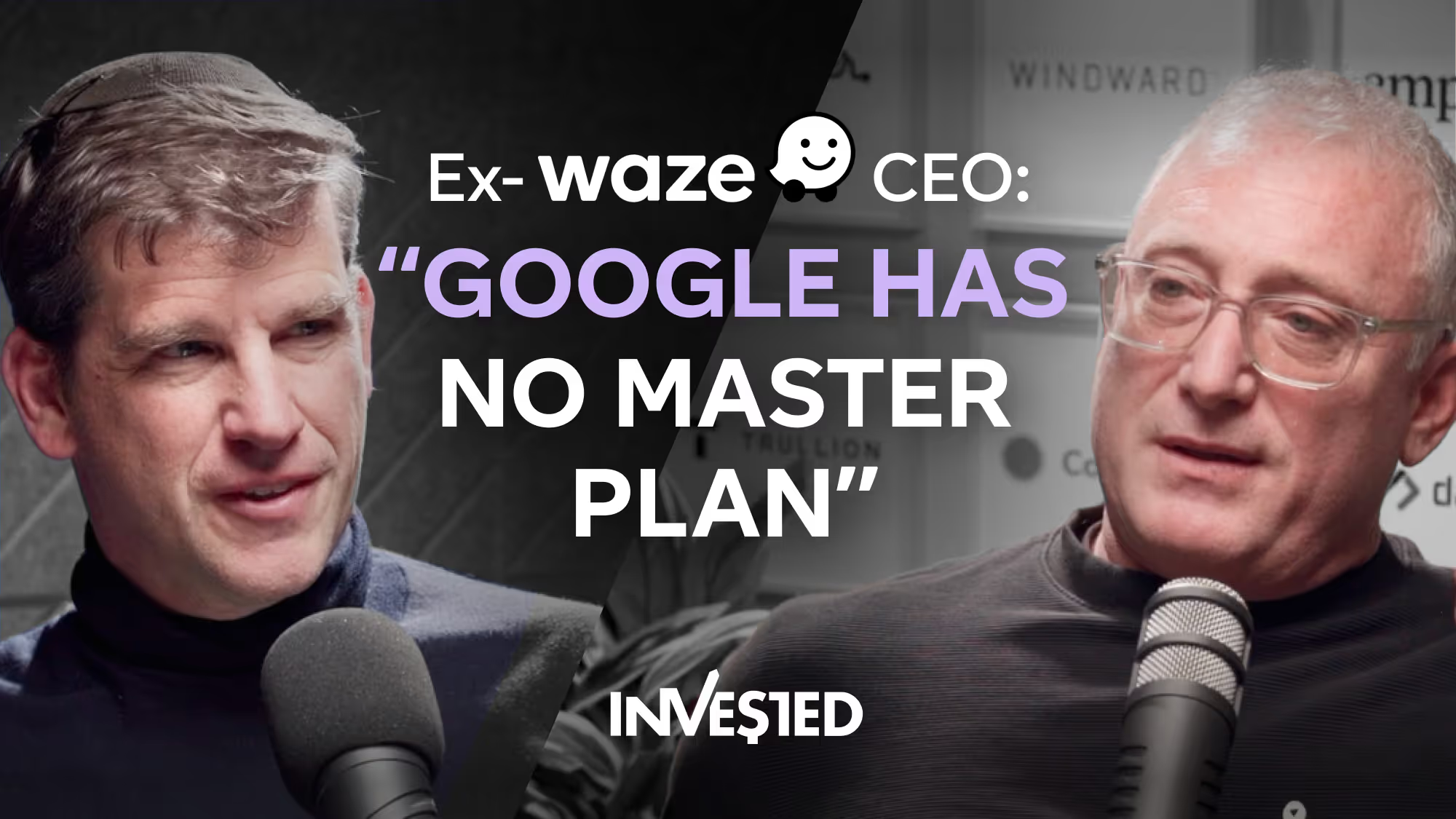
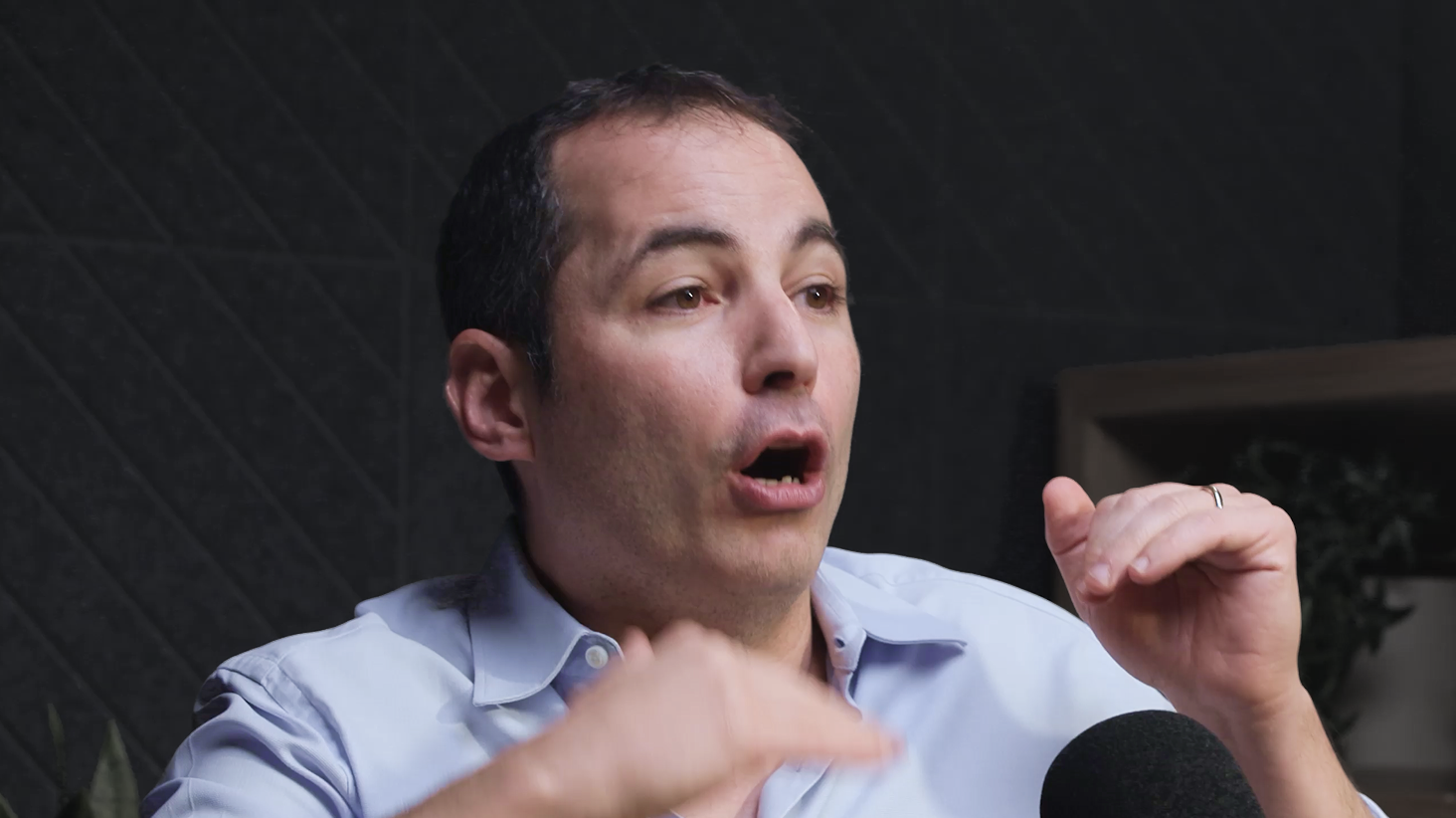
Ami Daniel, co-founder and CEO of Windward, on the Houthi blockade of Saudi oil, Trump's Russian diesel deal, and why the next war will be fought at sea.
On this episode of Invested, Michael Eisenberg talks with Ami Daniel, back for a record third appearance, about how Iran and the Houthis are disrupting shipping through the Strait of Hormuz and Bab el-Mandeb with cheap drones and missiles. Using Windward's maritime AI data, Ami explains why tanker freight rates have climbed from about $60,000 a day to nearly $1 million, why ship location transmissions around the Gulf have dropped 83%, and why he counts roughly 90 million more barrels leaving the Gulf over 12 days than public numbers show. They also cover Saudi Arabia's East-West Pipeline to Yanbu, the halt of Qatar's LNG exports from Ras Laffan, the split between US and European sanctions on Russia, marine insurance as the financial chokepoint of global trade, China's incursions near Taiwan and the Philippines, and the threat to undersea internet cables.
Ami served as an officer on the INS Hanit, the Israeli Navy corvette hit by a Hezbollah missile off Beirut on July 14, 2006. Four people were killed and about 12 were wounded. He first came on Invested after October 7th, when he set up a command center in his home to help rescue people from the Gaza envelope, and returned in March at the start of the war with Iran.
00:00 - Intro
00:41 - Ami Daniel's Record Third Appearance
02:28 - What Windward Does
03:49 - Hit by a Hezbollah Missile in 2006
04:49 - Iran Copies the Houthi Model
05:47 - Why Hormuz Can't Be Opened by Force
07:00 - How ADNOC Keeps Gulf Oil Moving
08:42 - Tanker Freight Rates Near $1M a Day
10:15 - The 5 Million Barrel Swing Factor
13:04 - Why the US Guards Gulf Oil
14:21 - How Iran Armed the Houthis
16:20 - The Houthi Blockade on Saudi Exports
20:41 - 83% of Ships Go Dark
21:52 - 90 Million Barrels Missing From Public Numbers
23:31 - Qatar's LNG and Fertilizer Shutdown
25:19 - Jebel Ali Container Imports Cut Off
27:57 - Are Iran's Naval Mines Here to Stay?
31:49 - The Houthi Blockade on Eilat Port
33:32 - The Trump-Putin Russian Diesel Deal
38:06 - US vs. European Sanctions on Russia
41:12 - Marine Insurance, the Financial Chokepoint
43:52 - China's Push Into Marine Insurance
44:47 - What Big Banks Fear About Oil Prices
47:06 - Iran's Death by a Thousand Cuts
49:36 - Is the Blockade on Iran Working?
51:31 - Can Iran Wait Out Trump?
54:50 - Turkey's New Maritime Claim
55:49 - China's Incursions Near Taiwan
59:46 - Ukraine's Drones and Maritime Drones
1:02:06 - Undersea Cables Under Threat
1:03:51 - Who Protects the Seas?
1:06:24 - Ami's Predictions for Iran and Russia
[Ami Daniel — 0:00]
Nefarious actors have rediscovered the maritime area as a path to greatness. You don't have to really sink it, you just have to pest it.
[Michael Eisenberg — 0:09]
You were hit at sea, correct? By a missile?
[Ami Daniel — 0:11]
Yes.
[Ami Daniel — 0:12]
Our families found out about it. They saw the ship burning live on TV.
[Ami Daniel — 0:16]
People think that space is the next space of war. I think space is very expensive to fight at. It's much cheaper to fight at sea than at space laying mines. The Iranians are also very sophisticated. They're really good at it. It doesn't feel to me like something is going away. Not now. I'll be tempted to say not ever.
[Michael Eisenberg — 0:31]
Wow.
[Michael Eisenberg — 0:33]
So your view is Iran wins?
[Michael Eisenberg — 0:41]
Welcome back to another episode of Invested. We have an invested record here today. My friend and CEO of Windward, Ami Daniel, is back for the third time.
[Ami Daniel — 0:50]
Third time.
[Michael Eisenberg — 0:51]
The third time. The first time we had Ami, because of his heroism on October 7th when he set up a command center in his home to save people from the Gaza envelope. The second time we had him was at the beginning of the war with Iran, where we started talking about Hormuz.
[Ami Daniel — 1:06]
And I gave some predictions.
[Michael Eisenberg — 1:07]
and he gave some predictions.
[Ami Daniel — 1:08]
Which are right.
[Michael Eisenberg — 1:09]
Which humbly, Ami will tell you are correct.
[Ami Daniel — 1:13]
I'm sorry, I'm just saying if you give predictions, you know if they're right or wrong, because time went by.
[Michael Eisenberg — 1:17]
They did. And so now we're having back a third time because I don't think there's a more important issue right now, not just in Hormuz, but what is going on in the global energy markets. What is going on in Russia and Ukraine? What are the geopolitical implications of what's happened in Hormuz? Iran, Bab el-Mandeb, which the Houthis are doing, and the Houthis firing on Saudi Arabia. Ami, for those of you who don't have his background and didn't listen to the first two episodes, is the founder and CEO of a company called Windward, which is the leading maritime intelligence company, maritime AI company, the observer of the seas. That is how he got his start. And he's found himself, as the war has evolved throughout the Middle East, in a critical position, talking to decision makers, opinion leaders, market makers globally on what is going on, not just in Hormuz, but in global commodity flows more broadly. And so I'm thrilled to have Ami here. This is going to be a deep dive into what's going on in the world of geopolitics, supply chains, maritime, and you name it. Ami, welcome back.
[Ami Daniel — 2:15]
Thanks. It's great to be here. Third time is a charm. I think.
[Michael Eisenberg — 2:17]
Ami, we were your investor early on in Windward. It then went public on the AIM and then got bought by people just when maritime became ridiculously hot.
[Ami Daniel — 2:25]
Timing is everything.
[Michael Eisenberg — 2:26]
Timing is everything. Tell us about Windward.
[Ami Daniel — 2:28]
So we're a maritime intelligence business. What we do is we try to figure out every ship and every cargo exactly where it's going and what it's doing. And we try to build our own vertically integrated network to do that. Our goal is to have full transparency of the oceans and provide information advantage to the good guys who fight to keep the world free and for the traders who want to make a lot of money from that.
[Ami Daniel — 2:48]
Last time was on Zoom.
[Michael Eisenberg — 2:50]
Last time was on Zoom.
[Michael Eisenberg — 2:51]
This time it's in person.
[Ami Daniel — 2:51]
This is better.
[Michael Eisenberg — 2:52]
because you came back to vote.
[Ami Daniel — 2:53]
It's great. And.
[Michael Eisenberg — 2:54]
I see you're chomping at the bit. You want to get started?
[Ami Daniel — 2:56]
Yeah, I want to get started. You know, first of all, it's great to be in Tel Aviv. It's just beautiful. I had a run on the beach today and yesterday. Just a beautiful energy vibe. And as I told my team yesterday after the elections, as I told them, you know, there are a couple of things not going to change. Number one, we're still going to be here. Number two, neighborhood's not going to change. Number three, if you look at the US, really AI and technology is really taking societies forward, even if politics is a bit difficult. So I think you can see this about the US economy and you can see this about other economies. And I think Alex Karp from Palantir said last week, I think, or this week, that there are three really players in the world of AI, US, China, and Israel. So I think there's only reasons to be optimistic about.
[Michael Eisenberg — 3:36]
I agree too about Israel, the United States, and.
[Ami Daniel — 3:40]
I was talking about Israel, I think about the Israeli economy, about resilience and about the story of building a true and just and successful society.
[Michael Eisenberg — 3:49]
Amen. I'm with you. Okay. I also want to point out, by the way, that in your personal history, you were hit at sea.
[Ami Daniel — 3:55]
Correct.
[Michael Eisenberg — 3:55]
By a missile.
[Ami Daniel — 3:56]
Yes.
[Michael Eisenberg — 3:56]
You know what this is like. Hezbollah fired a missile on the ship that you were an officer on.
[Ami Daniel — 4:00]
Correct. July 14, 2006, INS Hanit, it's an Israeli corvette got hit by Hezbollah missile about 12 miles northwest of Beirut in a tragic event. It was televised live on television on the Friday evening news. And this is how like the world and my family and our families found out about it. They saw the ship burning live on TV. So again, very tragic event. Four people were lost and about 12 wounded. But we kind of persevered. The rest of us. And I think so all this like sea and Hormuz and blockade, it all touches a bit deep. And I've done it myself and I think I'm privileged to be in a position where suddenly that niche where I dealt with for many, many years suddenly is not very niche anymore.
[Michael Eisenberg — 4:49]
So one prediction you made back in March when we spoke was that Iran would copy the Houthi model.
[Ami Daniel — 4:54]
Correct.
[Michael Eisenberg — 4:55]
And that's happened.
[Ami Daniel — 4:56]
Yep.
[Michael Eisenberg — 4:57]
The Houthi model is...
[Ami Daniel — 4:58]
The Houthi model is using basically missiles and drones to disrupt maritime traffic in almost noncommittal way. So it's not you have a full blockade, it's we're molesting you with, or pesting you with missiles and drones and making you feel unsecure or unsafe, for some of you. Like the Houthis are doing right now to Saudi exports. And I think also using low-cost munitions versus high-cost, Western munitions. And I think that has been successful to them.
[Michael Eisenberg — 5:31]
I started using the term iPhone munitions.
[Ami Daniel — 5:33]
Nice. Yeah. iPhone munitions. Yeah.
[Michael Eisenberg — 5:37]
Okay, so let's dig in. I think in March you also said, you said your predictions were correct.
[Ami Daniel — 5:43]
Unfortunately.
[Michael Eisenberg — 5:44]
So why don't you tell us what was correct? Because I think I have one that was incorrect.
[Ami Daniel — 5:47]
Okay. I said that this is not solvable in a military way.
[Michael Eisenberg — 5:50]
Right.
[Ami Daniel — 5:51]
I said you can't open Hormuz fully in a military way because they will always find another way to attack or pest or molest or disrupt traffic. And I think that has been correct. At the same time, I have to say CENTCOM has done a fantastic job in allowing exports to go through to some extent. I think oil is pumping through nicely. However, the Gulf is not only about oil. I think the last couple of weeks we've seen 22 or 23 ships get hit, out of which two or three sink, with like crew members like saved and fleeing the vessels and a lot of containers spread. I think Iran has also expanded the range and they're attacking off Kuwait, Iraq and, Fujairah. That goes well beyond Hormuz. So I was correct that you can't solve it and just say, hey, just don't attack. But I was incorrect in saying that it will stop the flows of oil. I think CENTCOM has changed that in a significant way, although it does require extraordinary effort.
[Michael Eisenberg — 6:49]
So if I were to summarize what you just said. Right now, Iran and the Houthis control. Iran controls the Strait of Hormuz and the Houthis control Bab Bab el-Mandeb.
[Ami Daniel — 7:00]
I don't think they control it. I think they have an impact or effect over it. Control sounds like something absolute. I don't think anybody has absolute control over a piece of geography at sea. It's very hard. But I think absolutely they have a lot of impact. We can see that Iran has stepped up attacks in the last two or three weeks, and I expect them, by the way, to be able to keep doing that because you don't need to be near the straits to attack the straits. You can fire a drone from a thousand kilometers deep in Iran and it can just go around and then hit a ship. I think that's big. I think that also has a big knock on effect on who ships out of the Gulf. Answer: Mostly the national oil companies. I think ADNOC, the Emirati oil company, has really, you know, did all the right things. They acquired a big company called Navig8, a big shipping company that they can shuttle oil through that. I think they've done a fantastic job and they've been very brave, by the way, and very proactive. They provide these services right now to Iraq and Kuwait, which has never happened before ever. Like it was always.
[Michael Eisenberg — 8:06]
Let's just summarize that for a second. So United Arab Emirates buys all these ships prior to the conflict. Conflict starts to happen. And now they've created this route.
[Ami Daniel — 8:14]
Yeah, there was something in the middle. A lot of people are afraid to do that.
[Michael Eisenberg — 8:18]
Right.
[Ami Daniel — 8:18]
Because
[Michael Eisenberg — 8:19]
I'm going to come to that in a second.
[Ami Daniel — 8:20]
Yeah.
[Michael Eisenberg — 8:20]
Yeah. So through the southern route, they're shuttling ships right now and also helping the Iraqis and the Kuwaitis get their oil.
[Ami Daniel — 8:27]
Correct.
[Michael Eisenberg — 8:29]
And goods out. But most, I think it's fair to say, ship crews and ships and shipping companies are not brave enough to do that right now. But the Emiratis have a big interest in that. Getting their own oil out and other people's oil.
[Ami Daniel — 8:42]
Yeah, I think the two main types of like people who do that is either Greeks, who are very greedy. Rightly so in this case, by the way, it's a lot of money. We can talk about that. I think it's like 60 times what you used to get.
[Michael Eisenberg — 8:54]
What is 60 times?
[Ami Daniel — 8:55]
The freight rate. So you should get pre-war, you would have gotten maybe 60k a day for a big tanker called a very, very large crude carrier.
[Michael Eisenberg — 9:02]
A VLCC, very large crude carrier, which carries—
[Ami Daniel — 9:05]
About a couple million barrels.
[Michael Eisenberg — 9:06]
2 million barrels of oil.
[Ami Daniel — 9:07]
1.5 to 2 million barrels of oil. And today I've seen rates as high as a million bucks a day. 700k, 750k. Almost a million bucks a day. Insurance rates are also up. Like I think we're looking at 7 or 8% of the hull value. The hull value could be 200 million.
[Michael Eisenberg — 9:22]
And normally it's what percent of the hull value?
[Ami Daniel — 9:23]
1%, maybe, maybe half percent.
[Michael Eisenberg — 9:25]
So insurance rates are up 7x to transit the Strait of Hormuz.
[Ami Daniel — 9:29]
Yeah. And freight rates are up about 15 times. Now you also don't pay just for the transit. You pay per day. And that has created a new phenomenon where there's an industrial level of a hub of ship to ship transfers of exports of oil off Fujairah in the UAE.
[Michael Eisenberg — 9:48]
Right. So Fujairah, for those who don't know, I hope they'll overlay the map on this, is the little tongue that sticks out, roughly, of the UAE towards Oman.
[Ami Daniel — 9:58]
Correct. On the east side.
[Michael Eisenberg — 9:59]
On the east side. And so that's kind of the exit point roughly of the Strait of Hormuz. And when you get to the other side of that there, there's first of all, bunkering in Oman.
[Ami Daniel — 10:10]
Yep. Fueling of ships.
[Michael Eisenberg — 10:11]
Fueling of ships in Oman. And now you're describing the ship-to-ship transfer.
[Ami Daniel — 10:15]
And I think maybe it makes sense to take a step back and just talk just about, just for listeners to understand the exports of oil. So the world makes about 80 million barrels of oil per day. Ish. Russia is about 10. Iran used to be about 2. Now Venezuela used to be 800k a day. Now it's up to 1.1 million, 1.2 million. So Venezuela is like up a few hundred K. Brazil is up a few hundred K as well. But Hormuz is about 20 million barrels a day. So a quarter, ish, of the world oil exports. Now what has happened is over time, because it was a disruption of many months, the world has drawn down what's called strategic reserves for about 600 million barrels.
[Michael Eisenberg — 11:05]
This is both the strategic petroleum reserve in the United States which has been drawn down. These are the beginnings of the strategic reserve in Europe.
[Ami Daniel — 11:05]
Correct.
[Michael Eisenberg — 11:13]
And no one knows exactly what happened in China, but there's an assumption that some of that was pulled down. And in Japan too.
[Ami Daniel — 11:18]
Yeah, because you just didn't have fuel for your car. Right. For a few months. Now really I think that what the world is getting to, and we need to talk about the Russian knock on effects in a second is, there's approximately 5 million barrels a day of oil which are the swing factor right now of the world economy. So if CENTCOM succeeds in exporting 10 million barrels or 16 million barrels a day or 15, that is the swing factor.
[Michael Eisenberg — 11:48]
What does that mean?
[Ami Daniel — 11:49]
That means that the world needs about 80 million barrels a day. So if you don't provide 80 million barrels a day, what happens is over time, first of all, prices go up. You need to draw down on strategic reserves. So when prices of oil goes up, as you know, because energy is such a big thing, inflation goes up. If inflation goes up, interest rates need to go up. If interest rates go up, usually equities go down, which affects obviously all of us. Now because of the AI revolution, they need to borrow so much money. If interest rates go up, capital to finance AI goes up. Anthropic IPOs and investors are like oh my God, they're going to pay five and a half percent or whatever interest on 600 billion.
[Michael Eisenberg — 12:30]
On compute.
[Ami Daniel — 12:30]
On compute. So there's a knockdown effect really. So a lot of.
[Michael Eisenberg — 12:34]
Knock on effect.
[Ami Daniel — 12:35]
Sorry, knock on effect, sorry. A knock on effect on a lot of things and not really oil. That's why oil is so important and that's why I think all eyes are really on how much is really exported per day from the Gulf. And that's why Abu Dhabi National Oil Company and these shuttles are so important. That's why Iran's impact on the world is so important. And that's why the Houthis impact is so important. So it's really that puzzle you need to understand in your head, which goes much beyond, you know, a local thing between the US and Iran.
[Michael Eisenberg — 13:04]
Yeah. So just also to back up historically, because I think this is important context, people have asked, why does the United States have military bases in the Persian Gulf with the Gulf countries? Why do they have military bases, you know, in Kuwait or in Saudi or in Jordan or in, you know, the UAE?
[Ami Daniel — 13:22]
In Qatar.
[Michael Eisenberg — 13:22]
In Qatar or wherever. Part of the answer to that is in the 1970s, when the Arabs shut down the oil, there was an energy crisis in the United States. By protecting the free flow of oil in the Persian Gulf, which is, as you said, between 20 and 25% of the world oil supply, but not only – something we have to come back to, supplies of other things. What they actually do is keep prices down and keep inflation down.
[Ami Daniel — 13:46]
Correct.
[Michael Eisenberg — 13:46]
As Iran chokes the Strait of Hormuz, which it does, they not only threaten the Strait of Hormuz and oil supply and their neighbors, they threaten the United States and the global economy.
[Ami Daniel — 13:56]
100% yes.
[Michael Eisenberg — 13:57]
Okay. So Iran today firing missiles and drones at ships in the Strait of Hormuz by direct line creates inflation and is a threat to the global economy. And the Houthis, which people think of as guys running around in sandals or flip-flops.
[Ami Daniel — 14:12]
They do.
[Michael Eisenberg — 14:13]
And firing missiles.
[Ami Daniel — 14:14]
They do run around in sandals or flip-flops, but they just fire ballistic missiles while doing that.
[Michael Eisenberg — 14:17]
But they have iPhone munitions. iPhone missiles.
[Ami Daniel — 14:21]
Yeah. And I think the Houthis is also. It's a good lesson because they were tiny, like several years ago. Tiny, tiny, tiny. And I think I know of specific proof that actually Iran has really armed the Houthis. So they really not just armed them, they also taught them and made them, I think, largely independent, not fully independent, but largely independent in terms of the missiles and drones they can build. And I think what happened is over time, Saudi and the UAE, specifically Saudi, did fight the Houthis, but usually from air. From the air. Now we all know from Israel, it's really hard to fight terrorism from the air because they just go somewhere else and they don't have uniform. So you really kind of. The only way I would say, I'm sorry to say this is like, it's like, by the way, the US army in Fallujah, in Iraq, if you know The Surge by, that's the book that General David Petraeus wrote before he took command of the forces in Iraq. Basically, that's what he wrote. He wrote a theory that says, how do you win the war in Iraq? Back then, he says the surge, you push 300,000 or so soldiers into Iraq, you flood these tunnels, you flood these places, you wash them out, you clean it, you keep it for a year, then you're done. And the Saudis didn't do that. What they did is air attacks. These air assaults didn't really work. And over time, the Houthis became more and more and more powerful, and they also now have conquered more and more and more of Yemen, including right now, Bab el-Mandeb, which is a very important strait.
[Michael Eisenberg — 15:43]
Just to back up one second. Yemen, for those who don't know, is on the southern point of the Arabian Peninsula, and it borders Saudi Arabia basically to the south.
[Ami Daniel — 15:43]
Yep.
[Michael Eisenberg — 15:56]
And it also looks over the Red Sea.
[Ami Daniel — 15:56]
Yeah.
[Michael Eisenberg — 16:00]
Which is a key point of transit that ultimately goes up to the Suez Canal. Hopefully, they'll overlay a map.
[Ami Daniel — 16:00]
Yeah.
[Michael Eisenberg — 16:05]
Goes up to the gulf between the.
[Ami Daniel — 16:07]
Gulf of Aden and the Red Sea.
[Michael Eisenberg — 16:09]
And the Red Sea. And it's a key transit point to get goods to Europe.
[Ami Daniel — 16:12]
Correct.
[Michael Eisenberg — 16:13]
In particular, because then it goes out from the Suez Canal to the Mediterranean Sea.
[Ami Daniel — 16:17]
And it's also.
[Michael Eisenberg — 16:17]
And it's very, very narrow, Bab el-Mandeb. And so it's easy to threaten.
[Ami Daniel — 16:20]
Yeah. Bab el-Mandeb, I think, is about 10 or 12 miles. So it's about half as, like twice as narrow or half the size of Hormuz. So it's very, very, very narrow. And only recently, i.e., whatever, last month or so, the Houthis really took control of Bab el-Mandeb because they were like 100 clicks to the north. Now they're on Bab el-Mandeb. So now they're saying, hey, Saudi, as long as you're fighting us, we're going to put on a blockade on Saudi or Saudi exports. So really, this is also very new. All this is new, is pre-Hormuz war, Saudi exported the 9 million barrels or so they export a day, which is a lot. It's about 10 or 12% of the world's export a day, were only from the eastern side of Saudi. This is very geographical. From the Straits of Hormuz, out. Now, because Iran started stopping the Straits of Hormuz, Saudi kind of introduced a new pipeline they've been building for years, very smart of them, into a port called Yanbu on the western side of Saudi to the Red Sea.
[Michael Eisenberg — 17:23]
Right. So it's on the Red Sea. The other side of the Red Sea is Egypt in that spot.
[Ami Daniel — 17:27]
Correct.
[Michael Eisenberg — 17:27]
And they're at Yanbu, which is this port. It's called the East West Pipeline.
[Ami Daniel — 17:30]
Exactly. Now, they can export 5 million from the east and 5 million from the West. Now you have here the Houthis saying, we're not going to let you export that from the West, we're going to attack you. So if Iran attacking Saudi exports from the east and the Houthis attacking Saudi exports from the West, including Yanbu port itself, including ships with Saudi crewed, with Saudi owned and so forth. By the way, evidently, and I looked at the stats today as preparation for this, transits in Bab el-Mandeb are very, like, consistent over the last month and a half, except Saudi.
[Michael Eisenberg — 17:30]
Yeah.
[Ami Daniel — 18:01]
So basically they're saying we're just putting a blockade on Saudi. Anybody else, you know, enjoy. So really, I think it's a new phenomenon where a terrorist organization really is putting, I don't say full blockade, but a lot of limitations on exports of countries. And, you know, it could happen here. Like somebody could, you know, could take a piece of land and get the right missiles and, you know, limit imports to Israel. Equally, by the way, they could do it to the US from Cuba, for example.
[Michael Eisenberg — 18:27]
Not even from Cuba. You could, for argument's sake, take a shoulder missile and fire it on a port in the United States, and you're from Mexico. It's not that far.
[Ami Daniel — 18:35]
I think that nefarious actors have rediscovered the maritime area as a path to greatness because it's very asymmetrical. You can have a drone that costs 50,000 and impact a ship that costs 2 million, that has oil for a couple hundred million. And you don't have to really sink it, you just have to pest it and shoot at it and hit it.
[Michael Eisenberg — 19:03]
And scare the crews, because they're all manned.
[Ami Daniel — 19:04]
Yeah, because it's like people getting $2,000 a day or, sorry, $2,000 a month or something. So they don't want to die. So it's really. It's really complicated, I think. And also a lot of the Western society has pulled back from doing shipping themselves. So if you look at shipping crews, it's Filipinos, it's Thais, it's Russians.
[Michael Eisenberg — 19:24]
Sri Lankans.
[Ami Daniel — 19:25]
Sri Lankans. It's a lot of like Asia.
[Michael Eisenberg — 19:27]
Some Pakistanis.
[Ami Daniel — 19:28]
Pakistanis. Correct.
[Michael Eisenberg — 19:29]
Yeah.
[Ami Daniel — 19:30]
But you won't see a lot of Israelis or Germans or Danes or so forth. Because you know, you spend nine months at sea and you don't see a lot of people and you don't make a lot of money. So really that dependency on kind of third party crews and that dependency on the ability, willingness for other people to export your goods is really a problem. And that's what ADNOC got right. They acquired their own fleet of ships. They did a vertically integrated oil supply chain. Hundreds of ships, hundreds of Emirati sailors or captains, but there are a lot of Emirati crews. And I know the CEO of ADNOC Shipping is a very good guy. He's a very, very talented leader and executive. And really, I think that is a new phenomenon. And I think the question is, what does this all mean? Yes, it means like right now we need to open Hormuz and Bab el-Mandeb. But what does it mean for the next 10 years of our lives? But we need to talk a bit about that. But first of all, let's finish up Hormuz and Bab el-Mandeb.
[Michael Eisenberg — 20:25]
I want to come back to the next 10 years of our lives soon. Because at least one man's view it's going to get a lot worse before it gets better. But just to focus on Yanbu, one second. So 5 million barrels came out through Yanbu, but there aren't a lot of loadings at Yanbu. Do you see that in your data?
[Ami Daniel — 20:41]
Yes, of course. I think first of all everybody used to, that's another big change, used to rely on something called AIS, which is basically shipping ships transmissions, voluntary ship transmissions, for safety. The problem is if it's for safety, why transmit your location and get fired?
[Michael Eisenberg — 20:59]
What does AIS mean?
[Ami Daniel — 21:00]
Automatic Identification System. It's a system, like a standard, based in the 1960s. And basically we're using it in a— it's not planned to do that. It's planned to just prevent collisions at sea. But we're using it and everybody's using it to monitor shipping movements worldwide.
[Michael Eisenberg — 21:18]
Right. And to monitor ship's locations. But right now with terrorists tracking it, nobody wants to share the location.
[Ami Daniel — 21:23]
Yeah, of course. So you have an 83% drop in transmissions around the Gulf. 83%. So dark shipping used to be something that dark fleet or bad actors do. Now it's like everybody. So that really has hindered the world's ability to understand what's happening in exports. That's why I spoke about these 5 million barrels a day of the swing factor of exports. So actually there is a way to do that like we do with kind of military grade precision satellites.
[Michael Eisenberg — 21:51]
To do what?
[Ami Daniel — 21:52]
To understand exactly what's happening in every port, in every terminal. And I can actually tell you who is pumping. I think there's a big gap right now between public assumptions or public numbers and real numbers. I think I count about 90 million barrels of difference between our number and public numbers.
[Michael Eisenberg — 22:09]
90 million barrels?
[Ami Daniel — 22:10]
90 million barrels over. Yeah, over 12 days, I think.
[Michael Eisenberg — 22:12]
Okay, so.
[Ami Daniel — 22:13]
It's a lot.
[Michael Eisenberg — 22:14]
That's really 7, 8 million barrels a day that you think the world is not counting.
[Ami Daniel — 22:18]
Correct.
[Michael Eisenberg — 22:19]
That is actually exiting either.
[Ami Daniel — 22:19]
Yeah.
[Michael Eisenberg — 22:21]
The Straits of Hormuz.
[Ami Daniel — 22:21]
Yeah.
[Michael Eisenberg — 22:23]
Or Yanbu.
[Ami Daniel — 22:24]
Yeah.
[Michael Eisenberg — 22:25]
And how does that jive with what you said earlier? That the Saudis are not getting their ships in and out.
[Ami Daniel — 22:29]
Because the Saudis are exporting from Suez north.
[Michael Eisenberg — 22:34]
Yeah.
[Ami Daniel — 22:34]
So what happened is they're protecting Yanbu and just, they're just going around. So they're going from, from Yanbu north instead of south. So they're really going from Yanbu north and then around the Cape of Good Hope into Asia.
[Michael Eisenberg — 22:47]
Okay.
[Ami Daniel — 22:48]
So they added about 35 days of journey to, because of the Houthis.
[Ami Daniel — 22:52]
Which, by the way, take away ships from the world's map. Because if you need to go 50, 60 days per direction with the same amount of ships you have, you have less shipping days. It's called ton miles. So you have less shipping days. And the Emiratis are helping the Saudis and Kuwaitis and Iraqis get oil out of Hormuz. So actually we're seeing a lot of exports of oil in the last month. And the world has been extremely resilient with CENTCOM's protection. But I think it's been very hard to follow that. I don't think we are seeing the same amount of LNG production in Ras Laffan in Qatar.
[Michael Eisenberg — 23:31]
We're not going to be seeing any LNG production.
[Ami Daniel — 23:33]
We're not seeing any.
[Michael Eisenberg — 23:34]
Ras Laffan, for those who don't know. Qatar sits like 60 miles away from Iran in the Strait of Hormuz. And Ras Laffan is the key natural gas production site in Qatar.
[Ami Daniel — 23:49]
And it's about 20% of the world's LNG.
[Michael Eisenberg — 23:51]
Right.
[Ami Daniel — 23:52]
And it's.
[Michael Eisenberg — 23:52]
It liquefied. LNG is liquefied natural gas.
[Ami Daniel — 23:56]
Thank you. Sorry. And it's very flammable. So if you hit a missile full of, with a ship full of crude oil, you can have a big oil spill. But it's not going to explode because it's crude oil. It's not flammable. LNG is very flammable, so it's much more dangerous. And Iran did hit one Qatari LNG vessel, I think a month ago, a month and a half ago, and it kind of shut down kind of the Qatari exports. So really, and I gotta say, I was pretty surprised about that because Qatar was one of the big, is, was, I don't know, one of the big brokers of a potential Iran-US deal. But they've kind of turned a tap off for Qatar and they really can do it because it's enough that you blow that ship completely with one small drone.
[Michael Eisenberg — 24:36]
Then nobody tries again.
[Ami Daniel — 24:38]
Yeah, exactly. That's what happened. And then nobody tries again because it's much more flammable. By the way, equally, you have fertilizer because 20% of the world's fertilizers come from Qatar. Because in the production of fertilizer you need a lot of. It's kind of a byproduct of LNG in Qatar.
[Michael Eisenberg — 24:54]
Yeah, you don't need gas to make the fertilizer. It's the sulfur and other parts of it are byproducts. Urea and stuff are byproducts of the natural gas.
[Ami Daniel — 25:02]
Correct. So the world is missing about 20% of the world fertilizer as well. Jebel Ali, which is the UAE container port, used to be one out of six or seven shipments used to be transshipped in Jebel Ali. It's like zero right now.
[Michael Eisenberg — 25:18]
Explain that. Expand that point.
[Ami Daniel — 25:19]
Yeah, sorry. When you ship containers, like let's say you want to relocate and you want to ship your container from, you want to buy a new cupboard from China and you live in the US. Not always it will be shipped directly from China to your house in the US. Oftentimes it will be transshipped, i.e. moved between two ships, somewhere in a hub. The big hubs are Rotterdam, Jebel Ali in the UAE, and Singapore. That's like the top three hubs in the world where people, things get transshipped, move between different ships. It's just like airplanes. If you are going to, if you're flying London, New York, you're going to fly a big plane. But if you're flying London to Oklahoma, maybe there's no direct flight. So you might take a small airplane from New York to Oklahoma. So same, except we go with big ships to Jebel Ali, Singapore, Rotterdam, and you transship to small local ships. So all of the imports and livelihoods of Qatar, Iraq, Bahrain, UAE are really dependent upon imports as well. So these imports to Jebel Ali, which is in the Gulf, have been cut completely because of Iran attacking in Hormuz. So now they're importing more from Oman, which is outside of the Strait. But still, it's not fun right now to live in Iraq or Kuwait because of that. So really, Iran to a large extent is putting a blockade on Iraq, Kuwait, Saudi in the UAE and not just in Bahrain, not just on the US and the world. It's really a big thing. It used to be called an act of war, by the way.
[Michael Eisenberg — 26:45]
It's not called an act of war anymore.
[Ami Daniel — 26:47]
It is, but you need to declare blockade for it to be an act of war. And by the way, the US also, as it was pushing back on Cuba, was limiting imports into Cuba, but it did not announce a blockade in Cuba. So there's a thin line over there, I think. And the Houthis did announce a blockade on Saudi, by the way. So today I don't know what it means to announce anymore. Also you have this, you know, the law of the seas and freedom of navigation, but nobody's enforcing it. So in reality.
[Michael Eisenberg — 27:15]
It's not that nobody's enforcing it. It's that the Houthis and the Iranians don't respect it either.
[Ami Daniel — 27:19]
Correct. Of course not, by the way, to be honest. Also, the Ukrainians and the Russians are not.
[Michael Eisenberg — 27:24]
We're going to come to them in a second.
[Ami Daniel — 27:25]
Yeah. So I think, I think Ukraine, Russia, you know, the Houthis, Iran and you know, I know people think of the Ukraine as a good guys. I think they are good guys, but still in terms of freedom of navigation, they're attacking ships. So you have four big countries right now or big entities attacking ships day in, day out and hitting the, really hurting the freedom of navigation, which increases inflation, provides less goods. And I think the prices at the pump in the US are at an all-time high, I think, right?
[Michael Eisenberg — 27:51]
Certainly for diesel.
[Ami Daniel — 27:52]
Yeah, for diesel.
[Ami Daniel — 27:53]
Which we need to talk about again, because it was a Trump-Putin deal on diesel.
[Michael Eisenberg — 27:57]
So you mentioned the last time you were here that the mines could get cleared by the US, I believe you said.
[Ami Daniel — 28:06]
Yeah, I think they did clear them.
[Michael Eisenberg — 28:07]
There's still one ship that sunk from— right, from a mine— or is that—
[Ami Daniel — 28:12]
I don't know. The answer is I don't know. Iran said it. I saw the video. I don't know if the video is AI-generated or real. It's really hard for me to say, I haven't seen CENTCOM clearly say if it is or it isn't. I know CENTCOM said they cleared the mines. I don't know if clearing the mines is a one-time thing or it's an ongoing thing.
[Michael Eisenberg — 28:31]
Because the Iranians continue to lay mines potentially?
[Ami Daniel — 28:34]
I think so. It's more likely than not that laying mines, the Iranians are also very sophisticated and they're really good at it. And they also had six months to prepare, right? So I think it's a fair assumption to say that if they keep attacking with drones and missiles, they want to keep attacking with mines and they're finding ways to do it. And I think CENTCOM is probably finding a way to clear these. But it doesn't feel to me like something is going away. Not now. I'll be tempted to say not ever.
[Michael Eisenberg — 29:02]
Wow. W.
[Ami Daniel — 29:04]
Hy not?
[Ami Daniel — 29:06]
Why would— if a mine is something that's easy to put and can blow up a ship, why would the Houthis not use that? Why would the Ukrainians and Russia not do that? Mines used to be a thing in the 1950s and 1940s, like naval mines, and they just went away for some reason. It feels like the big naval mines come back here. I think so.
[Michael Eisenberg — 29:25]
So just to summarize this part, you think that of what used to be 20, 25 million barrels a day of oil, the US and its partners, the UAE, in particular the Saudis, via Yanbu and via this strait of Hormuz and the Iraqis and the Kuwaitis, by the good graces of the Emiratis, are succeeding in getting out 15, 16 million barrels a day?
[Ami Daniel — 29:49]
I think it changes. I've seen the numbers. I think at some weeks they managed to do 140% of 2025 numbers. I think last week I think it was 110%. And I think it's gone down a bit in the last two weeks. So I think.
[Michael Eisenberg — 30:01]
Why?
[Ami Daniel — 30:02]
Because of the attacks.
[Michael Eisenberg — 30:03]
Because of the attacks?
[Ami Daniel — 30:04]
Yeah. Yeah. I think the attacks have an impact on exports. It has an impact on, an accumulating effect on seafarers' willingness to keep doing it because it's becoming more dangerous. There are 23 ships attacked in two weeks. It's a lot, man. It's a couple of ships a day.
[Michael Eisenberg — 30:17]
And the Iranians and the Houthis are ratcheting up the pressure in advance of the midterms in the United States.
[Ami Daniel — 30:21]
I think so. I think it's connected to the midterms. By the way, it may be connected to the elections in Israel. I don't know. I don't fully get that because I think there's probably wall-to-wall agreement in Israel that Iran are bad people in the political system. I don't think, you know, Eisenkot, who was the chief of defense, none of these people, political people say, oh, let's hug Iran and let's be friends forever.
[Michael Eisenberg — 30:41]
You said something earlier, I just want to question one second before we move on to Russia and Ukraine. So you mentioned that the Saudi ships are going north via the Red Sea, ultimately Suez Canal and then out to the Mediterranean through Straits of Gibraltar and around the Cape of Good Hope. The Houthis fired on Israel in response to Israel's incursion into Gaza after October 7th.
[Ami Daniel — 30:41]
Yeah.
[Michael Eisenberg — 31:06]
Which means that they can fire missiles all the way up.
[Ami Daniel — 31:06]
100%.
[Michael Eisenberg — 31:10]
The, you know, the Red Sea.
[Ami Daniel — 31:12]
Yeah.
[Michael Eisenberg — 31:13]
Why don't they fire on the Saudi ships as they're going up the Red Sea?
[Ami Daniel — 31:17]
It's a good question. I think first of all, it's hard to fire because you don't know where they are, these ships, they're dark and just going. It's a big ocean, so it's really hard to fire. You need to see the ships to fire at them. When I was in Lebanon in 2006, they saw our ship from the shore. So because we were like 10, 10 miles-ish off Beirut, they could see us with a radar and with whatever, like a camera. So. And that's how they aim the missile. So you need to see what to aim at. And Yanbu north, it's really far from the Houthis.
[Michael Eisenberg — 31:46]
But we're further. Israel is farther.
[Ami Daniel — 31:49]
Yeah, but Israel is like a static location. They can look at a map and put a GPS location so they can fire at Yanbu itself, but not at the ships leaving Yanbu. But I think, I'm not sure they need to, I think look at the Eilat port. Effectively, there's a blockade on the Eilat port.
[Michael Eisenberg — 32:04]
Yeah.
[Michael Eisenberg — 32:05]
By the Houthis.
[Ami Daniel — 32:07]
Yeah. Eilat port in Israel, which is the southern port into the Red Sea, has not been active for three years now because of the Houthis. So effectively, this is a fact, it's not my opinion, the Houthis are imposing a blockade on the port of Eilat in Israel for three years now. That's like, it is what it is. It used to get all the cars from Asia, from South Korea and Japan and import into Israel. And it's not because of the Houthis. So I think it has been effective to that extent and it has some effect on the Saudis. Again, just increasing or doubling the time it takes Saudi to export oil into APAC, reduces their revenue because you can only use Saudi-related ships because other people are afraid and you have a certain amount of ships and you double the distance, effectively you have half the shipments. So it does have a lingering effect. And I think Pakistan, Turkey said they're coming to Saudi's help and Egypt as well. Let's see. I don't know, I haven't seen that.
[Michael Eisenberg — 33:05]
If you're interested in finding out ahead of time what's going on in Israeli tech, what the latest trends are, who's breaking not only news, but breaking the trend lines, then you want to subscribe to Aleph's newsletter and you can sign up right in the show notes in the description of the show. Please subscribe to the newsletter. Okay, let's move on to Russia and Ukraine for a second. You mentioned before we came on, you had a conversation with one of the leading banks recently. Share.
[Ami Daniel — 33:32]
So I think it's all connected because at the end of the day, first of all, there's a midterms, okay. For the midterms for President Trump, it's very important that gas prices go down or at least don't go up. It's diesel prices which are impacted by Russia's participation in the world market. So reminder, Russia has been the most sanctioned country on earth following its incursion or invasion of Ukraine. So I think President Trump, President Putin agreeing on a deal to allow Russia to export, I think 300,000 a day and then 500,000 and a million barrels a day from Russia to the oil market, outside of sanctions, is meant for taking the prices of, diesel prices in the US down or at least not up.
[Michael Eisenberg — 34:26]
Just back up half a second just for our listeners. So we know. So diesel is downstream of oil. You can ship oil out. Oil is not itself very valuable. It's valuable, but it does.
[Ami Daniel — 34:38]
It needs to be refined.
[Michael Eisenberg — 34:38]
It need to be refined.
[Ami Daniel — 34:39]
In a refinery.
[Michael Eisenberg — 34:40]
The first distillate that comes out of oil is diesel fuel.
[Ami Daniel — 34:40]
Correct.
[Michael Eisenberg — 34:43]
Which is the most used fuel, basically.
[Ami Daniel — 34:43]
Yes.
[Michael Eisenberg — 34:45]
On the planet. And there is a shortage of diesel right now in the world for a variety of reasons. One is shortage of oil that's been coming out of the Strait of Hormuz. Two is that the Ukrainians have hit a lot of refineries.
[Ami Daniel — 34:57]
In Russia. As a response to Putin.
[Michael Eisenberg — 34:57]
In Russia and the Houthis and Iranians have hit refineries.
[Ami Daniel — 35:03]
In the Gulf.
[Michael Eisenberg — 35:03]
In the Gulf.
[Ami Daniel — 35:05]
As well as have limited exports from the Gulf because of that.
[Michael Eisenberg — 35:05]
Right.
[Ami Daniel — 35:09]
So again, on an aggregate basis, there are less, there's less diesel exported and we're coming into the winter in Europe. So it looks like a very cold winter in Europe.
[Michael Eisenberg — 35:19]
Less diesel. To be clear, there's also less LNG in the world because 20% of the world's LNG came out of Qatar.
[Ami Daniel — 35:19]
Correct.
[Michael Eisenberg — 35:26]
The US has been making up for a lot of that and even supplying Qatar with LNG to fulfill its contracts. Nonetheless, there is a shortage of LNG.
[Ami Daniel — 35:36]
And there's more power needed because of data centers with AI.
[Michael Eisenberg — 35:38]
Right, okay. So demand is going up and the winter is now coming.
[Ami Daniel — 35:42]
And the winter is coming. And it looks like because of El Niño. Sorry, this is very complicated. Because of El Niño. It's going to be, I think, the UK it was the hottest summer on record ever, I think, in 100, like 60 years. And that's probably El Niño because it makes the summer hotter and the winter probably colder. So the expectation at least is for to be a very tough winter in Europe.
[Michael Eisenberg — 36:05]
Good for skiing, bad for energy prices.
[Ami Daniel — 36:07]
Correct. And generally speaking, I think we're seeing a bit of shifts. The winter is coming a bit later in the year, also in Israel right now, but also also in Europe last year. Now, I think that's important because again, it's all one global system. So although the US theoretically does not need Russian diesel, effectively, it needs Russian diesel to fuel at least be available.
[Michael Eisenberg — 36:32]
It has to be in the market so that prices come down. There's enough supply in the market and also so that the expectation of future prices.
[Ami Daniel — 36:32]
Correct.
[Michael Eisenberg — 36:39]
Will also come down. There will be supply in the future, so you don't need to forward purchase and thereby drive up the price.
[Ami Daniel — 36:45]
However, I can say we have seen three ships full of Russian diesel on the way to the US as of yesterday, which I'm surprised because again, this used to be until like last week or something, sanctioned goods. You would not have touched them, you would never have imported them to the US. And I think that shows you also the spat between President Zelenskyy and President Trump, because as Ukraine keeps hitting refineries, because Zelenskyy is looking for a pressure point for Russia. Right. Because Russia is very big, they're smaller. And the pressure point they found is refineries. They have hit in quite an effective way, refineries and have reduced refining capacity by Russia. And that is against US interest. Because if President Trump wants prices to go down, Zelenskyy, please stop attacking refineries. He went to the full extent of allowing Russia to export diesel, by the way, outside of EU and UK sanctions, which the US cannot impact. So you are seeing a bifurcation, I think, of the policy where the US saying Russia, it's not going to be sanctioned. EU and UK it's still sanctioned. So if you're a trader somewhere, or if you're a shipping company somewhere, or if you're just a bank somewhere, they didn't finance it, you have a big problem right now because the US is saying no problem. The UK and Europe are saying there is a problem.
[Michael Eisenberg — 38:06]
Okay, you need to drill down another level to explain that. So I'm a bank.
[Ami Daniel — 38:06]
Yeah.
[Michael Eisenberg — 38:11]
I'm going to try to do my best. Okay? But I'm a bank. And almost all shipments are financed by banks.
[Ami Daniel — 38:17]
Correct.
[Michael Eisenberg — 38:18]
Through letters of credit and other things for ships. If an entity is sanctioned like Russia, Russian oil
[Ami Daniel — 38:18]
Cannot do business with.
[Michael Eisenberg — 38:27]
You cannot do business with it. Some of these banks are US banks. Some of these banks are European banks or UK banks. By the way, some of the insurers come out of Lloyd's of London.
[Ami Daniel — 38:36]
Correct.
[Michael Eisenberg — 38:37]
In the UK.
[Ami Daniel — 38:37]
Which we need to talk about.
[Ami Daniel — 38:38]
Yeah.
[Michael Eisenberg — 38:39]
And some come out of the US well.
[Ami Daniel — 38:42]
The vast majority out of the UK.
[Michael Eisenberg — 38:43]
Right.
[Ami Daniel — 38:44]
I think the efforts of President Trump to allow US marine insurance are not going great.
[Michael Eisenberg — 38:50]
Right. And so right now if the EU and the UK still sanction Russia, and by the way, Russia's on their doorstep at a threat to Europe, but the US has lifted sanctions on Russia.
[Ami Daniel — 39:02]
You can't get insurance.
[Michael Eisenberg — 39:03]
You can't get insurance. Right. Because the sanctions still hold in the UK and Europe even if the US has removed the sanctions. And you can't get letters of credit because the banks don't know how to operate in this environment.
[Ami Daniel — 39:15]
Correct. And I think it's pretty unprecedented because—
[Michael Eisenberg — 39:18]
Pretty unprecedented.
[Ami Daniel — 39:19]
Unprecedented because the US used to lead sanctions like historically, the UK didn't even have sanctions like the OFSI, the Office of Foreign Sanctions Investigation, in the UK is new, it's like four years old after Brexit. And generally speaking, the UK and the EU used to be followers of US sanctions. So the US was like the most sanctioning country on earth. And UK and EU kind of followed like bit by bit, and the EU to sanction something you need agreement of 27 countries. So by definition you have 27 people agreeing or one, you know, it takes longer. So they've been trying to sanction the Russian dark fleet and Russia over time to kind of limit its exports. And that US is opening up sanctions very quickly and the UK and EU are not. That is not something people have seen. And I think also to come back to your insurance comment because I think we shouldn't talk about China here. I think over the last four years, what has happened is the West knew, but the rest of the world understood that oil trade and shipping and global trade have its own choke point. Not a physical choke point, is a financial choke point. That financial choke point is basically marine insurance to ship anything in the world. If you want to ship to go into a port, you need three things. A flag. You can flag a ship in US or.
[Michael Eisenberg — 40:36]
Panama or Micronesia.
[Ami Daniel — 40:38]
Panama. It's usually like Panama, Marshall Islands. It's open registries. You pay 6,000 bucks and you can do it. Vanuatu is like a big, a big thing. I saw Equatorial Guinea today. Anyway, a flag, something called classification, which means once a year the ship has been tested for safety and you have a stamp of approval. And there's a bunch of class societies, but it's easier, Russia has a class society, India has a class society, China has a class society. It doesn't have a lot of implications, the financial implications, because it's just like an approval. So you can do it.
[Michael Eisenberg — 41:10]
It's a good housekeeping seal of approval that's easy to get.
[Ami Daniel — 41:12]
Yeah, exactly. It's easy to get. And marine insurance. The reason it's hard to get marine insurance is because what happens if there's an oil spill? The biggest reinsurance policy in the world is marine. Why? Globally, number one for years, by the way. Because in 1989 the Exxon Valdez, which is an ExxonMobil ship, had an oil spill off Antarctica. And these are awful, awful pictures of these.
[Michael Eisenberg — 41:38]
The wildlife covered in oil.
[Ami Daniel — 41:39]
Yeah, like penguins with oil. It's like awful pictures. And that really changed completely the world of shipping and safety insurance. They made, because of that, they created all kinds of organizations. I'm not going to name the names, but they did also make tanker— double-hulled tankers used to be single-hulled. Now a tanker is like a hull within a hull. A crude tanker. It has to be. And because of that there's much more safety attention than ever were in the last 35 years. What happened is because of Russia invading Ukraine, the West sanctioned the main insurers, which are all Western, by the way. It's 12. It's called P&I Club. It's third party insurance. They're all western except Japan, I think. But otherwise you have West P&I and you have Gard in Norway and you have Swedish Club in obviously Sweden and you have Skuld in Sweden and you have London P&I Club and UK P&I Club and so forth, it's all western. And the West stopped these insurers from allowing them to insure Russian ships. What happens is if you have right now an oil spill because of these old Russian kind of rust buckets. Same with Iran, by the way. Even after the war, there is no insurance coverage. So there's nobody to clean up. So the biggest policy in the world to solve marine insurance, if you have like a $10 billion damage, does not exist for them.
[Michael Eisenberg — 43:06]
So let's just unpack this one second. Russia and Iran, you were saying, have older ships, less safe ships.
[Ami Daniel — 43:15]
Because the West is stopping maintenance and sales of equipment to them.
[Michael Eisenberg — 43:18]
Right. Through sanctions.
[Ami Daniel — 43:20]
Through sanctions.
[Michael Eisenberg — 43:20]
And they're also uninsured ships.
[Ami Daniel — 43:22]
Correct.
[Michael Eisenberg — 43:23]
And as they begin shipping more oil.
[Ami Daniel — 43:25]
Correct. Which they are.
[Michael Eisenberg — 43:26]
Or other products. Which they are right now, because there's a diesel shortage or whatever it is.
[Ami Daniel — 43:31]
Because the West doesn't want to do business with Russia. So Russia is just reflagging its ships and having more ships under the flag of Russia versus asking Greece to do it. So Russia is taking the ADNOC page from their playbook and implementing that.
[Michael Eisenberg — 43:44]
And because of that, we have more unsafe and uninsured ships at sea.
[Ami Daniel — 43:44]
Correct.
[Michael Eisenberg — 43:48]
That could cause a big disaster if one of them gets hit or runs into an iceberg or God knows what else.
[Ami Daniel — 43:52]
Absolutely right. And it is a problem that right now has no solution. That's why China is really pushing into marine insurance. I've heard China is trying to replace Lloyd's of London as well. So just like President Trump is telling Chubb and others, I want American marine insurance, because why would I depend on, like, the UK? China is saying the same and saying, you know, we should build our own marine insurance. Why should we be subject to Western sanctions? Because what happens if, you know, there's a war with the US and they're going to sanction all the ships shipping stuff to us, what are we not going to import anything? So I think the implications of these blockade and these sanctions for sovereign policies is really huge. It's gigantic.
[Michael Eisenberg — 44:32]
Wow. So go back to. You said you had a conversation with this big bank.
[Ami Daniel — 44:35]
I feel it's like a lot to unpack in a podcast.
[Michael Eisenberg — 44:37]
It is a lot to unpack in a podcast. We're slowly getting there.
[Ami Daniel — 44:39]
Yeah, yeah, yeah, sorry.
[Michael Eisenberg — 44:41]
No, it's good. And, yeah, this big conversation you told me with a bank last week, what was it about?
[Ami Daniel — 44:47]
So it was about. It was with the head of oil research of one of the biggest banks in the world. And we were talking about exactly this. What are the oil markets, the diesel markets, and the LNG markets and so forth. And I think the reality is that oil is such a big market that is really tied into equities, it's tied into the diesel markets, it's tied into futures, it's tied into AI. So really, that question is very big. What is the impact, like what's going on with energy prices and what's the impact? And think of, if you think about it for a second, if gas price in the US is I think six and a half dollars a gallon or so right now, which is like all time high. And there is talk, again, I don't know anything specific, but there is a talk about an attack maybe on Iran after the midterms. It's being discussed publicly, that could go up. I think in Israel fuel is an all time high.
[Ami Daniel — 45:42]
Right now.
[Michael Eisenberg — 45:42]
It is.
[Ami Daniel — 45:42]
I think it's nine shekels or something. So again.
[Michael Eisenberg — 45:45]
Nine shekel a liter.
[Ami Daniel — 45:46]
A liter. Yeah, not a gallon. So it's about $3 a liter. So I think that question of can you keep exporting during a war with Iran? And I've heard publicly speaking people saying, oh, let's have a short and intense war. You can have one intent, you can intend to do one thing. The other side can do whatever they want. So if you attack them, they can expand attacks as well. I think there is a big worry about how much really are these exports from the East and the West, from Iraq, from Kuwait, from UAE, from Saudi of crude oil, from Yanbu of crude oil, which again right now I said I think is 90 million barrels. We're seeing more than public numbers. And Qatar, can you get export out of that? Because I think they're trying to restart Ras Laffan in Qatar. Whether or not they do it, I don't know, but they are trying to do that. Does that hold during war or not? And what does that do to crude prices and what is it do to prices of everything else, especially if interest rates are already going up? So I think that's why these 5 or so million barrels, if they manage to export 10 or 15 or 20 million barrels a day from the Gulf, are really a big swing factor because it just means you need to draw down more in reserves. You have less feedstocks for diesel, for refineries and then you have less diesel, then these prices go up even more.
[Michael Eisenberg — 47:06]
So I want to go back to Russia and Ukraine, but I just want to follow your line of reasoning. It sounds like what you're saying though is damned if you do, damned if you don't. If there's an attack on Iran that could shut down all the shipping of oil and everything else from the Strait of Hormuz and the Red Sea via Yanbu, etc. because the Houthis will counterattack.
[Ami Daniel — 47:06]
Yeah.
[Michael Eisenberg — 47:27]
Et cetera. And at the same time by not doing anything, what you have right now is an asymmetric war.
[Ami Daniel — 47:27]
Correct.
[Michael Eisenberg — 47:33]
Which you described before where the bad guys, the agents of chaos have figured out that you can run a war totally asymmetrically.
[Ami Daniel — 47:33]
Correct.
[Michael Eisenberg — 47:40]
On choke points.
[Ami Daniel — 47:40]
I agree.
[Michael Eisenberg — 47:40]
To quote a famous book, you know, death by a thousand cuts where they'll every day they'll ratchet up the price of oil by using some sort of drone to attack a ship, shoot a missile every once in a while, drop a mine and that over some period of time will give them ever more power with no price.
[Ami Daniel — 47:59]
Correct. And I think even more in the last couple weeks we've seen Iran, because of CENTCOM, the good work CENTCOM's been doing in Hormuz, expand the area of attacks. So they've also attacked in the anchorages off Iraq and Kuwait, in the anchorage in the ship areas of Fujairah, a tugboat. So instead of just.
[Michael Eisenberg — 48:19]
For our listeners, again, we'll put this on a map. So Kuwait and Iraq is further up the Strait of Hormuz. It's northwest in the Strait of Hormuz. And that's farther. Well, Iran's a border with almost the whole thing. Actually it's border with the whole thing, that's farther up from where they were attacking before, which was further south thank Qatar.
[Ami Daniel — 48:39]
Yeah.
[Ami Daniel — 48:39]
It's like three days siling from there. It's not close.
[Michael Eisenberg — 48:43]
Yeah.
[Ami Daniel — 48:43]
It's like pretty far. And Fujairah is outside of Hormuz.
[Michael Eisenberg — 48:43]
Right.
[Ami Daniel — 48:47]
It's also very, very sensitive. So I think by expanding that what they do is they also make would make it much harder for CENTCOM to defend that. Because if CENTCOM means to defend like a passage of seven hours in Hormuz, it's like a small tunnel.
[Michael Eisenberg — 48:59]
Meaning on the way out.
[Ami Daniel — 49:01]
On the way out.
[Michael Eisenberg — 49:01]
To the open sea.
[Ami Daniel — 49:02]
It's a small tunnel.
[Michael Eisenberg — 49:02]
Yeah.
[Ami Daniel — 49:03]
But if you need to defend Iraq and Kuwait and you don't have forces in the Gulf anymore because they're all out doing the blockade and Fujairah, it's way more complicated. So I think that's also an evolution that I don't think has been covered properly in the media. I think Iran has evolved its tactics again and is attacking much more inside and in Fujairah. So I think yes, it's death by a thousand cuts. Damned if you do. Damned if you don't. I actually think it's like a stare-off, a staring competition. The blockade as far as I know is working. I'm not aware that Iran is exporting.
[Michael Eisenberg — 49:36]
That's the next thing I was going to ask you. Iran's not succeeding in getting oil out, based on your data?
[Ami Daniel — 49:43]
No, out of the south side.
[Michael Eisenberg — 49:45]
Out of the sea.
[Ami Daniel — 49:45]
Out of the sea. I do hear in the grapevine that imports, because it's also an imports to Iran.
[Michael Eisenberg — 49:52]
Right.
[Ami Daniel — 49:52]
Right? Just to be clear, except. Except humanitarian things that, like rice or something. If the US approves to import into Iran, which I hear they are. I don't know if other goods like containers are not being imported via Karachi in Pakistan, for example. So I think.
[Michael Eisenberg — 50:09]
Then shipped from Karachi across the land into Iran.
[Ami Daniel — 50:12]
Yeah, exactly. So I think, I think there's a worry that a lot of dual-use goods from China and a lot of other maybe other things from China might go in via Karachi.
[Michael Eisenberg — 50:19]
And there are some pipelines also that go from Pakistan and Turkey into Iran.
[Ami Daniel — 50:24]
There are, but not a lot. But I don't know how much is exported. So I think the blockade is working in that thing, in that aspect. It is a staring competition where the US on one side and Iran on other side are staring at each other. And the question is how do you solve this? And that's what I said. I don't think there's any other solution, unfortunately, except diplomacy or like full-on attack, like Iraq. So again, as I said last time when the US attacked Iraq, I think in Desert Freedom and in the second time you had about 250,000 soldiers there.
[Michael Eisenberg — 51:00]
Yeah, shock and awe.
[Ami Daniel — 51:01]
Exactly. Across Iran, last time I counted it's like 50 or 60,000. So it's a fifth. A fifth. Now Iran is way bigger and it's also like, you know, they're preparing for war for six months.
[Michael Eisenberg — 51:13]
More.
[Ami Daniel — 51:14]
More. Yeah.
[Michael Eisenberg — 51:15]
One would say for 47 years.
[Ami Daniel — 51:16]
Yeah, 47 years. Yeah, you're right. You're right. But especially now for six months.
[Michael Eisenberg — 51:19]
Yeah.
[Ami Daniel — 51:19]
And they've learned a lot. So I think unless you go all in, which I actually don't think anybody will go all in right now, like maybe I'm wrong, like who knows? Right? But the price will be, you know, you'll see a lot of.
[Michael Eisenberg — 51:31]
So your view is Iran wins?
[Ami Daniel — 51:34]
My view is. My view. It's a tough situation.
[Michael Eisenberg — 51:39]
It's a tough situation.
[Ami Daniel — 51:40]
I don't know if they win because again they're on their knees in terms of economic pressure. I don't know if they can keep it up for three years. The question is President Trump is two years more to the clock. Right? So I think my guess is they're trying to wait out President Trump until the next elections. And according to polls right now, again, who knows, right? The Democrats might win the next election. And if you look at candidates, again, it's unclear who will be the candidates. But let's say it's Kamala Harris. She doesn't have the same policy as Trump.
[Michael Eisenberg — 51:40]
Yeah.
[Ami Daniel — 52:12]
And also we are seeing a lot of democratic countries like a pendulum effect. So it goes from one side to the other side completely. So I, so I think Iran is maybe hoping that that will be the situation and the next president would just say, "I'm done. Okay, I don't care. Let's sign something." Because he did do an agreement with President Obama.
[Michael Eisenberg — 52:31]
Let's go back to other shipments. I want to talk about supply chains. So you mentioned fertilizer before, basically. Right. Urea and others, which is not exiting the Gulf. What else are you seeing on that front?
[Ami Daniel — 52:44]
I think imports of the Gulf has hit big time or hit big time. So all the packaged goods from iPhones to clothes to cupboards to everything you need to live, and that's a big time problem right now.
[Michael Eisenberg — 52:58]
Into the Gulf.
[Ami Daniel — 52:59]
Into the Gulf. I think oil exports are out are down big time. And I think oil, that's the major exports. I'm not aware of like any other big exports there.
[Michael Eisenberg — 53:08]
When you talk to the banking guys, you talk to, are they worried about food shortages due to fertilizer shortages?
[Ami Daniel — 53:14]
I think fertilizer prices are going up a lot. I think there's still enough fertilizer in the markets right now. But it does depend also on Russia and Ukraine.
[Michael Eisenberg — 53:14]
So—
[Ami Daniel — 53:23]
Because the Ukraine is really a big export of wheat and in the big, in the first like six months of the war between Russia and Ukraine, the price of food went up a lot. Because of that. And then until they did a human humanitarian corridor, if you will. So I think if that goes, if that conflict becomes hotter versus colder, I think you might see a food shortage.
[Michael Eisenberg — 53:46]
Go back to your conversation with the bankers.
[Ami Daniel — 53:47]
Yep. They're not worried about that. What they're worried is really oil prices and diesel prices. I think diesel is a big thing and the winter in Europe is a big thing. I think the energy prices in Europe are very high right now, even higher than the US, I believe, because it's a net-net importer, and the US is a net-net exporter.
[Michael Eisenberg — 53:47]
That's right.
[Ami Daniel — 54:06]
Of energy. So I think it's a big thing. And I think with the economy in Europe, I think that will push inflation up, which will put interest rates up. So I think that is worried. I think generally speaking everybody in macro markets are a bit agitated right now. I would say also because of capital costs with AI. Right? Like the Big seven are spending a lot of capex. I don't know, I don't remember how many much.
[Michael Eisenberg — 54:31]
A lot.
[Ami Daniel — 54:31]
A trillion or something. Something like that of capex on data centers in the expectations that will work at some point.
[Michael Eisenberg — 54:41]
What other interesting insights are you seeing from your data?
[Ami Daniel — 54:41]
Yep.
[Michael Eisenberg — 54:46]
That you find informative about the global economy or the markets right now?
[Ami Daniel — 54:50]
I think you're looking starting to look also at hyperlocal markets. I think there is starting to be a lot of tension in the Middle East. Turkey has announced part of its exclusive economic zone to be part of Libya and Greece.
[Michael Eisenberg — 55:05]
Right.
[Ami Daniel — 55:05]
So they claim that now they have more rights at sea for gas and oil that they take away from Libya and Greece. I'm surprised to see that. I haven't seen that previously.
[Michael Eisenberg — 55:16]
So just to put a map on this again. So if you go north from the Israeli coast, you pass Lebanon and you get to Syria on the coast and you get to Turkey and those who kind of follow the map, it also kind of bends west, Turkey, where it kind of runs into Greece to the West of it. And now Turkey has drawn a line basically that cuts through Greek islands.
[Ami Daniel — 55:16]
Correct.
[Michael Eisenberg — 55:37]
It goes all the way to a port in Libya.
[Ami Daniel — 55:38]
Correct.
[Michael Eisenberg — 55:40]
Where they're claiming a exclusive economic zone. An EEZ.
[Ami Daniel — 55:43]
Correct.
[Michael Eisenberg — 55:43]
Exclusive economic zone for exploration.
[Ami Daniel — 55:43]
Correct.
[Michael Eisenberg — 55:47]
Their own needs, their own economy.
[Ami Daniel — 55:49]
Correct. I think that's one, number one. I think number two is China. I think because so much of the attention of the US is on CENTCOM. And I remind you the US hasn't had a supplemental budget, or in addition to the defense budget that the Trump administration wanted. I think they wanted like a trillion and a half dollars or something. A lot. So it's basically you have a. By the way, this is the opposite of Israel. I think Netanyahu, Prime Minister Netanyahu had maybe doubled the defense budget in Israel, I think or something like that, maybe two and a half times. And he did multiple times. Last time in the last three weeks he added, I think what, 3 or 4 billion shekels to the defense budget, the US couldn't do that politically. So the US defense establishment is operating a full out war almost for six or seven months. They need to replenish I think 60 or 70% of the armaments I heard, like patriots and stuff like that and THAAD missiles, without additional budget. I think that is a problem to the US because they can't restock fast enough. But they also can't innovate and invent new armaments and new technologies fast enough because of a political problem. That is hurting the US china does not have that. And as the US has to focus on CENTCOM, I think there's a bit less focus on PACOM, on the Pacific Command, which is China. Which I think China is, I think there's a lot of tension building up with Taiwan. There's a lot of tension building up with Vietnam and the Philippines.
[Michael Eisenberg — 57:06]
You see data that supports this or this is your analysis?
[Ami Daniel — 57:08]
No.
[Ami Daniel — 57:08]
I see data supports.
[Michael Eisenberg — 57:09]
What's the data that supports this?
[Ami Daniel — 57:10]
A lot more incursions. A lot more.
[Michael Eisenberg — 57:12]
What's an incursion?
[Ami Daniel — 57:13]
Sorry. When Chinese ships go into exclusive economic zone or waters of another country. So I think there's like a peak of like three years in incursions to Taiwan by Chinese ships. I think there's a peak of four or five years with conflicts between Chinese and Japanese fishing boats. Same with the Philippines. There's like daily conflicts and daily like almost violent events.
[Michael Eisenberg — 57:35]
Between China and the Philippines?
[Ami Daniel — 57:36]
Yeah.
[Michael Eisenberg — 57:36]
Yeah.
[Ami Daniel — 57:37]
Between China and everybody there. Yeah. The Vietnam, Japan, Philippines.
[Michael Eisenberg — 57:41]
This is like low grade antagonism to see how many times you can poke the bear?
[Ami Daniel — 57:46]
Exactly. And, or the bear poking the smaller bear.
[Michael Eisenberg — 57:46]
Right.
[Ami Daniel — 57:50]
In this case, because China is the big bear, they're poking the smaller bears. Right. So, I think that is another knock on effect of the US focusing on the Gulf because the US can't do it all. I also think a lot of people are thinking about what does that mean for our longer term strategy? Because the expectation and the worry is that the US might, the next administration might pull out of AIPAC, might pull out of the Gulf. Just focus on the US right now, after President Trump. And I think a lot of people are thinking about what does that mean for us? What does that mean in terms of who we buy from? What does that mean of who do we do business with? What does that mean in terms of could they protect us from China? So I really think there's a big impact on to some extent and some people say that Venezuela, US taking over, effectively taking over Venezuela in a day and taking out the President Maduro and effectively getting a lot of chunk of the oil industry in Venezuela and taking it a notch up in terms of production. There's a lot of people who think that is part of the Western Hemisphere focus, which the defense establishment in the US published, and that's connected with the play in Iran. And both of them are to prevent or take away oil independence from China. So if you say, well, we have sanctions or relationship with Russia to limit exports to China, we are limiting Venezuela exports to China. We're going to take it to the US we control the oil in Iran. If you put these three things plus Greenland together, that could be a prep versus China, which is really the big threat to the US not. Not Russia, I think, obviously, because China has like whatever 10 times the amount of ships the US already has or is building much faster. And I think I'm quite worried about what is the impact of the US ability to, because of a lack of budget, to focus on more than Iran and rebuild versus China.
[Michael Eisenberg — 59:41]
I want to shift gears for—
[Ami Daniel — 59:43]
Well, maybe that was too much—
[Michael Eisenberg — 59:44]
For a few last questions.
[Ami Daniel — 59:45]
Yeah.
[Michael Eisenberg — 59:46]
So the Ukrainians really innovated factories for drones in this war.
[Ami Daniel — 59:52]
I think they build a million a year or something.
[Michael Eisenberg — 59:54]
Yeah, iPhone munitions. Again, you take cheap parts and take them around.
[Ami Daniel — 59:59]
I saw they rescued a guy with a big drone.
[Michael Eisenberg — 60:01]
Yeah, I saw the video too. I have no idea what's real and what's AI these days. So who knows?
[Ami Daniel — 60:06]
This is real. This is not AI. Michael is in front of me, he's not AI. I can guarantee you that.
[Michael Eisenberg — 60:12]
What are we going to see in maritime drones? You already see like Saronic and Saildrone. Saronic seems to be deployed a fair amount.
[Ami Daniel — 60:18]
Yeah.
[Michael Eisenberg — 60:19]
And Saildrone and Anduril as well. You know, one of their machines, one of their drones was captured.
[Ami Daniel — 60:19]
Yeah.
[Michael Eisenberg — 60:26]
Or underwater submarine. Where's this going?
[Ami Daniel — 60:29]
So I'm actually in touch with a bunch of drone companies. I've seen drones at like 50k a pop already and 40k a pop.
[Michael Eisenberg — 60:36]
Marine drones.
[Ami Daniel — 60:36]
Marine drones.
[Michael Eisenberg — 60:37]
Yeah.
[Ami Daniel — 60:37]
It's like small surfboards that you can deploy and it can be three, six months at sea just with. They sail very slowly, one to two knots and they. They have like solar power and you can replace them. So you take a van and you push them out of the van and you let them sail in an area for three to six months. And then they do a bit of surveillance and they come back.
[Michael Eisenberg — 60:58]
Okay, so those are like sensor drones, surveillance drones. But the Ukrainian stuff is like suicide drones on some level. They go and take out refineries.
[Ami Daniel — 61:04]
But the sea is 70% of the world, right? The problem is, I think I hear the US saying maritime is the next front for the next 10 years. Because military satellites are so exquisite and expensive. You need something en masse and that is only going to come from commercial sensors. So you can get commercial satellites or commercial drones or maybe other sensors at the shore or maybe a combination of those, which is probably the answer. So these sensor drones are actually quite important. I think suicide drones, you're seeing it big time. And I think Ukraine is the leader, but not necessarily the only one. I know of a lot of others that are building. Like, I know of, I met at least 10 companies which have like Series A or C, building small drones.
[Michael Eisenberg — 61:45]
For maritime?
[Ami Daniel — 61:45]
Yeah.
[Ami Daniel — 61:47]
For maritime. Because I think the US is looking to buy a lot, and I think that's exactly it.
[Michael Eisenberg — 61:52]
And so you think the theater of war and conflict is moving to the seas over the next decade?
[Ami Daniel — 61:52]
Yes.
[Michael Eisenberg — 61:58]
You also think that.
[Ami Daniel — 62:00]
100% Yes.
[Michael Eisenberg — 62:00]
100% yes.
[Ami Daniel — 62:02]
Sea and undersea, by the way.
[Michael Eisenberg — 62:03]
Sea and undersea, yeah. Which includes cables, for example.
[Ami Daniel — 62:03]
Cables.
[Michael Eisenberg — 62:06]
We didn't talk about that. Let's just talk about that one. There's a lot of cables that run under Bab el-Mandeb. Right?
[Ami Daniel — 62:10]
Yeah, there's a lot of cables everywhere. There's a lot of cables. Basically, 95% of the internet is underwater cables, which are very expensive to lay, I think, and very easy to cut. And we've seen Russia and China cut them a bit across Taiwan and the Baltic, respectively. China in Taiwan and Russia in the Baltic. And Iran is explicitly threatened to cut fiber optic cables in the Gulf because there's also Amazon data centers in the Gulf. And the UAE is a world leader right now in data centers in AI, so they're trying to take that out. I think it's a big threat. I know a lot of countries which I mentioned, I think, in this chat, that are looking at it, and I think that becomes critical national infrastructure, because you can cut the UK out of internet easy. And one of the problems is that most of the countries are not sure who's responsible for protection of underwater cables. Is it the Ministry of Communication? Is it the internal security? External security? Is it Navy? And I think that's part of the problem. So they don't really know who's responsible. And therefore the answer is, in good management, as I tell my team, first of all, identify the problem. Second of all, understand who's accountable. If you don't know how to do that, nobody's accountable. So I think it's a big threat that's coming up. And that's why I said underwater and above the sea. That's the next space. People think that space is the next space of war. I think space is very expensive to fight at. It's much cheaper to fight at sea than at space. So at space, again, maybe China can fight the US at space, but not many other people can. You know, at sea, the Houthis can, you know, the Russians can. Everybody can. You just, you build a small drone, it costs you 50 to 100k. You put a bit of explosives and, you know, off you go. And you can't protect from that, really, from commercial ships.
[Michael Eisenberg — 63:51]
So given that you think the next war is maritime and the cost of attacking is going way down. And the US and many countries are stretched right now, who protects the seas, the underwater cables, defends against the drones? Those are Google's and Amazon's cables. Are they going to have their own navy? How's this going to work? Are we going back to the British East India Company?
[Ami Daniel — 64:18]
You know, I had a run today and yesterday here in Tel Aviv at the beach. And in Bograshov Beach, you go up and you have this big sign that says that 120,000 Jews came to Israel, the ma'apilim [clandestine immigrants], in, like, ships. And it says, "Broken the British blockade." That's what it says. 120,000 ma'apilim have broken the British blockade on Israel. And it kind of threw me back and said, well, blockade's been here for, like, 75 years, okay? And you could do right now a blockade with drones. You don't need, like, ships. You can do this remotely, especially if it's like, lingering drones. They're very hard to detect and they're very easy to deny. So I don't think Amazon and Facebook will have their own navies. I personally don't buy it. I don't think it's part of what they do. I do think every country needs to do this. And again, maybe there will be private companies doing it, but it's really. There's a big legal problem here. Even if you want to deploy these small surveillance drones and you're a private company, you need to get approvals from places where you use. Otherwise it's illegal.
[Michael Eisenberg — 65:25]
Or you do it illegally.
[Ami Daniel — 65:27]
Yeah, but the good guys—
[Michael Eisenberg — 65:27]
Companies are not going to. The good guys never do it illegally. The bad guys do.
[Ami Daniel — 65:30]
Companies like us or somebody won't do it illegally. The bad guys will do it illegally. So there's a big problem in the legal space of the maritime regime of how you defend. Are you allowed to shoot at something? Do you have authority? Can they sue you? And I think you either have, like, government backing to do that, but again, then you need to do locally. So my best guess is locally, I think you're going to have a disparity between countries, proactive countries like US and Israel, which are going to defend themselves and nonproactive countries. And nonproactive countries, I think, are going to be hit much more. And I think in Saudi, I have a lot of respect to Saudi, but you know, the Houthis were small. You could take them out when you were small, they were not taken out. Now they're big, they're bigger. I think that's a fact. So I think maybe the lesson is deal with problems when they're small. Otherwise they're going to be very, very big. And you need to have also political courage to do that.
[Michael Eisenberg — 66:24]
So we need to wrap up. I want to give you a chance to wrap up with one comment that you think will blow people's minds.
[Ami Daniel — 66:24]
Yep.
[Michael Eisenberg — 66:33]
And then a prediction.
[Ami Daniel — 66:33]
Okay.
[Michael Eisenberg — 66:35]
So I can have you back for the fourth time to see if you were right.
[Ami Daniel — 66:37]
Oh my God. Okay. So my comment is, I think information disparity is starting to be an advantage. If you can get information advantage because you use satellites or use whatever sensors, I think that game has been reopened. AI has commoditized insight right now as an API, but data is the new oil. But because everybody has data—
[Michael Eisenberg — 66:56]
It's not a new insight. Say something. Everyone knows that, right? Data is the new oil. You didn't invesnt that.
[Ami Daniel — 66:59]
I don't know. I think in the oil trading world and the shipping world, there was a bit of plateau in the last five years, until last six months.
[Michael Eisenberg — 67:06]
Okay.
[Ami Daniel — 67:06]
So if you want to trade oil or if you want to trade any commodities, work to get that unique insights from very niche areas. You need to work to get that.
[Michael Eisenberg — 67:16]
Okay. And since oil is related to equity markets, you need that for the equity markets too?
[Ami Daniel — 67:19]
I think so, yeah.
[Michael Eisenberg — 67:20]
You better know what's going on.
[Ami Daniel — 67:21]
I think you better know.
[Michael Eisenberg — 67:22]
That's your biggest insight? You better know what's going on?
[Ami Daniel — 67:25]
It's a good question. You know, you're putting me here on the spot. My biggest insight is I think if you wanna, if you wanna think big, think about the next space, which is gonna be big. I think it's gonna be maritime.
[Michael Eisenberg — 67:36]
Maritime.
[Ami Daniel — 67:37]
I think it's gonna be maritime. I think I would look to invest in things that change that and deal with that space because.
[Michael Eisenberg — 67:45]
Cause you're talking your own book.
[Ami Daniel — 67:47]
I don't know. Also because companies like Anthropic are eating everything else.
[Michael Eisenberg — 67:47]
Yeah that's fair.
[Ami Daniel — 67:53]
So you need to make something hardware which you can compete at and is very far, and Anthropic and these guys won't do.
[Michael Eisenberg — 67:59]
What's your most important prediction that we need to lay out here right now?
[Ami Daniel — 68:01]
I don't think it's going away. I think—
[Michael Eisenberg — 68:03]
You don't think what's going away?
[Ami Daniel — 68:04]
I don't think the war with Iran is going away or the Houthis. I think it's going to continue after the elections in the US.
[Michael Eisenberg — 68:09]
And for years?
[Ami Daniel — 68:11]
I think at least for two years.
[Michael Eisenberg — 68:12]
For three years?
[Ami Daniel — 68:13]
At least for two years. At least until there's a different president in the White House because you need to concede to Iran. And I don't think President Trump is the conceding kind.
[Michael Eisenberg — 68:19]
Why do you think people should concede to Iran?
[Ami Daniel — 68:21]
No, I don't think. I don't. I think the only way to do a deal with them is to concede to them. And I don't think President Trump is the conceding type.
[Michael Eisenberg — 68:28]
Got it.
[Ami Daniel — 68:28]
So maybe the next president will be. And therefore, I don't think it's solvable. So I think the crisis with Iran is here to stay, at least for two more years.
[Michael Eisenberg — 68:36]
And Russia, Ukraine.
[Ami Daniel — 68:38]
I don't think it's going to get solved. I think Russia's Ukraine is going to keep.
[Michael Eisenberg — 68:41]
So we're in a decade of war.
[Ami Daniel — 68:42]
I think so.
[Michael Eisenberg — 68:43]
Okay.
[Ami Daniel — 68:45]
Unfortunately.
[Michael Eisenberg — 68:46]
Listen, we get into those things every 80 or so years, but we will emerge stronger.
[Ami Daniel — 68:52]
Thank you for having me. It's been a pleasure.
[Michael Eisenberg — 68:53]
On that note, thank you, Ami, for coming back. This was amazing.
[Ami Daniel — 68:57]
Thank you.
[Michael Eisenberg — 68:57]
Thank you for joining us again on Invested. Please rate us five stars on Spotify and Apple Podcasts. Please subscribe to our YouTube channel and please, please, please subscribe to our newsletter and that way you can get early insights on the incredible Ami Daniel. Thanks for joining.
[Ami Daniel — 69:13]
Thank you.

Follow Ami on LinkedIn
Learn more about Windward
Listen to Ami's October 7th episode
Listen to Ami's Strait of Hormuz episode
Subscribe to Invested
Learn more about Aleph
Subscribe to our YouTube channel
Follow Michael on Twitter
Follow Michael on LinkedIn
Follow Aleph on Twitter
Follow Aleph on LinkedIn
Follow Aleph on Instagram
Executive Producer: Erica Marom
Producer: Sofi Levak, Dalit Merenfeld
Video and Editing: Nadav Elovic
Music and Creative Direction: Uri Ar
Content and Editorial: Jackie Goldberg
Design: Nimrod Sapir