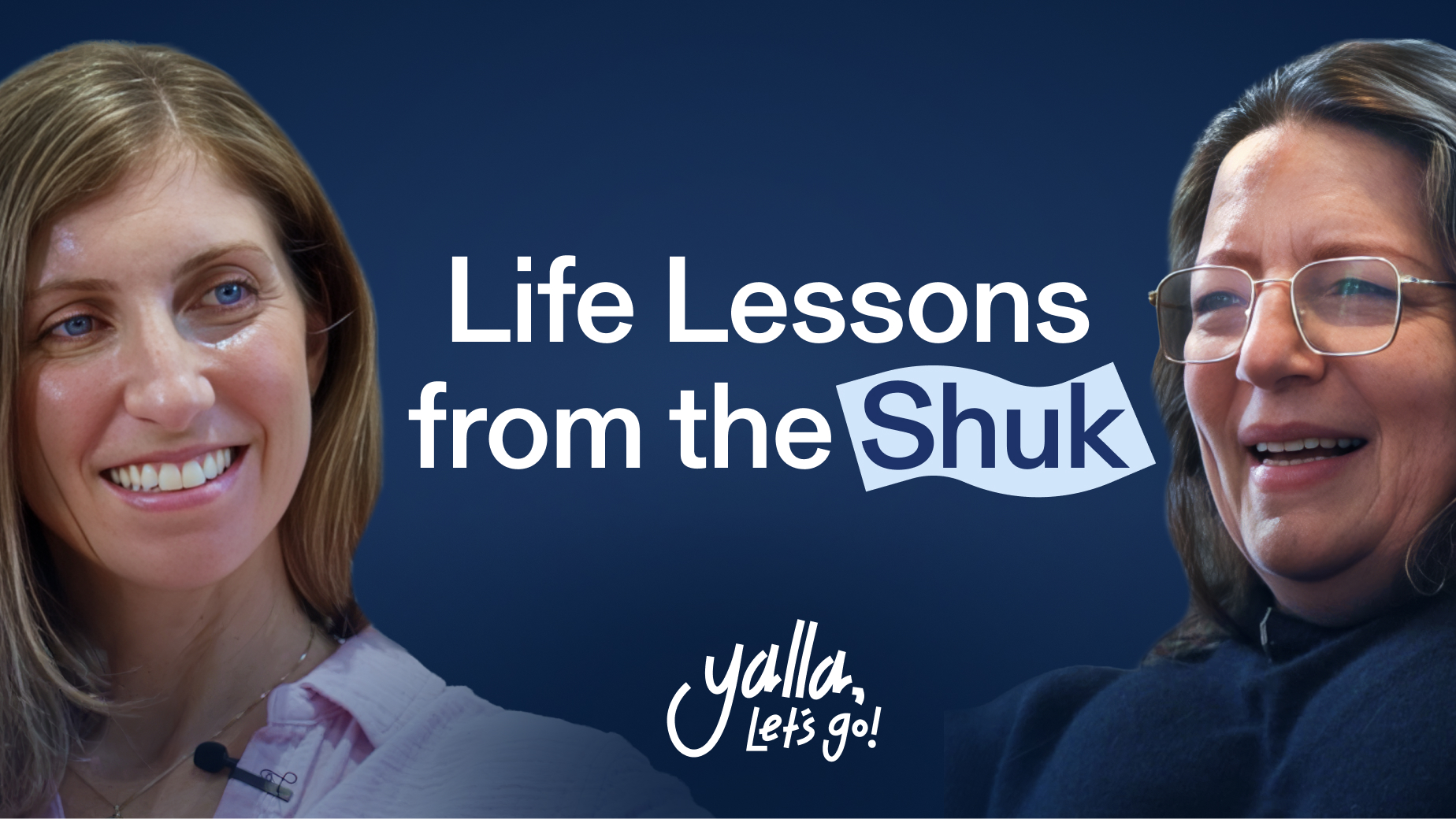
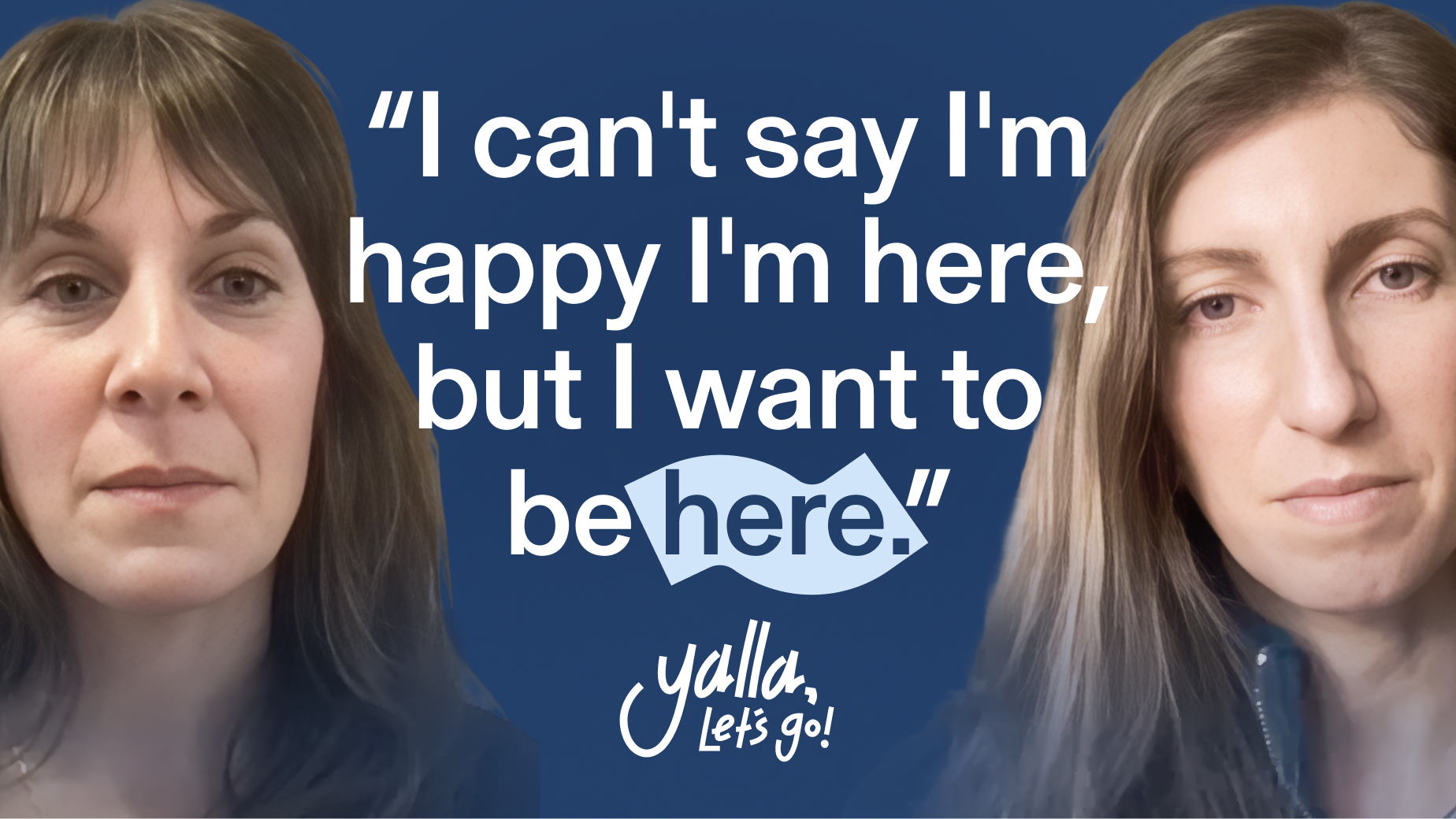
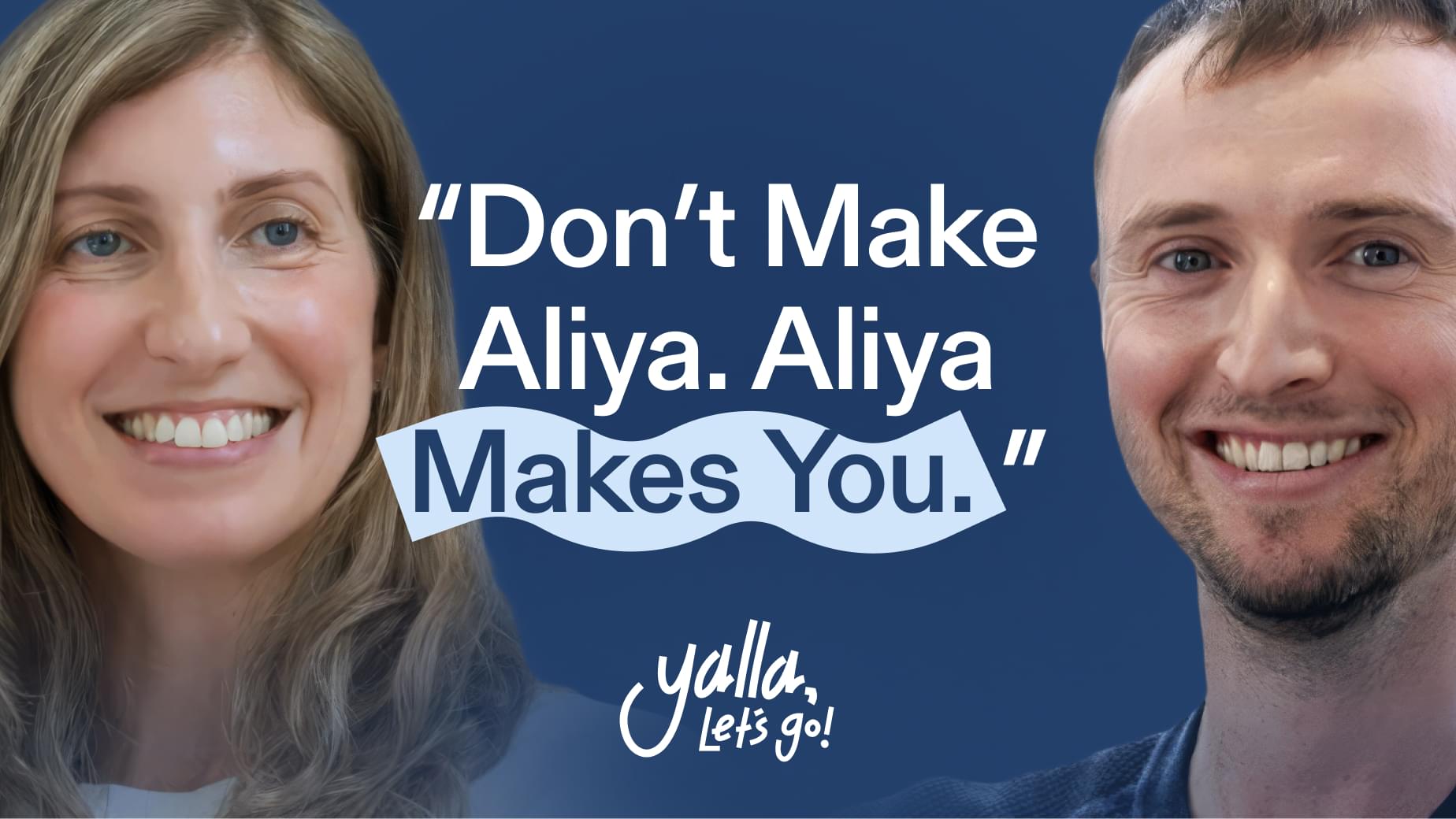
Michael Zagdanski
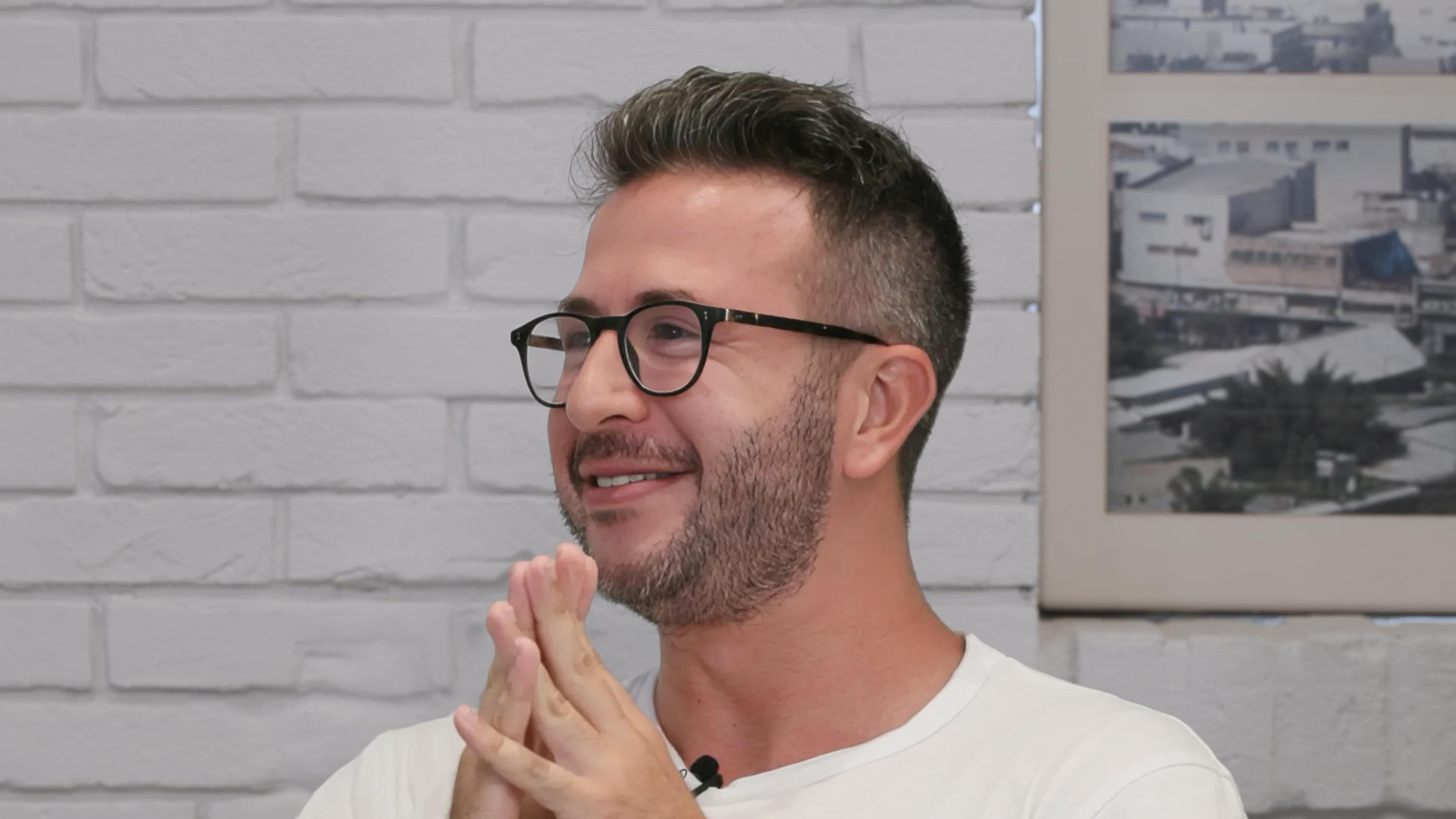

How can values create value? On this podcast, Michael Eisenberg talks with business leaders and venture capitalists to explore the values and purpose behind their businesses, the impact technology can have on humanity, and the humanity behind digitization.


Michael Zagdanski
Michael Zagdanski
Michael Zagdanski
Michael Zagdanski
Michael Zagdanski
Michael Zagdanski, co-founder of Olim in TLV and Tel Aviv’s "schnitzel guy," on making aliyah from Toronto, building a viral Instagram community for olim, and antisemitism abroad.
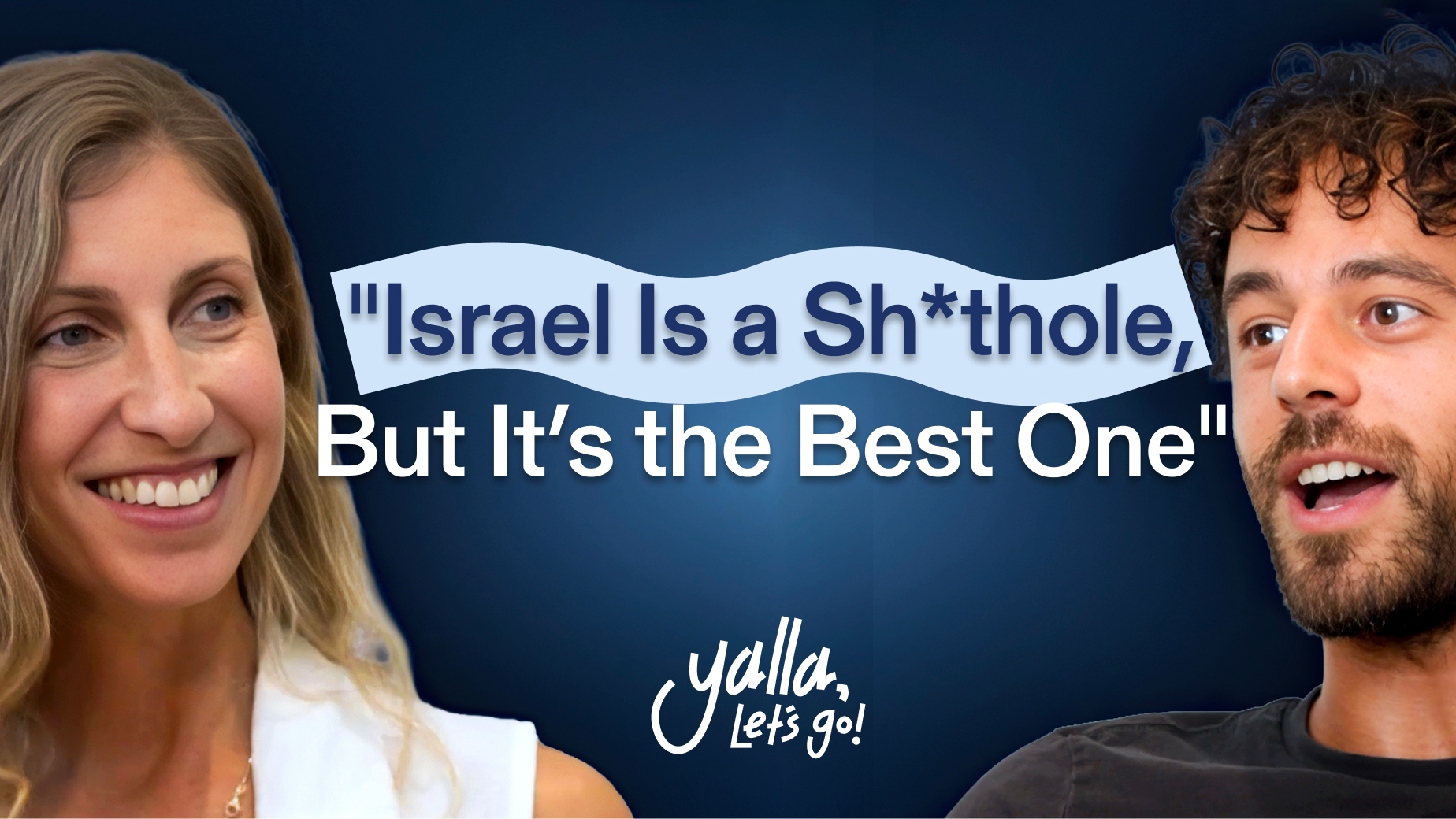
On this episode of Yalla, Let’s Go!, Erica Marom and Abbey Onn talk with Michael Zagdanski, who made aliyah from Toronto in 2020 after a three-month stay in Tel Aviv and left a family real estate career for social media. He explains how Olim in TLV grew from Noa Barazani’s meme page into a media company and community for English-speaking immigrants, how a pitch for schnitzel reviews made him the page’s best-known character, and why they call it the Barstool Sports of the Middle East. He also talks about working with the Tel Aviv municipality to get existing services in front of olim, and about building a career in Israel outside high tech.
Michael’s family still lives in Toronto, where a protest took place outside their synagogue on Yom Kippur. He compares that with life in Israel, where he says he doesn’t think about antisemitism even with missiles incoming. He describes how going through the war in bomb shelters alongside Israelis made him feel more a part of the country, and the reservist who told him the schnitzel reviews got him through his time in Gaza.
#YallaLetsGo #MichaelZagdanski #OlimInTLV #Aliyah #TelAviv
0:00 - Intro
0:51 - Pulse Check: Smoking Rules at an Israeli High School
2:38 - Meet Michael Zagdanski, Co-Founder of Olim in TLV
4:00 - From Toronto Real Estate to Aliyah in 2020
4:52 - The Three Months in Tel Aviv That Changed Everything
6:21 - Israeli Real Estate and the Freier Problem
7:25 - How Olim in TLV Started as a Meme Page
8:30 - Pitching Noa Barazani a Schnitzel Review Segment
9:44 - Falafel Gabay and the Michael Rapaport Review
10:33 - From Instagram Page to Olim Community
12:33 - Startup Nation: Olim in TLV’s Most Popular Segment
13:34 - Authentic Content vs. Traditional Hasbara
14:14 - Mama Schnitz at an Influencer Conference in New York
15:17 - Working With the Tel Aviv Municipality on Olim Services
17:20 - Careers for Olim Beyond High Tech
19:06 - When Olim in TLV Became a Business
19:40 - The Reservist Who Watched Schnitzel Reviews in Gaza
20:31 - Antisemitism in Toronto vs. Life in Israel
22:18 - Bridging the Gap Between Olim and Israelis
24:00 - Dating in Tel Aviv: Apps vs. Meeting in Person
24:52 - Why the War Made Him Want to Stay
26:14 - Israeli Bureaucracy: The Hardest Part of Daily Life
26:42 - Why the People Make Tel Aviv
28:18 - At 80: Helping Others Make Aliyah and Stay
29:08 - Rapid Fire: Schnitzel, Bekitzur & Family
[Abbey Onn — 0:00]
Toronto hasn't been an easy place to be Jewish recently.
[Michael Zagdansky — 0:03]
Toronto's a disaster. Everybody should get out of there as fast as they can.
[Michael Zagdansky — 0:06]
Here, there's obviously a lot of challenges with living here every day. Antisemitism is not one of them. Okay, fine, there might be a missile that's going to be incoming.
[Erica Marom — 0:13]
Now you guys have, like, millions of views, and you have, like, what, 90,000 followers?
[Michael Zagdansky — 0:17]
The soldier that stood up, like, "Your segments, your schnitzel reviews, whatever, got me through my time in Gaza."
[Michael Zagdansky — 0:23]
The people here are unbelievable. I never thought I would have close friends from South Africa, Australia, Brazil, England.
[Michael Zagdansky — 0:29]
I think there's ways to make it in other industries too. I don't think Israel is just all high tech, and there are other ways to grow in different industries here.
[Erica Marom — 0:36]
Or start an Instagram page.
[Michael Zagdansky — 0:38]
Or— yeah, no, don't do that.
[Erica Marom — 0:51]
Welcome back to another episode of Yalla, Let's Go, the podcast that Abbey and I started to remind ourselves why we made aliyah [immigrated to Israel]. We talk to people from all over the country, from athletes, chefs, politicians, influencers, people who work in high tech, you name it, about what it's really like to make aliyah and build a life in Israel, and ask them the questions you really want to know. But first, pulse check. What is living in Israel feeling like for you right now?
[Abbey Onn — 1:17]
It's not feeling like America.
[Erica Marom — 1:20]
That's the understatement of the century.
[Abbey Onn — 1:22]
We went to back-to-school night for my son, who just started high school, and I'm doing my very best. The whole thing is a straight hour of Hebrew, and I got it.
[Erica Marom — 1:32]
Yeah.
[Abbey Onn — 1:32]
They're talking about school rules, and they basically were like, the students are not allowed to smoke on campus. They will be in trouble. They will be suspended. When they want to smoke, they need to walk out of the school gate. And I was like, "I'm sorry, what?" It's not like a no smoking at all. It's not like smoking is bad. It's like, when your 15-year-old needs to light up, he should just walk out of the school gate and hakol beseder [everything's fine].
[Erica Marom — 1:58]
Yeah.
[Abbey Onn — 1:58]
And around me, three things happened. A couple of parents were like, "What? They're allowed to? It's okay? We're letting them smoke?" And some people were like, "Gam anachnu asinu – we also smoked in high school." And then a few other moms were like, "Ba li sigariya."
[Erica Marom — 2:13]
Oh, gosh.
[Abbey Onn — 2:13]
"Feeling like a cigarette right now." And I was like, where am I?
[Erica Marom — 2:16]
Oh, gosh.
[Abbey Onn — 2:17]
And I, you know, had to walk out and call a friend and be like, this country has issues. And—
[Erica Marom — 2:21]
Aviv was like, "Mom, can I have money for cigarettes?"
[Abbey Onn — 2:23]
Yeah. He was like, "No, no, no, I already bought them at the local, you know, makolet [corner store]."
[Erica Marom — 2:27]
Exactly. Oh, gosh.
[Abbey Onn — 2:28]
It's really special here. I grew up with a no-smoking policy. This is a walk-out-of-the-school-gate policy.
[Erica Marom — 2:34]
Yeah. This is a— when you're going to smoke.
[Abbey Onn — 2:37]
Yeah, yeah. We're giving you a blessing
[Erica Marom — 2:38]
A little bit different. Yeah. Okay. We are here today with Michael Zagdansky.
[Michael Zagdansky — 2:44]
What's going on?
[Erica Marom — 2:44]
Thank you so much for joining us.
[Michael Zagdansky — 2:46]
Excited to be here.
[Erica Marom — 2:47]
Co-founder of Olim in Tel Aviv. One of the best things on Israeli Instagram.
[Michael Zagdansky — 2:51]
Wow.
[Erica Marom — 2:52]
Made aliyah from Toronto.
[Michael Zagdansky — 2:54]
It's great to be here. It's very, very exciting. And it's actually funny that you were just speaking about smoking. I've never smoked a cigarette before, and that is definitely one of the culture shocks of moving here.
[Abbey Onn — 3:04]
Yeah.
[Michael Zagdansky — 3:04]
And there's still places that, after 11 p.m., you're allowed to smoke inside restaurants and venues and whatnot.
[Erica Marom — 3:12]
Oh, really? Is it after 11?
[Abbey Onn — 3:13]
We're so old.
[Erica Marom — 3:14]
Hold on. I was just saying, we're so old, we're not out after 11. Hold on. After 11, you can smoke inside?
[Michael Zagdansky — 3:19]
After 11, they're like— where was I? Café Popular on Arlosorov and Dizengoff there. And we're sitting, we're enjoying a meal, everything's going great, and then all of a sudden everyone just starts lighting up cigarettes, and I'm like, "Get me out of here. I don't want my clothes to smell. I can't deal with this."
[Erica Marom — 3:33]
I know. My hair—
[Abbey Onn — 3:33]
Literally, you don't see me, I'm doing this.
[Erica Marom — 3:36]
I don't want my hair to smell.
[Michael Zagdansky — 3:36]
But I always laugh, because Israelis can roll a cigarette. First of all, they roll cigarettes here, right? Versus just buying packs. But they can roll a cigarette anywhere. It's a very special skill. So I actually wanted to do a competition on how fast someone could— they'll be driving, like—
[Erica Marom — 3:51]
Yeah, there you go.
[Michael Zagdansky — 3:53]
Literally within seconds. So—
[Erica Marom — 3:54]
So we ask all of our guests, and we're going to ask the same thing of you. Tell us your life story in under a minute.
[Michael Zagdansky — 4:00]
Under a minute. Originally from Canada, made aliyah in 2020. I come from a real estate background, so it's kind of crazy how I ended up in social media. My family's very Zionistic. Never really thought to move to Israel. Got the opportunity to live here for three months, and I said, holy sh*t, this is the greatest place ever. Little did I know the challenges along the way, which I guess we'll get into. But yeah, now I run Olim in TLV, which is a media company and community. We try to showcase Israel in a very authentic way. We call ourselves the Barstool Sports of the Middle East, and we try to help people integrate once they move here, how to help them socially, services, et cetera. And I guess that's kind of my identity these days. People still refer to me as the schnitzel guy.
[Abbey Onn — 4:42]
But we're gonna get there.
[Erica Marom — 4:43]
Yeah.
[Michael Zagdansky — 4:44]
Okay. We'll get there.
[Erica Marom — 4:44]
Okay. So you made aliyah from Toronto to Tel Aviv. What was the original plan? Or was your plan always just to become an aliyah influencer?
[Michael Zagdansky — 4:52]
There was absolutely no original plan. And I have so much respect for people who can come on Birthright for a week and be like, "I'm moving to Israel." I don't have that risk appetite at all. We decided to just make some investments here, and so I got a chance to live here for three months, again, never ever thinking that I would convert that into something more permanent. And I just had the greatest three months of my life.
[Michael Zagdansky — 5:16]
It was like the honeymoon phase. Everything just worked every day. It was the perfect time of year, April to June, so the weather was perfect. It was before COVID and all the stuff that was going on. I have visited Israel many times over the years, so I had a friend group here and everything. Every night going to the tayelet [promenade], sunset walks, parties. And I was 27 at the time, and I'm like, oh my God, if this is somewhat sustainable, now is the time to do this in my life. And I'm still here six years later.
[Michael Zagdansky — 5:53]
If you would have told me 10 years ago that this would be my life, I'd say absolutely not, you're totally lying. I'm going to be in Toronto, I'm going to be working in real estate with my family. I kind of always had that planned out for me. So it was a big shift.
[Abbey Onn — 6:06]
It's crazy. You came for these three months, and you were doing real estate for a minute. What has real estate taught you about how to break the Israeli psyche? How to kind of get inside someone's head and help them figure out how to adapt here?
[Michael Zagdansky — 6:21]
Oh my God, I think it's the opposite. I think being in real estate scares you way more than breaking into the psyche. Real estate is a very local industry here, where you're trying to deal with construction workers and just real local Israelis. And so, I don't know, people look at me and their eyes light up. Like the term freier [sucker], right? They just look at me and they're like, oh my God, this guy is like, "We got this guy. He's—"
[Erica Marom — 6:47]
We're going to walk all over him.
[Michael Zagdansky — 6:49]
100%. So it took me a long time to break further into the real estate industry. But you have to think like an Israeli. You have to work with Israelis. You have to show people that you really know what you're talking about here.
[Abbey Onn — 7:10]
Okay, so when you steered away, you slid into your co-founder Noa's DMs with an idea about schnitzel. She was currently doing street interviews about aliyah, right? And you got into the DMs. Tell us what happened.
[Michael Zagdansky — 7:25]
Okay, so Olim in TLV started around three years ago, I believe, and it started off completely as a meme page. Noa, shout out Noa Barazani, who's now in New York, she noticed a gap in the— not really advocacy, but just showcasing funny things that were happening on the street. All these inside jokes of what it's like moving here, interactions with Israelis, stigmas about Birthright, about olim [immigrants], how people interact with each other and connect with each other. In Tel Aviv, there's so much random crap that's happening on the street all the time. So she literally just started uploading these videos of things and putting funny on-screen text that resonated with people.
[Michael Zagdansky — 8:06]
And before you know it, she went totally viral. Within six months she had, you know, some thousands of followers, tens of thousands, whatever it was. And so it started getting around the community of English speakers, and I really, really loved the content. So I started sending her stuff, and I ended up sending her a DM, being like, "Would love to go for coffee. I love what you're doing. Would love to find a way to help in any way that I can."
[Michael Zagdansky — 8:30]
It was also when the war started. So real estate-wise, everything was kind of on hold. There was no workers, nobody was doing anything. So I'm like, okay, how am I going to fill my time? So Noa finally ended up going for coffee with me. The joke is that she thought I was trying to ask her out on a date, which I was not. Went for a lunchtime coffee at Nabi Yuna.
[Michael Zagdansky — 8:51]
And so she started explaining to me her vision, how she saw this as the Barstool of the Middle East, and that's the kind of humor and edginess that she's going for with the brand. And I'm like, that's amazing, this sounds great, how can I help? And she's like, well, it's funny you say that, because I'm looking for different segments and characters. That's the Barstool model, right? To establish different characters. And I'm looking for my Dave Portnoy-style pizza review segment.
[Michael Zagdansky — 9:13]
And I'm like, oh, well, that's really great, because I was eating schnitzel every day, and my friends would always laugh. They're like, "Mike, you have to do a segment where you're eating schnitzel with beautiful Israeli women, and only Israeli models. You will blow up. You will have the biggest page, and it's going to go great." And I'm like, yeah, yeah, whatever. I don't know how to do any of that stuff. I don't edit the content. I'm like, very high-level creative at this point. So I said, I'll eat schnitzel and I'll try and do it. She's like, "Done."
[Michael Zagdansky — 9:44]
So we started doing videos. The first one was at Falafel Gabay, which is still my favorite to this day. I go every Friday. I think it's one of the best sandwiches in the world. And that went really, really well. And then the second one, Michael Rapaport happened to have been visiting, and coincidentally he was right next to the schnitzel place, so he was nice enough to do the second review with me. So the second video also went viral.
[Abbey Onn — 10:08]
Shout out Michael Rapaport.
[Michael Zagdansky — 10:09]
Shout out Michael Rapaport, who's in Israel right now. Amazing story. Before October 7th, he was never in Israel, and I think now he's been here, like, eight or nine times. He's really making up for lost time. Maybe he'll make aliyah one day. He'll be an oleh [immigrant].
[Abbey Onn — 10:23]
He was always my favorite of Phoebe's boyfriends. I just have to say.
[Abbey Onn — 10:26]
Mike.
[Erica Marom — 10:26]
Always knew.
[Michael Zagdansky — 10:27]
So we started doing these schnitzel reviews, and I was like, okay, that's it, you're my schnitzel guy.
[Michael Zagdansky — 10:33]
And then that just progressed. As the page continued to grow, people started seeing us as an organization, whatever you want to call it, and so we started getting a lot of questions. "Where do I go for Shabbat dinner?" "How do I convert my driver's license?" "Which bank do I go to open an account?" Every single facet of life. "I just had a baby. Is there a community of young moms?" And that's kind of when we realized there's something much bigger at play here.
[Michael Zagdansky — 11:03]
And because of the reviews and spending a lot of time with Noa, we built up a very good working relationship. It's funny, we always introduce—
[Abbey Onn — 11:09]
Not dating relationship.
[Michael Zagdansky — 11:10]
And I say, "This is my partner," and then Noa's like, "Business partner." It's this whole shtick that we have. And no, but it's super fulfilling. I actually had a fairly easy experience transitioning to Israel. I got to do it in a very low-risk way, and I would love to try and give that to other people, because aliyah is super rewarding. It's not easy by any means.
[Michael Zagdansky — 11:37]
But I think if people were able to cross some of the barriers with the language, with the culture, with the people, with work, relationships, et cetera, they would ultimately stay. And I think a lot of people come, they try it, and they see it as this small portion of their life, or this college-style experience where they come for two years, they have fun, meet people, et cetera, and then they go back. But I think that's artificial. I think people would stay if the circumstances presented themselves appropriately. I mean, you guys are the example. How long have you guys been here for?
[Erica Marom — 12:13]
Twenty years now.
[Abbey Onn — 12:14]
I'm almost 12.
[Erica Marom — 12:15]
I'm very old.
[Abbey Onn — 12:16]
Yeah, we're— we are in a—
[Erica Marom — 12:16]
Different age bracket.
[Michael Zagdansky — 12:18]
So I just hit my six years, so I started calling myself an oleh yashan [veteran immigrant].
[Erica Marom — 12:23]
No, no, until 10. Only 10 is old. I think it's considered a new immigrant until 10.
[Michael Zagdansky — 12:29]
Whatever. I converted. I'm now an oleh yashan, so I don't even know what you guys are called.
[Erica Marom — 12:33]
So tell us about what is Olim in Tel Aviv's most popular video?
[Michael Zagdansky — 12:38]
I would say our most popular segment is our street content. We have a segment called Startup Nation, where we just post videos of Israelis trying to do things in very unconventional ways.
[Erica Marom — 12:52]
Like the cardboard hats.
[Michael Zagdansky — 12:55]
Yeah, the cardboard hats. There was a video of Israelis trying to bring a couch up to the first floor, and instead of just using, I don't know, an elevator or something standard, they're trying to use all these pulleys and ropes to bring this couch literally up a floor from the ground. And that's the whole irony. They present Israel as this high-tech nation that's so advanced in so many ways, and in other ways it's so far behind, that you see this ironic stuff every single day of, like, wow, this country is amazing, and what the hell is going on here? How do things function? So that's been incredibly successful.
[Erica Marom — 13:31]
You guys also have a lot of spicy content.
[Michael Zagdansky — 13:34]
Yeah, definitely. We definitely try to do things as authentic as possible, because that's what engages people today. Just showcasing reality, real life, telling it the way it is. No bullshit. And I give all the credit in the world to people doing advocacy and hasbara [public diplomacy]. But for us, we're not going to be the people that walk next to a Christian or a Muslim and say, "Oh, you see, this isn't an apartheid." I don't think people resonate with that anymore.
[Abbey Onn — 14:04]
Look at this girl getting hit on, on the beach.
[Michael Zagdansky — 14:06]
Yeah, exactly.
[Erica Marom — 14:07]
Do you ever get, like—
[Michael Zagdansky — 14:09]
People love that kind of stuff. I don't know.
[Erica Marom — 14:10]
But do you ever get, like, angry calls from your mom about, like, the Tinder Tuesday content?
[Michael Zagdansky — 14:14]
My mom, who actually self-proclaims as Mama Schnitz, she loves the content. My mom is my number one supporter, and it was very funny because we got invited to go to this conference for influencers against antisemitism or whatever in New York a couple years ago, and I'm originally from Toronto, and so my mom's like, "I'm going to come to New York and see you. Obviously, you're so close." And so I was just kind of getting into this whole world. So my mom comes to the conference, me and Noa are there, and my mom's going around being like, "I know this guy, I know this guy, this guy does this content, this is this content." And she's going around being like, "I'm Mama Schnitz." Nice to meet you. And then they're like, "Cool. Who's that?" And she's like, "Oh, my son, he runs Olim in TLV." And everybody's like, "Cool. What's that?" No one had any idea who we were. And my mom knew everybody.
[Abbey Onn — 14:59]
So you said something that I think is so fascinating, and we could talk about this, you and I, for hours. You and I overlap a little bit in this world of helping people figure out what they do after they actually get here. You're working with the Tel Aviv municipality, right? How are you helping them think about making the lives of olim in Tel Aviv better?
[Michael Zagdansky — 15:17]
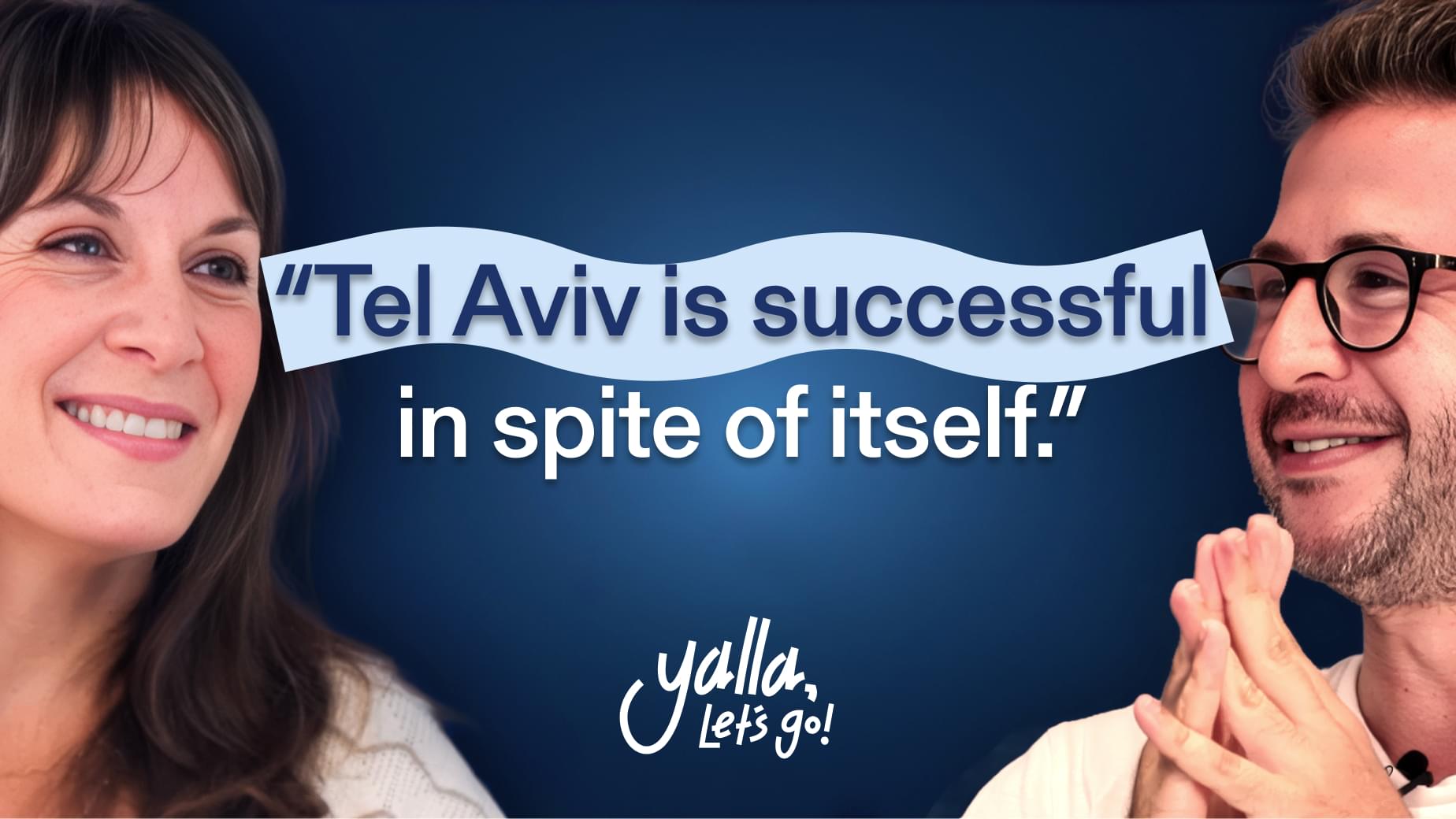
It's funny, because we've been in a lot of these conversations, and we could speak about this for hours. I think there's a misconception in the municipality that everything's going great because people are continuing to make aliyah. And I always say Tel Aviv is successful in spite of itself, because of olim wanting to give back, and people like you guys who have been here for so long and have made it through all those pain points. I think everybody has these epiphanies or midlife crises at three years, five years, seven years. Everyone has these points, and you've gotten through all that. So I think it's important to give back to help people have that similar experience, which is why people ultimately still come and they still stay and try to find their way.
[Michael Zagdansky — 16:03]
When it comes to the municipality, it turns out that they offer a lot of services for new olim. We're sitting in this meeting, and they were telling me that there's this service called Melave Olim, which is a call center in five languages where someone from the municipality is always available to help you with everything. I never knew about it, and I asked five of my friends, none of them had any idea about it. So it's not that they're not trying and providing services and doing events, it's just they're not reaching the audiences. And that's where I think we can help fill that gap. We have the audience. Our main demographic is 18 to 40, which is something that I think a lot of these— yeah, there's outliers here and there— but I think that's an age range that people are struggling now to engage with, just because of, again, as we spoke before, the different styles of content. The leadership in some of these organizations are a bit out of touch.
[Abbey Onn — 17:06]
To your point too about the Startup Nation, there's so much amazing tech in this country, and then the more bureaucratic things often have a hard time finding their audience. And so it's really lovely that they have the service and that you are helping match with the audience.
[Michael Zagdansky — 17:20]
Totally. And yes, obviously tech is the main place where I think olim, if they want to come and earn a great salary, it's an obvious thing that can work, right? To bridge the gap between the Israeli and the American mindset. I mean, you would know more about this, because you're specifically focused on high tech. Sales is probably the best thing for olim to go into.
[Abbey Onn — 17:45]
We love a go-to-market.
[Michael Zagdansky — 17:47]
When they first come here. But I think there's ways to make it in other industries too. I don't think Israel is just all high tech. There's a lot of people, especially now, I think people are getting sick of high tech because they just keep hearing all these numbers and things that are in the air and most of the time don't come to fruition. People now want to see more physical things, experiences. They want to, I don't know, maybe sell a product or go into all these different types of stuff. And that's also achievable here. And there are other ways to grow in different industries here—
[Erica Marom — 18:16]
Or start an Instagram page.
[Michael Zagdansky — 18:18]
Or— yeah, no, don't do that. Don't do that.
[Abbey Onn — 18:21]
I really love that. I actually think it's a very, very important point. And I do think tech is a great economic driver, but you should be able to come here and build a small business. You should be able to come here and pursue art or whatever profession you want, and know that it is actually possible.
[Michael Zagdansky — 18:36]
And that's my joke, because I'm allowed to say it, because I have a community. Every day someone starts a new community, a new run club, a new this. Everyone is just seeking something, seeking experience and community. And I give people a lot of credit. It is not easy to do this, or become an influencer, or start a podcast.
[Erica Marom — 18:56]
But when did you know that yours went from, like, now you guys have, like, millions of views and you have, like, what, 90,000 followers? So when did you know that this was no longer just a fun gig, but this is actually a business?
[Michael Zagdansky — 19:06]
I think it was when we started getting a lot of the inbound messages for other things in addition to just "We love your content." And it's funny, because I love content and searching and swiping and all that kind of stuff, but I don't look at something and I'm like, this is incredibly inspirational, or this encourages me to actually go out and do something. And we've gotten unbelievable sentiments, like, "Because of your page, we're making aliyah." "Because of your page, you encouraged me to come visit Israel," showing that even in wartime, things are completely normal.
[Michael Zagdansky — 19:40]
And we were at a Shabbat dinner, and this was the craziest thing: there was a soldier that stood up, and he was talking about the role of olim. He did a lot of reserve service. And I think something that came up in the dinner was that, you know, "We didn't do the army, so how else can we contribute?" And he was like, "Olim just coming here and showcasing Israel, and just even staying here, is doing your part." And then he looks at me and Noa, and he was like, "Your segments, your schnitzel reviews, whatever, got me through my time in Gaza." And I was so embarrassed. I'm like, what? I just review schnitzel online. So the fact that it can resonate with people in that way is, I guess, amazing. And that encourages us to continue to do it.
[Abbey Onn — 20:25]
You're speaking also— there is, I think, a global audience in this, right? It's reaching people outside of Israel.
[Michael Zagdansky — 20:31]
For sure.
[Abbey Onn — 20:31]
Toronto hasn't been an easy place to be Jewish recently.
[Michael Zagdansky — 20:35]
Wow. Toronto's a disaster. Everybody should get out of there as fast as they can.
[Erica Marom — 20:39]
Well, is your family still there?
[Michael Zagdansky — 20:41]
My family's still there, yeah. My family was actually at the synagogue where there was the big— not where— there were two incidents on Yom Kippur. One was the shooting in Belleville, and then the other one was the protest that took place outside of one of the synagogues. That was my parents' synagogue. And I mean, it's scary. It's scary. But—
[Abbey Onn — 21:00]
It's often, like, who's more scared for the other, sometimes, right? How do you feel being here when that's happening there, knowing also that you've been living through the last three years here?
[Michael Zagdansky — 21:08]
It's funny, because I have this conversation a lot. And here, there's obviously a lot of challenges with living here every day. Antisemitism is not one of them. You can go to shul, you can walk around, you can do whatever you want to do. Okay, fine, there might be a missile that's going to be incoming, but I don't think about antisemitism here, which is a totally different mindset, right? And everyone's like, "How do you live in Israel? You have to deal with all these missiles and rockets and all that." I'm like, well, you guys live in Toronto. The chance of something happening to you walking around as a Jew could be more than anything happening to me here. So it's just a different dynamic.
[Michael Zagdansky — 21:46]
But yes, I think it's becoming much more challenging in specific cities in North America. I think the alarm bells are starting to ring, but I think history shows that people really wait till the last second, or they find ways to justify it or put it to the side. It's a big deal to get up and move countries—
[Abbey Onn — 22:05]
And leave your big house and the ease of life—
[Erica Marom — 22:09]
Your comfortable life.
[Abbey Onn — 22:11]
And everything you know, it's extremely hard.
[Michael Zagdansky — 22:14]
100%.
[Abbey Onn — 22:14]
I don't think you can convince someone to come here. I think they have to really figure it out for themselves.
[Michael Zagdansky — 22:18]
I'm the perfect example of that. If I didn't get the chance to move here and experience— you don't know what you don't know. It's on us to try and go into their culture, right? And that's one of the things we say at Olim in TLV. It's funny, because the name is a bit misleading, because one of our goals is what we call bridging the gap between olim and Israelis. We have a party or an event, and we get, like, 15 to 20 DMs for every event being like, "Can I come? I'm not an oleh." And in my head it's like, duh, that's the whole point. We're trying to help bring people together. But I think people still put olim in a box, and I think that's part of the problem here. And olim put themselves in a box, right? Because they don't try to—
[Erica Marom — 22:57]
Well, because it's hard— the language, you know, all the things that we know, the language and the culture. It's very, very hard to get you to put yourself out there. It's uncomfortable to do that. It's easier to get swallowed up in the olim bubbles.
[Abbey Onn — 23:08]
Yeah. I think it's super hard to bridge the gap. I think we end up in our own shtetls.
[Michael Zagdansky — 23:11]
Bridge the gap.
[Abbey Onn — 23:12]
Yeah. And bridge the gap.
[Erica Marom — 23:13]
That's why we tell people to marry an Israeli.
[Abbey Onn — 23:15]
Yeah. This is our recommendation.
[Michael Zagdansky — 23:16]
So first of all, I agree with your recommendation. If you want to live here, I think a huge part of it is having family here, having a place to go for home-cooked food, having someone to help you. But did you guys marry Israelis?
[Abbey Onn — 23:28]
Both of us.
[Erica Marom — 23:28]
Yeah, both of us did. We dated Israelis and married Israelis.
[Abbey Onn — 23:30]
And they literally met each other on Zoom a week ago, and they're like, "Why didn't you tell us we looked alike?"
[Michael Zagdansky — 23:37]
So how did you meet your significant others? Were they, like—
[Abbey Onn — 23:41]
I'm going to speak directly to the Jewish Agency. Mine came as a shaliach [emissary].
[Michael Zagdansky — 23:45]
Really?
[Abbey Onn — 23:45]
He worked at the University of Texas in Austin, and I was working for Hillel International and trained him for part of what he—
[Michael Zagdansky — 23:51]
So you met him. So he brought you?
[Abbey Onn — 23:53]
I met him in the US, and he imported me. I'm an import. Like a drug.
[Erica Marom — 23:57]
No, I am the real story.
[Abbey Onn — 23:58]
Yeah, go.
[Erica Marom — 23:59]
Because I made aliyah by myself.
[Michael Zagdansky — 24:00]
It's funny, because people always ask me about the dating apps here. When someone visits, they're like, "How is it meeting people on the dating apps?" And Israelis are old school. Israelis want you to just go up to them here. There's so many opportunities to meet people, so many different outlets on the tayelet, just being out at a party or whatever. In Israel, more so than other places, organic is the way to do it. Both my siblings met their significant others on Hinge, but I think elsewhere there's higher-quality people on Hinge because there's less opportunities, and that's just the way to do it. And here, I do not think that that's necessarily—
[Erica Marom — 24:33]
You just gotta go over to a pretty girl and be like, "How you doing?" In Hebrew.
[Michael Zagdansky — 24:36]
Wow. You know, it's easy for you to say it. Okay. It's easy for you to say it.
[Erica Marom — 24:41]
Okay. So the truth is, you create a lot of fun and lively content here, but the last couple of years have been difficult. Have you ever thought of leaving? Have you ever thought of going back?
[Michael Zagdansky — 24:52]
I have definitely had my moments of considering leaving, and where I am in life and how I see myself moving forward. The war and the challenges were not one of them. I never once thought of leaving because of that. In a weird way, I really appreciate those times here, especially as an oleh. Going back to what we were saying before, it's kind of a way— again, it's a bit weird to say this, and obviously it's terrible for everybody that has suffered traumatic experiences, and people that have lost their lives and all that kind of stuff, but it's a form of integrating, to go into the bomb shelter and meet people and go through this kind of stuff together.
[Michael Zagdansky — 25:31]
And like we were saying before, yes, it was scary, but there's a real feeling here of, like, we're all in this together, and there was no tourism here. So you're meeting Israelis, and they see you, like, "Oh, this guy's here. He's with us. He's in this." And if anything, that made me feel more a part of society, which made me want to stay even more. It's like, okay, I'm here, I'm going through this. I'm more invested now. I want to continue to try. So for me personally, it had the complete opposite of what you're saying.
[Erica Marom — 26:08]
Is there anything for you, though, that is really hard about life here? If we could be really honest for a second?
[Michael Zagdansky — 26:14]
Yeah, there's a ton of stuff that's hard about life. Everything. Every basic thing here becomes so challenging. Literally everything related to services, like paying bills. Thank God, my Hebrew is now at a point where I can do things in Hebrew, but just the most basic things here take significantly more time. Everything, like ordering checks.
[Abbey Onn — 26:39]
Okay, let's flip it. What do you love the most about living here?
[Michael Zagdansky — 26:42]
The people. It's the people. It's the energy. I don't care about architecture. Tel Aviv is not the prettiest city in the world. You walk the streets and you're just like, "Where the hell are we? Why am I paying an exorbitant amount of money per month to rent or to buy or to anything?" This doesn't make sense here. But wow, the people here are unbelievable. There's a real global feeling here. You're meeting people from all over the world. Back in Canada, I never thought I would have close friends from South Africa, Australia, Brazil, England, et cetera.
[Michael Zagdansky — 27:18]
And my friends are going to make fun of me if they ever hear this, but this is my line: it takes a certain kind of person to change your whole life, for whatever reason, whether you felt like a misfit or you just wanted to change or whatever. You're choosing to uproot your entire life, and because of that, you're de facto interesting, or you have a story to tell. And everybody chose Israel. Israel's not random, right? People chose here because they're Jewish or they feel connected or whatever, and that gives you a really good baseline. And so you meet the most unbelievable people here, and the community here is second to none. Not when it comes to business— maybe real estate, they're a little sharky, the Israelis. But when it comes to community and anything you need on a personal note, people are very quick to help you and try and provide resources for you.
[Erica Marom — 28:07]
Last question. When you're 80 years old and you're looking back on your life, what's one thing that you think will have been true because you made aliyah that wouldn't have been true otherwise?
[Michael Zagdansky — 28:18]
So again, you don't know what you don't know. But now that I've been here and I made aliyah, life is just way more fulfilling. I'm a totally different person than I was, personally, professionally, everything. Israel teaches you to grow up, fend for yourself, figure life out, and everything is just way, way more fulfilling. I feel happy here. And when I look back and I think about what I'm doing now and hopefully what I'm going to continue to do, I really want to give the kind of experience I had when I made aliyah to everybody else. And if I'm able to look back when I'm 80 and be like, "I've helped all these people come here because of what we're doing, people have now decided to stay in Israel," that'll be everything for me.
[Abbey Onn — 29:08]
All right, we're going to do rapid fire.
[Michael Zagdansky — 29:10]
Okay.
[Abbey Onn — 29:11]
One-word answers. I'm going to start off with something I feel like is a comfortable one for you. Favorite Israeli food or snack?
[Michael Zagdansky — 29:16]
It's got to be schnitzel.
[Erica Marom — 29:18]
Where's the best place to get schnitzel?
[Michael Zagdansky — 29:19]
Falafel Gabay. Every Friday, schnitzel and a challah. It's not even a question. Zero.
[Abbey Onn — 29:24]
One Hebrew word or slang that you love?
[Michael Zagdansky — 29:29]
Bekitzur, which is like, "make a long story short." Someone can keep just telling a story, and you go, "Yalla, give me the bekitzur." Like, just tell me, like, yalla—
[Abbey Onn — 29:35]
Yall, let's go.
[Michael Zagdansky — 29:36]
Yeah, let's go. There you go. Just tell me. Tell me the ending.
[Erica Marom — 29:40]
What does Shabbat look like for you?
[Michael Zagdansky — 29:41]
Shabbat for me is just being surrounded— oh, one word. Sorry, people.
[Abbey Onn — 29:45]
What do you miss the most from home?
[Michael Zagdansky — 29:47]
Family. That's pretty much it. Family and friends are my remaining ties to Toronto.
[Erica Marom — 29:54]
Do you feel more Israeli or more Canadian?
[Michael Zagdansky — 29:56]
I feel more Israeli, for sure. I feel like it's in my blood. I definitely feel more Israeli. I love it here. I think everybody should come here.
[Erica Marom — 30:03]
Thank you. Thank you so much for joining us.
[Michael Zagdansky — 30:03]
Thanks a lot guys.
[Michael Zagdansky — 30:06]
Yeah, for sure. This was great.
[Abbey Onn — 30:07]
Thank you, and thank you to our entire team.
[Erica Marom — 30:11]
And share this with everyone you know, and go follow Olim in Tel Aviv.
[Michael Zagdansky — 30:14]
Follow Olim in Tel Aviv. Make aliyah.
[Abbey Onn — 30:18]
Yalla, let's go!
[Michael Zagdansky — 30:19]
Yalla, let's go!

Follow Olim in TLV on Instagram
Follow Olim in TLV on TikTok
Subscribe to Yalla, Let’s Go
Learn more about Aleph
Sign up for Aleph’s monthly email newsletter
Subscribe to our YouTube channel
Follow us on Instagram
Follow us on TikTok
Follow Aleph on Twitter
Follow Aleph on LinkedIn
Follow Aleph on Instagram
Hosts: Erica Marom, Abbey Onn
Executive Producer: Sarah Bard
Producer: Sofi Levak, Dalit Merenfeld
Video and Editing: Nadav Elovic
Music and Creative Direction: Uri Ar
Content and Editorial: Jackie Goldberg
Design: Nimrod Sapir